bookmark_borderBoost New Haven’s Walkability with Sidewalk Bond Initiative

Have you ever strolled down a New Haven street and thought, “This sidewalk could use a little love”? You’re not alone. Walkability is the heartbeat of our city, connecting neighbors, supporting local businesses, and making daily life a breeze. But keeping those pathways safe and beautiful requires hard work from skilled contractors—and a little something called a sidewalk bond. If you’re a contractor looking to work in New Haven, or simply a resident curious about how our sidewalks stay in top shape, you’re in the right place. Let’s break it all down in plain, friendly language.

What Exactly Is a New Haven Sidewalk Bond?

Think of a sidewalk bond as a promise wrapped in paperwork. It’s a type of surety bond that the City of New Haven, Connecticut, requires from contractors who work on public sidewalks. This isn’t just a suggestion—it’s a compliance must-have. The bond guarantees that the contractor will finish the job according to city codes and safety standards. If something goes wrong, like shoddy workmanship or an abandoned project, the bond steps in to protect the city and taxpayers.

In simple terms, a sidewalk bond is a three-party agreement. The contractor (that’s you, the principal), the city (the obligee), and the surety company (the financial backer) all shake hands in a legal sense. The surety says, “If this contractor doesn’t fulfill their obligations, we’ll cover the costs to fix it up to the bond amount.” It’s not insurance for the contractor—it’s a shield for the public.

Why Does New Haven Require Sidewalk Contractor Compliance?

Picture this: you’re walking home, coffee in hand, and you trip over an uneven slab because a contractor cut corners last month. Frustrating, right? New Haven takes walkability seriously, and compliance bonds are one way the city keeps everyone safe. By requiring a sidewalk bond, the city ensures contractors are financially accountable. No one wants half-finished paths or crumbling concrete just months after installation.

The focus on compliance also levels the playing field. Reputable contractors who take pride in their work don’t have to worry about low-ball bidders leaving a mess behind. The bond requirement filters out those who might cut and run. Ultimately, it’s all about protecting the city’s infrastructure and, most importantly, the people who use it every day.

The Walkability Connection: More Than Just Concrete

Walkability isn’t just a buzzword—it’s a quality-of-life game changer. Smooth, well-maintained sidewalks mean kids can walk to school safely, older adults can stay active without fear of falls, and everyone can access parks, shops, and restaurants with ease. New Haven’s sidewalk bond initiative puts a spotlight on this by making sure every repair, replacement, or new installation meets high standards. When contractors know they’re bonded, they’re more likely to deliver quality work because their reputation—and their wallet—is on the line.

Think of the bond as the unseen foundation beneath your feet. You might not notice it, but it’s quietly ensuring that your morning jog or evening stroll remains a pleasure, not a hazard.

How Does a Sidewalk Bond Actually Work?

Let’s demystify the process. When a contractor lands a job to repair or install a sidewalk in New Haven, they must purchase a bond before breaking ground. The bond amount is set by the city, often based on the project’s scope. The contractor pays a small percentage of that total amount as a premium—usually between 1% and 3% for those with good credit. The surety company then issues the bond, and the contractor presents it to the city as proof of compliance.

If the contractor completes the project to code, the bond simply expires without a fuss. But if they fail—say, they use substandard materials or walk off the job—the city can file a claim against the bond. The surety investigates, and if the claim is valid, they pay out to cover the cost of fixing the problem. Then, the surety will turn to the contractor for reimbursement. That’s the key: the bond protects the public, but the contractor is ultimately on the hook.

Common Scenarios That Trigger a Bond Claim

  • Abandoned projects: The contractor starts tearing up the sidewalk but never finishes, leaving a dangerous gap.
  • Code violations: The work doesn’t meet New Haven’s specific guidelines for slope, material, or accessibility.
  • Damage to public property: Heavy equipment scrapes up the road or breaks a water line, and the contractor doesn’t repair it.
  • Missed deadlines: The project drags on far beyond the agreed timeframe, disrupting the neighborhood.

Thankfully, these situations are rare when a contractor takes their commitment seriously. The bond’s real power is preventive—it encourages top-notch work from day one.

How Can Contractors Get a Sidewalk Bond in New Haven, CT?

Ready to secure your bond and win that next project? The process is simpler than you might imagine. You’ll start by contacting a surety bond agency that operates in Connecticut. Provide some basic information about your business and financials—the agency typically runs a soft credit check to determine your premium rate. Even if your credit isn’t perfect, don’t sweat it. Many agencies offer programs for various credit levels, and the premium is usually a small fraction of the total bond amount.

Once approved, you’ll pay the premium and receive your bond certificate. Hand that over to the City of New Haven with your permit application, and you’re good to go. It’s a straightforward step that signals professionalism and reliability. After all, being bonded tells the city—and your clients—that you stand behind your work.

Quick Checklist for Contractors

  • Confirm the exact bond amount required by New Haven for your specific project.
  • Gather your business license, EIN, and financial statements (if requested).
  • Compare quotes from a couple of surety agencies to find the best rate.
  • Ask about any additional compliance steps, like insurance or city registration.
  • Keep your bond active until the project is fully accepted by the city.

Boosting Walkability: A Shared Effort

Just think about what a fully walkable New Haven looks like. It’s more than smooth surfaces—it’s a vibrant, connected community. The sidewalk bond initiative plays a subtle but vital role in that vision. Every time a contractor lays a perfect stretch of concrete, they’re contributing to a city where people choose to walk, linger, and interact. That boosts local businesses, reduces traffic congestion, and even fosters a healthier population.

And it’s not just contractors who benefit. Residents get peace of mind knowing that the city’s rules have teeth. If a sidewalk project goes sideways, there’s a financial safety net in place. It’s community protection built right into the system. So next time you see fresh cement being poured, remember the invisible bond that’s quietly working behind the scenes.

What Happens If a Contractor Doesn’t Get Bonded?

Operating without a required sidewalk bond might be tempting to save a few dollars, but it’s a slippery slope. The City of New Haven can shut down a project, issue fines, or deny permits. Even worse, if something goes wrong, the contractor could face lawsuits or damage their reputation beyond repair. No one wants to be known as the contractor who left a neighborhood with a dangerous eyesore. In the long run, the small premium you pay for a bond is a bargain compared to the potential fallout.

For homeowners or business owners hiring a contractor, always ask to see their bond certificate. A legitimate professional will have it ready. Seeing that document is like a green light, signaling you’re working with someone who follows the rules and respects the community.

Your Part in New Haven’s Walkability Story

Whether you’re lacing up your sneakers for a jog through East Rock or pushing a stroller downtown, sidewalks are your unsung companions. The New Haven sidewalk bond might seem like a small detail in the grand scheme of urban life, but it’s one of those behind-the-scenes heroes that keeps the city moving—literally and figuratively. Contractors who embrace compliance aren’t just checking a box; they’re investing in a safer, more connected New Haven.

So, what’s your next step? If you’re a contractor, think of the bond as your ticket to better opportunities and a stronger reputation. If you’re a resident, appreciate the system that holds quality in place. Either way, you’re part of the walkability movement that makes this city such a special place to call home. Got questions about the bonding process or want to share your sidewalk success story? Drop a comment or reach out—we’d love to keep the conversation going.

bookmark_borderUnderstanding New Haven’s Excavation Contractor Compliance and Bonding Requirements

If you’re an excavation contractor in New Haven, Connecticut—or thinking about becoming one—you’ve probably heard the words “bond” and “compliance” tossed around more times than a shovel in soft soil. But what does it all actually mean for your day-to-day work? More importantly, how do you make sure you’re following the rules without getting buried in paperwork?

Let’s dig into the world of excavation contractor compliance and bonding in the Elm City together. Whether you’re a seasoned pro or just starting out, this guide will break everything down into simple, bite-sized pieces.

What Exactly Is an Excavation Bond?

Think of an excavation bond as a safety net—but not for you, for the city and its residents. In simple terms, it’s a type of surety bond that guarantees you’ll do your job according to local laws and regulations. If something goes wrong—say, you accidentally damage a public utility line or fail to restore a street properly—the bond provides financial protection to the City of New Haven.

Actually, calling it a “bond” can be a little misleading. It’s not insurance for your business. Instead, it’s a three-party agreement between you (the contractor), the city (the obligee), and a surety company (the backer). If you don’t meet your obligations, the surety pays the city up to the bond amount, but then they’ll come looking to you for reimbursement. So a bond is really a promise backed by money—your money, eventually.

Why Does New Haven Require Excavation Bonds?

Here’s a simple truth: digging up streets, sidewalks, or public rights-of-way can cause a lot of damage if it isn’t done carefully. New Haven’s streets are historic, narrow, and packed with underground utilities that weave together like spaghetti. One wrong move and you might knock out power to a whole block or crack a century-old sewer line.

To protect taxpayers and keep the city’s infrastructure from turning into a patchwork of shoddy repairs, the City of New Haven mandates that excavation contractors post a bond before obtaining a permit. This requirement is part of the city’s broader public works and right-of-way management ordinances. It’s the city’s way of saying, “We trust you, but we also want a guarantee.”

Compliance-Only vs. Full Bonding: What’s the Difference?

You might have seen the term “compliance-only” floating around in New Haven’s contractor requirements. This can confuse just about anyone, so let’s clear it up. A compliance-only bond focuses strictly on ensuring you follow all municipal codes, regulations, and permit conditions. It doesn’t necessarily cover the physical restoration work itself—that might be handled through a separate performance bond or a different guarantee.

In many cases, New Haven requires excavation contractors to secure a bond that covers both compliance and restoration. But the specific type and amount depend on the scope of your project. Always check with the City Engineer’s office or the Department of Public Works for the exact bonding form they’ll accept. Don’t assume a generic bond will check all the boxes.

Who Needs a New Haven Excavation Bond?

If you plan to excavate in the public right-of-way within city limits, you need a bond. This applies to:

  • General excavation contractors opening trenches for utilities.
  • Plumbers or drainage specialists connecting to city mains.
  • Landscaping companies doing deep earthwork near streets.
  • Paving and curb replacement crews.
  • Any subcontractor performing digging operations that disturb public property.

Even if you’re only doing a small job—like repairing a water service line from the street to a single-family home—the bond requirement still stands. The city rarely makes exceptions, because even small holes can lead to big liabilities.

How Much Does an Excavation Bond Cost in New Haven?

Here’s where many contractors breathe a sigh of relief. You don’t need to pay the full bond amount out of pocket. The bond amount required by New Haven can vary—often between $10,000 and $50,000 depending on the project—but you only pay a small percentage of that as a premium. This premium is usually based on your personal credit score and business financials.

For example, if the city requires a $20,000 bond, your annual premium might fall somewhere between $200 and $600 if your credit is solid. Not a bad price for peace of mind and the legal ability to work. If your credit is less than perfect, don’t panic. Many surety companies offer programs specifically for contractors. The rate may be higher, but it’s still far less than the full bond penalty.

The Step-by-Step Path to Compliance

Getting bonded and permit-ready in New Haven doesn’t have to feel like a maze. Here’s a quick roadmap to keep you on track:

1. Know Your Project’s Scope

Before anything else, determine exactly where you’ll be digging and what infrastructure you might encounter. Call 811 for utility mark-outs and gather a detailed site plan. The city will want to see that you’ve done your homework.

2. Reach Out to the City

Contact the New Haven Department of Public Works or the City Engineer’s office. Ask them what bond form they require, the specific bond amount for your job, and any additional insurance certificates they’ll want. This step alone can save you days of back-and-forth later.

3. Find a Reputable Surety Bond Provider

Look for a bonding agency that knows Connecticut municipal requirements inside and out. They’ll walk you through the application, pull a soft credit check (usually), and issue the bond within a day or two once approved. Many can email the bond directly to the city on your behalf.

4. Bundle with Licensing and Permits

With the bond in hand, you’ll typically combine it with your contractor registration or license and the specific street-opening permit for the job. Double-check that all names on the bond match your business name exactly as registered with the state. One tiny mismatch can send you back to square one.

5. Keep Records and Renew Annually

Most excavation bonds run for a one-year term and must be renewed. Set a reminder 30 days before expiration. If your bond lapses, the city can revoke your permits immediately, leaving you unable to work.

Common Pitfalls That Can Wreck Your Compliance

Even experienced contractors sometimes stumble. Here are a few traps to avoid:

  • Assuming one bond covers multiple municipalities. New Haven often has its own bond form separate from the state’s or neighboring towns. A bond filed with Hamden or West Haven won’t necessarily satisfy New Haven.
  • Not understanding restoration standards. The bond ensures you’ll restore pavement, sidewalks, or landscaping to the city’s satisfaction. If you do a quick patch and walk away, you risk a claim against your bond—and a black mark on your reputation.
  • Letting your business credit slide. Bond premiums are tied to your financial stability. Paying bills on time and keeping business credit clean can save you hundreds of dollars each year.
  • Skipping the fine print. The bond document might contain provisions that require written notice for changes in your business structure. If you change your LLC to a corporation, update the bond accordingly.

How Does an Excavation Bond Actually Protect You?

It might seem like the bond only protects the city, but it safeguards your business too. Think about it: without a bond, any damage you cause could turn into an immediate lawsuit or out-of-pocket expense that threatens your livelihood. With a properly structured bond, you have a clear process for resolving disputes. The surety company will investigate, and if a claim is valid, they’ll pay the city so you can keep working while you arrange repayment. This structure can prevent a financial punch from knocking you out entirely.

Plus, being bonded gives you a competitive edge. When the city clerk sees you’ve got your bond paperwork crisp and current, you’re already positioning yourself as a reliable professional. That can mean the difference between snagging a big project and watching it go to someone else.

What Happens If You Work Without a Bond?

If you start digging without the required bond, you’re not just bending the rules—you could face stop-work orders, stiff fines, and even a ban from future city contracts. New Haven takes public safety and infrastructure integrity seriously. A few years ago, contractors who overlooked bonding requirements found themselves on the wrong end of enforcement actions that cost them far more than the price of a bond. It’s simply not worth the risk.

Local Nuances You Should Know

New Haven has character—and so do its regulations. The city is home to Yale University, historic districts, and a dense urban core. That means excavation near landmarks or in high-traffic areas might trigger additional bonding or insurance requirements. The city might also demand a traffic control plan, and your bond must remain active until the city issues a final inspection and acceptance of the work, which could be months after you’ve filled the last hole.

Don’t forget that Connecticut also has a “Call Before You Dig” law that runs parallel to local rules. While 811 notification is a state mandate, the New Haven bond specifically covers local restoration and compliance. You’ll need to satisfy both layers—state law and city ordinance.

Making the Process Less Painful: A Proactive Mindset

What if you treated compliance as a business asset rather than a chore? Imagine never having to scramble for last-minute paperwork when a project comes your way. Build a relationship with a local surety agent who understands New Haven’s quirks. Keep a folder—physical or digital—with your current bond, insurance certificates, and a cheat sheet of city contacts. When a client calls with a rush job, you’ll already be miles ahead of the competition.

Ask yourself: when was the last time you reviewed your bonding needs? If it’s been a while, a quick phone call can clarify whether your current bond still aligns with the work you do today. You might have started out doing small residential patches and now you’re bidding on major commercial streetscapes. That growth might mean your bond amount needs to grow too.

Wrapping It All Up

New Haven’s excavation contractor compliance and bonding requirements aren’t meant to trip you up—they’re meant to make sure the city’s streets stay safe, attractive, and functional for everyone. When you understand what a bond is, why the city demands it, and how to secure one without breaking the bank, the whole process transforms from a headache into just another routine step of doing business.

By staying proactive, asking the right questions, and partnering with knowledgeable professionals, you can keep your focus where it belongs: on getting the job done right, shovel by shovel.

bookmark_borderNew Britain Connecticut Advances Infrastructure with New Concrete Contractor

Have you ever walked down a freshly paved sidewalk and wondered what it takes to make it so smooth and lasting? Or maybe you’ve driven over a newly repaired road and felt that satisfying lack of bumps. Behind every solid sidewalk, sturdy bridge abutment, and well-built curb in a city like New Britain, Connecticut, there’s a lot more than just concrete and hard work. There’s a quiet system of trust, accountability, and smart planning—and a little thing called a compliance bond plays a starring role.

Recently, New Britain made headlines with an infrastructure push that puts a spotlight on concrete contractors who are bonded specifically for compliance. But what does that mean for the city, for the workers, and for you as a resident? Let’s break it down in plain, everyday language.

What Exactly Is a Concrete Contractor Compliance Bond?

Think of a compliance bond as a promise with a safety net. When a contractor takes on a public works project—say, resurfacing a downtown parking lot or installing new storm drains—they sign a contract with the city. That contract says, “I’ll do the job this way, follow all the local codes, and meet these safety standards.” The bond backs up that promise.

In simple terms, it’s an agreement between three parties: the city (who needs the work done), the contractor (who will do the work), and a surety company (the one providing the bond). If the contractor fails to follow the rules or doesn’t finish the job properly, the bond steps in. The surety company either makes sure the contractor fixes the issue or pays the city so another contractor can take over.

New Britain is specifically using a City of New Britain CT Bond – Concrete Contractor – Compliance Only. That mouthful of a name just means the bond focuses on one key thing: making sure the contractor follows all the city’s regulations for concrete work. It’s not about project performance in the broadest sense, but about compliance with local laws, codes, and ordinances. That’s a huge deal.

Why “Compliance Only” Matters So Much

You might be thinking, “Aren’t all bonds the same?” Not quite. A performance bond ensures the whole project gets completed according to the contract. A payment bond makes sure subcontractors and suppliers get paid. But a compliance-only bond hones in on the details that keep our community safe and our structures up to code.

For New Britain, this means every concrete pour on city property must meet strict standards for mix, thickness, reinforcement, and finishing. If a contractor cuts corners and leaves a sidewalk prone to early cracking, the bond gives the city the financial muscle to demand fixes—without pulling extra money from the budget. It’s a way of saying, “We care about doing things right the first time.”

How New Britain Uses Bonds to Advance Infrastructure

Infrastructure isn’t just about big, flashy bridges. It’s the network of small things that make daily life easier: crosswalks that don’t puddle, wheelchair ramps with the right slope, durable curbs that survive plow season. By requiring compliance bonds for concrete contractors, New Britain is quietly transforming how these everyday projects come to life.

Why is this approach making such a difference? Let’s walk through a few key reasons.

1. Filtering for Qualified, Serious Contractors

Getting bonded isn’t as simple as filling out a form. Surety companies dig into a contractor’s credit history, past work record, and financial stability. They want to be confident the contractor will play by the rules. So, when New Britain requires a compliance bond, it automatically screens out operators who might be undercapitalized or have a history of shoddy work. The contractors who earn that bond are the ones who take their reputation seriously.

2. Protecting Taxpayer Dollars

City projects are funded by you—the taxpayer. Every dollar spent on a crumbling curb a year after installation is a dollar that could have gone to a new playground or a library program. The bond acts as a financial shield. If something goes wrong and the contractor can’t or won’t fix it, the bond pays for the remedy. It turns a potential loss into a manageable bump in the road.

3. Raising the Bar for Quality

When contractors know their work is tied to a bond that specifically checks compliance, they tend to pay closer attention. They’ll double-check concrete strength, make sure expansion joints are placed correctly, and follow the city’s detailed specifications. The result? Infrastructure that lasts longer and needs fewer repairs down the line. That’s a win for everyone who uses New Britain’s sidewalks and streets.

4. Building Public Trust

Have you ever seen a road project stall for months, leaving orange cones and dust everywhere? It’s frustrating. A compliance bond gives the city leverage to keep things moving and resolve disputes faster. Residents can feel more confident that the work outside their window won’t become an eyesore or a hazard. Trust grows when promises are kept, and bonds are a powerful way to cement that trust—quite literally.

What Does This Mean for the Average Resident?

You might not spend your day thinking about municipal bonding requirements, but their effects touch your life in surprising ways.

Imagine you’re pushing a stroller down a street in the East Side neighborhood. The newly replaced sidewalk panels are level, with no tripping hazards. The curb cuts are smooth and compliant with the Americans with Disabilities Act (ADA). That’s not an accident. It’s the result of contractors following precise compliance rules—rules enforced by bonds like the one New Britain uses.

Or picture a rainy April day. Properly installed concrete drainage channels and catch basins keep water from pooling on the road. Compliance bonding helps make sure these systems are built correctly, reducing flood risks and the potholes that come from water damage. It’s the kind of behind-the-scenes detail that makes a city feel well cared for.

A Real-World Analogy: The Safety Harness

Think of a compliance bond like a rock climber’s safety harness. The climber is the contractor, confident and skilled. The harness (the bond) doesn’t climb the mountain for them, but if they slip, it catches them. New Britain is the belayer, holding the rope. The harness gives everyone the courage to aim high while staying safe. If the contractor falls short on compliance, the city doesn’t plummet—it’s held secure while a solution is found.

How Do Contractors Get a Compliance Bond in New Britain?

If you’re a local concrete contractor or just curious about the process, here’s the straightforward path. First, the contractor identifies the exact bond requirement laid out by the City of New Britain. That often means the “Compliance Only” bond with a specific coverage amount. Then, they approach a surety bond agency—often an insurance company that specializes in bonds.

The agency will review the contractor’s financial records, credit score, and past project history. For smaller bonds, the process can be quick, sometimes even same-day. For larger ones, it’s a little more involved. Once approved, the contractor pays a premium (a small percentage of the total bond amount) and gets the official bond certificate to file with the city. That certificate becomes part of the project’s paperwork, a golden ticket that says, “Ready to work, and ready to do it right.”

What’s the takeaway here? If a contractor shows up with a valid City of New Britain CT Bond – Concrete Contractor – Compliance Only, you know they’ve passed a meaningful checkpoint. It’s not just a piece of paper; it’s evidence of professionalism.

Beyond the Bond: A Culture of Accountability

New Britain’s move to emphasize compliance bonds for concrete work is part of a larger shift. Cities across Connecticut are recognizing that robust infrastructure isn’t just about spending money—it’s about spending it wisely. By tying funding to clear compliance standards, they’re fostering a culture where doing the bare minimum isn’t enough.

This approach also invites innovation. When the rules are clear and the safety net is in place, creative concrete solutions can flourish. Decorative stamped concrete in a new public plaza? Permeable concrete that helps with stormwater management? As long as they meet code, these projects can move forward with the city’s full support. And because bonds back the compliance, the city can embrace fresh ideas with less risk.

Questions You Might Be Asking

“Will this make projects more expensive?” It might add a small upfront cost for the bond premium, but that’s usually built into the contractor’s bid. In the long run, reduced maintenance and fewer callbacks actually save money. Think of it as buying a slightly more expensive tire that lasts twice as long.

“Does a bond cover every single problem?” Not exactly. The bond focuses on compliance with laws and codes. But combined with a standard warranty and the city’s own inspections, the layers of protection add up to a pretty solid guarantee.

“How can I check if a contractor working in my neighborhood is bonded?” You can ask the city’s Public Works department or simply request the bond certificate from the contractor. Any reputable professional will be happy to share it.

Looking Ahead: A Stronger New Britain, One Pour at a Time

Infrastructure may not be glamorous, but it’s the skeleton that holds a community upright. With every sidewalk replaced, every bridge deck repaired, and every public building foundation laid, New Britain is reinforcing its commitment to quality and long-term thinking.

The City of New Britain CT Bond – Concrete Contractor – Compliance Only might seem like a small administrative tool, but it has an outsized impact. It nudges contractors toward excellence, protects public money, and quietly assures you that the ground beneath your feet is solid.

Next time you see fresh concrete being poured along Main Street or a crew finishing a new curb on your block, you’ll know there’s more at work than just cement and water. There’s a bond holding it all together—a promise that New Britain is building a future you can count on, step by step.

bookmark_borderSecuring Your Bridgeport Contractor Business with License and Bond Requirements

If you’re planning to dig up a street, install a sidewalk, or lay down a curb in Bridgeport, Connecticut, there’s a crucial step you can’t afford to overlook. The City of Bridgeport requires specific contractors to secure a license bond before they break ground. This isn’t just another piece of red tape; it’s a financial promise that protects the community and paves the way for your business to operate legally. Let’s walk through everything you need to know about the Bridgeport CT Street Excavating License & Curb and Walk Layers License Bond in plain, simple English.

What Exactly Is This Bond?

Think of a license bond as a safety net with three parties holding onto the rope. The first party is the City of Bridgeport – they’re the ones who require the bond. The second party is you, the contractor – you’re giving the promise. The third party is the general public or the city itself – they’re protected if something goes wrong. The specific bond we’re talking about covers two main types of work: street excavation and curb or walk layer projects. Sometimes it’s called a Sidewalk and Driveway Contractor Compliance Bond because, at its heart, it ensures you’ll follow the rules.

Who Needs to Carry This Bond?

Not every construction professional in Bridgeport needs this bond. It’s typically required for contractors who will:

  • Cut into or excavate any public street, alley, or right-of-way.
  • Remove, replace, or install curbs, sidewalks, and driveway aprons that touch city property.
  • Perform work that disturbs the public infrastructure in any way.

If your job involves a simple residential patio far away from the public sidewalk, you might not need it. But the moment your shovel touches that strip of land between the private lot and the road, the city wants a guarantee. Are you planning a project that requires a street excavation permit? Then it’s time to pay attention to the bond requirement.

Why Does Bridgeport Ask for a License Bond?

Imagine you hire someone to repair the sidewalk in front of your house. They dig it up, promise to be done in a week, and then vanish, leaving a gaping hole and a pile of rubble. Who fixes it? Without a bond, the cost might fall on you or the overwhelmed city budget. The bond acts like an insurance policy for the municipality. It guarantees that if a contractor does shoddy work, leaves a job site dangerous, or fails to pay for permits and repairs, funds are available to set things right. It’s not about distrusting contractors; it’s about ensuring everyone plays by the same set of rules.

Breaking Down the Two Bond Types

The City of Bridgeport often combines these requirements, but understanding each helps you see the full picture. A Street Excavating License Bond covers work that tears into asphalt or digs trenches in public roads. This could be for utility repairs, new water line connections, or sewer work. A Curb & Walk Layers License Bond, sometimes called a Sidewalk Contractor Bond, applies when you’re forming and pouring concrete for pedestrian walkways, curbs, and associated aprons. Both bonds share a common goal: making sure the public right-of-way is restored to a safe, clean condition.

Compliance Only: What Does That Mean?

You might see the term “Compliance Only” attached to this bond. That means the bond’s sole purpose is to ensure you follow city codes, ordinances, and the conditions of your permit. It doesn’t pay for your materials if they get stolen. It doesn’t cover worker injuries. It exists strictly to back up your promise to do the job correctly and clean up after yourself according to the local regulations.

How Much Will the Bond Cost You?

Here’s some good news: you don’t need to pay the full bond amount out of pocket. The city sets the required bond amount, which might be a few thousand dollars depending on the scope of work, but you only pay a small percentage of that as a premium. For a contractor with decent credit, the premium could be as little as 1% to 5% of the total bond value. So, if the city requires a $10,000 bond, your actual cost might be only $100 to $500 for the year. Bad credit? You might pay a bit more, but it’s still a very small fraction of the penalty amount. This makes the bond an affordable gateway to bigger and better jobs.

The Step-by-Step Process to Get Bonded

Navigating city paperwork can feel like a puzzle, but getting the bond itself is surprisingly straightforward. First, confirm the exact bond amount with the Bridgeport City Clerk or the Department of Public Facilities. They’ll tell you what you need based on your license type and the nature of your work. Next, reach out to a surety bond company or an agency that specializes in contractor bonds. You’ll fill out a short application, and they might run a soft credit check. Once approved, you pay the premium, and they issue the bond. Finally, you file the original bond form with the city along with your license application or renewal. Keep a copy for your records; you’ll likely need to renew it every year alongside your city license.

What Happens If a Claim Is Filed Against You?

Let’s be honest: nobody wants a claim. But mistakes happen, concrete can crack, and sometimes a resident feels the work wasn’t done right. If the city receives a valid complaint and determines you’re at fault, they can make a claim against your bond. The surety company will investigate. If the claim holds water, the surety pays out up to the bond limit to rectify the problem – maybe repaving a poorly filled trench or fixing a sunken sidewalk. Then, here’s the key part you need to remember: the surety will come back to you for reimbursement. A bond is not an insurance policy that pays and forgets; it’s an extension of credit. You are ultimately responsible for every penny paid out.

Common Misconceptions That Trip Up Contractors

I’ve heard this one plenty of times: “My general liability insurance covers all that.” It almost never covers the compliance promises required by the city. Insurance shields you from accidents and property damage; a bond shields the public from your failure to follow building specifications. Another confusion is the bond amount. Some think the bond increases the cost of their project astronomically. As we covered, the premium is modest, and it can actually make you more attractive to clients who know the city’s requirements are met. And please, don’t believe the myth that you can operate without it as long as you “do a good job.” Getting caught without a required bond can mean fines, project shutdowns, and a suspended license that devastates your reputation.

Keeping Your Bond Active and Your Business Healthy

Staying in compliance is an ongoing relationship. Mark your calendar for the bond renewal date; letting it lapse can create a gap in coverage and halt your permits. If your business expands into new types of excavation work, check whether the bond amount needs to increase. Maintaining a good credit score also keeps your premium low over the years. Think of the bond as a professional membership badge. It signals to the city and your customers that you’re a legitimate, accountable operator.

Real-Life Scenarios: Why the Bond Matters

Picture a cold January morning in Bridgeport. A water main bursts on a residential street. An emergency crew digs up the asphalt, fixes the pipe, and backfills the hole with a temporary patch. The contractor is required to return in the spring for a permanent restoration. But months roll by, and the patch sinks into a pothole. Angry neighbors call the city. Because a valid Street Excavating License Bond is on file, the city can call on that bond to hire another crew and bill the cost against the bond. Without it, the city’s budget—and your tax dollars—would swallow the repair. For sidewalk layers, consider a homeowner tripping on an uneven slab that was installed last week. The bond provides a clear path for correction without a legal battle.

Elevating Your Business with the Right Credentials

Getting bonded isn’t just about checking a box; it’s about building trust. When you hand a property owner your license information and mention the bond backing your work, it often closes the deal faster. They see you as a professional who takes public safety and city regulations seriously. In a competitive market like Bridgeport, that trust can be the deciding factor between winning the bid or seeing the job go to someone else.

So, as you prepare for your next sidewalk replacement or street cut, remember that the bond is your partner in professionalism. It protects the streets you work on and the sidewalks families stroll along. Secure it early, maintain it faithfully, and let it be one less thing you worry about while you focus on building a better Bridgeport, one slab and trench at a time.

bookmark_borderTrumbull CT Invests in Sanitary Sewer Connection Compliance and Improvements

When you flush the toilet or run the dishwasher, you probably don’t think much about where everything goes. You trust that the pipes under your street will carry it away safely. Behind that everyday miracle is a carefully planned system — and a lot of rules to make sure it keeps working. In Trumbull, Connecticut, the town is taking a fresh look at how homes and businesses connect to the public sewer system. The goal? Safer neighborhoods, cleaner water, and a smoother process for everyone involved.

If you’re a homeowner planning a renovation, a builder starting a new project, or a contractor specializing in underground work, you may have heard the term “sanitary sewer connection bond.” It sounds technical, but it’s really just a promise — a financial guarantee that any work done to connect your property to Trumbull’s sewer mains will meet the town’s standards. Let’s unpack what that means in plain English.

What Is a Sanitary Sewer Connection Bond, Anyway?

Think of a sewer connection bond like a security deposit for a rental apartment. Before you move in, the landlord asks for a deposit to cover any damage you might cause. If you leave the place spotless, you get your money back. A sewer connection bond works the same way. It’s money set aside — often through an insurance company or a bonding agency — that says, “This work will be done right.” If the contractor cuts corners or the job doesn’t meet code, the town can use that bond to fix the problem without dipping into taxpayer dollars.

In Trumbull, the Town requires water and sewer contractors to post this bond before they start digging. It’s called a “compliance only” bond because its sole purpose is to ensure the work follows all local rules. It’s not about generating revenue. It’s about protecting the public sewer system and the people who rely on it.

Why Trumbull Is Putting a Spotlight on Sewer Connections

Trumbull, like many Connecticut towns, has aging infrastructure. Some sewer lines date back decades. While the town regularly maintains its mains, what happens on private property can cause just as many headaches. A poorly connected lateral line can leak, crack, or let rainwater seep in. That extra water overwhelms treatment plants, leading to overflows or costly repairs. By tightening up the rules around new connections — and insisting on bonds — Trumbull is investing in the long-term health of the whole system.

Nobody likes red tape. But when you see news about sewer backups or polluted streams, you realize how important these behind-the-scenes measures really are. A sewer connection bond isn’t just a bureaucratic hurdle. It’s a shield for homeowners and a signal that the town expects high-quality work.

Who Needs a Sanitary Sewer Connection Bond?

You might be asking, “Does this apply to me?” It probably does if you’re:

  • A homeowner connecting a newly built house to the municipal sewer for the first time
  • A business owner upgrading an old septic system to public sewer
  • A plumber or excavation contractor installing a sewer lateral from the structure to the main line
  • A developer building a subdivision that requires new sewer taps

In most cases, the contractor you hire will take care of the bond. It becomes part of their paperwork. But smart homeowners still ask about it. You want to know that the person digging up your yard has the proper bonding in place. It’s a sign of professionalism — and it gives you an extra layer of protection.

How the Bond Process Works Step by Step

The process might feel unfamiliar, but it’s quite straightforward. Let’s walk through it as if you were a contractor or a homeowner overseeing a project.

1. Apply for a permit. Before any shovel hits the soil, you need a permit from the Trumbull Water Pollution Control Authority (WPCA) or the relevant town department. They’ll review your plans to make sure the connection meets design standards.

2. Secure the bond. The town will tell you the required bond amount. It usually reflects the cost of the work — for a typical single-family home lateral, it might be a few thousand dollars. You obtain the bond from a surety company. That company charges a small premium, a fraction of the total bond amount.

3. Complete the work according to code. Your contractor digs the trench, lays the pipe, and connects it to the main. A town inspector visits the site to make sure everything — from the slope of the pipe to the materials used — is up to snuff.

4. Get final approval. Once the inspector signs off, the bond obligation is released. It’s that simple. If the work fails inspection, the bond stays in force until corrections are made. In worst-case scenarios, the town can draw on the bond to hire someone else to fix the issue.

Real-Life Scenarios: Why This Matters to You

Imagine the Smith family on Elm Street. They’re building an addition and need to move their sewer lateral. They hire a contractor who says, “Sure, no problem.” But the contractor doesn’t pull the proper permits or file a bond. A few months later, a heavy rainstorm hits. The new connection wasn’t sealed correctly. Groundwater pours in, and the town’s sewer main backs up, flooding three basements. Without a bond, the town must chase the contractor — or, worse, the homeowner — for repair costs. With a bond in place, the financial solution is immediate and clear.

Now flip the story. Mr. Patel, a conscientious contractor in Fairfield County, always pulls a bond for his Trumbull projects. He knows it sets him apart. His clients sleep better. He can honestly say, “My work is guaranteed to meet town code, and here’s the paperwork to prove it.” That bond is a marketing tool as much as a compliance requirement.

Common Misconceptions About Sewer Bonds

Let’s clear up a few myths that often float around.

  • “It’s just another fee — the town wants my money.” Not true. The bond premium goes to the surety company, not the town. The town only accesses the bond if the work is defective. Think of it as an insurance policy, not a tax.
  • “A bond covers any kind of sewer problem.” No, the bond is specific to the construction and connection phase. It won’t cover normal wear and tear or a clog caused by wipes and grease years later.
  • “Only big commercial jobs need this.” Even a single-family home tie-in typically requires a bond. The rules apply equally, ensuring that every connection — large or small — meets the same high standard.

The Bigger Picture: Clean Water and Community Pride

Trumbull’s approach isn’t happening in a vacuum. Across Connecticut, cities and towns are tightening their stormwater and wastewater rules. Why? Because the Long Island Sound and local rivers are treasures. When sewer systems leak or overflow, the environmental damage is real. Bacteria levels spike. Shellfish beds close. The beauty that draws families to the area suffers.

By investing in compliance, Trumbull is investing in clean water for everyone downstream. That’s something to feel good about. Every properly bonded sewer connection is a small but meaningful win for public health and the environment.

Tips for Homeowners and Contractors Alike

Whether you’re holding the shovel or just writing the check, a few proactive steps can save you time and money:

  • Ask about the bond early. Don’t wait until the day the crew arrives. Confirm with your contractor that they’re familiar with Trumbull’s bond requirements and have lined up the necessary surety.
  • Keep records. Save the bond certificate number and the permit documents. If you ever sell the house, buyers appreciate proof that sewer work was done to code.
  • Work with local experts. Contractors who know Trumbull’s terrain and regulations are less likely to make mistakes. Local references matter.

Where Do We Go from Here?

Trumbull is sending a message that quality matters. The sanitary sewer connection bond might seem like a small detail in the grand scheme of a construction project, but it ripples outward. It protects your family from future headaches. It safeguards neighborhood property values. And it helps preserve the natural beauty we all enjoy.

Next time you see an orange-vested crew opening a street on your morning commute, you’ll have a better sense of the invisible safety net that’s in place. That hole in the road is temporary. The properly bonded connection beneath it can last a lifetime.

If you have questions about a specific project, reach out to Trumbull’s Water Pollution Control Authority. They can guide you through the bond amount, approved materials, and inspection schedule. A little paperwork today means peace of mind for years to come.

bookmark_borderUnderstanding Rocky Hill CT Requirements for Private Contractors Right of Way

If you’re a private contractor in Connecticut and your next project takes you into the streets, sidewalks, or public utilities of Rocky Hill, there’s a little something you need to know about before you break ground. We’re talking about the Rocky Hill CT Private Contractors Operating on Public Right of Way Bond. It might sound like a mouthful, but stick with me—by the time you finish reading this, you’ll understand exactly what it is, why it’s required, and how to get one without any headaches.

Let’s imagine you’ve just landed a job to install new fiber optic lines along a residential street. You’re excited. The crew is ready. But then the town says, “Hold on—do you have your right of way bond in place?” If you’re not familiar with this requirement, that question can stop you in your tracks. So let’s break it all down in plain, everyday language.

What Exactly Is a Public Right of Way Bond?

Think of a public right of way bond as a financial promise. It’s a guarantee that you, the contractor, will follow all the local rules when you work in an area the public uses—like roads, sidewalks, utility strips, or any land the town owns but the public travels through. If something goes wrong, the bond helps Rocky Hill cover the costs without having to chase you down in court or drain taxpayer dollars.

In simpler terms, it’s a safety net for the community. You leave a job site tidy, restore the pavement properly, and comply with the town’s specifications—everyone goes home happy. But if your work damages town property or creates a hazard and you don’t fix it, the bond kicks in to pay for repairs. Pretty straightforward, right?

Why Does the Town of Rocky Hill Require This Bond?

Rocky Hill, like many Connecticut towns, has a deep interest in keeping its infrastructure safe and its public spaces looking good. When private companies dig up streets or sidewalks, there’s always a risk. Maybe a water line gets nicked, the asphalt settles unevenly, or barriers aren’t put up correctly. Those mistakes can lead to expensive repairs, accidents, and a whole lot of frustration for residents.

Requiring a bond helps the town manage that risk proactively. It’s not about mistrusting contractors—it’s about protecting everyone involved. The bond requirement says, “We welcome your work, but let’s make sure the community is covered if something unexpected happens.” It also levels the playing field. Reputable contractors who already do quality work won’t see the bond as a burden. It simply verifies that everyone playing in the right of way follows the same set of rules.

A Real-World Analogy: Renting a Venue

Have you ever rented a hall for a wedding or a party? Often you’ll put down a security deposit. If you leave the place spotless, you get your money back. If there’s damage, the venue uses your deposit to fix it. A right of way bond works in a similar fashion, except the “deposit” is a bond that you purchase for a small percentage of its total value, and the “venue” is the town’s public property.

Who Needs a Rocky Hill Right of Way Bond?

Not every contractor who drives through Rocky Hill needs this bond. It’s specifically for private contractors who will perform work within the public right of way. This typically includes:

  • Utility contractors installing gas, electric, water, or telecom lines.
  • Excavation and paving crews cutting into streets for repairs or new installations.
  • Sidewalk and curb installers or repair teams.
  • Landscaping companies whose projects extend into the strip between the sidewalk and the curb.
  • Any subcontractor performing similar work on behalf of a larger firm.

If you’re unsure whether your project falls under this requirement, the best move is to contact the Rocky Hill Department of Public Works or the town’s engineering department. They can tell you definitively whether a permit—and the associated bond—is needed. When you call, just ask: “Does my project require a public right of way permit and bond?” It’s a simple question that can save you from delays and fines.

How Does the Bond Process Work?

Here’s a step-by-step look at how the bond functions before, during, and after your project:

1. You secure the bond. Before the town issues your right of way permit, you’ll need to purchase the bond from a licensed surety company. The bond amount is typically set by the town—often around $10,000, but it can vary depending on the scope of work. Always verify the current amount with Rocky Hill directly.

2. You perform the work. With the bond in hand, you do the job according to town specifications. That means following approved plans, restoring surfaces properly, and cleaning up when you’re done.

3. The town inspects. Once the work wraps up, the town will inspect the site. If everything checks out, the bond remains in place for a specified warranty period (often one or two years) to ensure the restoration holds up through seasonal changes.

4. A claim only happens if something goes wrong. If the town finds damage or substandard work that you fail to correct, it can file a claim against your bond. The surety company then investigates and, if the claim is valid, pays the town up to the bond amount. Important: you’re still on the hook to reimburse the surety for any payout. A bond is not insurance for you—it’s protection for the public.

How Much Will the Bond Cost You?

This is the part that makes contractors breathe easier. You don’t need to pay the full bond amount upfront. The bond premium—what you actually pay—is a small percentage of the total bond value. For a $10,000 right of way bond in Rocky Hill, a contractor with good credit might pay as little as $100 to $300 per year. Yes, that’s it.

The exact premium depends on a few things: your personal credit score, your business financials, and the surety company’s rates. Even if your credit isn’t perfect, specialized bond providers can often get you approved. Some companies offer online quoting in minutes, so you can know your price without a hassle.

What If You Don’t Get the Bond?

Skipping this step isn’t an option if the town requires it. Without the bond, you won’t be able to pull your right of way permit. That means no legal access to the job site. Starting work anyway could lead to stop-work orders, fines, and even legal trouble. Worst case, you could be held liable for any damage out of pocket, which could be far more expensive than the bond premium. It’s simply not worth the risk.

Think of the bond as your entry ticket. Without a ticket, you don’t get through the gate. And trying to sneak past the gate just creates bigger problems.

Common Misconceptions About Right of Way Bonds

Let’s clear up a few points that often trip people up:

  • “This is the same as general liability insurance.” No, it’s not. Insurance protects you against accidents at the job site. The bond protects the town if you fail to meet permit conditions.
  • “I only need it once.” The bond typically applies per project or per permit, though some contractors opt for a continuous bond that covers multiple jobs over a year. Check with Rocky Hill on how they handle renewals.
  • “It’s a tax or a fee for the town.” The bond premium goes to the surety company, not the town. The town benefits by having a financial backstop, not from the money you spend on the bond.

Tips for a Smooth Bonding Experience

If you’re ready to check this off your to-do list, a little preparation goes a long way. Here are a few practical tips:

  • Start early. Don’t wait until the day before you need the permit. Bond approval can be quick, but having a buffer helps.
  • Know your bond amount. Call Rocky Hill or visit their website to confirm the required bond amount for your specific project. Guessing can lead to having to redo paperwork.
  • Work with a bond specialist. Some insurance agencies dabble in bonds, but a surety-focused provider knows the ins and outs and can place difficult credits more easily.
  • Keep the bond current. If the warranty period extends beyond one year, you may need to renew the bond. Mark your calendar so there’s no lapse.

What Happens After the Bond Expires?

Most Rocky Hill right of way bonds have a set expiration date tied to the completion and final inspection of your work, plus a maintenance period. Once the town signs off and the warranty window closes without any issues, the bond’s obligation ends. You don’t need to do anything special to cancel it—just keep your records in case a question ever arises.

Rocky Hill’s Commitment to Safe, Beautiful Streets

Towns like Rocky Hill don’t implement bond requirements to make life difficult for contractors. They’re simply stewards of public spaces that thousands of people use each day. By requiring a bond, they ensure that private work doesn’t leave behind potholes, uneven sidewalks, or other hazards. Contractors who embrace this system actually build stronger reputations. When you’re known for completing right of way work cleanly and professionally, word gets around—and that leads to more opportunities.

Final Thoughts—And Your Next Steps

If you’re a private contractor planning work in Rocky Hill, Connecticut, the public right of way bond is one of those details that’s easy to overlook but absolutely essential to get right. It’s affordable, it’s straightforward, and it shows the town that you’re a responsible professional.

So, what now? Grab your project details. Pick up the phone and confirm the bond requirement and amount with Rocky Hill. Then reach out to a surety bond provider, lock in your rate, and get that permit. You’ll be on the job with peace of mind, knowing you’re fully compliant and the community is protected.

Have you dealt with a right of way bond in another Connecticut town? Was the process smooth, or did you bump into surprises? Every municipality has its own quirks, but understanding the Rocky Hill requirements gives you a solid template for how these bonds work across the state. Ready to dig in? Let’s build something great—responsibly.

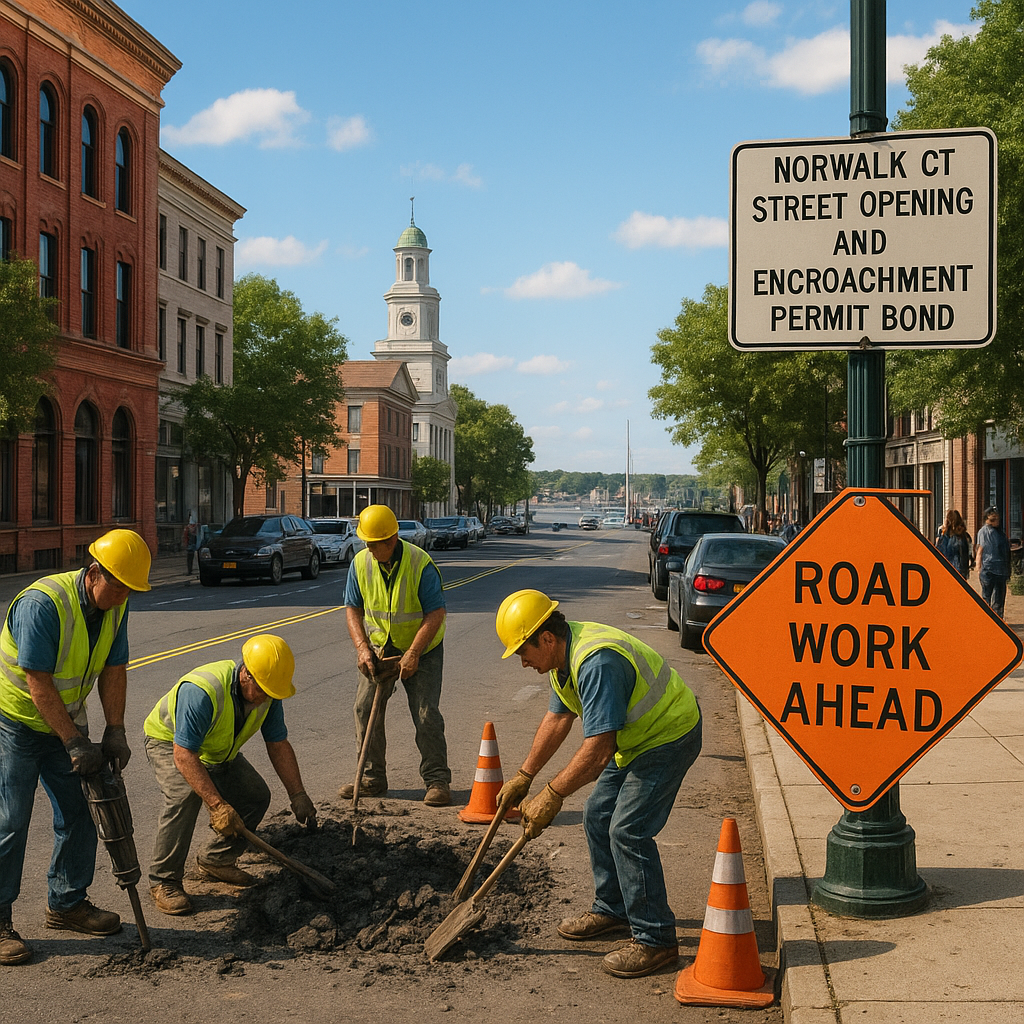
bookmark_borderUnderstanding Trumbull CT’s Encroachment and Street Opening Bond Requirements

So, you’re planning a project in Trumbull, Connecticut. Maybe you’re a contractor getting ready to repave a driveway that crosses a sidewalk, or a homeowner who needs to connect a new water line that runs beneath a quiet neighborhood street. You’ve pulled your permits, lined up your crew, and then someone at Town Hall mentions an “encroachment and street opening bond.” Suddenly, you’re scratching your head. What exactly is that, and why do you need one? Don’t worry. You’re not alone. Let’s walk through it together, plain and simple.

What is an Encroachment and Street Opening Bond, Really?

At its core, this bond is a promise. But it’s a promise with financial teeth. Think of it like a security deposit you might give a landlord when renting a car. The rental company trusts you’ll bring the car back in good shape, but they hold a little money just in case. Here, the Town of Trumbull is the one handing you the keys—specifically, the keys to their public property. If your work involves cutting into a town street, sidewalk, or even a tree belt, you’re encroaching on public land. The bond guarantees you’ll restore that space to its original condition, or better, once the job is done.

Behind the scenes, this isn’t a pile of cash you hand over and wait to get back. It’s a surety bond, which means three parties are involved: you (the contractor or homeowner), the town, and a bonding company. The bonding company essentially vouches for you. If you fail to patch that road properly or leave a dangerous ditch behind, the town can make a claim on the bond to pay for fixing it. It’s a safety net that protects every resident who drives, walks, or cycles through Trumbull.

Why Does Trumbull, CT Require This Bond?

Towns don’t just ask for paperwork to make your life difficult—though it can feel that way some mornings. Trumbull’s streets, curbs, and sidewalks belong to everyone. When a private party digs them up, there’s a real risk of shoddy repairs, unexpected settlement, or even just forgetting to repaint the crosswalk lines. The bond requirement puts a financial motivator in place. It says, “We’re letting you use our shared space, and we trust you’ll leave it as you found it.”

Imagine your neighbor gets a new sewer line installed, and the contractor fills the trench but rushes the paving. Six months later, that patch sinks into a crater that swallows a car tire. Without a bond, the town might have to spend taxpayer dollars to fix it. With the bond, there’s a dedicated pot of money available to step in and make things right. It keeps the burden off the community and squarely on the shoulders of the people doing the work.

Who Actually Needs One?

This requirement pops up more often than you’d think. It’s not just for massive construction companies. You might need a Trumbull street opening bond if you are:

  • Installing or repairing a driveway approach that crosses a town sidewalk.
  • Tapping into a public water or sewer main for a new connection.
  • Running underground electrical or gas lines beneath a road.
  • Opening the street to repair a private drainage issue.
  • Working on landscaping that disturbs the public right-of-way, like grading near a curb.

In short, if a shovel, backhoe, or saw cuts into any surface owned by the Town of Trumbull, you’re almost certainly in bond territory. The engineering or public works department will let you know during the permit process, but it’s wise to plan ahead. Nobody likes a surprise delay when the machines are already on site.

How Does the Bonding Process Work?

Getting an encroachment bond isn’t as daunting as it sounds. You won’t have to decipher legal jargon alone. Let’s break it down into bite-sized steps.

Step 1: Determine Your Bond Amount

The town will calculate how much the bond needs to cover. They look at the size of the excavation, the type of road, and the estimated cost of a professional repair. It’s not a random number. The goal is to have enough funds to fully restore the public area if you disappear overnight. A small utility cut might require a $5,000 bond, while a large street opening could push that figure much higher.

Step 2: Secure the Bond from a Surety Company

You don’t need to freeze your own cash. Instead, you purchase a bond through a licensed surety agent, much like buying an insurance policy. The premium you pay is a small percentage of the total bond amount—often just 1% to 3% for applicants with decent credit. The surety company then issues the bond form. You’ll bring that official document back to the town as part of your permit package.

Step 3: Complete Your Work with Care

Now for the important part. You perform the street opening or encroachment exactly as permitted. Follow all of Trumbull’s specifications for backfilling, compaction, and temporary patching. Don’t cut corners. The town will likely inspect your work at various stages, so open communication is your friend.

Step 4: The Release Period

After you finish, the town doesn’t cancel the bond immediately. There’s typically a waiting period—often one year, sometimes two—to see how the repair holds up through freeze-thaw cycles and regular traffic. If everything remains solid and nothing sinks or cracks, the bond is released. At that point, your obligation ends, and you can close the book on the project.

How Much Does a Trumbull Street Opening Bond Cost?

Let’s talk dollars and cents. You’re not writing a check for the full bond amount. The actual out-of-pocket cost is the premium. For example, if the town requires a $10,000 bond and your rate is 2%, you’ll pay just $200. That’s a small price for peace of mind. Some contractors build this cost right into their bid to a homeowner, so you might never even see it as a separate line item.

Keep in mind that credit history can tweak the premium. Strong credit means lower rates. Even with some dings on your credit, special programs exist to help you get bonded. The key is working with a surety professional who understands Connecticut municipal requirements. They can shop around so you don’t overpay.

What Happens If the Repair Fails?

Nobody wants a bond claim, but life happens. Maybe a subcontractor used the wrong soil mix. Perhaps a brutal winter opened up a pothole the size of a pizza box. If the town inspects and finds the restoration wanting, they’ll first give you a chance to fix it yourself. That’s always the best route. It preserves your reputation and avoids a formal claim.

If you can’t or won’t make the repair, the town will call on the bond. The surety company pays the town the cost to hire another contractor. Then the surety comes back to you for reimbursement. In this way, the bond is not insurance for you—it’s protection for Trumbull. The financial responsibility ultimately lands in your lap, so doing the job right the first time is the smartest move.

Tips for a Smooth Bonding Experience in Trumbull

A little preparation goes a long way. Here’s how to keep your project on track and your blood pressure low.

  • Talk to the town early. Before you start digging, visit the Trumbull Engineering Department. Ask about their specific bond form and current requirements. Regulations can shift, and you want the latest info.
  • Line up your bond before the permit. The bond is often a prerequisite. Having it ready shows you’re serious and keeps your timeline moving.
  • Follow the specs to the letter. Trumbull publishes standards for street openings, from the depth of gravel base to the type of asphalt. Print them. Live by them. A small detail skipped today can become a big headache during the release inspection.
  • Take “before” photos. Document the pre-existing condition of the sidewalk, curb, and road. If a crack was already there, you’ll have proof it wasn’t your fault. This simple habit has saved countless contractors from unfair blame.
  • Keep the bond active until it’s formally released. Don’t just assume the clock ran out. File the necessary paperwork with the town when the maintenance period ends. An expired bond that wasn’t officially released can still cause confusion down the line.

Seeing the Bigger Picture

It’s easy to view bonds as another layer of bureaucratic red tape. But step back for a moment. This requirement is part of what keeps Trumbull’s neighborhoods safe, walkable, and attractive. Every time a street opening is repaired correctly, with proper compaction and matching pavement, the whole community benefits. No potholes surprising cyclists. No sunken trenches rattling your car’s alignment. The encroachment bond drives accountability, and that’s something we can all appreciate.

Think of it as a team effort. The town sets the rules to protect public property. You bring the skills to do the work. The surety company stands behind your promise. The residents get smooth roads and safe sidewalks. When all three pieces click, even a messy construction project can have a tidy ending.

Ready to Start Your Project?

Whether you’re a contractor bidding on a Trumbull job or a homeowner finally tackling that drainage fix, don’t let the bond requirement intimidate you. It’s a well-oiled part of doing business in Connecticut. Grab the specs, crunch the bond cost into your budget, and move forward with confidence. A town that cares about its infrastructure is a town that will be around for generations—and your careful work, backed by a solid bond, will play a small but meaningful role in that story.

And if you’re still unsure where to begin, a quick call to a local surety bond agency can clear up any fog. They’ve walked hundreds of folks through this exact process. You’ll be on the other side with a permit in hand, a shovel in the ground, and a much clearer understanding of what those words “encroachment bond” actually mean.

bookmark_borderUnderstanding Connecticut Alcohol Distributor Tax Bonds for Compliance and Success

If you’re launching or running a business that moves beer, wine, or spirits across Connecticut, you already know the rules can feel like a maze. One piece of that puzzle that tends to trip people up is the Connecticut Alcoholic Beverage Distributor Tax Bond. Maybe the Department of Revenue Services listed it as a requirement for your license, or you heard another distributor mention it at a trade event. Either way, let’s strip away the confusion and talk about what this bond actually does, why it exists, and how you can secure yours without a headache.

What Is a Connecticut Alcoholic Beverage Distributor Tax Bond?

Think of this bond as a promise you make to the state of Connecticut. It’s not insurance for your business—it’s a three-party safety net. The three parties are your distribution company (the principal), the state’s Department of Revenue Services (the obligee), and a surety company (the one backing the bond). When you buy the bond, the surety company is telling Connecticut, “We trust this distributor to pay their alcohol and liquor taxes on time. If they don’t, we will cover the bill up to the bond amount.”

A simpler way to see it? Picture renting an apartment. You give the landlord a security deposit that promises you’ll pay rent and not trash the place. The tax bond is your security deposit with the state, guaranteeing you’ll remit every dollar of excise tax you collect from retailers.
Why Does Connecticut Demand This Bond in the First Place?

Alcohol is a heavily regulated product, and taxes on beer, wine, and spirits generate serious revenue for public services. As a distributor, you sit in the middle of the supply chain. When you sell to bars, restaurants, and package stores, you’re often collecting excise taxes that really belong to the state. Connecticut wants to make sure that money doesn’t accidentally get used for a new delivery truck or a slow-season cash-flow crunch. The bond protects public funds by giving the state a clear way to recover unpaid taxes without chasing you through a lengthy court process.

It also levels the playing field. Honest distributors who handle their tax obligations shouldn’t be undercut by someone who skips out on what they owe. The bond requirement helps keep everyone accountable.

Who Needs to File This Bond?

If you hold, or are applying for, a distributor license that lets you sell alcoholic beverages at wholesale in Connecticut, you’re almost certainly looking at a bond mandate. This applies whether your portfolio is full of local craft IPAs, imported wines, or major-brand spirits. The Connecticut Department of Revenue Services (DRS) is the agency that sets the specific amount and checks that you stay bonded year after year.

You might be a large operation with a warehouse in Bridgeport, or a small niche distributor delivering organic wine to a handful of restaurants in the Quiet Corner. The requirement stays the same: you need an active alcoholic beverage distributor tax bond on file to keep your license in good standing.

How Does the Bond Work in the Real World?

Let’s walk through a practical example. Imagine you run a craft spirits distribution company. Every month you collect tens of thousands of dollars in liquor taxes from the retailers you supply. The law says that money must be forwarded to the DRS on a set schedule. Now imagine a sudden downturn, and you fall behind. If those unpaid taxes pile up, the DRS can file a claim against your surety bond.

At that point, the surety company will investigate the claim. If it’s valid, the surety writes a check to the state for the owed amount, up to the full penalty of the bond. Here’s the part too many folks misunderstand: the surety isn’t giving you a free pass. After they pay the state, they will come to you for every cent they covered, plus any legal fees. You signed an indemnity agreement that makes you personally and corporately responsible for reimbursing the surety. So while the bond protects the state, it does not protect your business from financial loss.

Bond Amounts and What You’ll Actually Pay

The required bond amount isn’t a one-size-fits-all number. The DRS generally sets your bond based on your expected tax liability. For some distributors, that might mean a $10,000 bond. For high-volume operations, the required amount could be $50,000, $100,000, or even more. Always check your official licensing instructions to know your exact figure.

The good news? You don’t need to fork over the full bond amount in cash. You pay a small percentage, called the bond premium. For applicants with solid credit, that premium usually lands between 1% and 3% of the total bond amount. So on a $50,000 bond, your out-of-pocket cost might be as little as $500 to $1,500 for a full year of coverage. If your credit has some bumps, you can still get bonded, but the premium will be higher. Surety companies specialize in working with all kinds of credit profiles, so don’t assume you’re stuck.

How to Secure Your Connecticut Distributor Tax Bond

Obtaining the bond doesn’t have to be a weeks-long ordeal. Follow a clear path and you’ll have the paperwork ready faster than you think.

  • Confirm your required bond amount with the DRS. Your license application or renewal notice will spell out exactly what you need. Never guess—an incorrect amount just leads to delays.
  • Reach out to a reliable surety bond agency. Look for professionals who understand Connecticut’s alcohol tax bonds specifically. They’ll ask a few basic questions about your business and credit history.
  • Complete a short application. This often includes a soft credit check for the owners. The process is usually quick, especially if you’ve kept your financial house in order.
  • Review your quote and pay the premium. Once you accept the rate, the agency issues your bond and sends you the necessary documents.
  • File the bond with the DRS. Keep a copy for your records and make a note of the expiration date so you don’t miss a renewal.

Pitfalls That Can Trip Up Even Experienced Distributors

Even sharp business owners can stumble into trouble around tax bonds. Watch out for these all-too-common missteps.

Letting the bond lapse. Your bond runs for a set term, typically one year. If you forget to renew and the old bond expires, the state considers you non-compliant. That can put your license at risk, even if you’ve never missed a tax payment.

Underestimating your tax volume. If your business explodes and you suddenly owe far more in taxes than your bond covers, the state might ask you to increase the bond amount mid-cycle. Don’t ignore that request—it can lead to a forced shutdown.

Treating the bond like a safety cushion. Remember, the bond doesn’t pay off your tax debt. It creates a debt from you to the surety company. A claim can spiral into collection actions, higher future premiums, and a black mark that makes it tough to get bonded again.

Common Questions About Connecticut Alcohol Distributor Tax Bonds

Is this bond the same thing as liquor liability insurance?

Not at all. Insurance protects your business from unexpected losses like property damage or lawsuits. This bond guarantees your tax obligations to the state. You pay for insurance and hope you never use it. With a bond, you definitely don’t want a claim, because you’d have to pay the surety back in full.

Can I get a bond if my credit isn’t great?

Yes. Surety providers offer programs for people with challenged credit, slow pays, or even past bankruptcies. The premium will be higher—maybe 5% to 10% of the bond amount—but you can still meet the state’s requirement while you work on rebuilding your financial profile.

What happens if I operate without the required bond?

The state takes this seriously. You could face immediate suspension of your distributor license, fines, and a halt to your operations. Selling alcohol without proper licensing and bonding opens the door to legal action that could permanently close your business. It’s simply not worth the gamble.

How long does it take to get the bond issued?

Many distributors receive a quote within a few hours and can have the bond in hand the same day. For more complex situations or very high bond amounts, underwriting might take a day or two. The key is to start early so your license application doesn’t get jammed up.

Positioning Your Distribution Business for Long-Term Success

At first glance, a Connecticut Alcoholic Beverage Distributor Tax Bond might look like just another bureaucratic hoop. But if you flip the perspective, it’s actually a mark of credibility. Holding a bond tells retailers, suppliers, and the state that you’re a professional operation that takes its obligations seriously. It shows you’re not cutting corners, and it helps you build trust in a competitive industry.

So, whether you’re pulling your first keg shipment out of a new warehouse or you’ve been moving cases of merlot for twenty years, treat your tax bond as an essential gear in your business engine. Keep it active, stay on top of your excise tax payments, and pair up with a surety expert who speaks your language. That way, you can spend less time worrying about compliance and more time growing the list of accounts that love what you deliver.

bookmark_borderA Comprehensive Guide to Delaware Insurance Broker Bonds

Have you ever wondered what stands between you and a trusted insurance professional in Delaware? It’s not just a handshake or a framed license on the wall. Behind the scenes, a little-known safety net called a surety bond works hard to protect you. If you’re an aspiring insurance broker, or just a curious consumer, understanding the Delaware Insurance Broker Bond is like learning the secret ingredient that keeps the insurance world honest and fair.

This guide will walk you through everything you need to know in plain, simple language. No legal mumbo-jumbo, no confusing jargon. Think of it as a friendly chat over coffee about a topic that matters more than you might think.

So, What Exactly Is a Delaware Insurance Broker Bond?

Imagine you’re hiring a contractor to remodel your kitchen. You’d probably want some kind of guarantee that the job gets done right, correct? A surety bond works the same way, but for insurance brokers. A Delaware Insurance Broker Bond is a three-party agreement that promises the broker will follow all state rules and treat customers ethically.
Here’s the simple breakdown:

  • The Principal – That’s the insurance broker who needs the bond.
  • The Obligee – The State of Delaware, which requires the bond to protect the public.
  • The Surety – The company that backs the bond financially if something goes wrong.

If a broker breaks the law or harms a client financially, a claim can be made against the bond. The surety pays out up to the bond’s limit, but here’s the key: the broker has to pay that money back. This isn’t insurance for the broker. It’s a promise to consumers that they have a financial backup plan.

Why Does the State of Delaware Require This Bond?

It all comes down to one word: trust. Insurance brokers handle sensitive personal data and large sums of premium money. The Delaware Department of Insurance wants to make sure that anyone operating in this field plays by a strict code of conduct. The bond creates a layer of accountability that goes beyond the broker’s own word.

Think of the bond as a financial referee. If a broker misappropriates funds, fails to forward premiums to the correct insurance company, or commits fraud, the bond steps in to make things right for the harmed party. Without this requirement, consumers would be left to chase after a dishonest professional with little hope of recovering their money.

Who Needs a Delaware Insurance Broker Bond?

Not every insurance professional needs one. This specific bond applies to insurance brokers—not agents. So what’s the difference? It’s important. An insurance agent typically represents one or more insurance companies and sells their products. A broker, on the other hand, represents you, the client. Brokers shop around among multiple insurers to find the best policy for your needs. Because of this independent role, Delaware holds brokers to a separate licensing standard.
If you’re applying for an insurance broker license in Delaware, you’ll almost certainly need to secure this bond before your license is issued. The exact amount may vary based on your specific license type, so always check directly with the Delaware Department of Insurance for the most current requirements.

How Much Does the Bond Cost?

This is where people often get pleasantly surprised. You don’t need to pay the full bond amount upfront. For example, if the state requires a $10,000 bond, you won’t have to shell out $10,000 of your own cash. You’ll pay a small percentage, called a bond premium.

Several factors influence your premium:

  • Your credit score – Better credit usually means a lower rate.
  • Your financial history – A clean background helps.
  • Your experience in the industry – Established brokers often get favored rates.

For many applicants with good credit, the annual premium can be as low as 1% to 3% of the total bond amount. So that $10,000 bond might only cost you $100 to $300 per year. It’s a small price to pay for the ability to legally operate and build instant trust with clients.

How to Get Your Delaware Insurance Broker Bond in Three Simple Steps

The process isn’t complicated. You can typically complete it online without leaving your desk. Here’s how it works:

Step 1: Apply with a Reputable Surety Bond Company

Look for a provider that specializes in surety bonds for insurance professionals. They’ll understand Delaware’s specific requirements and guide you through the paperwork. You’ll provide basic business and personal details.

Step 2: Get a Quick Quote and Pay the Premium

Once you apply, the surety reviews your information. In many cases, you can receive a quote within minutes. If you accept it, you’ll pay the premium and the bond is issued. Fast, right?

Step 3: File the Bond with the State

After you pay, you’ll receive the official bond form. This isn’t something you just stash in a drawer. You must submit it to the Delaware Department of Insurance along with your license application. The state needs the original document to make your license active. Your surety company often helps by sending the bond directly to the state on your behalf.

What Happens If a Claim Is Filed Against Your Bond?

Let’s tackle the scenario nobody wants to imagine. A client believes you’ve acted unethically and files a claim on your bond. What unfolds next can be stressful, but knowing the process helps.

First, the surety company investigates. They won’t pay out just because someone files a complaint. They look for evidence. If the claim is valid and you did violate state regulations or cause financial harm, the surety will pay the harmed party up to the bond limit. However—and this is crucial—you are legally obligated to reimburse every penny the surety paid out. Unlike insurance, a bond is a form of credit extended to you. A paid claim can also make it difficult and more expensive to get bonded in the future.

This is why operating ethically isn’t just good karma; it’s a financial survival skill. Avoiding claims protects your wallet and your professional reputation.

Keeping Your Bond Active: Renewals and Changes

A Delaware Insurance Broker Bond isn’t a one-and-done deal. It usually needs to be renewed annually. Your surety will send a renewal notice before the expiration date. Pay the premium on time, and your bond stays live without a coverage gap. Let it lapse, and your broker license could be suspended.

What if your business details change, like your address or legal name? Notify your surety company right away. They’ll update the bond so it remains accurate for state records.

Common Misunderstandings About Insurance Broker Bonds

Let’s clear up a few myths so you’re never caught off guard:

  • “The bond protects me, the broker.” Not quite. It protects the public and the state. If a claim pays out, you must repay the surety. It’s a protection for your clients, not a liability shield for you.
  • “A bond is the same as errors and omissions insurance.” Definitely not. E&O insurance covers professional mistakes and negligence, and it pays out without requiring you to repay the insurer. A bond is about legal compliance and financial harm from unlawful acts. Smart brokers carry both.
  • “Once I get the bond, I can practice anywhere.” Bonds are state-specific. A Delaware bond only satisfies Delaware requirements. If you expand to other states, you’ll need to secure additional bonds per their rules.

Why This Bond Should Matter to Every Delawarean

You might not be a broker. You might just be someone shopping for the right health, auto, or business insurance. The Delaware Insurance Broker Bond is your quiet ally. It means that the person analyzing your risk and recommending coverage isn’t operating on blind trust alone. There’s a financial consequence for them if they break the rules.

Next time you sit down with a broker, you can ask yourself: “Does this person carry their bond?” That simple question demonstrates you’re an informed consumer who values transparency. And it reminds the broker that their conduct is backed by more than just words.

Final Thoughts: Building a Career on Solid Ground

For insurance brokers, the bond is the first brick in the foundation of your practice. It signals to Delaware that you’re serious, credible, and ready to serve the public with integrity. The cost is minimal compared to the doors it opens. The process is streamlined, and the peace of mind it offers your clients is priceless.

Whether you’re launching your career or renewing an existing license, treat your Delaware Insurance Broker Bond as more than a checkbox. See it as a badge of honor—a promise that you’ll do right by the people who trust you with their financial futures.

Got questions specific to your situation? Always reach out to the Delaware Department of Insurance or a licensed surety specialist. They’re there to help you navigate the requirements with confidence.

bookmark_borderEnsuring Compliance: The Importance of Plumbers Bonds in Seaford, DE

If you’re a plumber working in Seaford, Delaware, you’ve probably heard the term “plumber’s bond” thrown around. Maybe you’ve seen it on a permit application, or a city official mentioned it during a licensing chat. At first glance, it might sound like just another piece of paperwork—another hoop to jump through. But understanding this bond is key to running a smooth, hassle-free plumbing business in the city. Let’s unpack what a Seaford City DE single plumbers bond really means, why it’s required, and how it quietly protects everyone involved.

What Exactly Is a Plumber’s Bond?

Think of a plumber’s bond as a financial promise in three directions. It’s not insurance for your tools or your truck. Instead, it’s a guarantee the city requires to make sure you’ll follow the local plumbing codes and complete work responsibly. If something goes wrong—say, a job is left in a dangerous state or codes are ignored—the bond provides a way to make things right financially.

This type of bond is often called a “single bond” or “compliance bond.” The “single” part simply means it covers one specific plumber or business for all their work in the city, rather than requiring a separate bond for every individual job. That saves time, paperwork, and headaches. You pay a premium, the surety company backs you, and the city of Seaford gets a layer of protection.

Why Seaford, DE Requires Plumbers Bonds

Seaford is a growing community with a mix of historic homes, new developments, and commercial properties. With that growth comes a lot of plumbing work—repairs, remodels, new construction. City officials want to keep residents and business owners safe. A plumbing mishap isn’t just an inconvenience; it can lead to water damage, mold, contamination, or even structural issues. The city uses the bond requirement to weed out unqualified operators and to establish a clear financial backup plan.

When you pull a permit in Seaford, you’re agreeing to play by the rules. The bond is your skin in the game. If you fail to meet code, the city can step in and make a claim against that bond to cover the cost of corrections. This keeps the burden off taxpayers and places responsibility squarely on the professional who did the work.

Single Bond vs. Blanket Bond: Why It Matters

Plumbers sometimes confuse the “City of Seaford DE Plumbers Single Bond” with other bonding options. A single bond typically applies to one license holder within one jurisdiction. You might come across the term “compliance only” bond too. That means the bond’s sole purpose is to ensure regulatory compliance—not to cover things like worker injuries or property damage (those fall under general liability insurance).

In contrast, a blanket bond might cover multiple employees or multiple locations under one policy. But for a small or independent plumbing shop in Seaford, the single bond is the most common path. It’s straightforward: one bond, one plumber, one city. Easy to understand, easy to manage.

Who Needs This Bond?

Not everyone with a wrench needs one. In Seaford, master plumbers, journeyman plumbers, and plumbing contractors typically need to post a bond before they can obtain or renew their business license and pull permits. The exact amount can vary, so always check the current city requirements. Some municipalities set the bond at $5,000, others at $10,000. Seaford’s specific amount is small enough to be affordable but large enough to motivate compliance. Your premium—the amount you pay—is only a fraction of that total bond coverage.

How a Compliance Bond Shields Homeowners and Businesses

Picture this: you hire a plumber to repipe your bathroom. They finish the work, you pay them, and a week later a fitting behind the wall bursts. You call them back, but their phone is disconnected. Suddenly you’re staring at a soaked drywall and a repair bill that far exceeds your original plumbing cost. If that plumber was bonded and the city can prove the work didn’t meet code, your story might have a much happier ending. The bond can be used to compensate you for the damages.

While nobody wants to imagine that scenario, it happens. Bonds create trust between strangers. They’re the reason a homeowner can feel more confident hiring a licensed, bonded professional over a random handyman who “knows a guy.”

The City’s Perspective: Keeping Quality High

Seaford’s building department takes its inspection process seriously. The bond fits into a larger puzzle: licensing, insurance, continuing education, and on-site inspections. Together, these tools help the city maintain a standard. If contractors faced no financial consequence for cutting corners, corners would get cut far more often. The bond is a quiet enforcer—most plumbers never have a claim, but just knowing it’s there shapes behavior.

It’s a lot like a security deposit on a rental apartment. You treat the place better because you want your deposit back. The bond works similarly; you follow the rules because you don’t want a claim against your name. And when you have a clean record, renewals are painless.

Common Misconceptions About Plumbers Bonds

Let’s clear the air on a few things. A plumber’s bond is not insurance for your business. If your employee chips a customer’s expensive tile, that’s a job for your liability insurance. The bond steps in when code violations or permit issues arise, and the city gets involved. Also, the bond doesn’t protect the plumber from customer disputes over pricing—it’s strictly a compliance tool.

Another myth: getting bonded is difficult and expensive. Actually, for a plumber with decent credit, a single compliance bond might only cost between $100 and $300 a year. That’s a small price for the credibility and legal access it provides. Surety companies know this is a low-risk product, so they price it accordingly.

What Happens During the Bonding Process?

If you’re applying for the first time, the steps are simple. You’ll contact a surety bond agency or an insurance broker that handles contractor bonds. Provide basic information about your business, your license details, and possibly a credit check. The agency will quote you a premium based on the bond amount Seaford requires. Once you pay, you receive the bond paperwork to file with the city.

Pro tip: Don’t wait until the last minute. Processing can sometimes take a day or two. Starting early means you won’t hold up a permit on a project you’re itching to begin. Keep a digital copy of the bond, and place the original somewhere safe—you’ll need to reference the bond number on permit applications.

Renewal and Continuous Compliance

Most plumbers bonds run for a one-year term. You’ll get a renewal notice from your surety agency. Pay the premium, and your coverage continues seamlessly. If you let it lapse, the city may suspend your ability to pull permits immediately. That means disruption to your projects, your income, and your professional reputation. Set a calendar reminder a month before expiration. It’s a small habit that saves massive headaches.

How a Bond Can Boost Your Plumbing Business

Beyond just meeting legal requirements, the “bonded” label is a marketing advantage. Customers in Seaford are savvy. They read reviews, ask for credentials, and compare quotes. Being able to say “licensed, insured, and bonded” sets you apart from the competition. It signals stability and professionalism. When you hand a potential client your info and mention the bond, you’re telling them, “I stand behind my work so much that the city and a surety company trust me, too.”

Build that trust into your website and social media presence. Add a small “Bonded for Your Protection” badge or mention it in your bio. These little touches help convert curious visitors into paying customers.

Working with a Surety Agent Who Understands Local Needs

Not all bond agencies are created equal. Look for one familiar with Delaware regulations and specifically the City of Seaford’s requirements. A local agent can answer questions like: “Do I need a separate bond for residential and commercial permits?” or “What’s the exact language the city expects on the bond form?” Their insight saves you back-and-forth with city clerks. They’ll make sure your bond is accepted on the first submission.

If you’re a new plumber just starting out, don’t be shy about asking questions. A good agent wants you to succeed and will guide you toward the right product, even if that means referring you to someone else for insurance you might need alongside the bond.

Protecting the Community, One Bond at a Time

Some days, compliance feels like a stack of forms. But step back and see the bigger picture. The plumbers bond is part of Seaford’s commitment to quality growth. Safe plumbing means clean water, proper drainage, and fewer emergencies. That improves property values and quality of life for everyone. Your bond plays a small but vital role in that ecosystem.

So next time you write that premium check, remember you’re not just buying a piece of paper. You’re investing in your business’s credibility, your customers’ peace of mind, and a better-built Seaford.

Frequently Asked Questions About Seaford Plumbers Bonds

Can I use the same bond for multiple cities?

Usually not. Most bonds are jurisdiction-specific. A Seaford bond only satisfies Seaford’s requirement. If you work in Georgetown or Milford, you’ll likely need separate bonds or a statewide solution—check with each city.

What if a claim is filed against my bond?

First, don’t panic. Contact your surety agency immediately. They’ll investigate. If the claim is valid, the surety may pay it out and then seek reimbursement from you. This is why quality work and open communication with clients are so important—they help prevent claims from arising.

Does credit score affect my premium?

Yes, but for small compliance bonds, the impact is usually minimal. Even with less-than-perfect credit, you can often get approved, though your premium might be slightly higher. Specialty programs exist for contractors in tricky situations.

How do I prove I’m bonded to a customer?

You can provide a copy of your bond certificate. Many plumbers keep a laminated copy in their work van or a digital version on their phone. It’s a quick credibility boost during an estimate.

Take the Next Step

Ready to line up your Seaford plumbers bond? Reach out to a reputable surety bond provider today. Gather your license number, business info, and a few minutes of your time. The process is fast, and the peace of mind lasts all year. Compliance doesn’t have to be a chore—it can be a cornerstone of your professional brand. Here’s to your success, and to the continued safety of the homes and businesses you serve across Seaford, Delaware.

bookmark_borderUnderstanding Seaford’s Excavation Contractor Bond and Third-Party Liability

Have you ever seen a crew digging up a street in Seaford, Delaware, and wondered what keeps the whole operation safe for everyone nearby? Deep below the pavement lies a tangled web of utility lines, and one wrong scoop of an excavator bucket can lead to broken gas pipes, snapped water mains, or even a neighbor’s driveway crumbling. That’s where a very specific local safeguard comes into play — the Seaford DE excavation contractor bond. It’s not just paperwork; it’s a promise to protect you, your property, and the community.

What Exactly Is an Excavation Contractor Bond in Seaford?

Think of a surety bond as a three-party safety net. The City of Seaford requires certain contractors to post this bond before they can legally dig, grade, or trench within city limits. It’s different from insurance — while insurance shields the contractor, a bond primarily shields the public and the city from financial harm caused by the contractor’s work. In simple terms, it’s a financial guarantee that the excavator will follow all local rules, do the job properly, and fix any damage they might accidentally cause.

More Than Just a Piece of Paper

When we say “Seaford City DE single excavation company bond,” we’re often referring to a bond specifically tied to one business entity — not a blanket permit covering multiple firms. That single bond follows that contractor on every job they do in the city. So if “Dig Right Excavation” holds the bond, that bond leaps into action whether they’re digging a foundation on High Street or trenching for a sewer line near the Nanticoke River.

Why Third-Party Liability Takes Center Stage

You might have seen the phrase “excavation contractor – 3rd party liability” pop up. What does that really mean? Imagine you live next door to a construction site. The contractor is digging deep to install a new stormwater drain. Suddenly, the trench caves in, and the collapse destabilizes your fence and cracks your driveway. The damage didn’t happen on the contractor’s own property — it spilled over onto yours. That’s third-party damage. The excavation bond is designed to cover those exact situations, giving you a direct path to compensation without having to sue the contractor out of your own pocket.

Making Sense of “Third Party” With a Simple Analogy

Consider a neighborhood baseball game. The batter (the contractor) swings and accidentally smacks a ball through the windshield of a car parked across the street. The car owner (the third party) didn’t sign up for that risk. The bond acts like a pre-funded promise to pay for that windshield, so the homeowner doesn’t have to chase down the batter or hope his personal savings will cover it. In excavation, the stakes are higher — broken utilities, sinkholes, or even foundation damage — but the principle remains the same.

How Does a Seaford Excavation Bond Actually Work?

Let’s walk through a real-world scenario. XYZ Excavators secures a City Seaford, Delaware excavation bond for $25,000, as required by the city. While digging a trench for a new water line, the crew accidentally severs a fiber optic cable, knocking out internet service for an entire block. The telecommunication company files a claim against the bond, documenting the damage and repair costs. The surety company investigates. If the claim is valid, the surety pays the harmed party up to the full bond amount. Then, the surety turns to XYZ Excavators and says, “We covered your mess; now you need to pay us back every penny.” That’s right — this isn’t a free pass. The contractor remains fully responsible for the costs.

Why the City Requires This Bond

Seaford’s streets are a delicate web of aging infrastructure. A small miscalculation can rupture a gas main, flood a basement, or send mud sliding into a storm drain. Without a bond, the city — and ultimately taxpayers — might end up footing the bill for emergency repairs. By mandating a Seaford City DE single excavation company bond, the local government shifts the financial risk back where it belongs: on the contractor who is performing the work. It also creates a powerful incentive for contractors to call 811, scan for utilities, and shore up trenches properly.

Who Needs to Carry This Bond?

Not every person who picks up a shovel needs a bond. Usually, the requirement kicks in for professional excavating, grading, trenching, or earthmoving operations that involve heavy machinery. If you’re a homeowner planting a bush, you’re in the clear. But if you hire a company to dig out a basement, install a septic system, or trench for electrical lines within the city of Seaford, that company must present a valid bond. Before any permit is approved, city officials will often ask for proof of both the bond and proper insurance.

  • Residential excavation contractors doing foundation work
  • Commercial grading companies preparing sites
  • Utility trenching subcontractors
  • Landscape firms performing major earthmoving
  • Demolition crews where digging is involved

The Cost of a Seaford Excavation Bond (It’s Simpler Than You Think)

Contractors frequently worry that bonds will drain their operating budget. In reality, the price is quite manageable. The total bond amount is set by the city — commonly $10,000, $25,000, or higher, depending on the scope of typical work. However, the contractor only pays a small percentage of that total, known as the bond premium. For a contractor with solid credit, the premium might be just 1% to 3% of the bond amount annually. So a $25,000 bond could cost as little as $250 to $750 for a year of coverage. If your credit has a few dings, you’ll still likely qualify, though the premium may be slightly higher. The key takeaway? This is not a massive upfront expense — it’s an affordable license to operate safely and legally in Seaford.

Quick Steps to Get Bonded

The process usually takes just a few business days. You’ll provide basic business information and, in many cases, a personal credit check. A surety bond agency with experience in Delaware municipal bonds can match you with the right market. Once approved, you’ll receive a bond form that gets filed with the City of Seaford as part of your permitting packet.

What Happens Without a Bond? The Risks Are Real

Let’s say a contractor skips the bond, perhaps hoping to save a couple hundred dollars. A trench collapse damages a neighbor’s pool, or a severed gas line forces an evacuation of a nearby school. When the city and the injured parties start looking for compensation, the un bonded contractor may face personal lawsuits, business license revocation, and bills that can erase years of hard-earned profit. For a property owner who hired that contractor, the nightmare can be just as bad — you might get dragged into legal disputes, and your project could stall for months. The bond is not a hurdle; it’s a shield for everyone involved.

How Does This Bond Differ From General Liability Insurance?

This is one of the most common points of confusion. General liability insurance protects the contractor against claims of bodily injury or property damage. An excavation bond, meanwhile, guarantees compliance with city regulations and directly covers third-party property damage caused specifically by excavation. The bond creates a streamlined way for harmed parties to get paid without going through lengthy insurance adjuster negotiations or court battles. Think of the bond as the city’s own rapid-response tool, while insurance is the contractor’s broad safety net. Many contractors carry both, but only the bond satisfies Seaford’s municipal excavation requirements.

Benefits That Extend Beyond the Jobsite

A thriving Seaford depends on safe, reliable construction. When contractors operate under a bonded system, property values are protected, and residents feel confident when they see heavy equipment moving into their neighborhood. The bond also levels the playing field — reputable contractors who play by the rules aren’t undercut by those willing to take shortcuts. In a growing city like Seaford, Delaware, where new homes and businesses continue to take shape, this bond quietly strengthens the entire community fabric.

Frequently Heard Questions, Answered Plainly

Is the bond the same as a permit?

No. The permit gives you permission to do the work. The bond gives the city a financial promise that you’ll do it correctly and fix any damage. You typically can’t get the permit without the bond.

Can a claim come from a homeowner, not just the city?

Absolutely. Any third party who suffers property damage because of your excavation work can file a claim. That includes neighbors, utility companies, and business owners.

Does a Seaford DE excavation contractor bond cover injuries?

Bodily injury claims are generally handled by workers’ compensation or general liability insurance. The bond focuses on property damage and compliance with city codes, though always check the specific bond language.

Protecting Your Project, Your Pocket, and Your Peace

Whether you’re a contractor looking to expand your business in Sussex County or a homeowner considering a backyard addition, understanding the Seaford excavation bond and third-party liability gives you a huge advantage. It turns a confusing mandate into a clear layer of protection. The next time you see a track hoe tearing into the earth on a Seaford street, you’ll know there’s more holding that project together than just steel and soil — there’s a solid financial promise keeping everyone safe.

If you need help navigating the bonding process or simply want to chat about local requirements, reaching out to a surety professional familiar with Delaware city bonds is the easiest first step. After all, a little knowledge about excavation bonds can save you a mountain of trouble down the road.

bookmark_borderUnderstanding Delaware Security Alarm Business Bond Requirements

What Exactly Is a Delaware Security Alarm Business Bond?

If you run a security alarm company in the First State, you have probably heard the term “Delaware Security Alarm Business Bond” more than once. But what is it really? Think of it as a three-way safety net. A surety bond involves your alarm business (the principal), the State of Delaware (the obligee), and a surety company. The bond is a promise that your business will follow all state laws, honor every client contract, and treat customers fairly. If you slip up and cause financial harm, the bond steps in to make things right.

Unlike insurance, which protects your business, this bond protects the public and the state. You pay a premium to the surety company, and in return they vouch for your professionalism. If a valid claim is paid out, you must repay the surety. So while it opens doors, it also demands accountability. In Delaware, this bond is not a luxury—it is a licensing requirement for many security agencies offering alarm installation, monitoring, or service.

Why Does the State of Delaware Require This Bond?

Delaware takes consumer protection seriously. When a homeowner or business hires a security alarm company, they trust that company with their safety and property. The state mandates the DE Security Alarm Business Bond to create a layer of financial protection. It ensures that alarm contractors operate ethically, adhere to advertising rules, complete projects as promised, and do not engage in fraudulent or deceptive practices.

Without this bond, a poorly run alarm business could leave customers with broken systems, unfinished work, and no easy way to recover losses. The bond fills that gap. It also helps maintain a fair marketplace. Reputable alarm agencies support the requirement because it weeds out bad actors and raises the bar for everyone. So while the paperwork might feel like a hoop to jump through, it is really a badge of trust that tells customers you stand behind your work.

Who Needs a DE Security Alarm Business Bond?

The simple answer: any business that offers security alarm system services in Delaware and needs a state license. This covers companies involved in burglar alarms, fire alarms, access control systems, video surveillance, and monitoring centers. Whether you are a one-person operation just starting out or a large security agency with dozens of technicians, the bonding requirement applies to you.

More specifically, the Delaware Division of Professional Regulation oversees alarm business licensing. If your company designs, installs, services, maintains, monitors, or sells alarm systems to the public, you must file a surety bond. This applies to new license applications and renewal cycles. Even if your business is based outside of Delaware but you work on projects inside the state, you still need to meet the local bond requirement. In short, if you touch alarm equipment for a client in Delaware, do not skip this step.

How Much Does the Bond Cost, and What Determines the Price?

Let’s clear up a common misunderstanding. The required bond amount set by the State of Delaware is typically $10,000. That does not mean you pay ten thousand dollars out of pocket. You pay a premium, which is a small fraction of that total. Most alarm business owners pay between 1% and 5% of the bond amount if they have solid credit. That could mean just $100 to $500 per year.

Several factors shape your premium. The surety company looks at your personal credit score, business financial history, years of experience, and sometimes even your licensing track record. A clean background and good credit will unlock the lowest rates. If your credit is less than perfect, you are not out of luck. Many surety providers offer programs that cover higher-risk applicants, though the premium may climb to 8–15%. The bond usually runs for a one-year term, and you must renew it annually or whenever your license requires. Getting a few quotes is always smart, because prices can vary between bond agencies.

How to Get Your Delaware Alarm Business Bond: A Simple Step-by-Step Guide

Securing your Delaware Security Alarm Business Bond does not have to be a headache. Most agencies make the process fast and digital. Here is a straightforward path:

  • Choose a reputable surety bond agency. Look for a provider that specializes in Delaware alarm business bonds and understands local licensing rules.
  • Complete a short application. You will provide basic business details, ownership information, and possibly your Social Security number for a credit check.
  • Receive your quote and pay the premium. Once approved, you will see your annual cost. Pay online, and the bond is issued quickly.
  • File the bond with the State of Delaware. Your surety will give you the official bond form. Attach it to your license application or renewal paperwork exactly as instructed.
  • Keep a copy for your records. Store the bond document safely. You will need it for future renewals and possibly to show clients.

From start to finish, many business owners complete everything in a single day. The key is not to wait until the last minute, especially if your license is up for renewal.

What Happens If You Operate Without a Bond?

Operating a security alarm business in Delaware without the required bond is a serious misstep. The state can deny your license application or immediately suspend an existing license. You could face fines, legal penalties, and even a permanent mark on your professional record. Beyond the legal trouble, the practical consequences hurt. Without a bond, you cannot sign contracts with clients who check credentials. Trust disappears fast.

Imagine landing a big commercial project only to have the contract pulled because you could not provide proof of bonding. Reputation damage is often harder to repair than the fine itself. Think of the bond as a non-negotiable business expense, just like a contractor’s license or liability insurance. Skipping it is never worth the risk.

Frequently Asked Questions About DE Security Alarm Business Bonds

Is this bond the same as insurance?

No. Insurance protects your business from accidents and losses. A surety bond protects the state and your customers. If a claim happens, you must repay the surety for any payout. It is a guarantee, not a policy that covers your own damages.

Can I still get bonded if my credit is not great?

Yes. Many surety companies work with business owners who have low credit scores or limited financial history. You will likely pay a higher premium, but bonding is still possible. Providing strong business references or proof of industry experience can help.

How long does the bond last?

Most Delaware alarm business bonds are issued for one year. You must renew the bond before it expires to keep your license in good standing. Some agencies offer multi-year options that align with your license cycle, so ask about that convenience.

Does one bond cover multiple business locations?

Typically, a single bond covers your entire licensed entity operating under one business name. If you have separate legal entities or DBAs, the licensing board may require individual bonds. Always confirm with the Delaware Division of Professional Regulation to be safe.

What triggers a bond claim?

A claim can arise if your alarm business breaches a contract, uses deceptive sales tactics, violates state code, or causes a customer financial loss through negligence or misconduct. The state encourages consumers to first seek resolution directly with the business, but the bond is there as a financial backstop when needed.

The Bottom Line: Protecting Your Business and Your Customers

Getting your Delaware Security Alarm Business Bond is about more than checking a box on a license form. It signals to every potential client that you run a trustworthy, professional security agency. The State of Delaware uses this simple tool to create a safer, more reliable marketplace. Yes, there is a small cost involved, but the credibility and peace of mind you gain easily outweigh the expense. When you view the bond as an investment in your company’s reputation, the path forward becomes clear. Secure your bond, keep it active, and grow your alarm business with confidence right here in the First State.

bookmark_borderUnderstanding Delaware Public Adjuster Bond Requirements and Importance

Imagine a storm just rolled through your neighborhood in Wilmington, or a pipe burst in your Dover home. You file an insurance claim, but the settlement offer feels far too low. This is where a professional steps in—a public adjuster. But how do you know you can trust this person with your financial recovery? That’s where the Delaware public adjuster bond comes into play. Whether you’re a homeowner seeking peace of mind or an aspiring adjuster trying to get licensed, understanding this bond is a key part of the puzzle.

What Exactly is a Public Adjuster?

Let’s clear up a common confusion. When you file a claim, your insurance company sends their own adjuster. That person works for the insurer, and their goal is to settle the claim efficiently for the company. A public adjuster, on the other hand, works exclusively for you, the policyholder. They evaluate the damage, decipher the fine print in your policy, and negotiate to maximize your payout.

Because they handle large sums of money and sensitive personal information, states like Delaware don’t just hand out licenses to anyone. They require a safety net—a surety bond. This bond isn’t just paperwork; it’s a promise to act ethically.

Why the State of Delaware Requires a Bond

Think of the bond requirement as a financial flashlight. It shines a light on the adjuster’s professional responsibility. The Delaware Department of Insurance mandates that all public adjusters post a surety bond before they can legally operate. Why? Because in the chaos following a disaster, homeowners are vulnerable. The state wants a quick, reliable way to protect consumers from fraud, misrepresentation, or outright theft of settlement funds.

Without this bond, a dishonest adjuster could pocket a check, provide kickbacks to preferred contractors, or pressure you into accepting a lowball offer. The bond gives you a clear path to recover financial losses without having to navigate a lengthy, expensive lawsuit.

Breaking Down the Delaware Public Adjuster Bond

A lot of people hear “bond” and think “insurance,” but that’s not quite right. A Delaware public adjuster surety bond is a three-way agreement that’s much simpler than it sounds.

The Three Parties Involved

  • The Principal: That’s you, the public adjuster. You’re the one buying the bond and promising to follow state laws.
  • The Obligee: The State of Delaware and the consumers you serve. They are protected by the bond.
  • The Surety: The company that issues the bond and guarantees your performance. They put their money on the line.

Here’s how it works in real life: you do your job perfectly, and the bond just sits there. But if you violate the law or a contract, harming a homeowner, the obligee can file a claim against the bond. The surety investigates. If the claim is valid, the surety pays out to the homeowner up to the full bond amount. Then, you must repay the surety every single penny. It’s not a free pass; it’s a line of credit that protects the public.

The Bond Amount and State Requirements

So, how big is this safety net? Delaware generally requires public adjusters to carry a bond, and a common requirement sits at $20,000. This means the surety can pay out up to that amount to cover damages from your noncompliance. Keep in mind that requirements can shift, and the exact amount might depend on your specific license type or any updates from the Delaware Department of Insurance. Always verify the current mandate when you apply, but $20,000 is a solid benchmark to plan for.

It’s also crucial to understand that this bond is a continuous obligation. You’ll need to renew it as long as you hold your license. Letting it lapse is like letting your driver’s license expire—you can’t legally work until it’s active again, and the state could fine you.

How to Get Your Delaware Public Adjuster Bond

Getting bonded is rarely a headache. The process is straightforward and often happens online in just a few clicks.

  1. Find a reputable surety bond agency. Look for one specializing in license and permit bonds.
  2. Complete a short application. You’ll provide basic business and personal details. The surety will likely run a soft credit check.
  3. Receive your quote. You won’t pay the full $20,000. You only pay a small premium.
  4. Pay the premium and get your bond. The agency issues the bond form, which you file with the State of Delaware along with your license application.

Once you hand that bond to the state, you’re officially meeting your financial responsibility requirement. Then you can focus on helping your clients rebuild.

How Much Does the Bond Cost?

Here’s the part that surprises most new adjusters: you do not need to pay $20,000. The premium is just a tiny fraction. For a DE public adjuster bond, you can expect to pay between 1% and 5% of the total bond amount. For a $20,000 bond, that’s somewhere between $200 and $1,000 annually.

What dictates where you fall in that range? Your personal credit score is the biggest factor. If you have great credit, premiums are minimal. Even if your credit isn’t stellar, specialized surety agencies offer programs for bad credit that can still get you bonded, though the premium will lean toward the higher end. It’s like getting a car loan—better credit, better rate.

What the Bond Means for Consumers Like You

Let’s flip the perspective. If your home is damaged and you’re meeting with a public adjuster, you can ask directly, “Are you bonded in Delaware?” When they say yes, you have an immediate layer of protection.
Imagine you’re entrusting your entire claim settlement to someone. It’s natural to feel anxious. The bond acts as a guarantee that even if something goes terribly wrong—say, the adjuster forges your signature on a release or diverts funds—you won’t be left holding an empty bag. You can file a claim with the surety company and get your money back. It’s like having a security deposit held by a third party, just in case.

The existence of this bond requirement also weeds out bad actors. Someone with a history of fraud will struggle to get bonded, meaning they can’t get a license. That alone raises the bar for the entire profession in the First State.

Common Questions About Public Adjuster Bonds in Delaware

What happens if a claim gets filed against my bond?

First, don’t panic. The surety will investigate thoroughly. If it’s a minor misunderstanding, it might be resolved quickly. If the claim is valid, the surety pays the damaged party. You are then obligated to repay the surety. Think of it as the surety giving you a short-term loan to make things right. This is why it’s so critical to maintain ethical practices every day.

Is the bond the same as errors and omissions (E&O) insurance?

No, and this is a huge point of confusion. The surety bond protects the public. E&O insurance protects you. If a client sues you for making a professional mistake that costs them money, your E&O insurance covers your legal defense and settlement. The bond would cover fraudulent or dishonest acts that break the law. Smart adjusters carry both.

Can I get a Delaware public adjuster bond with bad credit?

Yes, in almost all cases. Surety companies know that people hit rough patches. You might pay a higher premium, possibly 5% to 10% of the bond amount, but bonding is still accessible. Some agencies even offer programs specifically designed to help rebuild credit through responsible bonding.

How long does it take to get bonded?

For a standard application with good credit, you can often get a quote in minutes and your official bond in under 24 hours. Bad credit applications might take a day or two of manual underwriting. Either way, it’s a fast process that won’t hold up your career for long.

Staying Bonded and Licensed: A Final Tip

Once you’ve got your Delaware public adjuster bond, don’t file it away and forget about it. Mark your calendar for the renewal date. A lapse can result in a suspended license, fines, and a damaged professional reputation. Keep your contact information current with both the surety company and the Delaware Department of Insurance.

In the end, this bond is more than just a regulatory hurdle. It’s a public badge of trust. For the adjuster, it’s the foundation of a legitimate business. For the consumer, it’s proof that the state and a financial institution stand behind the adjuster’s promise to serve you fairly. Whether you’re swearing in as a new adjuster or inviting one into your living room after a loss, that small piece of paper represents a very big commitment.

bookmark_borderSecure Your Mortgage Business with Delaware Loan Broker Surety Bonds

So, you’re ready to jump into the world of mortgage brokering in the First State. You’ve got the hustle, the connections, and the drive to help people land their dream homes. But before you can start connecting borrowers with lenders, there’s one crucial piece of paperwork you can’t afford to overlook: the Delaware Mortgage Loan Broker Surety Bond.

If that phrase sounds a little dry or intimidating, don’t worry. Think of this bond not as a boring legal hurdle, but as a badge of trust. It tells your clients and the state of Delaware, “I’m serious about my business, and I’m here to play by the rules.”

Let’s break it all down in plain, everyday language—no jargon, no confusion. By the end, you’ll understand exactly what this bond is, why it matters, and how to get yours without a headache.

What Exactly Is a Mortgage Loan Broker Surety Bond?

Imagine a three-way promise. That’s essentially what a surety bond is. The Delaware mortgage loan broker bond involves three parties:

  • The Principal: That’s you, the mortgage broker. You’re the one required to get the bond.
  • The Obligee: This is the State of Delaware, specifically the Office of the State Bank Commissioner. They require the bond to protect the public.
  • The Surety: The insurance company that issues and backs your bond financially.

Here’s the simplest way to picture it: the bond is a financial safety net. If you, as a broker, break the state’s rules—maybe you engage in fraud, or you mishandle a client’s funds—the bond gives the harmed party a way to recover their losses. It’s not insurance for you; it’s a shield for your customers and the state. In fact, if a claim is paid out, you’re ultimately responsible for paying the surety back every penny.

Why Does Delaware Require This Bond for Mortgage Brokers?

Great question. The state isn’t just piling on extra red tape. They have a very clear goal: keeping the mortgage industry fair and transparent. A mortgage is likely the biggest financial commitment most people will ever make. That’s a lot of vulnerability. The state wants to make sure that brokers handling first and second mortgage loans are doing so ethically and responsibly.

By requiring a surety bond, Delaware creates a layer of accountability. It’s a way of saying, “We trust you to operate legally, but if you don’t, there’s a fund available to make things right for the consumer.” For you, it’s a powerful marketing tool—it instantly signals to potential homebuyers that you’re a vetted, legitimate professional.

Who Needs a Delaware Mortgage Broker Bond?

Not every finance professional in Delaware needs this specific bond. It applies directly to individuals or companies acting as a “mortgage loan broker.” Under Delaware law, a mortgage loan broker is someone who, for a fee, arranges or attempts to arrange a mortgage loan between a borrower and a lender. This includes brokers working with both first mortgages and second mortgage loans.

If you’re facilitating residential mortgage loans on properties in Delaware, you can almost guarantee this bond is a cornerstone of your licensing requirements. The Delaware Office of the State Bank Commissioner is the regulatory body that oversees this. Before your license is issued or renewed, you must show proof that your bond is active. No bond, no license. It’s that simple.

How Much Does the Bond Cost, and What’s the Bond Amount?

Let’s talk numbers—but don’t panic. There’s a common mix-up between the “bond amount” and what you actually pay.

The bond amount is the total coverage limit. For Delaware mortgage loan brokers, the required bond amount is typically $25,000. This is the maximum amount the surety might pay out for valid claims against you. The amount isn’t pulled out of thin air; it’s set by the state to offer meaningful protection.

Your cost, or premium, is just a tiny fraction of that. You’ll pay a small percentage based on a few personal and business factors. For a $25,000 bond, a broker with solid credit might pay as little as $100 to $300 per year. That’s right—you could secure a $25,000 bond for the price of a decent dinner out. If your credit has a few bumps, don’t worry. There are programs for that too, and your cost will still be a manageable percentage. It’s miles away from paying the full amount upfront.

How to Get Your Delaware Mortgage Loan Broker Bond in 3 Easy Steps

The process of getting bonded is surprisingly breezy, especially when you work with a surety bond agency that understands the mortgage industry. You won’t be filling out mountains of confusing forms.

Step 1: Apply Online or Over the Phone

You provide basic information: your name, business details, and Social Security number. This lets the surety run a quick credit check. The whole application might take you five minutes.

Step 2: Get a Quote Instantly

Once submitted, you’ll receive a quote almost immediately. You’ll see the exact premium you’ll pay. No hidden fees, no bait-and-switch.

Step 3: Pay and Print Your Bond

After you pay the premium, the bond is issued. You’ll get an official bond document, usually via email, within minutes. Print it out and file it with your other licensing paperwork for the Delaware Office of the State Bank Commissioner. That’s it—you’re bonded.

What Happens If a Claim Is Filed Against Your Bond?

Let’s address the elephant in the room. Nobody gets a bond expecting a claim. But it’s human nature to wonder, “What if?” Understanding this process actually helps you see the bond’s value.

A claim happens when someone—often a consumer who feels they were wronged—files a complaint with the surety company, alleging you violated the Delaware mortgage broker laws, causing them financial harm. The surety will investigate. This isn’t a rubber stamp. They’ll look at the facts.

If the claim is valid, the surety may pay the harmed party up to the $25,000 bond amount. But here’s the critical part: the surety will then seek full reimbursement from you. This includes any legal fees they paid. Think of the surety bond like a co-signed loan. The surety vouches for you, but if they have to cover your debt, you’re on the hook to pay them back fully. It’s a strong incentive to operate your business with integrity and meticulous care.

Keeping Your Bond Active: Renewals and Staying Compliant

Your Delaware mortgage broker bond isn’t a one-and-done deal. It comes with an active term, usually one year, and must be renewed for as long as you hold your license. Most surety companies will send you renewal reminders, making it easy to pay your premium on time and avoid a lapse in coverage.

A lapse is a serious problem. If your bond expires and you don’t have a new one in place, your license is no longer valid. You can’t legally broker any loans. That could mean lost commissions, a damaged reputation, and possibly fines. Setting a calendar reminder a month before your bond expires is a simple habit that protects your livelihood.

Is This the Same as Errors and Omissions (E&O) Insurance?

This is a major point of confusion, so let’s clear it up. No, they are not the same. Your Delaware mortgage loan broker surety bond is mandated by the state to protect the public from your intentional wrongdoing or regulatory violations. It’s about compliance with the law.

Errors and Omissions (E&O) insurance, on the other hand, is a separate policy that protects you from financial loss due to mistakes, negligence, or failure to perform your professional duties. If a client sues you for giving bad advice that costs them money, E&O insurance would cover your legal defense and settlement. The surety bond would not. Many brokers wisely carry both. The bond gives the state and consumer confidence; E&O gives you peace of mind.

Why This Bond Is Good for Your Business

I know it might feel like an extra expense, but let’s flip the perspective. This bond is an asset. In a market where consumers are increasingly cautious about financial scams, being able to say “I’m bonded” separates you from unlicensed or shady operators. It’s a trust signal that works instantly, whether it’s on your website, your business card, or in your opening conversation with a new client.

Think of it like a restaurant’s health department grade displayed in the window. You want the “A.” A bond says you’ve met the financial and ethical standards to operate. This can be the deciding factor for a first-time homebuyer choosing between you and another broker.

Ready to Lock Down Your Bond and Your Reputation?

Securing your Delaware Mortgage Loan Broker Surety Bond isn’t a monstrous task. It’s a straightforward, affordable step that opens the door to your career in mortgage brokering. From protecting homebuyers during their most vulnerable moments to confirming your stand as a trusted professional, this bond works around the clock.

Don’t let the licensing process stall. Reach out to a specialized surety bond provider, get your free quote in minutes, and walk into the mortgage industry with the confidence that you’re fully compliant and protected. Your future clients are out there dreaming of a new set of keys. Let’s make sure you’re ready to hand them over—the right way.

bookmark_borderUnderstanding the Importance of Delaware Private Security Agency Bonds

What Exactly Is a Delaware Private Investigative & Private Security Agency Bond?

Before we dive into the why and the how, let’s get comfortable with the what. Think of a surety bond as a serious, three-way promise. You’re not just buying a piece of paper. You’re entering a financial guarantee that involves you (the private security agency or private investigator), the State of Delaware, and a surety company.

In simple terms, it’s a pledge that your agency will play by the rules. The bond guarantees you will follow all state laws, regulations, and ethical standards tied to your license. If you break that promise and cause financial harm to a client or the public, the bond is there to cover those losses—up to a set amount. It’s a safety net, but one you must be careful not to fall onto without good reason.

Why Delaware Requires This Bond for Private Investigators and Security Agencies

Imagine hiring someone to guard your business, monitor your property, or dig into sensitive personal matters. You’re handing over an enormous amount of trust. Delaware understands this, which is why the state mandates a license and a surety bond for anyone offering private investigative or private security services. The bond isn’t just paperwork; it’s a loud and clear statement: “We protect consumers.”

The state uses this requirement to filter out bad actors and create a pool of financial accountability. If a security guard steals from a client, or an investigator mishandles confidential information, victims aren’t left empty-handed. The bond steps in to cover damages, giving the public confidence that they’re working with a vetted, responsible professional. Without it, the industry would be a riskier place for everyone.

Who Needs to Get Bonded?

You might think this only applies to a sketchy detective in a noir movie, but the reach is much broader. If you plan to operate any of the following in Delaware, you’ll need this bond:

  • Private security agencies – companies that provide uniformed guards, patrol services, or event security.
  • Private investigative agencies – firms that handle background checks, surveillance, missing persons cases, or fraud investigations.
  • Individual private investigators – solo practitioners who aren’t part of a larger agency still need their own license and bond.
  • Alarm installation and monitoring companies – in many cases, these also fall under the same bonding umbrella if they offer security-related services.

The Delaware Professional Licensing Section oversees these requirements, and they don’t issue a license without proof of a valid bond. So whether you’re a startup patrol company or a seasoned PI, this bond is your ticket to legal operation.

How Much Does a Delaware Private Security Bond Actually Cost?

Let’s clear up a common worry right away. When you hear “$10,000 bond,” you might picture having to set aside ten grand in cash. That’s not how it works. The $10,000 is the penal sum—the maximum amount the surety will pay out on a claim. You only pay a small percentage of that to get covered. This percentage is your premium.

For most applicants with decent credit, the annual premium ranges from $100 to $500. Yes, you can protect your business and satisfy the state for less than the cost of a nice dinner out each month. Here’s what influences your rate:

  • Personal credit score – better credit often means lower premiums.
  • Business financials – established agencies with strong books can snag even better rates.
  • License history – a clean record free of complaints or claims helps immensely.

Even if your credit isn’t perfect, specialized bond providers have programs for nearly everyone. Think of the premium as a subscription fee for the public’s trust and your license.

A Quick Analogy: Renting a Financial Umbrella

If you rent an apartment, you don’t pay the full value of the building. You pay a small monthly rent. The bond premium works the same way. You’re renting the bond’s $10,000 coverage for a year, paying only a fraction of that ultimate promise.

How the Bond Protects the Public (and Your Clients)

Now for the heart of the matter. This isn’t insurance for your agency—it’s a consumer protection tool. Let’s walk through two real-world scenarios.

Scenario 1: The Disappearing Guard. You hire a private security firm to watch your construction site overnight. One of the guards walks off with $4,000 worth of tools. The security company’s contract might limit their liability, but the bond doesn’t. You file a claim against the agency’s surety bond up to its limit and get compensated for your loss.

Scenario 2: The Blabbermouth Investigator. A private investigator is hired to locate a long-lost family member. Instead of handling the information discreetly, they sell the story to a gossip website. The family suffers emotional distress and financial damage. The bond can provide restitution for the breach of confidentiality and violation of state law.

In both cases, the harmed party doesn’t have to rely on the often-shallow pockets of a small business. The surety’s deep pockets become accessible, which motivates agencies to operate ethically. Why? Because claims hit where it hurts—their ability to stay bonded and licensed.

What Happens If a Claim Is Filed Against Your Bond?

This is where many first-time agency owners get nervous. A claim isn’t a black mark you can just ignore. When a client believes you’ve caused them a financial loss due to misconduct or a violation of the Delaware code, they can file a claim with the surety company. Here’s the typical journey:

  1. The investigation: The surety examines the evidence. They don’t just pay out automatically. They’ll look at contracts, state laws, and the specific allegations.
  2. The payout: If the claim is valid, the surety pays the claimant up to the $10,000 bond amount.
  3. The reimbursement: This is crucial. Unlike insurance, the surety will then come to you, the bonded agency, seeking full reimbursement for what they paid out. Yes, you are ultimately responsible.

For this reason, treat the bond as a forced line of credit that you’ll never want to use. A claim can raise your future premiums, make it hard to get a new bond, and jeopardize your license renewal. The best defense is thorough training, solid contracts, and a zero-tolerance policy for unethical behavior.

How to Get Your Delaware Private Investigative and Security Agency Bond

Securing your bond bothers no one when you break it down into simple steps. The whole process often takes minutes online.

  • Step 1: Gather your info. You’ll need your business name, address, and possibly the license number you’ve been assigned (or are applying for). A quick check of your personal credit is standard.
  • Step 2: Apply for a quote. Work with a reputable surety bond agency that knows Delaware’s requirements. You’ll answer a few basic questions and receive a premium quote almost instantly.
  • Step 3: Pay your premium and get active. After payment, your bond form is issued. You’ll send the original bond and the necessary paperwork to the Delaware Professional Licensing Section to finalize your license.
  • Step 4: File and keep a copy. Don’t lose the paperwork. You’ll need to show proof at renewal time.

Simple, right? The key is not waiting until the last minute. Start the bond application as soon as you know you need a license so there’s no gap in your operations.

Common Misconceptions About Surety Bonds

Let’s sweep away a few cobwebs that confuse many new business owners.

  • “It’s the same as insurance.” Absolutely not. Insurance protects your business from accidents and unexpected losses. A bond protects the consumer, and you must pay the surety back if they pay a claim.
  • “Once I pay the premium, I never have to think about it again.” Bonds must be renewed annually. Letting it lapse means your license becomes invalid, and operating without it can lead to fines and closure.
  • “Only huge companies need to bother.” Solo private investigators and tiny guard agencies are subject to the exact same bonding law. Size doesn’t exempt you.
  • “It covers all professional mistakes.” The bond covers violations of law and certain unethical practices, but it’s not a substitute for professional liability (errors & omissions) insurance. Having both is the safest bet.

Maintaining Your Bond and Staying Delaware-Compliant

Your work isn’t finished the moment you hang your bond certificate on the wall. Keeping your bond in good standing is an ongoing responsibility. Here’s your quick checklist for peace of mind:

  • Renew before the expiration date. Mark your calendar at least 30 days early. Premiums can change, but renewals are generally straightforward.
  • Notify your surety of any business changes. Changing your agency name, structure, or address? Let them know. It might require a bond rider or a new bond.
  • Stay compliant with all Delaware regulations. Take continuing education seriously and stay updated on Title 24 changes. A clean record keeps your bond affordable.
  • Keep client expectations crystal clear. Written contracts that outline duties, limitations, and confidentiality terms prevent misunderstandings that bleed into claims.

Falling out of compliance doesn’t just threaten your bank account. It can shutter a business you’ve poured your heart into. A lapse in your bond can suspend your license overnight, leaving you unable to bid on contracts or serve existing clients.

Moving Forward With Confidence

The Delaware Private Investigative & Private Security Agency Bond often feels like another bureaucratic hurdle. But when you understand its purpose, it transforms into something more meaningful: a badge of credibility. You’re telling your clients, “I stand behind my work so firmly that the state and a surety company guarantee my professional conduct.”

Whether you’re just launching your firm or you’re a long-standing agency renewing your license, treat the bond as a cornerstone of your ethical foundation. Get bonded, stay compliant, and build a reputation that makes the public grateful you chose this line of work.

Ready to take the next step? A quick conversation with a knowledgeable surety bond specialist can get you a competitive quote in a matter of minutes—no heavy paperwork, no headaches. Your Delaware security agency deserves to operate with every protection in place, and the public deserves to feel safe in your hands.

bookmark_borderUnderstanding Delaware Motor Vehicle Dealer Bond Requirements for Car Dealers

So, you’re thinking about selling cars in the First State. That’s exciting! Whether you’re dreaming of a shiny new car lot or a cozy used vehicle corner, there’s one piece of paper you can’t skip: the Delaware Motor Vehicle Dealer Bond. If that phrase sounds like a foreign language, don’t worry. Think of this post as your friendly guide through the whole thing.

We’ll break down what this bond actually is, who needs one, how much it costs, and how to get it without pulling your hair out. No legal gibberish, just straight talk. Ready? Let’s jump in.

What in the World Is a Delaware Motor Vehicle Dealer Bond?

Let’s start with a simple analogy. Imagine you’re renting a lovely apartment. Your landlord asks for a security deposit, right? That deposit isn’t for them to keep—it’s a safety net. If you accidentally break a window or leave without paying the last month’s rent, the landlord can use that money to cover the damage. A motor vehicle dealer bond works the same way, but on a bigger scale.

In Delaware, a vehicle dealer bond is a three-party promise. The first party is you, the car dealer (the principal). The second party is the State of Delaware (the obligee), which requires the bond. The third party is the surety company that backs you financially. Essentially, the bond guarantees that you’ll follow all the state laws and treat your customers fairly. If you don’t, someone who suffers a loss can file a claim against your bond to get their money back.

It’s not insurance for your business. It’s a protection mechanism for the public and the state. You’re still on the hook for any valid claim—the surety just steps in upfront and then comes to you for repayment. Think of it like a safety net that catches problems, but you eventually have to patch up the net yourself.

Who Exactly Needs This Bond in Delaware?

Not every car-related business needs this specific bond. The requirement targets dealers who sell new vehicles or a mix of new and used vehicles. If you’re strictly a used-car-only dealer, the state might have different bonding rules for you (often a different amount or a separate license category). But for anyone opening a franchise dealership or a lot that sells brand-new cars alongside pre-owned ones, this bond is non-negotiable.

You’ll need to secure the bond before you can get your official Delaware dealer license. The Division of Motor Vehicles (DMV) simply won’t process your application without proof of a valid bond. It’s a classic “first step” kind of thing. Many aspiring dealers try to race through the paperwork and hit this speed bump with a jolt. Don’t let that be you—plan for it early.

How Much Does a Delaware Dealer Bond Cost?

Ah, the million-dollar question—or in this case, the $25,000 question. The required bond amount for new vehicle dealers in Delaware is fixed at $25,000. But here’s the good news: you don’t pay that full amount upfront. You only pay a small percentage, called the premium. Most dealers end up paying somewhere between $250 and $750 annually, depending on a few personal factors.

What affects your premium? The surety company looks at your personal credit score, your financial history, and sometimes even your business experience. A strong credit score can drop your rate to as low as 1% of the total bond amount. A rockier credit history might push it toward 3% or slightly higher. Still, even the higher end is manageable for most folks. It’s not a huge expense, but it’s non-negotiable.

One thing to remember: this is a recurring cost. You’ll pay the premium each year to keep the bond active. If you let it expire, your dealer license can get yanked faster than a hot cake off a griddle.

Why Does Delaware Require This Bond in the First Place?

You might wonder, “Why does the state care about my business?” Fair question. The Delaware Motor Vehicle Dealer Bond exists to keep the auto industry honest and to protect everyday folks from shady practices. Let’s paint a picture.

Suppose a customer buys a car from a dealer, but the dealer never delivers the title. The buyer is stuck with a vehicle they can’t legally drive. Or maybe the dealer collects sales tax and then disappears without sending that money to the state. Or perhaps a dealer plays fast and loose with odometer readings or sells a car with undisclosed flood damage. In each of these cases, the bond steps in as a financial remedy.

The bond also protects the state’s interests, ensuring dealers pay required fees and taxes. It’s a blanket of security that says, “We trust you to do the right thing—but if you don’t, there’s a way to make things right.”

Common Claims: What Makes Someone File Against Your Bond?

Understanding potential pitfalls helps you steer clear of them. Most bond claims come from:

  • Title troubles: Failing to provide a clean title within the legal timeframe.
  • Sales tax shenanigans: Collecting taxes from buyers but not passing them along to the state.
  • Misrepresentation: Lying about a vehicle’s condition, history, or mileage.
  • Contract violations: Not honoring warranties or written agreements.
  • License infractions: Operating without proper licensing, which often ends up hurting a buyer.

If someone files a valid claim and the surety company pays out, you’ll be expected to reimburse the surety in full. It’s not a free pass. A single claim can also make it harder (and pricier) to get bonded in the future. So, operating with integrity isn’t just a nice idea—it directly protects your wallet.

How to Get Your Delaware Auto Dealer Bond: A Step-by-Step Guide

Feeling a little overwhelmed? Don’t be. The process is surprisingly straightforward if you take it piece by piece. Here’s the typical path:

1. Find a Reputable Bond Provider

You can work directly with a surety company, but most dealers go through a specialized bond agency. These agencies work with multiple sureties and can shop around for the best rate based on your credit. Look for one that understands Delaware’s specific requirements for new vehicle dealers.

2. Complete a Quick Application

You’ll provide basic information: business name, address, social security number (for a personal credit check), and the bond amount needed. It takes just a few minutes. No physical exam required, we promise!

3. Get a Quote and Pay the Premium

Within hours or even minutes, you’ll receive a premium quote. Accept the quote, pay the fee, and you’re almost there. The agency will issue the bond paperwork.

4. Submit the Bond with Your License Application

The bond document—usually a one-page form—goes to the Delaware DMV along with the rest of your dealer license application materials. Keep a copy for your records; the DMV wants the original or a certified copy.

5. Renew Annually

Mark your calendar. You’ll need to renew the bond every year, paying the premium again. If your credit has improved, you might even snag a lower rate at renewal time.

Smooth Sailing: Tips to Avoid Bond Drama

Nobody wants a bond claim. Beyond the obvious advice of run a clean business, here are a few practical habits:

  • Document everything. Keep copies of every sale contract, title transfer, and tax payment. Paper trails are your best friend.
  • Transfer titles immediately. Don’t let titles pile up. Many states have a strict time limit, and Delaware is no exception.
  • Stay in touch with your customers. If a delay happens, communicate honestly. A frustrated customer who feels heard is far less likely to rush to file a complaint.
  • Know the law. Read up on Delaware’s dealer regulations (Title 21 is a good place to start). Ignorance won’t protect you if someone files a claim.

Think of your bond as a backstop you never want to use. A baseball catcher wears a mitt, but the goal is to catch the ball cleanly—not have it bounce off his mask. Your bond sits in the background, quietly doing its job, so the public feels safe doing business with you.

What If I Have Bad Credit? Is the Bond Still Possible?

Absolutely. Because the Delaware Motor Vehicle Dealer Bond market is competitive, some surety companies specialize in working with individuals who have less-than-perfect credit. Your premium might be higher—sometimes up to 5% or a little more—but it’s rarely a dead end. You might also explore options like a collateral bond (where you put up a certificate of deposit for part of the bond amount), but that’s less common for a $25,000 bond.

The key is to be upfront when applying. A quick conversation with a bond specialist can reveal programs you never knew existed. Don’t assume you can’t get bonded just because your credit score isn’t sparkling.

The Bottom Line: A Small Step Toward a Big Dream

Opening a new car dealership in Delaware is a thrilling venture. The state’s bond requirement might feel like a hurdle, but it’s really a building block for trust. It tells your customers, “I’m here to do things right, and the state backs that up.” For a few hundred bucks a year, you buy peace of mind for everyone involved—including yourself.

So take that first easy step. Reach out to a bonding agency, get your quote, and secure your Delaware Motor Vehicle Dealer Bond. Once that paper lands in the DMV’s hands, you’re one giant stride closer to swinging open those lot doors and welcoming your first customer. Now go make that dream happen!

bookmark_borderUnderstanding New Castle County Delaware’s Land Use Statutory Compliance Bond

Have you ever been handed a document that sounds more like a cryptic puzzle than a helpful instruction? If you’re a utility contractor working in New Castle County, Delaware, you might have come across something called the Land Use Statutory Compliance Bond. The name is a mouthful, but the idea behind it is pretty straightforward. Think of it as a promise you make to the community—a financial handshake that says you’ll play by the rules when you dig, build, or connect to public systems. Let’s unwrap this requirement together, piece by piece, and see why it’s actually a smart tool for both your business and the neighborhood you serve.

So, What Exactly Is a Land Use Statutory Compliance Bond?

At its core, this bond is a type of surety bond, which is a three-party agreement. You have the principal (that’s you, the utility contractor), the obligee (the New Castle County Department of Land Use), and the surety (the company that backs the bond financially). The bond guarantees that you’ll follow all the land use laws, codes, and regulations tied to your project. It’s not insurance for you—it’s protection for the county and the public. If something goes wrong and you don’t fix it, the county can tap that bond to cover the costs.

Utility contractors often see this listed as a “Compliance Only” bond. That tiny label matters. It means the bond is specifically focused on making sure your work meets the statutory requirements set by the county’s Department of Land Use. It’s not a blanket license bond or a general contractor bond—it’s laser-targeted at land disturbance, right-of-way work, erosion control, and similar activities that could impact public property or safety.

Why Does the County Need This Guarantee?

Imagine you’re a homeowner and your street gets torn up for a fiber optic cable installation. The crew finishes, but the pavement patch is lumpy, the grass strip is nothing but mud, and a storm drain got blocked in the process. Without some kind of enforcement, you’d be stuck with that mess. The Land Use Statutory Compliance Bond is the county’s way of saying, “We trust you to do the job right, but we’re keeping a safety net just in case.” It gives the Department of Land Use a financial lever to ensure any damage to public roads, sidewalks, utilities, or natural features is properly restored.

Who Needs to Secure This Bond?

If your business involves digging, trenching, boring, or installing utilities in New Castle County—whether it’s gas, water, sewer, electric, or telecommunications—you’re very likely in the audience for this requirement. The phrase “Utility Contractor – Compliance Only” often appears right on the bond form. This includes local plumbers, excavation firms, directional drilling companies, and larger infrastructure contractors. The county uses this bond as a condition for issuing permits. You can’t just show up with a backhoe and start working in the public right-of-way. You need a permit, and that permit won’t be released without proof that you have a valid bond on file.

Even long-established contractors sometimes scratch their heads over the details. The key is to view the bond not as red tape, but as a threshold credential. It separates serious, accountable professionals from fly-by-night operators. When you hand over that paperwork, you’re silently telling the county, “I’ve been vetted, I’m committed, and I stand behind my crew’s work.”

How Does the Bonding Process Actually Work?

Let’s walk through a scenario. You’re bidding on a job to relocate a sewer line under a county road. The county tells you that you’ll need a $10,000 Land Use Statutory Compliance Bond. That $10,000 is the penal sum—the maximum amount the county could claim if you fail to meet your obligations. But here’s the part many people get wrong: you don’t have to pay $10,000 out of pocket. You pay a small premium, often between 1% and 5% of that amount, to a surety company. Your exact rate depends on your personal credit score, business financials, and experience.

Once you have the bond, you submit it to the New Castle County Department of Land Use. It stays on file as an active guarantee throughout your project and sometimes for a maintenance period after completion. If you follow every regulation, repair any accidental damage, and close out your permits cleanly, the bond gets released with no money ever paid out beyond your initial premium. It’s like renting a safety deposit box for your reputation.

What Triggers a Claim, and What Happens Next?

A claim means the county believes you violated the terms of your agreement. Maybe you left a trench open overnight without proper barricades, or you failed to compact the backfill, causing a sinkhole months later. The Department of Land Use investigates and, if they deem you at fault and unresponsive, files a claim with the surety company. The surety will then look to you to resolve the issue or pay the cost of repairs. If you can’t or won’t, the surety may pay the county up to the bond’s limit, but that’s not the end of the story. Unlike insurance, where a payout closes the loop, a surety payout turns into a debt you now owe the surety company. They will collect from you, personally or from your business assets. Claims can also wreck your ability to get bonded in the future, making it tough to land new work.

That’s why it’s smart to think of the bond as a relationship tool. It keeps all parties communicating. If a project inspector flags an issue, your best move is to jump on it immediately, long before anyone mentions the word “claim.”

What Does This Bond Mean for Your Day-to-Day Operations?

On a busy jobsite, the bond itself might feel invisible. Nobody straps it to a safety vest. But its influence shows up in the culture of your crew. Knowing the county has a financial stake in your compliance encourages better paperwork, tighter erosion control, and more respectful treatment of public property. It’s a nudge that helps you avoid the nightmare of re-work orders or community complaints.

Let’s look at a few practical ways the bond shapes daily work:

  • Better site management: You’ll likely double-check silt fences, traffic cones, and asphalt cuts because you understand the financial ripple effect of a violation.
  • Stronger subcontractor oversight: If you hire subs, remember the bond is under your name. Their mistakes become your urgent problem.
  • Cleaner record-keeping: Permit numbers, inspection dates, and completion photos aren’t just busywork—they’re your evidence if anyone questions your compliance.

How to Get Your Bond Without the Headache

Walking into a surety bond agency for the first time can feel like you’re learning a new language. But the process is far smoother than you might think. Start by finding a surety broker who knows Delaware’s local requirements. Many agencies specialize in construction and contractor bonds and can talk to you in plain English.

Here’s a typical step-by-step path:

  1. Confirm the exact bond amount. Call the New Castle County Department of Land Use or check your permit packet. Don’t guess.
  2. Gather basic business and personal info. You’ll need your business license, possibly financial statements, and your own credit report authorization.
  3. Apply for a quote. Most agencies allow online applications that take 10 minutes.
  4. Compare premiums. Rates vary, but good credit can land you in the 1-3% range. Bad credit doesn’t always shut you out; specialized bonding markets exist.
  5. Receive and sign your bond. Once approved, you’ll sign the indemnity agreement and receive the official bond form to file with the county.

Pro tip: Don’t wait until the last minute. Rush processing often comes with higher fees. Treat the bond as an early checklist item before you even submit a bid.

Dispelling a Few Common Myths

There’s a lot of confusion floating around contractor circles about what this bond is and isn’t. Let’s clear the air:

  • Myth: “It’s just another insurance policy.”
    Fact: Insurance protects you from accidents and losses. A surety bond protects the county from your failure to follow rules. They’re separate worlds.
  • Myth: “The bond amount is what I pay.”
    Fact: You pay only the premium. A $10,000 bond might cost you $150 to $500, not the full ten grand.
  • Myth: “Once I have the bond, I’m covered forever.”
    Fact: Bonds have terms and must be renewed. Also, continuous bonds often require annual premium payments. Letting it lapse can freeze your permits.
  • Myth: “Only big companies need this.”
    Fact: Plenty of one-person operations secure this bond. New Castle County doesn’t care about your company size—they care about compliance.

What Happens If You Skip the Bond?

Simple answer: your project stalls. The Department of Land Use will not issue final permits or approvals without proof of bonding. Working without required permits can lead to stop-work orders, fines, and even legal action. You might also face damage claims from homeowners or business owners affected by unpermitted work, and without a bond, there’s no buffer—lawsuits could come directly after your personal assets. The bond requirement is non-negotiable, and county inspectors are trained to spot unpermitted activity. It’s a risk that simply isn’t worth taking.

A Final Word on Building Trust with Your Community

The Land Use Statutory Compliance Bond is more than a bureaucratic hoop. It’s a signal. It tells New Castle County residents that you’re not going to disappear when the dust settles. It tells project owners that you’ve been pre-screened by a surety company. And it tells your own team that your business operates with a long-term vision, not a quick-buck mentality. The next time you pull out that bond form, remember that you’re holding a tool that helps finish neighborhoods cleanly, keeps public infrastructure safe, and protects your own company from the chaos of unresolved violations.

So, is the process a little tedious? Sure, sometimes. Fingerprinting, credit checks, and renewal dates aren’t anyone’s idea of a good time. But compare that to the alternative—legal battles, tarnished reputation, or a drained bank account from out-of-pocket repairs. Suddenly, a straightforward bond requirement starts to look like a wise friend who insists you double-check your work before you pack up and head home. Take care of the bond, and the bond takes care of your freedom to do what you do best: building the connections that keep Delaware moving.

bookmark_borderNavigating Wilmington’s Air Conditioning Contractor Compliance and Bond Requirements

Let’s be honest—paperwork isn’t exactly the first thing that comes to mind when you think about fixing an air conditioner. You probably got into the trade because you’re good with your hands and you love solving problems on a hot Delaware afternoon. But if you’re planning to work as an air conditioning contractor in the City of Wilmington, there’s one piece of paper you absolutely can’t ignore: the compliance-only contractor bond. Think of it as a promise you make to the city and your customers, one that’s backed up by a financial guarantee.

This isn’t the most glamorous topic, I know. But understanding this bond is the difference between a smooth, legitimate business and a world of headaches. So let’s break it all down in plain English, without the legal jargon that makes your eyes glaze over. By the time you finish reading, you’ll know exactly what Wilmington’s requirements are, why they exist, and how you can check this off your to-do list without any stress.

What Exactly Is a Wilmington Air Conditioning Contractor Bond?

Imagine you’re a homeowner, and you hire someone to put in a brand-new central air system. You trust that person to pull the right permits, follow the building codes, and do the job safely. But what happens if they cut corners, the work is shoddy, or they damage your property? You’d want a way to make things right. That’s where the bond steps in.

A contractor bond is a three-party agreement. There’s you, the contractor (the principal), the City of Wilmington (the obligee), and a surety company (the one backing you financially). The City of Wilmington DE contractor bond is a specific type called a compliance-only bond. It guarantees that you will follow all the city’s rules, codes, and regulations while doing air conditioning work. If you don’t, someone who is harmed—usually a customer or the city itself—can make a claim against your bond to cover financial losses up to the bond amount.

Notice that word “compliance-only.” This isn’t insurance for your tools, and it’s not a bond that guarantees the quality of your craftsmanship in a general sense. It’s laser-focused on whether you played by the rules set out by the City of Wilmington. Did you get the required permits? Did you adhere to the local mechanical and building codes? That’s what this bond cares about.

Why Does Wilmington Require This Specific Bond?

You might be thinking, “Great, another hoop to jump through.” But there’s a good reason behind it. Wilmington officials want to protect their residents and the integrity of the city’s infrastructure. Air conditioning work involves electrical wiring, refrigerants, and structural changes that can be dangerous if not handled correctly.

By requiring an Air Conditioning Contractor – Compliance Only bond, the city creates a buffer. If a contractor violates the rules, the affected party doesn’t have to go straight into a long, costly legal battle right away. The bond provides a quicker path to financial recovery. It also helps weed out contractors who aren’t serious about their responsibilities. When you secure that bond, you’re sending a clear message: “I’m a pro, I know the local laws, and I stand behind my commitment to follow them.”

Who Needs This Bond in Wilmington? (It’s Probably You)

This requirement isn’t a suggestion; it’s a must-have. If you’re applying for or renewing an air conditioning contractor’s license in the City of Wilmington, Delaware, you will need to provide proof of this bond. It applies to sole proprietors, partnerships, LLCs, and corporations alike. It doesn’t matter if you’ve been in the business for twenty years or you’re just starting out—if you’re pulling a permit for AC work within city limits, the bond needs to be on file.

Are you a subcontractor working under a general contractor? Even then, if you are the one performing the air conditioning trade and your name is on that license, the city wants to see your bond. It’s tied to your individual or company license, not just the project itself. Don’t get caught off guard thinking the general contractor’s bond covers you. It almost never does for this specific, trade-level compliance.

Compliance-Only Bond vs. Other Bonds: What’s the Difference?

Let’s clear up a common mix-up. This is a compliance-only bond, not a performance bond and not a payment bond. Those are typically required on larger public works projects to guarantee the entire project gets finished and that all suppliers and subcontractors get paid. Your Wilmington compliance bond is much more straightforward.

It simply assures the city that you will comply with their laws. Think of it like a driver’s license bond, if you’ve ever heard of that. It’s not about how well you drive once you’re on the road; it’s about your promise to obey traffic laws. Similarly, your AC bond isn’t a warranty that your AC unit will run perfectly for 10 years. It’s a promise that during the installation, you crossed all your T’s and dotted all your I’s according to city code.

Step-by-Step: How to Get Your Wilmington AC Contractor Bond

The process is far simpler than you might fear. Most contractors are pleasantly surprised by how quickly they can tick this box. Here’s the typical path:

1. Gather Your Basic Information. Before you reach out to a surety agency, have your business details ready. This includes your legal business name, address, and your license number if you already have it. You’ll also need your social security number for a standard personal credit check. The bond is issued to you as an individual or to your business entity, but it’s almost always backed by your personal credit as the owner.

2. Get a Quick Quote. You can easily get a quote online or by calling a surety bond agency that’s familiar with Delaware requirements. Since this is a compliance bond with a relatively low risk profile for the surety company, the approval process is often instant. You won’t need to submit financial statements or years of tax returns for this type of bond.

3. Pay a Small Premium. Here’s the best news: you don’t pay the full bond amount. You pay a small percentage, called the premium. For a City of Wilmington contractor bond, premiums are incredibly affordable, often starting around a flat rate of $100 or $150 per year, depending on the required bond amount. Excellent credit will get you the best rates, but even with less-than-perfect credit, this bond is very accessible.

4. Receive and File Your Bond. Once you pay, the surety will issue the bond form. You’ll receive it as a PDF via email. Print it, sign it, and submit it to the City of Wilmington’s licensing department along with the rest of your license paperwork. Keep a copy for your records—you’ll need to renew it each year alongside your license.

How Much Does the Wilmington Bond Actually Cost?

Let’s talk numbers. The required bond amount is set by the city. You’ll need to verify the current exact amount with the Wilmington licensing office, but these compliance bonds are typically in the range of $5,000 or $10,000. Again, this is the penalty amount the city can claim against; it’s not what you pay out of pocket.

Your cost—the premium—is only a fraction. Say the city requires a $10,000 bond. If you have good credit, your annual premium might be just $100. That’s a small price to pay for the ability to legally operate your business in one of Delaware’s most active markets. What if your credit has taken a few hits? Don’t worry. While your rate might be a bit higher, special programs for credit-challenged contractors exist. You will never be locked out of getting bonded; the premium just adjusts to match the risk the surety company is taking.

What Happens If Someone Files a Claim Against Your Bond?

Let’s tackle the scary part head-on. A claim happens when someone—the city or a homeowner—believes you violated a building code or a regulation that caused them financial harm. They go to the surety company and file a formal claim. The surety will then launch an investigation. They’ll look at the evidence, the codes, and your side of the story.

If the claim is valid, the surety will pay out to the claimant up to the bond limit. Now, here’s the crucial part: this is not insurance. The surety company paid to make the problem go away, and they will come back to you for every single penny they paid out, plus any legal fees. This is called indemnification. When you signed for that bond, you made a legal promise to hold the surety harmless. Protecting your bond should be a top priority. Always communicate clearly with your customers, pull all required permits, and never take shortcuts on codes. The best way to handle a claim is to avoid one entirely.

Common Pitfalls to Avoid for Wilmington AC Contractors

Sometimes, staying compliant is a matter of knowing what not to do. Here are a few easy traps that can trip up even experienced contractors:

  • Letting the bond lapse. Your bond has an expiration date. If it lapses, the city can suspend your license. Mark your calendar a month before it expires. Most surety agencies will send reminders, but it’s your responsibility to renew.
  • Assuming “code” only means building code. Compliance includes all local business ordinances, zoning laws, and safety regulations. It’s a broad net.
  • Skipping permits to save time. A customer might beg you to just “get it done” without the red tape. A violation here is practically a guaranteed bond claim waiting to happen. Politely but firmly explain that you must follow the law to protect them and yourself.
  • Not updating your bond with business changes. If you change your business entity from a sole proprietorship to an LLC, your old bond might not be valid. Always notify your surety agent and the city about changes to keep your paperwork aligned.

Your Quick Guide to Staying on Top of the Rules

Feeling a little overwhelmed? Let’s simplify. Operating as a legitimate air conditioning contractor in Wilmington boils down to a few key habits. Start with clarity: always have a detailed written contract that outlines the scope of work and which permits you’ll pull. Next, treat the City of Wilmington’s code book as your playbook, not your enemy. If you ever have a question, calling the building department before you start work is much easier than explaining a mistake after the fact.

Finally, view your Wilmington City contractor bond as a badge of trust. It’s a mechanism that keeps the playing field fair for everyone. When your competitors are bonded and you are too, customers know they’re dealing with accountable professionals. It elevates the entire trade.

Ready to Get Bonded and Get to Work?

Navigating Wilmington’s air conditioning contractor compliance and bond requirements doesn’t have to be a confusing maze. You now understand what the compliance-only bond is, why the city demands it, and how to get it with minimal fuss. This single document connects your technical skill with a formal promise of integrity, and it’s surprisingly easy to secure.

The next step is simple. Reach out to a reputable surety bond provider that specializes in contractor license bonds in Delaware. In just a few minutes, you can answer a couple of questions, pay a small premium, and walk away with the bond you need to unlock your license and continue doing what you love—keeping Wilmington cool and comfortable, the right way.

bookmark_borderRehoboth Beach Strengthens Plumber Compliance with Bond Requirement Improvement

A New Layer of Trust for Every Faucet and Pipe

Imagine this: you wake up on a crisp Saturday morning in Rehoboth Beach, ready to enjoy a coffee on the porch, when you hear an ominous drip from under the kitchen sink. Panic sets in. You grab your phone and start searching for “plumber near me,” hoping you’ll find someone who can fix it fast and won’t leave a bigger mess behind. It’s a feeling we all know—that tiny leap of faith you take every time you let a contractor into your home. What if that leap could feel more like a confident step? That’s exactly what the City of Rehoboth Beach wants to create.

The Commissioners of Rehoboth Beach have taken a thoughtful step to improve how plumbing work gets done locally. They’ve strengthened a key requirement: the mandatory Rehoboth Beach plumbers bond. This isn’t just a dusty rule tweak buried in city paperwork. It’s a vibrant, real-world promise designed to protect you, your wallet, and your property. The specific bond we’re talking about is called a Compliance Only Bond for Master Plumber Contractors. If that phrase sounds a little technical, don’t worry. We’ll break it all down into simple, everyday language so you can understand exactly why this change is a big win for the beach community.

What Exactly Is a Plumber Bond? (It’s Not Insurance)

Let’s clear up a common mix-up right away. A surety bond is not the same thing as insurance. Many people think they’re interchangeable. They aren’t. Think of insurance as a safety net that protects the plumber’s own business if something unexpected happens, like an accident on the job. A bond, on the other hand, is a financial guarantee that protects you, the homeowner, and the city itself. It’s a three-way promise.

Imagine three people standing in a circle. The first person is the plumber (the Principal). The second is the city requiring the bond (the Obligee). The third is the company providing the bond (the Surety). The plumber promises to do the job correctly, following all the building codes. If they break that promise, the city or the homeowner can make a claim on the bond to cover the cost of fixing the mistakes. The surety company would pay out first, but then the plumber must pay the surety back. So, a bond is like a strong financial cheerleader making sure the plumber keeps their word.

“Compliance Only” – What This Really Means for Your Home

The bond now required by the City of Rehoboth Beach is specifically labeled Compliance Only. This doesn’t mean it’s a weak promise. It means the promise is laser-focused on what matters most: safety. This bond guarantees that every installation, every repair, and every pipe connected by a Master Plumber Contractor will comply strictly with Rehoboth Beach building codes and regulations. We’re talking about the invisible rules that keep water clean, drains flowing safely, and gas lines from becoming hazards.

What’s a simple way to picture this? Think of a building code as a recipe. You can’t just throw ingredients into a bowl and hope for a cake. You need the right measurements. A plumber working with a compliance bond has promised to follow the recipe to the letter. If they skip a step—say, they don’t install the correct backflow preventer, which could contaminate your drinking water—the bond is there to make things right. It ensures the work meets the minimum safety standards, even if the plumber has gone on to another job.

Why Rehoboth Beach Decided to Strengthen This Rule

You might wonder: why now? The Commissioners of Rehoboth Beach have always cared about safety, but a thriving coastal town constantly welcoming new residents and vacationers puts a unique demand on its infrastructure. Older beach cottages with quirky plumbing get renovated, new commercial spaces pop up, and the sheer humidity and salt air can stress piping systems. When work is done poorly, it doesn’t just cause a single leak; it can lead to mold, structural damage, or even public health risks. The improved bond requirement acts as a universal quality filter. It signals that only serious, dedicated professionals who can secure this financial backing are entitled to pull a permit and work on your home. It’s the city’s way of proactively raising the bar for everyone in the local plumbing trade.

How Homeowners Are the Real Winners

Have you ever had to chase a contractor to return and fix a botched job? It’s exhausting and can make you feel helpless. The strengthened plumber compliance bond in Rehoboth Beach changes that dynamic. It gives you a formal path to resolution that doesn’t involve angry phone calls and hoping for the best. If a professional inspection finds that work doesn’t meet the code, the bond can pay for a different qualified plumber to come in and correct the issues.

This mechanism buys you peace of mind before any water even flows. It means the plumber walking through your door has been vetted not just by a licensing board, but by a surety company that is betting on their reliability. Surety providers don’t hand out bonds to just anyone. They dig into the plumber’s financial history, their track record, and their professional reputation. When you hire a bonded plumber, you’re hiring someone who has already passed a rigorous background check you didn’t have to pay for. That’s a powerful layer of protection that goes way beyond a crisp business card.

What Local Plumbers Need to Know

If you are a Master Plumber Contractor working in the Rehoboth Beach city limits, compliance isn’t just a suggestion—it’s the ticket to operating legally. The process to secure this bond is far less intimidating than many think. It usually involves reaching out to a reputable surety bond agency, filling out a straightforward application, and paying a small premium. That premium is only a percentage of the total bond amount, often depending on your credit score and business history. Even though it’s an extra step, think of it as a badge of trust. Being able to say “I’m fully bonded for compliance in Rehoboth Beach” instantly sets you apart from unlicensed handymen who might put homeowners at risk.

Here’s a quick snapshot of what a plumber typically needs to get bonded:

  • Active Master Plumber Contractor License: You need the city’s specific license first.
  • Bond Application: Provide basic business and personal details to the surety agency.
  • Credit and Background Check: The surety company will evaluate financial stability and professional standing.
  • Premium Payment: Pay the annual premium, which is much less than the full bond coverage amount.
  • Filing with the City: The bond must be submitted directly to the Commissioners of Rehoboth Beach to remain valid.

A Bigger Picture: Enhancing Community Well-Being

This move by the Commissioners doesn’t exist in a bubble. It’s part of a larger commitment to maintaining the charm and safety of a city that thousands of people call home, and even more love to visit. When plumbing systems in a beach town fail, the environmental impact can be immediate. Untreated wastewater can seep toward our beautiful beaches and the Atlantic Ocean. By strictly enforcing code compliance through these bonds, the city creates a first line of defense against pollution. It’s a quiet, effective way to protect the very coastline that makes Rehoboth so special. Every tightly sealed pipe, every properly vented drain, adds up to a cleaner, healthier environment for our families and marine life.

What Happens When Something Goes Wrong?

Let’s walk through a practical scenario. Suppose a plumber installs a new water heater in your downtown Rehoboth home but doesn’t secure the pressure relief line according to code. A few weeks later, the pressure builds up and causes an internal failure that floods your utility room. The city inspector checks the work, confirms the code violation, and you’re left with a soggy mess and a repair bill. Without a bond, you’d be in a tough spot, hoping the plumber’s insurance covers a faulty technique (which it often doesn’t). With the compliance bond, you have a clear path. You would file a claim with the surety company, presenting the inspector’s findings as evidence. The claim would be investigated, and if upheld, the bond would supply funds to hire a proper contractor and fix the issue. You’re not stuck in limbo.

Why You Should Always Ask to See the Bond

So, the next time you chat with a plumber for your beach house or year-round residence, turn the conversation a little. Instead of just comparing price quotes and availability, ask one simple question: “Are you bonded with the City of Rehoboth Beach under the new compliance requirement?” A true professional will not only say yes, they’ll be proud of it. They understand that this bond isn’t an obstacle—it’s the foundation of a trustworthy relationship with their community. If they hesitate or try to explain it away, consider it a bright red flag fluttering in the ocean breeze. That person might not be ready to honor the promise that the rest of our hard-working local tradespeople stand behind daily.

Looking Ahead: A Safer Rehoboth for Everyone

The Commissioners of Rehoboth Beach have quietly engineered a system that works while you sleep. They’ve tightened the requirements around the Rehoboth Beach City Plumbers Bond to ensure that building code compliance isn’t just an ideal, but a funded, enforceable reality. It bridges the gap between a handshake agreement and absolute certainty. So whether you’re renovating a century-old cottage, building your dream home steps from the boardwalk, or just fixing that annoying leak under the sink, you can breathe a little easier. The beauty of Rehoboth Beach has always been its blend of relaxation and community strength. This bond improvement adds a layer of structural integrity that matches the natural beauty around it.

This is truly a collaboration between forward-thinking city leaders, skilled and responsible plumbers, and informed homeowners like you. By understanding what a compliance bond is and demanding it, you help lift the standard for everyone. The next time you twist a wrench or hear the hum of a properly working water heater, remember the invisible promise that helped make it right. It’s a promise penned by the city, backed by dollars, and designed to keep our beach town safe, one pipe at a time.

bookmark_borderUnderstanding New Castle City DE License and Permit Bond Requirements

Are you a roofing contractor looking to break into the New Castle City market? Or maybe you’re a homeowner who just heard the term “license and permit bond” and your eyes glazed over. Don’t worry, you’re in the right place. Let’s unpack the whole idea of the City of New Castle DE License and Permit Bond, specifically for roofing contractors. We’ll keep it simple, honest, and totally free of confusing insurance-speak. By the end, you’ll know exactly what this bond is, why it matters, and how to get one without the headache.

What Exactly Is a License and Permit Bond?

Imagine you’re lending your favorite ladder to a neighbor. You trust them, but you’d still like a little promise that if they break it, they’ll make things right. A license and permit bond works in a similar way, just with three parties instead of two.

The bond is a three-way agreement. There’s you, the contractor (the principal). There’s the city requiring the bond (the obligee), which in this case is the City of New Castle, Delaware. And then there’s the surety company that backs your promise financially. You’re not buying insurance for yourself. Instead, you’re giving the city a financial guarantee that you’ll play by the rules. If you don’t? The bond steps in to protect the public or the city from financial loss. It’s like a security deposit for your professional behavior.

The New Castle City, DE Twist: Compliance Only

You might have seen the phrase “Compliance Only” tacked onto the bond requirement. Here’s where the story gets specific to our friends in New Castle City. Some bonds guarantee that you’ll finish a specific construction project. Not this one. A compliance-only bond is laser-focused on something else entirely. It promises that you, as a roofing contractor, will follow all the local laws, building codes, and permit regulations the city has put in place.

Think of it as your pledge to keep your work safe and legal from day one. It doesn’t cover shoddy workmanship on a particular house, nor does it ensure you’ll finish a project on time. Instead, it tells the city, “I’ll pull the right permits. I’ll stick to the zoning rules. I won’t cut corners that put the community at risk.” If you break that promise, the city or a harmed party can make a claim against your bond to recover fines, fees, or damages caused by your non-compliance.

Why Did New Castle City Put This Rule in Place?

Pause for a moment and put yourself in the city’s shoes. They have to protect everyone — homeowners, businesses, and even other contractors who do things by the book. Without a bond, a roofer could breeze into town, ignore a stop-work order, and then disappear, leaving the homeowner with a mess and the city with unpaid fines. That’s a lose-lose scenario.

By requiring a license and permit bond, New Castle City creates a safety net. The bond acts like a referee. If a contractor ignores the rules, the bond money can be used to pay for the problem. More importantly, most contractors want to avoid a bond claim at all costs. Why? Because a bond is not insurance where you just let the company pay out and walk away. If a claim is paid, the surety company will come back to you, the contractor, for every single penny. That little detail naturally encourages everyone to stay compliant. It’s a clever system that quietly keeps the building landscape cleaner and safer.

Who Exactly Needs This Roofing Contractor Bond in New Castle City?

The short answer? If you plan to nail down a single shingle within the City of New Castle limits, you almost certainly need this bond. The city doesn’t just hand out permits to anyone with a ladder and a truck. They want proof that you’re a legitimate business that will respect the local rules. The “Roofing Contractor – Compliance Only” designation makes it crystal clear: this requirement is tailored for roofers specifically.

It doesn’t matter if you’re a giant company with decades of history or a solo operator just starting out. The bond requirement applies equally. It’s part of the licensing package you’ll need to pull together before you can legally advertise, bid, or break ground on any roofing project. Skipping this step isn’t a minor oversight; it can lead to hefty fines, your permits being yanked, and your reputation taking a serious hit right out of the gate.

How Big Is the Bond, and What Will It Cost You?

This is usually the first question every contractor asks. The city sets a required bond amount. You’ll need to check the most current municipal code or contact the New Castle City licensing office for the exact dollar figure, as these can be updated periodically. However, don’t let the total bond amount make you nervous.

You won’t pay that entire amount upfront. You’ll pay a small percentage, called the premium. For most contractors with decent credit, this premium ranges from 1% to 5% of the total bond amount. So, let’s say the required bond is $10,000. You might only pay somewhere between $100 and $500 to get bonded for an entire year. It’s an incredibly affordable way to unlock your ability to work in the city. The surety company will quickly look at your personal credit history and business financials to set your exact rate. Even if your credit isn’t perfect, there are usually programs available; you just might pay a slightly higher percentage.

The Step-by-Step Journey to Getting Bonded

Ready to get this done? The process is often much faster and simpler than pulling a building permit itself. Here’s a typical path you’ll follow:

  • Confirm the requirement: Call or visit the City of New Castle’s licensing department. Confirm the exact bond amount and any special form they require. Getting the form right is key.
  • Gather your info: You’ll need your business license, your own contact details, and your social security number for the personal credit check.
  • Apply with a surety bond agency: Choose a reputable agency that specializes in contractor bonds. Fill out a short application, which often takes less than ten minutes.
  • Get your quote and pay: The agency will run a soft credit check and present you with a premium price. Once you pay, they issue the bond.
  • File it with the city: You’ll send the original bond document to the City of New Castle. Don’t just keep it in a drawer; the city needs it on file to make your license active.
  • Mark your calendar: Bonds expire. Most are annual. You’ll need to renew the bond and send the city proof of renewal before it lapses. Make a note in your phone so your license doesn’t hit an unexpected dead stop.

What Kinds of Things Could Trigger a Claim Against Your Bond?

Remember, this is a compliance bond, so it’s not about an unhappy customer who just didn’t like the color of the shingles. Claims are almost always triggered by a clear violation of city rules. Some common scenarios include:

  • Starting a roofing job without pulling the required permits.
  • Failing to address a code violation after receiving a cited notice from a city inspector.
  • Ignoring a stop-work order because you wanted to finish a job quicker.
  • Causing damage to public property, like a sidewalk or street, during your work and leaving without repairing it.

If the city comes knocking with a claim, the surety company will investigate. If the claim is valid, they’ll pay out up to the bond’s limit. But remember that personal guarantee? The surety company will then demand that you reimburse them fully. So, protecting your bond means protecting your own wallet and business future.

The Bright Side: Why Being Bonded is a Business Superpower

At first glance, a bond might feel like just another bureaucratic hoop to jump through. But savvy contractors know it’s actually a marketing goldmine. When you can tell a homeowner, “Yes, I’m fully licensed, bonded, and insured by the City of New Castle,” you instantly set yourself apart from the unlicensed operators giving the trade a bad name.

That bonded status communicates trust before you even step onto the property. It tells customers that you’ve been vetted, you’ve put skin in the game, and you stand behind the legitimacy of your business. It’s a quiet reassurance that nudges a nervous homeowner to choose you over a cheaper, unbonded competitor. Think of the bond premium not as a cost, but as an investment in your company’s credibility and a direct line to more closed deals.

Common Missteps and How to Dodge Them

Life gets busy. Here are a few pitfalls that trip up busy roofing contractors, and how you can breeze right past them:

  • The “Set It and Forget It” trap: You got the bond and filed it. Great! But if you ignore the renewal notice, your license can become inactive overnight. Always set a reminder 30 days before expiration.
  • Assuming it covers your workmanship: A compliance bond is not a warranty. If a roof leaks because of poor installation, that’s a different kind of insurance claim. Make sure you explain this clearly to customers too, so expectations are aligned.
  • Not updating your bond if you change your business structure: If you switch from a sole proprietorship to an LLC, you may need a new bond. The name on the bond must exactly match your official business name on file with the city.
  • Blowing off the small stuff: Even small code violations can become bond claims. Don’t brush off a notice from a building inspector. A quick, corrective conversation can save a world of financial pain later.

So, What’s Your Next Move?

We’ve covered a lot of ground, but the core message is simple. The City of New Castle DE License and Permit Bond for roofing contractors is your ticket to doing business legally and ethically in a wonderful Delaware community. It’s a compliance-only promise that protects the city and, ultimately, your own reputation. The cost is modest, the application process is painless, and the professional advantage is enormous.

If you’re ready to start roofing in New Castle City, reach out to a trusted surety bond professional today. Have them walk you through the exact bond amount and get you a quote in minutes. A few simple steps now can open the doors to a thriving, trustworthy business for years to come. The rooftops are calling. Go get bonded, and answer them with confidence.

bookmark_borderUnderstanding Newark’s General Contractor Compliance Ordinance for Better City Development

Let’s face it—navigating city rules and construction regulations can feel like trying to read a map written in a foreign language. If you’re a general contractor in Newark, Delaware, you might have come across the term “City Ordinance Bond” and wondered what it really means for your business. Or maybe you’re a homeowner planning a renovation, and your contractor mentioned needing one. Wherever you stand, understanding Newark’s general contractor compliance ordinance doesn’t have to be overwhelming. In fact, this little bond plays a big role in shaping better city development and keeping everyone protected.

So, What Exactly Is a City Ordinance Bond?

Think of a City Ordinance Bond as a financial promise. It’s a three-party agreement between the city (Newark), the contractor, and a surety company that guarantees the contractor will follow all local building codes, zoning laws, and permit conditions. If the contractor messes up—say they don’t complete work correctly or violate a statute—the bond provides a safety net. The city or a harmed property owner can file a claim to cover the cost of fixing the problem.

You could compare it to a security deposit on an apartment. You pay the deposit before moving in, pledging that you’ll keep the place in good shape. If you leave a giant hole in the wall, the landlord uses that deposit to repair it. Similarly, the bond ensures the contractor’s work meets Newark’s standards, and if it doesn’t, funds are available to make things right.

Why Newark, Delaware Requires This Bond for General Contractors

Newark is a vibrant city, home to the University of Delaware and a growing mix of residential neighborhoods and commercial hubs. With all that growth comes responsibility. The city wants to ensure that every construction project—whether it’s a new shopping plaza, a home addition, or a deck replacement—contributes positively to the community. The compliance bond isn’t just red tape; it’s a proactive tool the city uses to uphold safety standards and protect its residents.

Here’s what the bond does for the city:

  • Ensures code compliance: Contractors must adhere to Newark’s specific building and safety codes, not just generic ones.
  • Reduces financial risk for the city: If a project violates ordinances, the city doesn’t have to drain taxpayer money to fix it.
  • Promotes quality development: Knowing they’re financially accountable, contractors are more likely to do the job right the first time.
  • Protects homeowners: If a contractor abandons a job or does subpar work that violates local rules, the bond can help cover corrective costs.

In a nutshell, this requirement creates a layer of trust between contractors, the city, and the people who live and work in Newark.

Who Actually Needs This Compliance Bond?

You might think only massive construction companies need a bond like this, but in Newark, the requirement often applies to a wide range of general contractors. If you’re performing work that requires a city building permit, you’ll likely need to post a City Ordinance Bond before the permit is issued. This covers:

  • New home construction and major renovations
  • Commercial build-outs and tenant improvements
  • Demolition projects
  • Structural alterations and additions
  • Electrical, plumbing, and HVAC work that ties into larger permitted projects

The exact dollar amount of the bond can vary based on the project’s scope and valuation. Typically, the city sets a minimum bond amount, and larger jobs might require higher coverage. It’s always wise to check directly with Newark’s Building Department or a trusted surety bond agency to confirm your specific obligations.

A Quick Example to Illustrate

Imagine you want to add a second story to your home near the University of Delaware. Your general contractor pulls the permit but fails to follow seismic retrofit guidelines required by Newark’s building code. Six months later, you notice cracks in the new walls. Because the contractor had a compliance bond in place, you can file a claim to get the structural issues fixed without a prolonged legal battle. The bond steps in to protect you and ensure the house meets code.

How Does the Bond Process Work Step by Step?

Getting a City Ordinance Bond doesn’t need to feel like scaling a wall. Here’s the typical path a contractor follows:

  1. Determine the required bond amount. The City of Newark’s permit office will tell you the bond amount needed for your project. This is often a set figure or a percentage of the construction cost.
  2. Apply with a surety company or bond agency. You’ll complete a short application that looks at your credit history, business experience, and financial strength. For small to mid-sized bonds, the process is usually quick and approval can happen within hours.
  3. Pay the premium. You don’t pay the full bond amount upfront. Instead, you pay a small percentage—often 1% to 5% of the total bond value. So, a $10,000 bond might cost you $100 to $500 annually.
  4. File the bond with the city. Once issued, you’ll submit the bond form to Newark’s permitting department. They’ll keep it on file, and you can proceed with your project.
  5. Maintain compliance throughout the job. The bond remains active until the project is finalized and all code requirements are satisfied. If you follow the rules, the bond simply expires without issue.

It’s worth noting that this bond is a “compliance-only” bond. That means it specifically protects the city and public from ordinance violations—it’s not a substitute for performance bonds or payment bonds that a private client might request. Think of it as a specialized tool, not a multi-purpose gadget.

The Connection Between Compliance Bonds and Better City Development

It’s easy to see bonds as just another bureaucratic hoop. But when you pull back the curtain, they play a quiet but powerful role in shaping Newark’s streets and skyline. Here’s how:

Raising the Bar for Craftsmanship

When contractors know their work is backed by a financial guarantee, they tend to prioritize quality. No one wants a claim filed against them—it hurts their reputation and can make future bonds more expensive. This creates a culture where doing things right becomes the norm, not the exception.

Building Trust in the Community

For residents, knowing that a project is bonded offers peace of mind. You’re not just relying on a handshake; you have a tangible safety net. This trust encourages more people to invest in improving their properties, which ultimately enhances the entire neighborhood.

Streamlining Enforcement

Instead of lengthy court cases every time a contractor violates a code, the city can tap into the bond to quickly address hazards or incomplete work. This efficiency means safer streets and fewer eyesores. It’s a practical way of keeping development on track without getting bogged down in bureaucracy.

Encouraging Responsible Growth

Newark is expanding, and with that expansion comes the need for new apartments, storefronts, and infrastructure. The compliance bond requirement acts as a filter, ensuring that only contractors who can meet financial and ethical standards take on projects. That filter helps the city grow in a thoughtful, sustainable way.

Common Questions Contractors and Homeowners Ask

Is this the same as a license bond? Not necessarily. Newark may require a separate license bond for contractors to even operate in the city. The City Ordinance Bond is project-specific and tied to a particular permit. Always verify which bonds are needed to stay fully compliant.

What happens if a claim is filed against my bond? The surety company will investigate. If the claim is valid, they’ll pay up to the bond amount to remedy the issue—but remember, the contractor is ultimately responsible. Any payout acts like a loan that the contractor must repay to the surety. Claims can also affect your ability to get bonded in the future, so it’s best to avoid them entirely.

How long does the bond stay in effect? It typically lasts for the duration of the permit and until the city signs off on the final inspection. Some bonds may have a set expiration date, so double-check the terms.

Can a homeowner request a bond even if the city doesn’t require it? Yes! You can always ask a contractor to obtain a compliance bond as a condition of your private contract. This gives you extra protection beyond the city’s requirements.

Simple Tips for a Smooth Bonding Experience

  • Work with a bond expert. A knowledgeable agent can help you get the right bond quickly and often at the best rate.
  • Keep your paperwork tidy. Have your contractor license, business financials, and permit details ready when applying.
  • Don’t wait until the last minute. While bonds are issued fast, delays in paperwork can stall your permit. Start early.
  • Understand your obligations. Read the bond form and city ordinance so you know exactly what you’re promising to do.

Wrapping It Up: Small Bond, Big Impact

Nobody jumps out of bed thrilled about buying a surety bond. But when you look at the bigger picture, Newark’s City Ordinance Bond is a quiet champion of smart, safe development. It keeps contractors accountable, protects homeowners from shoddy work, and helps the city grow without cutting corners. Whether you’re wielding a hammer for a living or simply dreaming of a renovated kitchen, understanding this requirement puts you one step closer to a successful, stress-free project.

Next time you hear “compliance bond,” think of it not as a hurdle, but as a handshake—an agreement that says, “We’re all in this together, building a better Newark one code-compliant building at a time.” And really, isn’t that a worthy foundation for any city?

bookmark_borderUnderstanding Delaware Appraisal Management Company Bonds for Real Estate Inspectors

Have you ever wondered what keeps the real estate appraisal world running smoothly behind the scenes? If you’re a real estate inspector working in Delaware—or planning to—you might have heard whispers about something called an Appraisal Management Company (AMC) bond. It sounds a bit like insurance, but it’s not quite the same. Let’s unpack it together in plain, everyday language. No legal mumbo-jumbo, no head-scratching jargon. Just the facts you need, delivered in a friendly, conversational way.

What Exactly Is an Appraisal Management Company Bond?

Think of an AMC bond as a safety net. It’s a three-party promise: the State of Delaware requires it, the appraisal management company buys it, and you—the real estate inspector—along with the general public, are protected by it. If an AMC breaks the rules, the bond can cover financial losses. It’s not insurance for the company itself; rather, it’s a guarantee that they’ll play by the book.

So, why should a real estate inspector care? Because you often interact directly with AMCs. They assign appraisal orders, coordinate scheduling, and handle the flow of critical property data. When an AMC follows state regulations, your job is simpler, payments arrive on time, and your professional reputation stays intact. The bond is the invisible shield that helps ensure all of that happens.

Why Delaware Requires AMC Bonds

The State of Delaware doesn’t just hand out AMC registrations like candy. They want to make sure consumers and industry professionals—like home inspectors and appraisers—are treated fairly. An AMC bond is a mandatory licensing requirement under Delaware law. It holds appraisal management companies accountable for their actions.

Picture this: you complete a thorough inspection, submit your report, and the AMC disappears without paying you. Or worse, they pressure an appraiser to inflate a home’s value, putting your future referrals at risk. The bond exists to handle those messy situations. If an AMC violates the law, a claim can be filed against the bond to recover losses. That peace of mind matters, especially when you rely on these companies for a steady stream of work.

How the Bond Connects to Real Estate Inspectors

You might be thinking, “Wait, I’m an inspector, not an appraiser. Why does this apply to me?” The truth is, the line between real estate inspection and appraisal can sometimes blur in the field. Many AMCs offer a range of property services, including both appraisals and inspections. When you work with or for an AMC in Delaware, their bond indirectly supports your business relationship.

Additionally, if you ever consider starting your own appraisal management company—maybe you want to expand your inspection business into managing a panel of appraisers—you’ll need to understand the bonding requirement inside and out. Even if that’s not your goal right now, knowing how AMCs are regulated helps you choose reputable partners and spot red flags before they become problems.

Breaking Down the Delaware AMC Bond Amount and Cost

Let’s talk numbers, but in a painless way. Delaware requires each AMC to post a surety bond. The bond amount is typically set by the state and may vary based on the company’s size or volume of business. It’s not a flat fee you pay and forget; instead, you pay a small percentage of the total bond amount as a premium.

For example, if the required bond is $25,000, you might pay only a few hundred dollars annually to obtain it. The exact premium depends on factors like the AMC’s financial health and the owner’s credit score. A strong credit history can make the bond surprisingly affordable. Real estate inspectors who run side businesses or manage small AMCs often find the cost is far less intimidating than it first appears.

What Happens If an AMC Doesn’t Have the Bond?

Operating without a required bond in Delaware is a recipe for trouble. The state can revoke the AMC’s registration, impose fines, and shut down their operations entirely. For you as a real estate inspector, that means any unfinished work could be left in limbo. You might have unpaid invoices and no clear path to collect them. That’s why it’s smart to verify that the AMCs you work with are properly bonded and in good standing. A quick check on the Delaware licensing website can save you from a major headache later.

How to Get an AMC Bond in Delaware (If You Ever Need One)

Maybe you’re not an AMC owner now, but what if the future holds a different plan? Let’s walk through the simple steps so you’re prepared.

  • Step 1: Determine your bond amount. Contact the Delaware Division of Professional Regulation or check the official AMC licensing guidelines. They’ll tell you exactly how much coverage you need.
  • Step 2: Apply with a surety bond company. You’ll provide basic business and personal financial information. This is similar to applying for credit.
  • Step 3: Get a quote. A reputable provider will show you the annual premium. Compare a couple of options to make sure you’re getting a fair deal.
  • Step 4: Pay the premium and file the bond. Once approved, you’ll receive your bond form. File it with the state to finalize your AMC license.

The whole process can often be completed within a few business days. Not nearly as daunting as it sounds, right?

Real-Life Scenario: Why the Bond Protects Your Inspection Business

Let’s get practical. Suppose you’ve built a solid relationship with a Delaware AMC over two years. They’re sending you steady inspection work, and payments have been reliable. Suddenly, you start hearing rumors that the AMC is mixing client funds or pressuring appraisers to hit certain values. A few weeks later, the company closes its doors, leaving dozens of inspectors and appraisers unpaid.

Because Delaware requires AMC bonds, you may be able to file a claim and recover some of your lost earnings. Without that bond, your only option might be a lengthy, expensive lawsuit with no guarantee of getting a dime. The bond transforms a hopeless scenario into one where you have a real path to compensation. That’s the power of this often-overlooked regulation.

Common Misconceptions About AMC Bonds

Let’s clear up a few myths that tend to float around.

  • Myth: The bond is the same as insurance for the AMC. Nope. Insurance protects the company; a bond protects the public and the state. If an AMC causes harm, the bond pays out, but the AMC must eventually repay the surety company every penny.
  • Myth: Inspectors have to buy this bond. Unless you’re operating an appraisal management company, you don’t need this specific bond. However, you might need other licenses or bonds depending on your inspection services. Always check Delaware’s requirements for your exact role.
  • Myth: Bond claims are impossible to win. They’re not easy, but they’re far from impossible. When clear evidence of wrongdoing exists, the system is designed to pay valid claims. It’s a legitimate safety mechanism.

How to Choose a Solid AMC Partner as a Real Estate Inspector

You don’t need to become a bond expert overnight, but a little knowledge goes a long way. When approaching a new AMC, ask these straightforward questions:

  • “Are you fully bonded and licensed in Delaware?”
  • “Can you share your Delaware registration number?”
  • “Do you carry any additional professional liability coverage?”

A reputable company will answer without hesitation. If they dodge the question or get defensive, consider that a bright red flag. Your time and work are too valuable to risk on an unlicensed operation.

Looking Ahead: Delaware’s Regulatory Landscape

The State of Delaware takes professional regulation seriously, and real estate-related bonds aren’t going away. In fact, as the real estate market evolves, you might see even stricter requirements designed to protect everyone involved. Staying informed helps you adapt quickly and keep your business on solid ground. Whether you’re crawling under houses, climbing into attics, or analyzing property data, the foundation of trust starts with proper licensing and bonding.

Wrapping It All Up

Understanding the Delaware Appraisal Management Company Bond doesn’t require a law degree. It’s simply a promise that an AMC will follow state rules, backed by a financial guarantee. For real estate inspectors, that promise translates into safer working relationships, fewer unpaid invoices, and a more professional industry overall. Keep this knowledge tucked in your back pocket. You never know when it’ll come in handy—whether you’re vetting a new AMC, expanding your own business, or just explaining the system to a curious colleague over coffee.

So next time you hear “DE AMC bond,” you won’t scratch your head. You’ll nod, smile, and know exactly why it matters. And that, dear reader, is a small but mighty superpower in the world of real estate.

bookmark_borderUnderstanding Lower Paxton Township’s Street Excavating and Tunneling Bond Requirements

Have you ever wondered what keeps our local roads from turning into a patchwork of poorly filled potholes after utility work or new construction? If you live in Lower Paxton Township, Pennsylvania, or plan on digging near its streets, there’s a quiet hero working behind the scenes. It’s not a piece of heavy machinery or a government inspector—it’s something much less visible but just as important: the street excavating and tunneling bond.

You might be asking, “What exactly is that, and why should I care?” Whether you’re a contractor breaking ground on a new project, a homeowner adding a new water line, or simply a curious resident who wants to know how tax dollars are protected, this guide is for you. We’re going to break down everything you need to know about Lower Paxton Township’s street excavating and tunneling bond requirements in plain, everyday language.

A Simple Look at the Right-of-Way

Before we jump into bonds, let’s talk about the space where all this work happens: the right-of-way. Think of the right-of-way as a sandwich. The top slice of bread is the paved street you drive on. The bottom slice is the land underneath it. Everything in between—the soil, gravel, and underground utilities like gas, water, and fiber optic lines—is part of that sandwich. The right-of-way doesn’t just belong to the person whose property touches it. It’s a public area managed by the township for everyone’s benefit.

So, when a contractor or utility company needs to slice into that sandwich to install a new sewer lateral or tunnel under the road, they’re working in space that belongs to all of us. Lower Paxton Township, like any responsible community, needs a way to make sure that after the work is done, the street is restored to its original condition—or better. That’s where the bond enters the picture.

What Is a Street Excavating and Tunneling Bond?

Picture a security deposit on a rental apartment. When you move in, you give the landlord a deposit. If you leave the place trashed, the landlord uses that money to fix the damages. If you leave it spotless, you get your money back. A street excavating and tunneling bond works in much the same way, but instead of a landlord, the obligee is the Township of Lower Paxton.

In official terms, this bond is a type of surety bond—a three-party agreement. You have the principal (the contractor doing the digging), the obligee (Lower Paxton Township, which requires the bond), and the surety (the insurance company backing the bond). The bond guarantees that the contractor will follow all township codes, complete the work properly, and most importantly, restore the street, curb, sidewalk, and any other disturbed areas to the township’s standards. If the contractor fails to do so, the township can make a claim against the bond to pay for the repairs. This protects public funds and keeps our streets safe and smooth.

Why Does Lower Paxton Township Require This Bond?

You might think, “Why can’t the township just trust the contractor to fix the hole?” In a perfect world, they could. But we’ve all seen those uneven pavement patches that make your car bounce as you drive over them. Those aren’t just annoying; they’re a safety hazard and a costly problem. A poorly restored trench can sink over time, damage vehicle suspensions, create tripping hazards for pedestrians, and allow water to seep underneath the road, leading to much more expensive failures like potholes and sinkholes.

Lower Paxton Township uses the bond requirement as a powerful incentive. The financial guarantee motivates contractors to do the job right the first time, because walking away from a shoddy patch job means the surety will come after them for the money. It’s the township’s way of saying, “We welcome progress and necessary utility work, but we insist you leave our public spaces exactly as you found them.” It aligns everyone’s interests: the contractor gets paid for their project, the community gets essential services without sacrificing road quality, and taxpayer money isn’t spent cleaning up someone else’s mess.

Who Typically Needs One?

This isn’t something a homeowner typically buys for a small DIY project in their backyard. You’ll most often see these bonds required for:

  • Utility companies installing gas, electric, water, or telecommunication lines.
  • Plumbing contractors connecting a new house to the main sewer line.
  • Excavation teams working on stormwater management systems.
  • Any entity performing directional drilling or tunneling beneath a public road.

If your project means cutting into the asphalt, the sidewalk, or the unpaved section between the curb and your property line, expect the township to ask for a permit—and that permit will almost certainly require a bond.

How Does the Bond Application Process Work?

Getting a bond might sound intimidating, but it’s a fairly straightforward process. It begins when you visit the Lower Paxton Township office to apply for a right-of-way opening permit. The township will tell you the exact bond amount they require. This amount isn’t pulled out of thin air. It’s calculated based on the scope of the work—the size of the trench, the type of road, and how much restoration is needed. A small driveway culvert replacement will have a much lower bond amount than a massive, multi-block sewer interceptor project.

With that dollar figure in hand, you then reach out to a surety bond agency. The agent will walk you through a quick application that often asks about your business history, credit score, and financial stability. For smaller bonds, it’s frequently possible to get approved almost instantly for a small premium—sometimes as little as 1% to 3% of the total bond amount. Don’t confuse the bond premium with the bond amount. If you need a $10,000 bond, you aren’t paying ten thousand dollars. You’re paying the premium, maybe $100 to $300, to the surety company for them to guarantee the full amount to the township.

Once approved, you receive the bond document, file it with the township, and receive your permit. The township is satisfied, and you can start digging—safely and compliantly.

What Happens If Something Goes Wrong?

This is the part most contractors worry about, but understanding it removes the fear. Let’s imagine a scenario: a contractor finishes a fiber optic installation and patches the trench. Six months later, after a few heavy rains, the patch sinks three inches, forming a dangerous dip. The township inspector sees it and notifies the contractor to come back and fix it. If the contractor is out of business, unresponsive, or simply refuses, the township doesn’t just shrug and fill it with taxpayer dollars.

They file a claim on the bond. The surety company then investigates. If the claim is valid—meaning the contractor really did fail to restore the street to standard—the surety will pay the township up to the full bond amount to hire another crew to make the repair. Here’s the crucial point: the surety paying out is not a gift. It’s more like a very serious loan. The surety will then aggressively pursue the contractor for every penny they paid out, plus legal fees. This is called indemnification. In the bonding world, the contractor is always ultimately responsible for their own work. The bond simply provides an immediate financial safety net for the public.

Common Questions Contractors Ask

Let’s tackle a few head-scratchers that pop up all the time.

Do I Need a Bond for a Small Repair, or Just Big Jobs?

This varies, but generally, any cut into the public right-of-way requires a bond, regardless of size. A tiny trench to repair a water service line still needs a bond. The logic is simple: even a small, poorly compacted patch can become a big problem. Always check with the township, but expect the answer to be yes.

What’s the Difference Between Excavating and Tunneling Bonds?

They are often packaged together in the requirement, but the work is different. Excavating means an open-cut trench—you dig down from the surface. Tunneling or boring means you drill horizontally underground without a huge open pit. Tunneling can be riskier because you’re creating a void beneath the road. If the tunnel collapses before it’s lined, you get a sinkhole. Because of that risk, the township’s bond requirement covers both methods to ensure the road’s structural integrity is protected from above and below.

How Long Does the Bond Coverage Last?

The bond isn’t permanent. It typically remains in effect for a defined maintenance period after the restoration is complete—often one to two years. This is a critical detail. The township wants to see the patch survive a full freeze-thaw cycle. If the pavement heaves in winter or washes out in spring, the bond is still there to cover the repair. After the maintenance period ends and the township gives final approval, the bond is released, and the contractor is off the hook for that specific job.

Why This All Matters to Residents

You might be reading this as a homeowner, not a contractor, asking why you need to know about bonds. Here’s why: next time you see a crew digging up your street, you can watch the process with a more informed eye. You’ll know there’s a financial guarantee backing up that final layer of asphalt. Your commute won’t be permanently ruined by a shoddy repair, and your property value is protected because the public infrastructure around your home is maintained to a high standard.

The bond also keeps costs fair. Without it, the township would have to build a huge contingency fund, raising taxes, to cover potential repairs. The bond shifts that financial risk exactly where it belongs: onto the party profiting from the excavation.

Tips for a Smooth Bonding Experience

  • Start early. Don’t wait until the bulldozer is idling at the curb. Contact the township and a bond agent a week or two before you need to break ground.
  • Document everything. Take before-and-after photos of the work site. If a pavement failure happens later, these photos can support your case if the damage was pre-existing.
  • Work with a specialist. An agency that deals specifically with contractor bonds knows the exact requirements for Lower Paxton Township. They’ll save you time and prevent paperwork headaches.
  • Keep your credit healthy. For larger bonds, your personal or business credit score heavily influences the premium you’ll pay. Good credit equals a lower cost.

Navigating the rules around street excavating and tunneling in Lower Paxton Township doesn’t have to feel like untangling a knot. The bond requirement is simply a promise made concrete—a promise that our shared streets will remain safe, functional, and smooth for everyone, long after the digging stops. Whether you’re the one holding the shovel or the one driving on the road, that’s a guarantee we can all appreciate.

bookmark_borderHarrisburg PA Implements New Street Cutting Bond to Protect Roads

Anyone who’s ever driven through a freshly paved street only to hit a bumpy, uneven patch a few months later knows the frustration. Roads get torn up for water line repairs, gas main replacements, or fiber optic installations. But what happens after the work is done? Who makes sure the contractor actually fixes the road right? That’s where the City of Harrisburg’s new street cutting bond comes in—and it’s a big deal for anyone living, working, or driving in the capital city.

You might be thinking, “A bond? That sounds like something only lawyers and contractors care about.” I get it. But stick with me, because this little financial safeguard is quietly reshaping how Harrisburg protects your daily commute, your car’s suspension, and your tax dollars. Let’s unpack what a street cutting bond really is, why Harrisburg decided to implement it now, and what it means for local contractors and homeowners alike.

What Exactly Is a Harrisburg PA Street Cutting Bond?

Picture this: a plumber needs to dig into a public street to connect a new sewer line. They cut through the asphalt, excavate down several feet, complete the plumbing work, and then fill the hole. If they don’t compact the soil properly, use the right materials, or repave the surface to city standards, that spot will soon sag, crack, or cave. Now you’ve got a pothole waiting to happen—and the city is left holding the repair bill.

A street cutting bond (sometimes called a road cut bond or street opening bond) is a financial guarantee that the contractor will restore the road to the city’s specifications. It’s a three-party agreement between the contractor, the City of Harrisburg, and a surety company. The contractor purchases the bond, and if they fail to do the restoration properly or abandon the job, the city can file a claim to get funds to fix the damage. Essentially, it’s insurance for the pavement—and it puts the financial responsibility squarely on the folks who dig the hole.

Harrisburg’s move to implement this bond isn’t about creating red tape. It’s about accountability. Before, the city might have had to chase down contractors or use public funds for repairs that were someone else’s fault. Now, there’s a clear, enforceable structure in place.

Why Harrisburg Took Action Now

If you’ve driven around Allison Hill, Midtown, or uptown recently, you’ve probably noticed a flurry of construction. New development is booming. Older infrastructure is getting long-overdue upgrades. Every one of those projects often involves cutting into city streets. Without a consistent bonding requirement, the quality of restoration work was hit or miss. Some contractors did a beautiful job. Others left behind patches that looked like a teenager’s first attempt at frosting a cake—lumpy and doomed to fail.

The new street cutting bond levels the playing field. It tells every contractor, from the one-man plumbing operation to the big utility company, “You dig, you fix, you guarantee it.” It also gives the city a dedicated fund to pull from if things go south, which means your tax money stays where it belongs—serving the community, not patching up preventable potholes.

How Does the Bond Work in Real Life?

Let’s walk through a practical example. Say a homeowner hires a plumbing contractor to replace a water service line from the street to the house. The contractor gets the proper permit and then must also secure a street cutting bond from the city. The bond amount often depends on the size and depth of the cut, how many square feet of street surface will be disturbed, and the type of road (a sleepy residential lane versus a high-traffic corridor).

Once the underground work is finished, the contractor temporarily patches the road. The city then inspects the restoration. If it meets all standards—proper compaction, correct pavement thickness, smoothness—the bond is released or eventually expires with no claim. If the work fails within the bond’s warranty period (often one to three years), the city can require the contractor to fix it. If the contractor refuses or has gone out of business, the city makes a claim on the bond and uses the payout to hire someone else to do the permanent repair.

Think of it as a security deposit, but instead of handing over cash that sits in an envelope somewhere, the contractor pays a small percentage to a surety company for the coverage. It’s less expensive than tying up thousands of dollars, yet it still provides the same protection for the city.

Who Needs a Harrisburg City PA Street Cutting Bond?

If you’re a contractor working in Harrisburg, almost any time you cut into a public right-of-way, this bond will be on your checklist. That includes:

  • Plumbers repairing water or sewer lines
  • Gas company crews upgrading service lines
  • Electricians running underground conduit
  • Telecommunication contractors laying fiber optic cables
  • Driveway installers when the project touches the street apron
  • General excavators doing any subsurface work that disturbs the roadway

For property owners and project managers, this is also a signal: make sure your contractor is properly bonded. A contractor who can’t obtain a street cutting bond might be unlicensed, inexperienced, or carrying a poor track record. Hiring someone without the bond could put you at risk if the city later finds out and issues fines—or worse, makes you pay for the street damage.

What Makes Harrisburg’s Bond Different?

You might be wondering if this is just another bureaucratic hoop. After all, many cities in Pennsylvania already have bonding requirements. What makes Harrisburg’s street cutting bond stand out is its renewed focus on enforcement and clear communication. City officials have emphasized that they’ll be closely tracking permits and restoration deadlines. The bond isn’t just a piece of paper that gets filed away. It’s an active part of the city’s asset management strategy.

Harrisburg’s engineering department is also working to educate contractors about the bond before they break ground. This proactive approach means fewer surprises, faster approvals, and roads that stay smooth for years. The city is basically saying, “We want growth and infrastructure upgrades, but not at the cost of our streets falling apart.”

5 Big Benefits of the Street Cutting Bond for Harrisburg Residents

You might never need to buy a street cutting bond yourself, but its existence touches your life in tangible ways. Here’s how:

  • Better road quality: Contractors have skin in the game. They know a sloppy patch could cost them their bond, so they’re more likely to do the job right the first time.
  • Faster repairs: When a restoration fails, the bond provides immediate funds. No waiting for drawn-out legal battles or budget allocations.
  • Protected public funds: The city doesn’t dip into its general fund to cover someone else’s poor workmanship.
  • Fair competition: Responsible contractors aren’t undercut by lowball bidders who skip proper restoration steps. The bond requirement helps filter out risky players.
  • Increased property value: Smooth, well-maintained streets boost neighborhood appeal and can even raise home values.

Common Questions About Harrisburg’s Street Cutting Bond

You might still have a few “what ifs” floating around. Let’s tackle some of the most frequent questions that pop up when a new bond requirement rolls out.

Is the bond cost passed on to the homeowner? Sometimes, yes. The contractor includes the bond premium as a line item in their bid. But consider it a small price for guaranteeing the restoration. Without a bond, you could end up with a $5,000 street repair bill down the road if the contractor botches the job and disappears.

What if the damage is minimal—just a tiny cut for a fiber line? Harrisburg typically scales the bond amount to reflect the scope of work. A small, shallow cut in a quiet residential street will have a lower bond requirement than tearing up a major arterial road. So the financial impact matches the risk.

How long does the bond remain in effect? Most street cutting bonds include a maintenance period, often 12 to 36 months after the final restoration is approved. That gives the city time to see how the patch holds up through freeze-thaw cycles and heavy summer traffic.

Can a contractor’s bond ever be canceled? Generally, the surety company can cancel the bond, but they must provide written notice to the city. Even after cancellation, claims can still be made for work already performed before the cancellation date. So the protection doesn’t just vanish overnight.

What Contractors Should Know Before Applying

If you’re a contractor reading this and you’ve got a job coming up in Harrisburg, here’s what you’ll want to do. First, contact the city’s engineering or public works department to confirm the exact bond amount and form required for your specific project. The bond is usually a standard surety form, but the dollar amount will vary. Most surety bond companies that write Pennsylvania license and permit bonds can issue a Harrisburg street cutting bond fairly quickly—often within 24 hours once your application is approved.

Your credit history and business financials will come into play. Surety companies want to see that you have experience completing street restorations without claims. If you’ve never bonded before, don’t panic. Many agents specialize in small contractor bonds and can guide you through the process. The premium is typically 1% to 5% of the bond amount for well-qualified contractors.

And here’s a pro tip: build a relationship with the city inspectors. When you know exactly what they’re looking for—compaction tests, asphalt temperature at the time of paving, proper joint sealing—you can prep your site so the inspection goes smoothly and the bond gets released without a hitch. Communication goes a long way in keeping your bonding costs low over time.

The Bigger Picture: A Smarter Way to Manage Growth

Harrisburg’s new street cutting bond isn’t an isolated policy tweak. It’s part of a larger conversation about how growing cities manage their aging infrastructure while welcoming new development. Every time a road gets cut open, it’s an opportunity to either strengthen the street network or weaken it. The bond ensures that opportunity results in a win for the public.

So next time you glide across a seamless patch of blacktop on Derry Street or see a work crew carefully compacting the base layer of an excavation on Front Street, you’ll know there’s a system quietly humming in the background—holding contractors to their promises and keeping Harrisburg’s roads smooth, safe, and long-lasting. And honestly, that’s something we can all feel good about, whether you drive a sedan, a delivery truck, or a beat-up bicycle.

If you’re planning a project that involves cutting into a city street, don’t wait until the last minute to sort out your bond. Reach out to the city early, get your paperwork in order, and choose a contractor who respects the process. Your neighbors (and their shocks absorbers) will thank you.

bookmark_borderPittsburgh Street Opening Bond: Enhancing City Infrastructure and Safety

Have you ever driven through Pittsburgh and noticed a perfectly smooth stretch of road suddenly marred by a patch that’s already sinking? Or maybe you’ve seen a sidewalk that never quite looked the same after utility work. That’s exactly the kind of scenario the City of Pittsburgh works hard to prevent. And one of its most powerful safety nets is something called a Street Opening Bond. It might sound like dry bureaucracy, but it’s really just a promise—backed by money—that our streets and sidewalks will be put back together the right way.

If you’re a contractor, a utility company, or even a homeowner planning a big project that involves digging into a city street or sidewalk, you’ll need to understand this bond. Think of it as a key that unlocks a permit, and a shield that protects everyone who uses Pittsburgh’s public spaces. Let’s break down what this bond is, why it matters so much for our city’s infrastructure, and how it quietly enhances safety every single day.

What Exactly Is a Pittsburgh Street Opening Bond?

In simple terms, a Pittsburgh Street Opening Bond is a type of surety bond required by the City of Pittsburgh, Pennsylvania. Whenever you need a permit to cut into, excavate, or open up any public street, alley, or sidewalk within city limits, this bond usually comes into play. It’s not an insurance policy that protects your business. Instead, it’s a three-party guarantee that protects the city—and by extension, all of us who live, walk, and drive here.

Let’s imagine a practical analogy. When you rent an apartment, you pay a security deposit. The landlord holds that money to make sure you don’t punch holes in the walls or leave the place trashed. If you do, the landlord uses your deposit to fix it. A street opening bond works exactly the same way, just on a larger scale. You (the contractor) promise to repair the street to the city’s standards. The bond is a financial guarantee held by a surety company. If you fail to restore the pavement, sidewalk, or underlying base properly, the City of Pittsburgh can make a claim on that bond to pay for someone else to do the fix.

Why the City of Pittsburgh Requires This Bond

Pittsburgh isn’t just one giant slab of asphalt. It’s a living network of roads, water lines, gas mains, fiber optics, and sewers that weave underground like a hidden spiderweb. Every day, projects need to access that underground world. A plumber replacing a sewer lateral, a telecom company laying new internet cables, or a tree service fixing a root-damaged sidewalk—all of them have to open up the street. Without a strong requirement like the City of Pittsburgh PA Street Opening Bond, the temptation to rush a backfill job or use cheap materials could be too great. A poorly compacted trench can turn into a rut, a pothole, or a sudden sinkhole. That’s a safety hazard and an expensive headache for taxpayers.

The bond serves as a critical quality assurance tool. It aligns a contractor’s financial interest with the long-term health of the infrastructure. When someone knows their bond could be pulled to pay for repairs, they’re much more likely to follow the strict specifications for excavation, backfilling, and temporary patching. In essence, the city is saying, “We trust you to do the work, but we need a guarantee that you’ll leave our public space just as sturdy and safe as you found it.”

Protecting More Than Just Asphalt

While we often focus on the road surface, the bond’s protection goes deeper. It ensures that the trench’s base and backfill materials are properly compacted in lifts. If that isn’t done correctly, the ground can settle, damaging water and gas lines and cracking the pavement above. The bond also helps guarantee that temporary steel plates are secure and that warning signs and barricades are in place during construction. All of this creates a safer environment for pedestrians, cyclists, and motorists. So the next time you see a neatly patched strip in a crosswalk that didn’t turn into a tripping hazard after the first rainstorm, you might just have a Pittsburgh City PA Street Opening Bond to thank.

How the Bond Enhances Infrastructure and Safety

Infrastructure deterioration often happens in slow motion. A cut that’s not properly sealed allows water to seep in. Freeze-thaw cycles in our classic Pennsylvania winters then work their destructive magic, expanding the cracks into full-blown potholes. What starts as a simple utility cut can weaken the entire pavement structure over a few seasons. The street opening bond acts as a long-term custodian for these vulnerable spots.

By mandating a restoration period—often a temporary patch followed by a permanent restoration months later—the city uses the bond to ensure contractors don’t just disappear. If the temporary patch sinks or fails, the bond is still on the hook. This forward-thinking approach keeps our streets smoother for longer and reduces the frequency of expensive emergency repairs. It’s a direct investment in the resilience of Pittsburgh’s transportation network, from bustling downtown arteries to quiet residential hillsides.

Safety is woven into this process too. The bond backs up the city’s requirement that all work zones meet strict safety standards. Proper traffic control, steel plating with skid-resistant surfaces, and timely restoration of pedestrian walkways aren’t just nice-to-haves; they’re part of the commitment the bond enforces. If a contractor leaves a dangerous gap in a sidewalk without a proper ramp, the city can step in immediately, knowing the bond will cover the cost of making it safe.

Who Needs a Street Opening Bond in Pittsburgh?

You might be surprised at the range of projects that trigger this requirement. The bond is not just for enormous infrastructure companies. Here’s a quick look at who typically needs one:

  • Utility contractors installing or repairing water, gas, electric, or sewer lines.
  • Telecommunications companies laying fiber optic cables or upgrading networks.
  • Plumbers and drain layers connecting a home’s sewer lateral to the main line in the street.
  • General contractors performing any excavation that disturbs the public right-of-way.
  • Underground storage tank removers or environmental firms doing soil remediation.
  • Homeowners who, in rare cases, pull a permit themselves for a major driveway replacement or sewer repair that extends into the street. (Often the contractor provides the bond on your behalf.)

The common thread is simple: if you intend to cut, dig, or break the surface of a street, alley, sidewalk, or curb owned by the City of Pittsburgh, you’ll almost certainly need a Pittsburgh Pennsylvania Street Opening Permit Bond before the permit is issued.

Navigating the Bonding Process Without the Headache

Getting bonded might sound like a complicated journey, but it’s actually quite streamlined, especially if you work with a specialized surety bond agency. The first step is to contact the City of Pittsburgh’s Department of Mobility and Infrastructure (or the permitting office) to determine your exact bond amount. The city often sets the bond amount based on the scope of the work—maybe $5,000 for a small residential sewer tap, up to $10,000, $25,000, or even more for a major contractor doing extensive trenching.

Once you know the required amount, you apply for the bond. The surety company will look at your personal credit, business experience, and financial stability. For most small to mid-sized bonds, this is a quick underwriting process. You’ll pay a small premium, typically a percentage of the total bond amount—often between 1% and 5% for well-qualified applicants. So, a $10,000 street opening bond could cost you just a few hundred dollars a year. That’s a small price for the ability to work legally and build trust with the city.

After approval, you receive the bond form, which you submit to the city along with your permit application. The bond stays on file and is usually continuous until canceled. Just remember, you’re responsible for keeping it active for the entire duration of your restoration obligations, which can extend well beyond the physical digging.

Common Questions and Straightforward Answers

Let’s tackle a few things people often wonder about when they first hear the term “street opening bond.”

Is a Street Opening Bond the Same as a License Bond?

Not exactly. A license bond guarantees you’ll follow rules and regulations tied to a professional license. A street opening bond is a specific permit bond that guarantees the physical restoration of public property. In Pittsburgh, you may need both, depending on your trade. The street opening bond is directly tied to the physical act of opening the street.

What Happens If My Temporary Patch Sinks?

If the city inspector determines the settling is due to improper backfill or compaction, they’ll notify you to fix it. If you don’t, the city can file a claim against your bond. The surety company will then investigate. If the claim is valid, the surety pays the city up to the bond’s penal sum, and then you must reimburse the surety company for every penny. That’s a powerful motivator to do the job right the first time.

Can I Get Bonded If My Credit Isn’t Perfect?

Yes, in most cases. Surety companies specialize in this kind of risk. While great credit gets you the lowest rate, many agencies offer bonding programs for those with less-than-perfect credit. The premium might be a bit higher, but you can still secure the bond and get your permit. It’s always worth talking to a bond professional rather than assuming you won’t qualify.

Why This Bond Is a Win for Everyone in Pittsburgh

It’s easy to view a bond requirement as just another hurdle or a fee. But step back and look at the big picture. A well-maintained street network attracts businesses, keeps property values stable, and makes daily commutes less stressful. The bond system ensures that the cost of repairing subpar work doesn’t fall on taxpayers who had nothing to do with the original cut. Instead, the party responsible is held accountable—financially.

For contractors, carrying a solid City of Pittsburgh Street Opening Bond is a badge of professionalism. It tells the city and your potential customers that you stand behind your work. It can even speed up the permitting process because the city already has your guarantee on file. And for residents, it means that when the orange barrels disappear, the road won’t start crumbling six months later, leaving you dodging a new crater every morning.

Whether you’re digging into Penn Avenue or just connecting a new house in Squirrel Hill to the main, the street opening bond is the invisible thread that ties private work to public safety. It’s a practical, time-tested tool that keeps Pittsburgh moving forward—literally—one properly compacted trench at a time. So next time you see a crew cutting into the pavement, you’ll know there’s a promise resting beneath their shovels, a promise that our streets will be whole again.

bookmark_borderUnderstanding New Cumberland’s Street Cut Ordinance and Its Impact

Have you ever wondered what happens when a contractor or utility company needs to dig up a street in your neighborhood? It’s a messy process, and it can leave behind a bumpy, crumbling patch if not done correctly. That’s where the New Cumberland Borough Street Cut Ordinance comes into play. If you’re a homeowner planning a new driveway, a business owner upgrading your water line, or just a curious resident, understanding this local rule can save you from unexpected headaches and costs.

Let’s break it all down in plain language. No legalese, no confusing jargon. Just the essentials you need to know about street cuts, bonds, and keeping our roads in good shape.

What Is a Street Cut, Anyway?

A street cut is exactly what it sounds like: cutting open the pavement of a public road to access something underneath. Think of the street like a protective skin over a network of pipes, wires, and cables. When someone needs to repair a water main, install a gas line, or replace a sewer lateral, they have to slice through that skin.

Here are a few common reasons for a street cut:

  • Connecting a new home to the public sewer or water system.
  • Fixing a broken underground pipe.
  • Running electrical or fiber optic cables to a building.
  • Installing a new driveway approach or curb cut.

Without proper oversight, these cuts can turn into long-term problems. Poorly patched pavement leads to potholes, sinking surfaces, and expensive damage. That’s why the Borough of New Cumberland steps in with a clear set of rules.

Why New Cumberland Borough Created This Ordinance

New Cumberland, like many Pennsylvania communities, takes pride in its infrastructure. Streets are not just for driving; they’re part of the town’s character and a major investment of taxpayer money. The Street Cut Ordinance is a protective layer—much like insurance—for the roads we all share.

Imagine you just repaved your driveway, and then a utility crew digs a trench right through the middle of it. You’d want a guarantee that they’d restore it perfectly, right? The ordinance works on that same principle, holding any person or company accountable for the work they do in the public right-of-way.

The Heart of the Matter: The Street Cut Bond

Now, let’s talk about the part that often raises questions: the bond. A Street Cut Bond is not a daily expense you’ll encounter, but it’s a crucial piece of the puzzle for anyone planning excavation work in the borough. Think of it as a security deposit.

When you apply for a permit to cut into a street, New Cumberland requires you to post a bond. This bond guarantees two things:

  1. The work will be done according to the borough’s specifications.
  2. If the contractor fails to restore the road properly, funds from the bond will cover the cost of borough crews fixing it instead.

How Does the Bond Amount Get Determined?

The bond isn’t a one-size-fits-all number. It’s typically calculated based on the size and depth of the planned cut. A small trench for a residential water line will require a much smaller bond than a massive excavation for a commercial development. Borough officials review the project plans and estimate how much it would cost to repave the affected area if everything went wrong. The bond amount reflects that worst-case scenario.

For residents, this might sound intimidating, but it’s actually a consumer protection measure. It means you won’t be left with a crumbling street if a fly-by-night contractor skips town after doing shoddy work.

Who Needs to Worry About This?

Most people will never need to file for a street cut permit. But you should be aware of the process if you find yourself in any of these situations:

  • You’re building a new home and need to tap into the public sewer or water main.
  • Your aging sewer line has collapsed and must be replaced from the house to the main.
  • You’re installing a geothermal system that requires underground loops beneath the street.
  • You’re a contractor working on any project within New Cumberland Borough limits.

In many cases, the contractor you hire will handle the permit and bond as part of their services. But it’s wise to ask them upfront: “Will you secure the street cut bond, or is that my responsibility?” Clear communication avoids surprises.

Step by Step: What the Process Looks Like

Navigating a borough ordinance can feel daunting, but New Cumberland has streamlined the steps to be as clear as possible. Here’s a typical path you might follow:

  • Initial Contact: You or your contractor reach out to the borough’s public works or engineering department. They’ll provide the necessary forms and explain current requirements.
  • Permit Application: You submit a detailed plan showing exactly where the cut will be, its dimensions, and the timeframe for the work.
  • Bond Calculation: The borough reviews the plan and tells you the required bond amount. This often involves a surety bond or a cash deposit held in escrow.
  • Pre-Inspection: Before any pavement is cut, a borough inspector may come out to document the existing condition of the road. This is for everyone’s protection.
  • The Work: The contractor performs the excavation, does the underground work, and then backfills the trench according to strict standards.
  • Restoration: A temporary patch is often placed immediately, but a permanent restoration follows later—once the ground has settled. This might include a full-depth asphalt patch or even an entire lane repaving, depending on the cut’s location.
  • Final Inspection: A borough official inspects the finished work. If it meets all standards, the bond is released. If not, the borough calls on the bond to complete the repairs.

A Word About Timeframes

The ordinance sets clear deadlines. Temporary patches must be maintained, and permanent restoration cannot drag on indefinitely. Typically, the permanent fix must be completed within a certain number of days—often 30 to 90—after the initial cut. This keeps a small pothole from becoming a year-long nuisance.

What Happens If Someone Ignores the Rules?

You might wonder, “What’s the big deal? Can’t they just fill the hole and move on?” The borough takes a firm stance because one bad patch can trigger a chain of problems. Water seeps into cracks, freezes in winter, and expands, turning a small scar into a crater. That pothole then damages cars and invites lawsuits.

If a contractor or property owner performs a street cut without a permit, or fails to restore the road properly, the consequences can be steep. These may include:

  • Fines for violating the ordinance.
  • Immediate stop-work orders until compliance is met.
  • Forfeiture of the posted bond to cover borough-made repairs.
  • Liability for any damage or injuries resulting from the improper patch.

For a homeowner, this could mean paying out of pocket for costly repairs and additional fees. It’s always better to follow the official route.

Why a Bond Protects You More Than the Borough

It’s easy to see the bond as just another bureaucratic hoop. But when you dig deeper (pun intended), you realize it’s a safety net for property owners. Let’s say you hire a plumber to replace your sewer line. They do the excavation, finish the pipe work, and throw some cold patch in the hole. Two months later, that patch sinks six inches, creating a hazard. The plumber is nowhere to be found—maybe they’ve gone out of business.

Without the bond, you could be on the hook for thousands of dollars to repave that section of public street, because the damage occurred as part of your project. With the bond in place, the borough can use those funds to hire a qualified paving crew, and you’re not left to deal with the aftermath alone. That’s peace of mind.

The Bigger Picture: Community and Infrastructure

When you drive through New Cumberland, the smooth roads and well-maintained streets don’t happen by accident. They’re the result of careful planning, regular maintenance, and ordinances like the Street Cut Ordinance. By requiring bonds and inspections, the borough ensures that every underground repair or new installation doesn’t shorten the lifespan of our roads.

Think of the bond as a promise to your neighbors. It says, “Yes, I need to open this street, but I’m going to leave it just as good—or better—than I found it.” That promise helps maintain property values, keeps emergency vehicles moving safely, and keeps our community looking its best.

Common Questions New Cumberland Residents Ask

Is a permit always needed for driveway repairs? Not necessarily. Resurfacing an existing driveway without changing its location usually doesn’t trigger a street cut permit. But if you’re widening your curb cut or altering the apron that connects to the road, you’ll likely need one.

Can I do the work myself? While a homeowner may be allowed to pull a permit for certain projects, the restoration of the street surface is often required to be performed by a contractor with proven experience—and sometimes a specific class of license. The borough wants to see that the crew knows how to compact backfill and lay hot asphalt properly.

How much does a typical bond cost? Bond amounts vary widely. A small residential sewer lateral repair might require a bond of a few thousand dollars. A larger commercial project could require tens of thousands. The good news is that for a surety bond, you usually pay only a fraction of the total amount as a premium—similar to an insurance policy.

Working Together for Better Roads

Understanding the Street Cut Ordinance isn’t just about avoiding penalties. It’s about being an informed resident who contributes to the well-being of New Cumberland. Next time you see a crew working in the street, you’ll recognize the layers of planning and protection that went into that project before a single shovel hit the ground.

If you’re considering a project that might touch the public right-of-way, start early. Visit the borough office or website, ask questions, and get clear on what’s required. A little paperwork upfront saves a mountain of trouble later. And when your street is still smooth years after that necessary repair, you’ll know why the system works.

bookmark_borderUnderstanding the Pennsylvania Private Detective License Application Process

So, you’re thinking about becoming a private detective in the Keystone State? Whether you call it a private detective, private investigator, or simply a PI, Pennsylvania has a clear path you need to follow. At the heart of that path is a license issued by the state—and one important piece of that puzzle is the Pennsylvania private detective bond, also known as the private investigator bond. Let’s walk through the entire application process in plain English so you know exactly what to expect.

Who Needs a Pennsylvania Private Detective License?

In the State of Pennsylvania, anyone offering investigative services to the public needs a state-issued private detective license. This isn’t a suggestion—it’s the law. If you plan to conduct surveillance, locate missing persons, investigate theft or fraud, or provide background checks for a fee, you must be licensed. Even if your business card says “Private Investigator” or you operate an agency, that license is your golden ticket to working legally.

Think of the license as a professional driver’s license. Just as you need a specific permit to drive a commercial truck, you need a specific license to call yourself a private detective. Without it, you risk fines, legal headaches, and a reputation that sinks before you even get started.

Step-by-Step Guide to the Pennsylvania Private Detective License Application Process

The process might look intimidating at first glance, but when you break it down into small pieces, it becomes manageable. Here’s the roadmap:

1. Meet the Basic Eligibility Requirements

Before filling out any paperwork, make sure you check these boxes:

  • You must be at least 25 years old.
  • You need to be a citizen of the United States or a legal resident.
  • You must have a clean criminal record—specifically, no felony convictions and no misdemeanors involving moral turpitude (think dishonesty or fraud).
  • You need relevant experience. Pennsylvania requires you to have at least three years of full-time investigative experience, either working for a licensed detective agency, a law enforcement agency, or a related government investigative body. Military police or insurance investigation can also count if the duties align.

Don’t have the three-year background? That’s where working under a licensed PI comes in. Many aspiring detectives start as employees to log those hours.

2. Gather Your Documentation

You’ll need to collect a few things before you submit your application. This part is like assembling the ingredients for a recipe—get everything on the counter first.

  • Proof of experience: Letters from past employers detailing your duties, dates, and hours worked.
  • Fingerprints: Pennsylvania requires a full set of fingerprints for a state and federal background check.
  • Passport-style photos: Usually two recent color photos.
  • Criminal history reports: Even if you think your record is spotless, you’ll need official verification.
  • Character references: At least five reputable citizens who have known you for three or more years and can vouch for your honesty and integrity.

3. Complete the Application Form

The official form comes from the Pennsylvania Department of State, specifically the Bureau of Professional and Occupational Affairs. You’ll provide your personal history, business details (if you have an agency name), and your experience summary. Be thorough—leaving blanks can delay the whole thing. Triple-check your entries. A simple typo in an address can cause weeks of back-and-forth.

4. Secure the Pennsylvania Private Detective Bond (aka Private Investigator Bond)

Here’s where many people’s eyes glaze over. But stick with me—it’s simpler than it sounds. A private detective bond, often called a private investigator bond, is a type of surety bond required by the State of Pennsylvania. It’s not insurance for you; it’s a promise to your clients and the state that you will follow the rules.

Think of the bond as a security deposit for your ethics. If you break the law or harm a client financially through dishonest acts, a claim can be made against the bond. The bond amount for a Pennsylvania private detective is currently set at a specific figure (check with the state for the exact dollar requirement, as amounts can change). You don’t need to pay the full bond amount upfront. You pay a small percentage, often called the bond premium, which can range from 1% to 5% of the total bond value based on your credit and background. For example, if the bond requirement is $10,000, your out-of-pocket cost might be as low as $100 to $500 for the year.

You’ll need to obtain this bond from a licensed surety company and include the bond form with your application. The bond must be in the name of the applicant exactly as it appears on the license. If you’re an agency, the bond will be in the business name.

5. Pass the Examination (If Required)

As of recent years, Pennsylvania does not have a state-specific exam for private detectives, unlike some other states. However, always verify the latest information with the Bureau of Professional and Occupational Affairs because rules can shift. If an exam requirement pops back up, you’d typically need to study state laws regarding privacy, surveillance, and reporting. For now, the focus is on your experience and character verification.

6. Pay the Applicant Fee

No license comes without a fee. You’ll submit a non-refundable application fee along with your paperwork. As of this writing, the fee is in the range of a few hundred dollars. Check the official board’s fee schedule to get the exact number. Keep in mind you’ll also have separate costs for fingerprints, bond premiums, and photos, so it’s smart to budget ahead.

7. Wait for Board Approval

Once everything is submitted, the State Board of Private Detective Agencies reviews your package. This can take several weeks to a few months. They verify your experience, run background checks, and confirm your bond is in order. Patience is your best friend here. While you wait, you could start planning your business infrastructure—like a website, office space, or a professional network—but don’t offer any investigative services yet. Jumping the gun can get your application denied.

Why the Private Detective Bond Matters So Much

You might wonder, “Why is the bond such a big deal?” Simple: it protects the public. Imagine hiring someone to investigate a sensitive family matter. You’re trusting them with private information. If that investigator were to misuse your data or act unethically, the bond gives you a financial safety net. It tells every potential client, “I am backed by a promise.” For the state, requiring a PA private detective bond weeds out folks who aren’t serious and provides a layer of accountability.

What happens if you can’t get bonded? Most surety companies will look at your credit, background, and business stability. A low credit score or a spotty history doesn’t automatically disqualify you, but it might raise your premium. The key is to shop around. Different surety providers have different appetites for risk. A conversation with a bond specialist can clear up what you’ll pay before you commit.

How Much Does the Whole Process Cost?

Let’s break down the likely expenses so there are no surprises. Keep in mind these are approximations, as fees are subject to change:

  • Application fee: $200–$300
  • Fingerprinting and background checks: $40–$60
  • Passport photos: $10–$20
  • Private detective bond premium: $100–$500 (depending on bond amount and your risk profile)

So the total initial investment often lands somewhere between $350 and $900. Compared to what you can earn as a licensed investigator, it’s a reasonable startup expense. And remember, the bond is an annual cost; you’ll renew it each year along with your license.

Renewing Your License and Bond

Getting the license is only the first mile. Pennsylvania private detective licenses must be renewed periodically—typically every two years. The state will send a reminder, but it’s up to you to keep your address current. The renewal process includes confirming that your bond is still active and paying a renewal fee. Don’t let your bond lapse. If it expires and you continue working, you’re operating illegally, and the state can revoke your license. Treat bond renewal like renewing your car registration—set a calendar alert a month in advance.

Common Questions People Ask Along the Way

“Can I Apply for a License If I Have a Past Misdemeanor?”

It depends on the misdemeanor. The board digs into any offense involving dishonesty, fraud, or moral turpitude. A minor traffic-related misdemeanor from years ago might not stop you, but a theft conviction likely will. Full disclosure is your best strategy. Trying to hide something will backfire when the background check reveals it.

“Do I Need the Bond Before I Submit the Application?”

Yes. The bond must be executed and included with your initial packet. The state won’t process an incomplete application. An insurance or surety professional can issue the bond quickly—sometimes within 24 hours—so you can time this step close to your submission.

“What If I Move My Business to Another County in PA?”

You’ll need to notify the state of the new address. The license is statewide, so you won’t need a new license number, but your records must stay current. Your bond may need to be updated to reflect the new business address if it’s written into the bond form.

Putting It All Together: Your Path to Becoming a Licensed PI

Starting a career as a private investigator in Pennsylvania is a step-by-step journey that rewards those who pay attention to detail—exactly the quality a successful detective needs. The application process boils down to proving your experience, passing background checks, paying your fees, and locking in that all-important Pennsylvania private detective bond. Take it one piece at a time, and don’t hesitate to call the state board with specific questions; they’re there to help applicants navigate the rules.

When you finally hold that license, you’ll have not only the legal authority but also the peace of mind that comes from doing things right. So gather those references, check your credit, find a bond that fits, and send off a clean application. Your new adventure in the world of private investigation is waiting just beyond the paperwork.

bookmark_borderUnderstanding Pennsylvania Auctioneer Licensing and Bond Requirements for Compliance

So, you’re ready to call bids and bring down the gavel in the Keystone State. Maybe you’ve been in the business for years, or perhaps you’re just starting to explore the world of auctioneering. Either way, you’ve probably run into two words that seem to pop up everywhere: licensing and bonding. It can feel a little like trying to read an auctioneer’s chant in slow motion—confusing at first, but once you get the rhythm, it all makes sense.

Let’s walk through Pennsylvania’s requirements together in plain, everyday language. No legalese, no head-scratching jargon. By the time you finish this article, you’ll know exactly what the Pennsylvania Auctioneer and Auction Licensing (State Board of Auctioneer Examiners) Bond is, why it exists, and how to get one without breaking a sweat.

What Exactly Is the State Board of Auctioneer Examiners?

Think of the State Board of Auctioneer Examiners as the referee for the auction world in Pennsylvania. They operate under the Pennsylvania Department of State, and their job is to make sure everyone playing the game follows the rules. The Board sets the standards for licensing, education, and professional conduct. If you want to legally operate as an auctioneer or run an auction company in the Commonwealth, you’ll need their stamp of approval.

That approval comes in the form of a license. And to get that license—and keep it—you’re almost certainly going to need a surety bond. It’s not a punishment; it’s a promise. We’ll get to that in a bit.

Who Needs an Auctioneer License in Pennsylvania?

This is a lot broader than many people think. It’s not just the person standing on stage with a microphone. Pennsylvania law covers several roles:

  • Auctioneers: The individuals calling the bids and conducting the sale.
  • Apprentice Auctioneers: Those training under a licensed auctioneer to gain experience.
  • Auction Companies: A business entity that operates as an auction house or firm, even if the individual auctioneers working for it are licensed.

If you fall into any of these categories, you’re required to obtain a license from the State Board of Auctioneer Examiners. The bond is a key part of that application process for auctioneers and auction companies alike. Apprentice auctioneers may have slightly different bonding rules, but they still need to work under a fully licensed and bonded professional.

The Pennsylvania Auctioneer Bond: Your Promise to Play Fair

Now, let’s shine a spotlight on that bond requirement. You’ll often hear it called the Commonwealth of PA Auctioneer and Auction Licensing Bond. That’s a mouthful, so many folks simply call it an auctioneer surety bond. But what is it, really?

Imagine you’re a client putting a cherished family heirloom up for auction. You trust the auctioneer to handle the item carefully, sell it honestly, and hand over the proceeds promptly. The bond is a financial safety net that guarantees the auctioneer will follow the state’s rules and ethical standards. If they don’t, the bond can be used to compensate the wronged party. It’s a three-party agreement:

  • Principal: That’s you, the auctioneer or auction company buying the bond.
  • Obligee: The Commonwealth of Pennsylvania, through the State Board of Auctioneer Examiners. They require the bond for the public’s protection.
  • Surety: The insurance company that issues the bond and backs the financial guarantee.

So, the bond isn’t insurance for you. It’s more like a credit line that you’re responsible for if a valid claim is made. You buy the bond to show the state your commitment to doing business the right way.

How Much Does the Bond Cost, and What’s the Required Amount?

The required bond amount, or penal sum, is set by the state. For both auctioneers and auction companies, Pennsylvania requires a $5,000 surety bond. That’s the maximum amount the surety would pay out on a claim, but it’s not what you pay for the bond itself. That’s a common mix-up.

The price you pay is a small percentage of that $5,000, usually between 1% and 5%. So, a bond with full coverage could cost you as little as $50 to $250 for a term. The exact premium depends on a quick check of your personal credit and financial background. Even if your credit isn’t perfect, programs exist to get you bonded. The key is to know that the state requires the full $5,000 coverage, not just a smaller amount.

How to Get Your Pennsylvania Auctioneer Bond in a Few Simple Steps

You might think getting a bond means mountains of paperwork, but it’s often smoother than a well-run auction. Here’s a straightforward path:

  1. Gather your basic info. You’ll need your legal name, business name (if applicable), address, and social security number for the credit check. An apprentice will likely need their supervising auctioneer’s details.
  2. Apply with a surety bond provider. You can go directly to a surety company or work with a specialized bond agency that has access to multiple markets. Many offer a quick online application that takes just a few minutes.
  3. Receive your quote and pay the premium. Once approved, you’ll get a quote. Pay it, and the bond is issued almost immediately. You’ll receive a bond form that you need to sign as the principal.
  4. File the bond with your license application. The original signed bond form must be included with your application materials sent to the State Board of Auctioneer Examiners. It’s a crucial piece—without it, your license can’t be processed.

Many auctioneers wonder if they can bundle this with other business insurance. While general liability insurance protects your business from accidents or property damage, the surety bond is a distinct requirement mandated by the state. You’ll need to purchase it separately, but the process is often hassle-free.

Keeping Your License and Bond in Good Standing

Getting the license and bond is a huge milestone, but it’s not a one-and-done deal. The bond has a term, typically one year, and it needs to be renewed before it expires. Your surety company will send a renewal notice. Don’t ignore it. If your bond lapses, the Board can suspend or revoke your license. That would bring your auctioneering business to a screeching halt.

Along with the bond renewal, you’ll also need to renew your license itself. The Board sets specific renewal periods and continuing education requirements. Think of it as staying in tune with your instrument. Learning new laws, ethical practices, and market trends doesn’t just keep you compliant—it makes you a better, more trusted professional. A lapsed license can cost you commissions, reputation, and even legal trouble, so mark those calendar dates.

Common Questions That Pop Up

Is there a difference between an auctioneer bond and an auction company bond?

While the bond amount is the same ($5,000), the bond form may differ slightly. An individual auctioneer’s bond is tied to that person, while an auction company’s bond covers the business entity. If you operate as both, you might need two separate bonds. The application will specify which type you need, and a knowledgeable bond agent can guide you.

What happens if someone makes a claim on my bond?

It’s not a fun situation, but it’s what the bond is for. If a client believes you’ve mishandled funds, misrepresented items, or violated the auction law, they can file a claim with the surety company. The surety will investigate. If the claim is valid, they’ll pay up to the $5,000 limit. But here’s the crucial part: the surety will then come to you for full reimbursement of everything they paid out, plus any legal fees. You’re ultimately responsible for your actions. That’s why it’s so important to operate transparently and ethically every single day.

Can I get bonded with bad credit?

Yes, in most cases. While standard rates are very low for good credit, a lower score might push the premium closer to the 5% mark. The important thing is that bonding companies understand everyone’s situation is different. They often work with programs designed to help new auctioneers and those who have hit a financial bump. Be honest on your application, and you’ll still have a solid path to compliance.

Why All of This Matters to Your Auction Business

Beyond checking a box for the government, holding a valid license and bond builds trust. It tells sellers and buyers, “I’m legitimate, I’m monitored, and I stand behind my work.” In a world where anyone can post an item for sale online, that professional credibility is a powerful differentiator. People want to know their assets are safe with you. The bond gives them that peace of mind before the first paddle even goes up.

Compliance also opens doors. Many estate attorneys, banks, and government agencies will only work with bonded auctioneers. You’re not just protecting the public; you’re protecting your reputation and your ability to land bigger, better contracts.

A Quick Recap Before You Grab That Gavel

Navigating the Pennsylvania State Board of Auctioneer Examiners doesn’t have to be overwhelming. Here are the essentials to remember:

  • You need a license if you’re acting as an auctioneer, apprentice, or auction company in the Commonwealth.
  • The Pennsylvania Auctioneer and Auction Licensing Bond is a $5,000 surety bond required with your license application.
  • It costs a fraction of that amount annually, depending on your credit.
  • File the original bond with the Board, and renew both the bond and license on time to avoid costly lapses.
  • A valid claim means you must repay the surety, so professional integrity always pays off.

When you look at it that way, the bond is not a hurdle—it’s your partner in building a solid, trustworthy business. So go ahead, take that next step, and get ready to call your auctions with confidence. You’ve got this.

bookmark_borderUnderstanding Allegheny County Right of Way Bonds: A Comprehensive Guide

So, you’ve got a project that requires digging into a public street, sidewalk, or right-of-way area in Allegheny County, Pennsylvania. Maybe you’re a contractor replacing a water line, a utility company installing fiber optic cable, or a homeowner putting in a new driveway that crosses the sidewalk. You’ve probably been told you need something called a “Right of Way Bond.” If that phrase makes your head spin a little, don’t worry. You’re in the right place. Let’s unpack everything you need to know, using simple language and zero confusion.

What Exactly Is a Right of Way Bond in Allegheny County?

Think of a Right of Way Bond as a financial promise. It’s a three-party guarantee between you (the contractor or permit applicant), the county (Allegheny County), and a surety company. The bond tells the county, “I promise to do the work correctly and restore the public space to its original condition. If I don’t, there’s money set aside to fix it.”

In plain English, this isn’t insurance for your tools or your crew. It’s protection for the public and the county. If you dig up a street to lay a pipe and then leave the pavement a bumpy mess, or if a sidewalk repair crumbles after a month, the county can use the bond to hire someone else to make it right. You’re pledging to follow all the rules set by Allegheny County’s Department of Public Works or the relevant municipal authority.

Why Does Allegheny County Require This Bond?

Allegheny County takes its public infrastructure seriously. Roads, sidewalks, curbs, and utility strips belong to everyone. If every contractor just cut into asphalt and did a slapdash job putting it back, our commute would feel like an off-road adventure. The bond ensures that the entity doing the work has both the skill and the financial backing to complete the restoration properly.

Here’s the core idea: public safety and longevity. A poorly restored trench can sink over time, creating hazards for drivers, cyclists, and pedestrians. The bond is your way of saying, “I stand behind my work long after I’m gone from the job site.”

Who Needs to Get One?

Not every little project triggers the need for a bond, but many do. You’ll typically need an Allegheny County Right of Way Bond if you are:

  • A general contractor opening a trench to connect sewer, water, or gas lines.
  • A utility company installing or repairing underground cables or pipes.
  • A paving company doing work that goes beyond the property line into the public right of way.
  • A homeowner acting as your own contractor for a major curb cut or drainage installation that affects the street or sidewalk.

When you apply for a right-of-way permit from Allegheny County, the reviewing department will tell you if a bond is required and for how much. Sometimes the bond amount is determined by the scale of the excavation, the traffic volume on the road, or the length of the disturbance.

How Does a Right of Way Bond Actually Work?

Let’s break this down with a relatable analogy. Imagine you borrow a neighbor’s pristine lawnmower. You promise to return it clean and working perfectly. Your other neighbor, a trusted mutual friend, holds $500 of your money. If you bring the mower back caked in mud and broken, the mutual friend gives that $500 to your neighbor for repairs. If you return the mower in great shape, you get your money back. The bond works in a similar way — just with legal paperwork instead of a cash deposit.

There are three parties in every bond:

  1. The Obligee – Allegheny County. They require the guarantee.
  2. The Principal – You, the contractor or permit holder. You’re doing the work.
  3. The Surety – The company backing your promise financially.

If you fail to complete the restoration according to county specifications, the county can file a claim against the bond. The surety will investigate. If the claim is valid, the surety pays out up to the bond amount. And here’s the part people sometimes forget: you have to pay the surety back for every cent they paid on your behalf. A bond is not an insurance policy that covers your mistakes — it’s a credit line you’re responsible for.

How Much Does an Allegheny County Right of Way Bond Cost?

You won’t pay the full bond amount. Instead, you pay a small percentage called the premium. For most right-of-way bonds, premiums range from 1% to 3% of the total bond value, depending on your credit score and financial history. So, if the county requires a $20,000 bond, you might pay as little as $200 to $600 for a one-year term.

Yes, your personal or business credit matters here. A contractor with strong credit usually secures the best rates. If your credit has taken a few hits, you still have options — the premium might be a bit higher, but specialized surety agencies can help you get bonded when others turn you away.

The Application Process: Easier Than You Think

Securing this bond doesn’t have to involve towering stacks of paper. Most agencies offer a straightforward, often digital process. Here’s a typical path:

  • Gather your permit details. Know the exact bond amount the county is asking for.
  • Fill out a short application. You’ll provide basic business and personal information, and possibly consent to a credit check.
  • Get a quote. Often within minutes for smaller bonds.
  • Pay the premium and receive your bond form. The surety will issue a document that you sign and submit to the county along with your permit paperwork.

Many contractors get tripped up waiting until the last minute. Plan ahead, especially if the project has a tight start date. A quick phone call to a surety bond specialist can clarify everything and keep your timeline intact.

Common Pitfalls and How to Avoid Them

Even experienced crews can stumble over bond-related details. Stay ahead of these common issues:

  • Underestimating the bond duration. Restoration warranties often last a year or more. Your bond must remain active until the county officially releases it. Letting a bond lapse before final inspection can stall your project or trigger fines.
  • Confusing bonding requirements across municipalities. While Allegheny County has its own rules, individual boroughs or townships within the county might impose additional conditions. Always double-check with the specific permitting office.
  • Thinking a general liability policy covers this. It doesn’t. Liability insurance and a right-of-way bond serve entirely different purposes. You need both in many cases.
  • Poor record-keeping. Photograph the work site before, during, and after restoration. Detailed documentation can resolve a dispute before it becomes a bond claim.

What Happens After the Work Is Done?

You finished the excavation, restored the pavement, and cleaned up the site. Now what? Don’t just walk away. The county will usually inspect the completed work. If everything meets their standards, they issue a release or acceptance letter. This is your golden ticket. It means the bond can be canceled or allowed to expire without any claims.

Keep in mind that some permits require a maintenance period. The bond might need to stay in force for six months or a year after final acceptance to cover any settlement or defects. Your surety agency can help you track those deadlines.

Can You Get a Bond if You’re a Small or New Contractor?

Absolutely. New contractors often worry that a limited track record will lock them out. While it’s true that sureties look at experience and financial stability, many programs exist specifically for emerging businesses. You might pay a slightly higher rate initially, but as you build a history of successful, claim-free projects, your bonding capacity and rates improve. Think of that first bond as an investment in your company’s future reputation.

Wrapping It All Up

An Allegheny County Right of Way Bond isn’t just a bureaucratic hoop to jump through. It’s a signal to the community and the county that you’re committed to quality workmanship and public safety. By understanding what the bond is, how to obtain it affordably, and how to maintain it through project completion, you keep your business moving smoothly — and keep Allegheny County’s streets and sidewalks safe for everyone.

Need help figuring out your exact requirement? Reach out to a surety professional who knows the Pittsburgh area and Allegheny County’s permit landscape. A quick conversation can save you hours of guesswork and set your project up for a clean, stress-free start.

bookmark_borderUnderstanding Pennsylvania Mortgage Originator Individual Bond Requirements

Think of a surety bond as a financial promise. If you’re stepping into the world of mortgage lending in Pennsylvania, you’ll quickly discover that the state has a unique way of protecting homebuyers—and it involves something called a mortgage originator bond. But don’t worry. You don’t need to be a legal expert to understand it. This guide breaks everything down into simple, bite-sized pieces. Whether you’re a brand-new loan officer or just curious about the industry, we’re going to walk through exactly what a Pennsylvania mortgage originator individual bond is, why it matters, and how you can get one without the headache.

What Exactly Is a Pennsylvania Mortgage Originator Individual Bond?

Let’s strip away the jargon. A Pennsylvania mortgage originator individual bond is a type of surety bond specifically for licensed mortgage originators working in the state. It’s not insurance for you—it’s a safety net for your clients and the state. The bond is a three-party agreement: you (the mortgage originator), the state (the obligee), and a surety company (the provider). If you break certain rules or commit fraud, the bond can compensate the person who got hurt. Later, you’ll pay the surety company back. It’s like co-signing a loan, but for professional ethics.

So, a PA mortgage originator bond is essentially your way of saying, “I promise to follow the law, and if I don’t, there’s money set aside to make things right.” It’s a licensing requirement, not an option. Without it, you can’t legally originate mortgages in the Keystone State.

Why Does Pennsylvania Require This Bond?

You might be wondering: Why the extra hoop to jump through? Pennsylvania, like many states, takes consumer protection seriously. The mortgage industry deals with life-changing amounts of money, and families put their trust in originators. The state wants to make sure that trust isn’t misplaced. The bond requirement, which falls under the Pennsylvania Department of Banking and Securities, acts as a financial deterrent against shady practices. If an originator were to engage in dishonest behavior—like misrepresenting loan terms, taking unauthorized fees, or outright fraud—the bond provides a clear path for victims to recover damages.

This isn’t just a Pennsylvania thing. Lots of states have similar requirements. But the Pennsylvania mortgage originator bond is tailored to comply with the state’s specific Mortgage Licensing Act. Think of it as a referee standing by, ready to step in if the game gets unfair.

Who Needs This Bond?

Not everyone in real estate needs this bond. So, how do you know if it applies to you? You need a Pennsylvania mortgage originator individual bond if you:

  • Take residential mortgage loan applications.
  • Negotiate terms for residential mortgage loans.
  • Offer or attempt to offer mortgage loan services to Pennsylvania residents—even if your office is in another state.

In short, if you’re doing the hands-on work of helping people get a home loan and you’re not already covered under a company’s larger bond, you probably need your own individual bond. The rule specifically targets individual mortgage originators who aren’t exempt. Licensed mortgage brokers who run their own shop often need one, too, but the individual bond is for the person holding the license, not the business entity.

A quick self-check: Did the Nationwide Multistate Licensing System (NMLS) or the Pennsylvania Department of Banking and Securities ask for a bond during your application? If yes, then you’re on the list. If you’re unsure, give them a call. It’s way better to confirm early than to let your license sit in limbo.

How Much Does the Bond Cost?

Here’s some good news: you don’t have to pay the full bond amount out of pocket. The required Pennsylvania mortgage originator individual bond amount varies, but it’s commonly set at $20,000. Wait—before you gasp—you only pay a small percentage of that as a premium. This premium is like a subscription fee, not a purchase price. Most originators with decent credit pay between $100 and $300 per year for their bond. Yes, you read that right. The cost is usually very manageable.

What determines your premium? The surety company looks at your personal credit score, financial history, and sometimes your experience in the industry. They’re assessing the risk that you’ll actually cause a claim. If your credit is strong and your background is clean, you’re likely to get the lowest rates. Even with some bumps in your credit report, you’ll probably still qualify—just at a slightly higher price. The premium is typically an annual expense you’ll renew when your bond term is up, often aligning with your license renewal cycle.

How to Get Your Pennsylvania Mortgage Originator Bond Step by Step

The process is a lot simpler than you might expect. You don’t need a lawyer, and you can often do everything online in a single afternoon. Here’s a roadmap:

  1. Confirm the required bond amount with the state. Double-check your NMLS licensing checklist or the latest guidelines from the Pennsylvania Department of Banking and Securities. Most individual originators will see a $20,000 requirement, but never assume.
  2. Find a reputable surety bond provider. Look for companies that specialize in mortgage bonds and are licensed in Pennsylvania. You don’t have to use a giant national firm, but they often have quick online platforms. Read a few reviews to make sure they’re easy to work with.
  3. Apply for the bond. You’ll provide basic information: your name, address, social security number, and maybe your NMLS ID. The application checks your credit. Don’t worry—this is usually a soft pull, so it won’t ding your score.
  4. Receive your quote and pay the premium. Once approved, you’ll see the annual premium. Pay it, and the surety company will issue the official bond form.
  5. File the bond with the state. In many cases, the surety company will file it electronically through the NMLS on your behalf. That’s one less thing for you to worry about. If not, you’ll receive a physical bond document you need to upload or mail in.

After that, keep a record of the bond and set a calendar reminder a month before it expires. Letting your Pennsylvania mortgage originator bond lapse is a fast way to get your license suspended—something nobody wants.

Common Misconceptions and Questions

“Is this the same as insurance for my business?”

Not at all. Your errors and omissions (E&O) insurance protects you if you make a mistake while doing your job. The bond protects the public and the state from your wrongful acts. And, crucially, if the bond pays out, you’re still on the hook to repay that full amount to the surety company. Think of E&O as an umbrella for your own rainy day; the bond is more like a security deposit that gets taken if you damage the apartment.

“Does my employer’s bond cover me?”

Maybe, but often not to the extent the state requires. Many mortgage brokerages or lenders have a company bond that covers their entire operation. However, Pennsylvania specifically requires individual licensees to maintain their own individual mortgage originator bond. That means if you leave the company or go solo, your bond follows you. It’s personal. Don’t rely on your boss’s paperwork—check your NMLS record to see exactly what’s missing.

“What happens if a claim is made against my bond?”

If a client or the state files a claim, the surety company investigates. If the claim is valid and you don’t resolve the issue directly, the surety pays up to the full bond penalty. After that, you must reimburse the surety company—every penny. This is why the bond keeps originators honest. A claim can also make it very hard to get bonded in the future. So, the best defense is always to operate with integrity and clear communication.

Keeping Your Bond Active and Your License Safe

A Pennsylvania mortgage originator individual bond isn’t a one-and-done deal. It’s an ongoing responsibility. Most bonds have a term of one or two years, often synced with your license expiration. The surety company will usually send you a renewal notice, but it’s your job to make sure everything goes through. If your bond lapses, even for a day, the state can suspend your license. Suddenly, you can’t close any loans. That’s a terrible place to be, especially in the middle of a busy season.

Life happens. Your credit might change, or you could have a busy stretch where paperwork slides. Put the bond renewal on your calendar, tie it to another annual task (like taxes), and if you move, update your address with the surety company. A small administrative slip shouldn’t derail your career.

The Bottom Line

The Pennsylvania mortgage originator individual bond might sound like a bureaucratic headache, but it’s really just a straightforward part of building a trusted career. It signals to your clients and the state that you stand behind your work, and that there’s real accountability if things go wrong. With low annual premiums and a quick application process, it’s one of the easiest licensing requirements you’ll tackle. Get it, stay on top of the renewal, and focus on what you do best—helping people make their homeownership dreams a reality. Ready to get started? Your next step is simply checking your NMLS requirements and reaching out to a trusted bond provider today.

bookmark_borderUnderstanding Pennsylvania Mortgage Originator Bonds for Employers and Sponsors

Imagine you run a mortgage company in Pennsylvania, and you’re bringing on talented loan originators to help families buy their dream homes. Before those originators can assist a single borrower, the state asks you to take one extra step—securing a specific type of financial guarantee. That guarantee is the Pennsylvania Mortgage Originator Employer or Sponsor Bond. It might sound like a dry technicality, but really, it’s a promise. A promise that your business will play by the rules and that consumers will be protected if something goes off track.

If terms like “surety bond” make your eyes glaze over, you’re in the right place. Let’s walk through everything you need to know in plain, everyday language. No legalese, no head-scratching jargon—just the friendly guide I wish I’d had when I first started exploring this topic.

What Exactly Is a Pennsylvania Mortgage Originator Employer or Sponsor Bond?

Think of this bond as a three-party safety net. The state of Pennsylvania requires it from certain businesses that employ or sponsor mortgage originators. A “sponsor” here often means the company that holds the license and takes responsibility for the originator’s actions, even if the relationship isn’t a traditional employer-employee setup.

Here’s the simple breakdown. A surety bond involves:

  • The principal – that’s you, the mortgage company or sponsor.
  • The obligee – the Pennsylvania Department of Banking and Securities, which wants to make sure the public is protected.
  • The surety – the insurance-like company that backs the bond and says, “We trust this business, and we’ll cover valid claims up to the bond amount.”

When you buy this bond, you’re not just checking a box on a licensing checklist. You’re telling the state, “We stand behind our team, and we have financial backing to prove it.” If your mortgage originator makes a mistake that causes financial harm to a borrower—and it’s covered under the bond—the affected party can file a claim. The surety might pay out to make things right, and then you’ll need to reimburse the surety for that amount. In that way, it’s more like a guarantee than traditional insurance.

Who Needs This Bond? (Spoiler: It’s Not Just Big Banks)

Pennsylvania’s Mortgage Licensing Act applies to a wide range of businesses. If you employ mortgage originators or act as their sponsor, you likely need a Pennsylvania Mortgage Originator Employer or Sponsor Bond. This includes independent mortgage brokers, correspondent lenders, and any entity that holds the required license and oversees loan originators.

Let’s make it concrete. Picture a small mortgage brokerage in Pittsburgh with five loan officers. The brokerage itself is the employer. To stay licensed and compliant, that brokerage must have an active employer bond on file. Even if you’re a one-person shop sponsoring yourself as the sole originator, the bond requirement still applies—you’re sponsoring your own license. The Pennsylvania Department of Banking and Securities sets the rules, and they’re consistent about this requirement across the board.

So, why does Pennsylvania care so much? It’s all about consumer confidence. Mortgage transactions involve huge sums of money and highly personal financial information. A bond creates a pool of funds that can help reimburse borrowers if someone acts dishonestly or breaks state laws. In other words, it’s the government’s way of ensuring that there’s always a financial backstop ready, even if a company disappears overnight.

How Does the Bond Actually Protect Consumers?

Imagine a scenario: a mortgage originator promises a borrower a rock-bottom interest rate, collects an upfront fee for “guaranteed processing,” but then vanishes without delivering anything. The borrower is out thousands of dollars and has no easy recourse. That’s where the bond steps in. The consumer can file a claim against your company’s bond, and if the claim is valid, they can be compensated up to the full bond penalty amount.

The bond covers things like:

  • Violations of the Pennsylvania Mortgage Licensing Act.
  • Fraud, misrepresentation, or dishonest dealings.
  • Failure to properly account for borrower funds.
  • Other wrongful actions that cause financial loss.

It’s not a blanket protection for every single complaint—simple dissatisfaction with loan terms won’t trigger a payout. But for serious missteps that break state law, the bond provides a path toward recovery. Knowing that this safety net exists helps homebuyers feel more secure working with licensed professionals.

What Does the Bond Cost? (Hint: You Don’t Pay the Full Penalty)

One of the most common misconceptions about surety bonds is the price. Many first-time buyers think they need to pay the full bond amount upfront—say, $100,000. That’s not how it works. Instead, you pay a premium, which is a small percentage of that total. For a Pennsylvania Mortgage Originator Employer Bond, the required bond amount is often set by the state based on things like your loan volume or number of licensed originators. Typically, amounts can range from $100,000 to $500,000 or more, but you’re only responsible for the premium, not the full sum.

So what does the premium look like? For most businesses with decent credit and solid financials, the premium might be as low as 0.5% to 3% of the bond amount per year. That means a $100,000 bond could cost somewhere around $500 to $3,000 annually. If your credit isn’t perfect, don’t panic. Many surety providers offer programs for all credit types, though the rate may be higher. The bottom line: securing this bond is much more affordable than you might expect.

Factors That Influence Your Premium

Surety companies look at a handful of key things when calculating your rate. Understanding these can help you budget and even improve your cost over time:

  • Personal credit history – Strong credit signals reliability and typically leads to lower premiums.
  • Business financials – Lenders may review your company’s assets, liquidity, and profitability.
  • Experience in the mortgage industry – Seasoned operators often qualify for better rates.
  • Bond amount required – Higher penalties mean slightly higher premiums, though not proportionally.
  • Claims history – A clean track record works in your favor.

Even if you face challenges in one area, brokers who specialize in surety bonds can shop your application across multiple markets to find a competitive quote. You’re not stuck with a one-size-fits-all number.

How to Get a Pennsylvania Mortgage Originator Employer Bond (Step by Step)

The process is surprisingly straightforward—especially if you’ve never done it before. Here’s how most applicants move from “I need a bond” to “I’m compliant and ready to go”:

  1. Determine your bond amount. Check the latest requirements from the Pennsylvania Department of Banking and Securities or your licensing instructions. You’ll often find this information on your NMLS (Nationwide Multistate Licensing System) checklist.
  2. Gather basic information. Have your business details, personal information for all owners, and financial statements handy. You’ll likely need to provide a social security number for a credit check.
  3. Work with a surety bond specialist. Choose a provider familiar with mortgage originator bonds in PA. They can explain nuances and help you avoid delays.
  4. Get a quote. Depending on your qualifications, you may receive an instant quote online or within a few hours after a brief underwriting review.
  5. Pay the premium and receive your bond. Once you accept the quote and make payment, the surety issues the bond form. You’ll file it with the state, often via the NMLS portal.
  6. Keep the bond active. Most bonds renew annually. Mark your calendar so your license never lapses.

What if you’re a startup with limited financial history? Some sureties have special programs for new businesses. They might look more heavily at the owner’s personal credit and industry background, or ask for additional details about your business plan. Don’t hesitate to ask questions—bond agents are accustomed to helping first-timers.

Common Questions About PA Sponsor Bonds

Does the bond cover my company if we make an honest mistake?
The bond primarily covers intentional violations, fraud, or acts that break the law. An honest error could still lead to a claim if it results in a violation of the Licensing Act. Your bond isn’t a substitute for professional liability insurance, but it does provide a layer of consumer protection that regulators require.

Is this the same bond that individual mortgage originators need?
No, individual originators may need their own surety bond or be covered under the company’s employer bond. Pennsylvania’s rules tie the coverage to the employer or sponsor. Always check with the Department of Banking and Securities to ensure both the company and the individuals are properly covered.

What if a claim gets filed against my bond?
If a claim arises, the surety will investigate. If the claim is valid, the surety may pay the damaged party up to the bond penalty, but then you must reimburse the surety in full. This is why it’s crucial to run a compliant, ethical operation—the bond isn’t a shield that absorbs losses for you; it’s a guarantee you give to the state and the public.

Can I get a bond with poor credit?
Yes, it’s often possible. You’ll likely pay a higher premium, but many sureties have programs that accommodate lower credit scores. The key is to work with an agency that has access to multiple markets, so you’re not limited to one strict underwriting guideline.

Let’s Wrap It Up with an Everyday Analogy

Think of the Pennsylvania Mortgage Originator Employer Bond like the security deposit a landlord requires when you rent an apartment. The landlord (the state) wants to know that if you break the rules or cause damage, there’s money set aside to fix the problem. You don’t pay the full deposit amount unless you break the lease—same as you don’t pay the bond penalty unless a valid claim occurs. Your premium is the small, recurring price for that peace of mind.

Securing this bond might not be the flashiest part of running a mortgage business, but it’s one of the most important. It unlocks your ability to operate legally, earns trust with borrowers, and shows the state you’re serious about playing by the rules. Once you treat the bond as a business tool rather than a bureaucratic hurdle, the whole process becomes a lot less intimidating.

If you’re ready to start, reach out to a surety bond professional, clarify your required bond amount, and check that your license checklist is complete. Whether you’re a brand-new mortgage brokerage or an established firm expanding your team, the right bond is your ticket to doing business the Pennsylvania way—transparently, responsibly, and with confidence.

bookmark_borderPennsylvania Turnpike Commission Expands Credit with Bridge Toll Bonds

Have you ever driven across a big bridge in Pennsylvania and wondered, “How do they pay to keep this thing standing?” Well, the answer just got a little more interesting. The Pennsylvania Turnpike Commission is making a smart financial move that could shape the future of our roads and bridges. They’re expanding their credit by issuing something known as bridge toll bonds. If that sounds like a mouthful, don’t worry. We’re going to break it all down in plain, everyday language.

Think of it like this: when you need to make a major home improvement, you might take out a loan or use a home equity line of credit. The Pennsylvania Turnpike Commission is doing something similar, but on a much larger scale. They’re using the steady flow of toll money from their bridges to secure fresh funding, giving them the room to tackle big projects without waiting years for cash to pile up.

What Are Bridge Toll Bonds, Anyway?

Before we dive deeper, let’s clear up what a “bridge toll bond” actually is. In simple terms, it’s a type of investment. The Commission sells these bonds to investors. Those investors hand over a chunk of money now, and in return, they get paid back with interest over time. The key twist is that the payback money comes from the tolls collected on specific bridges. So every time a car or truck crosses a toll bridge, a tiny part of that fee eventually helps repay the bondholders.

You can think of a bridge toll bond like a promise backed by a very predictable source of income: you and everyone else who pays to cross those bridges. Because people use these bridges day after day to get to work, run errands, or travel, the revenue stream is generally dependable. That dependability makes these bonds appealing to cautious investors like pension funds and insurance companies.

Why the Pennsylvania Turnpike Commission Needs to Extend Credit

The Turnpike Commission looks after a massive network. It’s not just the long ribbon of the Pennsylvania Turnpike itself. The Commission also manages an extensive system of toll bridges across the state. Many of these structures are decades old, and some are well over half a century. Nature, heavy traffic, and tough winters put constant wear and tear on concrete, steel, and asphalt. Maintaining them is an endless, expensive job.

By extending their credit with bridge toll bonds, the Commission is basically saying, “Let’s plan ahead and lock in affordable funding.” When you have a strong credit line, you can act faster when a bridge needs urgent repairs or when an upgrade can prevent future problems. Instead of scrambling to find funds during an emergency, they have the financial breathing room to do the work on their terms.

This move is a bit like a family refinancing their mortgage to free up cash for a new roof or a modern heating system. The Commission is leveraging the value of its existing assets to protect and improve them.

How Does This Expansion of Credit Actually Work?

The Pennsylvania Turnpike Commission doesn’t just print money. They go through a rigorous process. First, financial experts analyze how much toll revenue the bridges are projected to generate over many years. Based on that forecast, the Commission can issue bonds up to a certain amount while still comfortably covering the interest payments. The “extension of credit” part means they are increasing their overall capacity to borrow responsibly.

Once issued, these bonds hit the open market. Investors buy them because they offer a relatively safe place to park money with a steady return. The funds raised go into a dedicated pot, often earmarked for specific capital projects. Those projects might include:

  • Replacing cracked bridge decks
  • Reinforcing rusted support beams
  • Upgrading tolling technology to keep traffic moving
  • Improving safety features like lighting and guardrails

What makes bridge toll bonds distinct from general Turnpike bonds is that they are tied directly to bridge revenue. This separation can actually make them more secure in the eyes of investors, because they can track exactly where the money is coming from.

A Closer Look at the “Bridge” in Bridge Toll Bonds

When we talk about these bonds, we’re not referring to just any road. The Commission operates several major toll bridges that cross vital waterways like the Delaware River, the Susquehanna River, and the Allegheny River. Each one is a critical artery. If one of those bridges had to undergo an unexpected months-long closure, it wouldn’t just be an inconvenience; it would disrupt local economies and daily life. The funding secured through these bonds helps prevent such worst-case scenarios.

What’s in It for You, the Driver?

It’s easy to hear the words “toll bonds” and assume your next trip is going to cost more. But the story isn’t that simple. While tolls do fund these bonds, the goal is actually long-term stability. By maintaining bridges proactively, the Commission can often avoid staggering emergency repair bills that might trigger steeper, more sudden toll increases later on.

Imagine driving across a bridge that hasn’t been fixed in years. Potholes rattle your car. Rust peeks through old paint. Eventually, something major fails, and the bridge needs an emergency closure for an entire season. Trucking companies reroute, deliveries slow down, and costs ripple through the economy. That’s the expensive path. The smarter path is steady, planned maintenance funded through instruments like bridge toll bonds. You get a smoother, safer ride, and financial surprises are kept to a minimum.

Keeping Pennsylvania Moving

Infrastructure is the invisible backbone of our everyday life. The cup of coffee you drink in the morning likely arrived on a truck that crossed a toll bridge. The package you ordered online traveled across several. The job you commute to may depend on a reliable crossing. When the Pennsylvania Turnpike Commission expands its credit to support these structures, the benefits quietly spread across the entire state.

These bonds also let the Commission take advantage of historically favorable interest rates or strong market demand. Timing matters. By acting when the financial climate is right, they can borrow at lower costs and pass those savings on in the form of more efficient projects. It’s essentially comparing it to shopping for a mortgage: locking in a low rate saves you a fortune over the life of the loan.

Addressing the Elephant in the Room: Debt

No conversation about bonds is complete without talking about debt. It’s natural to wonder, “Aren’t we just piling on more debt?” That’s a fair question. The answer lies in how the money is used. Good debt builds lasting value. When a family borrows to buy a home, they get a place to live for decades. When the Turnpike Commission issues bonds to replace a bridge, we get a safe, functioning transportation link that can serve the public for half a century or more.

The Commission operates under strict financial oversight. They have limited debt capacity, meaning they cannot borrow endlessly. Every bond issuance is scrutinized by rating agencies like Moody’s and Standard & Poor’s. A strong credit rating allows them to borrow cheaply; mismanagement would lead to a downgrade. So far, the Commission has maintained a solid standing by carefully balancing revenue and debt.

How Do Rating Agencies See This?

When the Turnpike Commission extends its credit, rating agencies review traffic patterns, toll rates, and economic forecasts. They ask: Will enough cars cross this bridge ten years from now? The answer is usually yes. Pennsylvania’s strategic location as a freight corridor makes these bridges essential. This consistent performance helps the bonds receive solid investment-grade ratings, which in turn means lower borrowing costs. That’s a win for taxpayers and toll payers alike.

The Bigger Picture: Innovation in Infrastructure Funding

Across the country, states are getting creative with how they pay for roads and bridges. The old model of relying solely on gas taxes is becoming less effective, especially as cars become more fuel-efficient. Pennsylvania is adapting. By tapping into the value of its existing toll infrastructure, the Turnpike Commission is embracing a modern approach.

Bridge toll bonds are a perfect example of this shift. They reward the Commission for having a mature, heavily utilized bridge network. The better the system performs and the more people use it, the more financial tools become available. It’s a self-reinforcing cycle: invest in quality, attract more usage, generate steady revenue, and then reinvest again.

Is There Any Risk You Should Know About?

We always want to give you the honest picture. While these bonds are generally safe, no investment is entirely risk-free. If traffic volumes were to drop significantly over a long period—say due to a severe, prolonged recession or a massive shift to remote work—toll revenues could suffer. The Commission plans for this by building a cushion into their financial models. They don’t borrow right up to the absolute limit. But it’s still worth acknowledging that major economic disruptions can ripple through even the most stable systems.

Another factor is maintenance creep. If the Commission were to postpone needed repairs to save money in the short term, bridges could deteriorate, perhaps discouraging use and creating a negative feedback loop. Fortunately, the very existence of these bonds with their mandated project lists encourages discipline. The money is there for a purpose, and investors expect it to be spent wisely.

What’s Next for the Pennsylvania Turnpike Commission?

The expansion of credit through bridge toll bonds is not a one-off event. It’s part of a long-range strategic plan. In the coming years, you’ll likely see several major bridge rehabilitation projects move forward, many funded in part by these financial tools. You might also notice more electronic tolling taking over old-fashioned cash booths. That modernization speeds up traffic and reduces collection costs, indirectly supporting the revenue stream that backs the bonds.

The Commission continuously monitors which bridges need the most attention. Using advanced sensors and regular inspections, they can prioritize projects. This data-driven approach helps decide where each dollar of bond money should go first. So when you see construction crews out on a toll bridge, there’s a decent chance you’re looking at the result of this kind of smart financial planning.

How Can You Stay Informed?

Transparency is a big deal for public agencies. The Pennsylvania Turnpike Commission regularly publishes project updates, financial reports, and traffic studies on their website. They also hold public meetings for major undertakings. If you’re a regular commuter who depends on these bridges, it’s worth keeping an eye on what’s happening. A brief visit to their website can tell you if your daily route is due for an upgrade—and how it’s being financed.

You can also sign up for travel alerts. While not directly related to the bonds, these alerts are a practical way to see your toll dollars at work. Every lane closure for a planned resurfacing project is a sign that the system is being looked after, not just ignored.

Wrapping It All Up

The Pennsylvania Turnpike Commission’s decision to expand credit with bridge toll bonds might sound like dry financial news, but it touches something we all care about: safe, reliable, and well-maintained bridges. By using future toll collections as a foundation, they’re bringing money into the present to stop problems before they start.

Next time you hear a radio ad or see a sign about bridge work, remember the behind-the-scenes mechanism that made it possible. It’s a partnership between the Commission, investors, and everyday drivers. Together, we’re all helping keep Pennsylvania connected, one crossing at a time.

bookmark_borderFarrell City Plumbing Heating Contractor Compliance in Mercer County PA

If you’re a plumber or heating contractor looking to work in Farrell City, you’ve probably bumped into the term “Plumbing and Heating Bond.” It sounds official—and it is. But don’t let the jargon scare you. Think of it as a promise you make to the city and your customers: a promise that you’ll follow the rules, do the job right, and stand behind your work. In Mercer County, Pennsylvania, this bond is a key piece of staying compliant and keeping your business running smoothly.

What Exactly Is a Farrell City Plumbing and Heating Bond?

A plumbing and heating contractor bond is a three-party agreement. You, the contractor, are the principal. The City of Farrell is the obligee—the one requiring the bond. And the surety company is the third party that backs your promise financially. If you break the rules, the bond can pay out, but you’re ultimately responsible for every penny. So, it’s not insurance for you; it’s a safety net for the public and the city.

Farrell City calls this a “Compliance Only” bond. That means the bond guarantees you’ll comply with all local ordinances, building codes, and regulations that govern plumbing and heating work. It doesn’t cover your tools, your vehicle, or a slip on a wet floor. It’s laser-focused on keeping your business practices honest and code-compliant.

Why Does Farrell City Require This Bond?

Short answer: to protect everyone except you. The city wants to make sure residents get safe, professional work. If a contractor cuts corners, leaves pipes leaking inside walls, or installs a furnace that becomes a carbon monoxide hazard, the damage can be enormous. The bond gives homeowners a way to seek financial help without having to chase down a vanished contractor for years.

For the city itself, the bond is a quick enforcement tool. Instead of lengthy court battles, the bonding process can resolve issues faster. Think of it as a badge of trust—Farrell City is saying, “We’ve vetted you enough to know you’re serious, and now you’ve put your money where your mouth is.”

Who Needs a Plumbing and Heating Bond in Farrell?

Pretty much any plumbing or heating contractor doing business within Farrell City limits needs this bond. That includes master plumbers, journeymen working on their own, HVAC contractors who handle gas lines, and companies that install or repair boilers, water heaters, and piping systems. If you’re pulling a permit for work in Farrell, the city will almost certainly ask for your bond certificate before they hand it over. Even if you’re a one-person show running out of a van, the requirement doesn’t change.

Subcontractors should double-check, too. Sometimes the general contractor might already have a bond, but that doesn’t automatically cover your specific trade. It’s safer to call Farrell’s code enforcement or building department and ask directly, “Do I need my own plumbing and heating compliance bond?” A quick five-minute call can save you a massive headache later.

How Does the Bond Protect Homeowners and Businesses?

Imagine you hire a contractor to replace your hot water tank. The job looks fine for a week, then you notice a soggy ceiling below. The tank wasn’t installed to code, and a slow leak has ruined drywall and a section of hardwood floor. You call the contractor, and suddenly the phone number is disconnected. Without the bond, you’re stuck paying for repairs out of pocket. With the bond in place, you can file a claim against it. The surety investigates, and if your claim is valid, you get compensated for the damages—up to the bond amount.

This same protection applies to commercial properties, landlords, and even the city when public buildings need work. Knowing that recourse exists makes the entire local market healthier. People are more willing to hire licensed contractors because there’s a real safety net underneath every transaction.

How Much Does a Farrell City Plumbing Bond Cost?

Here’s some good news: you don’t have to pay the full bond amount out of your own pocket. The city sets the required bond amount—often between $5,000 and $10,000, though you’ll need to confirm the exact figure. What you actually pay is a small percentage of that total, called the bond premium. For most contractors with decent credit, that premium lands somewhere in the range of 1% to 5% of the bond amount.

Let’s put that into real numbers. If Farrell requires a $10,000 bond and your premium rate is 2%, you’ll pay just $200 for a year of coverage. Credit history, business experience, and personal financials influence your rate. Someone with stellar credit might see premiums as low as $100, while a contractor rebuilding their credit might pay $500 or more. The point is, it’s an affordable line item in your annual business budget, not a bank-breaking expense.

What Factors Influence Your Bond Premium?

Surety companies look at a few key things when pricing your bond. Your personal credit score is the biggest factor. They’ll also consider how long you’ve been in business, any past claims on this type of bond, and the overall health of your financial statements. Don’t worry if you’re new—many sureties offer programs for startups. You may just pay a slightly higher rate for the first year or two until you build a track record.

Is This the Same as Insurance?

Not at all, and confusing the two can cost you. General liability insurance protects you if something goes wrong—like a ladder falling on a client’s car. The bond protects the city and the consumer. If a claim gets paid on your bond, you are legally obligated to repay the surety company every dollar. Insurance, on the other hand, doesn’t come looking for repayment after a covered loss. So, consider the bond a line of credit you’re extending to the public, not a shield for your own mistakes.

How to Get Your Farrell City Plumbing and Heating Bond

Getting bonded is faster and easier than you might think. Most contractors can complete the process in a single business day.

Start by checking Farrell’s exact bond form and amount. The city clerk or building department’s website usually has this information, or you can call them. Once you know the required amount, you reach out to a surety bond agency. Many agencies specialize in contractor bonds and can walk you through the whole thing online.

You’ll fill out a brief application that covers your business name, personal information, and social security number for a credit check. In most cases, you’ll get a quote within minutes. After you pay the premium, the surety issues the bond. The original document goes to the city, and you get a copy for your records. Some agencies even file it directly with Farrell City on your behalf.

Can You Get Bonded with Less-Than-Perfect Credit?

Yes, absolutely. While excellent credit gets you the lowest rates, many sureties have programs for contractors with challenged credit. You might be asked to provide additional documentation, like business bank statements or a letter of recommendation from a previous client, but it’s very rare to be completely turned down. The key is to work with an agency that has access to multiple surety markets, not just one. That way, they can match you with a company that’s comfortable with your financial profile.

What Happens If a Claim Is Filed Against You?

A claim can feel like a punch to the gut, but understanding the process helps you stay level-headed. First, don’t panic. The surety company will investigate thoroughly. They’ll look at the complaint, review city codes, and talk to all parties involved. Many claims are resolved before any money moves. Sometimes a simple call to fix a small error can make the homeowner withdraw the claim.

If the claim is found to be valid, the surety will pay the damaged party up to the bond limit. Then, they’ll come to you for reimbursement. You signed a document promising to indemnify the surety, which means you have to pay them back every cent they spent plus any associated legal fees. That’s why doing the job right the first time isn’t just good business—it’s essential for your financial survival.

Keeping Your Bond Active Year After Year

A plumbing and heating bond isn’t a one-and-done thing. It typically renews annually. Your surety will send you a renewal notice, but put the date on your own calendar too, because even a one-day lapse can cause problems. If Farrell City checks and your bond isn’t active, they can pull your permits or suspend your ability to work until you’re compliant again. That missed income can be far more costly than the premium itself.

Treat your bond like you treat your driver’s license—always current, always on hand. When you renew, take a moment to check if the bond amount has changed. Cities occasionally update their requirements, and you don’t want to get caught with an outdated bond that no longer satisfies the ordinance.

Why This Bond Is Actually a Good Thing for Your Business

Maybe you see the bond as just another hoop to jump through. But used wisely, it becomes a marketing tool. When a homeowner sees that you’re bonded, it tells them you’re legitimate, professional, and accountable. In a world where unlicensed handymen can undercut your prices, the bond sets you apart. You can say, “Yes, I charge a little more, but my work is guaranteed by a surety bond required by Farrell City—can the other guy say that?”

Also, being bonded often boosts your reputation with suppliers and subcontractors. They know you take your obligations seriously. Over time, that trust can lead to better payment terms and smoother project coordination.

Common Questions from Contractors Like You

Do I need a separate bond for Farrell if I already have a state license?

Usually, yes. A state license bond and a city-mandated bond are different things. Farrell City writes its own rules, and they almost always want their own bond on file. Don’t assume one covers the other—always verify with local officials.

How long does the bond remain valid?

Most bonds run for one year from the effective date. You’ll need to renew it before it expires. Some sureties offer multi-year options that lock in the rate, but yearly renewals are the norm.

What if I only work in Farrell a few times a year?

The bond requirement usually doesn’t care about frequency. If you do any regulated work within the city, you need the bond before you start. Even a small, one-day repair job can trigger the requirement if a permit is involved.

Can the city change the bond amount after I’m already bonded?

Yes, and they sometimes do. If the ordinance changes, you’ll need to adjust your bond accordingly. Keeping in touch with the building department or joining a local trade association can help you stay ahead of those changes.

Quick Steps to Becoming Bonded Today

  • Contact Farrell City to confirm the exact bond amount and form needed.
  • Gather your business information, including tax ID and any license numbers.
  • Reach out to a surety bond agency—many have simple online applications.
  • Receive your quote, pay the premium, and get your bond certificate.
  • File the original bond with the city and keep a copy for your records.

Wrapping It All Up

The Farrell City Plumbing and Heating Bond might feel like a bureaucratic box to check, but it’s much more than that. It’s the foundation of trust between you, your customers, and the community you serve. The cost is modest, the application is simple, and the benefits—protection for the public, a competitive edge for you—are real. Whether you’re a seasoned contractor expanding into Mercer County or a fresh face just launching your business, getting your compliance bond is the first step toward building a reputation that lasts. So go ahead, make that call, get your bond, and start working with confidence.

bookmark_borderUnderstanding Pennsylvania Public Adjuster Bond Requirements for 2023

Have you ever felt like insurance companies speak a completely different language? For many homeowners and business owners in Pennsylvania, navigating a complicated property claim can be overwhelming. That’s exactly where a public adjuster steps in—like a trusted translator who advocates for you, not the insurance company. But before these professionals can help you, Pennsylvania requires them to obtain something called a Pennsylvania Public Adjuster Bond. If you’re exploring this career path or just curious about the process, this guide breaks down everything you need to know for 2023 in plain, simple English.

What Is a Public Adjuster, and Why Do They Need a Bond?

First, let’s get on the same page. A public adjuster is a licensed professional who helps policyholders—people like you and me—prepare, file, and negotiate insurance claims. Unlike the adjuster sent by your insurance company, a public adjuster works exclusively for your benefit. They inspect damage, estimate repair costs, and fight to get you a fair settlement.

So why a bond? Think of a PA Public Adjuster Bond as a financial safety net. It’s a three-party promise: the public adjuster (you), the state of Pennsylvania (the obligee), and a surety company (the bond provider). If the adjuster acts unethically—say, by mishandling settlement funds or violating state regulations—the bond can compensate the harmed party. It’s not insurance for the adjuster; it’s protection for the consumer and the state.

The Legal Landscape: Pennsylvania’s Public Adjuster Licensing Law

Pennsylvania takes public adjuster regulation seriously. Under the Public Adjuster Licensing Act, anyone practicing as a public adjuster in the Commonwealth must hold a valid license issued by the Pennsylvania Insurance Department. The bond is a non-negotiable piece of that license application puzzle.

In previous years, some requirements shifted to keep pace with industry changes. For 2023, the core rule remains clear: before you can represent clients, you must secure a surety bond and file it with the state. The bond essentially tells Pennsylvania, “I stand behind my work, and I have financial backing to prove it.”

How Much Bond Coverage Is Required?

The required bond amount for a Pennsylvania public adjuster is $20,000. This figure isn’t pulled out of thin air. It’s designed to offer meaningful protection without making it impossible for new adjusters to enter the field. If a valid claim is made against your bond and you fail to resolve it, the surety company will pay up to that full amount—but remember, you’ll be required to repay every penny. A bond works more like a pre-approved line of credit than a typical insurance payout.

Who Needs a Pennsylvania Public Adjuster Bond in 2023?

You might be wondering, “Does this apply to me if I’m just starting out?” The short answer is yes, if you plan to act as a public adjuster in Pennsylvania. Specifically:

  • New applicants: Anyone applying for an initial public adjuster license must submit proof of a bond.
  • License renewals: Existing adjusters must keep an active bond on file. If your bond expires or lapses, your license could be suspended faster than you can say “claim denial.”
  • Non-resident adjusters: If you hold a license in another state but want to handle claims in Pennsylvania, you’ll still need to meet the bond requirement unless a specific reciprocity agreement states otherwise (currently, Pennsylvania generally requires compliance with its own bond mandate).

Simply put: no bond, no license, no helping policyholders.

How Much Does a Pennsylvania Public Adjuster Bond Cost?

Now for the question everyone asks first: What’s this going to cost me out of pocket? The good news is you don’t need to pay the full $20,000 upfront. You pay a small percentage, called the bond premium. For a PA Public Adjuster Bond, your premium typically ranges from $100 to $200 per year if your credit score is in decent shape.

Why such a wide range? Surety companies look at your personal credit, business financials, and sometimes your industry experience. Imagine two people applying for the same bond:

  • Alex has a credit score above 700, no bankruptcies, and a few years of adjuster experience. His premium might be as low as $100 annually.
  • Jordan has a lower score around 600. She’ll still get bonded, but her yearly premium could be closer to $200 or even slightly higher.

It’s a small price to pay for the ability to run your business legally and build trust with clients.

Step-by-Step: Getting Your Bond and License in Pennsylvania

The process can feel like assembling a puzzle, but breaking it down makes it easy. Here’s your 2023 roadmap:

1. Complete Pre-Licensing Education

Pennsylvania doesn’t mandate a specific course hour count for public adjusters like some states do, but you must demonstrate competence. Passing the required examination is essential. Study the public adjuster laws, regulations, and ethical practices thoroughly.

2. Pass the Licensing Exam

The state exam tests your knowledge of Pennsylvania insurance statutes and general adjusting principles. You’ll book through a designated testing provider. Once you pass, you’ll receive instructions on applying for your license.

3. Purchase Your $20,000 Surety Bond

This step runs parallel to others. Find a reputable surety bond agency—many allow you to apply online in minutes. You’ll provide basic personal and business information. After a quick underwriting review, the agency issues your bond form. You’ll pay the premium and get the official document.

4. Submit Your Application and Bond to the State

Using the Pennsylvania Insurance Department’s online licensing system (or via approved vendors like NIPR), upload your bond form and complete the license application. Pay the required licensing fee separately. Double-check that your bond form matches the state’s exact language—mistakes here cause delays.

5. Maintain Your Bond and License

Your license period typically runs two years. During that time, you must keep your bond active without gaps. Set a calendar reminder a month before your bond’s expiration to renew seamlessly. Also, complete any continuing education requirements that develop in the future.

What Can Go Wrong? Bond Claims and How to Avoid Them

A bond claim is something you never want to face. It’s like a stain on your professional record that can increase your future premium costs or even make you ineligible for bonding. Common triggers include:

  • Improperly handling or misappropriating client settlement funds.
  • Engaging in fraudulent or deceptive business practices.
  • Failing to remit funds to the appropriate parties in a timely manner.
  • Violating Pennsylvania’s unfair claims settlement practices regulations.

To stay on the right side of the law, treat every claim with transparency. Keep meticulous records, communicate clearly with your clients, and never commingle your operating funds with money meant for them. Think of your bond as a silent watchdog—it’s there catching mistakes you hopefully never make.

Why the Bond Matters to Pennsylvania Consumers

Imagine hiring a public adjuster after a storm tears part of your roof off. You’re stressed, you hand over sensitive documents, and you trust them to negotiate a fair payout. If that adjuster disappears with your settlement check or gives you terrible advice that violates state rules, the bond gives you a path to recovery. It’s not perfect, but it’s a layer of accountability that sets licensed professionals apart from unregulated fly-by-night operators.

For adjusters, proudly mentioning your bond can be a trust-building tool. When clients know you’re bonded, they feel safer. It signals, “I’m legit, I’ve got skin in the game, and Pennsylvania recognizes that.”

Pennsylvania Public Adjuster Bond vs. Insurance: Don’t Confuse the Two

A quick clarification can save a lot of headaches: a bond isn’t insurance for your business. Your errors and omissions (E&O) insurance covers mistakes in your professional service. The bond protects the state and the public from intentional wrongdoing or legal violations. You’ll likely need both. Many successful adjusters carry an E&O policy alongside their bond to provide full protection.

Frequently Asked Questions (Naturally Answered)

Can I use a single bond if I expand into multiple states? Not usually. Each state generally demands its own bond, though some may accept alternative forms of financial security. Pennsylvania requires a bond filed specifically for its jurisdiction.

What if my credit score is really low? You can still get bonded. Certain specialty providers work with high-risk applicants. The premium will be higher—perhaps $500 or more per year—but it’s not an impossible barrier. Focus on rebuilding credit to lower costs over time.

How quickly can I get my bond? Many bonded applications are approved same-day online. You could hold your ready-to-file bond form in under an hour if everything checks out.

Does the bond ever go up in value? The $20,000 requirement is static for now. The Pennsylvania legislature could adjust it in the future, but there are no immediate plans to raise the amount.

Final Thoughts: Making 2023 a Year of Trust and Success

Securing your Pennsylvania Public Adjuster Bond is far more than a bureaucratic checkbox. It’s your entry ticket into a profession that genuinely helps people through some of their toughest days. Yes, finding the bond, passing the exam, and filing paperwork takes effort. But once you have that bond in hand, you join a community of trusted advocates across the Keystone State.

Whether you’re a career changer or a seasoned adjusting veteran, keep your bond current, your practices ethical, and your clients informed. Pennsylvania’s requirements exist to protect everyone—and when everyone feels protected, business thrives. Ready to take the next step? Connect with a reliable surety bond expert, and you’ll be helping policyholders before you know it.

bookmark_borderUnderstanding General Contractor Compliance in Farrell City Pennsylvania

Are you a general contractor eyeing that next project in Farrell City, Pennsylvania? Maybe you’re planning a home addition, a commercial renovation, or a brand-new build. Before you grab your hard hat and blueprints, there’s one important piece of paperwork you absolutely need to understand: the City of Farrell General Construction and Alteration Bond. This bond is often listed as “Compliance Only,” and it’s a must-have for pulling permits and staying on the right side of the law. Don’t let the formal name scare you. In this post, we’ll walk you through exactly what it is, why it matters, and how you can secure yours without a headache.

What is a General Construction and Alteration Bond, Anyway?

Think of this bond like a promise backed by money. It’s a three-party agreement between you (the contractor), a surety company (the bond provider), and the City of Farrell (the obligee). The bond guarantees that you’ll follow all local building codes, safety regulations, and permit conditions while doing any construction or alteration work. You might hear it referred to by its full official name: the City of Farrell, Mercer County PA General Construction and Alteration Bond. If you break the rules, the bond money can be used to fix the problem. It’s not insurance for you—it’s protection for the city and the public. The “Compliance Only” tag means the bond mainly covers your adherence to municipal ordinances, not the overall completion of the project. So if you accidentally put up a wall where you shouldn’t, the bond could kick in to help the city get things corrected.

Why Does Farrell City Need You to Have This Bond?

Simply put, it’s about keeping the community safe and standards high. The City of Farrell, located in Mercer County, wants to make sure all contractors play by the rules. Without a bond, a contractor could cut corners, ignore code, or leave behind shoddy work—and the property owner or the city would be stuck footing the bill. The Farrell City General Construction and Alteration Bond acts like a financial safety net. It gives the local government a way to enforce compliance without going through lengthy lawsuits. For you, it’s a badge of credibility. Having the bond tells clients and inspectors that you’re a professional who stands behind your work and respects local laws.

Who Exactly Needs to Get Bonded?

If you’re a general contractor planning to perform any construction, renovation, or alteration work within Farrell City limits, you’ll almost certainly need this bond. This covers everything from building a new deck to gutting a kitchen, to erecting a small commercial structure. Even smaller jobs might require it if a permit is involved. The requirement is typically tied to the permit application process. So, before you can even submit your paperwork, you must have the bond in place. It’s strictly a General Contractor – Compliance Only bond, so specialty subcontractors might not need it if they’re working under a bonded GC. But always double-check with the city’s building department to be safe.

Imagine you’re hired to convert a garage into a home office. You’ll need a permit, and with that permit comes the bond requirement. By securing the Farrell City General Construction and Alteration Bond, you’re promising to meet all electrical, structural, and zoning codes during the transformation.

How to Get Your Farrell City Construction Bond Step by Step</h

bookmark_borderFarrell City Electrical Contracts: Ensuring Compliance for Mercer County Electricians

If you’re an electrician working in Mercer County, you already know that keeping up with local rules is part of the job. But one requirement often raises questions: the Farrell City Electrical Contracts Bond. Maybe you’ve seen it called a compliance bond, or perhaps a city official mentioned it while you were pulling a permit. Whatever sparked your curiosity, you’re in the right place. Let’s break it all down in plain, simple English.

What Exactly Is the Farrell City Electrical Contracts Bond?

Think of this bond as a promise—backed by a guarantee. When you secure an electrical contracts bond for work in the City of Farrell, you’re telling the city and its residents, “I will follow the electrical code, complete the job properly, and play by the rules.” If something goes wrong, the bond provides a financial safety net to fix the problem.

It’s not the same as insurance. Insurance protects you and your business. A bond protects the public. In this case, the City of Farrell requires you to carry this bond before you start certain electrical projects. It’s a way for the city to say, “We trust you’ll do the right thing, but we also have a backup plan just in case.”

Why Farrell City Requires This Bond for Electricians

Local governments don’t just add paperwork for the fun of it. The Farrell City electrical contracts bond serves a clear purpose. When a homeowner or business hires an electrician, they’re letting someone into their property to work on a potentially dangerous system. Mistakes can lead to fires, injuries, or expensive damage. The bond helps make sure that if an electrician cuts corners or violates the local code, the affected party has a way to seek compensation.

It also levels the playing field. Honest, hardworking electricians want to compete fairly. The bond requirement helps weed out those who might underbid jobs by skipping safety measures. By enforcing this rule, the City of Farrell and Mercer County encourage quality work across the board.

Who Needs This Bond in Mercer County?

Not every electrician will need this specific bond. It’s typically required when you’re taking on a project that falls under the City of Farrell’s jurisdiction and involves a contract—especially with the city itself. Maybe you’re wiring a new municipal building, upgrading streetlights, or handling a renovation for a public facility. Even some private commercial jobs may ask for proof of bonding before they’ll sign a contract. If you’re unsure, the best approach is to ask the city’s building department. A quick call can save you a lot of headaches later.

How the Bond Works: A Simple Breakdown

Let’s look at the three parties involved. First, there’s the obligee—that’s the City of Farrell. They require the bond. Second, the principal—that’s you, the electrician. Third, the surety—the company that issues the bond and backs it financially.

Here’s a real-world example: Suppose you finish a city hall wiring project, but an inspector later finds a serious code violation that needs immediate correction. You’ve already been paid and, for some reason, you can’t or won’t return to fix it. The city can file a claim against your bond. The surety investigates. If the claim is valid, the surety pays the city up to the bond amount. But here’s the catch: you have to repay the surety every penny. It’s like having a co-signer on a loan—you’re still ultimately responsible.

How Much Does a Farrell City Electrical Bond Cost?

The cost isn’t a flat fee. It depends on the bond amount the city requires and your personal credit history. Most electrical compliance bonds for municipalities are set between $5,000 and $25,000. You don’t pay that entire amount upfront. Instead, you pay a premium—think of it as a small percentage. For many electricians with good credit, that premium might be as low as 1% to 3% of the total bond amount.

So, if the required bond is $10,000, you could pay just $100 to $300 for a year of coverage. Even if your credit isn’t perfect, there are programs that can help. The key is to work with a surety agency that specializes in contractor bonds. They understand the electrical trade and can find a solution that fits your budget.

Steps to Get Your Compliance Bond Quickly

Getting bonded doesn’t have to be complicated. Follow these simple steps and you’ll have your Farrell City electrical contracts bond in no time.

  • Confirm the exact requirement. Reach out to the City of Farrell’s permitting office. Ask for the bond form, the required amount, and any specific language that must appear on the document.
  • Gather your business details. You’ll need your electrical license number, business name, contact information, and possibly your Social Security number for a credit check.
  • Apply with a trusted surety provider. Look for a company that offers online applications. Many can give you a quote within minutes.
  • Pay the premium. Once approved, pay the stated amount. The surety then issues the bond.
  • File the bond with the city. You’ll usually need to submit the original bond document. Keep a copy for your own records.

It really can be that straightforward. Some electricians delay this step because they fear a mountain of paperwork. In reality, an experienced agent handles the heavy lifting.

What Happens If Someone Files a Claim Against Your Bond?

No one wants to face a claim. But it’s important to know the process. If the city or a client files a claim, the surety will open an investigation. They’ll review the contract, the code violations alleged, and any evidence provided. If they determine the claim is valid, they’ll pay out up to the bond limit. Then, they’ll come to you for reimbursement.

This is where things can get tricky. Unlike insurance, where a claim is settled and everyone moves on, a bond claim stays with you. It can affect your ability to get bonded in the future. It may also impact your business reputation. The best strategy is to avoid claims entirely by doing the job right the first time and communicating openly with clients.

Common Misunderstandings About Compliance Bonds

Let’s clear up a few myths. Some electricians think the bond covers their tools or protects them if a customer doesn’t pay. That’s not correct. The bond’s purpose is to guarantee compliance with codes and regulations. For protecting your tools or chasing unpaid invoices, you need a different type of insurance or a mechanic’s lien.

Another misunderstanding: “I’m a sole proprietor, so I don’t need a bond.” If the City of Farrell requires it, your business structure doesn’t exempt you. The rule applies based on the work and the location, not on how you file your taxes.

Renewing Your Bond and Staying Compliant

Most bonds are issued for a one-year term. You’ll need to renew it before it expires to avoid a lapse. A lapse could mean you can’t pull permits or start new projects. The city might even issue a stop-work order if your bond expires mid-job. Mark your calendar a month ahead of the expiration date. Many surety companies send reminders, but don’t rely on them alone.

Renewal is usually simple. Pay the annual premium, and the surety issues a continuation certificate. Keep that document handy, and make sure the city receives a copy if they require one. Staying on top of this keeps your business running smoothly and your reputation spotless.

Why This Matters for Your Electrical Business

Beyond just checking a box for the city, holding a compliance bond tells customers you’re a professional. It’s a quiet signal that you take your work seriously. When you present your bond alongside your license and insurance, you’re building instant trust. In a world where homeowners are wary of scams and shoddy work, that trust is worth its weight in copper wiring.

Think of the bond as a badge of credibility. The City of Farrell and Mercer County are just asking you to prove what you already know: you’re an electrician who stands by your work.

Ready to Take the Next Step?

Getting your Farrell City electrical contracts bond doesn’t have to be a chore. With a clear understanding of what’s needed, you can breeze through the process and get back to the work you love. Whether you’re wiring a new home in Farrell or upgrading a commercial panel in Mercer County, the right bond keeps you compliant and protected.

So, what’s your next job? Before you pull that permit, make sure your bond is in order. It’s a small investment that pays off in peace of mind—for you and for everyone who flips a switch in the City of Farrell.

bookmark_borderUnderstanding Philadelphia’s Curb Setter Bond for Driveway Contractors Compliance

If you’re a driveway contractor in Philadelphia—or thinking about becoming one—you’ve probably heard the term “Curb Setter Bond” tossed around. It might sound like just another piece of paperwork, but it’s actually a key that unlocks your ability to work legally in the city. And honestly, once you understand what it is, it’s not nearly as intimidating as it sounds.

Think of this blog post as a friendly conversation over coffee. We’ll walk through everything you need to know about Philadelphia’s Curb Setter Bond, why it exists, how much it costs, and how to get one without pulling your hair out. By the end, you’ll see that this bond isn’t a hurdle—it’s a badge of trust that helps you win more jobs.

What Exactly Is a Curb Setter Bond in Philadelphia?

Let’s strip away the legal jargon. A Curb Setter Bond is a type of surety bond required by the City of Philadelphia for contractors who set, reset, or repair curbs and sidewalks, especially when it’s tied to driveway construction. In plain English, it’s a three-party promise. You (the contractor) promise to follow the city’s rules. A bonding company backs that promise with money. And the city is the one who gets protected if things go wrong.

It’s not insurance for you—it’s a financial guarantee for the city and, indirectly, for the property owner. If you do the job according to code, nothing happens. If you cut corners and damage public property or leave a mess, the bond kicks in to cover the cost of fixing it. Think of it like a deposit you’d leave when renting equipment; you get it back in good standing as long as you return everything in proper shape. The bond is a pre-paid promise that you’ll leave the city’s curbs and streets as you found them—or better.

This bond often goes by a few different names: Philadelphia Curb Setter Bond, Driveway Contractor Bond, or simply Compliance Bond. But they all serve the same purpose: making sure driveway and curb work doesn’t become a headache for the neighborhood or the city’s infrastructure.

Why Does Philadelphia Require This Bond?

You might be thinking, “I’m a careful contractor. Why do I need a bond?” It’s a fair question. Philadelphia’s streets are old, narrow, and tightly packed. A simple curb cut for a new driveway can easily disturb water drainage, damage underground utilities, or create a tripping hazard on the sidewalk. The city wants to avoid turning your small project into a massive public expense.

The Curb Setter Bond acts as a safety net. It ensures that contractors don’t start a job, break something, and then disappear. The bond requirement also levels the playing field. It weeds out unqualified operators who might underbid a job but can’t meet the city’s standards. When you carry a valid Philadelphia curb setter bond, you’re telling homeowners and general contractors, “I’m legitimate, I follow the rules, and my work is backed by a financial guarantee.”

Another reason is the city’s long-term planning. Properly set curbs handle stormwater runoff and protect asphalt edges. Poor work leads to potholes, drainage issues, and costly repairs down the line. By mandating a driveway contractor bond, the city prevents those future problems at the source.

Who Needs This Bond? Are You One of Them?

Not every contractor in Philadelphia needs a curb setter bond. It’s specifically aimed at those doing work that touches the public right-of-way—typically the curb line, the sidewalk, and the apron where a driveway meets the street. If your project involves:

  • Pouring a new concrete driveway that requires a curb cut
  • Widening an existing driveway opening
  • Resetting or repairing damaged curbs alongside a driveway
  • Replacing sidewalks in conjunction with a driveway

…then you almost certainly need a Philadelphia Curb Setter Bond. The bond is tied to your license to perform this type of work, and you’ll need to show proof before pulling permits.

If you’re a general contractor who subs out curb work, the responsibility typically falls on the subcontractor. However, it’s wise to confirm your sub holds their own bond—otherwise, you might end up liable. For new contractors, it’s a must-have to even get started. For seasoned pros, it’s a non-negotiable part of your annual paperwork.

How Does the Bond Actually Work? Breaking It Down

Let’s use a scenario to make this crystal clear. Imagine you’re hired to replace an old, crumbling driveway in South Philly. You’ll need to cut the curb, pour a new apron, and make sure the street grade aligns perfectly. You’ve got your bond in place. Halfway through the job, a city inspector notices the curb wasn’t formed to spec—it’s too steep and doesn’t meet ADA compliance. The homeowner is upset. The city requires you to tear it out and redo it.

If you refuse or go out of business, the city can file a claim against your Curb Setter Bond. The bonding company investigates, and if the claim is valid, they pay the city up to the bond amount to hire another contractor to fix the curb. Then—here’s the big catch—the bonding company will come after you for that money. You’re ultimately on the hook. The bond just guarantees that the funds are available quickly so the public doesn’t suffer.

So, a bond isn’t a get-out-of-jail-free card. It’s a credit line you must repay. That’s why it motivates contractors to do things right the first time.

How Much Does a Philadelphia Curb Setter Bond Cost?

Great news: you don’t need to pay the full bond amount out of pocket. Let’s say the city requires a $10,000 bond (a common figure, though you should always check current regulations). You don’t write a check for ten grand. Instead, you pay a small percentage—often between 1% and 5% of that amount—as an annual premium. For a contractor with solid credit and business history, a $10,000 bond might cost just $100 to $300 per year.

The exact premium depends on your personal credit score, your business financials, and the bonding company’s underwriting. Think of it like paying a subscription fee to maintain your good standing. Even if your credit isn’t perfect, there are programs that can help you get bonded at a slightly higher rate.

Keep in mind that the bond amount can vary. Some driveway contractors may need a bond as high as $20,000 or more, depending on the scope of work and the city’s current mandate. Always verify with Philadelphia’s Department of Licenses and Inspections (L&I) or your bond provider.

The Simple Path to Getting Your Bond

Obtaining a Philadelphia Curb Setter Bond is surprisingly straightforward. You’ll typically follow these steps:

  • Confirm the requirement: Reach out to L&I or check the city’s website to know the exact bond amount and form you need.
  • Gather your info: You’ll need your business license number, personal details, and maybe a few years of financial history.
  • Apply with a surety provider: Many online agencies specialize in contractor bonds. They’ll guide you through the application, which can sometimes be done in minutes.
  • Get a quote and pay the premium: Once approved, you pay the annual premium, and the bond is issued.
  • File the bond with the city: You’ll receive the official bond document. Submit it as part of your permit or license renewal. Some bonding companies can even file it on your behalf.

From start to finish, the process can take as little as 24 hours. Many contractors procrastinate on this, but it’s a painless step that keeps your projects moving without delays.

Maintaining Compliance: Keep Your Bond and Business Healthy

Getting the bond is just the beginning. Staying compliant means more than just paying the premium every year. It’s about protecting your bond from claims and keeping your reputation shiny. Here’s how to do that:

  • Renew on time: Set a calendar reminder at least 30 days before your bond expires. Letting it lapse can suspend your ability to pull permits.
  • Document everything: Take before and after photos of every curb project. Keep signed contracts that clearly outline the scope and city code requirements.
  • Communicate with inspectors: Schedule inspections early and be present. A quick correction on the spot can stop a small issue from becoming a bond claim.
  • Use written change orders: If a property owner asks for something that might conflict with code, get it in writing and explain the risks.
  • Stay educated: Philadelphia occasionally updates its curb and sidewalk regulations. A quick check once a year can prevent accidental violations.

Think of your Curb Setter Bond as a partnership with the city. It’s a sign that you’re committed to quality work, and it opens doors to projects where homeowners demand proof of bonding. In many cases, you can even use your bond as a marketing tool. Put “Fully Bonded and Insured” on your truck, your website, and your estimates. That alone can set you apart from the competition.

Common Misunderstandings (And the Truth)

Let’s clear up a few myths that often trip up new driveway contractors:

“My general liability insurance covers the same thing.” Nope. Insurance protects you from accidents and damages. A curb setter bond guarantees compliance with city codes and payment for fines or restoration. They complement each other, but one doesn’t replace the other.

“Once I have the bond, I’m free from liability.” As we mentioned earlier, if a claim is paid, you must reimburse the surety company. The bond doesn’t erase your responsibility—it just assures the city that funds exist.

“I only need it for big commercial jobs.” The requirement often applies to residential driveway work, too. If you touch the curb, you likely need the bond. Never assume a small job is exempt.

“The bond amount is a fine I pay if I mess up.” The bond amount is the maximum the surety will pay out. You’re still liable for the full cost of damages above that limit, and you owe every penny the surety pays. So no, it’s not a fine you can just budget for.

Why It’s Really a Win-Win (Even if It Feels Like Red Tape)

It’s natural to see another government requirement and sigh. But look at it from the homeowner’s perspective. They’re spending thousands on a new driveway. They want confidence that the contractor won’t leave them with a cracked apron and a notice from the city. Your Philadelphia Curb Setter Bond gives them that peace of mind. It says, “If something isn’t up to code, there’s a clear path to get it fixed.” That trust often translates into more referrals and better online reviews.

For you, the bond also adds a layer of protection. When you follow the rules and document your work, the bond shields you from frivolous claims. The surety company won’t pay out unless you’ve truly failed to comply. So as long as you do quality work, the bond stays in the background, quietly supporting your business.

Ready to Take the Next Step?

Understanding Philadelphia’s Curb Setter Bond is the first move toward running a smooth, obedient, and successful driveway contracting business. You now know what the bond is, why it’s required, how much it’ll cost you, and how to keep it in good standing. The only thing left is to act. Check with Philadelphia L&I for current bond amounts, reach out to a reputable surety bond agency, and get bonded. It’s a small investment that pays off every time you break ground without a permit holdup or a worried homeowner looking over your shoulder.

So, are you ready to pave the way—literally and figuratively—with a solid compliance bond in your back pocket? Go ahead, take the leap. Your next driveway project will be all the smoother for it.

bookmark_borderUnderstanding Pennsylvania Consumer Discount Company Bonds and Regulated Loans

Have you ever needed a small loan to cover an unexpected expense? Maybe your car broke down, or a medical bill arrived out of the blue. In Pennsylvania, many people turn to companies that specialize in smaller, regulated loans. These businesses are known as consumer discount companies, and if you’re entering this industry—or just curious about how it works—you’ll quickly hear about something called a Pennsylvania Consumer Discount Company Bond. It might sound like a mouthful, but it’s really just a safety net designed to protect everyday borrowers like you and me.

Let’s walk through what this bond is, why it exists, who needs it, and how it helps keep the lending world fair and transparent. By the end, you’ll see that behind that formal title lies a straightforward promise: lenders must play by the rules.

What Is a Consumer Discount Company, Anyway?

Think of a consumer discount company as a neighborhood lender that provides smaller, short-term loans regulated by the state. These aren’t giant banks offering mortgages or six-figure business lines of credit. Instead, they help people who might need a few hundred or thousand dollars to bridge a gap. In Pennsylvania, these companies operate under the Consumer Discount Company Act, which sets strict rules on interest rates, fees, and loan terms.

The “discount” in the name can be a bit confusing. It doesn’t mean you’re getting a bargain. Historically, it refers to the practice of deducting interest from the loan amount upfront. Today, the term simply identifies a category of licensed lenders that offer regulated loans to consumers. If a business wants to make these types of loans in the Commonwealth of Pennsylvania, it needs a license—and with that license often comes the requirement to post a surety bond.

The Pennsylvania Consumer Discount Company Bond: A Simple Breakdown

So, what exactly is a Pennsylvania Consumer Discount Company Bond? It’s a three-party agreement that serves as a financial guarantee:

  • The principal: The consumer discount company (the lender).
  • The obligee: The Commonwealth of Pennsylvania (specifically the Department of Banking and Securities).
  • The surety: The insurance company that backs the bond.

If the lender violates the rules—say, by charging excessive fees or treating a borrower unfairly—the bond can step in to cover financial losses. It’s not insurance for the lender; it’s protection for the public and the state. The bond ensures that when a company promises to follow the law, that promise has real financial weight behind it.

In many ways, it’s like a financial umpire. The lender plays the game, the state sets the rules, and the bond is there to call a foul if the lender steps out of line. This keeps the whole system honest and gives borrowers a layer of security they might not even know they have.

Why Should Borrowers Care About This Bond?

You might be thinking, “I just want a loan. Why should I care about a bond?” Here’s the thing: the bond works quietly in the background, but it directly affects your experience. It means the company you’re dealing with has been vetted and approved by the state. To get the bond, the lender must meet certain financial and ethical standards. That process alone filters out many bad actors.

If something does go wrong—like a lender charging more than the legal interest rate or hiding fees—you can file a claim against the bond. It’s not a quick cash grab; you need to prove a violation occurred. But the fact that the bond exists often motivates lenders to stay compliant in the first place. It’s a bit like a restaurant that proudly displays its health inspection score. It gives you confidence that someone is watching out for you.

How Regulated Loans Work in the Keystone State

Pennsylvania takes consumer lending seriously. The state’s Department of Banking and Securities oversees the licensing process for consumer discount companies. A regulated loan is simply a loan that falls under specific state laws, with caps on interest and fees to prevent predatory lending. For example, the Consumer Discount Company Act puts a ceiling on how much a lender can charge, and it requires clear disclosure of all terms.

Here’s where the bond comes into the picture. To get a license, a consumer discount company must often file a surety bond with the state. The bond amount can vary based on the volume and size of the loans the company plans to issue. It’s not a one-size-fits-all figure. The state uses the bond as a tool to make sure lenders can pay out if they mess up. Without it, a license application stays incomplete.

Who Specifically Needs This Bond?

Not every lender in Pennsylvania walks around thinking about surety bonds. If you’re planning to open a business that offers small, short-term loans to consumers under the Consumer Discount Company Act, you almost certainly need one. This includes both brick-and-mortar storefronts and online lenders that operate under Pennsylvania jurisdiction. The bond requirement is triggered by the license application. Even existing companies that renew their licenses typically need to maintain a current bond.

If you’re unsure, the best move is to check directly with the Pennsylvania Department of Banking and Securities. They can spell out exactly what your business needs, including the bond amount and any special conditions. But in most cases, if you’re in the business of making regulated consumer loans in PA, the bond isn’t optional—it’s a must-have.

What Does Getting a Bond Look Like?

Let’s demystify the process. Obtaining a Pennsylvania Consumer Discount Company Bond isn’t as intimidating as it sounds. You’ll work with a surety bond agency or an insurance broker that specializes in bonds. They’ll ask about your business finances, credit history, and experience. The surety wants to know you’re a safe bet because they’re putting their money on the line if you break the rules.

Once approved, you’ll pay a premium—a small percentage of the total bond amount. People with strong credit and solid business plans might pay as little as 1-3% of the bond value. If your credit is shaky, the rate could be higher, but it’s still a manageable upfront cost. Then you’ll receive the bond paperwork to file with the state. Keep it current, because letting your bond lapse can lead to license suspension or worse.

How Much Does a Consumer Discount Company Bond Cost?

The cost isn’t the full bond amount. If the state requires a $50,000 bond, you’re not writing a $50,000 check. You’re paying a premium based on that number. For many small lenders, the premium falls in the range of a few hundred to a couple thousand dollars per year. It’s just like buying any other type of surety bond: your rate depends on risk. The healthier your financial profile, the less you pay.

This system makes bonds accessible even to new businesses. Surety companies understand that every lender starts somewhere. They’ll evaluate your application holistically, and many offer programs designed specifically for first-time bond buyers.

Common Misconceptions About the Bond

Let’s clear up a few things. First, this bond does not protect the lender. If a borrower defaults on a loan, the bond won’t cover the lender’s loss. That’s the lender’s own risk. The bond is solely for the benefit of the state and borrowers who’ve been wronged.

Second, it’s not the same as general business insurance. A liability policy might protect against slips and falls at your office. The surety bond focuses entirely on regulatory compliance. Think of it as a specialized promise, not a catch-all safety blanket.

Third, a claim on your bond is serious business. If a borrower successfully claims against your bond, the surety will pay them—but then the surety will turn to you for reimbursement. That means the lender ultimately pays for any violation, plus possible legal costs. So staying compliant isn’t just good ethics; it’s good business.

How the Bond Strengthens Pennsylvania Communities

Zoom out a bit, and you’ll see how this bond fits into a larger picture. When small lenders operate fairly, communities thrive. Someone with a tight budget can access emergency funds without falling into a debt trap. The bond encourages responsible lending, which in turn builds trust between consumers and financial institutions. In the Commonwealth of Pennsylvania, that trust is the bedrock of a stable local economy.

Imagine a town where the only lending option was an unlicensed, unregulated entity with no oversight. Interest rates could skyrocket overnight. Borrowers would have little recourse if things went wrong. The bond, alongside the licensing framework, prevents that scenario. It’s a quiet guardian that keeps the playing field level.

Steps to Stay on the Right Side of Your Bond

If you’re a consumer discount company, here are practical ways to avoid bond claims and keep your business in good standing:

  • Know the law inside and out. The Consumer Discount Company Act isn’t light reading, but understanding it is non-negotiable. Attend training, hire a compliance officer, or consult with a legal expert.
  • Be transparent with borrowers. Disclose all fees, interest rates, and repayment terms clearly. Confusion often leads to disputes.
  • Keep detailed records. Document every loan transaction thoroughly. Good records can be your best defense if a claim ever arises.
  • Renew your bond on time. Letting it expire can put your entire license at risk, even if no claims are pending.
  • Work closely with your surety agent. They can alert you to changes in requirements and help you manage your bond throughout the year.

Is a Consumer Discount Company Bond Right for Your Business?

If you’re reading this as an aspiring Pennsylvania lender, you might still be wondering whether you truly need this bond. The shortest answer: if you’ll be offering regulated loans under the state’s definition, yes, you do. The bond isn’t a penalty; it’s a credential that signals you’re a legitimate, trustworthy company. In a competitive market, that badge matters.

For consumers, knowing that a lender carries a Pennsylvania Consumer Discount Company Bond offers peace of mind. It means the company has passed a screening process and has financial backing to answer for any wrongdoing. Next time you consider a small loan, you might even ask the lender if they’re bonded. It’s a simple question that could save you from a world of hassle.

In the end, the bond represents something bigger than a piece of paper. It’s a commitment to fairness, transparency, and the well-being of Pennsylvania families. And that’s a promise everyone can appreciate.

bookmark_borderSharon City PA Building and Contractor Compliance Essentials Guide

Thinking about taking on a construction or renovation project in Sharon City, Pennsylvania? Whether you’re a seasoned contractor or a homeowner planning a major upgrade, there’s one topic that always comes up: the local bonding requirements. At first glance, phrases like “City of Sharon Building, Plumbing, Electric and Heating Bond” can feel a little intimidating. But once you peel back the layers, it’s really about protecting people, projects, and pocketbooks.

This guide walks you through everything you need to know about Sharon City PA compliance essentials for contractors. We’ll keep the language simple, share some real-world examples, and answer the questions that often pop up along the way.

What Exactly Is a Contractor Compliance Bond?

Think of a compliance bond as a promise with teeth. It’s a three-party agreement between the contractor (that’s you), the city, and a surety company. The bond guarantees that you’ll follow all local building codes, ordinances, and regulations when doing plumbing, electrical, heating, or general building work. If something goes wrong—say the work doesn’t meet code and you don’t fix it—the bond kicks in to cover financial damages, up to the bond amount.

In Sharon City, Mercer County, this isn’t just a “nice to have.” It’s a requirement for pulling permits on many types of projects. The specific bond names you’ll see pop up include the City of Sharon Building Bond, Plumbing Bond, Electric Bond, and Heating Bond. Sometimes they’re combined into one broad contractor license bond, but the intent remains the same: protect the public and uphold the integrity of local construction work.

Why Does Sharon City Require These Bonds?

You might be wondering, “Why the extra step?” The short answer is safety and accountability. A city like Sharon, with its rich history and mix of older and newer homes, needs to ensure that every wiring job, plumbing repair, and heating installation meets modern safety standards. The bond acts as a financial safety net for homeowners and the municipality itself. If a contractor walks away from a job that’s riddled with code violations, the bond can help pay for corrections without leaving the property owner stranded.

It’s also a trust signal. When you can show clients your Sharon City PA building compliance bond, you’re telling them, “I stand behind my work, and there’s a real guarantee in place.” In a competitive market, that can be the deciding factor for winning a bid.

Breaking Down the Different Bond Types

Not all bonds are created equal, and in Sharon you might encounter separate bonds depending on your trade. Let’s look at each one.

Building Contractor Bond

This covers general construction work, from framing a new addition to remodeling a basement. If you’re a general contractor, this is your bread-and-butter compliance tool. The bond amount can vary, so you’ll want to check the latest city ordinance or ask the building department directly. Usually, the bond guarantees that the structure will comply with the Pennsylvania Uniform Construction Code as adopted locally.

Plumbing Bond

Water damage from a faulty plumbing job can be catastrophic. The Sharon City plumbing bond ensures licensed plumbers perform work that meets the plumbing code. Even something that looks simple, like installing a new water heater, often requires a permit and proof of bonding. This bond protects against issues like improper pipe sizing, backflow contamination, or leaks that cause mold.

Electric Bond

Electrical mistakes aren’t just expensive—they can be deadly. The electric bond required by the City of Sharon ensures that all wiring, panel upgrades, and fixture installations follow National Electrical Code standards. It gives homeowners peace of mind that the lights won’t flicker dangerously and that the system won’t overload a few months down the line.

Heating Bond

In the cold Pennsylvania winters, a reliable heating system isn’t a luxury—it’s a necessity. The heating bond applies to contractors installing, repairing, or servicing furnaces, boilers, and ductwork. It confirms that the work is done safely and efficiently, reducing the risk of carbon monoxide leaks or fire hazards.

Who Needs to Be Bonded in Sharon City, PA?

Generally, anyone performing specialized trade work that requires a permit must be bonded. That includes master electricians, plumbers, HVAC technicians, and general contractors taking on structural projects. Handymen making minor cosmetic repairs might not need a bond, but the line can be blurry. Our advice? If you’re touching pipes, wires, gas lines, or load-bearing walls, call the Sharon City building department first. They’ll clarify exactly what’s needed for your specific job.

What about subcontractors? Often the primary contractor’s bond covers the work of licensed subs, but it’s smart to verify. Some larger commercial jobs might require each trade to have its own bonding in place. When in doubt, don’t guess—a quick phone call can save a major headache later.

How to Get a Contractor Compliance Bond in Sharon City

The process is more straightforward than you might imagine. Here’s a simple roadmap:

  • Determine the required bond type and amount. Contact the City of Sharon’s code enforcement or building department. Requirements can change, and they’ll give you the most current figures.
  • Find a surety bond provider. You can work with an insurance agency that specializes in surety bonds. Many offer online quotes and same-day issuance.
  • Apply and get approved. The surety company will check your credit and business history. For most small contractor bonds, approval is fast—often within hours—because the risk is relatively low.
  • Pay the premium. The premium is a small percentage of the total bond amount. For a $10,000 bond, you might pay just $100 to $300 annually, depending on your credit.
  • File the bond with the city. You’ll receive a bond form that needs to be signed and submitted to the Sharon City office. Keep a copy for your records, and you’re ready to pull permits.

Don’t confuse the bond with insurance. A bond protects the city and your client; insurance protects you and your business. Most contractors carry both for full coverage.

What Happens If You Work Without the Proper Bond?

Skipping the bond might seem like a way to save a few dollars, but the consequences can snowball fast. The city can issue stop-work orders, levy fines, and revoke your ability to pull future permits. Worse, if a problem arises, you’re personally on the hook for any damages, legal fees, and correction costs. That’s a risk that could easily bankrupt a small business.

For homeowners, hiring an unbonded contractor is equally risky. If the worker disappears halfway through a bathroom renovation, you have little financial recourse. That’s why savvy Sharon residents always ask, “Are you bonded and insured?”—and then verify the paperwork.

Keeping Your Bond in Good Standing

Once you have the bond, your work isn’t done. You need to keep it active. Most bonds run on a continuous term, meaning they stay in force as long as you pay the renewal premium each year. If you let it lapse, you’re right back in noncompliance territory. Set a calendar reminder a month before renewal to avoid gaps. Also, notify the city if you change your business structure or name, because the bond must reflect your correct legal entity.

Another key point: a bond isn’t a license to do poor work. Repeated claims against your bond can lead to the surety refusing to renew, which effectively blocks you from permitted work in Sharon City. Treat every job with care, and the bond will just sit quietly in the background doing its job.

Common Myths About Contractor Bonds

Let’s clear up a few misunderstandings we hear often.

Myth 1: “My general liability insurance is the same as a bond.” Not true. Insurance covers accidents and damage after the fact, while a bond specifically guarantees compliance with building codes and regulations. They serve different purposes.

Myth 2: “Only big commercial contractors need bonds.” In Sharon, even a one-person plumbing shop must have a bond if the work requires a permit. The size of your company doesn’t matter.

Myth 3: “The bond protects me, the contractor.” It protects the city and the homeowner. For protection as a contractor, you need liability insurance and possibly builder’s risk coverage.

Tips for Homeowners Checking a Contractor’s Bond

If you’re on the hiring side of the equation, here’s a quick cheat sheet. Before signing any contract, ask the contractor for their bond certificate. Jot down the bond number and the surety company’s name. You can contact the city of Sharon’s building department to confirm the bond is on file and active. Also, ask for a copy of their current liability insurance certificate. A professional contractor will never be offended by these requests—they’ll welcome your diligence because it shows you’re a serious client.

What about handymen? Some smaller jobs don’t legally require a bond, but for any project involving code-governed systems (plumbing, electric, HVAC), insist on a properly bonded and licensed pro. It’s your home, your safety, and your financial security on the line.

Connecting the Dots: Sharon City PA Building Compliance and Your Project

Navigating local building regulations can feel like learning a new language, but it doesn’t have to be stressful. The City of Sharon, Mercer County, has these rules in place for good reason. Every building, plumbing, electric, and heating bond represents a circle of protection that wraps around your project. It shields homeowners from shoddy work, gives the city a tool to enforce codes, and helps honest contractors prove their reliability.

Are you a contractor looking to expand into Sharon City? Getting your bond sorted early opens doors to more permits and more customers. Already working in the area? Take ten minutes to double-check that your bond coverage matches the current requirements—regulations can shift, and it’s better to catch an issue before the inspector does.

At the end of the day, compliance isn’t about red tape for its own sake. It’s about building a community where homes are warm, lights stay on, water flows properly, and families feel safe. That’s something worth bonding over.

Ready to start your next project in Sharon? Whether you’re swinging a hammer, holding the checkbook, or simply curious about the process, understanding these contractor bonds places you a step ahead. The road to a successful build begins with the right paperwork—and now you know exactly where that road starts.

bookmark_borderChambersburg Electrician Bond Ensures Compliance with Local Regulations

If you’re an electrician working in Chambersburg, Pennsylvania—or a homeowner planning a wiring upgrade—you’ve probably heard the term electrician’s bond tossed around. It might sound like a dusty legal formality, but think of it as a promise written in ink, backed by money. The Mayor and Town Council of Chambersburg require this bond to make sure every electrical job follows the rules and keeps the community safe. Let’s unpack what that means, why it exists, and how it quietly protects you every time a light switch flips on.

What Exactly Is an Electrician’s Bond in Chambersburg?

An electrician’s bond is a type of surety bond, not an insurance policy for the electrician. Imagine a three-legged stool. The first leg is the electrician (the principal), the second leg is the Town Council of Chambersburg (the obligee), and the third leg is the bonding company (the surety). The bond guarantees that the electrician will follow all local codes, ordinances, and regulations. If they break the rules, the bond has money set aside to fix things.

This isn’t optional red tape. The Mayor and Town Council require it as a compliance-only bond for electricians who pull permits within town limits. It’s their way of saying, “We trust you to do good work, but we also have a safety net.”

Why Does Chambersburg Ask for a Compliance-Only Bond?

Chambersburg is a historic town with a mix of century-old homes, modern businesses, and everything in between. Electrical systems don’t forgive shortcuts. A miswired panel or an ungrounded outlet can spark a fire. Local leaders want to prevent that nightmare before it starts. The compliance bond puts financial pressure on electricians to stay sharp and follow the National Electrical Code as adopted by the municipality.

It also protects the town’s reputation. When a contractor pulls a permit, the bond tells homeowners and business owners, “This person is vetted and accountable.” It’s like a background check that comes with a wallet.

How Does the Bond Differ from Insurance?

This question trips up many people. Let’s clear the air with a simple analogy. Insurance is a rainy-day fund for the electrician’s own mistakes—like dropping a tool that breaks a window. A bond is a guarantee to the town and the customer. If the electrician violates building codes or shirks permit requirements, the bond steps in to pay penalties or cover the cost of making the job right. The electrician then repays the bonding company every penny. So it’s less of a shield for the contractor and more of a commitment device for public safety.

Who Needs a Chambersburg Electrician’s Bond?

Not every handyman with a voltage tester needs one. The requirement typically applies to licensed electrical contractors performing work that requires a permit from the Mayor/Town Council of Chambersburg. If you’re installing a ceiling fan in your own home, you don’t need a bond. But if you hire a pro to rewire your kitchen, upgrade your service panel, or add new circuits to your basement workshop, that electrician must have an active, compliant bond on file with the town.

What about electricians who only do small repairs? Here’s the nuance. Chambersburg’s bond requirement often ties directly to the pulling of a permit. Even a seemingly minor task might need a permit, and if it does, the bond must be in place before the first wire is stripped. The best practice? Any electrician doing business inside the town limits should verify with the Clerk’s office or the building department. Better safe than fined.

What Does the Bond Obligate the Electrician to Do?

The bond’s language is clear: perform all electrical work in accordance with the town’s adopted codes, obtain proper permits, schedule required inspections, and correct any violations promptly. If an inspector finds dangerous splices or a panel that’s not up to code, the electrician must return and fix it at no extra cost to the homeowner. If they refuse or go out of business mid-job, the bond can be used to hire someone else who will do it right.

This is huge for homeowners. Imagine having a contractor abandon a half-finished job. Without a bond, you’d be stuck paying thousands to another electrician. With the bond, you can file a claim and breathe a little easier.

The Nuts and Bolts: Bond Amount, Cost, and Process

The Town Council sets the penal sum of the bond—the maximum amount the surety will pay out. In many municipalities, this might be $10,000, $15,000, or another amount specified by local ordinance. You’ll need to check the current Chambersburg municipal code, but the important part is that electricians don’t pay that full sum upfront. They pay a small percentage, often called the premium, which is typically based on personal credit and business history.

For a well-qualified electrician, the annual premium might be as little as $100 to a few hundred dollars. That’s a tiny price for the trust it builds. You apply, the surety company runs a quick background check, and if approved, you’ll have bond paperwork in hand quickly—sometimes the same day. The original bond form then gets filed with the Mayor/Town Council of Chambersburg before you can pull your next permit.

What Happens if Someone Files a Bond Claim?

Let’s paint a real-world picture. You hire an electrician to install outdoor lighting for your patio. After the job, the GFCI outlets trip constantly, and an inspector finds the work wasn’t done to code. The electrician stops returning your calls. Frustrated, you reach out to the town. You may be directed to file a claim against the electrician’s bond. The surety company investigates. If the claim is valid, they’ll pay for a different electrician to correct the issues up to the bond’s limit. The original electrician is then legally obligated to repay the surety for every cent spent.

Claims are rare because electricians don’t want to lose their bond eligibility. A single claim can make it difficult—or pricey—to get bonded again. So the simple existence of the bond encourages better behavior from day one.

Why Homeowners Should Care About the Bond Requirement

When you invite someone into your home to mess with electricity, you’re placing enormous trust in their hands. The compliance bond is your silent partner. It means the town has done some homework. It also forces the electrician to keep their license and insurance in good standing. Before signing a contract, ask, “Can I see your Chambersburg electrician’s bond?” A pro will be proud to show it. A shifty one might stammer. That’s your red flag.

Also, hiring a bonded electrician often satisfies your own home insurance company. Many insurers ask if contractors are licensed, insured, and bonded. Saying “yes” can keep your premiums steady and your coverage intact if something goes wrong.

How to Verify an Electrician’s Bond in Chambersburg

You don’t need a magnifying glass or a law degree. Start with the Chambersburg Borough office or the official website. Many towns keep an updated list of registered contractors with active bonds. Or you can ask the electrician for their bond number and call the surety company to confirm it’s valid. It takes five minutes and can save you a mountain of regret. If the electrician can’t produce proof, consider it an incomplete toolkit.

Common Questions We Hear About Compliance Bonds

Let’s tackle a few head-scratchers in plain language.

Does the Bond Cover Damage to My Property?

Not exactly. The bond is designed to enforce code compliance, not to pay for your broken vase. That’s what the electrician’s general liability insurance covers. Think of the bond as guarding the rules, while insurance guards your stuff. They work together like a ladder and a hard hat—different jobs, same safety goal.

What’s the Difference Between a License and a Bond?

A license is permission from the town to work there. It says, “You’ve passed tests, you have experience, you may operate.” A bond is a guarantee that you’ll do the work legally. You can hold a license but lose your bond if you violate terms—and then you can’t pull permits until the bond is reinstated. They’re a team.

Can an Electrician Get Bonded with Bad Credit?

Yes, often. Surety companies look at more than credit scores. They might charge a higher premium, but many bonding agencies offer programs for all credit types. The point is the Town Council wants the bond in place, so they’re generally flexible as long as the contractor has a valid license and a willingness to pay the premium.

How This Bond Helps the Entire Chambersburg Community

Beyond individual jobs, the bond creates a culture of accountability. When electricians know the Mayor and Town Council are paying attention, they tend to invest a little more time in continuing education, buy higher-quality materials, and double-check their apprentices’ work. It’s a rising tide. Safer homes mean fewer fire calls, less property loss, and a stronger local economy. The bond might seem like a small cog, but it’s part of a larger machine that keeps Chambersburg humming smoothly.

So next time you hear the term “electrician’s bond,” don’t yawn. Think of it as a handshake between a tradesperson, a town, and you. It’s bureaucracy, sure—but it’s the kind that makes a real difference when the lights stay on and the walls stay cool.

Taking the Next Step: For Electricians and Homeowners

If you’re an electrician ready to work in Chambersburg, start by reaching out to a reputable surety bond agency. Mention the specific requirement for the Mayor/Town Council of Chambersburg. They’ll guide you through the application, help you get a fair bond price, and even file the paperwork correctly. Keep a copy in your truck and a digital version on your phone—it’s a trust-builder on every estimate.

For homeowners, add one simple habit to your hiring checklist: verify the bond. Ask to see the document, check the expiration date, and jot down the bond number. It’s a step that separates wishful thinking from wise planning. Your family’s safety is worth that small effort.

Ultimately, the Chambersburg electrician’s bond isn’t about making life harder for contractors. It’s about making life better and safer for everyone who flips a switch, plugs in an appliance, or simply sleeps soundly at night knowing their home is wired right. And that’s exactly what the Mayor and Town Council intended.

bookmark_borderChambersburg Plumbers: Navigating Compliance and Bond Requirements Successfully

So, you’re a plumber in Chambersburg, Pennsylvania. You’ve got the skills, the tools, and the truck that’s seen better days. But there’s one more thing standing between you and that next big job: the mysterious-sounding plumber’s bond required by the Mayor and Town Council of Chambersburg. If the words “compliance only” and “borough bond” make your head spin, you’re not alone. Let’s break it all down into simple, everyday language—no legal jargon, no confusing fine print.

What Exactly Is a Plumber’s Bond in Chambersburg?

Think of a plumber’s bond as a promise you make to the community. It’s a three-party agreement. You, the plumber, are the principal. The Chambersburg Borough (the Mayor/Town Council) is the obligee—the one requiring the promise. And a surety company is the guarantor that backs you up. In plain terms, the bond says: “I will follow the rules, do my work properly, and if I mess up and cause damage, there’s money set aside to make it right.” It’s not insurance for you; it’s protection for the public. If something goes wrong, a claim can be made against your bond, and the surety pays out up to the bond amount. Then you pay the surety back. It’s like having a co-signer on a loan—they trust you, but they’re on the hook if you don’t deliver.

Why Does the Mayor/Town Council Require This Bond?

Chambersburg is a growing borough with a mix of historic homes, new developments, and busy commercial spaces. The local government wants to make sure that every plumber working within town limits is qualified and accountable. The bond is a simple, effective way to filter out unqualified operators. By posting a surety bond, you show the town that you’re serious, legitimate, and financially responsible. It’s not a money grab. It’s a safeguard for homeowners and business owners who might otherwise be left holding the bag if a plumbing job goes sideways. Have you ever heard a neighbor complain about a botched pipe repair that flooded a basement? Bonds are designed to prevent those nightmares from turning into endless legal battles.

The “Compliance Only” Label: What It Means for You

You might have seen the term “Plumber – Compliance Only” attached to the bond requirement. This simply means the bond’s purpose is to guarantee that you’ll comply with all applicable borough codes, ordinances, and regulations. It’s not a bond for a specific project; it’s a license bond that covers your overall business conduct in Chambersburg. Every time you pull a permit or do a job, your bond says, “Yes, this plumber will do things by the book.” If you cut corners, ignore safety codes, or violate the local plumbing rules, a claim can be filed. That’s why it’s so important to know the local regulations and keep your work squeaky clean.

Who Needs This Bond? Every Plumber?

Generally speaking, any plumber who wants to operate legally in Chambersburg Borough must obtain this bond before getting a business license or pulling permits. This includes independent contractors, plumbing company owners, and sometimes even journeymen if they are running their own jobs. If you’re a new plumber just starting your business, you’ll need the bond. If you’ve been working for someone else and are branching out on your own, you’ll need it. Even established plumbing businesses that move into the area must secure it. Not sure if it applies to you? The best practice is to contact the Chambersburg Borough office directly. A quick call can save you from a world of trouble, fines, or a stop-work order.

How Much Does the Bond Cost and What’s the Bond Amount?

Let’s clear up a common misconception. The bond amount is not the price you pay. The bond amount is the total coverage limit—the maximum that could be paid out on a claim. For the Chambersburg Plumber’s Bond, the required amount is set by the borough. Often, for license bonds like this, the amount is somewhere between $5,000 and $10,000, but you’ll need to verify the exact figure with the Mayor/Town Council. What you actually pay is a small percentage of that amount, called the bond premium. If you have good credit and a clean business record, you might pay as little as 1% to 3% of the bond amount annually. So, a $10,000 bond could cost you around $100 to $300 per year. That’s a tiny investment for the peace of mind and legal compliance it brings.

Factors That Affect Your Bond Premium

  • Personal credit score: Surety companies look at your credit history. A higher score generally means a lower premium.
  • Business financials: If you run a larger operation, they might check your company’s financial stability.
  • Experience and track record: A long history of satisfied customers and zero claims can work in your favor.
  • Bond amount: The higher the required coverage, the higher the premium—but the percentage stays small.

Step-by-Step: How to Get Your Chambersburg Plumber’s Bond

The process is surprisingly simple. It can take as little as a few hours if you have your documents ready. Here’s the typical path:

  1. Confirm the exact requirement: Reach out to the Chambersburg Borough office or visit their website. Ask for the official bond form or the exact bond language they need. Never rely on secondhand information.
  2. Gather your info: You’ll need your business name, address, contact details, and possibly your plumbing license number or business registration. Have your personal details ready too, because the bond application often asks for a social security number for a credit check.
  3. Apply online or through an agent: Many surety bond providers offer a fast online application. You can also work with an insurance agent who specializes in contractor bonds. The online route is usually quicker.
  4. Get approved and pay the premium: Most applicants receive approval within minutes to a few hours. Once you pay, the bond is issued immediately.
  5. File the bond with the borough: The surety company will send you the official bond document. You must deliver the original bond (or sometimes a certified copy) to the Mayor/Town Council office. Don’t forget this step—the bond isn’t active in their eyes until they have it on file.

Does that sound easier than you expected? Many plumbers are surprised that it’s not a huge bureaucratic ordeal. A little bit of paperwork, a small annual fee, and you’re free to focus on what you do best: fixing pipes and keeping water flowing.

Staying Compliant After You Have the Bond

Once the bond is in place, your job isn’t entirely over. You must keep it active. Most bonds run for a one-year term and must be renewed annually. Mark your calendar. Letting your bond lapse can lead to penalties, suspension of your business license, or even a stop on all your current permits. That’s a nightmare no one wants. Also, always follow the plumbing code of Chambersburg. Pull permits when required, schedule inspections, and never let a minor shortcut turn into a major claim. Think of your bond as a sleeping watchdog. It’s quiet and calm as long as you follow the rules, but it can bark loudly if something goes wrong.

What Happens if a Claim Is Filed Against Your Bond?

Let’s imagine a situation. You finish a water heater installation, but weeks later the homeowner discovers a slow leak that damages the flooring. They file a complaint with the borough and eventually a claim against your bond. The surety company will investigate. If the claim is valid, they’ll pay the homeowner up to the bond’s limit. But here’s the catch: you are legally obligated to reimburse the surety for every penny they pay out. It’s not free money. That’s why it’s crucial to have good customer communication, fix mistakes promptly, and carry your own liability insurance. A bond is a last-resort safety net, not a substitute for doing excellent work.

Why This Bond Benefits Plumbers, Not Just the Public

You might look at the bond requirement and think, “Great, another hoop to jump through.” But look at it from another angle. When you tell a potential customer in Chambersburg that you’re bonded, it sets you apart from the fly-by-night operators. It builds instant trust. “Bonded and insured” is a phrase people love to hear. It tells them you’re professional, accountable, and serious about your craft. That can lead to more calls, better referrals, and a reputation that grows over time. The bond requirement effectively weeds out unlicensed competitors, making the playing field a little fairer for those who do things right. So, it’s not just a burden; it’s a marketing advantage.

Common Mistakes to Avoid

  • Assuming any bond works: Different municipalities have different forms and wording. Always get the exact bond the borough asks for.
  • Waiting until the last minute: Bond processing is fast, but filing it with the town might not be instantaneous. Start a few weeks before you need your license.
  • Letting your bond expire: Set a reminder for renewal. Many surety companies send notices, but it’s your responsibility to keep coverage continuous.
  • Confusing bond with insurance: Remember, the bond protects the public. Your liability insurance protects you. You likely need both.

Final Thoughts: Your Path to Stress-Free Compliance

Navigating the Chambersburg plumber’s bond doesn’t have to be intimidating. Once you understand the simple purpose behind it—keeping the community safe and holding plumbers to a high standard—it starts to feel less like red tape and more like a badge of honor. You’re making a promise to your town, and the bond is the official handshake that seals it. Start by contacting the borough for the current bond requirements, find a reputable surety provider, and get that bond in your name. Before you know it, you’ll be quoting jobs with confidence, knowing that you’ve checked every compliance box. Have questions about the process? Drop them in the comments, or give the Chambersburg Borough office a call. They’re there to help, and so are the surety professionals who deal with bonds like this every single day. Here’s to your success, one properly bonded copper pipe at a time.

bookmark_borderUnderstanding the Role and Requirements of Veteran Appointed Fiduciary Bonds

Have you ever wondered what happens when a veteran can’t manage their own finances? Maybe due to injury, age, or illness, they need a trusted person to step in. That’s where a VA-appointed fiduciary comes in—and behind that fiduciary, there’s often something called a fiduciary bond. If you’re reading this, you might be a family member preparing to help a loved one, or just someone curious about how the Department of Veterans Affairs protects our nation’s heroes. Either way, you’re in the right place.

Let’s break down the world of veteran appointed fiduciary bonds in plain, everyday language. We’ll explore why they exist, who needs them, and what Pennsylvania has to do with it all. No confusing legal jargon, just clear answers.

What Is a Veteran Appointed Fiduciary Bond?

Think of a fiduciary bond as a safety net. When a veteran isn’t able to handle their VA benefits on their own, the VA appoints someone to do it for them. That person is called a fiduciary. The bond is a three-party agreement that guarantees the fiduciary will act honestly and follow all the rules.

Here’s a simple analogy: imagine you’re lending a friend a large sum of cash to hold for you. You’d want a written promise, maybe even a third person to vouch for them, right? A fiduciary bond is exactly that—a legal promise backed by a surety company. If the fiduciary mishandles the money, the bond helps make things right for the veteran.

You’ll often see it referred to as a VA appointed fiduciary bond or a bond of legal custodian – Department of Veterans Affairs. The name can vary slightly, but the purpose remains the same: protecting veterans who can’t protect themselves financially.

Why Does the VA Require These Bonds?

The Department of Veterans Affairs has a huge responsibility. It sends billions of dollars in benefits to veterans each month. When a veteran isn’t capable of managing that money, the VA needs to be absolutely sure it’s being used for the veteran’s care and well-being—not someone else’s shopping spree.

Requiring a bond does a few critical things:

  • It screens out bad actors upfront. Bond companies won’t issue a bond to someone with a shady financial history.
  • It creates a financial consequence for mismanagement. The fiduciary knows they’re personally on the hook.
  • It gives the veteran and their family a path to recover funds if something goes wrong.

Simply put, the bond is a layer of armor around the veteran’s income. It says, “We trust you, but we’re also checking.” It’s not about suspicion; it’s about prudence.

The Role of the Secretary of the Department of Veterans Affairs

You might notice the phrase “Secretary of the Department of Veterans Affairs” on official bond documents. Why? Because the Secretary, as the head of the VA, has the legal authority to appoint fiduciaries and set the rules for their oversight. When a bond is issued, it’s often made payable to the Secretary or the VA itself. This creates a direct legal link: if the fiduciary breaks the rules, the VA can step in on behalf of the veteran.

Think of the Secretary’s office as the ultimate guardian of the rules. The bond isn’t just a piece of paper—it’s a contractual obligation that names the VA as the party that can hold the fiduciary accountable. This setup ensures there’s a federal watchdog watching over every dollar.

State-Specific Requirements: Pennsylvania Legal Custodian Bond

While the VA is a federal agency, some states have their own additional layers. In Pennsylvania, for example, a fiduciary might need something called a Pennsylvania Legal Custodian (Dept of Veterans Affairs) Required of Veteran (VA) Appointed Fiduciary Bond. Yes, the name is a mouthful, but it simply means the state ties its own legal requirements to the federal appointment.

Why does Pennsylvania do this? State courts often get involved when a veteran is deemed incapacitated. The bond satisfies both the state’s demand for protection and the VA’s rules. It’s a dual-purpose tool that keeps everything aligned whether the fiduciary reports to a county court or the federal VA—or both.

If you’re serving as a fiduciary in Pennsylvania, you’ll likely encounter this specific bond. It’s not a different concept; it’s just a localized version that says, “This fiduciary is legit in the Keystone State and meets the Secretary’s standards.”

Who Actually Needs This Bond?

Not every fiduciary is the same. The VA determines who needs a bond based on risk. The most common candidates include:

  • Legal custodians appointed by a court who manage VA benefits for a veteran.
  • Professional fiduciaries or guardians who handle multiple veterans’ affairs.
  • Family members who are named as fiduciaries, especially when they don’t live with the veteran or when the amount of benefits is significant.

Sometimes, a spouse living in the same home may not be required to get a bond because the VA considers the day-to-day oversight as low-risk. But once the situation becomes more complex—like a nephew managing benefits from another state—a bond becomes almost certain. The VA looks at the whole picture: the fiduciary’s relationship to the veteran, the monthly benefit amount, and the fiduciary’s credit history.

How Does a Fiduciary Bond Work? A Peek Under the Hood

Let’s say you’re appointed as a legal custodian for your uncle, a veteran in Pennsylvania. The VA says you need a $50,000 bond. What does that mean?

First, you don’t pay $50,000. You pay a small premium, often a percentage of that total, to a surety company. The bond amount is the maximum coverage if something goes wrong. If you misuse $10,000, the surety may pay the veteran’s estate, and then they’ll come after you to recover that money. It’s kind of like a cosigned loan—the surety backs you, but they expect you to keep your promise.

This setup keeps everyone honest. The veteran’s money is safe, the VA fulfills its duty of care, and the fiduciary has a clear incentive to do things by the book.

Steps to Obtain a VA Fiduciary Bond

Getting bonded isn’t as daunting as it sounds. Many providers specialize in these exact bonds. Here’s a typical path:

  1. Receive your appointment letter from the VA. This document will spell out the requirement for a bond and the amount.
  2. Gather your personal information. You’ll need ID, social security number, and details about your financial background.
  3. Apply with a surety bond company. You can often do this online in minutes. The company will run a soft credit check.
  4. Pay the premium. For many, rates are affordable—sometimes as low as a few hundred dollars per year for a large bond amount.
  5. Submit the bond to the VA. Once approved, you’ll file the bond document with the regional VA office or the court, depending on the instructions.

The entire process can often be completed in a day or two. The key is not to delay—your fiduciary duties typically can’t officially start until the bond is in place.

Common Worries, Relaxed

It’s normal to feel a bit nervous when you hear the word “bond.” You might think, “Does this mean they don’t trust me?” Not at all. It’s simply a standard requirement applied to protect the most vulnerable. Even people with perfect backgrounds need to get bonded; it’s not a personal judgment.

What if your credit isn’t great? Don’t panic. There are surety companies that work with less-than-perfect credit. The premium may be a little higher, but it’s rarely a barrier. The VA wants a responsible fiduciary in place, and the bond industry understands that life happens.

Why the “Legal Custodian” Distinction Matters

You might see the term legal custodian paired with veteran appointed fiduciary bond. A legal custodian is simply someone appointed by a court to manage the veteran’s funds, as opposed to a VA-appointed fiduciary who isn’t court-supervised. Some veterans need both: a court-appointed guardian and a VA fiduciary, and in those cases, the bond must satisfy both the state court and the Department of Veterans Affairs. That’s where specific bond forms like the Pennsylvania Legal Custodian bond come into play.

If you’re in such a role, you might feel like you’re juggling two sets of rules. But here’s the good news: a properly structured bond can cover both bases. Talk to a bond provider who understands VA requirements and state court demands, and they’ll steer you toward the right solution.

What Happens If a Fiduciary Doesn’t Get Bonded?

Skipping the bond is not an option. Without it, the VA will not release the veteran’s benefits to you. In court-supervised cases, failing to file the required bond can lead to the removal of the legal custodian and delays in the veteran receiving care. It’s a non-negotiable part of the appointment. The VA’s primary goal is to disburse benefits safely, and the bond is the green light.

Think of it as the key that starts the engine. You can have the car, the keys, and the map, but without that final step, the funds stay parked.

Protecting Those Who Served: The Big Picture

Veterans have given so much. When age, injury, or illness diminishes their ability to manage money, they deserve the highest level of protection. The VA appointed fiduciary bond isn’t red tape—it’s a promise. A promise that the person handling a veteran’s benefits will act with integrity. Whether you call it a Virginia (VA) appointed fiduciary bond, a bond of legal custodian, or simply a surety bond, its heart is the same: safeguarding dignity and resources.

If you’re stepping into this role, take a deep breath. The process is straightforward, the costs are manageable, and the purpose is profoundly important. You’re not just filling out forms; you’re becoming a crucial pillar of support for someone who served. And that’s a role worth doing right.

Still have questions? Reach out to a bond specialist who handles VA fiduciary bonds—especially if you’re navigating the unique requirements of Pennsylvania or any other state. They can walk you through the details, compare costs, and have you bonded before you know it. Because when a veteran needs you, getting started shouldn’t be the hardest part.

bookmark_borderHow to Obtain a Sales Finance License for Motor Vehicle Sales in Pennsylvania

What Exactly Is a Sales Finance Company License?

Imagine you walk into a car dealership, find the perfect vehicle, but need to spread the payments out over time. The dealership doesn’t always lend the money itself. Instead, it sends your loan application to a separate company that specializes in auto financing. That behind-the-scenes company is often a licensed sales finance company. In Pennsylvania, a Sales Finance Company License under the Motor Vehicle Sales Finance Act (MVSFA) gives a business the legal green light to purchase retail installment contracts from car dealers—essentially, to finance the vehicles consumers buy.

Without this license, a company can’t step in and say, “We’ll cover the loan, and you can pay us back with interest.” The state requires licensing to protect consumers from unfair terms and to ensure that the companies handling these financial transactions are financially stable and trustworthy. Think of the license as a permission slip from the Pennsylvania Department of Banking and Securities, proving you’ve done your homework and you’re ready to play by the rules.

Who Needs This License in Pennsylvania?

Not every business involved with cars needs this license. You need it if your company’s main activity is buying motor vehicle retail installment contracts from dealers. If you’re a car dealership that occasionally assigns a loan to a bank, you probably don’t need it. But if your company operates as a finance company—taking on the risk of the loan after the sale—this license is mandatory.

Here are a few real-world scenarios:

  • Independent auto finance companies that partner with used car lots.
  • “Buy here, pay here” operations that assign their contracts to a separate legal entity.
  • Finance arms of dealer groups when they operate as a distinct business unit.

If your business model involves accepting the debt and collecting payments from car buyers over time, you likely fall under Pennsylvania’s MVSFA. And the moment you dip your toes into this pool, the state wants to see a license in your hand.

The Role of the Motor Vehicle Sales Bond

One of the biggest hurdles—and safeguards—in this process is the surety bond. A common question pops up: “What’s a surety bond, and why do I have to pay for it?” Let’s break it down in plain English.

A Safety Net for Consumers, Not Insurance for You

A surety bond is a three-party agreement. You (the finance company) are the principal. The state (Pennsylvania) is the obligee. And a surety company backs the bond. If your business violates the MVSFA—say, by charging excessive interest rates or failing to refund unearned insurance premiums—a harmed consumer can make a claim against that bond. The surety pays out first, but then you must reimburse the surety. So yes, it’s a financial backstop that protects the public, not a shield for your own missteps.

In Pennsylvania, the required bond amount for a motor vehicle sales finance license is $25,000. You don’t need to pay the full amount upfront. You pay a small percentage—often 1% to 5% of the bond amount—as a premium, based on your personal credit and financial history. For someone with decent credit, a $25,000 bond might cost only $250 to $500 per year. A small price for a big credibility boost.

Step-by-Step Guide to Getting Your License

Navigating government licensing can feel like assembling furniture without instructions. Let’s lay out each piece clearly so you never feel lost.

1. Determine Exactly Which License You Need

Pennsylvania distinguishes between a few license types under the MVSFA. Are you a sales finance company buying retail installment contracts, or a collector/repossession agent? Confirm your business activities match the “Sales Finance Company” category. If you’re unsure, a quick call to the Department of Banking and Securities can save weeks of wasted effort.

2. Set Up Your NMLS Account

Pennsylvania uses the Nationwide Multistate Licensing System (NMLS) for this license. If you don’t already have an NMLS account, create one at the NMLS website. The system will guide you through filing Form MU1 (the uniform application) and uploading required documents. Your company’s key officers and control persons will each need their own NMLS accounts to submit individual background checks through Form MU2.

3. Gather Required Documents

The NMLS checklist for a Pennsylvania Motor Vehicle Sales Finance License typically asks for:

  • Financial statements: Usually a current balance sheet and income statement prepared in accordance with GAAP, and sometimes audited or reviewed depending on your company’s size.
  • Business plan: A concise description of your products, target market, and operational workflow.
  • Organizational charts and formation documents: Articles of incorporation, bylaws, LLC operating agreement, etc.
  • Certificate of Good Standing from your home state, if you’re a foreign entity applying in PA.
  • Resident/Registered Agent details for service of process in Pennsylvania.
  • Management biography and background disclosures: Past disciplinary actions, criminal history, and employment history for all control persons.

Double-check the official Pennsylvania MVSFA checklist on NMLS, because missing a single document can halt your application.

4. Secure Your $25,000 Surety Bond

You can’t submit your application without proof of a bond. Reach out to a licensed surety company or a specialized bond agency. You’ll complete a short application, receive a quote, and pay the premium. Once issued, you’ll get the bond form that must be uploaded to NMLS. Make sure the bond is signed and names the Commonwealth of Pennsylvania as the obligee exactly as required.

5. Submit the Application and Pay Fees

Through NMLS, submit all forms, documents, and the bond. The application fee for a Pennsylvania Sales Finance Company License is $750, plus any NMLS processing fees. You’ll also pay for credit report checks and fingerprint processing through the NMLS system. After submission, the Department of Banking and Securities reviews everything. If something’s incomplete, they’ll issue a deficiency notice and give you a window to respond—so keep your eyes peeled.

6. Wait for Approval and Maintain Compliance

Processing times vary, but typically take several weeks to a couple of months. Once approved, your license appears as active on NMLS. But the work doesn’t stop there. You’ll need to renew annually, keep your bond active, and file annual reports. Missing a renewal deadline can lead to lapsed status, fines, and the need to re-apply from scratch—definitely not a fun do-over.

Common Mistakes That Delay Approval

Why do some applications drag on for months? Often it’s small, avoidable slip-ups:

  • Wrong bond amount or outdated form: Submitting a $10,000 bond when $25,000 is required will get a swift rejection. Always use the state’s most recent bond template.
  • Incomplete disclosure of control persons. The state wants to know everyone who owns 10% or more, along with all officers and directors. Leaving someone out—even unintentionally—raises red flags.
  • Financial statements that don’t match your business structure. A start-up with no assets might need a parent guarantee or additional capital injection to show financial responsibility.
  • Forgetting the resident agent requirement. If your company isn’t physically in Pennsylvania, you still need a registered agent physically located in the state to accept legal papers.

A little extra care at the document-gathering stage is like measuring twice before cutting wood—it prevents a lot of headaches.

Frequently Asked Questions

How much does the license cost in total?

Budget roughly $750 for the state application fee, plus NMLS fees (around $100-$150), fingerprinting costs (~$50-$60 per person), and your annual bond premium ($250-$500+). If you use an attorney or compliance consultant, add those fees too. All in, a first-time applicant often spends between $1,500 and $3,000, not counting any capital requirements.

Can I get this license if my company is based outside Pennsylvania?

Yes, as long as you satisfy the resident agent requirement and are authorized to do business in Pennsylvania (a Certificate of Authority from the Department of State). Your physical office can be elsewhere, but you’re still subject to Pennsylvania’s rules for any contracts with Pennsylvania dealers and consumers.

What if I already have a Consumer Discount Company license?

They’re different. A Consumer Discount Company license allows you to make small loans directly to consumers. To purchase motor vehicle retail installment contracts, you specifically need the Motor Vehicle Sales Finance license. Some companies hold both. Check with the Department if you’re overlapping services.

How often do I need to renew?

Annually, through NMLS, by the expiration date assigned to your license. You’ll also need to keep your surety bond active—if the bond gets canceled and not replaced, your license can be suspended fast.

Final Thoughts: Keep Your Eyes on the Road Ahead

Getting a Sales Finance Company License for motor vehicle sales in Pennsylvania may seem like a mountain of paperwork, but each requirement serves a purpose: building trust between your business, car dealers, and the people who just want to drive home in their new ride. By understanding who needs the license, why the $25,000 surety bond exists, and how to navigate the NMLS system step by step, you’re already miles ahead of the competition.

Ready to hit the gas? Start by reviewing the official NMLS checklist for Pennsylvania MVSFA, pull together your financials, and reach out to a reputable bond provider. With a little patience and attention to detail, that license will be yours—and you can focus on what you do best: helping more people get behind the wheel.

bookmark_borderNorth Hempstead Sanitation Bond Boosts Waste Management Efficiency

Have you ever wondered how your town keeps trash collection running smoothly year after year? It’s one of those things we rarely think about—until the bins pile up or a truck breaks down. For the Town of North Hempstead, New York, the answer lies in a little-known but powerful tool: the sanitation bond. Specifically, North Hempstead NY Chapter 46 focuses on refuse disposal, setting the stage for a smarter, more efficient waste management system. Let’s unpack what this means for residents, the environment, and your wallet.

What Exactly Is a Sanitation Bond?

Think of a sanitation bond as a community savings plan for garbage services. Instead of paying for a multi-million dollar waste facility or a fleet of new trucks all at once, the town borrows money by issuing bonds. Investors buy these bonds, and the town repays them over time, usually with interest. This spreads the cost across many years, much like a mortgage on a house. The Town of North Hempstead NY uses this approach under Chapter 46 to fund critical refuse disposal projects without slamming residents with a sudden tax hike.

But it’s not just about borrowing money. The bond is specifically tied to sanitation improvements—things like upgrading transfer stations, buying cleaner-burning trucks, or implementing recycling technology. By ring-fencing the funds for refuse disposal, the town ensures that every dollar raised goes directly into making trash and recycling services better, faster, and greener.

How Chapter 46 Transforms Refuse Disposal in North Hempstead

Chapter 46 of the town code isn’t just legal jargon. It’s the backbone of how North Hempstead plans, finances, and executes its sanitation vision. You might be thinking, “Okay, but what does that mean for my Tuesday morning garbage pickup?” Quite a bit, actually. When the town uses a sanitation bond under this chapter, it can tackle big-ticket items that keep the whole system humming.

Upgrading Aging Infrastructure

Many waste management facilities in older communities were built decades ago. They’re cramped, inefficient, and sometimes downright unpleasant. Chapter 46 bonds allow North Hempstead to modernize transfer stations and sorting centers. Imagine a facility where recyclables are sorted by advanced optical scanners instead of by hand, reducing contamination and increasing the amount that actually gets recycled. That’s the kind of leap a sanitation bond can fund.

Investing in a Smarter Fleet

Garbage trucks wear out fast, and older models guzzle diesel while puffing out thick exhaust. With bond proceeds, the town can transition to compressed natural gas (CNG) or electric trucks. These vehicles are quieter, cleaner, and cheaper to run over time. The result? Fewer emissions in your neighborhood and lower long-term maintenance costs for the town.

Expanding Recycling and Organics Programs

Chapter 46 is not just about tossing trash into a hole in the ground. It’s about reimagining what we throw away. Bonds have helped launch food scrap recycling pilots and yard waste composting programs. When the town has dedicated funding, it can absorb the up-front costs of new bins, collection routes, and public education—all things that pay off as landfill fees drop and environmental benefits climb.

Why Efficiency Matters More Than Ever

Waste management efficiency isn’t a buzzword; it’s a necessity. Landfill space is shrinking, costs are climbing, and communities are demanding sustainable practices. North Hempstead sits on Long Island, where land is precious and groundwater protection is critical. An inefficient refuse disposal system risks polluting the water table, wasting taxpayer money, and missing out on state recycling mandates.

So, how does a bond boost efficiency? Let’s break it down with a simple analogy. Suppose your household needed a new washing machine but you could only afford to pay $50 a month. If you saved up that $50, it would take years to buy one, and in the meantime you’d be hauling laundry to a laundromat—wasting time and gas. A bond is like financing the machine: you get it now, the washing gets done more efficiently, and the monthly payments fit your budget. The town does the same thing with sanitation infrastructure: it gets the tools it needs immediately, and the efficiency gains help offset the cost over time.

The Human Side: How This Affects Your Daily Life

It’s easy to glaze over when municipal finance comes up, but this topic touches your life every week. Picture a hot August morning. The garbage truck glides down your street almost silently because it’s an electric model funded by a sanitation bond. Your recycling bin, overflowing with correctly sorted plastics and paper, gets collected by a crew trained through a town program that the bond helped expand. Later, you drop off a bag of vegetable peels at a local compost site that didn’t exist before the bond paid for a pilot project. That’s efficiency in action.

These improvements also cut down on missed pickups. When trucks are newer and facilities are modernized, breakdowns and delays drop dramatically. No more staring at an overflowing bin wondering when the truck will appear. And because the bond spreads costs over many years, your property tax bill doesn’t spike to cover a sudden emergency repair at the old transfer station.

Common Questions About the Sanitation Bond

You might still have a few “what ifs” floating around. Let’s tackle them head-on.

Does a bond mean higher taxes?

Not necessarily. While bond repayments come from tax revenue, the whole point is to avoid massive one-time hits. A well-planned sanitation bond actually keeps rates steadier by spreading the cost over the life of the improvement. Plus, efficiency savings—like lower fuel expenses and reduced landfill tipping fees—often offset much of the repayment cost.

How long do these bonds last?

Typically, municipal bonds for equipment or facilities run 10 to 20 years. That aligns with the useful life of a garbage truck or a sorting machine. Once the bond is paid off, the town owns the assets free and clear, and the tax revenue that was earmarked for debt service can be used elsewhere or returned to residents through lower levies.

Can residents provide input?

Absolutely. Public hearings are a standard part of the bond authorization process. The town board discusses the proposal, and residents can voice support, concerns, or ideas. After all, it’s your money and your community. If you have thoughts on whether the next bond should prioritize electric trucks over a new recycling center, speaking up is a powerful way to shape the outcome.

Looking Ahead: The Future of Sanitation in North Hempstead

Waste management is evolving quickly. We’re seeing artificial intelligence sort recyclables, waste-to-energy systems that power homes, and even smart bins that signal when they’re full. North Hempstead’s Chapter 46 Sanitation Bond positions the town to jump on these innovations rather than watching from the sidelines. Every time a bond is issued, it’s an opportunity to weave the latest technology into the fabric of local service.

What could that look like in five or ten years? Imagine curbside pickup that separates glass, metal, and plastics automatically, thanks to optical sensors on the truck. Or a town app that sends you a notification the night before a special e-waste collection, with reminders on how to wipe your data from old devices. These aren’t far-off fantasies—they’re the logical next steps when refuse disposal gets the steady funding it deserves.

Simple Ways You Can Support the System

Efficiency isn’t just the town’s job. Residents play a huge role in making the whole system work. When you rinse out a peanut butter jar before tossing it in the recycling bin, you reduce contamination that gums up sorting machines. When you drop off hazardous waste like paint or batteries at a designated site, you prevent expensive incidents at the landfill. And when you stay informed about Chapter 46 bond proposals and vote or speak at hearings, you help steer funds toward the improvements that matter most to you.

  • Rinse containers to keep recyclables clean.
  • Separate food scraps if a composting program exists in your area.
  • Never put batteries or electronics in the regular trash.
  • Attend a town board meeting at least once to see how sanitation bonds are discussed.
  • Spread the word to neighbors about the “why” behind rising recycling standards.

The Big Picture: A Bond That Binds the Community

At its heart, a sanitation bond is a promise. It’s a promise that the Town of North Hempstead will take care of today’s refuse disposal needs without burdening tomorrow’s families with crumbling facilities and environmental headaches. Chapter 46 codifies that promise, turning good intentions into concrete actions. Whether you’ve lived here for decades or just unpacked your last moving box, you benefit from the invisible grid of services that a well-funded sanitation system provides.

Next time you wheel your bins to the curb, think about the journey that waste takes after it leaves your hand. Behind the scenes, there’s a carefully orchestrated dance of trucks, sorters, composters, and planners—all supported by the smart financing of a sanitation bond. It’s not flashy, but it’s one of the most important ways a town protects public health, preserves the environment, and keeps daily life running smoothly. And that’s something worth talking about, one garbage day at a time.

bookmark_borderUnderstanding Secondhand Dealer Bonds in North Hempstead New York

Are you thinking about opening a thrift store, pawn shop, or another business that buys and sells pre-owned goods in the Town of North Hempstead? If so, you have probably come across a requirement that sounds a bit like insurance but works differently: a Dealer in Second Hand Merchandise Bond. This little piece of paperwork plays a big role in protecting your customers and your community. Let’s unpack everything you need to know in plain, friendly language.

What Is a Dealer in Second Hand Merchandise Bond?

Imagine a promise written down, backed by money, that says you will follow the rules. That is exactly what this bond is. A Dealer in Second Hand Merchandise Bond is a type of surety bond required by the Town of North Hempstead, New York, for certain businesses that deal in used items. It is not insurance for your shop. Instead, it is a three-party agreement that protects the town and the public from financial loss if your business breaks the law or fails to meet its obligations.

The three parties involved are easy to remember:

  • The Principal: That is you, the secondhand dealer, who needs to buy the bond.
  • The Obligee: The Town of North Hempstead, which requires the bond as part of your license.
  • The Surety: The company that issues the bond and guarantees the principal will act ethically and in accordance with local ordinances.

Think of the bond as a financial safety net. If a customer believes your shop knowingly bought stolen goods and the town investigates, the bond can cover certain damages. It does not protect you personally from lawsuits, but it gives the public confidence that there is a recourse if something goes seriously wrong.

Why Does North Hempstead Require This Bond?

The Town of North Hempstead, like many municipalities across New York, wants to keep neighborhoods safe and cut down on the resale of stolen property. Shops that purchase jewelry, electronics, musical instruments, tools, and other secondhand items can sometimes, even unknowingly, become a pipeline for theft. The bond adds a layer of accountability. Because a dealer knows their bond can be claimed against, they are naturally more motivated to verify the identity of sellers, keep detailed transaction records, and cooperate with law enforcement.

This requirement is not about making your life harder. It is about creating a fair and transparent marketplace. When everyone plays by the same rules, legitimate secondhand businesses thrive and the community feels safer. The bond essentially says, “We trust you to run an honest shop, and we have a financial guarantee to back up that trust.”

Who Needs a Dealer in Second Hand Merchandise Bond in North Hempstead?

The short answer: if your business buys, sells, or trades used merchandise within the town, you most likely need this bond. The licensing division of the Town of North Hempstead wants to ensure that all secondhand dealers are covered. This can include, but is not limited to:

  • Pawn shops and pawnbrokers
  • Thrift stores that purchase items directly from the public
  • Antique dealers who buy and resell estate pieces
  • Consignment shops where the shop pays the original owner after a sale
  • Precious metals and jewelry buyers
  • Electronics resellers that acquire pre-owned phones, laptops, and gaming systems
  • Record stores, used bookstores, or vintage clothing stores that actively purchase inventory from walk-in sellers

If you are simply selling handmade crafts or brand-new products, you will not need this bond. The key factor is the act of buying secondhand goods with the intent to resell them. Still, requirements can sometimes vary based on the exact nature of your operation. A quick call to the Town Clerk’s office in North Hempstead can confirm your specific situation.

How Does the Bond Protect the Public?

Let us bring this to life with a practical example. Imagine a family comes home from vacation to find their home burglarized. The stolen items include a vintage guitar and some heirloom silverware. A few days later, a dealer in secondhand merchandise purchases those exact items from someone who is not the rightful owner, either missing red flags or failing to follow required reporting protocols.

When the original owners report the theft and the police trace the items back to the shop, the situation becomes messy. If the dealer violated the town’s secondhand dealer ordinance—say, by not holding the merchandise for the mandated period or not recording the seller’s identification properly—the owners could file a claim against the bond. The surety would then investigate and, if the claim is valid, compensate the victims up to the bond amount. The dealer would ultimately be responsible for reimbursing the surety. This process makes sure real people—your neighbors—do not end up permanently out of pocket because of a dealer’s non-compliance.

How Much Does a Secondhand Dealer Bond Cost?

This is where many business owners breathe a sigh of relief. The bond amount required by the Town of North Hempstead is typically a fixed sum, often $10,000 or a similar figure, but you do not pay that full amount upfront. Instead, you pay a small premium, which is a percentage of the total bond coverage. For many secondhand dealers, the annual premium can be as low as $100 to $300, depending on your personal credit score, business financials, and the surety provider.

Think of it like renting a large umbrella. You get the full $10,000 worth of coverage, but you only pay a fraction of that to have it. Even if your credit history is not perfect, there are bond programs designed to help small business owners get approved. In many cases, a streamlined online application can get you quoted in minutes.

Factors That Influence Your Premium

  • Personal credit score and financial history
  • Length of time in business
  • Any previous bond claims or legal issues
  • The required bond amount set by the town

The better your credit profile, the lower your rate. Some surety companies also offer first-year discounts or multi-year options that save you money in the long run.

How to Get Your Bond Quickly and Easily

Getting a Dealer in Second Hand Merchandise Bond does not have to be a headache. The process is surprisingly straightforward, especially if you work with a surety agency that understands North Hempstead’s specific requirements. Here is a typical path to follow:

  1. Confirm the exact bond amount and form: Ask the Town of North Hempstead for the official bond form or the required obligee name and wording. Never guess, because using the wrong form can delay your license.
  2. Apply online or over the phone: Many agencies offer a short application that captures basic business and personal details. You will usually receive a quote within the same day.
  3. Pay the premium: Once you accept the quote, pay the small percentage premium. You can often use a credit card, debit card, or electronic check.
  4. Receive your bond documents: The surety will issue the bond, which you can print or receive by mail. The document includes a seal, signatures, and the obligee information.
  5. Submit the bond to the town: Along with your other license application materials, file the original bond with the Town Clerk. Keep a copy for your records.

Most importantly, do not wait until the last minute. While a bond can be issued in as little as 24 hours, allowing a few business days ensures there are no hiccups before your planned opening date.

Common Questions About Secondhand Dealer Bonds

Is the bond the same as my business insurance?

Not at all. Your general liability or property insurance protects you from accidents, theft, or damage to your own inventory. The bond protects the public and the town from your potential legal violations. You will likely need both to fully safeguard your venture.

What happens if a claim is made against my bond?

If a valid claim is filed and the surety pays out, you are responsible for reimbursing every penny. The bond acts as a line of credit extended to you, not a payout fund. This is why a clean, ethical operation is your best defense against ever facing a claim.

Do I need to renew the bond every year?

Yes. The bond typically stays in force for one year and must be renewed to keep your license active. Most surety companies will send you a renewal notice, but it is wise to set your own reminder. Letting the bond lapse can result in license suspension or fines.

Can I change my bond provider later?

Absolutely. If you find a better rate or more responsive service, you can purchase a new bond before your current one expires. Just make sure the new bond aligns with the town’s renewal cycle so there is never a gap in coverage.

A Small Step That Builds Big Trust

Running a secondhand shop in the Town of North Hempstead is exciting. You create jobs, find treasures a second life, and become a part of a lively local business community. The Dealer in Second Hand Merchandise Bond is not a hurdle designed to trip you up. It is a straightforward requirement that says, loud and clear, that you are a responsible business owner. It tells your customers that they can shop with confidence and reassures the town that you are a partner in keeping the neighborhood safe.

So, as you gather your paperwork, apply for permits, and dream about your grand opening, remember that this small investment—sometimes costing less than a modest dinner out per month—sets the foundation for everything that comes next. Get your bond in place, hang that license on the wall, and welcome the community through your doors knowing you have done things right from the very start.

bookmark_borderAlbany NY Water and Sewer Permit Performance Bond Explained

If you’re a contractor digging into water or sewer work in New York’s capital, you’ve probably run into the phrase “Albany NY water and sewer permit performance bond.” It sounds like a mouthful, but this little piece of paper can make or break your next project. Let’s unpack what it really means, why the City of Albany insists on it, and how you can get one without pulling your hair out. Whether you’re repairing a cracked pipe or hooking up a brand-new building, understanding this bond puts you a step ahead. Think of this as your friendly, plain-English guide—no legalese, no jargon, just the stuff that matters.

What Exactly Is a Water and Sewer Permit Performance Bond?

A water and sewer permit performance bond is basically a contractor’s promise backed by money. It tells the City of Albany, “I’ll finish this work correctly, follow the rules, and fix any messes I make—and if I don’t, this bond will pay to make things right.” In the bonding world, it’s a three-way handshake. You, the contractor, are the principal. The City of Albany is the obligee (the one requiring protection). And the surety company is the surety, which stands behind your promise. If you drop the ball, the surety steps in—but you’ll ultimately have to pay them back. So it’s not insurance for you; it’s a safety net for the city and the public.

You might also hear it called an “Albany NY water and sewer contractor compliance bond.” That’s because it’s less about massive construction defaults and more about making sure you meet local codes, obtain proper permits, and restore streets, sidewalks, and landscaping after the job. The bond covers things like incomplete backfilling, pavement damage, or a connection that doesn’t meet Albany’s water and sewer specifications.

Why Does the City of Albany Require This Bond?

Imagine driving down Lark Street and suddenly hitting a sinkhole because a contractor didn’t pack the trench properly. Frustrating, right? That’s exactly what the City of Albany wants to prevent. Water and sewer lines run under public roads, sidewalks, and parks. Any shoddy work can cause leaks, contamination, collapses, or expensive emergency repairs—and nobody wants the taxpayer stuck with the bill.

By requiring a performance bond for water and sewer permits, the city shifts the financial risk from the public to the contractor and the surety. It’s a way of saying “we trust you, but we’re going to verify.” It also levels the playing field. Reputable contractors who would do the job right anyway aren’t hurt by the bond, and fly-by-night operators have a harder time sneaking in. The bond is a gatekeeper that protects the Albany’s infrastructure and, honestly, your reputation as a contractor. A city inspector who sees you’re properly bonded knows you’ve already gone through a vetting process.

Who Actually Needs This Bond?

If you’re any type of water and sewer contractor pulling a permit within Albany city limits, this bond is likely on your checklist. That includes:

  • Excavation companies tapping into municipal water mains for new service lines.
  • Plumbers installing or replacing sewer laterals from a home or business to the city connection.
  • Utility contractors working on storm drains, culverts, or combined sewer overflows.
  • General contractors whose project scope involves any disturbance of public water or sewer infrastructure.

It doesn’t matter if you’re a one-person shop or a larger firm—the requirement applies based on the work, not your company size. Some smaller repair jobs might fall under a different threshold, but always check with the Albany Department of Water & Water Supply or the Department of General Services. When in doubt, assume you’ll need a City of Albany water and sewer contractor bond before you break ground. Finding out after you’ve started can mean fines, stop-work orders, or a ruined schedule.

How the Bond Protects Everyone Involved

Let’s break this down with a real-world scenario. You win a contract to replace a failing sewer line underneath a residential street in the Pine Hills neighborhood. You pull your permit, post the required performance bond, and get to work. Months later, something goes wrong—maybe the trench settles and the road surface cracks, or a connection wasn’t sealed correctly and raw sewage backs into someone’s basement. The homeowner or the city can file a claim against your bond. If the claim is valid, the surety pays out up to the bond’s penalty amount to fix the damage. Then the surety comes to you for reimbursement. In the end, you still foot the bill, but the bond ensures the problem gets fixed quickly without a destructive court battle dragging on while the damage worsens.

That guarantee protects not only the city but also the neighborhood, drivers, and property owners. It also gives the city peace of mind that they won’t be left scrambling for funds in an emergency.

How Much Does an Albany Water and Sewer Permit Bond Cost?

You won’t pay the full bond amount. You pay a small percentage called the premium. If the city requires a $10,000 bond, your premium might be as low as $100 to $300 a year, depending on your credit and financial history. For larger required amounts—say $25,000 or $50,000—the premium scales up, but the percentage usually drops slightly for well-qualified contractors.

Several factors influence your rate:

  • Personal credit score: Bond companies look at the owner’s credit, not just the business. Good credit keeps premiums low.
  • Business financials: Solid cash flow and a healthy balance sheet tell the surety you’re a safe bet.
  • Experience and track record: A history of completed water and sewer projects in the Albany area without claims makes you more attractive.
  • Bond amount: Higher amounts mean a slightly higher total premium, though the rate per thousand may decrease.

For many contractors, this bond is one of the most affordable compliance costs in the entire permitting process. The exact required amount varies. Always confirm the current bond amount with the city permit office—they’ll tell you the specific figure needed for your project type.

Easy Steps to Get Bonded in Albany, NY

You don’t need to navigate this alone. The process is straightforward when you work with a surety bond agency that understands New York municipal bonds. Here’s the typical flow:

1. Find Out Exactly What the City Requires

Visit or call the Albany Department of Water & Water Supply or the Buildings and Regulatory Compliance office. Ask for the water and sewer permit performance bond form, the bond amount, and any specific wording the city demands. Sometimes the city provides the exact bond form you must use. Having this upfront saves back-and-forth.

2. Apply for the Bond with a Surety Provider

Pick a surety company or broker that specializes in contractor bonds. You’ll fill out a short application—many can be done online in minutes. You’ll need basic info: business name, address, years in operation, owner details, and possibly financial statements for larger bonds. For smaller bonds under $25,000, the underwriting is often instant or near-instant based on credit only.

3. Get Your Quote and Pay the Premium

Once approved, you’ll receive a quote. Review it, pay the premium, and the surety will issue the bond. Make sure the bond document includes the City of Albany as the obligee and matches the exact name and project description requested.

4. File the Bond with Your Permit Application

You’ll take the original signed and sealed bond (some agencies can send it directly to the city if you prefer) and submit it along with your water and sewer permit application. Keep a copy for your records. The bond typically needs to stay active for a specified duration—often one year or until the work passes final inspection, whichever comes later. Renewal is usually simple and just means paying the annual premium.

Common Questions From Albany Contractors

Is this the same as a general contractor license bond?

No. A general license bond covers your overall compliance with state or local licensing laws. The Albany water and sewer permit performance bond is specific to a particular job or permit and guarantees the actual construction work. You might need both depending on your business license requirements.

What if I have a claim filed against my bond?

Don’t panic, but don’t ignore it. If the city or a property owner files a claim, the surety will investigate. If the claim is valid, the surety will pay and then seek reimbursement from you. This can make it harder (and more expensive) to get bonded in the future. The best approach? Fix the issue before it reaches a claim. Communication with the city inspector during the project is your best defense.

Can I use my existing bonding line for this?

Sometimes yes. If you already have a blanket contractor bond or a larger bonding facility, check whether the surety can issue a rider or a standalone Water and Sewer Permit Performance Bond for Albany. Most sureties can accommodate specific municipal bonds quickly.

Do small repair jobs need this bond?

It depends on the department’s threshold. Small repairs on private property that don’t touch public right-of-way might be exempt. But anything that involves cutting into a city street, sidewalk, or connecting to a public main almost always requires the bond. Don’t guess—verify with the permit desk.

Smart Tips for a Smooth Bonding Experience

Here’s how to make this process painless and even use it to your advantage:

  • Start early. Don’t wait until the day before your project launch. Give yourself a week to gather documents and get the bond issued.
  • Keep your credit healthy. Even if your business is young, the owner’s personal credit drives the decision for small bonds. Pay your bills on time, reduce credit card balances, and correct any errors on your credit report.
  • Build a relationship with a surety specialist. A local New York bond agent will know Albany’s quirks and can push things through quickly. That relationship pays off when you need to increase your bonding capacity later.
  • Ask about bundled programs. If you do work in multiple municipalities (Schenectady, Troy, Saratoga Springs), a surety can often help you streamline bonds for all of them under one program.
  • Document everything on the jobsite. Take before and after photos, keep material receipts, and note any deviations from the original plan that the inspector approved. Good records are your armor if a claim pops up down the road.

Wrapping It Up: Your Next Move

The Albany NY water and sewer permit performance bond might feel like another bureaucratic hurdle, but it’s really a stamp of trust. It tells the city and the community you stand behind your trench, your pipe, your craftsmanship. Without it, permits stay locked in the file cabinet. With it, you’re ready to bid, dig, and build with confidence. Reach out to a surety bond professional today, get a quote, and check this requirement off your list. Because the best time to bond isn’t after a problem—it’s before you ever turn a shovel.

bookmark_borderUnderstanding Westchester County Plumbing Bond Requirements for Plumbers

If you’re a plumber looking to work—or expand your business—in Westchester County, you’ve likely stumbled upon a requirement that sounds more intimidating than it really is: the plumbing bond. Maybe you’ve seen terms like “Compliance Only,” “Surety Bond,” or references to the Westchester County Clerks & Trades Licensing Division and felt a wave of confusion. Take a deep breath. By the time you finish reading this, you’ll understand exactly what this bond is, why it exists, and how to get one without the headache. Think of it as a simple safety net that protects the people you serve and keeps your license in good standing.

What Exactly is a Westchester County Plumbing Bond?

Let’s strip away the jargon. A Westchester County plumbing bond is a financial guarantee, not an insurance policy for your business. It’s a three-party agreement between you, the plumber (the principal), the Westchester County Clerks & Trades Licensing Division (the obligee), and a surety company. The bond assures the county—and ultimately the public—that you’ll play by the rules. If you perform plumbing work that violates local codes or leaves a homeowner with a half-finished job, the bond offers a way for affected parties to seek compensation. You could think of it like a security deposit you pay in advance, except that instead of a landlord holding your cash, a specialized company backs you in exchange for a small fee.

When you hear “Plumber – Compliance Only,” that’s simply the bond’s focus: ensuring you comply with Westchester County’s specific plumbing regulations. It isn’t a blanket license to work everywhere in New York State; it’s tied to the rules of the Westchester County Clerks & Trades Licensing Division.

Why Does the Westchester County Clerks & Trades Licensing Division Require a Bond?

Imagine moving into a new home and discovering that the water heater was installed incorrectly. The floor is warped, the gas line isn’t properly sealed—and the plumber who did the work has vanished. Without some form of protection, you’d be stuck with the repair bill. That’s exactly the scenario a plumbing bond is designed to prevent. The Westchester County Clerks & Trades Licensing Division mandates bonds to protect consumers and uphold the integrity of local trades. It’s not about making your life harder; it’s about keeping everyone honest and accountable.

By requiring this bond, the county creates a professional standard. If a plumber cuts corners, the bond acts as a financial cushion for damages, up to the bond amount. It also gives you, as a licensed professional, a mark of credibility. When you can say, “I’m bonded by the county,” customers feel safer. It’s a trust signal that helps you stand out in a competitive market.

Breaking Down the “Compliance Only” Bond Requirement

The phrase “Compliance Only” can trip people up. Does it mean I don’t need insurance? No. Does it mean I’m covered if my tools get stolen? No. A compliance-only Westchester County plumbing bond is laser-focused on your adherence to the Plumbing Code and other county ordinances. If a dispute arises strictly because you failed to follow county regulations—like improper venting of drains, using non-approved materials, or not pulling the right permits—a claim can be made. It doesn’t cover typical business liabilities, such as an accidental water spill that damages a client’s heirloom rug. For that, you’d still want general liability insurance. The bond and your insurance work side by side, each handling different risks.

Who Needs This Bond in Westchester County?

If you’re applying for a new plumbing license, renewing an existing one, or even expanding your service area into Westchester, the bond is typically non-negotiable. The Westchester County Clerks & Trades Licensing Division lists it as a prerequisite for issuing or maintaining your license. Master plumbers, journeyman plumbers running their own operations, and sometimes specialty plumbing contractors all fall under this umbrella. The specifics can vary slightly based on the exact license class, so always double-check the current application kit from the Division’s website or office. But broadly speaking: if you want to pull a plumbing permit in Westchester on your own, a bond will be part of your paperwork.

How Much Does a Westchester County Plumbing Bond Cost?

This is the question that probably matters most to your wallet. The bond amount—the maximum coverage it provides—is set by the county. For many plumbers in Westchester, this is often $10,000, though it’s crucial to verify the current figure with the Westchester County Clerks & Trades Licensing Division, as requirements can be updated. Here’s the good news: you don’t need to pay $10,000 out of pocket. You only pay a small percentage, called the premium, to the surety company.

Your premium is typically based on your personal credit score and financial history. For a plumber with strong credit, the annual premium might be as low as $100 to $200 for a $10,000 bond. Even with less-than-perfect credit, options exist, though the premium will naturally be a bit higher. It’s not a one-time payment either; the bond must stay active, so plan on renewing it each year along with your license. Think of it as a predictable annual business expense, much like your truck registration or professional association dues.

The Simple Steps to Get Your Bond

Securing a Westchester County plumbing bond isn’t a long, drawn-out ordeal. In fact, the process can often be wrapped up in a single business day. Here’s a straightforward roadmap:

  • Gather your information. You’ll need your full legal business name, physical address, and social security number (for a personal credit check). If you operate under an LLC or corporation, the business’s EIN and formation date might also be required.
  • Request a quote from a surety bond agency. Not all agencies handle plumbing bonds frequently, so it helps to work with one familiar with the Westchester County Clerks & Trades Licensing Division. Provide the bond amount—again, confirm this with the county—and choose “Compliance/Plumber” as the bond type.
  • Review your quote. Most agencies will respond with a premium offer quickly, sometimes in minutes. Compare only if you’d like, but remember that speed and reliability matter just as much as price.
  • Pay the premium and sign the paperwork. Once you accept the quote, you’ll sign an indemnity agreement. This is your promise to reimburse the surety if they ever have to pay out a claim on your behalf. It’s an important document, so read it carefully.
  • Receive and file your bond. The surety will issue the official bond form. You then submit this original document to the Westchester County Clerks & Trades Licensing Division as part of your license application or renewal. Keep a copy for your own records.

Maintaining Your Bond and Keeping Your License Happy

Bonds aren’t “set it and forget it” items. The county generally requires continuous coverage, meaning a lapse could potentially jeopardize your license. Mark your calendar a month before your bond expires. Many surety agencies offer automatic renewal options, so you won’t accidentally slip into noncompliance. If you ever change your business structure—switching from a sole proprietorship to an LLC, for example—you’ll likely need a new bond under the updated legal name. Always loop in your surety agent and the Westchester County Clerks & Trades Licensing Division before making such changes.

What Happens If Someone Files a Claim Against Your Bond?

Let’s be real: no plumber wants to hear the word “claim.” But understanding the process helps you protect yourself. A claim occurs when a homeowner, business, or the county itself believes you violated the plumbing code and caused damage. The claimant brings their evidence to the surety company. The surety investigates. If the claim is valid and you don’t resolve the issue directly, the surety may pay the claim up to the full bond amount.

Here’s the critical part: you, as the plumber, must pay back every cent the surety paid out. This is what the indemnity agreement is all about. The bond acts as a line of credit in a moment of trouble, but it’s not free money. That’s why it’s so much better to address customer complaints early and stand behind your work. Did a pipe you installed leak because of a failed fitting you supplied? Fix it promptly. Communication is your best defense against a formal bond claim.

Does This Bond Cover Other Counties or Just Westchester?

This is a common point of confusion. A Westchester County plumbing bond is issued specifically for and accepted by the Westchester County Clerks & Trades Licensing Division. It does not automatically cover you in neighboring counties like Putnam, Rockland, or Dutchess. Each municipality sets its own licensing rules. If you’re planning to work across county lines, expect to pull separate bonds or meet equivalent requirements for each jurisdiction. Treat the Westchester bond as your local key—it unlocks doors only within its defined area.

Three Quick Tips to Make the Bonding Process Smoother

  • Ask the county first. Before you pay for anything, visit the Westchester County Clerks & Trades Licensing Division website or call them to confirm the current bond amount and any updates to the form. Requirements can change.
  • Bundle your coverage. Some surety providers also offer general liability insurance. While they’re not the same, bundling with one agency often saves time and sometimes money.
  • Keep your credit healthy. Since the premium hinges heavily on your credit score, paying bills on time and correcting errors on your report can lower your bond costs year after year.

Putting It All Together

Meeting Westchester County’s plumbing bond requirement doesn’t have to be a stressful puzzle. At its heart, it’s a straightforward promise: you’ll follow the county’s codes, and if something goes wrong, there’s a fund to make it right. The Westchester County Clerks & Trades Licensing Division uses this tool not to burden plumbers, but to elevate the trade and protect the community. Once you secure that bond and file it with your license, you can focus on what you do best—installing, repairing, and keeping Westchester’s water flowing safely. And the next time a homeowner asks if you’re licensed and bonded, you can answer with a confident “absolutely.”

bookmark_borderNewburgh’s Street Opening: Transforming City Infrastructure and Connectivity

Think about the last time you drove down a smooth, freshly paved street. It’s easy to take that quiet ride for granted, isn’t it? But underneath that asphalt lies a hidden world of pipes, wires, and cables that keep our homes and businesses running. When something needs fixing or upgrading down there, the street has to be opened up. That’s where a street opening bond comes in, and in the City of Newburgh, New York, this small piece of paper is actually a superhero for the community’s future. Let’s pull back the manhole cover and see why.

What Is a Street Opening Bond, Really?

If you’ve never heard the term before, a street opening bond might sound like something only contractors and city officials care about. But it affects everyone who uses the road—drivers, cyclists, pedestrians, even kids on scooters. Simply put, a street opening bond is a financial guarantee. It’s a promise, backed by money, that anyone who cuts into a public street will restore it to its original, safe condition. Think of it like a security deposit on a rental apartment. You want your full deposit back, so you leave the place spotless. The bond works the same way: do the job right, and the bond is released. If not, the city uses that money to fix the mess.

In the City of Newburgh, this requirement isn’t just red tape. It’s a safeguard. The city’s historic streets are lined with century-old infrastructure that needs careful handling. From Broadway to Liberty Street, every road cut made by a utility company, plumber, or internet provider has to meet specific standards. The bond ensures those standards aren’t just a wish list.

Why Newburgh, NY Takes Street Openings So Seriously

Newburgh is a city on the move. With ongoing revitalization projects, new businesses opening their doors, and a growing demand for modern utilities, the underground is busier than a beehive. Each time a gas line gets replaced or fiber-optic cable is laid, a section of the street must be temporarily excavated. Done poorly, those patches can settle, crack, or turn into potholes that rattle your teeth and damage vehicles. That’s why the City of Newburgh NY street opening bond process is tied directly to long-term connectivity and infrastructure health.

Imagine baking a beautiful cake and then having to cut a slice out to fix a candle. You’d want the slice put back so perfectly that no one notices the seam. The city expects the same level of care with its streets. Without the bond, a quick fix might cover the hole today but fall apart after a few freeze-thaw cycles. Newburgh’s winters don’t play nice with shoddy asphalt work. The bond makes sure the patch matches the quality of the original road, keeping everyone safe and the city looking its best.

How the Street Opening Bond Transforms Infrastructure

You might be wondering: how does a simple permit requirement lead to transformation? The connection is more direct than it seems. When contractors know they’re financially accountable, they invest in better materials, skilled crews, and thorough final inspections. That drives up the overall quality of utility work across the entire city. Over time, dozens of small, well-done patches add up to a network of streets that last longer and cost less to maintain.

The Ripple Effect on Everyday Life

Let’s say a water main breaks on a residential street near Downing Park. The city issues a street opening permit, backed by a bond, to the repair crew. Because the crew aims to get that bond released, they compact the soil properly, use the right asphalt mix, and clean up every bit of debris. The result? The street functions like new, emergency vehicles can respond quickly without dodging potholes, and property values stay steady. Multiply that by dozens of projects each year, and you’ve got a powerful tool for neighborhood improvement.

Better yet, the bond process encourages coordination. Utility companies often share timetables to avoid cutting into a freshly paved road. Have you ever seen a brand new street get torn up just weeks later? It’s frustrating. The bond system in Newburgh gently nudges everyone to plan ahead, which saves taxpayer dollars and minimizes orange-cone headaches.

Breaking Down the Newburgh Street Opening Permit Process

If you’re a contractor or a property owner planning work that involves digging, you’ll need to know the basics. The City of Newburgh requires a street opening permit before any excavation begins. As part of that, you’ll need to secure a street opening bond in an amount set by the city. That amount reflects the potential damage that could occur if the restoration isn’t done right. It’s not meant to be a punishment; it’s a reassurance for every resident that the work will be professionally completed.

Here’s a simple snapshot of how the journey usually looks:

  • Application: You submit details about the location, purpose, and duration of the work.
  • Bond Calculation: The city determines the bond amount based on the scope of the cut.
  • Inspection: Before, during, and after the work, city inspectors check that safety and quality standards are met.
  • Restoration: The opening is filled, compacted, and paved to match the surrounding street.
  • Release: Once the final inspection passes, the bond is returned or released.

Is a little extra paperwork worth it? Ask anyone who has driven through a neighborhood full of patched-over trenches that have sunk into miniature valleys. They’ll probably tell you yes, a thousand times yes.

Connectivity: More Than Just a Smooth Road

When we talk about connectivity, we often picture Wi-Fi signals and 5G towers. But physical connectivity matters just as much. The City of Newburgh NY street opening bond indirectly speeds up broadband expansion and gas line modernization. How? By creating a predictable, fair system. Utility companies can budget accurately for restoration costs, which removes a major headache from project planning. That means faster rollout of high-speed internet to underserved pockets and safer energy infrastructure for everyone.

Consider this: a local internet provider wants to bring fiber to a historic neighborhood with brick sidewalks and narrow streets. They know that restoring those surfaces properly isn’t cheap. The bond gives the city a safety net, so they’re willing to approve the project. Without that guarantee, the city might hesitate, worried about protecting its landmark charm. The bond acts as a bridge between progress and preservation.

Common Questions About Street Opening Bonds in Newburgh

Who typically needs a street opening bond?

Usually, licensed contractors, utility companies, and sometimes homeowners who are doing major work that requires cutting into the public right-of-way. Even if you’re just replacing a sewer lateral from your house to the main line under the street, you might need one.

How is the bond amount decided?

The city looks at the size of the opening, the type of road (a busy arterial versus a quiet side street), and the estimated cost of restoration. It’s a case-by-case determination to make sure the bond realistically covers potential damage.

Can I do the work myself to save money?

Generally, no. The city requires licensed and insured professionals to perform street openings. The bond is just one piece of the puzzle; proper training and equipment are non-negotiable for safety and quality.

Why This Small Rule Has a Big Impact on Your Daily Drive

Let’s be real—nobody wakes up excited about municipal bonds and permits. But every time you drive your kids to school without swerving to avoid a crater, you can thank a system that prioritizes accountability. Newburgh’s approach to street opening bonds is like having a good neighbor policy for the road. It says, “You can make necessary improvements, but you have to leave this shared space as good as you found it.”

An analogy might help: imagine a public kitchen. If everyone who used the counter had to leave it spotless and undamaged, the kitchen would always be ready for the next person. But if one person left a sticky mess, the next person would have to clean it up, and over time the counters would get scratched and stained. The bond is the kitchen manager making sure the first person actually cleans up. It keeps the line moving smoothly for everyone.

Looking Ahead: Newburgh’s Path to Smarter Infrastructure

As the city continues to grow and attract investment, the pressure on underground utilities will only increase. Climate change brings more intense storms, testing old drainage systems. New federal funding programs are pushing broadband expansion. And an expected influx of new residents will demand reliable water, gas, and electric service. In this exciting but challenging landscape, the humble street opening bond becomes a cornerstone of good governance. It allows the city to say yes to progress without sacrificing the quality of its streets.

Will the process ever become fully digital, with real-time tracking of bond status and paperless permits? It’s likely. Many municipalities are moving in that direction, and Newburgh has the opportunity to lead by example. Streamlining the process while keeping the standards high benefits everyone—contractors save time, the city saves staff hours, and residents get better roads faster.

What You Can Do to Support This Infrastructure Transformation

You don’t need to be a city planner to play a part. Stay informed about local projects. If you see a poorly patched street opening that’s sinking or creating a hazard, report it to the City of Newburgh’s public works department. Your eyes on the ground are invaluable. Attend community meetings where infrastructure spending is discussed. Ask questions about how street opening bonds are managed and enforced. Citizen involvement keeps the system accountable on all sides.

For contractors and small business owners, take the time to understand the process thoroughly. The team at City Hall is there to help, not to trip you up. A little preparation goes a long way in getting your project completed without costly delays. Remember, every job you finish to code is a tiny investment in Newburgh’s reputation as a city that cares about quality.

Next time you’re stuck in traffic because of road work, try to see the bigger picture. That orange cone zone might represent a water main upgrade that prevents a future boil-water advisory. It might be the installation of fiber-optic cable that finally gives a hundred families access to lightning-fast internet. Behind the scenes, a street opening bond is silently ensuring that when the trucks leave, the road isn’t left worse off. It’s not flashy, but it’s the kind of behind-the-scenes hero every city needs.

In the end, Newburgh’s street opening bond isn’t about paperwork. It’s about promise. A promise that as the city modernizes beneath the surface, the streets we all share will remain safe, smooth, and ready for whatever comes next. And that’s a promise worth keeping.

bookmark_borderBecoming a Licensed Private Investigator in New York State

Thinking about a career where every day brings a new puzzle? Becoming a licensed private investigator in New York State might be your perfect fit. It’s a world of surveillance, research, and helping people find answers—but first, you’ve got to get that official license. Don’t worry; it’s not as mysterious as a spy thriller, but it does involve some clear steps. Let’s walk through everything you need to know, from the basic requirements to the all-important surety bond.

Is a Career as a PI Right for You?

Private investigation isn’t just about tailing cars in a trench coat. Today’s PIs work on cases involving background checks, missing persons, insurance fraud, corporate investigations, and even digital forensics. You might partner with law firms, businesses, or everyday folks who need the truth uncovered. The work is independent, often unpredictable, and deeply rewarding for those who love digging for facts. If you have patience, sharp observation skills, and a knack for connecting dots, you’re already on the right track.

New York’s Ground Rules: Who Can Apply?

New York State sets clear requirements to ensure PIs are professional and trustworthy. Before you dive into paperwork, make sure you check these boxes:

  • You must be at least 25 years old. (Yes, age matters here—it’s about life experience and maturity.)
  • You need to be a U.S. citizen or a legal resident alien.
  • You must demonstrate good moral character, which typically means a clean criminal record. Any felony convictions or certain misdemeanors can disqualify you.
  • Experience or education is a big piece of the puzzle. New York wants to see that you know the ropes.

Now, what counts as experience? The state looks for a combination of investigative work and training. You can qualify through several paths, which we’ll break down next.

Path 1: The Investigative Experience Route

This path is for those who’ve already been working in a similar field. New York accepts experience as a police officer, fire marshal, federal agent, or an investigator for a government agency. Typically, you need at least three years of full-time investigative experience. If you’ve spent years solving cases in the public sector, you’re already halfway there. Even work as a licensed private investigator in another state can count, provided you’ve held that license in good standing.

Path 2: The Employment Route

Not coming from law enforcement? No problem. If you’ve worked for a licensed private investigator or a detective agency in New York, those hours add up. You need to have been employed doing actual investigative work for a permissible employer, under the supervision of a licensed PI. The magic number here is also three years of verifiable, full-time employment. Think of it like an apprenticeship—learning the trade hands-on before hanging your own shingle.

Path 3: The Education and Exam Route

This one’s for career changers and fresh starters. You can substitute a portion of the experience requirement with education from an approved institution. For example, college credits in criminal justice or a related field can count toward those three years. Once you meet the adjusted experience requirement through a combination of education and any investigative work, you’ll need to pass the New York State Private Investigator Examination. Yes, there’s a test. It covers laws, ethics, investigative techniques, and your understanding of the state’s legal framework. Passing it proves you’re ready to operate responsibly.

The Role of the Private Investigator Bond

Here’s where things get a little less “cloak and dagger” and a lot more “paperwork and protection.” If you’re planning to run your own agency—or even if you’re an individual PI operating under a business name—New York requires a Private Investigator, Watch, Guard or Patrol Agency Bond. This is a specific type of surety bond that acts as a financial safety net for your clients and the public.

So, what exactly is a surety bond? Imagine it as a promise backed by a third party. You (the PI), an insurance company (the surety), and the state enter into an agreement. If you break the law, act unethically, or cause financial harm to someone through your services, the bond can cover damages up to a certain amount. The surety pays out, and then you reimburse the surety. It’s not insurance for you—it’s protection for the people you serve.

In New York, the bond typically carries a coverage amount of $10,000 for a private investigator agency. You don’t pay the full $10,000 upfront; you pay a small premium, often as little as $100-$200 per year, depending on your credit and background. Without this bond, the Department of State won’t issue your license. It’s a non-negotiable piece of the puzzle.

Step-by-Step: From Application to License in Hand

Ready to get the ball rolling? Here’s the roadmap written in plain English.

1. Gather Your Proof of Experience or Education.
Collect employment letters, tax forms, certifications, or transcripts that clearly show you meet the three-year requirement. If using the exam route, secure your eligibility letter from the state to sit for the test.

2. Complete the Application.
Head over to the New York Department of State, Division of Licensing Services website. Download the Private Investigator License Application. Fill it out carefully—mistakes can cause delays. You’ll need to provide your personal history, work history, and answer character and fitness questions.

3. Pass the Exam (If Required).
If you’re not qualifying solely through verified experience, you’ll take the written exam. Study the NYS Penal Law, Civil Practice Law and Rules, and the General Business Law Article 7, which governs private investigation. Many candidates find a prep course helpful—think of it as boot camp for your brain.

4. Secure Your Bond.
Once your application is moving forward, purchase the required Private Investigator, Watch, Guard or Patrol Agency Bond. The bond form must name the State of New York as the obligee. A quick call to a surety bond provider will get you a quote. They’ll issue the bond certificate you’ll need to include with your application package.

5. Pay the Fees.
Licensing isn’t free. Expect to pay an application fee and, upon approval, a license fee. As of now, the individual PI license fee is around $400 for two years, but always check the current schedule. Agency licenses have higher fees. It’s a small investment compared to the opportunities that open up.

6. Submit Everything and Wait.
Bundle your application, bond, fee payment, and any supporting documents, and mail them to the Division of Licensing Services. Processing times can vary, so patience is the name of the game. Once approved, you’ll receive your license in the mail. Frame it—you’ve earned it!

Individual License vs. Agency License: What’s the Difference?

New York offers two main types of credentials. An individual license lets you work as a PI, but if you want to run your own detective agency, hire employees, or operate under a business name, you’ll need an agency license. The agency license requires that the business have a qualifying broker—someone who already holds an individual PI license. The bond we discussed is particularly tied to the agency license (hence the name “Private Investigator, Watch, Guard or Patrol Agency Bond”), but even solo practitioners forming an LLC or corporation often need it. When in doubt, ask the state or a bonding expert—they can steer you right.

Keeping Your License Active and Healthy

Getting licensed is a big achievement, but maintaining it is key. Licenses in New York are typically renewed every two years. You’ll need to keep your bond active—if it lapses, your license can be suspended. Stay on the right side of the law, handle evidence properly, and never misrepresent yourself. The Department of State takes complaints seriously. A clean professional record not only protects your reputation but also keeps those annual bond premium rates low.

Common Questions from Aspiring New York PIs

“Do I need a degree to become a PI?”
Not necessarily, but education can shorten the experience requirement. Many successful PIs come from law enforcement or military backgrounds, while others use degrees in criminal justice to fast-track the exam route.

“What if I have a minor blemish on my record?”
Be honest on your application. The state reviews each case individually. A youthful mistake from a decade ago might not be a dealbreaker, but lying will certainly make it one.

“Can I carry a badge or use police-like titles?”
Absolutely not. Impersonating a law enforcement officer is a serious crime. You’ll operate as a private citizen with investigative authority, and you must always identify yourself truthfully.

Your First Steps Toward a Thrilling New Chapter

Becoming a licensed private investigator in New York is a structured but achievable journey. It blends real-world experience with legal know-how, and that mandatory bond adds a layer of public trust that sets the profession apart. Whether you’re transitioning from a police department or starting fresh after college, the path is open—you just need to walk it one step at a time. Gather your documents, study the laws, and secure that bond. Before you know it, you’ll be the one finding answers for those who need them most. Good luck—your investigative adventure starts now.

bookmark_borderUnderstanding the Importance of Adjuster’s Bonds for New York Insurance

Picture this: you’ve just completed your training, passed the exam, and you’re ready to start helping New Yorkers navigate complicated insurance claims. Then, right before you can get your license, someone mentions a surety bond. It can feel like a surprise hurdle. But here’s the thing—that Adjuster’s Bond isn’t a roadblock. It’s a promise. And in the Empire State, that promise touches everything from a fender bender in Buffalo to a burst pipe in Brooklyn.

Whether you’re an independent adjuster, a public adjuster, or just exploring a career in claims, understanding this bond is key. This guide will walk you through what it is, why it exists, and how to check it off your list with zero stress. Let’s demystify the People of the State of NY Adjuster’s Bond together.

What Exactly is an Adjuster’s Bond?

Think of an adjuster’s bond as a financial safety net—but not for you. It’s a three-party agreement that protects the public. If an adjuster acts unethically or breaks the rules, the bond can cover losses up to a set amount. It’s like having a referee in your corner who guarantees you’ll play fair.

In the simplest terms, the bond involves:

  • The Principal: That’s you, the insurance adjuster.
  • The Obligee: The State of New York, which requires the bond.
  • The Surety: The company that backs the bond financially.

If a client or the state files a valid claim against your bond, the surety pays out first. But don’t forget—you’ll need to reimburse the surety for every penny. It’s not insurance for your business; it’s a guarantee for the people you serve.

Why Does New York Require This Bond?

New York’s Department of Financial Services doesn’t ask for this bond just to add paperwork. The state wants to make sure that every adjuster operates with integrity. When a homeowner in Albany files a property claim after a storm, they’re already stressed. They’re trusting you to handle their loss fairly. The bond is the state’s way of saying, “We’ve got your back.”

It also helps regulate the industry. Without a bond, dishonest adjusters could cause financial harm and simply disappear. With a bond in place, there’s a clear path for recovery. It levels the playing field and gives New Yorkers confidence that licensed professionals are held to a high standard.

Who Needs an Adjuster’s Bond in NY?

Not every insurance professional needs one, but if you fit any of these descriptions, a bond is almost certainly on your to-do list:

  • Independent Adjusters: If you work on behalf of insurers to investigate claims, you need a bond.
  • Public Adjusters: These professionals represent policyholders, not insurance companies. New York treats public adjusters with extra scrutiny, and a bond is mandatory.
  • Adjuster Firms: In some cases, a business entity must hold a bond separate from individual adjusters.

Always check the specific license class you’re applying for. A casual reader might confuse an adjuster’s bond with a broker’s bond or an agent’s bond, but they serve different roles. The People of the State of NY Adjuster’s Bond is built exclusively for those who evaluate and settle claims.

Is It the Same as Insurance?

This trips up a lot of newcomers. An adjuster’s bond is not the same as professional liability insurance. Insurance protects you from mistakes or lawsuits. The bond protects the public from your wrongdoing. You might need both, but they aren’t interchangeable. Think of the bond as a license requirement, while insurance is a smart business shield.

How Much Does a New York Adjuster’s Bond Cost?

Good news: you won’t need to break the bank. The bond amount is set by the state, but you only pay a small percentage as a premium. For many adjusters, the required bond is $1,000. That means if something goes wrong, the bond covers up to $1,000 per claim. But your upfront cost is often between $50 and $100 per year.

What determines your exact premium? A few simple factors:

  • Your credit history: A strong credit score can lock in the lowest rates.
  • Your professional background: If you’ve had past bond claims or license issues, it might cost a bit more.
  • The surety provider: Different companies offer slightly different rates. It pays to compare.

For a bond that lasts a full licensing term—often two years—you’re looking at a very manageable expense. It’s one of the most affordable pieces of the licensing puzzle.

How to Get Your Adjuster’s Bond in New York

Walking through the process is easier than assembling a piece of flat-pack furniture. Here’s a practical roadmap:

Step 1: Confirm your bond requirement. Before you do anything, visit the New York Department of Financial Services website. Look up your specific license type—Independent Adjuster, Public Adjuster, etc.—and note the exact bond amount and form number.

Step 2: Gather your information. Have your personal details ready, including your Social Security number, business name (if applicable), and mailing address. This speeds up the quote process.

Step 3: Apply online. Many surety companies let you get a quote in minutes. You’ll fill out a short application, and the system will run a soft credit check. You’ll typically see your price instantly.

Step 4: Pay the premium. Once you accept the quote, pay the small fee, and the bond is issued. You’ll receive a digital copy right away and sometimes a physical document in the mail.

Step 5: File the bond with the state. The bond form must be submitted with your license application or renewal. Don’t sit on it—file it promptly to avoid delays.

Keeping Your Bond and License in Good Standing

Getting the bond is only the beginning. To stay compliant, keep these tips in mind:

  • Renew on time: Bonds typically align with your license period. Set a reminder at least 30 days before expiration.
  • Avoid bond claims: This might sound obvious, but claims can spike your future premiums. Treat every client fairly, document everything, and never commingle funds.
  • Report changes: If you move, change your business structure, or your name changes, notify your surety. Keeping information current prevents headaches later.

Common Misconceptions Cleared Up

We’ve heard plenty of myths floating around about adjuster bonds. Let’s set the record straight.

“I’m an independent adjuster, so I don’t need a bond if I work for a firm.”

Not true. Even if a larger company employs you, your personal license may still require its own bond. The firm’s bond doesn’t automatically cover your individual actions. Always verify with the DFS.

“The bond protects my equipment and tools.”

Nope. The bond has nothing to do with your physical belongings. It’s all about financial integrity. If your laptop gets stolen, that’s a job for property insurance, not a surety bond.

“I can use a bond from another state.”

New York requires a bond specifically naming the People of the State of New York as the obligee. A bond from Texas or California won’t cut it. You need a NY-specific form.

Why This Bond Actually Benefits You

At first glance, the bond seems like it only benefits the public. But dig deeper, and you’ll see it’s a hidden asset for adjusting professionals, too.

Holding a valid NY Adjuster’s Bond instantly signals credibility. When you hand your license to a worried homeowner in Rochester, the bond says you’re legitimate. It separates you from unlicensed fly-by-night operators. In a competitive market, that trust can win you more clients than any flashy ad campaign.

Plus, it forces good habits. Knowing there’s a bond backing your work encourages careful documentation, clear communication, and ethical decision-making. Those habits lead to fewer complaints and more referrals. Over time, that reputational boost is priceless.

What If a Claim Is Filed Against Your Bond?

Let’s be honest: nobody wants a claim. But should one arise, don’t panic. The surety will investigate first. They’ll separate legitimate grievances from baseless ones. If the claim is valid, the surety pays the harmed party up to the bond amount. Then, legally, you owe the surety back for every dollar plus any fees.

This is why practicing ethical adjusting matters. A single upheld claim can haunt your career and your wallet. The best defense is to treat every claim file as if it’s your own family’s. When in doubt, over-communicate and under-promise.

Ready to Move Forward?

The People of the State of NY Adjuster’s Bond isn’t a roadblock—it’s a handshake between you, the state, and the people you serve. Once you understand its role, securing one becomes a simple, affordable step. Whether you’re pursuing an independent adjuster license or becoming a public adjuster, this bond is your ticket to a career built on trust.

Take a deep breath. You’ve got this. Grab that bond, file it with your application, and step confidently into one of the most resilient industries around. Because when a storm hits or a fire displaces a family, they’ll be looking for someone who not only understands claims but also values integrity. That someone can be you.

bookmark_borderUnderstanding New York’s Requirements for Dog Licenses and Shelter Bonds

If you run an animal shelter, manage a municipal pound, or you’re a loving dog owner in the Empire State, you’ve probably stumbled across some official-sounding phrases that feel like they belong in a government filing cabinet. Terms like “Manager Animal Pound or Shelter Bond Form” and “New York dog license requirements” might make your eyes glaze over, but they’re actually simpler than they seem. Let’s break it all down in plain, everyday language—no legalese, no headaches—so you can understand exactly what’s needed, why it matters, and how to stay on the right side of New York’s laws.

Why New York Cares About Dog Licenses (And You Should Too)

Think of a dog license as your pup’s official ID card. Just like you carry a driver’s license, your four-legged friend needs one to prove they belong to you and are up to date on their vaccinations. New York State takes this seriously, and for good reason. A license helps reunite lost dogs with their families faster, funds animal control services, and ensures the overall health of the canine community.

But it’s not just a cute piece of paper. If a stray dog is picked up and isn’t wearing a license tag, the clock starts ticking. With a valid license, a quick scan of the tag number leads right back to your contact information. Without one, it’s a guessing game that can end in heartbreak. So, who needs a New York dog license? Pretty much every dog over the age of four months that lives in the state. Even if your pup never leaves your property, the law still applies.

What You’ll Need to Get Your Dog Licensed

Getting that license is surprisingly straightforward. Most folks handle it through their local town or city clerk’s office, and many municipalities now offer online renewal. The core requirements are the same across New York, though fees can vary a bit by county. You’ll generally need:

  • Proof of a current rabies vaccination (this is non-negotiable)
  • Proof that your dog has been spayed or neutered, if applicable (this often lowers the fee)
  • A completed license application form
  • The appropriate fee—expect to pay anywhere from $5 to $25 for an altered dog, and more for an unaltered one

Here’s a practical example: say you adopt a rescue dog named Benny in Rochester. The shelter already had him neutered and gave you a rabies certificate. You take those documents, fill out a simple one-page form at the clerk’s office, pay a small fee, and walk out with a shiny metal tag that clips right onto Benny’s collar. Easy as that! Renewal reminders usually come by mail, so it’s hard to forget.

Why a License Is More Than Just a Rule

Ever lost your wallet and felt that sinking panic? Imagine losing your dog without any form of identification. A license tag is the cheapest insurance policy you’ll ever buy. It connects lost pets to their owners in minutes, not days. Beyond that, the fees collected don’t disappear into a bureaucratic void. They support local animal shelters, fund low-cost spay/neuter programs, and help animal control officers respond to dangerous situations. Licensing your dog is a small act that ripples outward in a big way.

Decoding the Manager Animal Pound or Shelter Bond Form

Now, if you’re on the other side of the fence—managing an animal pound or a private shelter—New York throws another requirement into the mix: the Manager Animal Pound or Shelter Bond. This is where that official form name comes from, and it’s a crucial part of running a facility legally. But what exactly is it? Let’s demystify.

What Is a Surety Bond? (And Why Should You Care?)

Picture this: you hire a contractor to renovate your kitchen, and they ask for a deposit. You want a guarantee that they won’t take your money and vanish. That peace of mind often comes in the form of a surety bond—a three-party agreement that promises the job will be done honestly and correctly. In the animal welfare world, the Manager Animal Pound or Shelter Bond works the same way. It’s a financial safety net that protects the public, the animals, and the municipality you serve.

New York requires this bond for a simple reason: a pound or shelter manager holds a position of trust. They handle stray and surrendered pets, collect fees, and make life-and-death decisions every day. The bond ensures that if something goes wrong—funds are mishandled, animals are neglected, regulations are ignored—there’s financial recourse for those harmed. It’s not about assuming you’ll do a bad job. It’s about proving to the state and the community that you’re accountable.

Who Needs This Bond and When?

If you are appointed or hired as the manager of a municipal animal pound or a shelter that contracts with a town or city, don’t be surprised when this requirement pops up. The exact bond form—often titled something like “Manager Animal Pound or Shelter Bond Form” in official state documents—must be completed and filed before you can serve in that role. It’s not optional. Skipping it can lead to fines, legal trouble, or the loss of your operating authority.

How much bond coverage do you need? The amount is usually set by the municipality, often ranging from a few thousand dollars up to $10,000 or more, depending on the size of the operation. The cost you pay for that coverage (the premium) is just a small percentage of the total bond amount. Think of it like an annual insurance premium that keeps everyone protected.

How to Get a Manager Animal Pound or Shelter Bond

Obtaining this bond doesn’t require a law degree or a finance background. Most managers turn to a licensed surety bond agency. You’ll fill out a short application that asks about your personal credit and professional background. The agency then quotes a premium based on your financial standing and the required bond amount. Once approved, you pay the premium, sign the bond form, and file it with the appropriate New York State or local office. It’s that simple.

A little analogy might help: think of the bond application as a background check for trustworthiness. If your financial house is in order and you have no history of fraud, the premium will be low, and you’ll be bonded in no time. If there are some bumps in your credit, you might pay a bit more, but bonding is usually still possible. It’s not a test meant to exclude well-meaning animal lovers; it’s a safeguard that protects everyone involved.

Common Mistakes to Avoid

One frequent slip-up is confusing a bond with standard business insurance. Insurance protects you from things like liability claims or property damage. A bond protects the public from your actions. They’re different tools, and New York requires the bond specifically. Another mistake? Letting the bond lapse. The moment your bond expires or isn’t renewed, you’re out of compliance. Always mark your calendar and get renewals submitted early. Finally, don’t assume a private rescue is exempt just because it isn’t a municipal pound. If your shelter has a contract with a city or town to handle strays, the bond requirement will likely apply to you too.

How These Rules Protect Animals and Communities

Dog licensing and shelter bonds might feel like unrelated red tape, but they’re actually two sides of the same coin. Licensing targets individual pet owners, encouraging responsible guardianship and funding the animal welfare system at its foundation. The shelter bond targets the professionals who care for lost, abandoned, and abused animals, locking in a layer of accountability at the institutional level.

When both systems work together, you get a safer, more humane community. A licensed dog is quickly returned home, freeing up shelter space for animals that truly need it. A bonded shelter manager operates with transparency, handles public money ethically, and maintains standards of care because they know there’s a financial consequence for cutting corners. It’s a partnership between pet owners, professionals, and the state—all with the same goal of protecting our furry friends.

Embracing the Process Without the Headache

Nobody wakes up excited about filling out government forms or buying bonds. But understanding why these requirements exist changes the perspective. New York’s dog license is your ticket to proving you’re a responsible pet parent. The Manager Animal Pound or Shelter Bond is your badge of honor as a trusted animal caregiver. Both are proof that you’re playing your part in a system designed to safeguard lives—both human and canine.

So, whether you’re clipping a shiny new license tag onto Buster’s collar in Queens, or you’re signing a bond form as the newly appointed manager of a shelter in Syracuse, take a moment to appreciate the bigger picture. These small steps keep tails wagging, families whole, and communities strong. And if the paperwork ever feels overwhelming, remember: help is just a phone call away—whether it’s your local clerk’s office for license questions or a bond agency that can walk you through the bonding process in minutes.

Stay informed, stay compliant, and give your pup an extra treat tonight. After all, they’re the reason all this exists in the first place.