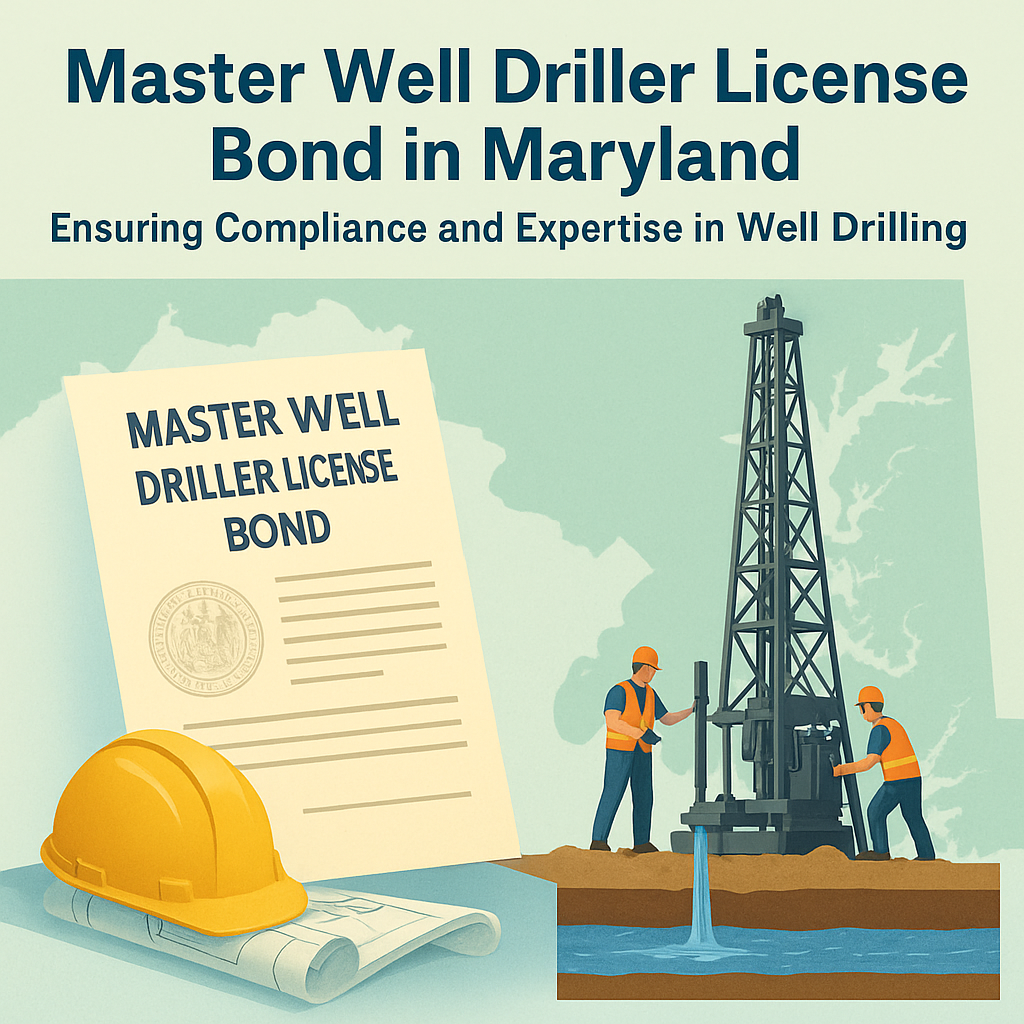
bookmark_borderUnderstanding Maryland’s Well Drillers License Bond for Compliance

If you’re a well driller or pump installer in Maryland, you’ve probably already heard about the license bond requirement. It can sound like just another piece of paperwork, but it’s actually a key that unlocks your ability to work legally. Think of it as a promise—backed by money—that protects the public and keeps your business in good standing with the state. Let’s unpack everything you need to know in plain, everyday language.

What Is a Maryland Well Drillers License Bond?

A Maryland Well Drillers License Bond is a three-party agreement. The parties are you (the well contractor), the Maryland State Board of Well Drillers (the obligee), and a surety company that issues the bond. Its job is simple: it guarantees that you’ll follow all state laws, rules, and regulations related to well drilling and pump installation. If you don’t, a claim can be made, and the bond will cover financial losses—up to the bond amount.

But here’s the twist. This is known as a compliance-only bond. It doesn’t guarantee the quality of your work or that a well will produce a certain amount of water. Instead, it focuses entirely on you following the legal framework. So if a homeowner is unhappy because their well ran dry through no fault of yours, the bond generally won’t step in. However, if you drill without a permit, fail to file required reports, or abandon a well improperly, that’s when the bond becomes active.

Why Does Maryland Require This Bond?

Maryland takes groundwater protection seriously. A poorly constructed well or a botched pump installation can contaminate drinking water supplies—not just for one house, but for entire communities. The State Board of Well Drillers uses the bond as a tool to enforce regulations. It gives them teeth. Without it, disciplinary actions might not recover taxpayer money spent fixing violations. With it, there’s a financial safety net.

You can think of the bond as a deposit at a tool rental store. You promise to return the equipment in good shape and pay the rental fee. If you don’t, the store keeps your deposit. For well drillers, the bond is that deposit—held by the state. Stay compliant, and you get it back in the form of a continued license and a clean record. Break the rules, and the state can make a claim to correct the problem.

Who Needs a Well Driller or Pump Installer Bond?

If you perform any of the following work in Maryland, you’ll likely need this bond:

  • Drilling, boring, or digging a water well
  • Installing, repairing, or replacing a water pump system
  • Constructing monitoring wells or geothermal boreholes
  • Abandoning (properly closing) old wells

The bond requirement applies to both new license applicants and those renewing. Whether you’re a sole proprietor or run a larger drilling company, you have to secure and maintain the bond for as long as you hold an active license. Sometimes, the bond is specifically called a Well Contractor – Compliance Only bond, emphasizing its limited but vital purpose.

Are you a pump installer who works on wells but never drills them? In Maryland, the license classification covers both. So yes, pump installers usually fall under the same bonding umbrella. The State Board’s regulations often require a combined Well Driller and Pump Installer License Bond. Always double-check your specific licensing class, but the compliance bond is a common thread.

How Much Does the Bond Cost, and How Do You Get One?

The required bond amount in Maryland is typically set by the state board. It can vary, but a common figure is $10,000. This isn’t what you pay out of pocket. You pay only a small percentage—usually between 1% and 5% of the bond amount—as an annual premium. So if the bond is $10,000 and your rate is 2%, you’d pay just $200 per year.

What determines that percentage? The surety company looks at your personal credit score, business financials, and experience. A strong credit history can get you a rate as low as 1%. If your credit has a few bumps, you might still qualify through specialized programs, though the premium will be slightly higher. The good news: even with less-than-perfect credit, most well contractors can get bonded.

Getting bonded is straightforward. You apply with a surety bond agency (often online). They’ll ask for basic info, run a soft credit check, and give you a quote. Once you pay the premium, the bond is issued. You then file the bond form with the Maryland State Board of Well Drillers to complete your license application or renewal. It’s a bit like getting car insurance before you can register your vehicle.

Compliance Bond vs. Performance Bond: What’s the Difference?

This is a major point of confusion, so let’s clear it up with a simple analogy. A compliance bond is like a traffic ticket guarantee: it says you’ll obey the rules of the road. A performance bond is like a warranty on the car itself: it promises the car will work as expected. Maryland’s license bond is strictly the first type. It ensures you’ll adhere to regulations, keep records, pull permits, and follow safety standards.

Why does this matter? Because a customer might call thinking the bond will cover a cracked well casing or an underperforming pump. While those are serious issues, they’re typically handled through your business insurance, warranties, or a separate contractor performance bond you might choose to offer. The license bond won’t pay out simply for shoddy work—unless that shoddy work directly violates a specific state code and results in a board action.

How to Stay Compliant and Avoid Claims

Nobody wants a bond claim. A claim can raise your future premiums, damage your reputation, and even threaten your license. The best defense is a solid offense of good habits. Here’s what that looks like in daily practice:

  • Always pull necessary permits. Never start drilling without them.
  • File well completion reports on time. Maryland requires details on depth, yield, and geology.
  • Follow proper abandonment procedures. An old well that’s not sealed correctly is a direct pipeline for contaminants.
  • Stay up to date with continuing education. Regulations change, and ignorance isn’t a defense.
  • Keep your license and bond current. A lapse can shut you down instantly.

Think of your bond as a silent partner that’s always watching. It doesn’t interfere when you do things right. But the moment you cut a corner that breaks the law, it becomes a loud alarm. By sticking to your training and the state’s guidelines, the bond remains nothing more than a paperwork requirement.

What Triggers a Bond Claim?

Claims most often come from the State Board itself, not private citizens. The board can file a claim if they have to step in and fix a violation you created. For example, if you abandon a well improperly and the state hires another contractor to seal it, the board might seek reimbursement from your bond. Homeowners can file complaints, but the claim is usually processed through the regulatory investigation. So if you ever get a notice from the board, take it seriously and respond quickly.

Common Pitfalls and How to Avoid Them

Even experienced drillers stumble into bond-related trouble. Let’s look at a few real-world scenarios—disguised but realistic—to help you steer clear.

The Permit Procrastinator. A driller starts a job thinking he’ll get the permit “in a day or two.” A neighbor reports the unmarked equipment, and an inspector arrives. The result? A stop-work order, fines, and a potential bond claim because drilling without a permit is a direct violation. Solution: make permits the first step, never an afterthought.

The End-of-Year Rush. A contractor forgets to renew the bond along with the license. For two weeks, work continues without active bonding. Even if no violations occur, working without a bond is itself a violation. The board can suspend the license. Avoid this by setting a calendar reminder 60 days before your bond expires.

The “Old Well” Assumption. While replacing a pump, you discover an ancient, unrecorded well nearby. You ignore it because it’s not your job. But regulations often require you to report such findings. Failure to do so can lead to fines charged against the bond. Always report abandoned wells you encounter on a site.

Renewing Your Bond: A Quick Annual Checkup

Your bond generally aligns with your license term, often one year. Before it expires, you’ll get a renewal invoice from your surety agency. Pay the premium to keep the bond active without a gap. Some agencies offer an automatic renewal option so you don’t have to think about it. If you switch surety companies, make sure the new bond is effective before the old one cancels—there can be no coverage gap.

Does your bond amount ever change? Yes, if the state board updates its requirements. Stay subscribed to any newsletters or alerts from the board. A change from $10,000 to $15,000 means you’ll need a new bond, and your premium will adjust accordingly.

What If a Claim Is Filed Against You?

First, don’t panic. A claim doesn’t automatically mean you’re guilty. The surety company will investigate. You’ll have a chance to provide evidence that you followed the rules. If the claim is valid, the surety may pay it out, but then they will come to you for reimbursement. This is called indemnity—you agreed to pay back all claim amounts when you signed the bond agreement. That’s why avoiding claims is critical: the bond is a guarantee, not insurance.

If you receive a claim notice, communicate with your surety and consider consulting an attorney who understands Maryland’s well driller regulations. Often, misunderstandings can be cleared up before any money changes hands.

Bringing It All Together

Maryland’s Well Drillers License Bond is more than a bureaucratic hoop. It’s a commitment to protect groundwater, your clients, and your professional reputation. By understanding that this is a compliance-only bond, you can explain its limits to customers and focus on what you do best: delivering safe, reliable water access. The bond doesn’t have to be a headache. With a reliable surety partner, good organizational habits, and a respect for the rules, it becomes a simple annual renewal that keeps your business flowing as smoothly as the wells you drill.

So, are you ready to get bonded or renew? Take a few minutes to check your expiration date, gather your paperwork, and reach out to a surety expert. A few small steps today can save you from big problems tomorrow—and keep you in the good graces of the Maryland State Board of Well Drillers.
bookmark_borderGuide to Maryland Well Drillers and Water Conditioner Installer Licensing

If you’re thinking about starting a career drilling wells or installing water treatment systems in Maryland, you’ve probably come across terms like “license bond” and “compliance-only bond.” They might sound intimidating, but they’re simply part of the state’s way of keeping groundwater safe and protecting homeowners. Let’s walk through everything you need to know about getting licensed with the Maryland State Board of Well Drillers, what a water conditioner installer license entails, and how that all-important surety bond fits into the picture.

Understanding the Maryland Board of Well Drillers

Maryland takes its groundwater seriously. After all, thousands of families rely on private wells for drinking water, and a poorly constructed well can contaminate an entire aquifer. That’s where the Maryland State Board of Well Drillers comes in. This board oversees the licensing and regulation of anyone who drills, repairs, or abandons a well, as well as those who install water conditioning equipment connected to a private water supply.

Think of the Board as a guardian. Its job is to make sure every professional working with wells knows what they’re doing and follows strict health and safety standards. They set the rules for exams, continuing education, and financial responsibility—which is where the “compliance-only bond” appears.

Who Needs a License in Maryland?

Before you order business cards, you’ll want to confirm which license category fits your work. The Board divides licensed professionals into two main groups within the scope of our topic: well drillers and water conditioner installers.

Well Drillers

A well driller license is required for anyone who wants to drill, alter, or seal a well. This includes digging a new residential water well, deepening an existing one, or permanently abandoning a well that’s no longer in use. In Maryland, you must be licensed to perform any of this work—even if you’ve been doing it for decades in a neighboring state. No license, no drilling. It’s that straightforward.

Water Conditioner Installers

This one surprises people. If you install water softeners, reverse osmosis systems, iron filters, or any other point-of-entry water treatment equipment that connects to a private well system, you need a water conditioner installer license. The logic is simple: a badly installed treatment unit can contaminate the water supply or cause pipes to cross-connect with wastewater. The state wants you to prove you understand plumbing codes, backflow prevention, and the chemistry of the water you’re treating. It’s not just about selling equipment; it’s about protecting public health.

What is a License Bond and Why Do You Need One?

Here’s where things get interesting. A license bond, sometimes called a surety bond, is a three-party agreement. You, the contractor, buy the bond from a surety company. The bond promises that you will follow all state laws and regulations while doing your job. If you break those rules—say, you drill a well that collapses because you cut corners, or you install a conditioner that causes a sewage backup into the house—the harmed party can make a claim against your bond.

But wait, isn’t that the same as insurance? Not exactly. Insurance protects you from accidents. A bond protects the public and the state. Think of it like a security deposit. The state wants you to have some skin in the game, so to speak. If you cause damage or fail to comply with regulations, the bond pays out up to a set amount. Then you have to repay the surety company. It’s a financial incentive to do things right the first time.

The Compliance-Only Bond Explained

You may see the phrase “Well Contractor – Compliance Only” on your paperwork. This simply refers to the type of bond required by the Maryland State Board of Well Drillers. A compliance-only bond guarantees that the licensed contractor will faithfully observe all provisions of the relevant state code, local ordinances, and Board regulations. It’s not a bond that guarantees workmanship in the traditional sense; rather, it ensures you’ll comply with the law while performing your trade.
In Maryland, the well driller or water conditioner installer must maintain this bond as a condition of holding an active license. If you let the bond lapse, your license can be suspended or revoked faster than you can say “groundwater contamination.”

How to Get Your Maryland Well Driller or Water Conditioner License

The path to getting licensed isn’t a secret maze, but it does require patience and preparation. Here’s a step-by-step overview that covers both well drillers and water conditioner installers, because the process shares considerable DNA.

1. Meet the basic qualifications.
You must be at least 18 years old, and for well drillers, you typically need to document a certain amount of hands-on experience working under a licensed driller. Water conditioner installers may need to show proof of relevant training in plumbing or water treatment.

2. Prepare for the exam.
The Board requires you to pass a written examination covering Maryland’s well construction and water conditioning regulations, as well as general trade knowledge. Don’t underestimate this test. Study resources include the Maryland Code of Regulations (COMAR) Title 26, Chapter 4, and industry manuals on hydrogeology, drilling methods, and water chemistry.

3. Submit your application.
You’ll fill out an official application form available from the Maryland State Board of Well Drillers. Along with the form, you’ll submit your exam results, experience verification, and the required fee. Be meticulous—missing signatures or incomplete experience logs are the most common reasons for delays.
4. Secure your compliance bond.
After you’ve passed the exam and the Board approves your application, they’ll instruct you to file a surety bond. The bond amount is set by the Board, and you can purchase it through any licensed surety company. Once you have the bond document, you send it to the Board to complete your licensing.

5. Receive your license.
Once everything is verified, you’ll get your license number and can legally begin working. Frame that license—but keep a copy in your truck, because you’ll often need to show it to inspectors and homeowners alike.

Cost of the Bond and Licensing Fees

You’re probably wondering, “How much is this going to set me back?” Let’s break it down. The license bond premium is not a flat fee; it’s a small percentage of the total bond amount. For well drillers and water conditioner installers in Maryland, the bond requirement is generally in the range of several thousand dollars. The premium you pay annually might be as low as $100 to $300, depending on your credit and the surety company’s rates. Good credit often means a lower premium.

On top of the bond, you’ll pay a license application fee to the Board and possibly an exam fee. These amounts change occasionally, so always check the Board’s current fee schedule. And remember, the bond must be renewed every year to keep your license active. Treat it like a subscription you cannot afford to forget.

Keeping Your License Active and Compliant

Getting the license is just the start. Staying compliant is an ongoing responsibility. Let’s look at the key pieces.

Renew your bond on time.
If your bond expires, your license becomes inactive. The surety company will typically send you a renewal notice, but it’s your job to follow through. If you switch surety companies, you’ll need to provide the Board with a new bond form before the old one lapses.

Complete continuing education.
The Board may require a certain number of continuing education hours per renewal cycle. These courses keep you updated on new drilling technologies, changing water quality standards, and revised state regulations. They’re also a great place to network with other professionals.

Report changes promptly.
If your business address, corporate structure, or contact information changes, notify the Board at once. An outdated record can cause serious headaches if a complaint arises and you can’t be reached.

Follow the rules to the letter.
This includes submitting well completion reports, using approved materials, maintaining safe distance from septic systems, and properly sealing abandoned wells. The compliance bond is there precisely because the state wants to hold you accountable if you skip these steps.

Frequently Asked Questions

Can I drill a well on my own property without a license?
Maryland law allows a homeowner to drill a well on their own land only for their personal use, but even then, you must still obtain a permit from the local health department and follow all construction standards. For any work done for compensation, a license is mandatory. Don’t risk the penalties.

What’s the difference between a well driller license and a master well driller license?
Maryland offers categories such as well driller and master well driller. The master designation usually requires more experience and allows the holder to supervise other drillers. However, both need a compliance bond. Check with the Board for the exact tier that fits your background.

Does the water conditioner installer bond cover defective products?
Generally, no. The compliance bond covers your adherence to regulations, not manufacturer defects. If the water softener unit you installed had a factory flaw, that would be a product liability issue. But if you incorrectly installed the unit and caused a cross-connection, the bond could be triggered.

How do I get my bond if I have poor credit?
Don’t panic. Many surety companies offer programs for individuals with less-than-perfect credit. You might pay a higher premium, but you can still obtain the bond. Work with a surety bond agency that specializes in contractor bonds; they often have markets that welcome new business.

What happens if someone makes a claim on my bond?
First, the surety will investigate. If the claim is valid, the surety pays the damaged party up to the bond limit. Then the surety will seek reimbursement from you for every penny paid out, plus legal costs. That’s why it’s far better to resolve disputes directly with clients before they escalate.

Why This Licensing Process Matters to You and Your Customers

It’s easy to see rules and bonds as bureaucratic hoops to jump through. But step back for a moment. Every time you pull a license and secure that compliance bond, you’re telling the world that you stand behind your work—and the law stands behind it, too. Homeowners breathe easier knowing the person drilling 300 feet into their yard has been vetted by the state. They trust that the water conditioning system won’t turn their tap water brown or, worse, dangerously unsafe.

Moreover, operating with a valid license and bond elevates your business. It sets you apart from unlicensed handymen who might offer a lower price but can’t guarantee safety. You become the professional that real estate agents, home inspectors, and health departments recommend.

Getting your Maryland well driller or water conditioner installer license isn’t a one-time chore; it’s an investment in your credibility. The compliance bond is the final piece that seals the deal between you, the state, and your customers. Start by visiting the Maryland State Board of Well Drillers website, download the latest application package, and map out your timeline. Tackle the exam preparation, gather your experience logs, and then shop for the bond. Once you’re fully licensed, you’ll be ready to tap into a career that literally brings clean water to life. And that’s something worth drilling down on.

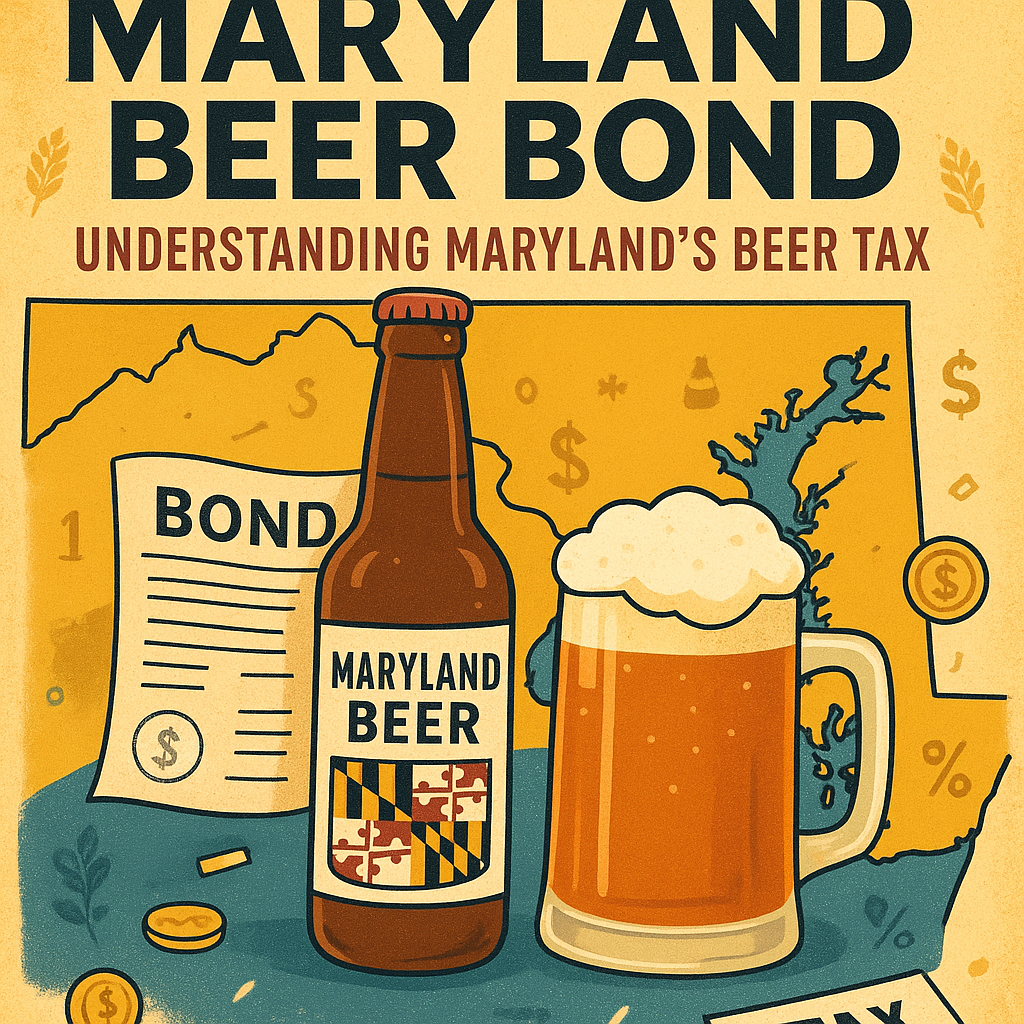
bookmark_borderUnderstanding Maryland Beer Tax and Non-Resident Dealer Bond Requirements

So, you’ve brewed something special in Virginia, Pennsylvania, or even out on the West Coast, and Maryland beer lovers are starting to ask for it. That’s exciting. But before you load up that first truck, there’s a little paperwork and a financial safety net you’ll need to understand: the Maryland beer tax and the non-resident dealer bond. It might sound intimidating, but think of it as a simple handshake between your brewery and the state—a promise that you’ll play by the rules.

What Exactly Is the Maryland Beer Tax?

Like many states, Maryland places an excise tax on all beer sold within its borders. This isn’t paid by the person buying a six-pack at the store; it’s collected from the businesses that bring the beer into the state. If you’re a brewery or importer located outside of Maryland, you’re considered a “non-resident dealer.” And that means you’re responsible for collecting and paying the Maryland beer tax on every gallon you sell to a Maryland wholesaler or retailer.

As of 2024, the rates are straightforward. Most beer with an alcohol by volume (ABV) of 6% or less is taxed at $0.09 per gallon. If your brew packs a little more punch and exceeds 6% ABV, the rate bumps up to $0.12 per gallon. A barrel holds 31 gallons, so for a standard strength craft pilsner, you’re looking at about $2.79 in tax per barrel. It doesn’t sound like much, but if you’re moving hundreds of barrels a year, it adds up fast—and the state wants to make sure that money actually reaches their coffers.

So, Why Does Maryland Ask for a Non-Resident Dealer Bond?

Here’s where the bond comes in. The Comptroller of Maryland’s Alcohol and Tobacco Tax Bureau requires out-of-state beer sellers to post a Non-Resident Dealer Beer Tax Bond. This bond acts as a financial guarantee. Imagine renting an apartment: your landlord asks for a security deposit in case you damage the place or skip out on the last month’s rent. The non-resident dealer bond works much the same way. It tells the state, “If this brewery doesn’t pay its beer taxes, there’s money set aside to cover the bill.”

This requirement protects everyone. It protects Maryland taxpayers by ensuring tax revenue isn’t lost. It protects law-abiding breweries from unfair competition by people who might try to dodge the tax. And honestly, it protects your own business from falling into penalties that can get ugly fast.

Who Needs to Get This Bond?

If any of the following describes your operation, you likely need a Maryland non-resident dealer bond:

  • You’re a brewery, brewpub, or beer manufacturer based in another state or country.
  • You sell and ship beer directly to a Maryland-licensed wholesaler or retailer (even if you use a third-party distributor).
  • You import beer into the United States and want to have it distributed in Maryland.
  • You’re a beer brand owner who contracts with an out-of-state brewery but sells the finished product to Maryland accounts.

In short, if your beer touches Maryland soil and money changes hands, the state wants you registered and bonded.

How Much Does the Bond Cost and How Much Coverage Do You Need?

The required bond amount is set by the Comptroller and is typically $1,000 for most non-resident dealers. However, the state has the right to ask for a higher amount if they believe your projected tax liability is larger. Think of the bond’s penalty (the full $1,000) like the face value of a safety net—the state can claim against it up to that limit if taxes go unpaid.

Now for the good news: you don’t have to tie up $1,000 in cash to get bonded. You work with a surety company who issues the bond for a fraction of that amount, called the premium. For a standard $1,000 bond, the premium is often as low as $100 per year, depending on your personal credit and financial history. If your credit is solid, you can often get bonded the same day you apply.

How the Bond Works: A Quick Three-Party Handshake

Surety bonds might sound like insurance, but they’re a bit different. There are three players:

  • The Principal – That’s you, the beer dealer.
  • The Obligee – The State of Maryland, who requires the bond.
  • The Surety – The bonding company that backs your promise financially.

If you fail to file your tax returns or don’t pay the excise tax you owe, the obligee can file a claim on the bond. The surety will then pay the state up to the bond limit—but here’s the key part: you have to pay the surety back every penny. So while the bond makes the state whole, it doesn’t let you off the hook. It’s a powerful incentive to stay compliant.

Step-by-Step: How to Get Your Non-Resident Dealer Bond and Start Selling in Maryland

Feeling ready to tackle the process? It’s easier than you might think. Follow these steps to get legal and keep those Maryland taps flowing.

1. Register with the Maryland Comptroller’s Office

Your first stop is the Alcohol and Tobacco Tax Bureau. You’ll need to apply for a Non-Resident Dealer Permit. This usually involves completing an application form that asks for basic business information, your federal employer identification number (EIN), and details about the types of beer you sell. You can often find the forms online through the Comptroller’s website.

2. Secure Your Non-Resident Dealer Beer Tax Bond

While your permit application is in process, reach out to a surety bond agency that knows Maryland’s alcohol bonds. They’ll ask a few questions about your business and may run a soft credit check. Once approved, they’ll issue a bond form that you’ll sign as the principal. The agency will then give you the completed bond to submit with your other paperwork.

3. File the Bond with Your Permit Application

Send the original bond form along with your permit application to the Comptroller’s office. You might also need to include a fee for the permit itself. Processing times can vary, so plan ahead—ideally a few weeks before you plan to ship your first keg.

4. Stay Current on Tax Returns

Once you’re approved, the real work begins. You’ll typically file Maryland beer tax returns monthly or quarterly, depending on the volume you sell. Payments are due along with the returns. Keep meticulous records of every shipment into the state. Even if one month you have zero sales, you usually still need to file a zero return. Falling behind on filings can trigger a bond claim or a permit suspension.

What Happens if You Skip the Bond or Don’t Pay Your Taxes?

It’s tempting to think no one will notice an out-of-state brewer selling a little beer without the proper paperwork. But states share data, and Maryland wholesalers are diligent about buying from properly licensed sources. If you’re caught selling without a permit and bond, the consequences can be severe:

  • Your beer can be seized or refused entry into the state.
  • You could face fines and interest on unpaid taxes.
  • The Comptroller can revoke your ability to sell in Maryland for a long time.
  • A bond claim stays on your record, making future bonds much more expensive and difficult to get.

Bottom line: it’s not worth the risk.

Real-World Example: A Small Brewery’s Smooth Maryland Expansion

Let’s put it all together. Imagine a small craft brewery in Delaware called Tidewater Ales. They’ve been getting requests from a Maryland distributor who wants to carry their popular hazy IPA. Before sending a single case, the brewery owner visits the Comptroller’s site, downloads the permit application, and calls a bond agency. She qualifies for a $1,000 bond with a $115 annual premium. Within two days, she has the bond in hand. She mails the application, bond, and permit fee. Three weeks later, her permit arrives, and Tidewater Ales is officially Maryland-compliant. When they ship their first pallet, they charge the proper excise tax, file their first monthly return on time, and sleep soundly knowing everything is buttoned up.

Could they have skipped the bond and hoped for the best? Maybe, but that one distributor would have asked for their Maryland permit number before signing a deal. The bond didn’t just satisfy the state; it gave the distributor confidence that Tidewater was a legitimate partner.

A Few Extra Tips for Out-of-State Breweries and Importers

  • Check the Tax Rate Often: Tax rates can change with new legislation. Always verify the current rate on the Maryland Comptroller’s official site before invoicing.
  • Bundle Your Bond: Some surety agencies offer multi-state bond programs. If you’re expanding into several states, you might save by handling all your alcohol bonds through one provider.
  • Keep Your Bond Current: Most non-resident dealer bonds run continuously until canceled. Pay your annual premium on time, and don’t let it lapse. A canceled bond means an automatic gap in your compliance that can jeopardize your permit.
  • Ask Your Distributor: Maryland wholesalers deal with these requirements daily. Don’t be shy about asking them what they need from you. They can often point you to the exact forms and share timelines from their experience.
  • Consider a Bond Rider If Volume Spikes: If your sales explode and the state requires a higher bond amount, your surety can often issue a rider bumping the coverage without starting from scratch.

Taking the Next Step Is Easier Than You Think

Expanding your beer into Maryland is a fantastic growth opportunity. The state has a thriving craft beer scene and consumers eager to try new flavors. The non-resident dealer bond is just a small administrative speed bump—a way to promise the state that you’ll handle the tax side of things responsibly. Think of it like getting a passport before an international trip. A little paperwork upfront opens up a world of new customers.

So, are you ready to share your latest lager, stout, or sour with Maryland? Grab your paperwork, secure that bond, and start building your reputation in a whole new market. And remember, the bond isn’t just red tape—it’s the foundation of a trusting relationship between your business and the Old Line State.

bookmark_borderGuide to Maryland Oversize Permit and Highway Administration Bond

Moving big things down the road is no small task. If you’re hauling a massive piece of equipment, a wide load of lumber, or a prefabricated home through Maryland, you quickly run into a wall of rules. These rules are not there to make your life difficult. They protect the roads, bridges, and everyone else driving beside you. Understanding the Maryland oversize permit process and the related bonding requirements can turn a confusing chore into a smooth ride.

The Basics: What Is an Oversize Permit in Maryland?

Picture a standard highway lane. Anything that spills beyond those painted lines—whether it is extra wide, incredibly tall, absurdly heavy, or exceptionally long—generally needs special permission to travel. That permission is called an oversize or overweight permit. The Maryland State Highway Administration (SHA) issues these permits so that local infrastructure stays safe.

You are not just asking for a simple ticket. You are entering into an agreement. By accepting a permit, you promise to obey specific travel times, stick to approved routes, and carry the right insurance. Slip up, and you can face fines or damage claims. That is where the concept of a financial guarantee comes in, which often takes the form of a surety bond.

Why Does the State Highway Administration Care So Much?

The Maryland SHA is responsible for thousands of miles of roadways. They maintain bridges, overpasses, and the asphalt itself. An overloaded truck can crush pavement, crack a bridge beam, or knock a traffic signal out of alignment. The repair costs are staggering. Naturally, the SHA wants to make sure that if your load causes damage, the state does not get stuck with the bill.

This is the same logic a landlord uses when asking for a security deposit. You hope nothing goes wrong, but the guarantee is there if something does. And in the world of heavy hauling, the “security deposit” often shows up as a bond form.

Diving into the Maryland Credit Hauling Bond

You might see the term “Credit Hauling Form (State Highway Administration) Bond” and scratch your head. It sounds like something that belongs in a banker’s vault, not on a trucker’s clipboard. But it is simpler than it looks. A credit hauling bond is a specific type of surety bond that essentially gives the SHA a line of credit they can tap into if you breach your permit conditions or damage state property.

Instead of making a huge cash deposit upfront, you pay a premium to a surety company. That company issues a bond form to the SHA. If the state has a valid claim against you—say, you took a load down a restricted road and tore up the surface—the SHA can demand payment from the bond. But here is the catch: you are ultimately responsible for paying back every penny to the surety company. A bond is not insurance for you; it is a financial guarantee for the public and the state.

When Do You Need This Bond?

Not every move requires a credit hauling bond. However, the SHA frequently asks for it when:

  • You are moving an extremely heavy load that exceeds normal weight limits by a significant margin.
  • Your hauling route includes bridges or overpasses that need careful structural analysis.
  • You have a history of permit violations, or you are a new hauler without a long track record of safe moves.
  • A specific permit classification triggers the bonding requirement automatically.

The bond acts as a standing promise. If you haul oversized loads regularly, you do not want to stop at the border and negotiate a new security payment every time. A bond covers you for a set period, making repeat trips feel much less like a bureaucratic nightmare.

Breaking Down the Permit Application Process

So how do you actually get your oversize permit and satisfy the bonding requirements? The steps might seem like a tangle of forms, but you can peel them apart one layer at a time.

1. Figure Out Your Dimensions and Weight

Before doing anything else, you need crystal-clear measurements. How wide is the load at its widest point? What is the overall height from the ground? What is the gross vehicle weight? Fudging these numbers is not just risky—it can void your permit and lead to heavy penalties. The SHA uses this data to decide which routes you can safely use.

2. Choose the Right Permit Type

Maryland offers several permit categories depending on what you are moving. A single-trip permit works for a one-off move. An annual permit makes sense for frequent operations. There are also special permits for manufactured housing, superloads, and containerized cargo. The SHA website and field offices can help you pick the right one, but many haulers work with a permitting service to save time.

3. Secure Your Bond (If Required)

If the SHA tells you a credit hauling bond is needed, you will need to provide a completed bond form. Contact a surety bond agency that works with Maryland SHA bonds. You will fill out some paperwork, undergo a quick credit check (in most cases), and pay a premium. The agency then issues the bond. Keep the original form handy because the SHA might request a copy with your permit application.

4. Submit Your Application

With your route planned, your vehicle information ready, and your bond in hand, you submit everything to the SHA. Many applications now happen online through the Maryland SHA’s permitting portal. But complex moves—superloads—often need a manual review and an engineer’s blessing. Be prepared for that extra back-and-forth.

5. Get Approval and Stay in Your Lane

Once approved, you will receive a permit document. Read it carefully. It lists travel restrictions, such as “daylight hours only” or “no weekend travel.” Some permits require pilot cars with flashing lights. Some ban travel during rush hour or bad weather. If you ignore these terms, you can face fines and a claim against your bond. That claim could spike your future bond premiums and damage your reputation with the SHA.

Common Mistakes That Trip Up Haulers

Even seasoned professionals sometimes stumble. Here are a few pitfalls you can dodge with a little planning.

  • Guessing the weight: “It looks about right” rarely ends well. Invest in a certified scale ticket.
  • Forgetting to check route restrictions: A bridge with a low clearance can trap you for hours. Use the SHA’s online truck routing tools.
  • Letting the bond expire: Bonds have a fixed term. If yours lapses, your permit can become invalid overnight. Mark your calendar.
  • Not keeping a copy of the bond form in the cab: During an inspection, having documentation ready shows you are serious about compliance.
  • Assuming the bond covers cargo damage: Remember, the credit hauling bond protects the state’s roads and structures—not your freight. For that, you need cargo insurance.

Making Sense of the “Credit Hauling Form” Jargon

Why does the SHA call it a credit hauling bond? Think of it this way: the state is essentially extending credit to you by allowing your heavy load onto public infrastructure without a massive upfront cash deposit. The bond backs up that credit. If you fail to reimburse the state for damage, the surety steps in to cover the bill on credit extended to you. Then you owe the surety.

This may sound a little like a circle, but it is designed to keep commerce moving. Without this system, the SHA might require you to deposit thousands of dollars in cash for each trip. That would freeze up your working capital and make many jobs impossible. The bond is a smart middle ground—safety for the public, and cash-flow flexibility for your business.

Working With a Bond Provider: What to Expect

You might feel a flutter of anxiety when someone mentions a credit check or a bond application. Do not worry. Most MD SHA credit hauling bonds are fairly accessible for businesses with decent financial standing. The surety company looks at your personal or business credit, your experience in hauling, and sometimes your driving record. The premium you pay is a small percentage of the total bond amount—often between 1% and 10% depending on your qualification.

Once approved, the bonding company sends you the official paperwork. You may need to sign the indemnity agreement, which spells out your obligation to repay any claims. Keep that document somewhere safe. If the worst happens and a claim arises, communicate with the surety immediately. Ignoring a claim turns a manageable problem into a full-blown crisis.

How This All Ties Together for a Smooth Haul

Imagine you are moving a house-sized transformer from the Port of Baltimore to a substation in western Maryland. The load is 14 feet wide and tips the scales at 180,000 pounds. Without a permit and bond, you would never make it past the port gate legally. But by working with the SHA and your surety agent, you plan a route that avoids low bridges. You arrange police escorts and utility crews to lift traffic lights. You post a credit hauling bond that says, “If my transformer punches a hole in a rural road, the state will be made whole.”

This whole system might feel like a tangle of red tape, but every strand exists because someone, somewhere, had a very bad day. A load took down a power line. A bridge buckled. Experience shaped the rules, and the rules shape your planning.

Practical Tips to Stay Ahead of the Curve

  • Start early: Permit applications for superloads can take weeks. Do not wait until your freight is already sitting at the dock.
  • Build a relationship with a good surety agent: They understand the SHA’s bonding forms better than a general insurance broker.
  • Use the SHA permitting portal: Maryland’s online system is your friend—bookmark it and learn to navigate its menus.
  • Train your drivers: Every driver should know the permit conditions by heart. One wrong turn can cost you the bond.
  • Keep records: Save copies of every permit, every bond renewal, and every route approval. Audits can happen, and your memory is not as reliable as a digital file.

Does all this sound like a lot of work? It is. But hauling oversized loads is a high-stakes game. The reward is landing contracts that ordinary carriers cannot touch. The risk is causing damage that can bankrupt a careless operator. The Maryland oversize permit and credit hauling bond are the guardrails that keep you in business and keep the public safe.

You are not just moving cargo. You are moving responsibility down the highway. With a clear understanding of the permit process and the bond that backs it, you can roll into Maryland knowing that you have dotted every I and crossed every T. And on the open road, that peace of mind is worth every penny.

bookmark_borderMaryland State Implements New Bond for Highway Oversize Permits

Have you ever driven down the highway and seen a massive piece of equipment being hauled on a flatbed trailer? Maybe it was a bulldozer, a prefabricated home, or a wind turbine blade. Moving things that are wider, taller, or heavier than the law normally allows is no small feat. It takes careful planning, special permits, and now—if you’re in Maryland—a new kind of financial guarantee called a performance bond. If you’re a trucker, a construction company owner, or just someone curious about how those big rigs get from point A to point B without damaging the roads, you’re in the right place.

Let’s unpack what the Maryland State Highway Administration (SHA) is doing, why it matters, and how you can stay on the right side of the rules without getting a headache. We’ll keep things simple, practical, and—dare I say—a little fun. Because let’s face it, bonds and permits don’t have to be boring.

Wait, What Exactly Is an Oversize Permit in Maryland?

Before we jump into the bond itself, let’s make sure we’re all on the same page. An oversize permit is essentially a permission slip from the state. It allows a vehicle and its load to exceed standard legal size and weight limits on public roads. Think of it like asking your neighbor for permission to park in their driveway while yours is being paved. You need that green light before you proceed.

In Maryland, the SHA handles these permits for state-maintained highways. When a load is exceptionally heavy or large, the risk of damaging pavement, bridges, or overhead structures goes up. The permit sets conditions—like designated routes, travel times, and required escort vehicles—to minimize those risks. But permits alone didn’t always guarantee that if something went wrong, the costs would be covered quickly and efficiently. That’s where the new performance bond steps in.

The Big News: Maryland’s Performance Bond Requirement

The Maryland State Highway Administration now requires certain haulers to secure a Maryland Hauling Performance Bond as part of the oversize permit process. You might see it called the “MD Hauling Performance Bond,” “MD SHA Performance Bond,” or even “Maryland Oversize Permit Bond.” These all point to the same thing: a financial safety net that protects the state and its taxpayers.

Picture this: a company moves a huge crane across a rural bridge, and despite all precautions, the bridge sustains minor damage. Without a bond, the state might have to chase the company for repair costs, potentially dragging the situation out for months. With the bond in place, the state can claim against that bond promptly, getting the funds needed to fix the bridge without relying on a slow legal process. It’s a lot like a security deposit on a rental apartment. Landlords hold that deposit so they’re not stuck paying for damages out of pocket. Similarly, the performance bond acts as a guarantee that the hauler will follow all permit conditions and cover any damages caused.

Why Now? Understanding the Logic Behind the Bond

You might be thinking, “Why is Maryland springing this on haulers now?” It’s a fair question. Over the past few years, infrastructure projects have exploded across the Old Line State. Bigger wind energy components, prefabricated bridge sections, and modular construction units are crisscrossing highways more regularly. While that’s great for progress, it also increases wear and tear on aging roads and bridges.

The Maryland SHA wants to be proactive rather than reactive. A performance bond creates a pool of money that’s accessible immediately in case something goes wrong. It also encourages haulers to double-check their routes, maintain their equipment well, and follow every rule to the letter—because nobody wants a claim against their bond. That can lead to a better environment for everyone sharing the road.

Who Needs This Bond? Let’s Break It Down

Not every pickup truck towing a slightly wide trailer will need to race out and buy a bond. The requirement typically applies to commercial motor carriers hauling loads that exceed certain thresholds for weight, width, height, or length. If you regularly move super loads—the kind where you see state police escorts and road closures—you are almost certainly in this group.

To put it in practical terms:

  • Heavy haulers transporting construction machinery like excavators, bulldozers, or cranes.
  • Mobile home movers relocating manufactured houses or modular offices.
  • Wind energy contractors delivering massive turbine blades and tower sections.
  • Industrial movers handling oversized tanks, generators, or large-scale prefabricated components.

If you’re unsure whether your loads qualify, check the Maryland SHA’s current permit guidelines. They usually spell out the exact dimensions and weights that trigger the need for a bond. When in doubt, a quick call to a Maryland transportation compliance expert or bond agency can clear things up fast.

How Does a Performance Bond Actually Work?

Now let’s demystify the bond itself. A performance bond isn’t an insurance policy for the hauler—it’s a three-party agreement designed to protect the state. Here are the key players:

  • The Principal: That’s you, the hauler or moving company. You’re promising to follow all permit rules and pay for any damage caused.
  • The Obligee: The Maryland State Highway Administration. They’re the ones requiring the bond and benefiting from its protection.
  • The Surety: The bonding company that issues the bond and backs your promise financially.

If the hauler violates the permit terms and causes damage, the SHA can file a claim against the bond. The surety company will investigate and, if the claim is valid, pay the state up to the bond’s full amount. But here’s the catch: the hauler must reimburse the surety for every penny paid out. So while the bond feels like a form of credit, it’s really a personal guarantee with a middleman. It’s similar to a co-signer on a loan—they step in if you can’t pay, but they expect you to make things right eventually.

What’s the Cost? Hint: It’s Not the Full Bond Amount

One of the biggest misconceptions about performance bonds is the price tag. When you see a requirement for a $50,000 or $100,000 bond, your eyes might widen. But you won’t have to write a check for that entire sum. Instead, you pay a small percentage of the total bond amount as a premium. That premium can range from 1% to 5% depending on factors like your personal credit score, business financials, industry experience, and the size of the bond.

For example, if you need a $25,000 bond and your rate is 2%, you’d pay just $500 per year. That’s a manageable fixed cost for the peace of mind and compliance it provides. Better credit typically means lower rates, so it pays to keep your financial house in order. Many bonding agencies even offer multi-year terms if your permits roll over, saving you paperwork down the road.

How to Get Bonded Without Pulling Your Hair Out

The process might sound intimidating, but it’s pretty straightforward. Most haulers get their bond through a specialized surety bond agency. You’ll fill out an application, provide some basic business and financial information, and the agency will shop around with their surety partners to find you the best rate. Here’s a simple roadmap:

  • Step 1: Confirm the exact bond amount and form required by the Maryland SHA. Don’t guess—get it in writing from the permit office or a trusted source.
  • Step 2: Reach out to a bond agency that understands the transportation industry. They’ll know the nuances of Maryland’s requirements.
  • Step 3: Complete the application. Be ready to share your business license, EIN, and possibly recent financial statements.
  • Step 4: Receive your quote. Once you accept and pay the premium, the bond is issued.
  • Step 5: File the bond with your permit application and keep a copy in your glovebox (or digital files) for roadside checks.

The whole thing can often be done online in a matter of hours. Yes, really. So if you suddenly land a big job that requires moving an oversized load tomorrow, you aren’t necessarily out of luck.

What Happens If You Skip the Bond?

Skipping this requirement isn’t a slap-on-the-wrist situation. Operating without the necessary bond can lead to permit denial, fines, and even having your truck placed out of service at a weigh station. That means downtime, lost revenue, and a tarnished reputation with clients who expect on-time delivery. Beyond the legalities, think about your liability. Without a bond, any damage you cause could come directly out of your company’s pocket. A single bridge strike or road surface repair can run into tens of thousands of dollars. A bond caps your exposure in many ways by creating a structured process, but avoiding it altogether opens you up to unlimited risk.

So the question isn’t really “Can I get away without it?” It’s “How can I protect my business and comply with the law in the smartest way possible?” The answer usually points back toward getting bonded.

Real Talk: Will This Bond Slow Down Your Business?

Change is never easy, especially when it involves paperwork and extra costs. But look at it this way: the new Maryland oversize permit bond is already becoming standard for competitors in your field. Getting ahead of it can actually make your business look more professional and reliable to general contractors and project owners. It shows you’re serious about safety and accountability.

Plus, understanding the bond requirement now means fewer surprises later. Imagine showing up to pick up a load and discovering your permit isn’t valid because of a missing bond. By then, you’re burning fuel and payroll without moving an inch. A little bit of prep work now keeps your wheels turning when it matters most.

Final Thoughts: Embracing the Bond as a Business Tool

The Maryland State Highway Administration’s new performance bond for highway oversize permits is more than a bureaucratic hoop. It’s a reasonable step toward keeping state roads safe and financially protected while allowing the essential movement of massive goods. For haulers, it’s a manageable cost that builds credibility and limits liability. For everyday drivers, it’s an invisible shield that helps ensure the roads stay in good shape even after that house-sized excavator rumbles by.

If you’re in the hauling business, take a few minutes this week to review your upcoming loads. Do any of them cross into Maryland on state highways? Check the size and weight. If you suspect you’ll need the MD Hauling Performance Bond, reach out to a bonding professional sooner rather than later. It’s a small step that can save you big headaches.

Have more questions about oversize permits or bonds? Pop them in the comments below—I’d love to keep the conversation rolling. Safe travels out there, and may your loads always be just the right size.

bookmark_borderUnderstanding the Importance of a Maryland Insurance Broker’s Bond

So, you’re thinking about becoming an insurance broker in the Old Line State, or maybe you’re already deep into the licensing maze. Either way, you’ve probably stumbled across a requirement that stops a lot of people in their tracks: the Maryland insurance broker bond. It sounds official, maybe even a little intimidating. But here’s the truth—once you understand what it is and why it exists, you’ll see it’s just a simple safety net that protects everyone involved. Let’s walk through it together, using plain language and real-world examples.

What Is a Maryland Insurance Broker’s Bond?

Think of a Maryland insurance broker bond as a three-way promise. The insurance broker (that’s you) promises to follow all the state’s laws and treat clients fairly. The State of Maryland (the obligee) requires this promise before you can legally do business. The surety company backs up that promise with a financial guarantee. If you break the rules, the surety steps in to make things right for the harmed party—up to a certain dollar amount. After that, you’re responsible for paying the surety back every penny. It’s not insurance for the broker. It’s a shield for the public.

You’ll often hear it called an insurance broker bond, a surety bond, or an MD insurance broker bond. They all mean the same thing. The bond amount in Maryland is typically $10,000, but always double-check with the Maryland Insurance Administration (MIA) because requirements can change based on the specific license type.

Why Does Maryland Require This Bond?

Picture this: You hire someone to find the best coverage for your family’s health or your small business’s liability. You hand over sensitive information and premium payments. You trust they’ll place you with a legitimate carrier. Now imagine that broker pockets the money and never actually secures the policy. You think you’re covered, but you’re not. A disaster strikes, and you’re left holding the bag. That nightmare scenario is exactly why the Maryland insurance broker bond exists.

The Maryland Insurance Administration mandates this bond under the state’s insurance code. Its entire purpose is to protect consumers from fraudulent, dishonest, or incompetent brokers. By setting a financial stake in the game, the state ensures that only serious, ethical professionals enter the field. If a broker violates any part of the Maryland insurance law—failing to remit premiums, misrepresenting policy details, or operating without proper authorization—the bond is there to catch the fallout. It’s the government’s way of saying, “We care about our residents, and we’re going to hold you accountable.”

How Does the Bond Protect You?

It’s natural to wonder, “Okay, but who exactly is ‘you’ in this scenario?” The bond protects three groups all at once. First, it protects consumers—the people and businesses that rely on your expertise. Second, it protects the State of Maryland from having to step in and cover losses caused by rogue brokers. Third, and this part is often overlooked, it actually protects honest brokers by weeding out bad actors and maintaining the profession’s reputation.

Let’s say a broker collects $8,000 in advance premiums for a commercial policy but never forwards the money to the insurance company. The client discovers this only after a fire damages their warehouse, and there’s no active policy. The client can file a claim against the bond. The surety company investigates. If the claim is valid, the surety pays out up to the bond’s limit. The client gets compensated, the state sees that consumer harm was addressed, and the broker is then legally obligated to repay the surety in full. The bond didn’t erase the broker’s mistake—it just made sure the innocent party wasn’t left with nothing.

Compare it to a security deposit on an apartment. You pay the deposit to show you’ll take care of the property. If you damage it, the landlord uses the deposit to fix things. The Maryland insurance broker bond works similarly, except the “deposit” is backed by a whole financial company, not just your own cash.

Who Needs a Maryland Insurance Broker Bond?

If you plan to sell, solicit, or negotiate insurance contracts in Maryland and you’re operating as an insurance broker—rather than a captive agent tied to one company—you almost certainly need this bond. The key distinction is that a broker represents the insurance buyer, not a particular insurer. You’re the independent advisor helping clients shop the market.

Even if you’ve had a license in another state for years, the moment you apply for a resident or non-resident insurance broker license in Maryland, the bonding requirement kicks in. Business entities acting as insurance brokers must also secure a bond. The license won’t be issued or renewed without proof of a valid, active bond filed with the MIA. It’s not a suggestion; it’s a legal prerequisite.

How Much Does a Maryland Insurance Broker Bond Cost?

Here’s where many new brokers breathe a sigh of relief. You do not need to pay the full $10,000 bond amount out of pocket. The cost you pay is a small annual premium—typically between 1% and 5% of the total bond value. So for a $10,000 bond, you could be looking at as little as $100 for the entire year.

Your exact premium depends on a few factors, primarily your personal credit score and financial history. A strong credit profile often snags you a rate right near that 1% mark. If your credit has a few bumps, don’t panic. Surety companies specialize in writing bonds for all kinds of applicants, and you’ll still qualify—you might just pay a slightly higher percentage. Even at 5%, that’s $500 for a year of bonding, which is a modest investment compared to the value of the license and the trust it builds.

Bond premiums are a business expense you can plan for annually. Most bonds are issued on a one-year term and must be renewed before the expiration date to keep your license in good standing.

How to Get Your Maryland Insurance Broker Bond

Getting bonded isn’t a complicated ordeal. The whole process can frequently be done online in a single afternoon.

Here’s a quick step-by-step roadmap:

  • Confirm your required bond amount. While $10,000 is the common figure, check the Maryland Insurance Administration’s latest guidance or your license application instructions. Never assume.
  • Choose a reputable surety bond provider. Look for a company that’s licensed in Maryland and has experience with insurance broker bonds. You can go directly to a surety or work with an online bond agency that compares multiple markets to find you the best rate.
  • Complete a short application. You’ll provide basic information: your legal name, business name if applicable, Social Security number (for the credit check), and contact details. The application rarely takes more than ten minutes.
  • Receive your quote and pay the premium. If you have great credit, you’ll likely see an instant approval and a low price. Once you pay, the bond becomes active.
  • File your bond with the state. The surety company will issue a bond form. You or the agency will submit this form directly to the Maryland Insurance Administration as part of your license application or renewal. Keep a copy for your records.

That’s it. Five straightforward steps, and you’ve checked a major licensing box off your list.

Common Misconceptions and Real-World Examples

Let’s clear up a few head-scratchers that pop up all the time.

“Is the bond the same as errors and omissions (E&O) insurance?” Not at all. E&O insurance protects the broker if they make a mistake and get sued. The bond protects the public from the broker’s wrongdoing. They’re complementary but entirely separate products. You’ll likely need both.

“I’ve been an agent for a long time, does that I can skip the bond as a broker?” No. Even seasoned professionals who switch from a captive agent role to an independent broker role must meet the broker’s requirements, bond included. The state doesn’t grandfather in experience.

Imagine a client, Maria, who asks her broker to secure life insurance. The broker recommends a specific policy, collects the first quarterly premium of $900, but then forgets to submit the application to the carrier. Maria’s coverage never goes into effect. She passes away unexpectedly three months later. Her family goes to claim the benefit only to find there is none. The family’s recourse? A claim against the broker’s bond. The bond can’t replace the life insurance payout, but it can return the lost premium and cover certain damages, offering a layer of justice that wouldn’t exist without the bond.

Keeping Your Bond Active and Avoiding Claims

Once you have your Maryland insurance broker bond, treat it like a precious document. Pay your renewal premium on time. If you let the bond lapse, the MIA will be notified, and your license could be suspended or revoked. No bond means no business.

To steer clear of claims, always operate transparently. Document every client interaction. Remit premiums promptly—never commingle client money with your personal accounts. Stay educated on Maryland’s insurance regulations, which are available through the MIA website. A claim against your bond can make future bonds more expensive and tarnish your reputation. An ounce of prevention is worth a ton of cure here.

Frequently Asked Questions

Can I get a bond with bad credit?

Yes. Surety companies work with all credit types. While a lower score may bump your premium to the higher end of the 1-5% range, you won’t be shut out. Some programs even specialize in bonds for people rebuilding their credit. The most important thing is to apply and see what rate you get—you might be pleasantly surprised.

Is the bond a one-time purchase?

No. The bond is renewed annually, usually on the anniversary of its issuance. You’ll pay a premium each year. Some sureties offer multi-year options that lock in a rate, but most are year-to-year. Always track your renewal date so you don’t accidentally let coverage lapse.

What happens if a claim is filed against my bond?

The surety company will investigate the claim. If they determine it’s valid, they’ll pay the claimant up to the full bond amount. Then they will come to you for full reimbursement. You signed an indemnity agreement promising to repay every cent. A bond claim isn’t a free pass; it’s essentially a short-term extension of credit you must pay back, often with legal fees added.

Does a Maryland insurance broker

bookmark_borderUnderstanding Maryland Performance Bonds for State Highway Right of Way

Have you ever driven down a Maryland highway and noticed construction crews working along the shoulder, or maybe a contractor installing a new driveway entrance that connects to a state road? That work often takes place in what’s called the right-of-way — the strip of land the state owns alongside the highway. If you’re a contractor taking on that kind of project, the Maryland State Highway Administration (SHA) will ask you for something very specific before you even lift a shovel: a Maryland Performance (State Highway Administration, Right-Of-Way) Bond. It might sound like a mouthful, but stick with me. By the end of this post, you’ll know exactly what it is, why it exists, and how to make the bonding process as smooth as a freshly paved road.

So, What Exactly Is This Bond?

Think of a performance bond as a promise with a financial backbone. When you buy this bond, you’re essentially telling the Maryland SHA, “I will complete this right-of-way project exactly as we agreed — on time, correctly, and safely. If I don’t, this bond will cover the costs to make things right.” It’s not insurance for you; it’s protection for the state and the public. The bond guarantees that if something goes wrong — say, the work stops halfway, or the finished product doesn’t meet SHA standards — there’s money set aside to hire someone else to fix it without dipping into taxpayer funds.

Let’s break down the three key players in every bond:

  • The Principal: That’s you, the contractor. You’re the one who purchases the bond and promises to do the work.
  • The Obligee: The Maryland State Highway Administration. They’re the party requiring the bond and the one protected by it.
  • The Surety: The insurance-like company that backs your promise. If you can’t finish the job, the surety steps in — either by funding completion or by paying the state up to the bond amount.

Why Does Maryland SHA Require This Bond for Right-of-Way Work?

The right-of-way is a delicate space. It’s not just about the pavement; it includes utilities, drainage systems, signage, guardrails, and even the soil stability that keeps the highway safe. When a contractor digs into that zone to install a water line, widen an entrance, or do any approved work, the SHA needs assurance that the public won’t be left with a dangerous mess if the contractor walks away or does a poor job. The bond is the state’s safety net.

Imagine a local company wins a contract to relocate utility poles along a busy stretch of Route 50. They start the job but run into financial trouble and disappear. Without a performance bond, the SHA would have to scramble for emergency funds to finish the relocation — all while drivers navigate an active work zone. With the bond, the surety company pays to complete the project. That’s peace of mind for the state and for every person who uses that road.

Who Needs This Bond, Anyway?

This isn’t a bond every contractor in Maryland carries. It’s specifically tied to projects on state highway right-of-way that SHA oversees. You’ll likely need one if you’re:

  • Installing, repairing, or relocating utilities (gas, water, electric, fiber optic) within the right-of-way.
  • Building or modifying commercial or residential driveway connections to a state road.
  • Performing landscaping, grading, or drainage work that impacts the highway shoulder or adjacent land.
  • Conducting any construction or excavation the SHA classifies as a right-of-way permit activity.

Usually, the SHA will list the specific bond amount and requirements right in your permit or contract. So if you’re bidding on a job like this, keep an eye out for the bond clause early — it can affect your timeline and cost estimates.

How Much Does a Maryland SHA Right-of-Way Performance Bond Cost?

Here’s where it gets interesting. The bond amount — the maximum coverage — is set by the SHA based on the project’s scope. It might be $50,000 for a small driveway apron, or $500,000+ for a major utility relocation. But you won’t pay that full amount upfront. Instead, you’ll pay a premium, which is a small percentage of the bond total.

For most contractors with solid credit and a stable business history, that premium falls anywhere from 1% to 3% of the bond amount. So if the SHA requires a $100,000 bond, your annual premium could be as low as $1,000 to $3,000. If your credit is a bit bumpy, the rate might climb higher, but specialized surety brokers can often help. The key takeaway? The cost is far less scary than the bond amount makes it seem.

What Influences Your Bond Premium?

Surety companies don’t just pull numbers out of thin air. They look at:

  • Your personal and business credit scores — higher scores generally equal lower rates.
  • Your industry experience — proven track records make you a lower risk.
  • Financial statements — solid cash flow and assets help.
  • The size and complexity of the project — a straightforward driveway tie-in is less risky than a major gas line relocation.

Think of it like renting an apartment: the landlord wants to know you’ll pay rent on time and not trash the place. The surety wants to know you’ll finish the job and not leave a financial hole.

How to Get Bonded: A Simple Step-by-Step

Feeling overwhelmed by paperwork? Don’t be. The process is more straightforward than you might think, especially if you work with a surety bond agency that knows Maryland’s SHA requirements inside and out.

Here’s the typical path:

  1. Confirm your bond requirement: Your SHA permit or contract will specify the exact bond type and amount. Use that as your starting point.
  2. Find a reputable surety bond provider: Look for agencies with experience in contractor bonds and specifically Maryland state bonds. They can shop rates among multiple sureties.
  3. Submit a quick application: You’ll provide basic business and personal info, plus financial documents if the bond is large. This step is often digital and can take minutes.
  4. Get a quote: In many cases, you’ll receive a premium quote the same day. For larger bonds, the surety might do a deeper review, which could take a day or two.
  5. Pay the premium and receive your bond form: Once you pay, the surety issues the official bond document. You’ll file that with the SHA to finalize your permit or contract.

Pro tip: Don’t wait until the last minute. Bonding a complex project can take a little back-and-forth, especially if you need to gather financial records. Starting early keeps your project on schedule.

What Happens If a Claim Is Made Against Your Bond?

Let’s talk about the elephant in the room. No contractor plans to fail a job, but things happen. If the SHA determines you’ve defaulted — maybe you abandoned work, missed critical deadlines, or delivered substandard results — they can file a claim against your performance bond. The surety investigates, and if the claim is valid, they’ll pay out up to the bond’s limit.

But here’s the part many contractors overlook: you must repay the surety for every dollar they spend on a claim. A performance bond isn’t a free pass; it’s a line of credit in disguise. That’s why it’s so important to only take on projects you can handle and to communicate early with the SHA if you hit a snag. Often, the surety can help find a workable solution before a full-blown claim derails your business.

Common Misconceptions, Cleared Up

Is a performance bond the same as a permit bond or a payment bond? Not quite. A performance bond covers the completion of the work itself. A payment bond (often required alongside the performance bond) guarantees you’ll pay your subcontractors and suppliers. The SHA might require both on larger jobs. And a simple permit bond might only cover code compliance, not full performance. Always double-check which bond your SHA paperwork calls for.

Another myth: that performance bonds are only for huge contractors. In truth, even a small landscaping company doing a commercial entrance improvement for a few thousand dollars could trigger the bond requirement if it’s on SHA right-of-way. The bond amount scales with the job, so small contractors can absolutely qualify.

Why This Bond Is Actually a Good Thing for Your Business

If you’re a contractor, you might see bonding as just another hoop to jump through. But look at it from a different angle: carrying a performance bond signals to the state — and to private clients — that you’re credible, stable, and serious. It can open doors to bigger jobs that unbonded competitors can’t touch. Plus, knowing you’re bonded often gives you a competitive edge in the bidding process. You’re telling the world, “I stand behind my work so strongly that a third party guarantees it.” That’s marketing money can’t buy.

So, the next time you’re planning a project that bumps up against a Maryland state highway, embrace the bond. It’s not just a piece of paper — it’s a partnership that protects everyone who shares our roads. Do you have a project on the horizon? Maybe it’s time to start a conversation with a bonding professional and see how painless the process can really be.

bookmark_borderUnderstanding the Importance of Wine and Liquor Bonds in Maryland

If you’re planning to sell, distribute, or manufacture wine and liquor in Maryland, you’ve probably come across the term “wine and liquor bond.” It might sound like something only big corporations need to worry about. But the truth is, this little financial tool plays a huge role in keeping the alcohol industry fair, responsible, and legal. So what exactly is a Maryland wine and liquor bond, and why should you care? Let’s break it down in plain, simple language.

So, What Is a Wine and Liquor Bond in Maryland?

At its core, a wine and liquor bond is a type of surety bond required by the State of Maryland for certain businesses involved with alcohol. Think of it as a three-way promise. You (the business owner) promise to follow all state laws and tax rules. The state (the Comptroller of Maryland) asks for a financial guarantee to back up that promise. An insurance or surety company steps in and says, “If this business doesn’t keep its word, we’ll cover the losses up to the bond amount.”

In simpler terms, a Maryland liquor bond works like a safety net. It doesn’t protect your business directly. Instead, it protects the state and the public from any financial harm you might cause by breaking the rules, like failing to pay alcohol excise taxes. It’s not insurance for you; it’s a guarantee that you’ll play by the book.

Why Does Maryland Require These Bonds?

You might be asking yourself, “Why can’t I just get my license and start selling?” Well, alcohol is a heavily regulated product. The state collects significant tax revenue from wine, beer, and spirits. If a wholesaler skips out on paying taxes, it could mean a big hit to public funds. The bond ensures that money is still recoverable.

Beyond taxes, a Maryland alcohol bond also encourages businesses to follow rules about licensing, labeling, and selling to minors. It’s a financial incentive to stay compliant. Imagine a driver who pays a security deposit before renting a car. If they return the car damaged, the deposit covers repairs. Similarly, if a liquor wholesaler violates regulations and causes a financial loss, the state can file a claim against the bond to recoup that loss. It’s a powerful motivator to do things right the first time.

Who Needs a Maryland Wine and Liquor Bond?

Not every corner store needs one. In Maryland, the requirement typically falls on larger players in the supply chain. The most common categories include:

  • Wholesalers and distributors of wine and liquor.
  • Manufacturers and non-resident dealers shipping products into the state.
  • Certain direct wine shippers operating under special permits.
  • Bonded warehouse operators who store alcohol before it’s taxed.

If you’re a small retailer or a restaurant with a license to sell on-premises, you might not need a state-level wine and liquor bond—though local jurisdictions could have their own similar requirements. The key factor is whether your business handles the product before the excise tax is paid. The Comptroller of Maryland wants to lock in that tax money, and the bond is the key.

Still unsure? It’s always smart to check directly with the Maryland Alcohol and Tobacco Commission or your licensing office. They can confirm whether your specific license type requires a bond and at what amount.

How Much Does a Maryland Liquor Bond Cost?

Here’s a common misconception: the bond amount is not the price you pay. The bond amount, often set by state law as $2,000, $5,000, $10,000 or more, is the total coverage the state can claim. The actual cost to you—the premium—is only a small percentage of that face value.

Typically, you’ll pay somewhere between 1% and 5% of the bond amount annually. For example, a $5,000 bond might cost as little as $100 per year for someone with excellent credit. The exact rate depends on your personal and business credit scores, business financials, and experience in the industry. You don’t need perfect credit to get bonded. Many surety companies work with applicants who have less-than-perfect scores, though the premium may be a bit higher.

Example time: Imagine you’re starting a wine distribution company in Baltimore. The state tells you a $10,000 Maryland wine and liquor bond is required. You apply with a surety agency, they check your credit, and offer a 2% rate. Your annual cost? Just $200. That’s a small price to pay for the legal right to operate and build a successful business.

The Three-Party Promise: How It Really Works

To truly understand the importance, let’s walk through a practical scenario. You (the wholesaler) are the principal. The Comptroller of Maryland is the obligee. The surety company is the surety. You buy a $15,000 bond. Later, an audit shows you under-reported excise taxes by $8,000. The state gives you time to pay, but you don’t. The obligee then files a claim against the bond. The surety investigates, confirms the loss, and pays the state $8,000.

But here’s the catch: you are ultimately responsible for that money. The surety will come back to you to recover every penny they paid out, plus any legal costs. The bond is not a get-out-of-jail-free card. It’s more like a co-signer on a loan. The co-signer pays the lender if you default, but you still owe the co-signer. That’s why a Maryland alcohol bond acts as such a strong accountability tool—it hits your own wallet if you fail to follow the rules.

Simple Steps to Get Your Maryland Alcohol Bond

Securing your bond doesn’t have to be a headache. Here’s a quick roadmap:

  1. Confirm your required bond amount with the licensing authority. Don’t guess—over- or under-shooting can slow you down.
  2. Find a reputable surety bond provider. Many companies offer instant online quotes for Maryland wine and liquor bonds.
  3. Submit a quick application. You’ll need basic info about your business, personal identification, and sometimes financial records.
  4. Get your quote and pay the premium. Once approved, you’ll receive the bond form.
  5. File the bond with your license application. The surety usually sends the original to you, and you submit it to the state.

The whole process can often be completed in a day. Yes, you read that right. For straightforward bonds under $25,000, approvals are frequently instant, meaning you can get licensed and start operating quickly.

Beyond the License: Renewals and Staying in Good Shape

Most Maryland wine and liquor bonds are continuous, meaning they stay in effect until canceled. You’ll typically pay a premium once a year to keep the bond active. If you miss a payment, the surety can cancel the bond and notify the state. A canceled bond means your license could be suspended or revoked—fast.

To avoid that nightmare, mark your renewal date on your calendar. Many agencies send reminders, but it’s your responsibility. Staying compliant with tax payments and regulations won’t just keep your business running smoothly; it can also improve your credit and lower your bond premiums over time.

What Happens If You Skip the Bond?

Let’s be blunt: operating without a required Maryland liquor bond is a surefire way to get shut down. The state will deny your license application or revoke an existing one. You could face fines, legal action, and a damaged reputation that makes it nearly impossible to get licensed again. It’s not a corner worth cutting. The cost of the bond is insignificant compared to the potential loss of your entire business.

Common Myths About Wine and Liquor Bonds, Busted

Myth #1: “The bond protects my business from lawsuits.” Nope. It protects the state and consumers, not you. If someone sues you for a slip-and-fall at your warehouse, the liquor bond won’t help. That’s what general liability insurance is for.

Myth #2: “I can use one bond for all states.” Bonds are generally state-specific. A Maryland wine and liquor bond only satisfies Maryland’s requirements. If you’re also distributing in Virginia or D.C., you’ll need separate bonds for those jurisdictions.

Myth #3: “Bonds are just a hidden tax.” Actually, they’re a way to level the playing field. By ensuring everyone pays their share of taxes, the state prevents some operators from undercutting honest businesses. In the long run, that helps the entire industry thrive.

Why a Maryland Wine and Liquor Bond Matters to You

Whether you’re launching a craft distillery, expanding a wine import business, or simply picking up a distributor license, the bond is more than a bureaucratic checkbox. It’s a sign that you’re serious about running a legitimate operation. It tells the state, your partners, and your customers that you’re committed to following the rules and paying what you owe.

Think of it as a foundation piece. Just like a solid floor supports a beautiful building, a properly filed Maryland alcohol bond supports a stable, reputable business. Without it, everything else is shaky. But with it, you’re free to focus on what really matters: growing your brand, delighting customers, and being part of Maryland’s rich beverage scene.

So next time someone asks why you need that bond, you can confidently explain how it keeps the industry honest, protects public funds, and gives your business the green light it deserves. And if you’re ready to take the next step, a quick chat with a surety specialist can have you bonded and on your way faster than you think.

bookmark_borderMaryland WSSC Bonds: Ensuring Right of Way and Performance

Have you ever driven through a Maryland neighborhood and noticed crews digging near the road, installing new water mains or sewer lines? If you live in the Prince George’s or Montgomery County area, that work is often done under the watchful eye of the Washington Suburban Sanitary Commission, or WSSC. But large public utility projects come with a lot of risk. What happens if a contractor leaves a mess, doesn’t pay their workers, or the work fails before it’s finished? That’s exactly where WSSC payment and performance bonds come into play. Think of them as a financial promise that keeps everyone protected—the commission, subcontractors, suppliers, and even the community.

In this post, we’re unpacking everything you need to know about these bonds, especially as they relate to right-of-way projects. Whether you’re a contractor looking to bid on WSSC jobs or a curious homeowner wondering what all those orange cones mean, you’ll walk away with a crystal-clear picture.

What Exactly Is the Washington Suburban Sanitary Commission (WSSC)?

Before diving into bonds, let’s set the stage. The Washington Suburban Sanitary Commission, known as WSSC Water, is one of the largest water and wastewater utilities in the United States. It serves nearly 1.9 million residents in Montgomery and Prince George’s counties. Day in and day out, WSSC is responsible for maintaining thousands of miles of pipes, pumping stations, and treatment plants. A big part of that work involves right-of-way projects—those strips of land along public roads or easements where critical infrastructure lives.

Whenever WSSC hires a contractor to install, repair, or upgrade water and sewer lines within these rights-of-way, they need a guarantee that the job will be done right and that everyone involved gets paid fairly. That guarantee comes in the form of a bond.

What Are Payment and Performance Bonds?

Imagine you’re having your kitchen remodeled. You hire a contractor, but they disappear halfway through, and you later find out they never paid the cabinet supplier. Now that supplier is knocking on your door asking for money. Painful, right? Payment and performance bonds exist to stop exactly that kind of nightmare on a much larger, public-works scale.

These bonds are actually two separate protections wrapped into one package:

  • Performance Bond: This guarantees the contractor will complete the project according to the contract terms, plans, and specifications. If the contractor fails, the surety company steps in to either fix the problem, hire a new contractor, or compensate the project owner—in this case, WSSC.
  • Payment Bond: This ensures that subcontractors, laborers, and material suppliers get paid. If the contractor doesn’t pay them, they can make a claim against the bond. Without this, suppliers might refuse to deliver materials, and workers could place liens on the project, causing huge delays.

For WSSC right-of-way work, having both bonds is non-negotiable. It’s like a safety net with two layers: one catching unfinished work and the other catching unpaid bills.

Why Right-of-Way Projects Need These Bonds in Maryland

Right-of-way (ROW) work isn’t your typical backyard construction. Crews dig up busy streets, navigate existing utilities, and work in tight spaces while keeping traffic flowing. The potential for accidents, delays, or cost overruns is high. WSSC must protect public funds and ensure minimal disruption to neighborhoods. A performance bond gives WSSC peace of mind that the project won’t become an abandoned eyesore. The payment bond, on the other hand, keeps the local supply chain healthy. For example, a small gravel supplier from Laurel shouldn’t have to worry about whether a big general contractor will pay them. The bond says, “Yes, you’ll get your money.”

Maryland law, including the Little Miller Act for local projects, often requires such bonds on public works. WSSC, as a quasi-public agency, mandates them to align with these laws and its own strict standards. So, if you’re a contractor, you simply can’t win a WSSC right-of-way contract without securing the right bonds.

How Do WSSC Payment and Performance Bonds Work in Real Life?

Let’s walk through a practical example. Suppose “Metro Underground Piping” wins a WSSC contract to replace a 100-year-old water main under Georgia Avenue. Before signing the contract, Metro Underground must provide a performance bond and a payment bond. Each bond typically covers 100% of the contract amount.

Now imagine the project hits a snag. The contractor uncovers unexpected rock and decides the job is too costly to finish. They walk away. WSSC will notify the surety company, which investigates. The surety might hire another contractor to complete the work using the bond funds. Meanwhile, the payment bond ensures the company that rented the excavator and the crew that already worked two weeks don’t lose their money.

This system doesn’t just protect WSSC. It actually protects the contractor, too. How? A bonded contractor is seen as pre-qualified and trustworthy. It opens doors to bigger projects and better opportunities. Plus, knowing that a surety company has vetted your business can help you stand out from the competition.

Common Misunderstandings About WSSC Bonds

Because bonds are less familiar than insurance, a few myths float around. Let’s clear them up.

“A bond is the same as insurance.”

Not quite. When you buy insurance, you’re protecting yourself against risk. If something goes wrong, the insurance company pays the claim, and your premiums might go up. A surety bond, on the other hand, is a three-party agreement. The surety guarantees the contractor’s performance to the project owner. If the surety pays out, the contractor must repay every penny. So, a bond is more like a line of credit than a safety cushion for the contractor.

“Only big companies can get bonded.”

While getting bonded does require a review of your finances and work history, small and emerging contractors can absolutely qualify. Surety companies look at your experience, business plan, and creditworthiness. Starting with smaller bonds and building a track record is a common path. Even a two-person trenching crew can become bonded with the right support and documentation.

“The bond amount is the maximum I’ll ever pay if something goes wrong.”

Here’s the tough truth: the bond amount is the limit the surety will pay, but as the contractor, you’re still on the hook for that entire amount plus legal costs if a claim is validated. That’s why it’s crucial to manage projects carefully and communicate early if problems arise. A bond isn’t a get-out-of-jail-free card; it’s a serious commitment.

Steps to Obtain a WSSC Payment and Performance Bond

If you’re a contractor eager to bid on WSSC right-of-way projects, the bonding process might seem intimidating. But breaking it down makes it manageable.

  1. Get Your Financial House in Order: Sureties will look at business and personal credit scores, cash flow statements, and balance sheets. A healthy working capital position is key.
  2. Prepare a Strong Work-in-Progress Report: This shows what projects you’re currently handling and whether you’re managing them profitably.
  3. Work with an Experienced Bond Producer: Find an agent who specializes in contract surety bonds, not just any insurance agent. They can guide you to the right surety company that understands WSSC requirements and Maryland-specific nuances.
  4. Showcase Your Experience: A resume of completed projects, especially similar right-of-way utility work, proves you can handle the job. Letters of recommendation and a solid safety record help a lot.
  5. Be Transparent: Explain any past financial hiccups or bonding challenges. Sureties value honesty and a good recovery story more than a spotless record with hidden gaps.

Once bonded, you’ll have a pre-qualification letter or bond capacity that tells WSSC you’re ready to roll. It’s a badge of credibility in the construction world.

The Bigger Picture: How Bonds Benefit Maryland Communities

It’s easy to see bonds as just bureaucratic paperwork, but they directly impact your daily life. Consider the last time a water main break closed your street. The faster a reliable contractor can jump into action and finish properly, the sooner your commute returns to normal. Payment bonds also keep local businesses alive. That family-owned supply yard in Silver Spring stays solvent because they know they’ll be paid for the pipe they delivered.

Moreover, bonds reduce the likelihood of costly legal battles and mechanic’s liens on public property. Taxpayers aren’t left footing the bill for a half-finished job. WSSC’s insistence on quality and financial protection means our water infrastructure stays safe and reliable for generations.

What If a Claim Happens?

Nobody wants a claim, but it’s wise to understand the process. If a subcontractor isn’t paid, they typically must send a notice within a specific timeframe (often 90 days from last work or delivery). The surety will investigate and either pay the valid claim or deny it if it lacks merit. For performance claims, WSSC must officially declare the contractor in default. The surety then examines whether the default is legitimate and chooses the best remedy.

As a contractor, your best defense is proactive communication. If you see a problem brewing—cash flow trouble, delayed materials, or design conflicts—talk to the surety early. They might offer resources or advice to keep the project on track and avoid a default altogether. Sureties aren’t your adversary; they want you to succeed because a claim is expensive for everyone involved.

Key Differences Between WSSC Bonds and Other Maryland Bonds

You might wonder if a generic Maryland contractor bond will cover WSSC work. The answer is no. WSSC has its own bond forms and specific language that must be met. A bond that works for a Baltimore City project might not automatically apply to a WSSC right-of-way job. Always verify that the bond explicitly lists the Washington Suburban Sanitary Commission as the obligee and references the correct contract number. Small paperwork errors can delay your notice to proceed and cost you time and money.

Wrapping It All Up

WSSC payment and performance bonds are far more than a tick-box requirement. They’re the heartbeat of fair, responsible construction in our region’s water and sewer infrastructure. They protect the public, ensure trust between contractors and suppliers, and ultimately keep clean water flowing to our taps. For contractors, they unlock doors to meaningful, steady work. For residents, they are silent guardians watching over the trenches in front of our homes.

So next time you pass a WSSC right-of-way site, you’ll know there’s a powerful financial promise backing every shovelful of dirt. And if you’re thinking about stepping into that world yourself, start the conversation with a knowledgeable surety professional today. Your journey into secured, successful contracting could be just a bond away.

bookmark_borderUnderstanding Annapolis Towing License Bond Requirements for Contractors

You’ve probably seen tow trucks zipping around Annapolis—picking up cars from private lots, helping stranded drivers, or clearing accident scenes. If you’re thinking of joining this essential industry, there’s one piece of paperwork you absolutely can’t ignore: the Annapolis towing license bond. Don’t let the term “bond” intimidate you. Think of it as a safety net, a promise that you’ll play by the rules. Let’s break down what this bond really is, why the City of Annapolis requires it, and how you can get one without losing your mind.

What Exactly Is a Towing License Bond?

Let’s strip away the insurance jargon. A towing license bond is not insurance for your business. Instead, it’s a three-party agreement designed to protect the public—your customers and the city itself. Picture a triangle. On one corner, you have the principal (that’s you, the towing contractor). On another corner, the obligee (the City of Annapolis, the one requiring the bond). And finally, the surety (the company that backs your bond financially).

If you break the city’s towing rules—say, you overcharge a driver or damage a vehicle while towing—someone can file a claim against your bond. The surety pays up to the bond amount to make things right. But here’s the kicker: you’re still on the hook. You’ll need to reimburse the surety for every penny they pay out. It’s like having a cosigner on a loan; they trust you, but if you mess up, you’re responsible for the debt.

Why Does Annapolis Require This Bond for Towing Contractors?

Imagine parking regulations as a delicate ecosystem. Private tow companies are a necessary part of that system—they keep fire lanes clear, clear disabled parking spots, and manage unauthorized vehicles. But without oversight, things could go south fast. Towing companies could slap on hidden fees, hold vehicles hostage, or damage cars with zero accountability.

The City of Annapolis uses the towing license bond as a regulatory handshake. By posting this bond, you’re telling the city, “I agree to follow your municipal code, treat people fairly, and operate ethically.” It’s a financial incentive to behave, because breaking the rules could hit your wallet directly. For the public, it’s reassurance that they’re not dealing with a fly-by-night operator. If something goes wrong, there’s a pot of money available to compensate them.

Who Needs an Annapolis Towing License Bond?

If you plan to tow vehicles from private property within Annapolis city limits, you almost certainly need this bond. This applies to contractors doing what’s often called “non-consent” towing—when the vehicle owner didn’t request the tow, like when a car is parked illegally in a private lot at 2 a.m. Even if you’re just starting out or running a one-truck operation, the bond requirement doesn’t go away. The city wants every towing contractor, regardless of size, to have that financial backing.

Are you offering only roadside assistance where the driver calls you directly? That’s consent towing, and the rules might be a bit different. However, it’s always smart to check with Annapolis city authorities, as licensing requirements can cover multiple towing activities. The bond requirement often shows up as part of the business license application process. The city might call it a “compliance only bond” because its sole purpose is to guarantee you’ll follow local laws.

How Does a “Compliance Only” Bond Work in Real Life?

Let’s step away from legal definitions for a moment. Think of the bond like a deposit you put down when renting an apartment. You don’t expect to lose that deposit; you plan to leave the place spotless. But the landlord knows that if you punch a hole in the wall, they can use your deposit to fix it. In the same way, Annapolis requires you to essentially “deposit” a bond amount (though you pay a small fraction of that upfront) as a sign of good faith. If you keep your nose clean and operate ethically, the bond sits quietly in the background, costing you nothing beyond the initial premium.

The “compliance only” label means the bond doesn’t cover things like your truck getting stolen or an employee getting hurt. It’s strictly about obeying city ordinances. So if you charge exactly what the law allows, give proper notice before towing, and release vehicles promptly upon payment, your bond will likely never be used. It’s a silent partner that only speaks up when rules are broken.

What’s the Bond Amount, and How Much Will It Cost Me?

The City of Annapolis sets a specific bond amount that you must post. This is the maximum the surety will pay out for a single claim or in total. You’ll find this figure in the municipal code or on your license application—often it’s a manageable sum like $10,000, $25,000, or another amount tailored to the risk. Don’t panic when you see that number, because you are not shelling out that whole amount in cash.

Instead, you pay a premium—a small percentage of the bond amount. For towing contractor bonds, premiums typically range from 1% to 10% of the bond amount, depending on your personal credit score and business finances. Someone with strong credit might pay as little as $100 a year for a $10,000 bond. If your credit is a little rough, you could still get bonded, but the rate might be higher. The surety company evaluates the risk that you’ll cause a claim, and sets your price accordingly.

Factors That Influence Your Bond Cost

  • Credit history: A solid credit score signals reliability, so you’ll snag a lower rate.
  • Business experience: If you’ve been in the towing game a while without claims, that helps.
  • Bond amount required: Higher required amounts naturally mean slightly higher premiums, even with great credit.
  • Surety company selected: Different sureties have different underwriting appetites. Shopping around pays off.

Step-by-Step: How to Get Your Annapolis Towing Bond

Getting bonded isn’t a maze—it’s a straightforward path. Let’s walk through it together.

Step 1: Confirm the exact bond requirement. Visit the Annapolis city clerk’s office or their official website. Look for the towing contractor license application. It will spell out the required bond amount and any special wording the bond must include. Don’t guess; get it in writing.

Step 2: Gather your business and personal information. Surety companies will ask for your business name, address, Social Security number (for a personal credit check), and sometimes basic financials. Having your ducks in a row speeds things up.

Step 3: Apply with a reputable surety bond provider. You can go through an independent insurance agent who specializes in bonds, or use an online surety marketplace. They’ll generate a quote quickly, often within minutes for smaller bonds. You’ll provide the details from step 2, and they’ll run a soft credit pull.

Step 4: Review and pay your premium. Once approved, you’ll get a rate. If it looks good, pay the premium and the surety will issue your bond. You’ll typically receive a bond form ready to be filed.

Step 5: File the bond with the City of Annapolis. Your bond form will need to be submitted alongside your license application. The bond document is the official proof that you’ve met the requirement. Keep a copy for your records, and set a reminder for renewal, as these bonds usually need to be kept active year after year.

What Happens If You Operate Without This Bond?

Skipping the bond might feel tempting if you’re trying to cut costs, but it’s a dangerous game. Operating a towing business without the necessary license and bond can land you in hot water. The city can slap you with fines, revoke your business license, or even impound your trucks. More importantly, it destroys the trust Annapolis residents and businesses have in you. A bonded contractor displays a commitment to doing things the right way. Without it, potential clients might choose a competitor who looks more legitimate.

And let’s not forget—if you do cause damage without a bond, you’re personally on the hook for every cent. A lawsuit could sink your business faster than a lead anchor. The bond is there to provide an easier path to resolution for everyone involved.

Maintaining Your Bond and Keeping Your Record Clean

Once you’re bonded and licensed, your job isn’t done. Most bonds renew annually. Pay your premium on time to avoid a lapse. If the city ever sends a notice about a claim or complaint, take it seriously. A single valid claim can cause your future premiums to spike, or even make bonding harder to obtain. Treat every tow with care, document vehicle condition before and after, and train your drivers on proper procedures. A few extra minutes of caution can save you thousands of dollars and a world of hassle.

Tying It All Together: Why the Bond Matters Beyond Paperwork

At first glance, the Annapolis towing license bond looks like another bureaucratic hoop. But when you look closer, it’s a sign of a maturing industry. It separates the professionals from the opportunists. It tells the mom worried about her car in a private lot, “You’re protected.” It tells the city, “We can trust this business.” And it tells you, the contractor, that you’re playing a long-term game built on integrity. So, whether you’re applying for your first towing license or renewing an existing one, embrace the bond as a badge of honor. It’s not just a compliance checkbox—it’s your promise to do right by Annapolis.

Now, take a deep breath, gather your documents, and get bonded. The streets of this historic city are waiting for a tow operator they can rely on. Why not let it be you?

bookmark_borderNavigating Baltimore’s Excavation and Pavement Regulations with Surety Bonds

Ever wondered what happens when construction crews dig up city streets or sidewalks? If you’ve noticed roadwork in Baltimore, you’ve seen the process in action. But what you might not see is the invisible safety net protecting the city and its residents—surety bonds. Today, we’re diving into a specific kind of bond: Baltimore’s requirement for excavating, cutting pavement, and following all the rules. Don’t worry if that sounds technical; we’ll break it down together.

Why Baltimore Requires a Surety Bond for Street Work

Imagine you’re about to do some major yard work. You hire a landscaper who promises to dig a trench for a new drainage system, tear up part of your driveway, and restore everything perfectly. You’d want a guarantee, right? A promise that if they leave a mess or damage something, you won’t be stuck with the bill. That’s exactly what a surety bond does, but on a much larger scale for public streets.

When a contractor needs to excavate or cut into a city-owned right of way—sidewalks, streets, alleys—in Baltimore, the City doesn’t just hand over a permit and hope for the best. They require a Right of Way Excavation and Pavement Cutting Bond. This bond is a three-party agreement between the contractor (principal), the City of Baltimore (obligee), and a bonding company (surety). It’s the city’s way of saying, “We trust you to do the job right, but if you don’t, we have a financial backup.”

What Exactly Is This Bond Covering?

Let’s get specific. In Baltimore, this bond isn’t just about digging. It’s a promise to comply with all ordinances and regulations related to the work. That includes:

  • Properly restoring pavement, sidewalks, and curbs after the work is done.
  • Following safety standards to protect pedestrians and drivers.
  • Repairing any damage caused to public utilities or infrastructure.
  • Completing the work within the allowed timeframe.
  • Cleaning up the site thoroughly.

Think of it like a deposit on a rental property. The landlord holds a security deposit in case you damage the apartment. Similarly, the city holds this bond as a financial guarantee that the contractor won’t leave a pothole or half-finished trench that could endanger people or cost taxpayers money.

Who Needs This Bond in Baltimore?

You might be a contractor wondering if this applies to you, or a business owner planning a construction project. The rule is straightforward: anyone performing work that disturbs the public right of way in Baltimore City must obtain this bond before getting a permit. Common examples include:

  • Utility companies installing or repairing water, gas, electric, or fiber lines.
  • Plumbers connecting a new building to the main sewer line.
  • General contractors cutting a driveway curb or replacing a sidewalk.
  • Excavation firms doing foundation work that extends into the street area.

Essentially, if your shovel hits a city street or sidewalk, you’re in bond territory. This applies equally to a large-scale infrastructure project and a small repair job.

How Does the Bond Process Work? A Simple Walkthrough

Navigating city paperwork can feel overwhelming, but acquiring this bond doesn’t have to be. Let’s walk through it step by step, like following a recipe.

Step 1: Determine Your Bond Amount

Baltimore City sets the required bond amount based on the scope of work. For smaller projects, it might be a few thousand dollars. Major excavation jobs could require a bond of $50,000 or more. The city’s permit office will tell you exactly what you need after reviewing your project plans. Always check with the Baltimore City Department of Transportation or the agency issuing your permit.

Step 2: Apply for the Bond

You’ll work with a licensed surety bond agency. They’ll ask some questions about your business—credit history, experience, financial stability. Why? The surety company is vouching for you. They need to feel confident that you’ll complete the job correctly so they won’t have to pay out. It’s similar to a bank vetting you before issuing a loan.

Step 3: Pay the Premium

Good news: you don’t have to put up the full bond amount in cash. You pay a small percentage as a premium, often between 1% and 10% of the total bond value. For a $10,000 bond, you might pay only $100 to $1,000 per year. The rate depends on your credit and business track record. Contractors with strong financials and good credit enjoy lower rates.

Step 4: File the Bond with the City

Once issued, you’ll receive the bond form. Submit it to the Baltimore City permitting office along with your permit application. The bond must be in place before you break ground. Keep a copy for your records; the city keeps the original on file.

What Happens If Something Goes Wrong?

This is the part everyone wonders about. Suppose a contractor cuts a street, promises to repave it in two weeks, but six months later the area is still a muddy mess. Or maybe the patch work sinks and creates a dangerous bump. The city can step in and make a claim against the bond.

Here’s the key thing to understand: the bond pays the city for the cost of fixing the problem. Then, the surety company will come to the contractor for repayment. It’s not insurance for the contractor; it’s a guarantee to the city. Contractors are ultimately responsible for their work—and their wallet.

This system protects everyone. Residents don’t have to live with shoddy repairs, the city doesn’t waste taxpayer money, and reputable contractors can stand out because they’re bonded.

Common Misconceptions About Surety Bonds

Many people confuse surety bonds with insurance. Let’s clear that up. Insurance protects you from unexpected events. A bond protects a third party (the city) from your failure to meet obligations. If a claim is paid, you must reimburse the surety. It’s more like a co-signer on a loan than a safety net.

Another myth? “Only big companies need this.” Incorrect. Even a solo plumber installing a water line for a rowhouse likely needs a bond to cut into the sidewalk. The size of your business doesn’t matter; the nature of the work does.

Why This Bond Is a Win for Baltimore Communities

It might seem like just another bureaucratic hoop. Yet, this bond has a real, positive impact on neighborhoods. By holding contractors accountable, Baltimore keeps its streets safer and its infrastructure in better shape. No one wants a bike lane riddled with unfinished patch jobs or a newly paved road cut open and ignored. The bond ensures that the people who break ground also take responsibility for sealing it back to code.

For contractors, being bonded is a badge of trust. It tells clients and the city, “I stand behind my work.” It can even help win bids because many project owners require proof of bonding before awarding contracts.

Get Help Navigating Baltimore’s Requirements

If you’re feeling a bit lost, take a deep breath. The process might seem dense, but you don’t have to figure it out alone. The City of Baltimore provides clear resources through its permit office, and a knowledgeable surety bond agent can answer questions specific to your project.

Ask yourself: Could my next job involve a city street or sidewalk? If yes, start the bonding process early. It will save you from last-minute permit delays and show that you’re a responsible professional.

By understanding and securing the right surety bond, you’re not just complying with the law—you’re helping to maintain the Charm City we all love, one well-paved street at a time.

bookmark_borderMaryland’s Wine Bond: Revolutionizing Local Vineyards and Boosting State Economy

A Warm Welcome to Maryland’s Wine Country

Have you ever uncorked a bottle of local Maryland wine and wondered how it traveled from a sun-soaked vineyard straight to your table? The journey involves more than just crushing grapes and corking bottles. Behind the scenes, a quiet hero helps make that magic happen—the Maryland wine bond. This isn’t some dusty financial document locked in a vault. It’s a key that unlocks new opportunities for small family vineyards and gives a gentle nudge to the state’s economy. Let’s pour a glass and explore this unsung star together.

What Exactly Is a Maryland Wine Bond?

Think of a surety bond as a promise with a safety net. A MD wine bond (often called a Direct Wine Shipper’s Bond or a Winery Bond) is a three-party agreement. The winery (you), the state of Maryland (the obligee), and a surety company all shake hands. The bond says, “I guarantee this winery will play by the rules—pay taxes, follow shipping laws, and treat customers fairly.” If those rules get broken, the bond covers the financial mess up to a set amount. It’s not insurance for the winery; it’s protection for the state and for all of us who love a good glass of wine.

The Maryland Comptroller’s Office requires this bond for any winery that wants to ship directly to consumers inside the state. Without it, you can’t legally send a case of your award-winning Chambourcin to a doorstep in Baltimore or a cozy cabin in Deep Creek Lake. The bond amount can vary, but it’s usually manageable—often ranging from $1,000 to $5,000 depending on your production volume and permit type. You don’t pay that full amount upfront; you pay a small premium, much like an annual fee, to keep the bond active.

Why a Simple Bond Feels Like a Revolution for Local Vineyards

Once upon a time, Maryland’s wineries could only sell through wholesalers, tasting rooms, and farmers’ markets. That meant a terrific Syrah from a tiny vineyard in Frederick County might never reach a fan in Ocean City. The Maryland wine bond changed all that. It unlocked direct-to-consumer shipping, a true game changer. Suddenly, a family-run operation with just a few acres could compete with big-name labels. The bond became the golden ticket that allowed small vineyards to build a loyal following far beyond their dirt roads.

So how exactly is this little financial instrument revolutionizing things? Picture a young couple who took over a hillside plot and planted their first vines a decade ago. Before the bonding requirement, they leaned heavily on weekend tasting visits. Now, with a Wine Maryland bond in hand, they launch an online wine club. A couple in Silver Spring hears about their crisp Vidal Blanc on social media. In two clicks, the wine is on their porch for a Friday dinner. That direct connection isn’t just about convenience; it’s about storytelling. The vineyard can include a handwritten note, a pairing recipe, or a story about the season’s harvest. Relationships bloom, and so do sales.

The bond also acts like a trust badge. When consumers see that a winery is bonded and fully compliant with MD State laws, they feel safer sharing their credit card information and home address. It’s a quiet nod that says, “We’re legit, and we care about doing things right.” That peace of mind can convert a curious browser into a repeat buyer.

Breaking Down the Bond: Simple Steps, No Headaches

I know what you might be thinking: “Bonds sound complicated and full of scary paperwork.” Let’s bust that myth. Securing a Maryland wine bond is surprisingly straightforward, especially when you work with a specialized agency that understands wine. Here’s the easy roadmap:

  • Check your permit type. The Maryland Comptroller issues different permits for direct shippers, wineries, and wine festivals. Confirm exactly which one you need.
  • Gather a little paperwork. You’ll typically need your business name, federal employer ID number (EIN), and details about your wine production volume.
  • Apply with a surety provider. Many agencies let you complete the whole process online in under ten minutes. You’ll answer a few basic questions.
  • Pay a small premium. For most wineries, the premium is affordable—think of it as a modest business lunch rather than a major expense. It’s often only a few hundred dollars a year.
  • Get your bond certificate. Once approved, you receive the document electronically. File it with the state, and you’re ready to ship.

No law degree required. No endless waiting rooms. The whole idea is to open doors, not lock them.

A Toast to the State Economy: Pouring Money Back into Maryland

Every time a bottle of Maryland wine ships across state lines or down the highway, the state smiles. Direct shipping generates tax revenue—both excise taxes and sales taxes—that flows right back into local communities. The MD wine bond ensures those taxes get collected and remitted correctly. Think of it as a gentle, built-in accountability partner. The bond doesn’t strangle business; it fertilizes the soil for long-term growth.

Local vineyards thrive, and their success ripples outward. A larger winery can hire more tasting room hosts, vineyard workers, and marketing staff. They buy corks and glass from suppliers. They partner with nearby restaurants and bed-and-breakfasts. Eventually, visitors flock to the state for weekend wine trails, spending money on gas, meals, and lodging. The bond quietly stands guard, making sure all the economic activity stays honest and transparent.

Maryland’s wine industry is no longer a small footnote. According to industry reports, the state is home to over one hundred wineries, and that number keeps climbing. Direct shipping allowed many of them to survive the unpredictable times when tasting rooms had to close. The MD wine bond didn’t cause the boom single-handedly, but it removed a huge barrier. It gave mom-and-pop vineyards the same digital shelf space as big conglomerates. That’s a rising tide that lifts all boats.

Real-World Example: From Vineyard Dream to a Thriving Business

Let’s look at a fictional but entirely possible story. Lucas and Maria own a small organic vineyard in Carroll County. They make a limited batch of a stunning Cabernet Franc each year. For a long time, their customers lived within a 30-mile radius. They dreamed of expanding but worried about the complexity and legal red tape. After chatting with a local wine association, they learned about the Maryland wine bond. They applied, paid a modest premium, and got approved. Within months, they launched a simple online store. Orders trickled in from Annapolis, then Rockville, then further afield. Their annual revenue grew by forty percent. They hired Maria’s niece to help with packing and Lucas could finally repair the barn roof. The bond didn’t create the great wine; it created the highway that let the wine travel.

Protecting Everyone at the Table: Consumers, Wineries, and the State

One of the most beautiful things about this bonding system is that it’s not a winner-takes-all arrangement. Everyone gets a slice of security.

  • For wine lovers: You get access to rare, small-batch bottles that never appear on grocery store shelves. If something goes wrong—say, a winery collects your money and never ships the wine—the bond provides a path for compensation. You aren’t left shouting into the void.
  • For winery owners: The bond is a tool to build credibility. It shows licensing authorities and banks that you’re serious and financially responsible. It can make it easier to negotiate with distributors or secure a small business loan.
  • For the state of Maryland: The bond safeguards tax dollars and enforces fair play without requiring an army of inspectors. It’s efficient, cost-effective, and keeps the industry thriving without heavy-handed regulation.

It’s a circle of trust held together by a single piece of paper—a remarkably powerful one.

Common Questions Uncorked

You might still have a few questions swirling around. Let’s answer them honestly.

Does every Maryland winery need this bond? Not every single one. If you only sell wine out of your tasting room and never ship across county lines, you might not need a direct shipper permit. But the moment you want to send a bottle by mail or common carrier, the MD wine bond becomes your best friend. Always check with the Maryland Comptroller’s alcohol division for your specific situation.

Is the bond a recurring annual cost? Yes, it typically needs to be renewed each year in step with your permit. The premium you pay stays low as long as your business remains in good standing. Think of it as a yearly subscription to a wider marketplace.

What if a claim is filed against my bond? Claims are rare when you follow the rules. The bond is there for honest mistakes or unexpected mishaps. If a claim happens, the surety company pays the state first, but you are ultimately responsible for reimbursing the surety. That’s why keeping good records and remitting taxes on time is the bedrock of a happy wine business.

Sipping Forward: How to Get Started Today

If you’re a Maryland winery owner or dreamer, the path ahead is clear and inviting. Start by visiting the official Maryland Comptroller’s website to understand the direct wine shipping permit requirements. Then, reach out to a surety bond provider that knows the grape-stained fingerprints of the wine industry. They’ll walk you through the application without jargon or judgment. You’ll have your Maryland wine bond in place faster than it takes to ferment a white wine.

For everyone else, the next time you click “order” on a bottle from a little vineyard you’ve never visited, remember the quiet champion in the background. That MD wine bond is doing its job—connecting farmers, artisans, and happy sippers while pouring economic energy back into the Old Line State. It’s a small piece of paper with a big, bold finish. Cheers to that.

bookmark_borderUnderstanding Harford County’s New Solid Waste Hauler Performance Bond Requirements

If you haul trash, recycling, or construction debris in Harford County, Maryland, you’ve probably heard whispers about something new. Maybe you saw a notice from the county, or a fellow hauler mentioned it over coffee. The rules are changing, and at the center of it all is a single, important piece of financial security: a performance bond. This isn’t just another layer of red tape; it’s a promise to the community that your work will be done right, and it’s quickly becoming the standard for solid waste operations in this corner of MD.

So, what does this mean for you? Whether you’re an independent hauler with one truck or manage a fleet of vehicles, understanding Harford County’s new solid waste hauler performance bond requirement is now a must. Let’s break it down in plain language—no confusing legal speak, just the facts you need to keep your business moving forward.

What Exactly Is a Solid Waste Hauler Performance Bond?

Think of a performance bond like a security deposit for grown-up businesses. When you rent an apartment, you put down a deposit to cover any damage you might cause. A performance bond works in a similar way, but on a much larger scale and specifically for your contractual or regulatory obligations. In Harford County, it’s a written guarantee that you’ll follow all the rules tied to your solid waste hauling permit. If you don’t—say you abandon a route mid-contract, fail to clean up waste properly, or damage public property—the bond steps in to cover the costs of fixing the problem. It’s not insurance for you; it’s protection for the county and its residents.

Behind the scenes, three parties are involved. The hauler is the “principal,” Harford County is the “obligee” (the one requiring the bond), and a surety company is the “surety” that backs the promise. The surety says, “We believe this hauler will do the job. If not, we’ll pay up to the bond amount.” And yes, you’d have to pay the surety back later. It’s a credit-backed promise, not a gift.

Why Is Harford County Rolling This Out Now?

You might wonder, why the sudden focus on waste hauler compliance? Harford County, like many places in Maryland, is managing rapid growth and increasing pressure on its infrastructure. More homes, more businesses, and more construction sites all mean more waste. The county wants to avoid situations where a hauler falls short and taxpayers are left with the cleanup bill. A performance bond ensures there’s a dedicated pool of money to draw from without chasing down an unreliable operator through the courts.

Beyond finances, it’s about accountability. When a bond is on the line, haulers have a powerful incentive to maintain their trucks, honor service schedules, and dispose of waste at approved facilities instead of taking illegal shortcuts. It levels the playing field, too. Haulers who invest in doing things the right way won’t be undercut by competitors who cut corners and then disappear when problems arise. In short, the bond requirement is a tool to keep Harford County clean, safe, and fair for everyone doing business here.

Who Needs to Pay Attention to This Bond?

If your work involves collecting, transporting, or disposing of solid waste within Harford County, it’s time to sit up straight. This applies to a wide range of haulers:

  • Residential waste and recycling pickup services.
  • Commercial dumpster rental companies servicing restaurants, offices, and retail centers.
  • Construction and demolition debris haulers moving materials from job sites.
  • Roll-off container providers and compacting truck operators.
  • Any hauler operating under a county-issued solid waste permit.

Even if you’re a subcontractor working for a larger firm, the county may require you to be individually bonded. The best move is to review your permit renewal paperwork carefully. If the term “performance bond” appears, you’re on the list. Don’t assume someone else handles it—lack of a required bond can lead to suspended permits, fines, or being barred from bidding on county contracts.

How Does This Differ From Regular Insurance?

This is one of the most common head-scratchers. You already pay for commercial auto insurance, general liability, and maybe pollution coverage. Why add a bond on top of that? The key difference is who gets protected. Your insurance policies are designed to protect your business from accidents, lawsuits, and unexpected losses. A performance bond protects a third party—Harford County and its citizens—from your failure to perform as promised. If a covered event happens, insurance might pay for damage to your truck, while the bond might pay for the cost of hiring another hauler to finish your incomplete route. They complement each other, but they don’t replace one another.

How Much Does the Bond Cost, and What Amount Is Required?

Now for the part everyone wants to know: dollars and cents. The required bond amount is set by Harford County and can vary based on the scale of your operation. A small hauler with a single truck might need a bond for $10,000 or $25,000, while a larger company handling tens of thousands of tons of waste annually could see requirements reaching $100,000 or more. You won’t pay that full amount upfront. Instead, you pay a premium, usually a small percentage of the total bond. For a well-qualified applicant, the premium might hover between 1% and 3% of the bond amount annually. So, a $25,000 bond could cost as little as $250 to $750 per year. If your credit has a few bumps, the rate might be a bit higher, but bonds remain far more affordable than the face value suggests.

Steps to Securing Your Harford County Waste Hauler Bond

Getting bonded doesn’t have to be a headache if you break it down. Here’s the typical path:

  1. Confirm the exact bond amount and form: Harford County will give you a bond form or specify the exact language they require. Take no shortcuts here—wrong wording can invalidate the bond.
  2. Contact a surety bond provider: Look for an agency experienced in commercial bonds in Maryland. They’ll understand local regulations and can often get things moving fast.
  3. Complete an application: You’ll share some basic business information, and they’ll usually run a soft credit check. For larger bonds, financial statements may be requested.
  4. Receive a quote and pay the premium: Once approved, you’ll pay the annual premium and the bond becomes active.
  5. File the bond with Harford County: Keep a copy for yourself and provide the original, sealed bond to the county as part of your permit package.

Renewal typically happens yearly, often aligned with your permit expiration. Mark your calendar well in advance—letting a bond lapse can shut down your operations overnight.

Staying Compliant and Avoiding Claims

A performance bond isn’t something you can just buy, file away, and forget. A claim against your bond is a serious event. It means the county is saying you didn’t meet your obligations and it’s pulling money from the bond to cover the fallout. If that happens, you’ll owe the surety every dollar paid out, plus potential legal fees. Your future bonding ability could evaporate, and your reputation in Harford County will take a hit that’s hard to recover from.

To steer clear of claims:

  • Read and understand every permit condition. Does your permit require specific disposal sites, record-keeping, or vehicle maintenance logs? Follow them to the letter.
  • Communicate proactively. If a mechanical breakdown or weather event disrupts your service, inform the county and your customers immediately. Transparency often prevents small problems from growing into formal complaints.
  • Keep impeccable records. Document waste disposal tickets, route sheets, and customer communications. If a dispute arises, solid records are your best defense.
  • Honor contract terms with clients. Many bonds also cover your agreements with property owners or businesses. Don’t overpromise and underdeliver.

What If You’re Just Starting Out or Run a Tiny Operation?

New and small haulers sometimes worry that bonding requirements will push them out of the market. While it’s an extra step, it’s rarely a dealbreaker. In fact, carrying a performance bond can be a competitive advantage. It tells customers, “I’m serious, I’m accountable, and the county trusts me enough to accept my bond.” Many property managers and construction firms will specifically ask for proof of bonding before signing a contract. Once you have that bond in hand, it becomes part of your professional toolkit.

If your credit isn’t perfect, you might need to work with a surety company that specializes in higher-risk situations. The premium will be a little steeper, but it’s a bridge to building a track record. Over time, as you show reliable service and financial stability, your premium can drop.

Bringing It All Together

Change can feel daunting, especially when it comes to government requirements. But Harford County’s solid waste hauler performance bond is really about raising the bar for everyone. It’s a clear signal that the county values reliable waste service and wants to protect its neighborhoods and natural spaces from the mess of failed operations. For haulers ready to step up, the bond is a badge of credibility. It says you’re not just here to make a quick buck—you’re here to build a sustainable business that the community can count on, year after year.

As the new requirements roll out, take a moment to gather your paperwork, connect with a trusted Maryland surety bond professional, and get ahead of the curve. Don’t wait until your permit renewal lands on your desk and you realize you’re missing this critical piece. A little preparation now saves you from rushed decisions, higher costs, and unwanted downtime. Keep hauling, keep serving, and let your bond do the talking—your business and Harford County will be better for it.

bookmark_borderUnderstanding Baltimore’s New Requirements for Demolition Contractor Compliance

If you’re a demolition contractor in Charm City, you’ve probably heard rumblings about a new compliance twist. Maybe you spotted the phrase “Baltimore City Razing Contractors Single Bond” while renewing your license, or a colleague mentioned that the old way of doing things is, well, old. Change can feel overwhelming, especially when it involves paperwork and surety bonds. But here’s the silver lining: this new requirement isn’t a roadblock. It’s a carefully designed layer of protection—for you, for property owners, and for the neighborhoods you work in. Let’s walk through what this single bond means, why Baltimore made the switch, and how you can check off compliance without losing sleep.

What Is a Baltimore City Razing Contractors Single Bond, Exactly?

Think of a surety bond as a promise sealed with a financial backbone. When Baltimore issues you a “Single Razing Contractors Bond,” it’s not insurance for your business. Instead, it’s a three-party agreement that guarantees you’ll follow the rules. The parties are: you (the contractor), the City of Baltimore (the obligee), and a surety company (the financial backer). If you skip a safety step, fail to clean up debris properly, or violate local demolition codes, the bond kicks in to make things right. The city, or an affected property owner, can file a claim, and the surety pays up to the bond amount. Then you repay the surety—so it keeps you accountable.

This isn’t a completely alien concept. Many trades use bonds. But the phrase “Single Razing Contractors Bond” signals a key simplification. Instead of juggling separate bonds for every individual demolition job, Baltimore now requires one blanket bond that covers your work across multiple projects. It’s like a season pass to a park rather than buying a ticket every single time you want to enter. That one bond, once secured, becomes your ongoing compliance partner.

Why Baltimore Made the Shift to a Single Bond

Baltimore’s housing stock is rich with history, but it also comes with aging row homes, vacant structures, and tight urban lots. Demolition, or “razing,” isn’t just about knocking down walls. It involves protecting adjacent properties, controlling dust that may contain lead paint residue, and making sure utility lines are properly disconnected. The city’s Department of Housing and Community Development (DHCD) realized that tracking compliance on a project-by-project basis created administrative headaches and gaps in oversight.

By rolling requirements into a Baltimore City Single Razing Contractors Bond, officials can see at a glance whether a contractor is authorized to operate. The bond acts as a universal stamp of credibility. It tells homeowners and developers that a razing contractor has met the city’s financial responsibility threshold. It also streamlines enforcement. If something goes wrong on a job site, there’s one clear avenue for recourse instead of hunting down a bond that may have only been valid for that one address.

Who Needs to Pay Attention?

Does your business touch demolition—even partially? If you hold a license to perform razing work within Baltimore City limits, you’ll almost certainly need to nail down this compliance. That includes general contractors who occasionally take on teardowns, specialized demolition firms, and even subcontractors in some scenarios. The rule centers on any activity classified as “razing” under the Baltimore City Building, Fire, and Related Codes.

Even if you’ve been working in Baltimore for decades, don’t assume you’re grandfathered in. The new single bond requirement represents a deliberate departure from older, piecemeal rules. Renewal season is a common time to discover the shift when the city asks for proof of your Baltimore City Razing Contractors Bond. If you’re starting fresh, you’ll be asked for it before your license is issued. So whether you’re a veteran demolishing a commercial block or a newcomer tackling a garage tear-down, this applies to you.

How the Single Bond Stands Apart from Previous Rules

Before this update, Baltimore often used a per-project bonding model. You’d have to secure a separate bond each time you pulled a demolition permit. Imagine if your cell phone provider charged you a new contract for every call—tedious, right? The administrative load was heavy, and the risk of a lapse increased if a contractor forgot to renew a bond for a single job. The city also had to sift through mountains of paperwork.

The Baltimore City Single Razing Contractors Bond flips that model on its head. It’s a continuous bond that typically stays in force as long as you maintain your license and pay the premium. The coverage amount isn’t tied to one address; it’s a fixed sum set by the city, often reflecting the scope of work a contractor is permitted to handle. That means fewer trips to your agent, fewer stacks of bond forms, and a smoother path from quote to job site.

Breaking Down the Compliance Checklist

You’re busy, so let’s make this practical. How do you go from “I just heard about this” to “fully compliant” without pulling your hair out? Here’s a friendly roadmap:

  • Verify your license category. Visit the DHCD website or call the permit office to confirm that your current license requires the single razing bond. Ask for the exact bond amount Baltimore mandates for your tier of work.
  • Reach out to a surety bond specialist. Not all agents understand the nuances of Maryland demolition bonds. Work with an agency experienced in Baltimore City contractor bonds. They’ll know the filing process, the city’s specific form, and any rider language required.
  • Gather your business documents. You’ll typically need your license number, business financials (credit score matters), and possibly a personal financial statement for smaller companies. The stronger your financial picture, the lower your premium.
  • Pay the premium and get filed. Once approved, your surety issues the bond. You’ll receive a copy, and the original or a certified copy gets filed with the city. Many agencies now offer electronic filing, speeding up the process.
  • Set a renewal reminder. Most bonds are annual. Sync the expiration date with your calendar so your compliant status never lapses. A lapse could halt your next permit in its tracks.

What Does a Baltimore City Razing Contractors Single Bond Cost?

You don’t need to pay the full bond amount out of pocket. Think of it like a home mortgage: you only put down a fraction, and the bank trusts you for the rest. For a demolition contractor bond, you’ll pay a premium—typically between 1% and 5% of the total bond sum. So if Baltimore requires a $10,000 bond, your annual cost might hover between $100 and $500, depending on your creditworthiness and business history.

Contractors with excellent credit often land at the lower end of that scale. If your credit has a few bumps, don’t panic. Specialty surety markets exist for folks with less-than-perfect scores, and the premium might still be manageable. The key is to start early. Waiting until the deadline could leave you scrambling and facing higher rush fees. Budget for this premium as a predictable line item—it’s far cheaper than a fine or a suspension digging into your revenue.

The Real-World Impact: A Quick Story

Let’s paint a picture. Imagine a small Baltimore razing contractor, let’s call him Marcus. He lands a contract to take down a fire-damaged rowhouse on the east side. Marcus does everything by the book, but during the pull, an unforeseen brick fall damages the neighbor’s shared wall. Previously, sorting out who covers the repair could devolve into finger-pointing and drawn-out disputes. Because Marcus holds his Baltimore City Single Razing Contractors Bond, the neighbor can file a claim. The surety investigates, pays the legitimate damages quickly, and Marcus’s business doesn’t get bogged down in lawsuits. He repays his surety over time and keeps his reputation intact. The bond transformed a potential business-killer into an annoyance he can handle.

This isn’t a fairy tale—it’s exactly the kind of protection the city envisioned. The bond acts like a shock absorber for the inevitable bumps that demolition work can bring.

What Happens If You Don’t Play by the Rules?

Let’s be blunt. Operating without the required Baltimore City Single Razing Contractors Bond is a gamble you don’t want to take. The repercussions can escalate quickly:

  • Permit denials. You show up at the permit counter, and your application stalls. No bond, no permit. Work grinds to a halt.
  • Fines and penalties. The city can levy monetary penalties for unlicensed or non-compliant demolition activity, and those fines can stack per day.
  • License suspension or revocation. Repeat issues or willful non-compliance could cost you your ability to work in Baltimore at all.
  • Personal liability. Without a bond, if something goes wrong—property damage, environmental contamination, an injury—you’re personally on the hook. Your business assets and even personal savings could be exposed.

Compliance isn’t just a bureaucratic hoop; it’s a shield. It tells clients, “I’m responsible, I’m vetted, and I stand behind my work.”

Demystifying the “Compliance Only” Mindset

Some contractors look at the bond as a “compliance only” checkbox—something they buy, file, and forget. While the minimal aim is indeed compliance, a shift in mindset can transform the bond from an expense into a marketing asset. You can truthfully advertise that you’re fully bonded and licensed in Baltimore City. That short phrase can tip a homeowner’s decision your way, especially when they’re nervous about a demolition near their family’s home. In an industry where trust is everything, the MD City of Baltimore Razing Contractors Bond becomes part of your brand’s safety story.

Frequently Asked Questions, Answered Casually

Is this bond the same as general liability insurance?
No, and that trips up many folks. Insurance protects your business from accidents, theft, or injuries. The bond protects the public and the city from your failure to follow specific laws and regulations. They’re two different tools, and you’ll likely need both.

Can I use one bond for both Baltimore City and Baltimore County work?
Not automatically. Baltimore City is a separate jurisdiction with its own rules. If you work in multiple Maryland counties, check each one’s bonding requirements. Your single razing bond is specific to the City of Baltimore unless your surety has a rider that extends coverage elsewhere, which is rare.

How quickly can I get the bond?
If your paperwork is in order and your credit is solid, many agents can turn around a quote within hours and issue the bond the same day. Electronic filing with the city speeds that final step dramatically. Even with credit challenges, a few days is realistic.

Will the required bond amount increase over time?
It’s possible. Cities adjust bond amounts to match inflation and risk assessments. Always read renewal notices from DHCD and chat with your bond agent about any pending changes.

Partnering with the Right People

Navigating Baltimore’s demolition landscape doesn’t have to be a solo mission. Build a small support team: a bond agent who knows the city’s ins and outs, an attorney who understands Maryland contractor law if you have complex questions, and the permit office itself, which can be surprisingly helpful when you approach early and respectfully. When everyone is rowing in the same direction, that single bond becomes just one oar in a steady boat.

The Bottom Line: Embracing the New Standard

Baltimore’s move to a Baltimore City Razing Contractors Single Bond is a response to a growing city with deep-rooted history and safer demolition practices. It trades complexity for clarity, and scattered obligations for one straightforward policy. Instead of viewing it as yet another government hoop, embrace it as a framework that keeps neighborhoods safer and your business disputes manageable.

So, are you ready to turn compliance into confidence? Reach out to a surety professional, get your bond in place, and step onto your next job site knowing you’ve done things right. In a city where every brick tells a story, you’ll be the contractor who writes the next chapter responsibly—with all the paperwork to prove it.

bookmark_borderUnderstanding Maryland’s Non-Resident Outdoor Advertising Bond Requirements

If you’re an out-of-state business dreaming of lighting up a Maryland highway with your client’s billboard, you’ve probably stumbled across the term Maryland Non-Resident Outdoor Advertising Bond. At first glance, it might look like just another layer of government red tape. But in reality, it’s a straightforward financial promise that keeps everybody honest — and the roadsides beautiful. Let’s unpack what this bond actually means, why Maryland insists on it, and how you can check it off your to-do list without breaking a sweat.

What Exactly Is a Non-Resident Outdoor Advertising Bond?

Think of this bond as a security deposit held by a third party. You’re not handing cash directly to the state. Instead, you’re purchasing a guarantee from a surety company that says, “If this out-of-state advertiser doesn’t follow the rules, we’ll cover the costs up to a set amount.” It’s a safety net Maryland uses to protect its interests and its residents.

The bond ties together three parties:

  • The Obligee – The State of Maryland (usually represented by the State Highway Administration or a similar regulatory body). They require the bond.
  • The Principal – That’s you, the non-resident outdoor advertising business.
  • The Surety – The insurance-like company that backs your promise financially.

If you follow every regulation while your sign is up, the bond sits quietly in the background. But if a violation occurs — say, a damaged sign becomes a safety hazard and you don’t fix it — the state can file a claim. The surety pays out, and then you repay the surety. It’s not insurance for you; it’s protection for the public.

Who Needs to Secure This Bond?

Wondering if this applies to your business? Here’s a quick checklist. You’ll likely need a MD Non-Resident Outdoor Advertising Bond if:

  • Your company is registered and based outside of Maryland.
  • You plan to erect, maintain, or operate any form of outdoor advertising structure within state borders — think billboards, digital signs, poster panels, or even large murals that promote a business.
  • You’re applying for a permit from the Maryland State Highway Administration (SHA) or the relevant local authority.
  • You’re leasing a piece of land to place a sign and the permit office flags your out-of-state status.

For example, imagine your sign company is based in Virginia. A national brand hires you to install a towering billboard just off I-95 near Baltimore. Before you can break ground, Maryland will ask for proof of this bond. It’s not an optional add-on — it’s a key that unlocks the permit process.

Why Does Maryland Require a Bond from Non-Resident Advertisers?

It’s a fair question. Why single out out-of-state businesses? The answer lies in jurisdiction and accountability. If a Maryland-based company violates sign laws, the state can lean on local courts and resources to fix the problem. Chasing down a business headquartered in another state, however, is much trickier. The bond bridges that gap.

Maryland uses the bond to ensure that non-resident advertisers:

  • Comply with all applicable laws, zoning codes, and permitting requirements.
  • Maintain signs safely so they don’t become eyesores or hazards.
  • Remove structures promptly when permits expire or if the sign is abandoned. Removal can be expensive, and the bond guarantees the state won’t be left holding the bag.
  • Pay any fines or fees that arise from violations without forcing Maryland into lengthy interstate legal battles.

In short, the bond says, “We’re not from here, but we’ll play by your rules — and here’s a financial promise to prove it.”

The Three-Party Promise Made Simple

Let’s use an analogy. Picture you’re renting a high-end apartment. The landlord (Maryland) asks for a security deposit. You don’t want to tie up a huge chunk of cash, so you ask a wealthy friend (the surety) to guarantee the deposit. If you trash the apartment and skip town, the landlord collects from your friend, and then your friend comes after you for the money. That’s exactly how the Maryland Non-Resident Outdoor Advertising Bond works. It keeps the state whole while giving you the freedom to operate without freezing your working capital.

What Does the Bond Cost?

This is the part where many business owners breathe a sigh of relief. You do not pay the full bond amount upfront. The state sets a required bond amount — for outdoor advertisers, it’s often in the range of $10,000 to $25,000, depending on the number of signs or the project’s scope. But your actual out‑of‑pocket cost is just a small percentage of that total. This percentage is called the premium.

Typically, premiums range from 1% to 5% of the bond amount for applicants with good credit. So if Maryland requires a $15,000 bond and you qualify for a 2% rate, you’ll pay roughly $300 per year. Factors that influence your premium include:

  • Your personal or business credit score.
  • The surety company’s underwriting appetite.
  • The exact bond amount mandated by the permitting authority.

Even businesses with less‑than‑stellar credit can obtain a bond, though the premium might be higher. Shopping around with a specialized surety broker can help you find the most wallet‑friendly rate.

How to Get Your Bond in 4 Straightforward Steps

Securing a Maryland outdoor advertising bond doesn’t have to feel like a paperwork marathon. Here’s the typical path:

  1. Verify the exact requirement. Reach out to the Maryland State Highway Administration or the local permitting office. Ask for the specific bond form, the required bond amount, and any wording that must appear on the document.
  2. Apply with a reputable surety company or bond agency. You’ll provide basic business information, and usually consent to a soft credit check. The application is often shorter than you’d expect.
  3. Review your quote and pay the premium. Once approved, you’ll receive a rate. Pay the premium, and the surety will issue your bond.
  4. File the bond with the permitting authority. The original bond document must be submitted alongside your permit application. Keep a copy for your records, and note the renewal date.

What Happens If You Skip the Bond?

Tempted to see if you can slide by without one? Think again. Operating without a required non-resident advertising bond can lead to serious headaches:

  • Permit denial – Your application won’t even get past the front desk.
  • Stop‑work orders and fines – If you start building without a bond and a permit, Maryland can hit you with daily penalties that add up fast.
  • Legal trouble – Willful noncompliance can result in litigation, damaging your reputation and your ability to work in Maryland in the future.
  • Claims against you personally – Without a bond, any damage or removal costs could come directly out of your company’s pocket, with no surety buffer.

The bond isn’t a punishment. It’s a tool that lets the state welcome out‑of‑state advertisers while keeping its own interests protected. Taking the shortcut is never worth the risk.

Keeping Your Bond in Good Standing

Once your bond is in place, a little proactive maintenance goes a long way:

  • Renew on time. Most bonds run for one year. Mark your calendar well before the expiration date to avoid a lapse in coverage.
  • Follow all sign regulations. This includes height restrictions, lighting rules, and vegetation control around the sign structure.
  • Notify your surety of any changes. If your business name, address, or ownership structure changes, let them know. Staying transparent keeps your bond valid.
  • Address complaints swiftly. If the state notifies you about a peeling sign face or a loose panel, fix it immediately. This prevents a claim from ever being filed.

Common Questions About the Maryland Non-Resident Outdoor Advertising Bond

Is this bond the same as insurance?

Not quite. Insurance protects your business from unexpected losses like fire or theft. A bond protects a third party (the state and the public) from your failure to perform. If a claim is paid, you’ll have to reimburse the surety company in full. It’s a credit‑based guarantee, not a risk‑transfer policy.

Can I cancel the bond when my project ends?

Typically, you can request cancellation once the permit expires and all signs are removed. The surety will often require a release from the obligee — a letter from Maryland confirming you’ve met all obligations. Don’t just stop paying the premium; formal cancellation protects you from future liability.

Does my bond cover damage to my own billboards?

No. The bond covers the state’s costs if you violate regulations. Your own equipment and signs need a separate commercial property or liability insurance policy. Think of the bond as a promise to the state, not a shield for your assets.

What if my credit isn’t perfect?

Many surety companies work with applicants who have less‑than‑ideal credit. You may pay a higher premium, but you can still get bonded. Working with an agent who specializes in Maryland advertising bonds helps you navigate these options without unnecessary rejections.

Wrapping It All Up

The Maryland Non-Resident Outdoor Advertising Bond might seem like just another hoop to jump through, but it actually opens doors. It tells Maryland, “We’re serious about doing business here the right way.” With a clear understanding of what the bond is, why it’s needed, and how affordable it can be, you can focus on what you do best — creating eye‑catching outdoor ads that get people talking. Secure your bond, lock in that permit, and let your signs do the rest.

bookmark_borderUnderstanding Pawnbroker Bond Requirements in Baltimore, Maryland

So, You Want to Be a Pawnbroker in Charm City?

Opening a pawn shop in Baltimore is an exciting venture. You get to help people unlock quick cash from their valuables, you’ll see a fascinating array of items, and you become part of a commerce tradition that goes back centuries. But before you start appraising gold chains and musical instruments, there’s a crucial piece of paper you absolutely can’t skip: the Baltimore City pawnbroker bond. If the term “surety bond” makes your head spin, don’t worry. We’re going to break it all down using plain, everyday language so you can get licensed and open your doors with confidence.

What Exactly Is a Pawnbroker Bond in Baltimore?

Let’s clear up a common confusion right away. A pawnbroker bond is not insurance for your business. Think of it more like a financial promise that protects the public – your customers and the city itself. It’s a three-party agreement between you (the pawnbroker), a surety company, and the City of Baltimore. The bond guarantees that you’ll run your shop according to all the local laws and ethical rules. If you slip up and someone gets hurt financially because you broke the rules, the bond provides a way for them to get compensated, up to the bond’s penalty amount.

In Baltimore, the legal requirement is crystal clear. The city’s code mandates that before you can even receive your pawnbroker license, you must file a surety bond in the penal sum of $10,000 with the Board of License Commissioners. Yes, just $10,000 for a bond that covers your entire operation in this specific jurisdiction. That number might seem small if you’re picturing the value of jewelry and electronics flowing through a busy shop, but it’s the city’s baseline safeguard. This bond must be issued by a surety company that is authorized to do business in Maryland.

Why Does Baltimore Require This Bond? The Real Purpose

You might wonder, why not just trust business owners? The city knows the vast majority of pawnbrokers are honest. However, the pawn industry handles other people’s personal property, which creates unique risks. The bond acts as a safety net for several specific situations. It’s not just bureaucracy – it’s a consumer protection shield.

Protecting Individuals from Wrongful Conduct

Imagine a scenario. A Baltimore resident brings in a family heirloom for a loan. You both agree on the terms and the redemption period. The customer comes back to repay the loan plus interest on time, but the heirloom has been sold or is missing because proper records weren’t kept. What then? The bond kicks in to help make that person whole. Another example: if a pawnbroker sells an item that was supposed to be held for a specific loan period or fails to return property when all legal redemptions are made, the surety bond provides a fund for the injured party to claim against.

Ensuring Compliance with Local Laws

The bond also guarantees compliance with the entire web of Baltimore City regulations governing pawnbrokers. This includes rules about accurate record-keeping, reporting transactions to law enforcement (to help prevent dealing in stolen goods), proper interest rate limits, and holding periods. If a pawnbroker violates these laws in a way that causes a financial loss to a customer, the city can also require the surety to pay. It’s a powerful motivator to run a tight ship.

How to Get Your Baltimore Pawnbroker Bond: A Straightforward Path

Getting this bond is much less intimidating than it sounds. You won’t be wandering through government halls trying to figure it out alone. The process is streamlined by insurance and surety professionals who handle this every day. Here’s the typical journey:

Step 1: Find a trustworthy surety bond agency. Look for one that specializes in license and permit bonds and is licensed in Maryland. An experienced agent knows the exact Baltimore form and will save you time.

Step 2: Submit a simple application. You’ll provide basic information about yourself and your business. This isn’t a test of your entire life story. The surety company primarily wants to see that you’re reliable. They’ll check your credit history, which gives them a snapshot of your financial responsibility. Don’t panic if your credit isn’t flawless – it’s just one factor.

Step 3: Pay the premium. You do not need to pay the full $10,000 upfront. That’s the penalty amount for a claim. Your cost is a small percentage called the premium. We’ll get to exact numbers in the next section.

Step 4: Receive your bond form. The surety will issue the official bond document. It will include a signature and a power of attorney. You’ll then submit this bond along with the rest of your license application to the Baltimore City Board of License Commissioners. Keep a copy for your records.

What Does a Baltimore Pawnbroker Bond Actually Cost?

Here’s the million-dollar question – but luckily, the answer involves much less cash. The premium you pay for a $10,000 pawnbroker bond is typically between $100 and $1,000 per year. Why such a wide range? It all comes down to your personal credit score and business financials.

For a pawnbroker with strong credit (think a score above 650 or 700), you’re often looking at the lowest tier, around 1% to 3% of the bond amount. That means you could pay as little as $100 to $300 for a full year of coverage. If your credit has some bumps, you might fall into a higher-risk tier, pushing the annual premium toward $500, $750, or even $1,000. Even at the higher end, it’s a modest expense to unlock your ability to legally operate. Some sureties also offer the option to pay for a multi-year term upfront, which can sometimes net you a small discount.

What if your credit isn’t great? Many bond companies offer programs for individuals with less-than-perfect credit. You will likely still qualify – you might just pay a higher rate. It’s a great idea to request a free quote from a couple of agencies before you commit. This lets you compare and see who offers the best rate, without any obligation.

Where This Bond Fits Into Your License Application

You can’t just buy the bond and frame it on your wall. It’s a mandatory attachment to your license application. Baltimore City handles pawnbroker licensing through its Board of License Commissioners, and the process also involves a background check and a review of your business location. The bond must be active and filed before the license is issued. If you let your bond lapse – by failing to renew it each year – the city can suspend or revoke your license faster than you can say “defaulted loan.” Mark your calendar for the renewal date and treat it like any other essential bill.

What Happens if Someone Files a Claim Against Your Bond?

Let’s walk through a real-life flavor of this. Suppose a customer believes you sold their guitar without giving them the required notice or waiting period, and they’re out $800. They can file a claim with the surety company. The surety will investigate. If the claim is valid and within the bond’s conditions, the surety pays the customer up to the lost amount (but not exceeding the $10,000 total bond cap).

But here’s the critical part that many new business owners misunderstand: you, the pawnbroker, are ultimately responsible to repay every penny the surety pays out. The bond is not a free pass. It’s a line of credit extended to you. The surety pays the claim, then they come to you for reimbursement, including any legal fees they incurred. That’s why the best strategy is to operate so ethically and carefully that a claim never arises in the first place. Accurate, bulletproof record-keeping is your best friend.

Common Questions Pawnbrokers Ask Before Getting Bonded

You’re not alone in having a few lingering thoughts. Here are quick answers to the questions that pop up most often.

Do I need a separate bond from the State of Maryland? No. Maryland’s state-level pawnbroker regulations through the Department of Labor do not generally require a statewide pawnbroker bond for all operators. Baltimore City’s $10,000 bond is a local municipal requirement. So, for your shop within the city limits, this is the bond you’ll secure. Always verify with the city licensing board if you plan to operate outside Baltimore.

Can I use my bond for multiple locations? Usually not. The bond is tied to a specific licensed location and the licensee named on it. If you plan to open a second shop in Baltimore, you’ll almost certainly need a separate bond and license for that address.

How fast can I get bonded? Incredibly fast. Many surety bond agencies can issue your bond the same day, sometimes within a few hours after you submit a completed application and pay the premium. You don’t need to wait weeks.

Getting It Done Right: Your Next Moves

Understanding the pawnbroker bond requirement in Baltimore boils down to this: it’s a $10,000 guarantee that costs you a small annual fee, designed to keep your business honest and protect the people you serve. It’s a sign to the city that you’re a legitimate operator, not a fly-by-night risk.

To move forward, pull together your personal information, decide on a bond agency (look for one with strong reviews and a clear quote process), and get that bond in hand. Pair it with a thorough understanding of Baltimore’s pawnbroker ordinances, and you’ll be ready to serve your community with confidence and complete compliance. The path from aspiring shop owner to licensed pawnbroker is clear – and that $10,000 bond is one of the easiest boxes to tick when you know exactly what it is and how it works.

bookmark_borderUnderstanding Montgomery County MD Demolition Contractor Bonds and Liabilities

Demolition work might seem straightforward—you knock things down and clear the site. But anyone who’s ever stood next to a rumbling excavator knows there’s a lot more to it. In Montgomery County, Maryland, tearing down a structure or digging near a public right-of-way comes with a set of rules designed to protect everyone from unexpected headaches. One of the most important requirements is a specific type of surety bond. You might have seen terms like Demolition Performance Bond, Right of Way Bond, or Montgomery County MD Performance Demolition Bond floating around and felt a little lost. Let’s break it all down in plain, friendly language.

What Exactly Is a Demolition Contractor Bond?

Think of a contractor bond as a safety net—not for you, the contractor, but for the county and the public. It’s a three-party promise. You, the contractor (the principal), buy the bond from a surety company. Montgomery County (the obligee) is the one that requires it. If you fail to follow the rules or finish the job as promised, the county can make a claim on that bond to get the work fixed or completed. It’s a bit like a security deposit you put down when renting a car, except here a specialized insurance-like company backs the guarantee. It’s not insurance for your tools or your truck—it’s a financial guarantee that you’ll play by the book.

Why Does Montgomery County, Maryland Require These Bonds?

Imagine a crew demolishes an old garage near a busy sidewalk in Silver Spring but leaves a jagged foundation hole and scattered debris. The contractor vanished. Without a bond, taxpayers might end up footing the bill for cleanup and repairs. Montgomery County wants to avoid that. The bond ensures that if something goes sideways, money is already set aside to correct the problem. Whether it’s a full building teardown or work that digs up a public right-of-way (like a street, alley, or sidewalk), the county needs to know the job will be finished responsibly, safely, and without sticking the community with surprise costs. It’s all about protecting public spaces and neighbors.

Breaking Down the Bond Types: Demolition, Right of Way, and More

In Montgomery County, you might encounter a few different bond names that sound similar but cover slightly different scenarios. Don’t worry—once you see them side by side, they make sense.

Montgomery County MD Demolition Performance Bond

This is the big one for any contractor tearing down a residential or commercial structure. Before you even get a permit, the county will likely ask for a Demolition Performance Bond. This bond guarantees that you’ll complete the demolition according to approved plans, on time, and in a way that leaves the site clean and safe. If you walk off the job halfway through, or the county finds you didn’t properly secure the site, the bond kicks in. For example, if you were hired to demolish a fire-damaged house in Gaithersburg and stopped work after just removing the roof, the county could use bond funds to hire another contractor to finish the job and haul away the mess. The bond amount is usually based on the project’s size and complexity.

Right of Way Performance Bond

What if your demolition work doesn’t just stay on private property? Many projects involve moving heavy equipment across sidewalks, digging near roads, or temporarily blocking a lane. That’s where a Right of Way Performance Bond comes in. This bond promises you’ll restore any public right-of-way you disturbed—replacing cracked curbs, repaving torn-up asphalt, or fixing damaged signs—exactly to the county’s standards. Picture a crew in Takoma Park that needs to place a dumpster on the street. If they chip the curb or leave a pothole, the bond makes sure the repairs happen promptly. Without it, the county could be stuck with a dangerous roadway and no easy way to force the contractor back.

Sometimes the county bundles these protections into a single Demolition or Right of Way Performance Bond. You might see it called exactly that on a permit application. No matter the label, the core idea stays the same: you’re giving the county a financial promise to do the job right, from start to finish, including any public property you touch along the way.

Wait, What About Third-Party Liability? Isn’t That the Bond?

Here’s a common mix-up. A Montgomery County MD Performance Demolition or Right of Way Bond protects the county. It does not cover damage you might cause to neighboring homes, a passing car, or a person walking by. That’s where third-party liability insurance steps in. Let’s say during a Bethesda demolition, a chunk of concrete flies into the house next door and breaks a window. The county’s bond won’t pay for that. Your general liability insurance will (or should). Think of the bond as your promise to the county to follow the rules, while insurance is your protection against the “what ifs” of everyday accidents. Most contractors need both. The county wants to see your bond, and any smart project owner will ask for proof of liability insurance, too. This dual layer is what truly keeps everyone safe.

How Much Does a Demolition Bond Cost in Montgomery County, MD?

Good news: you won’t pay the full bond amount upfront. The surety company charges a small percentage of that total, called the premium. For a Demolition Performance Bond set at $25,000, your annual premium might be anywhere from $250 to $750, depending heavily on your personal credit score, business financials, and experience. Contractors with strong credit and a solid track record often get the best rates. If your credit is a little bumpy, don’t panic—specialized bond agencies work with all kinds of applicants. The county determines the required bond amount based on the project scope. A simple garage tear-down might need a $10,000 bond, while a large commercial demolition could push that number into six figures. Always factor this cost into your bid so you’re not caught off guard.

Step-by-Step: Getting Your Montgomery County Demolition or Right of Way Bond

Feeling ready to tackle this? The process is simpler than you might think. Here’s a quick walk-through:

  • Figure out exactly what the county wants. Check your permit requirements. The county inspector or permit office will tell you the bond type and amount. Don’t guess—ask directly.
  • Reach out to a surety bond agency. Look for one familiar with Maryland and Montgomery County requirements. They’ll walk you through the paperwork.
  • Complete a short application. Provide basic business and personal info. The underwriter will check credit and possibly review a few project references.
  • Get your quote and pay the premium. Once approved, you’ll receive the bond form and invoice. Pay the premium, and the bond is issued.
  • File the bond with Montgomery County. Your bond agency usually sends the original document directly to the county, but confirm this step. Keep a copy for your records.

Many agencies can turn this around in 24 to 48 hours for simple bonds. If your project is especially large or complex, give it a few extra days. The key is starting early so the bond doesn’t hold up your permit.

Common Pitfalls Contractors Run Into (and How to Dodge Them)

Even seasoned pros slip up. Here are a few bear traps to sidestep:

  • Assuming your general insurance covers the bond requirement. It doesn’t. Bonds and insurance are separate tools. You need both.
  • Pulling the wrong type of bond. A Right of Way Bond won’t cover the full demolition if the permit specifically requires a Demolition Performance Bond. Read the fine print.
  • Letting the bond lapse before the project is officially closed out. The county may hold the bond requirement until final inspection. If you cancel it too soon, you’ll be scrambling.
  • Not accounting for the bond cost in your project budget. It’s a real expense, but thankfully often only a fraction of the total bond amount.
  • Ignoring credit improvement. Better credit almost always means a lower premium. Small steps to clean up your credit can save you money on every bond.

Why It All Matters: Peace of Mind and a Stronger Reputation

You might look at a Montgomery County Demolition or Right of Way Bond as just another bureaucratic hoop. But flip the perspective. Having that bond tells homeowners, developers, and the county that you’re a legitimate, responsible contractor who stands behind your work. It’s a badge of trust. When a potential client sees you’re bonded, they know the county already vetted you to a degree and that there’s a financial backstop in place. That can be the tiebreaker between you and an unlicensed, unbonded competitor who throws out a cheaper number. Plus, you sleep better knowing you’re fully compliant and protected from a financial freefall if something goes wrong.

Ready to Tackle Your Next Project in Montgomery County?

Demolition can be thrilling, transformative work. Whether you’re clearing the way for a dream home in Rockville or removing a hazardous structure in Wheaton, having the right bonds in place keeps your project moving forward smoothly. Take the time to understand what Montgomery County needs, chat with a knowledgeable surety bond professional, and lock in your bond early. It’s a small step in the grand timeline of a project, but it’s the foundation that keeps your business standing tall long after the last pile of rubble is hauled away.

bookmark_borderCarroll County MD Plumbing Contractor Bond: Ensuring Compliance for Sewer Contractors

If you’re a plumber or sewer contractor working in Carroll County, Maryland, you’ve probably heard about a requirement that can feel like just another hoop to jump through: the Carroll County MD Plumbing Contractor Bond. But what if I told you it’s less about red tape and more about trust? Think of it as a promise you make to the community, backed by a financial guarantee. Let’s unpack this in plain English so you can get back to doing what you do best – keeping pipes flowing and drains clear.

What Exactly Is the Carroll County Plumbing/Utility Contractor Bond?

Simply put, this bond is a type of license bond required by the County Commissioners of Carroll County. It’s often referred to as a plumber and sewer contractor bond or a plumbing/utility contractor bond. The key phrase here is “compliance only.” This bond doesn’t guarantee that your work will be perfect or that you’ll finish a project on time (that’s a performance bond). Instead, it guarantees that you’ll follow all the local rules, codes, and ordinances that apply to your trade.

Imagine you’re a driver and your contractor license is like your driver’s license. The bond is like a special insurance policy that says, “If this driver breaks traffic laws, there’s a fund to cover the fines.” It’s there to protect the public, not you, but it also shows you’re a legitimate, accountable professional.

Who Actually Needs This Bond?

If you’re an individual or a business performing plumbing or sewer work within Carroll County, chances are this bond applies to you. It’s specifically for contractors who need a license from the county. This usually includes:

  • Master plumbers and journeyman plumbers pulling permits.
  • Sewer contractors installing, repairing, or maintaining sewer lines.
  • Utility contractors whose work touches water, sewer, or storm systems.

Essentially, if you’re digging a trench or connecting a pipe to a public system, the county wants to know you’re on the hook for playing by the rules. Not sure if you need it? A quick call to the Carroll County permits office can clear things up, and we’ll point you in the right direction, too.

Why Does Carroll County Require a Compliance Only Bond?

You might be thinking, “Why do I need to pay for a bond just to promise I won’t do anything wrong?” It’s a fair question. The answer lies in public protection. Local governments use these bonds to create a financial cushion between a contractor’s mistake and the public’s wallet. If a contractor violates county code – maybe they dig without proper permits, damage public property, or leave a mess that the county has to clean up – there’s a pool of money available to cover the damages or fines.

It also levels the playing field. When every licensed contractor has to get bonded, it helps weed out unqualified operators. For homeowners and businesses hiring a plumber, seeing that you hold a valid Carroll County MD Plumbing Contractor Bond is a signal that you’re serious, vetted, and accountable.

How Does a “Compliance Only” Bond Actually Work?

Let’s break this down with a simple, everyday analogy. Picture a three-legged stool. The three parties involved are:

  • The Obligee (Carroll County): The county officials who require the bond and hold you to the rules.
  • The Principal (You, the Contractor): The person or business taking out the bond.
  • The Surety (The Bond Company): The financial institution that backs your promise.

When you buy the bond, the surety company tells the county, “We believe this contractor will follow the rules. But if they don’t, we’ll pay up to the bond amount for covered violations.” Now, here’s the part that surprises many contractors: if a valid claim is paid, the surety will come to you for reimbursement. A bond is not insurance for you; it’s a credit line you’re responsible for. You pay them back for any losses, plus associated costs.

For example, say you accidentally damage a county water main while working and the county has to pay $2,000 for emergency repairs. If the county files a claim on your bond and the surety pays, you’ll owe that $2,000 back to the surety. It’s a powerful motivator to keep your work clean and your paperwork in order.

What’s the Required Bond Amount and What Does It Cost?

In Carroll County, the typical bond amount for plumbing and sewer contractors is set by the county commissioners. You’ll often see a required limit, such as $10,000 or $20,000, but you should always verify the current amount with the county because requirements can change. The good news is you don’t need to have that full amount in cash.

You pay only a small percentage of the total bond amount as a premium. For a compliance bond, this premium is often based on your personal credit and business financials. For established contractors with solid credit, the annual premium might run somewhere between $100 and $300 for a $10,000 bond. Even with less-than-perfect credit, options are available, though the rate may land a little higher. Think of it like buying a promise for pennies on the dollar.

Step-by-Step: How to Get Your Bond Quickly

Getting bonded doesn’t have to be a headache. Here’s how the process typically goes:

  1. Confirm your requirement. Check with Carroll County’s licensing department to know exactly what bond amount and form they need.
  2. Apply online or over the phone. Provide basic info about your business and, usually, your social security number for a credit check. The process is fast and secure.
  3. Get a quote. In many cases, you’ll see your premium instantly. For most plumbers and sewer contractors, the cost is surprisingly affordable.
  4. Pay the premium and receive your bond. Many surety agencies can email you the bond form right away. You’ll also get a power of attorney form that the county may require.
  5. File the bond with the county. Typically, you’ll submit the original bond form along with your license application or renewal. Keep a copy for your records.

Common Misunderstandings That Can Trip You Up

Because the bond world has its own language, a few things often cause confusion. Let’s clear them up right now.

“It’s the same as general liability insurance.”

Not true. General liability might pay if you accidentally break a client’s window. A compliance bond pays only when you violate county code. They are complementary but serve completely different purposes. You’ll likely need both.

“Once I buy it, I don’t have to worry about it for years.”

Check the term. Most bonds are written for one year and require annual renewal. If you let it lapse, your license could be suspended. Mark it on your calendar.

“The bond covers my workmanship.”

Again, this is a compliance bond, not a performance or workmanship guarantee. If a customer is unhappy with a soldering job and wants it redone, that’s between you and the customer – not the bond. The bond only kicks in for regulatory violations.

What Happens If a Claim Is Filed Against You?

Let’s be real: nobody wants to think about this. But understanding it removes the mystery. A claim typically starts when the county notices a violation – maybe you failed to call for an inspection, constructed something without a permit, or caused damage to public infrastructure. The county notifies the surety, who investigates. If the claim is valid, the surety pays the county up to the bond limit. Then, as we mentioned, the surety will seek reimbursement from you.

The best defense? Operate with integrity. Pull every required permit, document your communications, and build a relationship with the local inspectors. Contractors who communicate openly and fix mistakes voluntarily rarely end up with bond claims.

Keeping Your Bond and Your Business in Good Standing

Once you’re bonded, a little proactive care goes a long way. Send your renewal payment on time. Notify your bond provider if you change your business structure or address. And if you ever face a situation that could lead to a claim, talk to your surety agent early. They often have solutions that can stop a small problem before it becomes a big headache.

The Hidden Perk: Standing Out in a Crowded Market

Beyond just satisfying county hall, this bond can be a silent marketing tool. In an industry where trust is everything, proudly noting that you’re licensed and bonded sets you apart from someone working out of a pickup truck with no backing. Homeowners are more likely to hire you when they see you’ve met the county’s strict requirements. It’s a simple way to say, “I’m not going anywhere, and I stand behind my commitment to play by the rules.”

Still Have Questions? That’s What We’re Here For

Navigating bonds can feel a bit like learning a new language. But hopefully, you now see that the Carroll County MD Plumbing Contractor Bond – this compliance-only bond for sewer and utility contractors – is really a straightforward tool that protects everyone involved. It keeps the county’s infrastructure safe, it gives your customers peace of mind, and it reinforces your reputation as a pro. If you’re ready to take the next step, reach out to a specialized surety agency that understands the local Maryland market. They’ll help you get the right bond at a fair price, often in a single afternoon.

bookmark_borderUnderstanding Maryland’s Private Fingerprinting Provider Bond for Public Safety

If you’re running a business that captures fingerprints for background checks in Maryland, you’ve probably heard the term “surety bond” tossed around. It might sound like just another piece of bureaucratic red tape, but it’s actually a cornerstone of trust between you, your clients, and the state. Let’s unpack what the Maryland Private Fingerprinting Provider Bond really means—without the confusing legal jargon—and why it’s a win for everyone involved.

What Exactly Is a Maryland Private Fingerprinting Provider Bond?

Think of this bond as a safety net with three players. Yes, it involves a piece of paper and an insurance-like agreement, but at its heart, it’s a promise. The state requires private businesses that offer fingerprinting services to post this bond. It’s a financial guarantee that you’ll follow all the rules set by the Maryland Department of Public Safety and Correctional Services—and if you don’t, there’s money set aside to make things right.

A common misconception is that this bond protects your business. It doesn’t. Instead, it’s a shield for your customers and the state. If your company mishandles sensitive fingerprint data, fails to transmit records properly, or violates privacy laws, an injured party can file a claim against the bond. The surety company pays out up to the bond’s limit, and then you’re responsible for paying the surety back. So, it’s more like a line of credit with a very specific purpose: keeping you accountable.

Why Does the State Require This Bond?

Fingerprints are as unique as a snowflake, and the data derived from them is incredibly powerful. With just a set of prints, someone can unlock personal histories, employment eligibility, and even criminal records. Maryland doesn’t want that power in the hands of unvetted providers. The bond requirement is the state’s way of saying, “We trust you, but we’ll verify—and we want a guarantee.”

By mandating this bond, the Maryland Public Safety & Correctional Services ensures that every private provider has skin in the game. It’s a proactive measure. The oversight isn’t just about punishing wrongdoing; it’s about preventing sloppy procedures before they happen. When you know a financial safety net hangs over your operations, you’re far more likely to double-check security protocols, properly train staff, and safeguard the equipment that captures those delicate whorls and loops.

Who Needs to Secure This Bond?

Not everyone with an ink pad needs a bond. This requirement specifically targets private entities that offer live scan fingerprinting or other digital capture methods as a service to the public. If you are a designated “Private Fingerprinting Provider” operating in Maryland, you’ll almost certainly need one. Typical businesses include:

  • Independent live scan operators who submit prints to the state’s criminal history repository.
  • Private security firms that run background checks for their own clients.
  • Retail-based fingerprinting service centers that help people with employment, licensing, or certification needs.
  • Mobile fingerprinting businesses that travel to offices and events.

If you’re an employer only fingerprinting your own staff under a specific exemption, you might not need this bond. However, the moment you open your services to the public for a fee, you step into regulated territory. When in doubt, a quick call to the Maryland Department of Public Safety and Correctional Services can clarify your status. It’s far better to ask than to assume and later face a suspension.

How Does the Bond Protect You and the Public?

Let’s use a simple analogy. Imagine you hire a courier to deliver a glass sculpture. You’d want assurance that if they drop it, you’ll be compensated. In the world of fingerprinting, the “glass sculpture” is a person’s biometric data and transactional reliability. If a provider accidentally sends an applicant’s prints to the wrong agency, causing a job offer to be delayed, or worse, mixes up files and falsely links someone to a crime, the damage can be catastrophic.

The Maryland Private Fingerprinting Provider Bond steps in for exactly those scenarios. It gives your customers peace of mind, knowing there’s a financial backstop. For your business, it’s a badge of credibility. Displaying that you’re bonded tells potential clients, “We’re legitimate and held to a high standard.” While the bond doesn’t shield your business from financial loss if a claim is paid, it does act like a powerful marketing tool that says your reputation matters as much as your revenue.

More Than Just Paperwork

What might surprise you is how the bond actually helps your daily operations. The bonding process itself involves a review of your business finances and ethics. Sureties don’t want to take risks, so by qualifying for the bond, you’re essentially getting a third-party vote of confidence. It can also push you to tighten internal controls. Knowing that a privacy breach could trigger a bond claim forces you to invest in encryption, audit trails, and proper disposal methods for sensitive information. Ultimately, that makes your business safer and more resilient.

What Does It Cost to Get Bonded?

Here’s where people often breathe a sigh of relief. You don’t need to have the full bond amount sitting in your bank account. The bond amount required by the Maryland Department of Public Safety and Correctional Services is typically set by regulation, often at a fixed sum like $25,000 or another designated figure (always confirm the current requirement, as these figures can change). The cost to you, however, is only a small percentage of that total. This is called the premium.

For a provider with solid credit, the annual premium might be as low as 1% to 5% of the total bond amount. So, if your required bond is $25,000, you might pay just a few hundred dollars a year. Factors that influence your premium include your personal credit score, business financials, and industry experience. Even if you’ve had credit hiccups, specialized surety agencies offer programs to help you get bonded, though the premium percentage may be higher. Think of it as a subscription to trustworthiness that won’t break the bank.

How to Obtain Your Maryland Fingerprinting Provider Bond

The process isn’t nearly as daunting as filing taxes. It typically flows in a few straightforward steps:

  • Confirm the exact bond amount and form. Reach out to the Maryland Department of Public Safety and Correctional Services or check their official website to get the most current bonding requirement. The bond form must match their specifications.
  • Apply with a licensed surety bond agency. You’ll provide basic information about your business and the owner’s personal details. The agency shops your application among multiple surety companies to find the best rate.
  • Get a quote and pay the premium. Once approved, you’ll receive a quote. After payment, the surety issues your bond.
  • File the bond with the state. You’ll receive the original bond document. Usually, you need to submit it to the Maryland Department of Public Safety and Correctional Services as part of your licensing or registration package. Keep a copy for your records.
  • Mark your calendar for renewal. Most bonds run on an annual cycle. If you let it lapse, you could lose your authorization to provide fingerprinting services, so put a reminder somewhere visible.

Avoiding Common Misconceptions

Some business owners mix up the bond with insurance. Again, commercial insurance protects your own assets from accidents or lawsuits. This surety bond protects others from your business’s failures to comply with the law. You cannot use the bond to cover a broken scanner or a slip-and-fall in your lobby.

Another sticky point is assuming one bond covers all locations. If you operate multiple fingerprinting sites under different legal entities, each entity likely needs its own bond. And don’t fall into the trap of thinking a generic business license eliminates the need for this specific MD Public Safety & Correctional Services Private Finger Printing Provider Bond. It’s a targeted requirement, and its absence can get your operations shut down faster than a dead battery in a fingerprint scanner.

Is It Worth the Effort? Absolutely.

Being a private fingerprinting provider puts you in a position of incredible responsibility. You’re handling the keys to someone’s identity. The bond requirement isn’t a hurdle designed to trip you up; it’s the framework that makes your service reliable. For your clients—whether they’re teachers, nurses, or security guards—knowing you’re bonded helps them walk into your office with confidence, not anxiety.

So, take that next step. Secure your bond, safeguard your operations, and build a business where trust is just as tangible as the technology you use. A little paperwork today keeps big problems away tomorrow, letting you focus on what you do best: providing accurate, secure fingerprinting services that Maryland counts on.

bookmark_borderUnderstanding Calvert MD Sewage Disposal Installer’s Bond Requirements

If you’re a septic system installer in Calvert County, Maryland, you’ve probably heard the term “surety bond” tossed around. It might sound like just another piece of red tape, but it’s actually a pretty clever safety net—for you, your customers, and the community. Today we’re diving headfirst into what the Calvert MD sewage disposal installer’s bond really is, why the Calvert County Board of Health requires it, and how you can get one without tearing your hair out.

What Exactly Is a Sewage Disposal Installer’s Bond?

Think of a surety bond as a promise with a financial backbone. It’s a three-way agreement between you (the installer), the Calvert County Board of Health (the obligee), and a surety company (the financial backer). In plain English, you’re telling the county, “I’ll do my job according to the rules, and if I mess up, there’s money set aside to fix it.”

This isn’t insurance for your tools or truck. It’s a specific type of third-party liability protection. If your work falls short of local health codes and a property owner suffers damages, the bond can step in to cover valid claims. It’s like having a financial co-pilot that helps ensure everyone plays fair.

Why the Calvert County Board of Health Insists on It

Let’s face it: improperly installed sewage systems can turn into a nightmare. We’re talking groundwater contamination, foul odors, and expensive property damage. The Calvert County Board of Health isn’t just a bureaucratic hurdle; it’s the watchdog for public safety. By requiring a bond, the Board ensures that installers have skin in the game. It’s a way to hold professionals accountable without forcing homeowners to fight a lone battle in court.

When you pull a permit to install or repair a septic system, the county wants to know you’ll comply with the Maryland sewage disposal regulations and the county’s own health standards. If something goes south—say, a system backs up into a basement because it wasn’t sized correctly—the bond can pay for cleanup and corrections. That means the homeowner isn’t left holding a stinky, expensive mess.

How This Bond Acts as a Third-Party Liability Shield

Here’s an easy analogy: renting an apartment. Your security deposit sits with the landlord, ready to cover damage beyond normal wear and tear. The sewage disposal installer’s bond works similarly, but for regulatory compliance. The bond doesn’t cover you if you stub your toe on a pipe. It covers other people—your clients and the public—if your work doesn’t meet the required standards.

Let’s say you install a system, and a few months later, untreated effluent seeps into a neighbor’s well. The neighbor falls ill, and tests trace the contamination back to your faulty installation. The bond can pay medical expenses, property remediation, and even legal fees up to the bond amount. You, the installer, are ultimately responsible for repaying the surety company if a claim is paid, but the bond provides an immediate financial resource for harmed parties. It’s a classic “protect the community first” approach.

Who Needs This Bond in Calvert County?

Not everyone with a shovel needs to rush out and get bonded. This requirement typically applies to licensed sewage treatment installers who are pulling permits from the Calvert County Board of Health. If you’re an independent contractor, part of a larger septic company, or even a master plumber dabbling in septic work, check with the county. They’ll let you know whether your specific license class mandates a bond.

In most cases, new applicants for a Calvert County septic installer license will need to provide proof of bonding before their first permit is issued. Existing license holders might need to keep a bond on file continuously. Don’t assume your general liability policy covers this—it usually doesn’t. The bond is its own unique beast, specifically required by the Board of Health.

Breaking Down the Bond Amount and Cost

Now for the million-dollar question—although thankfully, the bond isn’t that pricey. The required bond amount is set by the county, often somewhere between $5,000 and $15,000, but you don’t pay that full amount upfront. You pay a premium, which is a small percentage of the total bond value. For many installers with decent credit, that premium might be as low as 1% to 5% of the bond amount. So, a $10,000 bond might only cost you $100 to $500 per year.

What determines your premium? The surety company will look at your personal credit history, your business experience, and any past claims. A solid credit score and a clean record can snag you a bargain rate. If your credit is a little bruised, don’t panic. Many agencies offer bonds to contractors with less-than-perfect scores, though the premium might be a bit higher. Think of it like a car loan—better credit gets better terms, but there are options for nearly everyone.

Steps to Secure Your Calvert MD Sewage Disposal Installer’s Bond

Getting bonded doesn’t need to be a headache. Here’s a straightforward path you can follow:

  • Confirm the exact bond amount with the Calvert County Board of Health. Give them a call or visit their website. Different license types may have different requirements.
  • Gather your business information. You’ll need your license details, business name, and possibly financial statements.
  • Reach out to a surety bond provider. Many agencies specialize in contractor bonds and can walk you through the process in minutes.
  • Complete the application. This often involves a quick online form and permission for a soft credit check.
  • Pay the premium and receive your bond form. The surety will issue a bond document you can file with the county.

Once filed, the bond typically covers a specific term—often one or two years. You’ll need to renew it before it expires to avoid any gap in your licensing compliance. A lapsed bond can hold up your permits and, in some cases, lead to fines or suspension. Set a calendar reminder six weeks before renewal so you’re never caught off guard.

Common Misunderstandings About the Bond

Plenty of installers confuse this bond with insurance, but they’re not the same. Insurance protects you from accidents, theft, or injury. The bond protects the public and the Board of Health from your non-compliance. A claim on your bond doesn’t mean the surety company simply pays it and walks away. They’ll pay the affected party, then come to you for reimbursement. In the bond world, you’re always on the hook for valid claims—so the best strategy is to avoid them entirely by doing great work.

Another misconception: “I’ve never had a complaint, so I don’t need a bond.” Actually, the county won’t issue permits without it, so your flawless track record is wonderful, but it doesn’t waive the requirement. The bond is a prerequisite, not a reward for past perfection.

What Happens When a Claim Is Filed?

A claim usually starts with a complaint to the Calvert County Board of Health. If they determine that your installation violated health codes and caused damage, they may require you to correct the problem. If you refuse or delay, the injured party might file a claim against your bond. The surety company will investigate. If the claim is valid, the surety pays up to the bond’s limit and then seeks repayment from you. That’s why maintaining a high standard of work isn’t just good ethics—it’s good business. Too many claims can make it hard to get bonded again or skyrocket your premiums.

Why This Bond Matters to Homeowners and the Community

If you’re a homeowner reading this, you might be wondering why any of this matters to you. Simple: this bond requirement gives you a safety net. When you hire a bonded Calvert County septic installer, you’re not just hoping they’ll do the job right. You have a formal avenue for recourse backed by a financial guarantee. It can be the difference between a smooth installation and a yearlong legal battle over a soggy backyard.

From a community health perspective, proper sewage disposal is no joke. Maryland’s delicate Chesapeake Bay ecosystem can’t afford leach fields leaking untreated waste. The bond program adds an extra layer of enforcement, pushing installers to comply with the regulations that protect public waterways and drinking water sources. It’s an invisible shield guarding the health of every family in the county.

Tips for Installers to Keep a Clean Bond Record

Staying claim-free is the best way to keep your bond affordable and your reputation shining. Here are a few pointers:

  • Stay updated on code changes. The Calvert County Board of Health occasionally updates its regulations. Attend workshops or read their bulletins so you’re never caught doing things the “old way.”
  • Document everything. Before and after photos, soil percolation test results, and inspection sign-offs can be your best friends if a dispute arises.
  • Communicate clearly with clients. Set realistic expectations about the system’s capacity and maintenance. Many complaints stem from misunderstandings, not shoddy work.
  • Follow up after installation. A quick check-in a few months down the road can catch minor issues before they balloon into claims.

Finding the Right Bonding Partner

Look for a surety company that understands Maryland’s specific contractor landscape. An agent familiar with local Board of Health requirements can speed up the process and ensure you get the correct bond form. Ask about their claims support process and whether they offer flexible payment options. Some agencies even bundle bonds with other contractor needs, saving you time and money.

Wrapping It All Up

At its core, the Calvert MD sewage disposal installer’s bond isn’t a hurdle—it’s a handshake between you, your customers, and the county. It says you stand behind your work and that the community’s health matters. Yes, there’s some paperwork and a small annual cost, but the peace of mind it delivers is enormous. Whether you’re about to get licensed for the first time or renewing for the tenth, understanding the why and how of this bond makes you a smarter, more trusted professional. So go ahead, get bonded, and keep Calvert County’s soil—and its people—healthy and happy.

bookmark_borderUnderstanding Baltimore’s Single Drain Layers Bond Requirements for Right of Way

If you’re a contractor in Baltimore who digs into streets, sidewalks, or public rights-of-way to install or repair drainage systems, you’ve probably heard the term “Single Drain Layers Bond” tossed around. It might sound like just another piece of paperwork—until a city inspector asks for proof before you can break ground. Suddenly, it’s the most important document in your world. Let’s walk through what this bond really is, why the City of Baltimore requires it, and how you can check this off your to-do list without breaking a sweat.

What Exactly Is a Single Drain Layers Bond?

Think of a Single Drain Layers Bond as a financial promise, wrapped in a legal document, that protects the City of Baltimore and its residents. When you perform work in the public right-of-way—areas like the strip between the curb and the sidewalk, or the road itself—the city needs a guarantee that you’ll follow the rules, do the job right, and leave the site in safe, clean condition. This bond is that guarantee.

In simple terms, it’s a three-party agreement. You, the drain layer (the principal), get the bond. The City of Baltimore is the obligee—the one requiring the bond. The surety company is the third party that backs you financially. If you fail to comply with regulations or cause damage, the city can make a claim against the bond to cover repair costs or penalties. It’s not insurance for you; it’s protection for the public.

Who Needs This Bond in Baltimore?

The short answer: anyone doing drain layer work within Baltimore’s public right-of-way. But let’s break that down. Are you connecting a home’s downspouts to a new storm drain? Replacing an old clay sewer lateral under the sidewalk? Installing a french drain that ties into the municipal system? If your project involves opening up any part of the public street, alley, sidewalk, or utility strip, the city will almost certainly require a bond on file before issuing a permit.

Even smaller contractors who only occasionally touch the right-of-way should take note. This isn’t just for large excavation companies. A one-person operation fixing a residential drain line that crosses under the sidewalk might still need a Single Drain Layers Bond. If you’re unsure, ask yourself this question: “Will my work disturb any surface that isn’t private property?” If the answer is yes, read on.

The Right-of-Way Puzzle: Why It Matters So Much

Public rights-of-way are shared spaces. They carry water mains, gas lines, fiber optic cables, and sewer connections. One poorly backfilled trench can turn into a sinkhole months later. A forgotten patch of uneven asphalt can trip a pedestrian. That’s why Baltimore doesn’t just hand out permits with a handshake—they want a bond in place as a safety net.

Picture this: you install a new driveway drain that crosses the sidewalk. Six months later, the ground settles and creates a dip where rainwater pools and freezes into a hazard. Without a bond, the city might have to chase you down for repairs, spending taxpayer money in the process. With a bond, the surety steps in to resolve the issue quickly. It’s a system designed to keep everyone accountable.

How Is the Bond Amount Determined?

In Baltimore, the required bond amount for a Single Drain Layers Bond is typically a fixed sum. It’s not based on a single project’s value, but rather on the potential risk to the city’s infrastructure. While amounts can change with legislation, you’ll often see bonds in the range of $5,000 to $10,000 for this specific license bond. Always verify the current requirement with the Baltimore City Department of Transportation or the permit office—regulations shift over time.

Don’t let that number scare you. You’re not paying $10,000 out of pocket. The bond amount is the maximum coverage the surety provides. You actually pay a small percentage of that amount as an annual premium, usually somewhere between 1% and 5%, depending on your credit score and business history. So a $10,000 bond might cost you only $100 to $500 a year. That’s a manageable line item for most contractors.

The Step-by-Step Process: How to Get Bonded

Securing a Baltimore Single Drain Layers Bond doesn’t have to be a maze. Here’s a straightforward path you can follow:

  • Confirm the exact requirement. Before anything else, reach out to the Baltimore City permit office or check their website. Ask, “What bond amount and form do you need for a drain layer working in the right-of-way?” Get it in writing if possible.
  • Gather your business information. Surety companies will ask for your legal business name, address, and possibly your license number. Having these ready speeds things up.
  • Apply with a surety bond agency. You can work with a specialized bond agency that understands Baltimore’s requirements. They’ll walk you through the application, which often takes just a few minutes online or over the phone.
  • Undergo a quick underwriting review. The surety will check your personal and business credit. For bonds under a certain threshold, this is often a soft credit check that won’t heavily impact your score. Decisions can come within hours.
  • Pay the premium and receive your bond. Once approved, you pay the annual premium, and the agency issues the official bond form. You’ll get a physical or digital copy to file with the city.
  • Submit the bond to Baltimore City. This is usually done alongside your permit application or license renewal. Keep a copy for your records—you’ll need to renew the bond each year.

Don’t wait until the last minute. Sureties can process applications fast, but city offices may take time to record everything. Start a couple of weeks before your planned project kickoff.

Common Mistakes That Trip Up Contractors

Even experienced drain layers sometimes stumble over bond details. Let’s highlight a few pitfalls so you can sidestep them:

  • Assuming a general license bond covers right-of-way work. Many cities separate a business license bond from a right-of-way permit bond. In Baltimore, the Single Drain Layers Bond is specific. Don’t show up with the wrong document.
  • Letting the bond lapse. Most bonds renew annually. If your bond expires and you’re mid-project, you could face a stop-work order. Mark your calendar and set reminders.
  • Confusing the bond with insurance. As we touched on earlier, this bond protects the city, not you. It doesn’t replace general liability insurance. You’ll still need separate coverage for property damage, injuries, or your own equipment.
  • Underestimating credit’s role. If you have a lower credit score, your premium might be higher. That doesn’t mean you can’t get bonded—some markets offer programs for all credit levels—but it’s wise to budget accordingly.

A Real-Life Scenario: The Sidewalk Sinkhole

Let’s make this tangible. Imagine you’re a drain layer named Alex. You excavate a section of sidewalk in a Baltimore neighborhood to replace a collapsed storm drain. You finish the job, restore the concrete, and move on. Weeks later, heavy rain washes away the soil beneath your patch because the compaction wasn’t right. The sidewalk caves in, creating a hazard. A resident reports it to the city.

The city inspects, determines the cause traces back to your work, and files a claim against your Single Drain Layers Bond. The surety investigates, confirms the fault, and pays the city up to the bond limit for the cost of proper repairs. You’re then responsible for reimbursing the surety—this isn’t a free fix. Without the bond, the city might have sued you directly, costing far more in legal fees and damages. The bond streamlines the resolution and keeps your business reputation from a deeper nosedive.

Why This Bond Is Good for Your Business

It’s tempting to view bonds as an annoying cost of doing business. Try flipping that perspective. Holding a valid Single Drain Layers Bond signals to clients, general contractors, and city officials that you’re a legitimate professional who plays by the rules. It often gives you a competitive edge. When a homeowner or developer compares bids, a bonded drain layer appears more trustworthy and less risky.

Plus, once you’re bonded and in the city’s system, future permit applications can become smoother. You’ve already demonstrated financial responsibility. That can translate into fewer hurdles down the line.

Frequently Asked Questions You Might Be Wondering About

Can I use the same bond for multiple projects? Usually, yes. The Single Drain Layers Bond typically covers all your right-of-way work for the bond term, not just a one-off job. But double-check with the city, because some special projects or higher-risk activities might require an additional or higher bond.

What happens if I can’t get approved through standard markets? There are bonds for people with less-than-perfect credit. You might pay a higher rate, but you can still meet the requirement. Work with an agency that has access to multiple surety carriers.

Do I need this bond if I’m just subcontracting for a larger company? In many cases, yes. The primary contractor might carry a bond, but Baltimore City often wants each subcontractor doing the actual excavation to be individually bonded. Verify with the permit office to avoid surprises.

Is the bond the same as a permit fee? No. The permit fee is a separate charge. The bond is a guarantee; the permit is official permission to start work. You’ll usually need to show proof of your bond before the permit is issued.

Keeping Up with Changes and Staying Compliant

City regulations aren’t set in stone. Baltimore updates its codes periodically. Make it a habit to check in annually, not just when your bond expires, but also to see if the required bond amount or form has changed. Follow the Department of Transportation’s bulletins, or join a local contractor association that shares regulatory updates. Being proactive prevents that sinking feeling when your permit is denied because your bond doesn’t match the latest specs.

Your Next Move

So where do you go from here? Start by confirming the exact bond requirement with the City of Baltimore. Then reach out to a surety bond professional who can help you navigate the application. Collect your business paperwork, be ready to answer a few credit questions, and secure that bond. With the document in hand, you can focus on what you do best—installing reliable drainage systems that keep Baltimore’s properties dry and its streets safe.

That piece of paper might feel small, but it opens up big opportunities. It tells the city you’re ready, you’re responsible, and you’re a partner in keeping the public right-of-way in top shape. And isn’t that a reputation worth building?

bookmark_borderUnderstanding Nominal Personal Representative Bonds in Maryland: A Guide

Dealing with a loved one’s estate can feel like walking through a maze of legal paperwork. If you’ve been named as the personal representative (often called the executor) in a Maryland will, you might have stumbled across the term “nominal bond” and scratched your head. What exactly is it? Why does a bond with a tiny dollar amount matter so much? Let’s break it down in plain English so you can check this task off your list with confidence.

What is a Personal Representative Bond?

Before we zero in on the word “nominal,” it helps to understand the basic idea of a personal representative bond. When someone passes away, their assets and debts need to be sorted out. The court appoints a personal representative to manage that process—paying creditors, filing taxes, and distributing what’s left to the heirs. Because this person handles money and property that belongs to others, Maryland’s Orphans’ Court often requires a kind of financial safeguard: a surety bond.

Think of it as an insurance policy for the estate. If the personal representative makes a big mistake—say, takes funds for themselves or simply vanishes with the bank accounts—the bond can step in to compensate the beneficiaries up to the bond’s limit. It doesn’t protect the personal representative; it protects the people who are supposed to inherit.

The Nominal Bond Explained

Now, here’s where the “nominal” part comes in. In many Maryland estates, the will explicitly states that no bond is required, or all the interested parties (heirs, creditors) agree to waive a full bond. But the court might still want something on file—a formality that satisfies the law’s requirement for a bond without creating a big expense or hurdle. That’s a nominal bond.

A nominal bond is a bond set at a very small, sometimes symbolic amount. You might see it for as little as $100, $500, or $1,000, even when the estate is worth hundreds of thousands of dollars. It’s the court’s way of saying, “We trust this personal representative, but we’re still going to put a safety net in place, just in case.”

When is a Nominal Bond Required in Maryland?

Maryland law gives the Orphans’ Court discretion over bonds. You’ll typically encounter a nominal bond in a few common scenarios:

  • The will waives bond – but the court says “not so fast.” Even if the decedent’s will specifically says “no bond shall be required,” the court can still impose a bond if it believes circumstances call for one. Often, they’ll compromise with a nominal sum.
  • All heirs and creditors consent. If everyone who has a financial stake in the estate signs a waiver, the court might lower the bond requirement drastically. A nominal bond keeps the legal box checked while honoring the family’s wishes for a low-friction process.
  • Small or simple estates. For an estate with limited assets, no real estate to sell, and little risk of mismanagement, a full bond could be overkill. A nominal bond fits the situation neatly.
  • Unsupervised administration. Even when the court allows unsupervised administration (meaning the personal representative doesn’t have to report every single step), Maryland still often requires a bond—and nominal may be the chosen amount.

In each case, the goal is balance: protect the estate without drowning the representative in red tape.

How Much Does a Nominal Bond Cost?

Because the bond amount is so small, the premium you’ll pay is correspondingly tiny. Surety companies charge a percentage of the total bond, usually between 0.5% and 1% for a standard bond, but for nominal amounts the premium might be a flat minimum fee. For a $1,000 nominal bond, you could pay as little as $50 to $100 per year. That’s a small price for peace of mind and a smooth probate process.

Keep in mind that the premium is an estate expense. You don’t pay it out of your own pocket; the estate reimburses you. And the bond stays in effect for as long as the administration lasts—though for nominal bonds, the renewal fees remain minimal.

The Process of Obtaining a Nominal Bond

Getting a nominal bond isn’t complicated, but you do need to follow the steps in order:

  1. File the petition for probate. When you open the estate with the Register of Wills in the appropriate Maryland county, you’ll request appointment as personal representative. The petition will note whether the will waives bond or why you believe a nominal amount is appropriate.
  2. Wait for the court’s order. The Orphans’ Court reviews the petition and sets the bond amount. For a nominal bond, this often happens quickly, especially if all waivers are attached.
  3. Apply through a surety agency. You’ll need to contact a Maryland-licensed bond provider. They’ll ask basic questions—your name, the estate’s value, and the court-ordered bond amount. Credit checks for nominal bonds are usually lenient, but the surety wants to confirm you aren’t a known risk.
  4. Pay the premium and file the bond. Once approved, you’ll receive the bond document. File it with the Register of Wills, and you’ll receive your official Letters of Administration, which allow you to act.

Even if you’re the most trustworthy person in the family, the bond is a legal requirement, not a personal judgment. Treat it like renewing your driver’s license—necessary, routine, and nothing to stress over.

Nominal Bond vs. Full Bond: Key Differences

Let’s put some numbers to this to make it crystal clear. Imagine an estate with $300,000 in personal property (bank accounts, stocks, a car) and a house titled solely in the decedent’s name. The personal representative will need to manage, sell, or transfer those assets.

  • Full bond: The court might require a bond equal to the entire value of the personal property plus an estimate of the real estate’s rental value during administration. That could mean a bond of $350,000 or more. The annual premium could be over $1,000, and the underwriting is stricter—poor credit or a financial hiccup in your past could lead to a denial.
  • Nominal bond: With signed waivers or a will instructing no bond, the court instead orders a $500 nominal bond. The annual premium is pocket change. The surety’s risk is tiny, so the approval process is usually lightning fast.

The difference in both cost and hassle is dramatic. That’s why families often work together to consent to a nominal bond—it leaves more money in the estate for the people who matter.

Why Does Maryland Require Any Bond at All?

You might wonder, “If everyone in the family trusts me, why does the state meddle with a bond, even a nominal one?” It’s a fair question. Maryland’s probate system is built on centuries of trying to find the sweet spot between efficiency and protection. Even a nominal bond does a few important things:

  • It puts a surety company on the hook. If something goes terribly wrong, the surety pays out first and then goes after the personal representative. This gives the heirs a clear route to recover losses without suing a family member directly.
  • It creates a paper trail. The bond is a public record that the personal representative has a formal duty. That can discourage trouble before it starts.
  • It satisfies statutory requirements. Some parts of the Maryland Estates and Trusts Code simply say a bond must be posted unless very specific conditions are met. A nominal bond checks that box without burdening everyone.

Think of it like the smallest lock on a diary. Most people would never try to read it, but the lock says, “This is private,” and the mere presence of it keeps things orderly.

Frequently Asked Questions About Nominal Personal Representative Bonds in Maryland

Can the bond requirement be waived entirely?

Sometimes yes, but not always. If the will expressly waives bond and the court is convinced that no bond is necessary for the protection of interested persons, it might waive it completely. Similarly, if all heirs and creditors agree in writing, the court can waive bond. However, the court retains the power to order a nominal bond anyway if it believes some protection is prudent, even when everyone agrees.

What if I can’t get a bond due to credit issues?

This is a common worry. For a full bond, poor credit can be a roadblock. For a nominal bond, sureties are far more flexible because their financial exposure is limited. If your credit is severely damaged, you might still be able to get a bond by paying a slightly higher premium or by using a specialty surety market. In extreme cases, the court could appoint a different personal representative, but that’s a last resort.

Is a nominal bond the same as an executor bond?

Yes and no. “Executor bond” is just another name for a personal representative bond. A nominal bond is simply one type of executor bond—one with a very low dollar limit. The legal function is identical; only the amount differs.

Do I need a lawyer to get a nominal bond?

Not necessarily. Many surety agencies can help you directly, and some Register of Wills offices provide guidance. That said, the probate process in Maryland has many moving parts. If you’re unsure about any step—filing the right waiver forms, calculating the estate’s value correctly, or even whether you need a bond at all—a brief consultation with a probate attorney is a wise investment.

How long does the nominal bond stay in effect?

The bond remains active until the court formally discharges the personal representative, which usually happens after all debts are paid, taxes are filed, and assets are distributed. At that point, the representative files a final account, and the court closes the estate. The surety cancels the bond, and no further premiums are due.

Making the Nominal Bond Work for You

Handling an estate is an act of love and duty. The last thing you need is a confusing legal roadblock. Understanding that a nominal bond is simply a low-cost, low-fuss formality can lift a huge weight off your shoulders. If you’ve got a will that waives bond or a united family ready to sign consent forms, you’re already on the easiest path.

Before you jump in, have a quick conversation with the Register of Wills office in the county where the decedent lived. They can confirm whether a nominal bond is likely in your case and point you toward Maryland-licensed surety providers. Then, gather those signed waivers, breathe easy, and take the next step with the confidence that you’re protecting everyone involved—without breaking the bank.

Maryland’s Orphans’ Court isn’t trying to make your life harder. A nominal personal representative bond is proof that the system can bend toward common sense, honoring your loved one’s wishes while still keeping a gentle guardian at the gate.

bookmark_borderUnderstanding Maryland’s Used Motor Vehicle Dealer Bond Requirements

If you’re dreaming of selling used cars, trucks, or trailers in the Old Line State, you’ve probably come across a list of licensing requirements that can feel a bit like alphabet soup. One of the most important—and often misunderstood—pieces of the puzzle is something called a surety bond. Specifically, Maryland requires many dealerships to hold a Motor Vehicle Dealer or Trailer Dealer – Used Bond. Think of it as a financial promise that protects your customers and the state. In this post, we’ll walk through everything you need to know in plain, everyday language. No legalese, no runaround—just the facts you can actually use.

What Exactly Is a Maryland Used Motor Vehicle Dealer Bond?

Let’s strip away the fancy terminology. A Maryland used car dealer bond is simply a three-party agreement. The first party is the dealer (that’s you), who buys the bond. The second party is the state’s Motor Vehicle Administration (MVA), which requires the bond as a condition of doing business. The third party is the surety company that backs the bond financially.

But what does the bond actually do? It guarantees that you, as a dealer, will follow all the rules laid out in Maryland’s transportation laws. If you handle a title incorrectly, fail to pay required fees, or engage in any deceptive practices, someone who suffers a financial loss can file a claim against your bond. The surety would pay them up to the bond’s limit—and then you’d have to pay the surety back. In other words, it’s not insurance for you; it’s a safety net for the public.

A helpful analogy is to think of it like a security deposit for an apartment. Your landlord holds that deposit to cover any damage you might cause. Here, the state “holds” (via the bond) a financial guarantee that you’ll treat buyers fairly. If you leave the “apartment” spotless, the deposit is never touched. If you don’t, the landlord has a way to cover the repairs.

Who Needs This Bond? A Quick Reality Check

Not every business that touches a vehicle has to post a bond. In Maryland, this specific requirement applies to used vehicle dealers and trailer dealers who sell only pre-owned units. If you’re opening a lot that sells second-hand cars, light trucks, SUVs, motorcycles (depending on classification), or trailers, you’ll almost certainly need a bond as part of your MVA dealer license application.

The bond is often referred to on official forms as the “MD Motor Vehicle Dealer or Trailer Dealer – Used Bond” and it’s exactly what the name implies: for dealers who don’t sell new vehicles. Wholesale dealers who only sell to other licensed dealers may have different requirements, so always double-check with the MVA based on your business model. The golden rule is simple—if the public can walk onto your lot and buy a used vehicle, this bond is likely in your future.

Why Does Maryland Require a Dealer Bond in the First Place?

You might be asking, “Why me? Why another hoop to jump through?” It’s a fair question. The state isn’t picking on you. The bond requirement exists because buying a vehicle is one of the biggest financial decisions a family makes. Unfortunately, a small number of bad actors have been known to sell cars with rolled-back odometers, undisclosed flood damage, or liens still attached to the title. The bond gives victims a path to recover their money without having to navigate the legal system alone.

From a broader perspective, the bond keeps the industry honest. When every licensed dealer has skin in the game, the playing field levels out. Consumers gain confidence, and reputable dealers thrive. So while it might feel like an extra expense, it’s actually a trust-building tool that tells every person walking onto your lot, “I’m legit, and I stand behind my obligations.”

Protecting More Than Just Car Buyers

It’s not only the customer who benefits. The bond also guarantees that you’ll pay state taxes, fees, and any penalties that might arise from an MVA audit. If you accidentally underpay sales tax or fail to forward title fees on time, the state can seek reimbursement from the bond. Again, you’ll ultimately be responsible for that money, but the bond ensures the state doesn’t get left holding an empty bag.

How Much Does a Used Dealer Bond Cost in Maryland?

Let’s talk numbers, because this is where confusion often sets in. The bond has two figures to keep in mind: the penal sum (the total coverage amount) and the premium (what you actually pay).

For most used vehicle dealers in Maryland, the required bond amount is $15,000. That’s the maximum the surety company would pay out for a valid claim. But you do not pay $15,000 out of pocket. Instead, you pay a small percentage as your premium—typically somewhere between 0.5% and 5% of the bond amount, depending on your personal credit score, business financials, and experience.

Here’s a practical example. Imagine you have solid credit and a clean history. You might snag a premium of $150 to $200 for the entire year. That breaks down to roughly $12 to $17 a month. Someone with less-than-perfect credit could still get bonded, but the rate might inch up to $500 or $750 annually. It’s still manageable, and far less than the full coverage amount.

What Influences Your Bond Premium?

  • Credit score: This is the biggest factor. Higher scores generally mean lower rates.
  • Business experience: If you’ve been a dealer before with no claims, you’re seen as less risky.
  • Financial stability: Surety companies may look at your business’s cash flow or personal assets.
  • Bond term length: Multi-year bonds sometimes offer a discount when paid upfront.

Keep in mind that even if your credit isn’t perfect, you can still get bonded. Programs exist specifically to help new or credit-challenged entrepreneurs get their dealer license, so don’t let fear of a high quote stop you from exploring your options.

Step-by-Step: How to Secure Your Maryland Dealer Bond

Getting bonded isn’t a marathon—it’s usually a quick process if you have your paperwork ready. Here’s a straightforward path you can follow:

  • 1. Check your license requirements with the MVA. Confirm that you need a $15,000 used motor vehicle dealer bond. Don’t guess; call or visit the MVA website to verify the exact bond form and amount for your situation.
  • 2. Gather your information. You’ll need your business name, address, tax ID, and the names of owners. If you’ve already secured your dealer location, have that address handy—the bond must match your license application.
  • 3. Request a quote from a surety bond agency. You can do this online or over the phone. You’ll answer a few questions about your background and credit. In many cases, you’ll get a quote within minutes.
  • 4. Pay the premium. Once you accept the quote, you’ll pay the annual premium. The agency then issues the bond document—often electronically for speed.
  • 5. File the bond with the MVA. You’ll need to submit the original bond form (or a certified copy) along with your dealer license application. Without it, your application won’t be complete.

That’s really it. The whole process can often be wrapped up in a single business day, especially if you work with an agency that specializes in Maryland auto dealer bonds.

Common Questions That Pop Up at This Stage

Does the Bond Expire?

Yes. Most bonds are issued for a one-year term and must be renewed annually. You’ll receive a renewal notice, but it’s your job to make sure the bond never lapses. If it does, the MVA can suspend your dealer license until you provide a new bond.

Can I Cancel the Bond and Get a Refund?

Typically, no. The premium is fully earned once the bond is issued. If you close your dealership mid-year, you might be able to cancel future renewal obligations, but the current term is usually non-refundable.

What If Someone Files a Claim Against My Bond?

First, don’t panic—but do take it seriously. The surety company will investigate. If the claim is valid, they’ll pay the injured party up to $15,000. Then, and this is crucial, you’ll be required to reimburse the surety for every penny. This is why operating ethically and keeping meticulous records is in your own best financial interest. A claim can also make it harder (and more expensive) for you to get bonded in the future.

How Does This Bond Fit Into Your Bigger Picture?

It’s easy to see the bond as just another line item on your startup checklist, but try to view it as an investment in your dealership’s reputation. When a customer is standing on your lot, nervous about making a down payment, the fact that you’re licensed and bonded provides an invisible layer of reassurance. You can even mention it in your sales conversations: “Did you know Maryland requires us to carry a $15,000 bond that protects your purchase? It means we’re held accountable to the highest standards.”

That kind of transparency builds trust faster than any flashy sign ever could. In a competitive market, trust is what turns a first-time visitor into a loyal customer who recommends you to friends and family.

A Few Real-World Scenarios to Bring It Home

Let’s paint a couple of quick pictures. Imagine you’ve just sold a used pickup truck. Two weeks later, the buyer discovers the truck has a hidden lien from three states away that was never disclosed. Legally, the buyer can come after you. Your bond is there to resolve the financial side of things if you’re found at fault. Another scenario: you accidentally miscalculate and underpay sales tax on a batch of vehicles. The comptroller’s office can tap the bond to make up the shortfall. In both cases, the bond steps into the gap, and you’re then on the hook to make the surety whole.

These aren’t horror stories meant to scare you. They’re everyday examples of why the system exists—and why you should welcome the structure it provides. After all, you’d want the same protection if you were on the other side of the transaction.

Ready to Move Forward? Here’s Your Takeaway

Understanding Maryland’s used motor vehicle dealer bond requirements doesn’t have to be a headache. To recap, the bond is a $15,000 financial guarantee that you’ll obey state laws and treat customers fairly. You pay only a small yearly premium to obtain it, and it’s a mandatory part of getting your dealer license from the MVA. The process is straightforward, and the peace of mind it brings—to you and your buyers—is well worth the modest cost.

So as you build your business plan, line up your inventory, and picture that grand opening day, don’t let the bonding requirement trip you up. Tackle it early, keep it active, and use it as a badge of honor. In a state that values fair dealing, being bonded tells the world you’re ready to do things the right way, one handshake at a time.

bookmark_borderMaryland Motor Vehicle and Trailer Dealers: Essential New Bond Requirements

Ever felt like the paperwork for your dealership just never ends? You’re not alone. Between titling, registration, and keeping the lot looking sharp, the last thing you probably want to deal with is another state requirement. But here’s the thing: if you’re a franchised motor vehicle dealer or trailer dealer in Maryland, there’s a piece of the puzzle you simply can’t skip—the new dealer bond. Let’s break it down in plain English, without the legal mumbo-jumbo.

So, What Exactly Is a Maryland Dealer Bond?

Think of a bond as a financial promise. It’s not insurance for your business; it’s protection for your customers and the state. When you get a Maryland Motor Vehicle Dealer or Trailer Dealer bond, you’re essentially saying, “I’ll play by the rules. And if I don’t, there’s money set aside to make things right.” A surety company backs you up, but if a claim is paid out, you’re responsible for reimbursing them. It’s like having a co-signer with a really good memory.

The Maryland Motor Vehicle Administration (MVA) requires this bond before you can get or renew your dealer license. No bond, no license. It’s that simple. The bond falls under the state’s Transportation Article and is specifically for franchised dealers selling new or new-and-used vehicles. Trailer dealers have their own set of requirements, but the concept is identical.

Who Needs This Bond? Let’s Get Specific.

If you’re reading this and scratching your head, wondering if this applies to you, here’s the quick filter. You definitely need a Maryland Motor Vehicle Dealer or Trailer Dealer – New Bond if:

  • You hold a franchise agreement with a manufacturer to sell new vehicles (cars, trucks, SUVs) in Maryland.
  • You sell both new and used vehicles under that franchise umbrella.
  • You’re a trailer dealer—franchised or not—required to post a bond under MVA regulations.

What about independent used car dealers? They have their own separate bond category, so that’s a different story. This bond is laser-focused on the franchised side of the house and trailer dealers. If you’re a startup dealership or a seasoned owner renewing your license, the requirement holds steady.

How Much Bond Coverage Do You Need?

Bond amounts can feel like a guessing game, but Maryland keeps it fairly straightforward. For most franchised motor vehicle dealers, the required bond is $50,000. That’s the total coverage limit per bond period. Before you panic, remember: you don’t pay $50,000 out of pocket. You pay a small premium—often as low as 1% to 5% of the bond amount—depending on your credit and financial history. So a dealer with solid credit might only pay a few hundred dollars annually.

Trailer dealers might see a different amount based on the specifics of their license type, so always double-check with the MVA or your bond provider. The key is to get the exact amount stated on your licensing paperwork. Submitting a bond for the wrong amount can delay your license faster than a paperwork snafu on title Tuesday.

Why Does Maryland Even Require This Bond?

Picture this: a customer buys a brand-new truck, but the dealer never sends the title. Weeks turn into months, and the customer’s temp tag expires. Who do they call? The MVA, the Attorney General, maybe a lawyer. The dealer bond acts like a financial safety net. If the dealer violates the law—say, by failing to deliver a title, engaging in fraud, or breaching the franchise agreement in a way that harms consumers—a claim can be made against the bond. The injured party gets compensated up to the bond limit, and the dealer’s reputation (and wallet) takes a hit until the surety is repaid.

It’s not meant to be punitive. It’s about keeping the marketplace honest. For you, the dealer, carrying a bond tells the world, “My business is legitimate, and I stand behind every deal.” It builds trust before a customer even walks through the door.

The “New Bond” Part: Is This Something Different?

You might have noticed the phrase “New Bond” in the official description. Don’t overthink it. This simply refers to the bond required for new vehicle dealers—that is, franchised dealerships that sell new cars and trucks. It’s not a brand-new type of bond just introduced. Maryland has required these bonds for years. Sometimes the term “New Bond” is used to distinguish it from a renewal bond or a used dealer bond. So if you see that language on an MVA form, breathe easy. You’re in the right place.

How to Get Your Maryland Dealer Bond: A No-Sweat Guide

Ready to check this off your to-do list? Here’s the step-by-step, simplified:

  1. Confirm your required bond amount. Call the MVA or check your license application instructions. Write that number down.
  2. Reach out to a reputable surety bond agency. Many work online in minutes. You’ll need your business details, social security number or EIN, and possibly financials.
  3. Get a quick quote. Most agencies can quote instantly for dealers with good credit. Even with less-than-perfect credit, options exist—though the premium may be a bit higher.
  4. Pay the premium and sign the paperwork. Once paid, you’ll receive the official bond form.
  5. File the bond with the MVA. Usually, the surety company sends it straight to the MVA, or they give you a form to include with your license application. Keep a copy for your records.

It’s honestly faster than detailing a trade-in. The whole process can often be done in a single afternoon.

Don’t Let the Bond Lapse: Renewal Matters

Most Maryland bonds run on an annual term that parallels your dealer license. If your bond expires and you haven’t renewed it, your license can be suspended automatically. That means no selling cars until you fix the gap. Not exactly ideal when you’ve got floor traffic on a sunny Saturday. Set a calendar reminder a month before your bond’s expiration date. Your surety agency will typically send reminders, but it’s your responsibility to keep the bond active. Think of it like renewing your tags—ignore it, and you’ll find yourself in a bind.

What Happens If Someone Files a Claim?

Let’s be real: no one wants a claim. But if a customer or the state believes you’ve violated the dealer regulations, they can make a claim against your bond. The surety investigates. If the claim holds water, the surety pays the injured party up to the bond limit. Then comes the part most dealers overlook: you must reimburse the surety for every penny paid out. Not only that, your ability to get bonded in the future could take a dive. That’s why it’s crucial to operate ethically and address small disputes before they balloon into formal claims. Sometimes a simple conversation with a disgruntled buyer can avoid a world of headache.

Common Misconceptions Worth Unpacking

“I already have garage liability insurance, so I’m covered.” Afraid not. Insurance protects your business from things like fire, theft, or a slip-and-fall on the lot. A bond protects the public from your business’s regulatory slip-ups. They’re two completely different safety nets that don’t overlap.

“My franchise agreement covers consumer complaints.” Maybe partially, but the MVA requires the bond independently. Even the best factory backing doesn’t replace the state-mandated bond.

“Bonds cost a fortune.” Most dealers pay between $250 and $1,500 a year for a $50,000 bond, depending on credit. When you compare that to the cost of losing your license for a single day, it’s a bargain.

Frequently Asked Questions (Because You’re Probably Wondering)

Does my bond cover both my new and used inventory?

Yes. If you’re a franchised dealer selling new and used vehicles under the same license, a single $50,000 bond typically satisfies the MVA’s requirement. The bond isn’t inventory-specific; it’s tied to your dealer license.

I’m a trailer-only dealer. Is the bond amount the same?

Not always. While many trailer dealers fall under similar bonding rules, the exact amount can differ based on your business model and license type. Always verify directly with the MVA’s Dealer Licensing unit to avoid guesswork.

Can I use a letter of credit instead of a bond?

Maryland used to allow alternatives in certain cases, but today, a surety bond is the standard. A cash deposit or letter of credit is rarely accepted for this license type anymore. The surety bond route is the simplest and most widely used method.

What if my credit isn’t great? Will I still qualify?

Absolutely. Programs exist for all credit types. You might pay a higher premium or need a cosigner, but you can get bonded. Some agencies specialize in working with dealers who have had financial hiccups. Don’t let a low credit score stop you from at least getting a quote.

A Real-Life Scenario to Bring It Home

Imagine a dealer named Mike. He runs a small franchised dealership just outside Baltimore. Mike’s always done right by his customers, but one busy month he forgot to renew his bond. The MVA sent a notice, but it got buried under a pile of sales paperwork. A week later, his license was flagged, and he couldn’t process new car registrations. He lost three sales before he got things straightened out. All because a tiny renewal slipped through the cracks. Mike’s story is a gentle nudge: treat your bond like the essential business tool it is, not an afterthought.

Ready to Secure Your Maryland Dealer Bond?

The whole process is simpler than it sounds. Start by checking your license requirements, then explore your surety bond options. Whether you’re opening a brand-new franchise or just renewing, having a valid bond in place keeps your business rolling smoothly. It’s a small step that makes a big statement about your commitment to doing things the right way.

Got a question about bonds, licensing, or the Maryland MVA process? Drop it in the comments—I’d be happy to help point you in the right direction. Here’s to your dealership’s success, one honest deal at a time.

bookmark_borderMaster Well Driller License Bond in Maryland: Contractor Compliance Guide

If you’re a well drilling contractor in Maryland, you’ve probably heard the phrase “Master Well Driller License Bond” tossed around. It might sound like just another piece of paperwork, but it’s a key part of staying legal and trusted in this industry. Think of it as a promise—a safety net that protects homeowners, the environment, and your reputation. Let’s break it down in simple terms, so you know exactly what it is, why it matters, and how to get it without the headache.

What Is a Master Well Driller License Bond?

A Master Well Driller License Bond is a type of surety bond required by the Maryland State Board of Well Drillers. It’s not insurance for you—it’s a financial guarantee for the state and your customers. If you fail to follow the rules, the bond steps in to cover damages or penalties. You can think of it like a security deposit: the state says, “We’ll trust you to drill safely and by the book, but we need a backup plan just in case.”
This bond involves three parties:

  • The Principal: That’s you, the well drilling contractor.
  • The Obligee: The Maryland State Board of Well Drillers, which requires the bond.
  • The Surety: The company that issues the bond and backs the guarantee.

If you cause harm—say you contaminate a water supply or abandon a job without proper sealing—the bond can pay out up to the bond amount. But remember, you’ll have to pay that money back to the surety later. So it’s not a free pass. It’s really a powerful incentive to do the job right.

Who Needs This Bond in Maryland?

Not every person who digs a hole needs this bond. The Maryland State Board of Well Drillers requires it for anyone applying for or renewing a Master Well Driller license. If you’re operating as a well contractor in the state, and your work involves drilling, installing, or servicing wells, this bond is likely on your checklist.

It’s all about compliance. The state wants to make sure that licensed professionals are accountable. Whether you’re drilling residential water wells, geothermal systems, or monitoring wells, you must have an active bond on file before you can legally work. Even if you’ve been in the business for decades, you can’t skip this step. The bond amount may vary, but the requirement is consistent for master well drillers across the state.

Why the State of Maryland Requires This Bond

You might wonder, “Why me? Why not just trust my license?” Good question. The answer lies in protection. Well drilling is heavy, technical work. A mistake can contaminate groundwater, damage nearby property, or leave a family without safe drinking water. The Maryland Department of the Environment and the Board of Well Drillers need a tool to enforce regulations and help consumers recover if something goes wrong.

The bond serves as a financial cop on the block. It encourages drillers to follow the state’s well construction codes and proper abandonment procedures. If a driller cuts corners, the bond can cover the cost to fix the problem. That means homeowners aren’t left holding a massive bill, and the state doesn’t have to chase down rogue contractors with taxpayer money. It’s a win-win for everyone except the bad actors.

How Much Does the Bond Cost?

Here’s where many people breathe a sigh of relief. You don’t have to pay the full bond amount upfront. Instead, you pay a small percentage called the bond premium. The required bond amount in Maryland might be set at a specific sum—let’s say $10,000 or $20,000—but your premium will typically be between 1% and 5% of that total. For example, a $20,000 bond could cost as little as $200 per year if your credit and financials are solid.

Several factors influence your exact premium:

  • Credit score: Higher scores usually unlock lower rates.
  • Business experience: Established drillers with a clean track record get better pricing.
  • Claims history: If you’ve had bond claims before, expect to pay more.

Even with less-than-perfect credit, you can still get bonded through specialized programs. It’s always a good idea to shop around or work with a bond agency that understands the well drilling industry. They can help you find the most affordable option.

The Bond Claim Process – What Happens If Something Goes Wrong?

Let’s walk through a scenario. Imagine a homeowner hires you to drill a new well. A few months later, the water tests positive for bacteria because the well wasn’t grouted properly. The homeowner files a complaint with the Maryland State Board of Well Drillers. If the Board determines you violated construction standards, a claim can be made against your bond.
The surety will investigate. If the claim is valid, the surety pays the homeowner up to the bond limit to cover cleanup, repair, or a new well. At this point, you owe the surety every cent they paid out. Think of it as a loan you must repay. This process protects the consumer quickly while keeping you accountable. The best way to avoid claims? Communication, meticulous work, and following the state’s well construction guidelines to the letter.

Steps to Get Your Maryland Well Driller Bond

Getting bonded doesn’t have to be a maze. Here’s a straightforward path:

  • Confirm the exact bond amount with the Board. The Maryland State Board of Well Drillers will tell you the required coverage. Don’t guess—check the official source.
  • Gather your business details. You’ll need your license number, entity type (LLC, sole proprietor, etc.), and basic financial information to apply.
  • Request a quote from a surety bond provider. Many agencies let you do this online in minutes. You’ll get a premium estimate almost instantly.
  • Pay the premium and sign the paperwork. Once you accept the quote, you’ll finalize the agreement and receive your bond form.
  • File the bond with the state. Send the original bond document to the Board as part of your license application or renewal. Keep a copy for your records.

The entire process can often be completed in a day. Many drillers find it’s one of the easier parts of compliance once they understand it. Just don’t wait until the last minute—your license renewal might hinge on having an active bond in place.

Keeping Your Bond Active and Avoiding Headaches

Once you have the bond, it usually runs on an annual cycle that matches your license period. You’ll need to pay the premium each year to keep it active. If you let it lapse, the state can suspend your license, and you’ll be unable to legally operate. That’s a nightmare scenario no contractor wants.

Set a reminder well before the expiration date. Some surety companies send renewal notices, but don’t rely solely on that. Also, if your business structure changes—like switching from a sole proprietorship to an LLC—you may need a new bond. Always keep the Board informed of major changes.

Common Questions About the Well Driller Bond

Is this the same as general liability insurance?

No. General liability insurance protects you from accidents and property damage claims. The bond protects the state and the public from your non-compliance. They serve different purposes. You might need both to run a fully protected business.

Can I use a personal check to pay the bond premium?

Most surety agencies accept credit cards, ACH transfers, or checks. Paying is easy. Just discuss payment options with your chosen provider.

What if I work in multiple states?

The Maryland Master Well Driller License Bond only satisfies Maryland’s requirement. If you drill in Pennsylvania, Delaware, or West Virginia, you’ll need to check each state’s bond requirements separately. Each state has its own board and rules.

Does a new driller pay more for the bond?

Not necessarily. Credit and financial stability are the biggest factors. A new business with a strong personal credit score can still secure a low premium. Some sureties may ask for business financials or a personal guarantee, but don’t assume you’ll be priced out. It’s always worth applying and seeing your quote.

Why Compliance Builds Trust

Think about the families you serve. They’re relying on you to provide a safe, reliable water source—something absolutely essential. By maintaining your Master Well Driller License Bond, you’re signaling that you take that responsibility seriously. You’re telling Maryland homeowners, “I stand behind my work, and the state backs that up.”

Compliance isn’t a burden; it’s a marketing advantage. When you hand over a written bid or contract, you can mention that you’re fully bonded and licensed. That one line sets you apart from unlicensed operators and builds instant credibility. In a world where trust is currency, the bond is your badge of honor.

A Final Word on Getting It Done

The Master Well Driller License Bond in Maryland might feel like just another hoop to jump through, but it’s actually a streamlined system that protects everyone involved. The process is quick, the cost is manageable, and the peace of mind is priceless. If you’re ready to start your application or just have more questions, reach out to a surety professional who knows the well drilling world. They’ll guide you through the quote, answer your questions in plain English, and help you stay on the right side of Maryland’s regulations.

Your license is your livelihood—keep it safe, keep it bonded, and keep doing the excellent work that keeps our water flowing.

bookmark_borderEnhancing Stormwater Management in Harford County with Performance Bonds

Have you ever watched a heavy rainstorm and wondered where all that water ends up? In Harford County, Maryland, managing stormwater is a big deal. It’s not just about keeping roads from flooding. It’s about protecting streams, preventing erosion, and making sure new construction projects don’t create problems for neighbors and the environment. One tool that helps make this happen is something called a stormwater management performance bond. If that phrase sounds a little intimidating, don’t worry. We’re going to break it down into plain, everyday language.

What Exactly Is a Stormwater Management Performance Bond?

Think of a performance bond as a promise backed by money. When a developer wants to build a new neighborhood, shopping center, or even a single large building in Harford County, they must design a plan for handling rainwater. That plan might include ponds, underground storage systems, grass-lined channels, or special drains. The county needs to be sure the developer doesn’t just draw a pretty picture and then disappear. The performance bond guarantees that the stormwater system will actually be built according to the approved plan.

Here’s a simple analogy: You hire a contractor to build a patio and promise to pay only after it’s finished. But what if the contractor leaves halfway through? The performance bond works like a financial safety net. A third party—usually an insurance or surety company—stands behind the developer’s promise. If the project stalls or the stormwater features aren’t installed correctly, the county can use the bond money to finish the work. This keeps taxpayers from footing the bill.

Why Harford County Takes Stormwater Seriously

Harford County sits near the Chesapeake Bay, one of the most treasured water bodies in the United States. Everything that happens on the land eventually affects the bay. When it rains, water washes over parking lots, roofs, and construction sites, picking up dirt, oil, pesticides, and other pollutants. If that runoff isn’t slowed down and cleaned naturally, it rushes directly into local creeks and, eventually, the bay. Erosion can carve out stream banks, destroy fish habitats, and lower water quality for everyone.

Maryland has some of the toughest stormwater regulations in the country for this very reason. Harford County enforces those rules through a combination of permits, inspections, and financial guarantees like performance bonds. By tying a large construction project to a bond, the county adds a layer of accountability. It’s not about making life hard for builders. It’s about ensuring that growth doesn’t come at the expense of clean water and safe communities.

A Closer Look at the Local Process

So how does a developer in Harford County actually navigate this? Let’s walk through the typical steps without getting bogged down in legal jargon.

First, before any dirt moves, the developer submits a detailed Stormwater Pollution Prevention Plan (often called a SWPPP) and a grading permit application. Engineers design the permanent stormwater management controls. Once the plan is approved, the county calculates the estimated cost to build those controls. The developer then purchases a performance bond for that amount, naming Harford County as the beneficiary. This bond remains in effect until the system is built, inspected, and shown to work properly. Only then is the bond released.

During construction, inspectors drop by to make sure things are on track. If they spot a failing sediment basin or an unfinished retention pond that’s turning into a muddy mess, the developer gets a chance to fix it. If the developer refuses or simply walks away, the county can trigger the bond claim. That rarely happens because most builders want to maintain a good reputation. But the safety net is there, and that peace of mind is invaluable.

Who Really Benefits from a Performance Bond?

You might think this only affects big construction companies, but the ripple effects touch everyone. Here’s who wins:

  • Homeowners and Residents: Nobody wants their street to flood every time it rains. A properly functioning stormwater system means less standing water, fewer mosquitoes, and a lower risk of property damage. It also preserves the beauty of local green spaces.
  • Local Government: By requiring a bond, the county doesn’t have to scramble for emergency funds if a developer fails. The cost of cleanup or completion is covered by the surety, which keeps the budget predictable.
  • The Environment: Effective stormwater management filters out pollutants, recharges groundwater, and protects the streams that feed the Chesapeake Bay. That means healthier ecosystems and safer places for fishing and recreation.
  • Reputable Developers: Yes, even developers benefit. A bond signals to investors, lenders, and future customers that the company plays by the rules. It builds trust and can speed up project approvals because the county knows there’s a financial backup.

How Does a Bond Differ from Insurance?

This is a common source of confusion. Normal insurance protects the business against accidents or losses. A performance bond protects the public and the government. If a claim gets paid out, the surety company will turn around and recover that money from the developer. So it’s not free money. It’s a powerful incentive to finish the job right the first time. You can think of it as a co-signer on a loan—someone with deep pockets is vouching for you, but if you default, you’re still on the hook.

Making the Bonding Experience Smoother

For a developer, getting bonded can feel like one more hurdle in an already complicated process. But with a little preparation, it doesn’t have to be painful. Here are a few practical tips:

  • Start the conversation early: Reach out to a surety broker as soon as you have a rough cost estimate. They can review your financial documents and help you understand what the surety company will look for—things like your credit score, business history, and cash flow.
  • Keep your paperwork squeaky clean: Accurate cost projections, signed contracts, and well-organized engineering plans make a great impression. The more thorough you are, the easier it is for the surety to say yes.
  • Build a relationship: Staying loyal to one broker or surety company can pay off. They’ll get to know your business and may offer better rates or faster approvals over time.
  • Don’t underestimate phasing: Large projects can often be broken into phases. You might secure a bond for the first phase, complete it, and then tackle the next. This can reduce the total bond amount at any one time, making the financial side more manageable.

What If Something Goes Wrong?

Let’s be real. Construction is messy, and unexpected setbacks happen. Perhaps the original developer runs into financial trouble and can’t finish the stormwater pond. This is when the bond shows its true value. Harford County would step in, file a claim with the surety company, and hire a new contractor to wrap up the work. The process isn’t instant, but it’s far faster and less costly than litigation or leaving a project half-finished for years.

Could this affect a homebuyer who just moved into a new subdivision? Yes, and that’s exactly the point. Imagine moving into a dream home only to find a giant, unlandscaped mudhole where the promised park and pond should be. Without a bond, the homeowner’s association might have to raise fees to cover the repair. With a bond, the problem gets solved by the entity that guaranteed the work in the first place. It’s a layer of protection that keeps promises from slipping through the cracks.

Connecting the Dots to the Chesapeake Bay

You can’t talk about stormwater in Harford County without mentioning the bigger picture. The county sits within the Susquehanna River watershed, which supplies roughly half of all freshwater entering the Chesapeake Bay. Every retention pond, rain garden, and underground filter paid for—and guaranteed—by a performance bond helps reduce the amount of sediment and nutrients choking the bay. It’s a tangible link between a piece of paper filed in a county office and the health of a national treasure.

When you drive by a new development and see those fenced-off basins or freshly planted swales, there’s a good chance a performance bond is quietly sitting in the background, ensuring they’ll be completed. Next time you’re stuck in a summer thunderstorm, seeing water run across a parking lot without turning into a muddy river, you can appreciate that someone planned for it—and a bond guaranteed it.

Looking Ahead: A Smarter Approach to Growth

Harford County continues to grow, and with that growth comes more rooftops, more pavement, and more stormwater. Performance bonds aren’t a magical cure-all, but they are a cornerstone of smart, responsible development. They align the incentives of private builders with the public good. They remind us that a clean, functional environment isn’t just a nice-to-have—it’s something we owe to each other.

So, whether you’re a developer mapping out your next project, a homeowner curious about that retention basin behind your house, or just someone who loves a healthy local stream, the concept is worth understanding. At its heart, a stormwater management performance bond is a community handshake backed by a safety net. And in a world where rainstorms don’t wait for anyone, that’s a pretty smart thing to have.

bookmark_borderUnderstanding Maryland Insurance Adviser Bonds for Better Financial Security

Have you ever heard the phrase, “It’s better to be safe than sorry”? When it comes to financial advice, that saying couldn’t be more true. If you’re an insurance adviser in Maryland, or you’re looking for one, understanding the Maryland Insurance Adviser Bond is a key part of making sure everyone stays protected. Let’s break it down together—no confusing jargon, just a friendly chat about what this bond is, why it matters, and how it helps build financial security for everyday folks like you.

What Exactly Is a Maryland Insurance Adviser Bond?

Think of a Maryland Insurance Adviser Bond as a promise with a financial backbone. It’s a type of surety bond that insurance advisers in the state must post. You might hear it called an MD Insurance Adviser Bond, an insurance advisor bond Maryland, or simply an adviser bond. They all mean the same thing. The bond is a three-party agreement between the adviser (you), the state of Maryland (the obligee), and a bonding company (the surety).

But here’s the real-world version: it’s like a safety net. If an insurance adviser acts unethically, breaks state rules, or mishandles your money, the bond steps in to cover financial losses. It doesn’t protect the adviser—it protects you, the consumer. And that’s a big deal.

Why Does Maryland Require This Bond?

The Maryland Insurance Administration isn’t just being picky. They want to make sure that when someone holds themselves out as an insurance adviser, they play by the rules. The bond requirement acts as a shield for the public. By having skin in the game, advisers are less likely to cut corners or engage in shady behavior. If they do, the bond funds can be used to make things right.

This system builds trust. And trust is everything when you’re talking about insurance decisions that affect your family’s future, your business, and your peace of mind.

Who Needs to Post a Bond?

Not every insurance professional in Maryland needs one, but many do. If you’re operating as an insurance adviser—someone who offers advice, analyzes policies, and gets paid for that counsel—you might fall under this requirement. The exact need depends on your license type and the services you provide. The state will spell it out during the licensing process. Typically, insurance advisers who handle client funds or charge fees for advisory services are the ones who see this bond pop up on their to-do list.

If you’re a consumer, you can simply ask your adviser, “Do you carry the required Maryland insurance adviser bond?” A trustworthy adviser will happily say yes and may even show you proof. It’s a green flag.

How Does the Bond Work in Plain English?

Let’s walk through a simple scenario. Imagine you hire an insurance adviser to help you find a life insurance policy. You hand over a premium payment, but instead of forwarding it to the insurance company, the adviser pockets the cash. That’s a clear violation. You’d file a claim against the adviser’s bond. After investigating, if the claim is valid, the surety company pays you up to the bond’s penalty amount. The adviser then must pay back the surety—every single penny. So, the adviser is ultimately responsible.

This isn’t insurance for the adviser. It’s more like a guaranteed line of credit that only kicks in when something goes wrong, and the adviser always pays the bill in the end. It’s accountability baked into the system.

How Much Does a Maryland Insurance Adviser Bond Cost?

Here’s some good news: you don’t need to pay the full bond amount upfront. The bond amount—often set by the state at something like $10,000 or more—is the total protection available. The premium you pay is only a small fraction of that, usually between 1% and 5%. Your exact rate depends on factors like your credit score, business experience, and financial history.

For an insurance adviser who is just starting out, a $10,000 bond might cost as little as $100 a year. That’s a tiny price to pay for the credibility and legal compliance it brings. When you work with a surety bond specialist, they can often shop around to find the most affordable option for you.

Factors That Influence Your Bond Premium

Curious why premiums vary so much? It all boils down to risk. The surety company wants to know that you’re likely to play by the rules. They’ll look at:

  • Personal credit score: A strong score signals reliability and often means a lower premium.
  • Business financials: If you have a steady track record, you’ll be seen as a safer bet.
  • Industry experience: More years of clean practice can work in your favor.
  • Bond amount: Larger bond limits mean slightly higher premiums, but the percentage stays small.

Advisers with less-than-perfect credit shouldn’t panic. There are programs for just about everyone. You might pay a bit more, but you can still get bonded and keep your license active.

The Simple Process of Getting Your Bond in Maryland

Getting a Maryland Insurance Adviser Bond isn’t complicated. In fact, you can often do it in a day. Here’s the typical path:

  • Confirm your requirement: The Maryland Insurance Administration will tell you the exact bond amount you need.
  • Gather basic information: You’ll provide personal details, your business name (if any), and your social security number for a soft credit check.
  • Apply with a surety company or agency: Many allow online applications that take just minutes.
  • Receive your quote and pay the premium: Once approved, you pay the annual premium.
  • File the bond with the state: The surety will issue the bond form. You’ll send it to the Maryland Insurance Administration as part of your licensing paperwork.

That’s it. The whole process is streamlined so you can focus on what you do best: helping clients.

What Happens if an Adviser Doesn’t Get the Bond?

Skipping this step isn’t a small oversight—it can shut down an adviser’s business. Operating without the required bond can lead to fines, license suspension, or even revocation. On top of that, a client who discovers an adviser isn’t bonded may take their business elsewhere. Trust is fragile. Meeting bond requirements shows you take your professional responsibilities seriously.

How the Bond Strengthens Financial Security for Everyone

At first glance, the bond might seem like just another regulatory hoop. But step back and you’ll see it’s a cornerstone of financial security. When an adviser is bonded, you can enter the relationship with confidence. You know there’s a backup plan if things go wrong. That peace of mind is priceless, especially when you’re making decisions about annuities, long-term care, or life insurance.

For advisers, the bond sets you apart. It tells potential clients, “I’m legitimate, I’m accountable, and I’ve taken extra steps to protect you.” In a crowded marketplace, that message can be the difference between a handshake and a closed door.

Common Misconceptions About Maryland Adviser Bonds

Let’s clear up a few myths that float around.

“The bond covers my mistakes like errors and omissions insurance.” Not true. The bond protects against intentional wrongdoing, like fraud or theft. E&O insurance covers professional negligence. They’re two different safety nets, and savvy advisers often have both.

“Once I buy the bond, I’m covered forever.” Bonds need to be renewed annually. Letting it lapse means you’re out of compliance and unprotected.

“Only big firms need a bond.” Even solo advisers can be required to post a bond. The state cares about your conduct, not the size of your operation.

Real-Life Benefits: A Quick Story

Picture a small business owner in Baltimore. She hires an insurance adviser to review her commercial policies and ends up giving the adviser a significant sum to place coverage. Weeks pass, and she learns no policy was ever issued. The adviser vanished. Because that adviser held a Maryland Insurance Adviser Bond, the business owner filed a claim and recovered her loss. Without that bond, she might have been left with nothing but a hard lesson. That’s the system working exactly as it should.

Tips for Choosing the Right Bond Provider

If you need a bond, don’t rush the decision. Here’s how to pick a great partner:

  • Look for specialization: Find a surety agency that understands the MD insurance adviser bond market. They’ll know the ins and outs of state requirements.
  • Check reviews: Happy clients often mean smooth service and fair pricing.
  • Ask about support: Will they help you if a claim is ever filed? Good agencies guide you through the process.
  • Compare rates: Premiums can vary slightly, so a quick comparison could save you a few dollars.

Keeping the Big Picture in Mind

The Maryland Insurance Adviser Bond may start as a licensing checklist item, but it quickly becomes a symbol of integrity. It’s a quiet promise that goes into your back pocket: you’ll do right by your clients, and if you don’t, there’s a remedy. In a world where financial advice can feel confusing and sometimes risky, this bond is one of those steadying forces that helps everyone sleep a little easier.

So, whether you’re an adviser getting ready to launch your career or a consumer vetting a potential consultant, remember the bond. It’s not just a piece of paper—it’s a concrete layer of protection that makes Maryland’s insurance market safer, fairer, and more reliable.

Next time you hear the term “insurance advisor bond Maryland,” you’ll know exactly what it means and why it matters. And that knowledge? That’s the first step toward stronger financial security for you and your community.

bookmark_borderUnderstanding Charles County MD’s Landfill Dumping Fees and Bond Requirements

Thinking about where your trash goes after you toss it in the dumpster? If you run a business in Charles County, Maryland, that generates waste—whether you’re a contractor tearing out drywall, a landscaper hauling branches, or a property manager cleaning out an old unit—chances are you’ll find yourself headed to the county landfill. But before you load up the truck and hit the road, there’s a piece of paperwork you might not expect: a landfill account surety bond. And, of course, you’ll need to understand the actual dumping fees to keep your costs in check.

This might sound like just another bureaucratic hoop, but it’s actually a simple system designed to keep the landfill running smoothly. Let’s break it all down in plain English so you know exactly what to expect, how much it costs, and why it exists in the first place.

What Exactly Is a Charles County Landfill Account Surety Bond?

Imagine you’ve just opened a tab at a neighborhood café. The owner trusts you to pay at the end of the month because you’re a regular. Now picture the county landfill as that café, but on a much larger scale. Instead of coffee, they’re taking tons of construction debris, household junk, and everything in between. The “tab” here is your landfill account—and the surety bond is the financial promise that backs up your word.

A landfill account surety bond is a three-party agreement. The county (the obligee) asks you, the hauler or business owner (the principal), to purchase a bond from a bonding company (the surety). This bond guarantees that if you fail to pay your dumping fees, the bonding company will step in and cover the bill—up to the bond amount. Then, the bonding company will come after you for reimbursement. Think of it as a safety net for the county, not insurance for you.

Why does this matter? Because the landfill processes hundreds of vehicles every week. Tracking down unpaid debts from individual haulers would be a logistical nightmare. The bond streamlines everything and keeps the focus on, well, the actual trash.

Why Does Charles County Require a Bond for Landfill Accounts?

It all boils down to risk management. The county operates the landfill as a public service, but it’s also a business that needs to cover its operating costs. Every time a truck tips a load of shingles, old furniture, or yard waste, the county incurs expenses for compacting, covering, and eventually closing that cell of the landfill. If a hauler were to rack up thousands of dollars in fees and then disappear, taxpayers would be left holding the bag.

The surety bond requirement flips that scenario on its head. It tells the county, “We’ve vetted this account holder, and we’re confident they’ll pay.” It also encourages haulers to stay on top of their bills because any claim against their bond can hurt their credit and future ability to get bonded. In short, it’s a practical tool that protects public funds while giving businesses a clear path to use the landfill responsibly.

How Do Landfill Dumping Fees Work in Charles County?

Now let’s talk about the other half of the equation: what you actually pay when you arrive at the scale house. Dumping fees, sometimes called tipping fees, are the charges for disposing of solid waste at the Charles County Landfill and Recycling Center. These fees vary based on three main factors:

  • Type of waste: Municipal solid waste (your everyday household trash) is often at one rate, while construction and demolition debris, yard waste, or recyclable materials may have different—sometimes lower—rates. Clean loads of dirt or concrete might even be accepted at a discount because they can be used as cover material.
  • Weight: The golden rule at any landfill is: the heavier the load, the more you pay. Vehicles are weighed upon entry and exit, and you’re billed for the difference. That’s why you’ll often see large dump trucks rolling slowly over a giant scale before and after tipping.
  • Vehicle type: Pickup trucks, box trucks, and commercial roll-off containers can all face different minimum fees. For instance, a homeowner with a pick-up full of old carpet might pay a flat fee if the load is under a certain weight, while a 30-yard container from a demo site will be strictly pay-by-the-ton.

So how much can you expect to hand over? Rates shift from time to time, but as an example, a typical mixed municipal waste load might run somewhere around $60 to $70 per ton. Yard waste and clean wood could be significantly cheaper. A small pickup truck with a couple of hundred pounds of random household junk? You might get away with a minimum charge that feels more like a few bucks. The best move is always to check the Charles County Department of Public Works website or call the landfill directly before your trip. They can give you the current fee schedule so there are no surprises.

Getting Your Bond: How Much Does It Cost and Where Do You Start?

Here’s the good news: you don’t have to pay the full bond amount upfront. You pay a premium, which is a small percentage of the total bond value. For example, if the county requires a $10,000 landfill account bond, your annual premium might fall somewhere between $100 and $300, depending heavily on your personal or business credit score. The stronger your financial history, the less you’ll pay. Some bonding agencies even offer instant online quotes, so you can see your rate in minutes.

The process usually looks something like this:

  1. Open an account with the county: Visit the solid waste division’s office or their website and complete the landfill account application. They’ll tell you the exact bond amount you need, which is often based on your estimated monthly dumping volume.
  2. Contact a surety bond agency: Look for an agency familiar with Maryland commercial bonds. You’ll provide basic business details and perhaps undergo a soft credit check. If you’re a brand-new business with no credit history, don’t worry—many programs exist for first-time bond buyers.
  3. Purchase the bond and file it: Once approved, you’ll pay the premium and receive your bond document. The agency may file it directly with the county or give it to you to hand in. After that, your account is active, and you can start hauling.

One smart tip: ask the bonding agency if the bond can be bundled with other business insurance policies or if there’s a discount for paying annually versus monthly. Over time, a good relationship with your surety provider can save you real money.

What Happens If You Don’t Pay Your Landfill Bill?

Let’s walk through a real-world scenario. Suppose you’re a contractor in the middle of a busy season, and you’ve run up $3,000 in dumping charges over two months. For whatever reason, you miss the payment deadline. The county will first send reminders and late notices. If the bill remains unpaid, they can file a claim against your surety bond. The bonding company then investigates and, if the debt is valid, pays the county the outstanding amount. But here’s the kicker: you still owe every penny. The surety will demand reimbursement from you, and they have legal teeth to garnish wages, place liens on assets, or take you to court. Plus, your ability to get bonded in the future takes a serious hit. It’s a path nobody wants to walk.

This safety net is precisely why the system works. It protects the county’s cash flow without letting bad actors slip through the cracks. For honest business owners, it’s just a background requirement that rarely, if ever, becomes a problem.

Common Questions You Might Be Asking

Is the bond the same as insurance?

No. Insurance protects you from unexpected losses—like a fire or an accident. A surety bond protects the county from your financial default. If a claim is paid, you’re on the hook to repay the bonding company. Think of it like a co-signed loan rather than a policy.

Do I need a bond if I’m just a homeowner cleaning out my garage?

Almost always, no. The bond requirement applies to commercial accounts and frequent haulers. A resident with a pickup truck and a load of broken patio furniture typically pays cash or card at the scale and drives away, no account needed. If you plan to make multiple trips over a short period, ask the landfill staff if a temporary account makes sense—but that’s rare.
Can I pay a cash deposit instead of getting a bond?

Some jurisdictions allow a cash bond, where you deposit the full bond amount with the county. However, most haulers prefer the surety bond route because it keeps their cash free for daily operations. Charles County’s current policy leans toward the commercial surety bond, but checking with their solid waste department is always wise.

A Few Words of Caution and a Path Forward

Before you fire up the engine and head for Billingsley Road, take ten minutes to do your homework. The landfill’s rules about what’s accepted, what’s banned (like hazardous waste or certain electronics), and how to sort your load can save you from frustrating rejections or extra fees. And while the bond process may feel like a minor hurdle, it’s a key part of keeping Charles County’s waste disposal fair and financially sound for everyone.

Still have questions? Reach out to a local surety bond professional who understands Maryland regulations, or get in touch with the Charles County Department of Public Works. They deal with these situations every day and can point you in the right direction. A little planning now means your next trip to the landfill will be nothing but a smooth, predictable stop on your busy schedule.

bookmark_borderUnderstanding Maryland Home Improvement Contractor Bonds and Third-Party Liability

Picture this: You’ve just hired a contractor to remodel your kitchen. The design looks amazing, the timeline is set, and you hand over a hefty deposit. Weeks later, the work is sloppy, the contractor vanishes, or the project doesn’t meet local building codes. It’s a homeowner’s worst nightmare. In Maryland, there’s a powerful safeguard built into the system to protect you from exactly that kind of financial and emotional headache—the Maryland Home Improvement Contractor Bond. But what is it, how does it work, and why does third-party liability matter so much? Let’s break it all down in plain English.

What Is a Maryland Home Improvement Contractor Bond?

At its core, a Maryland Home Improvement Contractor Bond is a type of surety bond. Think of it as a three-way promise between the contractor (that’s the principal), the state of Maryland (the obligee), and the bonding company (the surety). The bond guarantees that the contractor will follow all state laws, regulations, and codes when working on your home. If they don’t, the bond steps in to cover financial losses up to a certain amount.

You might hear it called an MHIC bond because it’s tied directly to the Maryland Home Improvement Commission (MHIC). In Maryland, any contractor performing home improvement work valued at $500 or more must be licensed by the MHIC—and part of that licensing process is securing this bond. It’s not optional. It’s a legal requirement.

Why Does Maryland Require This Bond?

The short answer? To protect the public. Home improvement projects can go sideways for all sorts of reasons—unscrupulous contractors, financial instability, or simple incompetence. The bond acts as a financial safety net for homeowners who suffer losses because a contractor broke the rules.

Maryland legislators understood that suing a contractor in court can be slow, expensive, and uncertain. The MHIC bond creates a much faster, more direct path to compensation. It also incentivizes contractors to do the right thing from the start. After all, if a claim is paid out, the contractor is personally on the hook to reimburse the bonding company for every penny.

The Role of Third-Party Liability in Home Improvement Bonds

Here’s where the term “third-party liability” comes into play. In a surety bond, the contractor is the first party, the state is the second party, and you—the homeowner—are the third party. The bond is designed specifically to compensate third parties like you when the contractor violates the terms of their license. That’s third-party liability in a nutshell.

Unlike a contractor’s general liability insurance, which might cover accidental damage to your property during the job, the MHIC bond covers financial harm caused by a contractor’s failure to meet legal and contractual obligations. Think of the bond as a promise backed by money, while insurance is protection against accidents.

How Does the Bond Protect Homeowners in Real Life?

Let’s make this concrete. Imagine you hire a contractor to install a new deck. You pay $7,000 upfront. The contractor starts the work but halfway through, they stop showing up. You can’t reach them, and the deck is left in a dangerous, unfinished state. After giving the contractor a reasonable chance to fix the problem, you can file a claim against their MHIC bond.

Another common scenario: a contractor uses substandard materials or fails to pull the proper permits. Months later, a county inspector flags the work and you have to pay someone else to tear it out and redo it. Again, the bond is there to help you recover those costs—typically up to the bond’s full penalty amount, which for most MHIC bonds is $20,000.

It’s important to understand what the bond doesn’t cover. It won’t pay for simple dissatisfaction (like not liking the paint color you picked), nor will it cover workplace injuries or damage to the contractor’s own tools. Those fall under other types of insurance. The bond’s sole purpose is to ensure the contractor plays by the rules.

The Difference Between a Bond and Insurance—And Why It Matters

A common misconception is that a contractor’s bond works like an insurance policy for the contractor. It doesn’t. Let’s clear that up with an analogy. Imagine renting a car: the rental agency requires a deposit. If you return the car damaged, they use the deposit to fix it. The deposit protects the rental agency, not you. A surety bond works the same way—it protects the homeowner and the state, not the contractor.

When a claim is paid, the bonding company will immediately seek reimbursement from the contractor. In the insurance world, the insurance company absorbs the loss. With a bond, the contractor absorbs the loss. That’s why legitimate contractors take bonding very seriously. A single valid claim can jeopardize their ability to stay in business.

How Do You Get an MHIC Bond as a Contractor?

If you’re a contractor reading this, you might be wondering how to secure your bond. The process is straightforward but does involve a credit check. Surety companies use your personal and business credit scores to determine the bond premium—basically the cost you pay to get the bond.

Here’s the typical path:

  • Complete the MHIC license application through the Maryland Department of Labor. You’ll need to provide proof of experience, financial references, and pass an exam.
  • Apply for the bond with a licensed surety company or an agency that specializes in contractor bonds. You can often do this online.
  • Pay the premium, which is usually a small percentage of the total bond amount. For the standard $20,000 bond, premiums can range from $100 to $1,000 or more per year, depending on your credit profile.
  • File the bond with the MHIC and keep it active as long as your license is valid.

What Affects the Cost of a Maryland Home Improvement Contractor Bond?

The $20,000 bond amount doesn’t mean you pay $20,000. You only pay the premium. Rates typically fall between 0.5% and 5% of the bond amount for most applicants. So, a contractor with excellent credit might pay as little as $100 annually, while someone with challenged credit could pay closer to $1,000.

Factors that influence your premium include:

  • Personal credit score: The biggest factor. Higher scores mean lower risk in the eyes of the surety.
  • Business financial history: Bankruptcies, liens, or judgments can push your rate higher.
  • Years of experience: A solid track record can sometimes help offset minor credit issues.
  • Prior claims: A history of bond claims will make you a higher risk.

Many bonding agencies offer programs for contractors with less-than-perfect credit, so don’t assume you can’t get bonded. It may just cost a bit more.

What Should Homeowners Do If Something Goes Wrong?

You don’t need to be a legal expert to use the bond as it was intended. If you believe a licensed Maryland contractor has violated the law or their contract, here’s a simple action plan:

  • Document everything. Keep copies of your contract, receipts, photos of the work, and logs of all communication.
  • Attempt to resolve the issue directly with the contractor in writing. Many disputes never reach the bond stage because contractors want to protect their reputation and bonding capacity.
  • Contact the MHIC to file a formal complaint. The commission can investigate and, if they find wrongdoing, may suspend or revoke the contractor’s license.
  • File a claim against the bond if the contractor fails to make things right. You’ll need to provide evidence of the violation and the financial loss you suffered.

It’s important to note that the bond has a limit—$20,000 for most cases. If your loss exceeds that amount, you may need to pursue additional legal remedies. But for many remodeling and repair projects, the bond provides substantial protection.

Common Myths About Contractor Bonds in Maryland

Let’s bust a few persistent myths so you can move forward with clarity, whether you’re a homeowner or a contractor.

Myth #1: A bond is the same as insurance. We’ve already touched on this, but it bears repeating. Insurance protects the contractor from accidents; the bond protects the public from contractor misconduct.

Myth #2: Only large companies need bonds. Nope. Any home improvement contractor in Maryland doing $500+ in work must be licensed and bonded. Even a solo handyman hanging a door needs to comply if they’re doing business properly.

Myth #3: Homeowners can claim bond money for any dissatisfaction. The bond only kicks in for clear violations of Maryland home improvement law or the terms of your written contract. Disputes over minor cosmetic issues generally don’t qualify.

Myth #4: The bond covers subcontractors automatically. If a subcontractor messes up, the primary contractor is still responsible. The bond covers the actions of the licensee, so you don’t need to chase down the subcontractor—the contractor must answer for their entire team.

Staying on the Right Side of the Law

For contractors, maintaining your MHIC bond in good standing isn’t just about avoiding penalties. It’s a mark of credibility. When homeowners see that you’re bonded and licensed, they know you’re serious about your trade and committed to quality. It builds trust before you ever pick up a hammer.

For homeowners, the Maryland Home Improvement Contractor Bond is one of the strongest consumer protections in the country. It turns the often-intimidating idea of “third-party liability” into a real, accessible safety net. Next time you’re planning a home upgrade, ask to see a contractor’s MHIC license and verify their bond status. It only takes a few minutes and could save you thousands of dollars—and countless sleepless nights.

Whether you’re swinging the hammer or signing the contract, understanding how this bond works puts you in control. Because a well-informed choice is always the best foundation for a successful home improvement project.

bookmark_borderUnderstanding Westport CT’s Tree Work Permit and Right of Way Regulations

Picture this: a stately old oak tree in your front yard has a large dead limb hanging over the road. You know it needs to come down before the next storm, but you’re not sure if you can just hire a tree service and go ahead. If you live in Westport, Connecticut, the answer is a little more involved—and for good reason. The town has specific rules around tree work, especially when it involves the public right-of-way, and a unique requirement called a Tree Work Permit Bond. Let’s break it all down in plain English, so you can keep your property safe and stay on the town’s good side.

Why Westport Takes Tree Work So Seriously

Westport is known for its lush, tree-lined streets and a strong commitment to preserving its natural beauty. Trees aren’t just pretty—they boost property values, clean the air, and provide shade that lowers energy bills. But trees near public roads and sidewalks can also become hazards if they’re neglected. A falling limb or an unstable trunk isn’t just a private problem; it’s a public safety issue. That’s where the town steps in with permits and right-of-way rules, making sure any work is done safely, correctly, and with the community’s best interests in mind.

What Exactly is a Tree Work Permit in Westport?

A tree work permit is basically a green light from the town that says you’re allowed to trim, prune, or remove certain trees. Not every tree on your property needs a permit, but many do—especially if they fall within the town’s right-of-way or are considered “public shade trees.” These are trees planted along the street, often between the sidewalk and the curb, or even some large trees on private land that the town deems significant to the streetscape. You can think of the permit as your formal request: “Hey, I need to do this tree work, here’s my plan, and I promise to do it responsibly.”

Enter the Tree Work Permit Bond: Your Pledge to the Town

Here’s where it gets interesting. Westport requires many applicants to secure a Tree Work Permit Bond before the work begins. A bond is not insurance for you—it’s a financial guarantee you provide to the town. Think of it like a security deposit. If you hire a contractor to cut down a tree along the roadside and they accidentally damage the sidewalk, the town can use the bond to cover repairs. It protects Westport and its residents from shoddy work or unfinished jobs. If you follow all the rules, the bond eventually goes away or is released without issue. If you don’t, the town has a safety net.

How Does the Bond Amount Work?

The bond amount can vary depending on the scope of the work. A small pruning job might need a bond of a few thousand dollars, while a large removal near utility lines could require something more substantial. The town’s tree warden or public works department will tell you the exact figure after reviewing your application. Importantly, you don’t need to tie up that much cash yourself. You purchase a surety bond through an insurance or bonding company for a small percentage of the total coverage. It’s affordable, and the cost is generally a fraction of the bond amount.

Understanding the Public Right-of-Way

The phrase “right-of-way” trips up a lot of people. It’s the strip of land the town owns or has an easement over, typically starting from the center of the road and extending a certain number of feet onto what looks like your front yard. In many Westport neighborhoods, that strip includes the sidewalk, the grassy area next to it, and sometimes even part of your lawn. If a tree sits within that zone—or its branches overhang the road or sidewalk—the town has a say in what happens to it. You might own the land but not the right to disturb the public’s safe passage without permission.

A Simple Analogy

Imagine you’re renting an apartment. You can paint the walls, but you need the landlord’s approval before you knock down a wall. The town acts like the “landlord” for the right-of-way, ensuring the shared space remains safe and attractive for everyone. You still get the benefits of a beautiful tree, but the wider community has a stake in it too.

When Do You Need a Tree Work Permit and Bond?

Not all tree work triggers the requirement. Generally, you’ll need to apply if:

  • The tree is within the town’s right-of-way, or its canopy extends over the road or sidewalk.
  • You plan to remove a public shade tree or a tree of a certain size on private property that the town protects.
  • Major pruning (beyond simple deadwood removal) is planned near utility lines or public infrastructure.
  • You’re a contractor hired to work on such trees, and the town requires a bond to safeguard against damage.

If you’re just trimming a small ornamental tree in your backyard far from the street, you probably don’t need a thing. But when in doubt, a quick call to the Westport Tree Warden’s office can save you a world of trouble.

The Step-by-Step Journey: From Application to Completion

Let’s walk through what a typical permit and bond process looks like. It’s less intimidating once you see the roadmap.

1. Assess the Situation

Walk your property and note any trees that look unhealthy, dead, or dangerously close to the road. If you’re unsure whether the right-of-way extends to where the tree stands, the town can help you figure it out.

2. Contact a Licensed Arborist

Towns like Westport often require a certified arborist’s assessment. They can tell you if the tree can be saved with pruning or must be removed. Their report becomes part of your permit application and shows the town you’ve done your homework.

3. Submit Your Application

The permit application typically asks for the property address, a description of the work, the arborist’s report, and a site plan. You’ll also indicate who will do the work. If it’s a contractor, they might need to provide their own proof of insurance and bonding—or you’ll secure the bond.

4. Secure the Tree Work Permit Bond

Once the town sets the bond amount, contact a surety bond agency. You pay a premium (often based on your credit and the risk), and they issue the bond certificate. You’ll submit that with the rest of your paperwork. The bond remains in force until the town signs off on the completed work.

5. Get the Green Light and Do the Work

With permit in hand and bond in place, you can hire a qualified tree service. Make sure they follow all safety protocols and stick to the scope approved by the town. This isn’t the time for scope creep—if you realize more work is needed, reach out to the town before acting.

6. Final Inspection and Bond Release

After the job is done, the town may send someone to inspect the area. They’ll check for clean cuts, no damage to public property, and proper cleanup. Once everything looks good, the bond is released or exonerated. You’re all set.

Common Pitfalls (And How to Sidestep Them)

Even well-meaning homeowners hit snags. One frequent mistake is assuming that because you planted a tree 20 years ago, it’s entirely yours to remove. If it’s in the right-of-way, the town’s interest trumps personal preference. Another error is starting work without realizing a bond was needed—this can lead to stop-work orders and fines. Also, skipping the arborist report often delays the permit, because the town wants an expert’s word that removal is justified. A little patience upfront prevents a lot of headaches later.

Why These Rules Actually Help You

It’s easy to view permits and bonds as bureaucratic red tape. But think about what they prevent. Without the bonding requirement, a disreputable tree service could cut corners, damage a gas line, and vanish, leaving you and the town with a massive repair bill. The permit process ensures trees aren’t removed willy-nilly, preserving Westport’s character for generations. And the right-of-way protections keep sidewalks passable, streets clear for emergency vehicles, and neighborhoods safer. Ultimately, these rules protect your investment in your home and community.

Real-Life Example: The Neighbor’s Leaning Pine

Say your next-door neighbor has a towering white pine leaning precariously toward the street after a wet spring. The branches scrape the power lines, and the base is lifting the sidewalk. Even though it’s on their property, the right-of-way impacts mean the town can require them to address it. The neighbor applies for a permit, gets a bond, and hires a bonded contractor. The tree is safely removed without damaging the road, the sidewalk is repaired under the contractor’s insurance, and the bond is released. Everyone sleeps better that night—no lawsuit, no outages, no finger-pointing. That’s the system working as designed.

Frequently Asked Questions, Answered Casually

Is the bond the same as my homeowner’s insurance?

No. Homeowner’s insurance covers your liability if something goes wrong on your property, like a tree falling on your house. The bond specifically guarantees that the permitted tree work meets the town’s standards and that any damage to public property gets fixed. They serve different purposes.

How much does the bond cost me out of pocket?

For a typical residential project, the premium might be between 1% and 5% of the total bond amount. So if the town requires a $5,000 bond, you could pay as little as $50 to $250. It’s a small price for compliance and peace of mind.

Can I do the work myself to avoid the bond?

Even if you’re a skilled DIYer, the town still wants the bond because the risk to public property exists regardless of who wields the chainsaw. Plus, major tree work is dangerous and best left to pros with the right equipment. Your application may be denied if you can’t show you’re using a licensed, insured service.

What if I don’t touch the tree and it falls naturally?

If a storm blows a right-of-way tree onto the road, it’s generally the town’s responsibility to clear it. But if you knew the tree was a hazard and didn’t act, there could be liability questions. When in doubt, report dangerous trees to the town. You won’t get in trouble for asking questions.

Tips for a Smooth Westport Tree Project

  • Start early; permit approvals can take a few weeks during busy seasons.
  • Keep photos of the tree before work begins, just in case a dispute arises later.
  • Choose a tree care company that has experience with Westport’s regulations. Ask if they’ve worked on bonded permit jobs before.
  • Respect the right-of-way—don’t plant new trees near the road without checking allowed species and spacing with the town.
  • Visit the Westport town website or call the Public Works department for the latest application forms and bonding requirements, as rules can change.

Wrapping It All Up

Navigating Westport’s tree work permit and bond requirements might feel like a detour, but it’s really a road map to a safer, prettier town. The bond isn’t a punishment; it’s a promise that you’ll do right by your neighbors and the public spaces we all share. Next time you look at that old oak leaning toward the street, you’ll know exactly what to do—call an arborist, file your permit, secure your bond, and rest easy knowing you’re part of keeping Westport’s tree canopy healthy and hazard-free for everyone.

bookmark_borderMaryland’s Beer Bond Boost: Exploring State Beer Tax Impacts

Imagine cracking open a cold, locally brewed Maryland craft beer on a warm summer evening. The hops, the crisp finish—it’s a small moment of pure enjoyment. But behind that bottle or pint lies a complex web of regulations, taxes, and financial safeguards you might never think about. One of those hidden gears is something called a beer bond. Recently, there’s been chatter about changes in Maryland’s beer tax, and that has a direct line to the bond brewers and distributors are required to hold. So, what does a “beer bond boost” really mean, and why should the average beer lover care? Let’s break it all down without the jargon.

Wait, What Exactly Is a Beer Bond?

A beer bond sounds like a secret handshake among brewers, but it’s far less mysterious. In simple terms, a beer bond is a type of surety bond. Think of it as a safety deposit required by the state. Before a brewery, wholesaler, or sometimes even a retailer can legally operate, they must post this bond with the Maryland Comptroller’s office. The bond acts as a financial guarantee: if the business fails to pay its state beer taxes, the bond covers the bill. It protects the state—and by extension, taxpayers—from losing out on revenue.

Why is this necessary? Alcohol taxes are more than just a minor fee. They’re a significant source of funding for public services like roads, schools, and health programs. The state wants to make sure that money arrives on time, every time. The bond is a promise backed by real dollars, so even if a distributor runs into financial trouble, Maryland gets its share.

Maryland’s Current Beer Tax Cheat Sheet

Before we can understand the bond boost, we need to look at the tax itself. Maryland imposes an excise tax on beer at the wholesale level. Right now, that rate is $0.09 per gallon. You read that right—just nine cents for every gallon of beer. When you add up the massive volume of beer sold across the state, those pennies quickly become millions of dollars each year. For a small craft brewer selling keg after keg, it’s a predictable cost of doing business. For a large distributor, it’s a line item that gets very serious very fast.

But here’s the connection: the beer bond amount is typically tied to the expected tax liability. If you’re a small brewery projecting modest sales, your bond might be a few thousand dollars. For a major wholesaler moving truckloads of beer monthly, the bond could be tens or even hundreds of thousands of dollars. A change in the tax rate doesn’t just alter the per-gallon price—it directly recalibrates the bond requirement.

How a Beer Tax Hike Boosts the Bond

Here’s where the puzzle pieces fit together. If Maryland lawmakers decide to increase the beer tax, the state doesn’t just pocket more cash per barrel. The Comptroller’s office recalculates the potential tax liability for every bonded business. A higher tax rate means the maximum unpaid taxes the state could be on the hook for also goes up. To keep the safety deposit adequate, the required bond amount gets a boost.

This is a classic domino effect. A proposed tax jump from $0.09 to, say, $0.15 per gallon might not sound like much to a consumer. But for a wholesaler who handles 5 million gallons a year, that extra six cents translates to an additional $300,000 in annual tax liability. The surety company providing the bond will then demand a higher premium or more collateral, tying up more of that business’s working capital. For some smaller operators, scraping together the cash to cover the increased bond can become a real headache.

Why Should Craft Beer Fans Pay Attention?

You might be thinking, “This is all back-office money stuff. How does it touch my pint glass?” The answer is: more directly than you’d guess. When a brewery’s cost of doing business spikes—whether from higher taxes, bigger bonds, or both—they have to make tough choices. Those choices often flow downstream to the people who love their beer.

Let’s paint a picture. Jamie runs a small farm brewery on the Eastern Shore. She sells most of her beer right out of a cozy taproom. Her current beer bond is manageable at $2,500, reflecting her low tax footprint. If the tax rate doubles and her bond jumps to $5,000 or more, that’s money she can’t use for a new fermentation tank, an extra employee, or marketing. She might raise her pint prices by a quarter. She might cut back on experimental brew batches. Over time, the rich local beer scene could lose a bit of its creative spark.

The Bigger Picture: Craft Beer as an Economic Engine

Maryland’s craft beer industry isn’t just about tasty beverages. It’s a serious job creator. Breweries, taprooms, and beer-focused restaurants employ thousands of people and draw tourists to main streets and rural crossroads alike. When the state tinkers with beer taxes, it risks cooling off an economic engine that has just hit its stride.

Think of the bond as one gear in that engine. A sudden boost can cause friction. A distributor might delay expansion plans because too much cash is locked up in surety requirements. A new nano-brewery might hesitate to launch at all if the upfront bond obligation feels too steep. This is especially painful in an era when local breweries already wrestle with rising grain costs, can shortages, and stiff competition.

Are We Sure a Tax Increase Is Coming?

Proposals to raise alcohol taxes surface regularly in state legislatures, and Maryland is no exception. Lawmakers often frame these hikes as “lifestyle taxes” that can fund critical programs like substance abuse treatment, mental health services, or infrastructure. After all, beer lovers don’t vote as a single bloc, and a few extra cents per drink can look painless on paper.

Yet the reality is more nuanced. The last several legislative sessions in Annapolis have seen bills that would increase beer tax rates, sometimes by indexing them to inflation, sometimes by a flat nickel-per-drink. Each time, a passionate debate erupts. Brewers, distributors, hospitality workers, and beer enthusiasts point out that higher taxes—and the resulting bond increases—disproportionately hurt small, local businesses while doing little to solve structural budget gaps. It’s a classic tug-of-war between revenue needs and nurturing a homegrown industry.

What Could Be Different This Time Around?

The phrase “Maryland’s beer bond boost” might refer to a specific legislative push or a renewed conversation about modernizing alcohol tax laws. One angle that’s gaining traction is linking the bond amount more closely to actual sales data rather than a broad projection. This could mean that a tax increase wouldn’t automatically deliver a punishing bond hike; instead, the bond would scale gradually with real revenue.

Another idea floating around is a tiered bond system. Small craft producers could remain in a lower bond bracket, while only the largest wholesalers feel the full force of a tax-driven boost. Such a system would acknowledge that a microbrewery producing 500 barrels a year poses a different financial risk than a statewide distributor moving tens of thousands of barrels. If you’re a fan of hyperlocal beer, these are the details worth watching.

How to Think About Bonds Without Snoozing

Let’s use an everyday analogy. You rent an apartment. The landlord asks for a security deposit equal to one month’s rent. If you’re a good tenant and pay your rent on time, you get that deposit back when you move out. A beer bond works almost exactly like that. The brewery or wholesaler puts up a deposit—often via an insurance company—to assure the state it will pay its beer taxes. As long as the taxes flow in properly, the business doesn’t lose the bond money; it just remains tied up. A tax hike is like the landlord suddenly raising the rent and demanding a new, higher security deposit. Even if you can afford the monthly increase, having to fork over a fatter deposit right away can strain your savings.

Three Ways a Beer Bond Boost Could Reshape Your Shopping Cart

  • Higher six-pack prices. Brewers may pass along a fraction of the increased tax and bond cost to customers. A few extra cents per can might not break your budget, but it adds up over a summer of cookouts.
  • Fewer limited releases. Smaller breweries often fund fun, one-off beers from their cash reserves. When capital gets tied up in a bond, that barrel-aged stout or hazy IPA experiment might never leave the idea board.
  • Slower distribution growth. If you enjoy grabbing a local beer in a grocery store or a bar across town, remember that expanding distribution requires cash flow. A bigger bond burden could mean that your favorite farm brewery stays self-distributed a little longer, limiting availability.

What Brewers Wish You Knew

Brewery owners rarely want to sound like they’re complaining about taxes. They understand that public services need funding. What stings is the sudden nature of a bond boost tied to a tax change. A small operation often operates on razor-thin margins. An unexpected requirement to post an extra $10,000 bond can mean the difference between hiring a part-time taproom employee and stretching the existing team even thinner. That translates to longer lines on a Saturday afternoon or shorter hours during the week.

Many brewers argue for a conversation that balances revenue with growth. Could the state offer a bond credit for breweries that use Maryland-grown grain? Could new breweries get a phase-in period before the full bond kicks in? Creative solutions exist, but they need voices—from industry and from consumers—to push them into the spotlight.

Staying in the Loop Without Becoming a Tax Expert

You don’t need a law degree to pay attention. Follow your local brewery on social media; many of them share legislative alerts when beer-related bills come up in Annapolis. Join a state brewers guild mailing list. Even a quick call or email to your state delegate can make a difference. Politely sharing that you value a thriving craft beer sector and that you’re concerned about the ripple effects of a tax-and-bond hike humanizes the issue far beyond spreadsheets and bond paperwork.

The Bottom of the Pint: A Balanced Approach

Maryland’s beer bond isn’t going away. It’s a sensible tool to ensure tax compliance. But when lawmakers consider tapping the beer tax for new revenue, the bond boost that follows deserves a clear-eyed look. It’s not just an administrative detail—it’s a cash-flow squeeze that can reshape what beers land on store shelves and what price you pay at the register.

The goal shouldn’t be a world without beer bonds or reasonable taxes. It should be a system where the bond burden grows slowly and predictably, giving breweries time to adapt. So, the next time you sip a pint of Maryland rye IPA or a classic lager, you’ll know there’s a whole lot more inside that glass than just malt and hops. There’s a quiet financial structure, and right now, it’s waiting to see whether a boost will help or hinder the state’s vibrant beer culture.

bookmark_borderUnderstanding the Baltimore Auctioneer License Bond Requirements and Process

Have you ever been to a lively auction in Baltimore? The fast-talking auctioneer, the eager bidders, the thrill of a winning bid—it’s exciting. But behind that excitement is a serious responsibility. If you’re planning to become an auctioneer in Baltimore City (and you’re not selling livestock), you’ll need something called an auctioneer license bond. It’s not just a piece of paper; it’s your ticket to doing business the right way.

Maybe the term “surety bond” sounds confusing. Don’t worry—you’re not alone. Think of it like a safety net. It protects the public if an auctioneer doesn’t follow the rules. In this guide, we’ll walk through the Baltimore auctioneer license bond in plain, everyday language. We’ll cover what it is, why it matters, how to get one, and how much it costs. Let’s dive in.

What Is a Baltimore City Auctioneer License Bond?

Let’s break it down. A Baltimore City auctioneer license bond is a type of surety bond required by the city for auctioneers who handle personal property (not livestock). It’s a three-party agreement between:

  • The Principal – That’s you, the auctioneer.
  • The Obligee – The City of Baltimore, which requires the bond.
  • The Surety – The company that issues the bond and guarantees your performance.

Think of the bond as a promise. You’re promising to follow all local auction laws and treat your clients fairly. If you break that promise, the bond can provide financial compensation to the harmed party. But here’s the important part: it’s not insurance for you. If the surety pays out a claim, you’re responsible for paying them back. It’s like having a co-signer—they trust you, but if something goes wrong, you’ll need to settle up.

Who Needs This Bond in Baltimore?

Not all auctioneers are the same. Baltimore City requires a specific license bond for auctioneers who sell items like antiques, estate goods, business inventory, art, vehicles, and more. If you’re auctioning off grandma’s antique vase or a restaurant’s kitchen equipment, this bond applies to you.

On the other hand, if you’re an auctioneer who focuses only on livestock, you’re in a different category and likely don’t need this particular bond. But for everyone else selling goods under the hammer, the city wants to see that bond certificate before you can even pick up your auctioneer’s gavel.

You might be thinking: “Why does the city care so much?” Well, imagine you attend an auction, win a bid, pay your money, but the auctioneer never delivers the item—or pockets the proceeds and disappears. The bond gives consumers a way to recover their losses. It’s a layer of consumer protection that keeps the marketplace fair.
How Much Does the Auctioneer Bond Cost?

Now for the good news: you don’t need to pay the full bond amount out of pocket. Let’s say the required bond amount for Baltimore City is $10,000 (always check with the city clerk’s office for the most current amount, as requirements can change). You only pay a small percentage as a premium—typically 1% to 5% of that total.

Your exact premium depends on your personal credit score and financial history. If you have strong credit, you might pay as little as $100 a year. If your credit has a few bumps, you could pay more, but even then it’s usually within reach. For many folks, the cost is less than a dinner out each month.

What if your credit isn’t perfect? Don’t panic. There are surety companies that work with people in all kinds of situations. Some offer quotes based on other factors, like business experience. It never hurts to apply and see what options are available.

The Bond Amount: What’s the Magic Number?

The city sets a fixed bond amount. As of this writing, Baltimore commonly requires a $10,000 auctioneer license bond, but you must verify this number directly with the City of Baltimore’s licensing department. We can’t stress this enough: always confirm the current requirement before you apply. A quick phone call or visit to the city’s website can save you time and headaches later.

Why $10,000? That figure represents a reasonable limit of protection for a single transaction or series of transactions. It tells the public that if something goes sideways, there’s at least a baseline safety net.

Step-by-Step: How to Get Your Auctioneer Bond

Getting the bond isn’t complicated. Here’s a straightforward path you can follow:

  1. Gather Your Information: You’ll need your business details, personal identification, and maybe a few years of financial history. Think of it like applying for a credit card—just a bit more paperwork.
  2. Choose a Reputable Surety Bond Agency: You can go directly to a surety company or work with a specialized bond agency. An agency often has access to multiple markets and can shop around for the best rate.
  3. Submit a Quick Application: Many agencies let you apply online in minutes. You’ll provide your name, address, social security number for a credit check, and the bond details (auctioneer license bond for Baltimore City).
  4. Get Your Quote: In many cases, you’ll receive a premium quote almost instantly. You’ll see the annual cost before you commit.
  5. Pay the Premium and Receive Your Bond Form: Once you pay, the surety issues the official bond document. This isn’t just an email; it’s a legal instrument that you’ll need to sign as the principal.
  6. File the Bond with the City: You’ll submit the original signed bond (or a certified copy) to Baltimore City’s licensing office along with the rest of your license application. They must have the bond on file before they issue your auctioneer license.

The entire process, from application to having the bond in hand, can often be completed in a day or two. If you’re in a hurry, many agencies offer same-day bonding for qualified applicants.

What Happens If You Don’t Get the Bond?

Skipping this step is not an option. Without a valid auctioneer license bond, Baltimore City will not approve your license application. Operating without a license can lead to steep fines, cease-and-desist orders, and damage to your professional reputation. You could even face legal action. In short, the bond is the gateway—no bond, no chants.

But more than that, having the bond shows your clients you take your responsibilities seriously. It’s a trust signal. When you display your license backed by a bond, you’re telling the world: “I stand behind my hammer.”

Keeping Your Bond Active: Renewals and Ongoing Responsibilities

Auctioneer bonds are typically issued for one year. That means you need to renew annually for as long as you’re licensed. Your surety will send you a renewal notice before the expiration date. You’ll pay the premium again, and they might pull a fresh credit check. Sometimes, if your financial situation improves, your premium could drop.

Don’t let the bond lapse. If the bond expires before you renew it, your license could be suspended. Stay on top of the dates. Mark them on your calendar, set a reminder on your phone—do whatever it takes to keep things current.

Real-Life Scenarios: How the Bond Protects People

Let’s put some skin on these bones. Imagine you’re an auctioneer handling an estate sale. You collect payments from winning bidders but then fail to pass the proceeds to the estate. That’s a clear violation. The estate can file a claim against your bond to recover the missing funds. The surety investigates, and if the claim is valid, they pay up to the bond amount. You then have to reimburse the surety.

Another example: you misrepresent a lot—say a “vintage Rolex” that turns out to be a cheap knockoff. A buyer who paid thousands could seek compensation through the bond. It’s a powerful accountability tool that encourages ethical behavior.

Common Questions about the Auctioneer Bond

Does my personal credit really affect the cost?

Yes, but don’t let that scare you. The surety uses your credit as a snapshot of financial responsibility. Even if your score isn’t perfect, you can still get bonded. Some companies specialize in helping people with lower credit scores, though premiums might be a bit higher.

Is this the same as insurance?

Not exactly. Insurance protects you and your business from unforeseen events. A bond protects the public from your mistakes or misdeeds. And remember, you must pay back any claims the surety pays out. That’s the big difference.

Can I use one bond for multiple cities or states?

Generally, no. A Baltimore City auctioneer bond is specific to the city’s requirements. If you work in other jurisdictions like Baltimore County or other Maryland cities, you’ll likely need separate bonds or meet their own licensing rules. Always ask local officials what they require.

How long does it take to get bonded?

For many, it’s a same-day process. You can apply online, get approved, pay, and download the bond form in under an hour. Then you just need to submit it to the city.

A Final Word: Your Passport to a Trusted Auction Career

Navigating government requirements can feel intimidating, but the Baltimore auctioneer license bond is one of those things that’s simpler than it sounds. It’s a small step that opens the door to a rewarding profession. By securing this bond, you’re not just checking a box—you’re building a foundation of trust with your clients and the community.

If you’re ready to start, reach out to a licensed surety bond professional today. They can walk you through the specific requirements for Baltimore City, answer your questions, and get you bonded fast. Then you can focus on what you do best: orchestrating great auctions, creating excitement, and helping people discover treasures.

bookmark_borderUnderstanding Baltimore City Master Electrician’s Bond for 3rd Party Liability

What Exactly Is a Baltimore City Master Electrician’s Bond?

If you’re a master electrician working in Baltimore—or planning to become one—you’ve probably heard about a special requirement: the Baltimore City Master Electrician’s Bond. But what is it, really? Think of it like a financial promise note. It’s a three-party agreement that guarantees you’ll follow the city’s electrical codes and regulations. If something goes wrong and a third party is harmed, the bond jumps in to cover the costs.

In simple terms, it’s a type of surety bond specifically designed for third-party liability. The city requires it before you can pull a permit or renew your license. The bond doesn’t protect you—it protects the public and the municipality. Knowing how this works can save you from surprises down the road, whether you’re a seasoned contractor or just gearing up for your first job in Baltimore, Maryland.

Why Does Baltimore Require This Bond?

Baltimore City isn’t picking on electricians. Local governments across Maryland ask for similar bonds from plumbers, HVAC technicians, and general contractors. The idea is simple: when a professional holds a license, the public trusts them to do safe, code-compliant work. But what happens when that trust gets broken? That’s where the bond comes in.

The Master Electrician’s Bond acts as a safety net for the community. Picture a homeowner who hires an electrician to rewire a kitchen. If the wiring is done incorrectly and causes a fire two weeks later, the homeowner faces thousands of dollars in damage. Without a bond, they might have a hard time getting compensated. With the bond in place, they have a direct path to recover some of those losses. The city uses the bond to uphold standards and hold license holders accountable.

It’s also a quiet quality filter. Electricians who can’t secure a bond usually have serious red flags in their background. So, requiring the bond helps keep unreliable operators out of the market, which benefits everyone.

How Does Third-Party Liability Coverage Work?

Let’s break down the “third-party liability” part. There are three parties in every surety bond:

  • Principal: That’s you, the master electrician.
  • Obligee: The City of Baltimore, which requires the bond.
  • Surety: The company that backs the bond financially.

If a third party—like a homeowner, business owner, or pedestrian—suffers property damage or bodily injury because you didn’t follow the electrical code, they can file a claim against the bond. The surety investigates. If the claim is valid, the surety pays out up to the bond’s limit (often $10,000 in Baltimore). Then, and this is the critical part, you must reimburse the surety for every penny. A bond works like a line of credit, not an insurance policy for your own mistakes.

This arrangement keeps things fair. The injured person gets compensated quickly, the city keeps its regulatory teeth, and electricians have a strong financial reason to do the job right the first time.

Who Is Protected by the Bond? (Spoiler: It’s Not the Electrician)

It’s a common misconception. Many electricians assume the bond is there to protect them if a client sues. It doesn’t. The bond is 100% for the benefit of third parties and the obligee, the City of Baltimore. The electrician is the one taking on the risk. If a claim pays out, the electrician is on the hook for the full amount, plus any legal costs the surety incurred.

So, who is actually protected?

  • Homeowners who suffer property loss from faulty wiring or code violations.
  • Businesses that lose inventory or face shutdowns because of electrical mishaps.
  • Tenants and visitors injured by unsafe electrical work done in a building.
  • The City of Baltimore itself, if it incurs costs due to code enforcement or cleanup after a violation.

This protection doesn’t cover normal wear and tear or dissatisfaction with cosmetic work. It’s strictly about financial harm caused by a breach of the regulations you agreed to follow when you got your license.

Real-Life Examples of When a Bond Comes to the Rescue

Let’s put this into context with everyday situations. Imagine you install a new electrical panel in a Baltimore rowhouse. A few months later, a short circuit sparks a small fire that damages the kitchen ceiling. The homeowner’s insurance might cover part of it, but they still have a large deductible and personal belongings to replace. They file a claim against your master electrician bond. Because you didn’t meet the city’s code for panel clearance, the surety pays the homeowner up to $10,000. You then repay the surety, often within a few weeks.

Another example: a café in Fells Point hires you to add outdoor lighting. The work blocks a sidewalk without proper permits, and a passerby trips over your equipment, breaking their wrist. The injured person can file a third-party liability claim against your bond to cover medical expenses. Again, you’re ultimately responsible for reimbursing the bond company.

These scenarios aren’t just hypothetical. They happen often enough that Baltimore keeps the bond requirement on the books year after year.

Master Electrician Bond vs. General Liability Insurance

Many electricians confuse the bond with insurance. Let’s clear that up once and for all.

General liability insurance protects you and your business. If you’re sued for property damage or bodily injury, your insurer hires a lawyer and pays damages up to your policy limits. You pay a premium, and the insurer absorbs the loss. The claim does not become a personal debt.

A surety bond, like the Baltimore City Master Electrician’s Bond, is a credit instrument. The surety guarantees payment to a damaged third party, but you must indemnify the surety. That means you pay them back. Every. Single. Time. Your premium is a fee for this service, not a risk transfer. In fact, if you have frequent claims, the surety may refuse to renew your bond, which can make it impossible to keep your license active.

Both tools are essential. Insurance protects your business. The bond protects the public and is non-negotiable if you want to work legally in Baltimore.

How Much Does a Baltimore Master Electrician Bond Cost?

You don’t pay the full bond amount out of pocket. For a $10,000 bond—a common requirement in Baltimore City—you’ll pay an annual premium. That premium is usually a small percentage of the bond amount. For electricians with good credit, it might be between 1% and 5%. That means you could pay as little as $100 to $500 per year.

So, what influences your rate?

  • Personal credit score: This is the biggest factor. Strong credit unlocks the lowest rates.
  • Business financials: If you have a stable business history, that helps.
  • Claims history: Past bond claims or licensing issues can drive the price up.
  • Experience level: Some sureties reward years in the trade with better terms.

Even if your credit isn’t perfect, you can still get bonded, often through programs designed for applicants with less-than-ideal credit. The premium will just be a bit higher. The important thing is to start the process early, even before you submit your license paperwork to the City of Baltimore.

Steps to Get Your Bond and Stay Compliant

Getting the bond isn’t complicated, and you can usually do it in a single afternoon. Here’s a straightforward path:

  1. Confirm the exact bond amount and form. Visit the Baltimore City Department of Housing and Community Development website or call the permits office. Make sure you have the latest bond form.
  2. Gather your information. You’ll need your master electrician license number, personal details, and Social Security number for the credit check.
  3. Request quotes from a surety bond provider. Many agencies specialize in license bonds for Maryland contractors. You can apply online or over the phone.
  4. Review and pay the premium. Once approved, you’ll pay the annual premium and receive the bond document.
  5. Sign the bond as the principal. File it with the City of Baltimore along with your license application or renewal.

Mark your renewal date on your calendar. Bonds are typically continuous until canceled, meaning you just pay the premium each year to keep it active. Letting it lapse can lead to a suspended license, and nobody wants that headache.

What Happens If a Claim Is Filed Against Your Bond?

First, don’t panic, but take it seriously. The surety will notify you and begin an investigation. They’ll review the claim, the code in question, and any evidence. If the claim is small, you might be able to resolve it directly with the claimant before the surety pays out, which can save your claims history. However, if the surety determines the claim is valid, they will pay and then demand repayment from you.

Ignoring a claim won’t make it go away. In fact, it can lead to a court judgment that makes your bond renewal much more expensive—or impossible. The best defense is clear communication and a strong commitment to code compliance on every job. Keep detailed records, photos, and signed inspection reports. They are your best friends if a claim ever appears.

Why This Little Piece of Paper Matters So Much

At first glance, a $10,000 bond might seem like just another fee to pay. But it represents something bigger. It’s a public declaration that you stand behind your work and accept responsibility when things go wrong. For a homeowner hiring someone to rewire their basement, that promise can be the difference between choosing you and going with an unlicensed handyman.

In a city as historic and tightly woven as Baltimore, electrical safety isn’t a luxury. It’s a necessity. The bond system—supported by thousands of responsible electricians every year—helps keep neighborhoods safe, homes protected, and trust alive. So, the next time someone asks, “What’s that bond for?” you’ll have a clear, confident answer.

bookmark_borderAnne Arundel County Implements Enhanced Soil Erosion Control Measures

Have you ever watched a construction site turn into a muddy mess after a heavy rain? That swirling, chocolate-brown water running down the street isn’t just dirty—it’s carrying soil, chemicals, and debris straight into our local streams and the Chesapeake Bay. Keeping that dirt in its place is serious business, and in Anne Arundel County, Maryland, the rules just got a whole lot stronger. If you’re a homeowner planning a big landscaping project or a developer eyeing a new subdivision, there’s one term you need to know: the grading and sediment control bond. Let’s unpack what this means, why it matters for every resident, and how the county’s fresh approach is protecting our water.

What Is a Grading and Sediment Control Bond, Exactly?

Think of this bond as a promise backed by money. Before anyone moves a shovel of dirt on a site that disturbs a certain amount of land, Anne Arundel County requires them to secure a financial guarantee. That guarantee—often called a surety bond—ensures that if the contractor or property owner fails to install proper erosion controls or leaves the site a muddy disaster, the county has funds readily available to step in and fix the problem. It’s a lot like a security deposit you’d put down for an apartment. You do everything right, you get your money back. You leave a mess, and the deposit covers the cleanup. Only here, the “apartment” is our shared environment.

The bond is tied to a grading permit. The permit outlines exactly how the work should be done to stop soil from washing away. Sediment control measures—silt fences, storm drain inlet protection, temporary seeding, and stabilized construction entrances—form an invisible shield around the site. If those measures fail or aren’t put in place at all, the bond becomes the county’s safety net.

Why Anne Arundel County Is Raising the Bar

You might wonder, haven’t these rules been around forever? Yes, but the pressure on our local waterways has never been higher. Every time a hard rain hits a bare construction site, it can erode tons of soil in just hours. That sediment clouds the water, harms fish and aquatic plants, and carries nutrients like phosphorus that fuel algae blooms downstream. Anne Arundel County, with its 500-plus miles of shoreline along the Chesapeake Bay and its tributaries, sits on the front lines of this battle. The county isn’t just sitting back; it’s actively tightening the reins.

New enhanced measures mean the county is looking more closely at how bonds are calculated, inspecting sites more frequently, and raising the bar for what “good” erosion control actually looks like. It’s not about making life difficult for builders—it’s about making sure the person who creates the risk is the one who owns the cleanup, not taxpayers and not the families who swim and fish in our creeks.

Digging Deeper: How the Bond Works in Real Life

Let’s say you’re a contractor breaking ground on a new community in Pasadena. Your grading plan says you’ll disturb three acres. The county reviews your sediment control design and calculates a bond amount that would cover the cost of hiring a third-party crew to install, maintain, and repair all those controls if you walk away. You then go to an insurance or surety company and purchase that bond, paying a small percentage of the total as a premium. The bond is filed with the county, and you get your grading permit.

Throughout the project, inspectors stop by—sometimes unannounced. They check that silt fences are trenched in properly, that gravel pads at the exit are keeping mud off the road, and that any bare slopes are quickly covered with mulch or grass. If they spot a problem, you fix it. If you repeatedly ignore violations, the county can call in the bond. That means the surety company pays the county, and then the surety comes after you for every penny. It’s a powerful motivator to keep the site clean.

A Safety Net for Homeowners, Too

Here’s a common scenario. You hire an excavator to level your backyard for a pool. The crew scrapes away the grass, and a surprise thunderstorm sends a slurry of mud into your neighbor’s yard and the storm drain. If that contractor didn’t have a grading permit and the required bond (yes, small projects often trigger this), you could be left holding the bag for fines and cleanup. The bond process adds a layer of consumer protection, ensuring the folks you hire take soil control seriously from day one.

Peeling Back the Layers of the Enhanced Measures

So what exactly is new in Anne Arundel County’s playbook? While the core concept of the bond hasn’t changed, the expectations and enforcement have sharpened like a freshly tuned instrument. Let’s walk through a few tangible shifts.

More Realistic Bond Amounts

In the past, bond calculations sometimes fell short of what emergency repairs actually cost. The county has updated its formulas to reflect today’s prices for heavy equipment, labor, and materials. That means the financial “cushion” is thicker, and the public is better insulated from risk. If a site needs immediate stabilization after a contractor goes bankrupt, the county won’t have to scramble for extra funds.

Smarter, Tech-Driven Inspections

Inspectors aren’t just driving by with a clipboard anymore. Enhanced measures incorporate digital reporting and geo-tagged photos. This creates an undeniable record of compliance—or lack thereof. For good actors, it speeds up the close-out process and the return of their bond. For bad actors, it’s incontrovertible evidence. The message is clear: out of sight is no longer out of mind.

The Domino Effect: Cleaner Creeks and Happier Communities

All this talk about paperwork and penalties might feel dry, but the payoff is anything but. Picture the Marley Creek or the Severn River after a solid downpour. When sediment controls function perfectly, the water stays clearer. Underwater grasses, which are the nurseries for blue crabs and rockfish, get the sunlight they need. Kids can wade without stirring up clouds of muck. And property values near clean water? They tend to hold steady or climb. A grading and sediment control bond is, in many ways, a down payment on that quality of life.

It also helps the county meet its Chesapeake Bay cleanup goals—a legal and moral obligation. Every pound of dirt kept out of the water is a victory. By strengthening the bond program, Anne Arundel County is proving that environmental protection and responsible development can walk hand in hand.

Who Needs to Pay Attention?

You might be thinking, “I’m not a developer,” but the net is wider than you’d expect. Any land-disturbing activity exceeding 5,000 square feet typically kicks in the need for a grading permit and a bond. That’s about the size of a single-family home lot with a decent backyard. Even some smaller projects, especially those on steep slopes or near critical areas, can be caught by the rules. So if you’re planning:

  • A new home construction or a major addition
  • A large driveway regrade
  • A commercial building pad
  • Clearing land for a trail or a pond
  • Any soil stockpiling operation

…you need to have a conversation early with the county’s Inspections and Permits office. They’ll help you understand what bond amount applies and what control practices you’ll need to design into your plan.

Navigating the Bonding Process Without the Headaches

I know, “bond” sounds like financial jargon that makes your eyes glaze over. But getting one is usually straightforward. Most contractors already have a relationship with a surety bond provider, and the cost to you might be a few hundred to a few thousand dollars, depending on the project size. Compare that to a potential fine of thousands of dollars—or a lawsuit from an affected neighbor—and it’s a bargain.

Start by gathering your civil plans or site design. Submit them with your permit application. The county’s plan reviewer will note the maximum area of disturbance and the erosion control features, then calculate a bond estimate. You’ll secure the actual bond, file it with the county, and get your approved permit. Keep that bond in place until the project is completely stabilized—meaning grass has grown thick, slopes are covered, and an inspector gives you the final thumbs-up. Then the bond is released.

What Happens When Things Go Wrong?

Let’s be real: sometimes things slip. A silt fence gets knocked over by equipment. A storm hits the day before the seeding contractor was scheduled. The county’s approach isn’t to slap fines on everyone at first blush. It’s about communication and correction. Typically, you’ll get a notice of violation and a window to fix it. However, repeated neglect or an outright abandonment of the site triggers the bond call. Once that happens, it’s messy: your bonding company will pay the county and then pursue you for the full amount plus legal fees. You might also find it nearly impossible to get bonded for future work. That’s a career-ender for a builder.

The enhanced measures mean the county is faster to spot failing controls and less tolerant of endless delays. The goal isn’t punishment—it’s keeping our waterways clean in real time, not months later when the damage is done.

Your Role as a Resident—Yes, You Have One

Change doesn’t just come from county hall. Next time you pass a construction site, glance at its perimeter. Do you see silt fences standing upright, with no gaps at the bottom? Is there a gravel entrance so trucks aren’t tracking mud onto the road? Are storm drains wrapped with protective fabric? If something looks off, you can report it to Anne Arundel County’s Department of Inspections and Permits. Your eyes on the ground are priceless. That’s community-powered protection.

And if you hire a contractor? Ask about their grading permit and bond. It’s a sign of professionalism. A builder who complains loudly about these rules is waving a red flag. The true pros know that a clean, stable site saves money and headaches in the long run.

A Cleaner, Greener Anne Arundel County

The enhanced soil erosion control measures are not a static set of rules gathering dust. They’re a living commitment to our rivers, our Bay, and our neighborhoods. The grading and sediment control bond weaves accountability into the very fabric of how we grow. It’s a quiet hero—rarely seen but holding the line against the mud and sediment that threaten what makes this area so special.

Next time you enjoy a sunset over the Magothy River or reel in a perch off a pier in Shady Side, remember that part of that clean experience relies on a simple premise: if you disturb the earth, you protect the water. Anne Arundel County is making sure that promise isn’t just words. It’s a bond—literally.

bookmark_borderUnderstanding Annapolis Grading Permit Performance Bond Requirements for Contractors

Picture this: You’re a clearing and earthwork contractor, and you just landed a project that will reshape a piece of land near the Chesapeake Bay. The plans are approved, the equipment is ready, and then the City of Annapolis drops a requirement into your permit package: a grading permit performance bond. If you’ve never dealt with this before, it can feel like a sudden, confusing hurdle. But once you understand the purpose and process, it’s simply a tool that protects everyone involved—including your business. Let’s break it all down in plain language.

What Exactly Is a Grading Permit Performance Bond?

Think of a grading permit performance bond as a promise with a financial backbone. It’s a three-party agreement that guarantees you, the contractor, will complete the grading and earthwork according to the city’s approved plans and all local codes. If something goes wrong—say the job isn’t finished, or the erosion controls fail—the City of Annapolis has a way to step in without leaving taxpayers or the environment holding the bag.

More formally, the bond runs directly to the municipality. It’s not insurance for your company. Instead, it’s a safety net for the public. If a claim is paid, the surety company will expect you to repay every penny. So, it’s a serious commitment, but one that’s standard for projects that can impact drainage, water quality, and neighborhood stability.

Why Does the City of Annapolis Require This Bond?

Annapolis sits on the shores of the Severn River and the Chesapeake Bay. Any time soil moves, it can send sediment into waterways, clog storm drains, or disrupt the natural flow of rainwater. The city’s grading permit process isn’t just about paperwork—it’s about protecting a delicate ecosystem and the safety of surrounding properties.

By requiring a performance bond, Annapolis ensures that:

  • Erosion and sediment control measures stay in place during the entire project.
  • Final grading matches the engineered plans, preserving proper drainage.
  • If a contractor abandons the work or violates regulations, the city can quickly hire another crew to fix the issues without spending public funds first.

In short, the bond keeps responsible contractors accountable while giving the municipality a financial remedy when things go sideways. It’s a common practice not just in Maryland, but in many communities that prioritize smart land development.

Who Needs an Annapolis Grading Permit Performance Bond?

The answer is straightforward but worth spelling out. Any clearing and earthwork contractor performing grading activities that require a permit from the City of Annapolis will likely need this bond. That includes:

  • Site preparation for residential or commercial buildings
  • Roadway and utility trenching projects
  • Stormwater management pond construction
  • Large-scale land clearing and mass grading

Even if you’re a subcontractor hired by a general contractor, if your name is on the permit, the bond requirement falls on you. The bond amount is set by the city based on the estimated cost of the grading work or the value of the improvements. You’ll find the exact figure listed in your permit approval letter. When in doubt, Annapolis permit officials are usually happy to clarify the requirements before you sink time into an application.

How Does the Bond Work in Practice?

Let’s walk through a real-world scenario. Suppose you’re hired to grade a site for a new medical office. You obtain your grading permit from Annapolis and a bond for $50,000. Midway through the project, your crew hits unexpected rock, and the budget tightens. Frustrated, you walk away without stabilizing the slopes or installing the required silt fence. A heavy rain comes, washing sediment into a nearby creek.

The city inspects the site, documents the violations, and files a claim against your bond. The surety investigates. If the claim is valid, the surety pays the city up to the full bond amount. The city then uses that money to hire another contractor to bring the site into compliance. Meanwhile, your company is now indebted to the surety for the payout, plus legal costs. Your bonding capacity might also take a hit, making future projects harder to secure.

That’s why it’s far better to communicate early, manage the project diligently, and treat the bond as the enforceable promise it is.

How Much Does a Grading Permit Bond Cost?

Here’s some good news: you don’t need to pay the full bond amount upfront. You only pay a premium—a small percentage of the total bond sum. For a well-qualified contractor with strong credit, premiums for an Annapolis grading permit bond typically range from 1% to 3% of the bond amount annually. So, a $25,000 bond might cost between $250 and $750 per year.

Several factors influence your exact rate:

  • Personal and business credit score – Higher scores unlock lower rates.
  • Business financials – Surety companies look at cash flow, assets, and past project profitability.
  • Experience and track record – A history of completing similar grading jobs without claims works in your favor.
  • Bond size – Larger bonds may undergo more rigorous underwriting.

Even if your credit is less than perfect, you can usually still get bonded. Some sureties specialize in working with emerging contractors, though the premium percentage will be higher. Always shop around or work with a specialized surety broker to find the best fit.

Steps to Secure Your Annapolis Grading Bond

The process is simpler than most people think. Here’s a clear path:

  1. Find out your required bond amount. Check your grading permit paperwork from the City of Annapolis. If it’s not there, contact the Department of Planning and Zoning or the permit office directly.
  2. Gather your documents. You’ll typically need basic business info, personal financial statements, and possibly a project cost breakdown.
  3. Contact a surety bond agency. Look for an agency that understands Annapolis and MD grading permit bonds. They’ll walk you through the application and underwriting.
  4. Submit your application. This may involve a credit check. Most agencies can provide a quote within a few hours to a day.
  5. Pay your premium and sign the paperwork. Once approved, you’ll receive the bond forms.
  6. File the bond with the city. The original bond document usually needs to be submitted to Annapolis before your permit is activated.

The entire timeline can be as fast as 24 to 48 hours if you’re prepared. Starting early helps avoid delays in breaking ground.

Common Situations That Can Trigger a Bond Claim

Understanding what leads to claims helps you avoid them. In Annapolis, the most frequent triggers include:

  • Abandonment of the project. Leaving a site unfinished exposes soil to erosion and creates safety hazards.
  • Failure to maintain sediment controls. Silt fencing, inlet protection, and stabilized construction entrances must stay functional until final vegetation is established.
  • Non-compliance with approved grading plans. Changing slope ratios or drainage patterns without city approval can cause off-site flooding.
  • Ignoring stop-work orders or violation notices. This signals to the city that you’re not willing to cooperate, often prompting a claim.

The best defense is simply doing what your permit requires and communicating proactively with city inspectors if challenges arise. A quick phone call explaining a temporary problem is almost always better than silence.

Is This the Same as Insurance? Can I Use a Letter of Credit Instead?

It’s a common mix-up. A grading permit performance bond is not insurance. Insurance protects your business from unforeseen losses, while a bond protects the city from your failure to perform. With a bond, you—the contractor—are fully responsible for any payouts. There’s no deductible and no shared risk with the surety.

As for alternatives, some municipalities allow a letter of credit or a cash deposit in lieu of a bond, but Annapolis typically requires the bond itself. Always verify current policy with the permit office before assuming you can use a substitute. Even if a letter of credit is accepted, many contractors prefer bonds because they don’t tie up cash or credit lines in the same way.

Tips for a Smooth Bonding Experience

  • Maintain solid credit. Even a small improvement can lower your premium.
  • Keep clean project records. Document inspections, photos, and any weather events that affect your site.
  • Build a relationship with a surety agent. Someone who knows your work can get bonds placed faster.
  • Understand permit conditions before you sign. If something seems unclear, ask the city for clarification. It’s far easier to adjust plans early than to explain non-compliance later.

Frequently Asked Questions About Annapolis Grading Bonds

How long does the bond need to stay in effect?

The bond typically remains active until the city issues a final acceptance or release of the grading permit. This happens after a final inspection confirms that all earthwork is complete, stabilization is satisfactory, and any required as-built drawings are submitted. Don’t cancel the bond early—doing so could automatically suspend your permit and create unnecessary complications.

Can I include the bond premium in my project bid?

Absolutely. Smart contractors treat the bond premium as a direct project cost, just like materials or fuel. Factoring it into your estimate ensures your margins stay healthy and the requirement doesn’t eat into profit unexpectedly.

What if I only do small residential grading jobs?

Even small projects can trigger the bond requirement if they disturb a certain amount of soil or are located near sensitive resources. Annapolis’s threshold for a grading permit is relatively low, so always check with the city rather than assuming you’re exempt.

Bringing It All Together

An Annapolis grading permit performance bond might feel like just another bureaucratic step, but it’s really a shared commitment to build responsibly. For contractors, it signals professionalism and financial stability. For the city, it preserves the natural beauty and safety that make Annapolis such a unique place to live and work.

Next time a grading permit lands on your desk, you’ll know exactly what the bond means, how to get it without stress, and how to keep it from turning into a costly lesson. A little preparation goes a long way—and that’s something every good earthwork contractor already understands.

bookmark_borderFrederick County MD Electrical Compliance: A Guide for Electricians

Working as an electrician in Frederick County, Maryland comes with a unique set of rules. It can feel like untangling a knot of wires—until you know exactly which ones go where. One phrase you’ll run into time and time again is the “electrical bond.” If that term makes you scratch your head, don’t worry. You’re not alone. Many skilled electricians hear about the Frederick County MD electrical bond and wonder, “What is this really for, and why do I need it?”

Let’s walk through everything in plain, everyday language. By the time you finish reading, you’ll understand what the County Commissioners of Frederick County, Maryland require, how the compliance-only path works, and how to stay on the right side of the rules without losing your mind.

Why Frederick County Cares About Electrical Bonds

Imagine you hire a painter to refresh your living room walls. They promise to finish the job, but halfway through, they accidentally knock over a bucket of paint, damage your hardwood floor, and then vanish. That’s exactly the kind of headache the local government wants to prevent—but on a much bigger, more dangerous scale. Electricity isn’t just about bright lights; it’s about safety. A wiring mistake can lead to fires, injury, or expensive property damage.

The Frederick County Commissioners decided long ago that if an electrician is going to work on homes and businesses in the area, there needs to be a financial safety net. That safety net is called an electrical bond. Think of it as a promise backed by money. If something goes wrong, the bond helps cover the costs to make things right. It’s not insurance for you, the electrician. It’s protection for your customer and for the county.

Breaking Down the Phrase “Electrical Bond”

Sometimes the term “bond” gets mixed up with “license.” Let’s clear that up right now. A license shows you’ve passed exams and have the technical know-how. A bond is a separate layer. It’s you—or a bonding company—saying, “I’ll follow the county’s electrical code, and if I don’t, there’s money set aside to fix any problems.” When you hear “Frederick County MD electrical bond,” it’s essentially this guarantee in action.

Here’s a simple analogy: You know how when you rent an apartment, you sometimes pay a security deposit? The landlord holds onto that money just in case you damage the property. The bond works the same way, except it’s held by a third-party surety company, and it’s there specifically for code violations or incomplete work that leaves a property unsafe.

What “Compliance Only” Means for Electricians

You may have seen the words “compliance only” attached to the bond requirement. This is where things get really interesting—and potentially confusing. A compliance-only electrical bond in Frederick County MD is a slimmed-down version of a broader surety bond. It doesn’t cover every imaginable business risk. Its sole focus is making sure your work meets the county’s electrical code.

So what does that look like in real life? You pull a permit, install a new circuit panel, and your work passes inspection. Great—no bond claim needed. Now imagine the inspector comes back a week later and finds that you used the wrong gauge wire, creating a fire hazard, and you’ve already moved on to another job. The county can step in and make a claim against your compliance bond. The bond isn’t for the cost of a whole new circuit panel; it’s specifically to bring your work up to the required safety standard.

How This Differs From a Full Surety Bond

A full surety bond might cover payment to subcontractors, material suppliers, or even the total contract price if you abandon a project. The compliance-only bond the Frederick County Commissioners ask for has a narrower job description. It doesn’t worry about whether you paid your helper on time. It worries about one big question: Did you follow the National Electrical Code and local amendments? If the answer is no, the bond is there to make things right.

Ask yourself this: Have you ever had a job where you thought, “It’s close enough,” only to have an inspector red-tag it later? Now multiply that inconvenience by a formal claim and the potential to lose your ability to pull permits. That’s why understanding the compliance bond isn’t just bureaucratic busywork—it’s part of protecting your reputation and your livelihood.

Walking Through the Process: From Permit to Bond

Here’s a step-by-step look at how the electrical bond fits into your everyday workflow. We’ll keep it as simple as following a wire diagram.

  • Step 1: Get your master electrician license recognized. Frederick County doesn’t just take anyone’s word for it. You’ll need to show your state-level license and any other paperwork the county requires.
  • Step 2: Obtain your Frederick County MD electrical bond. You’ll reach out to a surety company or an insurance agent who handles bonds. Tell them you need a compliance-only electrical bond for Frederick County. The county sets the bond amount. You pay a small percentage of that as a premium—often just a few hundred dollars a year.
  • Step 3: File the bond with the County Commissioners’ office. You can’t just buy the bond and toss it in a drawer. The county needs proof on file. Without it, you won’t get your electrical permit.
  • Step 4: Pull permits and do the work. This is the part you already know best. Run the wires, install the fixtures, respect the code.
  • Step 5: Pass inspections. When the county inspector signs off, everybody breathes easier. That successful inspection is the best way to keep your bond untouched and your record clean.

Common Questions That Keep Electricians Up at Night

We’ve gathered a few questions that float around jobsites and supply houses. The answers might save you a phone call to the county office.

“Is an electrical bond the same as general liability insurance?”

Nope, and treating them as identical can get you into trouble. General liability insurance is more like a wide umbrella. It can cover things like a customer tripping over your tool bag or accidental damage to a home’s structure while you’re working. The compliance bond, on the other hand, is laser-focused on code-related violations. Many electricians carry both. They work side by side, but they don’t overlap completely.

“What if I move my business from Carroll County to Frederick County?”

Maryland counties don’t share a central electrical bond. A bond you hold in another jurisdiction might not satisfy Frederick County. You’ll likely need a separate, county-specific bond. The County Commissioners of Frederick County, Maryland want a bond that names them specifically. Always double-check, but be prepared to secure a new bond for your Frederick County projects.

“Can a claim shut down my business?”

It can put a big dent in your operations. A claim on your Frederick County MD electrical bond sends a signal that your work didn’t meet code. The county could suspend your ability to pull permits until the issue gets resolved. The surety company may pay the claim, but then they’ll come to you for reimbursement—plus higher premiums down the road. It’s easier to just slow down and do the work right the first time.

How to Stay on the County Commissioners’ Good Side

The Frederick County Commissioners aren’t out to make your life difficult. They’re balancing the needs of public safety with a thriving construction industry. Here are a few tips to keep your relationship with the county smooth and drama-free.

  • Keep your bond active. Mark your calendar a month before it expires. A lapsed bond means no permits, and no permits means no work.
  • Document everything. If an inspector asks you to make a change, write it down. Take a photo. Having a paper trail can protect you if a question ever pops up about your compliance.
  • Stay ahead of code changes. Frederick County adopts the National Electrical Code with some local twists. Spend a few hours each year updating your knowledge. It’s a lot cheaper than an attorney.
  • Communicate honestly with customers. Set realistic expectations about what your work includes and how inspections work. A happy, informed customer is far less likely to file a complaint that spirals into a bond claim.

What Happens If You Hear Those Dreaded Words: “Bond Claim”

Maybe a customer called the county alleging your work wasn’t up to par. Or an inspector flagged an issue you missed. Your heart sinks. Take a breath. First, reach out to the county’s permitting office and really listen to the complaint. Then contact the surety company that issued your compliance-only bond. They’ll guide you through the next steps. Often, you’ll have a chance to correct the problem yourself before the claim pays out. If you fix the code violation quickly and keep the county informed, you might avoid a formal claim altogether.

Think of it like a check-engine light in your truck. Ignoring it won’t make the problem disappear. Addressing it early is always the cheaper, less stressful route.

The Bigger Picture: A Safer Frederick County

Every time you pull a permit and follow the electrical code, you’re adding a little brick to a much larger wall of community safety. The electrical bond requirement isn’t red tape for the sake of red tape. It’s a quiet, behind-the-scenes promise that Frederick County homes and businesses will stay safe long after you pack up your tools. The County Commissioners of Frederick County MD have built a system where electricians, inspectors, and homeowners can trust each other a bit more.

So next time you’re renewing your bond or explaining it to a new apprentice who looks thoroughly confused, remember the “why.” It’s not just about complying with a rule. It’s about standing behind every splice, every connection, and every panel you install. That’s the kind of reputation that keeps your phone ringing.

Whether you’re a seasoned master electrician or someone just starting to navigate the local rules, understanding the Frederick County MD electrical bond puts you on solid ground. It lets you focus on what you do best: keeping the lights on—safely, reliably, and with the full confidence of the community you serve.

bookmark_borderEnhancing Waste Management with Refuse Collector’s Bond in Dorchester County

Have you ever stopped to think about what keeps our trash collection running smoothly? Beyond the reliable trucks and the dedicated workers, there’s a quiet but mighty safeguard in place: the Refuse Collector’s Bond. If you live or do business in Dorchester County, Maryland, this bond plays a bigger role in your daily life than you might realize. Let’s unpack what it is, why it matters, and how it helps keep our beautiful Eastern Shore community clean and worry-free.

What Is a Refuse Collector’s Bond?

Think of a Refuse Collector’s Bond as a financial promise wrapped in a safety net. It’s a type of surety bond that waste haulers, trash collectors, and disposal companies must secure before they can legally operate in Dorchester County. The bond is a three-party agreement between the refuse collector (the principal), the County Council of Dorchester County (the obligee), and the surety company that backs the bond.

This isn’t just a piece of paper. It’s a guarantee that the collector will follow all local rules, handle waste responsibly, and fulfill their contractual duties. If they don’t, the bond provides a way for the county—and the people it serves—to recover financial losses. It’s a lot like a security deposit you’d put down when renting an apartment, but designed specifically for the waste management world.

Why Dorchester County Requires This Bond

You might wonder, “Why does a trash hauler need a bond?” The answer lies in protecting public health, the environment, and your hard-earned money. Dorchester County, with its rich marshes, waterways, and close-knit communities, depends on clean and timely waste disposal. The bond requirement helps the county maintain high standards without using taxpayer dollars to fix problems caused by a negligent operator.

The County Council mandates this bond under local licensing regulations. It’s not a punishment—it’s a proactive shield. When a company posts a bond, they’re saying, “We’re serious about doing things right.” The bond covers a range of potential issues, from missed pickups to improper disposal that could harm the Chesapeake Bay watershed. In short, the bond aligns the collector’s interests with the county’s goal of safe, dependable refuse disposal.

How the Bond Protects Residents and Businesses

Let’s bring this down to your everyday life. Imagine you’ve contracted with a private waste hauler to pick up your restaurant’s trash twice a week. You’ve paid in advance for the month. Suddenly, the hauler stops showing up, leaving bins overflowing and a smell that drives customers away. What do you do? Without a bond, you might be stuck in a long, expensive legal battle. With the Dorchester County Refuse Collector’s Bond in place, you have a much smoother path to getting compensated.

Here are a few key ways the bond shields you and your neighbors:

  • Financial reimbursement for non-performance: If a hauler fails to deliver services you’ve already paid for, a claim can be filed to recover those costs.
  • Environmental cleanup coverage: Should a collector illegally dump waste or damage public property, the bond helps fund necessary cleanup operations.
  • Code compliance assurance: The bond pushes collectors to adhere to Dorchester County’s solid waste ordinances, keeping streets cleaner and disposal sites safer.

It’s a communal safety cushion. Every resident, business owner, and visitor benefits when haulers operate with accountability.

Who Needs a Refuse Collector’s Bond in Dorchester County?

Not every individual needs to run out and get one. This requirement applies to businesses and independent operators who collect, transport, or dispose of refuse for others within the county. That includes:

  • Private residential trash collection companies
  • Commercial dumpster rental services
  • Construction debris removal firms
  • Recycling and scrap material haulers
  • Septic tank and grease trap waste transporters, when classified under refuse handling

If you’re a startup or an established company looking to expand into the Dorchester County market, securing this bond is likely one of the first steps before you can get your operating license. The county’s licensing office will specify the exact bond amount, which is determined based on the scope of your operations and potential risk.

How to Obtain a Refuse Collector’s Bond

Getting bonded might sound intimidating, but it’s actually a straightforward process when you know the steps. Here’s a simple walkthrough:

1. Determine Your Bond Amount

Reach out to the Dorchester County Council or the county’s permitting department. They’ll tell you the required bond amount for your specific type of waste collection activity. This can range from a few thousand dollars to much higher limits, depending on the volume and nature of the refuse you handle.

2. Gather Your Business Information

Surety companies will want to see your business license, financial statements, and sometimes personal credit history for the company owners. Think of it like applying for a business loan—the healthier your finances, the better your chances of getting approved quickly and at a low rate.

3. Apply with a Trusted Surety Provider

You can work directly with a surety bond agency that specializes in Maryland commercial bonds. They’ll shop around to find you competitive pricing. The premium you pay is only a small percentage of the total bond amount, often between 1% and 10%, depending on your creditworthiness and business experience.

4. Pay the Premium and File the Bond

Once approved, you’ll pay the premium, and the surety will issue the bond document. You then file the original bond with the Dorchester County Council to complete your licensing requirements. Many agencies can even file electronically, speeding up the process.

5. Renew as Needed

Most refuse collector bonds are active for a one-year term and need to be renewed annually. Mark your calendar so your coverage never lapses—operating without an active bond can lead to fines or loss of your license.

What Happens If a Claim Is Filed?

Understanding the claim process demystifies the bond’s real-world power. If a customer, business, or the county believes the refuse collector has violated the terms—like failing to pick up waste as contracted or causing environmental damage—they can file a claim against the bond. The surety company then investigates. If the claim is valid, the surety pays out up to the bond’s full value to make the injured party whole.

But here’s an important nuance: the bonded collector is ultimately responsible for repaying the surety for any claims paid. This means the bond doesn’t let collectors off the hook—instead, it motivates them to operate ethically and responsibly. It’s a powerful cycle of accountability that keeps the entire waste management ecosystem honest.

Common Myths About Refuse Collector Bonds

Let’s clear up a few misconceptions we often hear:

  • “It’s just another tax.” Not true. The bond premium is a fee for a financial guarantee, not a government tax. It serves a distinct protective purpose.
  • “Only big companies need it.” Even a one-truck operation must be bonded if it’s hauling refuse for hire in Dorchester County. The size of the business doesn’t exempt anyone from the requirement.
  • “Insurance covers the same things.” Regular liability insurance protects the business itself from accidents or damages. The bond specifically protects the county and the public from the collector’s failure to meet legal or contractual obligations. They complement each other, but they’re not interchangeable.

Why Dorchester County’s Approach Stands Out

Dorchester County’s insistence on a refuse collector’s bond reflects a deep commitment to community well-being. In a region where tourism, agriculture, and fishing rely on pristine natural resources, cutting corners on waste disposal isn’t just a nuisance—it’s a threat. The bond requirement ties directly to the county’s efforts to preserve the health of the Chesapeake Bay and maintain the charm that draws people to Cambridge, Vienna, and the many small towns here.

It also levels the playing field. Responsible haulers who invest in proper equipment and training aren’t undercut by fly-by-night operators who might skip town after causing a mess. The bond acts as a barrier to entry for unreliable actors, elevating the standard of service for everyone.

Frequently Asked Questions About the Dorchester County Refuse Collector’s Bond

We’ve gathered some of the most common queries to help you get a full picture.

Can I get bonded with bad credit?

Yes, it’s often possible. While excellent credit gets you the lowest premium, many surety companies offer programs for applicants with less-than-perfect credit. The premium may be higher, but you can still qualify and start building your business credit over time.

How long does it take to get the bond?

For a straightforward application with good credit, same-day approval is common. Even more complex situations are usually resolved within a few business days. Once you have the bond document, immediate filing with the county gets you up and running.

Does the bond need to be renewed every year?

Generally, yes. The county will likely require annual renewal to maintain your active license. Keep open communication with both the county and your surety provider to avoid coverage gaps.

What’s the difference between the bond amount and the premium?

The bond amount is the full coverage limit (say, $25,000), which is the maximum that can be paid out in a claim. The premium is the much smaller amount you pay each year (often a few hundred dollars) to keep the bond in force.

Embracing a Cleaner Future, Together

The Refuse Collector’s Bond in Dorchester County is more than a regulatory checkbox. It’s a symbol of trust built between waste haulers, the county government, and every person who expects their trash to disappear without a second thought. Next time you see a collection truck rumbling down the road, you’ll know there’s an invisible safeguard riding along—a bond that helps keep our communities healthy, our environment protected, and our local economy thriving.

Whether you’re a hauler taking your first steps toward licensing or a curious resident wanting to understand how your county works, we hope this guide has shed light on a small but essential piece of the puzzle. If you have more questions, the Dorchester County Council’s office is a wonderful resource, and local surety professionals are always happy to walk you through the bonding process with plain-English advice.

bookmark_borderFrederick County MD Septic System Installer Compliance and Regulations Update

Picture this: you’re a hardworking septic system installer in Frederick County, Maryland. You’ve got the tools, the know‑how, and a string of happy customers. Then someone mentions you need a “septic system installer bond” to stay compliant. Your first thought might be, “Is that just another hoop to jump through?” It’s not. It’s actually a smart, protective layer for everyone involved—including you. Let’s break down what’s happening with bonding rules and compliance updates in both Frederick County and Frederick City, so you can keep your business running smoothly without any surprises.

What Exactly Is a Septic System Installer Bond?

Think of a contractor bond as a promise ring, but with a financial backup. When you get bonded, a surety company says, “We trust this installer to follow the rules.” If something goes off track—like incomplete work that violates county codes—the bond covers valid claims up to a certain amount. But here’s the key: it’s not insurance for you. It’s a safety net for the public and the county. You’re still on the hook to pay back the surety if they have to cover a claim. So it’s really a three‑party handshake between you, the county, and the bonding company.

In Frederick County, the requirement exists because septic systems aren’t just about drains and tanks. A poorly installed system can contaminate groundwater, cause public health hazards, and leave homeowners with an expensive mess. By requiring a bond, the county adds an extra layer of accountability. It’s like having a responsible friend co‑sign a loan—everyone takes the commitment more seriously.

Frederick County vs. Frederick City: Two Flavors of Compliance

You may have seen references to both “The County Commissioners of Frederick County MD Septic System Installer Bond” and “Frederick City MD Septic System Installer Bond.” Do you need both? It depends on where your project is located. Frederick County covers all the unincorporated areas, while Frederick City has its own set of rules inside the city limits. Many installers work in both, so staying aware of each jurisdiction’s requirements saves you from a compliance headache.

At its heart, both want the same thing: a guarantee that your work meets health and safety standards. The bond amount and specific paperwork might differ slightly, but the spirit is identical. If you’re doing work in the county, you’ll typically deal with a compliance‑only bond that’s tied directly to the permit process. The city’s version follows a similar path. Always check with the local permitting office before starting a project—rules can change, and grandfathering doesn’t apply to brand‑new installations.

Why This Matters Way More Than You Think

Here’s a quick reality check. Imagine you install a septic tank for a family of four. Two months later, a heavy rainstorm exposes a crack in your tank because the soil wasn’t compacted properly. Sewage seeps into the neighbor’s yard and eventually trickles into a well. Without a bond, the county might have limited leverage to force a correction quickly. With a bond, the homeowner can file a claim, the surety investigates, and the problem gets fixed—often before it turns into a courtroom drama. That’s the beauty of the system. It puts teeth into the regulations without requiring everyday folks to sue.

For you as an installer, having that bond also signals trustworthiness. It tells customers, “I’m not going anywhere, and I stand behind my work.” In a competitive market, that’s a quiet advantage. You become the contractor who does things the right way, not just the fast way.

What’s New in the Compliance and Regulations Update?

Regulations aren’t static. Frederick County periodically reviews its bonding requirements to match updated environmental codes and public health data. Recently, there’s been a push toward clearer documentation and faster claim resolution. While the fundamental bond requirement hasn’t disappeared, officials are focusing more on education. They want installers to understand why the bond exists, not just treat it as a fee.

Another shift? Digital record‑keeping. More permitting entities now accept electronic bond verification, which means you can often prove compliance with a few clicks. That’s a win for you—less time shuffling paper, more time in the field. However, this also means your bond information must stay current. A lapsed bond can result in an automatic stop‑work order, even if the lapse was accidental. So mark your calendar, set a phone reminder, or tie a string around your finger. Keeping that bond active is now under a brighter spotlight than ever before.

The Compliance‑Only Bond: Simple but Powerful

You might see the phrase “Septic Tank Contractor – Compliance Only” pop up. Don’t let the term fool you. A compliance‑only bond is specifically designed to guarantee that your work follows all applicable codes and regulations. It’s narrower than a general contractor’s license bond, which might cover broader business practices. For Frederick County, this targeted approach makes it straightforward: if your installation passes inspection and meets code, the bond likely sits unused. But if an inspector finds a violation you won’t correct, the bond steps in to cover the cost of bringing things up to standard.

Think of it like a referee at a soccer match. You’re playing the game, doing your best. The referee only blows the whistle when a clear foul happens. The compliance‑only bond is that whistle—it’s there, but nobody wants to hear it. The goal is to have a quiet bond that never has to pay out.

How to Get Your Septic Installer Bond in Frederick County

The process isn’t as daunting as some folks fear. Here’s a straightforward walk‑through:

  • Find a licensed surety provider. Not all bond companies handle septic installer bonds, so seek one familiar with Maryland regulations. A local agent can often give you the fastest answer.
  • Complete an application. You’ll typically provide basic business info, your experience, and perhaps your credit history. For established installers, this is quick and painless.
  • Get a quote. The cost (the premium) is a small percentage of the total bond amount—often between 1% and 5% for most applicants. If you have great credit, you could pay as little as a few hundred dollars a year.
  • Pay and file the bond. Once approved, pay the premium, and the surety will issue the bond form. You then file it with the Frederick County or Frederick City permitting office. Now you’re compliant.

How long does it take? Many installers get bonded within 24 to 48 hours. If you’re up against a job deadline, tell the bonding agent—they can often expedite the paperwork.

But What If My Credit Isn’t Perfect?

We hear this worry often. A lower credit score doesn’t automatically disqualify you. It just might mean a slightly higher premium. Surety companies do look at credit, but they also consider your business track record, the length of time you’ve been licensed, and your history with past claims. Don’t assume the worst—let an agent run the numbers. You might be pleasantly surprised. And even if the premium is higher today, you can work on improving your credit and reapply later for a better rate. The important thing is to get compliant now so you can keep working.

Real‑World Scenarios: When the Bond Saves the Day

Let’s put a face on this. Meet Dan, a septic installer with 15 years of experience. Dan’s crew accidentally misaligned a distribution box during a busy week. The homeowner noticed soggy soil and a faint odor a month later. Because Dan was bonded, the county stepped in to mediate. The surety covered the cost of correcting the issue while Dan’s team fixed the mistake. Without the bond, Dan could have faced a strained relationship with the county and a potential lawsuit. Instead, the problem got solved, and Dan kept his reputation largely intact.

Then there’s Lisa, a new contractor just starting out. She viewed the bond as an unnecessary expense—until a client asked for proof before signing a contract. The bond became a marketing asset. Lisa could say, “I’m bonded and fully compliant with Frederick County regulations,” which instantly set her apart from two unlicensed operators the client had also considered. That single job paid her bond premium many times over.

Common Questions You Might Be Asking

“Is the bond the same as liability insurance?”
Nope, they’re different tools. Insurance protects you if something happens (like damaging a customer’s property). The bond protects the county and the public from your non‑compliance. You typically need both.

“Do I need a separate bond for each job?”
Usually not. One bond covers all work you do within the jurisdiction during the bond’s term. You just keep it active, and it’s like a blanket permission slip.

“What happens if I let my bond lapse?”
In Frederick County, your ability to pull permits can be suspended immediately. You might even face fines. Even a one‑day gap can cause a domino effect of delays. Treat renewals like you treat your driver’s license—don’t let it expire.

“Can I get bonding if I’m new to the industry?”
Yes, but be prepared to answer more questions. New installers may need to show proof of training, certification, and sometimes a higher premium until they build a track record. It’s a temporary hurdle, not a permanent roadblock.

Staying Ahead of the Curve: A Few Friendly Tips

Regulations evolve, and that’s not a bad thing. By staying proactive, you turn compliance into a streamlined part of your business. Here’s how:

  • Subscribe to county updates. Follow the Frederick County government website or sign up for email alerts related to permitting and environmental health.
  • Build a relationship with a local bonding agent. They become your early‑warning system for changes in bond amounts or documentation.
  • Keep your paperwork digital. Snap photos of your bond, license, and certificates. Store them in a cloud folder. When an inspector asks for proof, you pull it up on your phone in seconds. Confidence matters.
  • Educate your customers. A short sentence on your website or a line on your estimate that says “Fully bonded and compliant with Frederick County and City regulations” works wonders. It answers the question before it’s asked.

Turning Compliance Into Your Business Superpower

It’s easy to see bond requirements as red tape, but when you flip the perspective, they become a badge of honor. Complying with Frederick County MD septic system installer bond rules shows you’re a professional who takes public health seriously. In an industry where a single bad installation can poison a water source, that reputation matters. Every ride‑along with the county’s permitting office, every piece of paperwork, every renewed bond—these are small but mighty ways you protect your community.

So the next time you hear “compliance update” or “septic tank contractor – compliance only,” don’t roll your eyes. Consider it a reminder that the county has your back and expects you to have theirs. With a little preparation, you’ll keep on installing systems that families rely on for decades. And when someone asks if you’re bonded, you’ll smile and say, “Absolutely—I’ve got you covered.” That’s the kind of confidence that builds more than septic tanks. It builds lasting trust.

bookmark_borderUnderstanding Baltimore County MD Auctioneer License Surety Bonds Essentials

So, you’re thinking about becoming an auctioneer in Baltimore County, Maryland. It’s a career filled with fast-paced action, the thrill of the chant, and the satisfaction of connecting buyers with unique items. But before you step up to the podium, you’ll need to navigate the licensing process. One key piece of that puzzle is the Baltimore County MD Auctioneer License Surety Bond. If that phrase sounds a little intimidating, don’t worry. We’re going to break it all down in simple, friendly terms. Think of this as your go-to guide for understanding the essentials without the headache.

What Exactly Is a Surety Bond? (Let’s Skip the Jargon)

Imagine you’re hiring a contractor to build a fence. You want a guarantee that they’ll actually complete the job properly. A surety bond is a bit like a financial promise. It’s not insurance for you, the auctioneer. Instead, it’s a three-party agreement that protects your clients and the public. If you make a mistake or act unethically, the bond provides a way for harmed parties to get compensated. In the world of auctioneering, this bond is vital because you’ll be handling other people’s valuable possessions and money.

Here’s how the three parties fit together:

  • The Principal: That’s you, the auctioneer. You’re the one required to get the bond.
  • The Obligee: This is Baltimore County. They require the bond to protect the public interest and ensure you follow the rules.
  • The Surety: The company that backs your bond financially, guaranteeing that you’ll meet your obligations.

If you follow all the auction laws and county regulations, the bond just sits there quietly. It’s only if something goes wrong that a claim might be filed. A common misconception is that this bond protects your business from lawsuits. It doesn’t. It protects the consumer, and if a valid claim is paid out, you’ll need to reimburse the surety company for every penny.

Why Does Baltimore County Require This Bond for Auctioneers?

You might be asking, “Why is Baltimore County specifically asking for this?” It’s a great question. The county wants to create a fair and trustworthy marketplace. Without a bond, there would be no safety net for people who consign a vintage car, a family heirloom, or an entire estate to an auction. The Baltimore County MD Auctioneer License Surety Bond serves a few crucial purposes:

  • Ensuring Honest Dealings: It’s a deterrent against fraud or misrepresentation. If you were to sell an item and then disappear with the proceeds, the bond offers a path for reimbursement.
  • Guaranteeing Payment to Consignors: After the gavel falls, the seller needs to get their money promptly and correctly. The bond backs up your promise to settle accounts accurately.
  • Enforcing Compliance: The bond requires you to adhere to all applicable laws, regulations, and ethical standards for auctioneers in the county. This includes handling sales tax correctly and maintaining proper records.

Think of the bond as your professional handshake. It tells clients, “You can trust me because I’m backed by a financial guarantee required by Baltimore County.” It levels the playing field and gives smaller consignors the confidence to work with you. Without it, the risk of entering a transaction might simply be too high for many people.

Who Needs This Specific Auctioneer Bond?

The requirement is fairly straightforward but precise. If you’re applying for an auctioneer license in Baltimore County and your business doesn’t primarily deal with livestock auctions, you fall squarely into the “other than livestock” category. So, whether you’re planning to auction off antiques, fine art, real estate (if permitted by your license), business liquidation inventory, or estate treasures, this bond is for you. Livestock auctioneers have a separate set of rules and bonding requirements, so this guide is tailored for everyone else in the vibrant auction scene of Baltimore County, Maryland.

The Magic Number: What’s the Required Bond Amount?

Now for the practical detail everyone wants to know. In Baltimore County, the required bond amount for auctioneers (other than livestock) is typically a set figure established by local licensing regulations. While you should always verify the exact current amount with the county’s licensing office, it’s commonly set at $20,000. This doesn’t mean you pay twenty thousand dollars out of pocket. Not even close. It means the bond’s total coverage limit is $20,000. Your actual cost—the premium—will be just a tiny fraction of that amount. We’ll get into the dollars and cents shortly.

Think of it like a security deposit for an apartment. The landlord isn’t asking you to pay the full value of the apartment. They just want a deposit to cover potential damages. Here, the full bond amount is the maximum coverage limit, and you’re only responsible for the small premium payment.

How Much Will the Bond Cost You? And What Affects That Price?

This is the part where many aspiring auctioneers breathe a sigh of relief. The premium for a Baltimore County MD Auctioneer License Surety Bond is surprisingly affordable. For a $20,000 bond, you can often expect to pay somewhere between $100 and $300 per year, depending on a few key factors. It’s not a huge barrier to entry.

What determines your exact premium? The surety company will take a quick look at:

  • Your Personal Credit Score: This is the biggest factor. A strong credit score signals reliability, so you’ll snag the lowest rates.
  • Your Financial History: They might review for any past bankruptcies, liens, or judgments.
  • Your Experience in the Industry: If you’ve been bonded before and maintained a spotless record, it helps.
  • Business Financials (if applicable): For established businesses, the surety may consider the company’s overall stability.

Even if your credit isn’t perfect, don’t panic. There are bond programs designed for all kinds of situations. Some providers offer “bad credit surety bonds” with slightly higher rates, but they still get you licensed. The key is to work with a specialized surety bond agency, not just any insurance agent, because they understand these unique requirements inside and out.

A Step-by-Step Guide to Getting Your Auctioneer Bond

The process is simpler than you might think. You won’t be buried in paperwork for weeks. Here’s how to go from “I need a bond” to “I’ve got my bond” in just a few easy steps.

Find the Right Surety Partner

Start by finding an agency that specializes in license and permit bonds, especially in Maryland. They’ll have access to multiple surety companies and can shop around on your behalf to get you the best rate. A quick online search for “Baltimore County auctioneer bond” will point you in the right direction. Look for a provider that explains things clearly and has positive reviews from other license holders.

Complete a Short Application

You’ll provide basic information: your name, business name, address, and social security number for the credit check. The application rarely takes more than ten minutes. Some agencies even have streamlined online portals that make it a breeze.

Get Your Quote and Pay the Premium

Once you submit the app, you’ll quickly receive a quote. If you’re happy with the premium, you pay it, and the surety company gets to work issuing your bond.

Receive Your Bond and File It with the County

After payment, you’ll receive the official bond document. This is what Baltimore County needs to see. Along with your other license application materials, you’ll submit the original bond form to the Baltimore County licensing office. Do not lose this form; it’s the tangible proof of your financial guarantee. Keep a copy for your records, and you’re all set.

Keeping Your Bond in Good Standing: Renewals and Claims

Your relationship with the bond doesn’t end on the day you file it. It’s an ongoing requirement. Most bonds are issued on an annual or multi-year term that must be renewed before it expires. Your surety agency will usually send a renewal notice, but it’s ultimately your responsibility to ensure there’s no gap in coverage. Letting your bond lapse is a quick way to put your auctioneer license at risk. The county may suspend or revoke your license if the bond is cancelled.

We also need to talk about claims, because that’s the part nobody wants to face. A claim occurs when someone believes you violated the terms of the bond and files a complaint. Common triggers for a claim could be failure to remit sales proceeds, misrepresentation of items, or not paying taxes collected at the auction. If a claim is filed, the surety will investigate. If they find it valid, they’ll pay the harmed party up to the bond amount. Afterward, you must repay the surety every dollar they paid out, plus any legal fees. So, while the bond is a tool for consumer protection, acting professionally and ethically is your absolute best defense. No claims means no headaches and a pristine record.

Simple Analogy to Tie It All Together

Still trying to visualize how this all works? Let’s use a library card analogy. Your library card gives you the privilege to borrow books. If you lose a book or damage it, the library wants compensation. A bond is like having a friend co-sign on your account. If you skip town without paying for the lost book, the library asks your friend for payment. Your friend will then come to you to get their money back. Here, Baltimore County is the library, the auctioneer is the cardholder, and the surety company is the co-signing friend. You get the privilege of being licensed, but you’re fully accountable for your actions.

Frequently Asked Questions to Clear Up Any Confusion

Is the Baltimore County bond the same as a State of Maryland auctioneer bond?

Not necessarily. Maryland State may have its own licensing and bonding requirements for auctioneers, but Baltimore County can have additional local requirements. Always check with both the state and county licensing authorities to ensure you meet all obligations. The county bond is specifically for operating within Baltimore County’s jurisdiction.

Can I use one bond for both state and county licensing?

It depends on the wording of the bond form. Sometimes a bond can be written to cover multiple obligations, but often they are separate. Confirm with your surety agency and the respective licensing offices. It’s safer to assume you’ll need a distinct bond for Baltimore County.

What happens if my credit score is really low?

You can still get bonded. The premium will be higher—perhaps several percent of the bond amount—but it’s not a dead end. Some agencies specialize in high-risk bonds. Budget for the increased cost and work on improving your credit for future renewals.

Do I need a new bond if my business name changes?

Yes. The bond must match your licensed business name exactly. A name change requires a new bond rider or a reissued bond. Contact your surety agency immediately to update your file.

Navigating the licensing process for auctioneers in Baltimore County doesn’t have to feel lonely. The Baltimore County MD Auctioneer License Surety Bond is simply a tool that builds trust and keeps the auction community honest. Once you understand the why and the how, it becomes just another box to check off on your exciting journey. You’ve got the chant, you’ve got the passion, now you can get the bond and start turning items into sold treasures. Good luck out there, and may your auctions always be lively and your settlements always be smooth.

bookmark_borderHagerstown Carpenters and Contractors Bond: Essential Permits for Street Excavation

If you’re a carpenter, plumber, electrician, or general contractor in Hagerstown, Maryland, you’ve probably heard the phrase “bond and permit” tossed around like it’s no big deal. But when a street excavation project lands on your desk, those words suddenly become the center of your universe. Let’s break down the City of Hagerstown MD Building Contractors And Carpenters Single Bond and the all-important Street Excavation Permit in plain, everyday language. No legal jargon, no confusing fine print—just the stuff you actually need to know.

What Exactly Is This Bond, and Why Should You Care?

Think of a bond as a safety net. When you’re about to dig up a street, sidewalk, or public right-of-way, the city wants reassurance that the job will be done right—and that you’ll clean up your mess afterward. The Hagerstown City MD Single Building Contractors And Carpenters Bond is that reassurance. It’s a financial guarantee you purchase from a surety company. If you fail to complete the work according to city rules, or if you leave a trench unfilled for three weeks, the city can make a claim on your bond to cover the cost of repairs or finishing the job.

You don’t pay the full bond amount upfront, though. You pay a small percentage—often 1% to 5% of the total—like a subscription fee for credibility. So, a $10,000 bond might only cost you $100 to $500 a year. That’s a pretty sweet deal for the peace of mind it gives both you and the city.

Why Does a Street Excavation Permit Require a Bond?

Imagine your neighborhood street. Now picture a backhoe tearing it up for a sewer line repair. Without proper oversight, that hole could turn into a lake after a rainstorm or a car-swallowing crater. The Street Excavation Permit is the city’s way of saying, “You can dig, but you have to follow our rules.” The bond backs up that promise financially.

Hagerstown, like many cities, wants to protect public infrastructure. Water mains, gas lines, fiber-optic cables—they all crisscross underground. A sloppy excavation can damage those, disrupt traffic, or create safety hazards. The bond ensures there’s money set aside to fix things if a contractor cuts corners or walks off the job. It’s not about distrust; it’s about accountability.

Who Needs the Hagerstown Contractors and Carpenters Bond?

Not every handyman with a shovel needs one. This bond is specifically for building contractors and carpenters who will perform work that involves opening or excavating any street, alley, sidewalk, or public easement in the City of Hagerstown, Maryland. If your project includes trenching for a new water tap, installing underground electrical conduit, repairing a sewer lateral, or even doing fiber optic work that crosses a public road, you’ll almost certainly need this bond before the city issues a street excavation permit.

Common professionals who get this bond include:

  • General contractors handling site development
  • Framing carpenters who also dig foundation footings near public property
  • Plumbers connecting homes to city water or sewer mains
  • Electricians burying cables under a sidewalk
  • Excavation and grading subcontractors

Essentially, if your tools include a shovel and your work site includes anything the public walks or drives on, the bond is in your future.

How Does the Process Work, Step by Step?

You don’t have to be a paperwork wizard to pull this off. The city’s process may feel like a maze, but we can map it out in a handful of clear steps.

Step 1: Know What You Need Before You Dig

Call the Hagerstown Engineering Department or visit their website. Describe your project. They’ll tell you if a street excavation permit is required and what bond amount they’re asking for. The bond is often a fixed sum set by city ordinance—maybe $10,000, $25,000, or another figure based on the scope of work.

Step 2: Get Your Contractor Bond

You can purchase the City of Hagerstown MD Building Contractors And Carpenters Single Bond from a licensed surety bond agency. Many insurance agents offer them. You’ll fill out a short application, provide some basic business info, and pay the premium. In most cases, bonds for straightforward street excavation are approved quickly—sometimes instantly—if your credit is decent. The bond will list the city as the “obligee” (the protected party), you as the “principal,” and the surety company as the backer.

Step 3: Apply for the Street Excavation Permit

With your bond certificate in hand, head back to the city. You’ll fill out a permit application, describe the excavation location, duration, and traffic control plan. There will likely be a permit fee as well. The city reviews your plans, checks that the bond is on file, and issues the permit. Only then can you start digging.

Step 4: Do the Work, Restore the Site, and Keep Your Record Clean

Perform the excavation exactly as described. When you’re done, restore the street or sidewalk to its original condition—or better. Hagerstown inspectors will come by to verify. Once they sign off, your bond obligation for that project essentially ends, though the bond itself may remain active for future permits during its term.

What If You Skip the Bond and Dig Anyway?

Let’s be blunt: that’s a fast track to fines, stop-work orders, and a damaged reputation. The city can issue citations that cost more than the bond premium would have. They can shut down your entire job site. Worse, if something goes wrong—like a gas line gets nicked because you didn’t get proper locates—you could be personally liable for repairs, medical bills, and legal fees. The bond exists to protect you, too, by spreading that risk.

Trying to sneak an excavation without a permit is like driving without insurance. It might seem cheaper in the moment, but one accident will flip that logic on its head.

How Much Does This Bond Cost, Really?

The amount you’ll pay depends on the bond’s required value and your financial background. Most contractors pay between $100 and $750 annually. If a city ordinance demands a $20,000 bond and you have good credit, you might pay just $200 a year. Carpenters who only occasionally do minor street cuts sometimes find bundled or short-term options, but the single bond is the most common route.

Think of it as a yearly operating expense, right alongside your license fees and tool maintenance costs. And it’s often tax-deductible as a business expense, which softens the blow.

Frequently Asked Questions (in Plain Talk)

Is the bond the same as insurance?

Not quite. Insurance protects you if something goes wrong. A bond protects the city and the public. If a claim is paid out on your bond, the surety company will come to you for reimbursement. So it’s more like a line of credit with your signature promising to make things right.

Can I Use One Bond for Multiple Permits?

Usually yes. The single bond is designed to cover all your street excavation permits within the city during its term. You don’t need a new bond for each pothole you dig. Just keep the bond active and maintain the required coverage limit.

What If I Only Do Small Digs—Like Fence Posts Near a Sidewalk?

Even small digs can trigger the bond requirement if they’re within the public right-of-way. Always ask the city first. A quick phone call can save you from a major headache.

How Long Does the Bond Last?

Most are written for one-year terms and renew annually. You’ll get a reminder from your agent when renewal time rolls around. Pay the premium on time to avoid a gap in coverage, because a lapsed bond means you can’t pull any new street excavation permits until it’s fixed.

A Real-World Example to Tie It All Together

Let’s say you’re a self-employed carpenter in Hagerstown, and a homeowner hires you to build a backyard deck. During the project, the client also asks you to run a new water line to a garden fountain, which means digging a trench across the sidewalk strip. Here’s what you do:

First, you check the city’s requirements. They say, “Yes, that’s a street excavation—you need a bond and a permit.” You contact a surety agency, secure a $5,000 contractor bond for about $100, and receive your bond certificate the same day. You take that to the city, apply for the permit, pay a small permit fee, and get approval. You dig the trench, lay the pipe, compact the soil, and patch the sidewalk perfectly. The inspector gives you a thumbs-up. Your bond stays on file for the next time you need to work near public property. Done and dusted.

Notice how the bond didn’t slow you down? It actually made you look more professional to your client. You could say, “We’re fully bonded and permitted by the city,” which builds trust.

Final Thoughts Before You Grab That Shovel

Navigating municipal rules can feel like learning a new language, but the Hagerstown Carpenters and Contractors Bond is one piece of the puzzle that’s straightforward once you grasp the “why.” It’s simply a promise—backed by money—that you’ll respect public property and do quality work. Combined with a Street Excavation Permit, it unlocks the door to projects that might otherwise be off-limits.

Are you ready to dig into your next Hagerstown project? Start by reaching out to the city’s engineering department, then talk to a trusted surety bond agent to lock in your bond. It’s a small step that keeps your business moving forward, protects the community, and lets you focus on what you do best—building and creating.

bookmark_borderUnderstanding Utility Contractor’s Bonds in Frederick City, Maryland

If you’ve ever dug a trench in your yard to run a new water line, or watched a crew tear up a street to fix a sewer pipe, you’ve witnessed the kind of work that needs a special promise. In Frederick City, Maryland, that promise often comes in the form of a utility contractor’s bond. Think of it like a safety deposit you’d leave when renting a tool — but on a much bigger, city-scale level. Let’s break down what this bond is, why it matters, and how it keeps everyone playing by the rules.

What is a Utility Contractor’s Bond, Anyway?

Imagine a handshake deal where a contractor tells the city, “I’ll do the job right, and I’ll fix any mess I make.” The bond is the legal version of that handshake. It’s a three-party agreement: the contractor (called the principal), the city requiring the bond (the obligee), and the insurance company backing it (the surety). If the contractor fails to follow codes, damages public property, or leaves a project half-finished, the city can file a claim against the bond. The surety company then pays to fix the problem — and later collects that money from the contractor. So, it’s not a free pass; it’s a financial guarantee that responsibilities are met.

In Frederick, this bond is a non-negotiable ticket to working within public rights-of-way, like roads, sidewalks, and utility easements. Without it, you simply can’t pull a permit for the job. And for good reason — nobody wants a contractor to dig up a street, lay a pipe, and vanish without restoring the pavement.

Why Does Frederick City Require This Bond?

City governments care deeply about two things: public safety and protecting taxpayer dollars. When a contractor opens up the ground in a public area, the potential for things to go sideways is real. A poorly backfilled trench might cause a sinkhole. A broken water main could flood a basement. If the contractor isn’t financially on the hook, the city — and ultimately residents — would have to foot the repair bill. The bond ensures that the responsible party is always accountable.

Frederick’s regulations are part of the city’s right-of-way management. They want to make sure any company working in streets or on public utilities has not just the skills, but the financial backing to stand behind their work for a set period. It’s like a warranty you’d get on a new appliance, but for underground pipes and wires.

Who Needs a Utility Contractor Bond in Frederick?

Not every handyman needs one. This requirement typically applies to businesses that physically alter public property or work on utility systems that connect to the city’s mains. You’ll likely need a bond if you are:

  • A general utility contractor installing or repairing water lines, sewer laterals, storm drains, or gas pipes within the city’s right-of-way.
  • An excavation contractor whose work involves cutting into streets, curbs, gutters, or sidewalks.
  • A directional drilling company boring under public roads for fiber optics, electrical conduits, or cable lines.
  • An irrigation contractor performing work that touches municipal water connections or crosses public spaces.

Essentially, if your project involves a permit from Frederick City’s Department of Public Works or Engineering, there’s a strong chance a utility contractor’s bond will be in your list of must-haves. The exact bond amount can vary based on the scope of work, but it’s often set by city code or as a blanket requirement for all utility contractors.

What About Irrigation Contractors? Compliance-Only Bonds

Here’s where things get specific — and you might have noticed the term “irrigation contractor – compliance only” floating around. In many places, irrigation contractors who install lawn sprinklers, drip systems, and landscape watering networks also touch the water supply. In Frederick, if an irrigation job requires tapping into the municipal water system or working in the right-of-way, the city may demand a compliance-only bond. This isn’t about performance or finishing the job per se; it’s strictly about following the rules.

A compliance-only bond guarantees that the contractor will adhere to all city codes, ordinances, and regulations. It’s narrower in focus. If the contractor connects a backflow preventer incorrectly, violates water conservation rules, or fails to turn the water off at the street after work, the city can use the bond to cover fines and corrective actions. This type of bond is often smaller in amount than a full performance bond, but it still offers vital protection for the community.

How Does the Bond Protect the Public?

Let’s paint a picture. A utility crew replaces a sewer line under a neighborhood street. Everything looks fine until a few months later, when the pavement starts sinking. Residents now have a hazard right outside their driveways. Because the contractor held a $25,000 bond with the city, the city can file a claim, get the money to repatch the road properly, and the surety chases the contractor for reimbursement. The homeowner doesn’t pay a cent. That’s the beauty of the system.

The bond also acts as a deterrent. Contractors know that cutting corners could lead to claims that hike up their future bond premiums or make it impossible to get bonded again. So, there’s a built-in incentive to do quality work the first time. It’s a bit like a driver’s points system — too many infractions, and you’re out of the game.

How Much Does a Utility Contractor Bond Cost?

The bond amount — the coverage limit the city demands — is the big number you’ll see, but that’s not what you pay. You’re paying a premium, a small percentage of that total. For a common $10,000 bond, you might pay as little as $100 to $150 a year if your credit and finances are in good shape. For larger amounts like $50,000 or $100,000, the annual cost scales up but still often remains just 1% to 5% of the bond value.

Several factors influence your exact rate:

  • Personal and business credit score: Better credit equals lower rates.
  • Bond amount required by the city: Higher limits, higher premiums.
  • Work history and experience: A seasoned contractor with a clean record gets better pricing.
  • Type of bond: Compliance-only bonds may be priced slightly differently than broader performance bonds.

Even if your credit has taken a few hits, many surety companies offer programs that can approve you, though the cost may be higher. The key is not to let sticker shock stop you — because operating without the bond can result in permit denials, fines, or even a shutdown of your project.

How to Get Your Frederick City Utility Contractor Bond

The process is refreshingly straightforward, much simpler than digging a trench through rock. Here’s a step-by-step walkthrough:

1. Confirm Your Bond Requirement

Check with Frederick City’s permitting office or the Department of Public Works. They’ll tell you the exact bond type and amount you need. Ask whether it’s a standard utility contractor bond or a compliance-only bond for irrigation work. This avoids wasted time and wrong paperwork.

2. Gather Your Business Details

You’ll need your company’s legal name, address, license numbers, and often the owner’s social security number for a credit check. If you’ve been in business for a while, have your contracting license and insurance info ready.

3. Shop Around Among Surety Providers

You don’t have to go to a giant national firm; many local insurance agents in Frederick specialize in contract bonds and know the city’s quirks. They can pull quotes from multiple carriers. Compare premiums, but also look at turnaround time and support if you ever need a rider or a claim advocate.

4. Complete the Application

Most applications are online and take under 15 minutes. You’ll provide basic financials, project details (if applicable), and sign off on the agreement. For smaller bonds under $50,000, approval is often instant, without mountains of paperwork.

5. Pay and Receive Your Bond Form

Once approved, pay the premium and get the official bond document. Carefully review it — the obligee must be listed as “City of Frederick, Maryland” or whatever specific municipal entity is named. Then submit it to the city along with your permit application.

Common Questions About Frederick’s Utility Bonds

Is this the same as insurance? Not exactly. Insurance protects you; a bond protects the city and the public. And if a claim is paid, you must reimburse the surety company. So, while an insurance policy covers your tools and liability, a bond guarantees your promise to the city.

Does my bond cover work on private property? Typically, no. The bond is for work in the public right-of-way or connections to municipal systems. A private job inside a backyard may not require it, but always verify. Some subdivisions in Frederick have private utility easements that still fall under city oversight.

Can I cancel my bond once the job is done? Bonds often have a maintenance period. For instance, the city may require the bond to stay active for one or two years after project completion to cover latent defects. The surety will issue a cancellation only when the city releases you, so don’t try to cancel early — that could breach your permit terms.

What Happens If You Ignore the Bond Requirement?

Let’s be real — skipping the bond to save a hundred bucks isn’t worth the headache. Working without a bond can lead to stop-work orders, fines, and a revoked permit. If something goes wrong, you’ll be personally liable for all damage. That might mean paying for street repairs, water line fixes, or even legal fees if a resident sues. A single sinkhole repair can cost tens of thousands of dollars. The bond premium is a tiny price for peace of mind and legal compliance.

Finding the Right Support in Frederick

The bond world can feel foreign, but you don’t have to go it alone. Local surety agents understand Frederick’s municipal code and can help you get exactly what you need — whether that’s a $10,000 irrigation compliance bond or a $100,000 utility contractor bond for major infrastructure work. These professionals can also advise you on pairing the bond with the right liability insurance, so you’re fully covered.

Remember, the city’s goal isn’t to make life hard. They’re simply ensuring that every road cut, every water tap, and every excavated sidewalk is restored to a safe and durable standard. The bond is your partner in that process, giving your customers the confidence that you stand behind your work long after the dirt is back in the hole.

So, next time you see a crew with hard hats and orange cones on Market Street or near Baker Park, know that behind the scenes a bond is silently watching over the job. And if you’re the one holding the shovel, now you know exactly how to get bonded and get to work in Frederick City, Maryland.

bookmark_borderConnecticut Security Service License Bond: Essential Guide for Private Agencies

Ever wondered what stands between a private security agency and its clients when things go sideways? In Connecticut, it’s called a Security Service License Bond. Think of it as a financial promise—a safety net that protects the public and ensures your agency plays by the rules. Whether you’re launching a new guard company or renewing your license, understanding this bond is a must. Let’s break it down in plain, everyday language.

What Exactly Is a Connecticut Security Service License Bond?

A Security Service License Bond is a type of surety bond required by the State of Connecticut for private security agencies. But don’t let the word “bond” confuse you. It’s not insurance for your business. Instead, it’s a three-party guarantee that your agency will follow all state laws and regulations.

Picture a triangle. On one corner, you have the principal—that’s your security agency. On another corner, the obligee—the Connecticut Department of Emergency Services and Public Protection (DESPP) or the state itself, which requires the bond. The third corner is the surety—the company that backs your bond financially. If your agency messes up—say, by violating licensing rules or causing harm to a client—the bond kicks in to compensate the wronged party. Later, you’ll need to pay the surety back. It’s all about accountability.

Why Does Connecticut Require This Bond?

Security agencies hold a lot of trust. You’re safeguarding people, property, and sensitive information. Connecticut mandates this bond to protect consumers and the public. If a security guard acts unethically, fails to fulfill contractual duties, or breaks state regulations, a claim can be filed against the bond. This gives clients peace of mind, knowing there’s a financial backup if something goes wrong. It also weeds out unqualified operators—only serious, legitimate businesses can secure and maintain this bond.

Who Needs to Obtain a Security Service License Bond?

If you operate a private security agency in Connecticut, you likely need one. This includes companies that provide:

  • Security guard services
  • Private patrol operations
  • Armored car services
  • Event security staffing
  • Loss prevention specialists

Basically, any business that contracts to protect individuals or property must file a bond with the state to get or renew its license. The bond requirement covers new applicants as well as existing agencies renewing their biennial registration. Don’t skip this step—your license application won’t be approved without it.

How Much Does the Bond Cost and What Determines the Price?

Bond amounts are set by the state. For most private security agencies in Connecticut, the required bond is $10,000. But here’s the good news: you don’t pay the full $10,000 upfront. You only pay a small premium, typically a percentage of the total bond amount. Most agencies end up paying between $100 and $500 per year, depending on their financial profile.

What influences that premium? The surety company looks at:

  • Personal credit score – This is the biggest factor. A strong credit score often means the lowest rates.
  • Business financials – If your company has solid financials and experience, that helps.
  • Industry experience – Established agencies with a clean track record are seen as lower risk.
  • License history – Any past claims or disciplinary actions can raise the cost.

Even with less-than-perfect credit, you can still get bonded. Some providers specialize in high-risk bonds, though the premium will be higher. Think of it like a car loan: the better your credit, the better your rate.

The Bond Amount vs. The Cost: A Quick Analogy

Imagine you’re renting an apartment. The landlord requires a security deposit of $1,000. But you don’t actually lose that money—it sits in an account, ready to cover any damage you might cause. The bond works similarly. The $10,000 is the deposit amount, but you only pay the landlord a small non-refundable fee to hold that deposit in trust. In this case, the surety company charges you that fee (the premium) for standing behind your promise.

Steps to Get Your Connecticut Security Service License Bond

Getting bonded is usually straightforward. Here’s a simple roadmap:

  1. Find a reputable surety bond provider. Look for companies that specialize in license and permit bonds. They’ll understand Connecticut’s specific requirements.
  2. Complete a quick application. You’ll need to share basic business info, your license number (if renewing), and possibly your Social Security number for a credit check.
  3. Receive a quote. Within minutes or a few hours, you’ll know your premium. Many agencies offer instant online quotes.
  4. Pay the premium and get your bond form. Once you pay, the surety issues the official bond document.
  5. File the bond with the state. You’ll submit this document to the Connecticut DESPP as part of your licensing process. Some sureties file it for you, but always confirm.

Remember, the bond must be continuous or renewed alongside your license. Missing a renewal could cause your license to lapse.

What Happens If a Claim Is Filed Against Your Bond?

No agency owner wants to face a claim, but it’s vital to understand the process. If a client, employee, or member of the public believes your agency violated the law or caused financial harm, they can file a claim with the surety company. The surety investigates. If the claim is valid, the surety pays the claimant up to the $10,000 bond limit.

Here’s the catch: unlike insurance, a bond claim doesn’t just disappear. You, the principal, must fully reimburse the surety for every penny paid out. It’s effectively a line of credit. A large claim can wreck your business finances. It also makes it harder—and more expensive—to get bonded in the future. That’s why running a compliant, ethical agency isn’t just good practice; it’s a financial survival strategy.

Common Misconceptions About Security Agency Bonds

Let’s clear up some confusion that often trips people up.

“It’s the same as general liability insurance.”

Nope. Liability insurance protects your business from lawsuits for accidents or injuries. The bond protects the state and public from your errors or misconduct. They’re two different tools. You’ll likely need both—the bond is mandatory for your license, while insurance is a smart business move.

“Once I get the bond, my personal assets are safe.”

Not exactly. As mentioned, if a claim is paid, you must repay the surety. Your personal and business assets are on the hook. The bond is a guarantee, not a shield. Think of it as co-signing a loan; you’re ultimately responsible.

“I can use the same bond for multiple companies.”

No, the bond is specific to the licensed entity. Each agency needs its own bond matching its legal business name as registered with the state.

Why a Strong Bond Profile Boosts Your Business

Beyond compliance, a continuously maintained bond signals trustworthiness. When a potential client asks, “Are you licensed and bonded?” you can answer yes with confidence. It shows you’ve passed a vetting process and have financial backing. In a competitive market, that can tip the scales in your favor. Plus, avoiding claims keeps your premium low, saving you money year after year.

What Should You Do If Your License Is Up for Renewal?

Don’t wait until the last minute. Bond processing can take a day or two, but rushing can lead to errors. Contact your surety provider at least a month before your license expires. Confirm that the bond form meets the state’s latest requirements—sometimes forms change. Ask if you’re eligible for a renewal discount. Many sureties reward loyal clients with lower premiums if no claims have occurred.

How to Choose the Right Bond Provider

Not all providers are created equal. Look for these qualities:

  • Expertise in Connecticut bonds – They’ll know the exact filing details and can avoid delays.
  • Competitive rates – Get quotes from a couple of places to compare.
  • Responsive support – If a claim ever comes up, you want a team that communicates clearly.
  • Option for bad credit programs – If your score isn’t ideal, some agencies offer flexible underwriting.

Many online bond specialists make the process painless. You can often apply, pay, and download your bond in under an hour.

Final Thoughts: Protecting Your Agency and the Community

The Connecticut Security Service License Bond is more than just a bureaucratic box to check. It’s a commitment to operate fairly, ethically, and professionally. For the state, it’s a way to protect citizens. For your clients, it’s a sign of reliability. And for you, it’s a necessary investment to build a solid, trustworthy security business. Now that you have the essentials, are you ready to get your agency bonded and take the next step? Don’t hesitate—reach out to a trusted surety provider and secure your peace of mind today.

bookmark_borderUnderstanding Connecticut Private Detective Bonds: Essentials for Investigators

So, you’ve decided to become a private investigator in the Constitution State. That’s exciting. You’ll track down clues, interview witnesses, and help people find answers. But before you open your office door, there’s one small but mighty piece of paper you need to understand: the Connecticut private detective bond. It might sound intimidating, but it’s really just a promise — one that protects your clients and keeps your business official.

Maybe you’ve already found the license application forms and noticed the bond requirement. Or maybe a colleague whispered, “Don’t forget the bond, it’s a big deal.” Either way, you’re in the right place. Let’s walk through what this bond is, why it exists, how much it costs, and how to get one without pulling your hair out. No legal jargon, no snooze-worthy paragraphs — just the essentials, served up straight.

What Is a Connecticut Private Detective Bond, Really?

Think of a private detective bond as a safety net made of paper. It’s a three-party agreement. You, the investigator, are the principal. The state of Connecticut (specifically the Department of Emergency Services and Public Protection) is the obligee. And the surety company is the financial backer that issues the bond.

Here’s the simple version: you promise to follow all the rules that govern private detectives in Connecticut. The bond says that if you break those rules and cause someone financial harm, there’s money available to make things right — up to a certain amount. For private detectives in Connecticut, that amount is $10,000.

This isn’t insurance for you. If a claim is paid out, you’ll have to reimburse the surety company every penny. So it’s more like a credit line that proves you can be trusted. It tells the state and your future clients, “I take my professional duty seriously.”

Why Does the State Require This Bond?

Picture this: you hire someone to investigate a sensitive matter, maybe a missing loved one or a business partner you suspect of fraud. You share personal details and expect honesty. Now imagine the investigator violates your privacy, uses deceptive practices, or simply takes your retainer and vanishes. Without a bond, you’d have to sue and hope to recover something. The bond creates a quicker, clearer path to compensation.

Connecticut mandates the private detective license bond under Public Act 04-192 and the related regulations. The goal isn’t to make your life difficult. It’s to safeguard the public from unethical or incompetent investigators. In a field where trust is everything, the bond acts as an impartial referee. It says, “If this professional slips up, there’s a fund to help cover the damage.”

Beyond protection, the bond also legitimizes your business. It shows you’ve met the state’s financial responsibility standards. When you present your license and bond together, potential clients see a serious professional, not a fly-by-night operation. For many investigative agencies, having the bond is as essential as having a business card.

How Does the $10,000 Bond Protect People?

Let’s break down a real-world scenario. Imagine you’re hired to conduct surveillance for a divorce case. In the process, you accidentally trespass on private property while trying to get a photo. The property owner files a complaint and the court finds you violated privacy laws. Your client incurs legal fees and emotional distress directly caused by your overreach. The client can make a claim against your $10,000 Connecticut private detective bond.

The surety company will investigate. If the claim is valid, they pay the harmed party up to the bond’s limit. Then they come to you for full repayment. This keeps you accountable without leaving the client waiting for a court settlement that might never materialize. It’s not a punishment tool — it’s a trust-building mechanism.

Common reasons for bond claims include:

  • Violating state or federal privacy laws.
  • Using deceptive or fraudulent practices.
  • Misappropriating a client’s funds or property.
  • Failing to deliver a contracted service without justification.
  • Breaching a court order related to an investigation.

Remember, a claim can hurt your reputation and make it harder to renew your bond later. So the best strategy is to operate with integrity from day one.

How Much Does a CT Detective Bond Cost?

Here’s the good news: you do not need to pay the full $10,000 out of pocket. What you pay is a small percentage of that amount, called the bond premium. For Connecticut private detective bonds, premiums typically range from $100 to $500 per year, depending on your personal credit and financial history.

If your credit score is solid, you’ll often qualify for a standard market rate, right around $100 annually. If your credit has a few bumps, don’t panic. Many surety companies offer programs for less-than-perfect credit, though the premium might inch closer to $300-$500. The key is that almost anyone can get bonded, regardless of credit — the price just adjusts to match the risk.

You can usually pay the premium in one lump sum for the entire license term. In Connecticut, the bond must cover the full licensing period, which often runs for two years. So you might pay $200 to $1,000 for a two-year bond, depending on your rate. When compared to the cost of other business startup expenses, like equipment, insurance, and office space, the bond premium is surprisingly manageable. It’s an investment in your professional standing.

Steps to Get Your Connecticut Private Investigator Bond

Ready to cross this off your to-do list? The process is straightforward. You won’t need to wrestle with mountains of paperwork.

1. Gather your information. You’ll need your legal business name, your Social Security number (for a personal credit check), and the exact details of your license application. If you’re renewing, have your previous bond information handy.

2. Choose a reputable surety bond agency. Look for a company that specializes in license and permit bonds, not just any insurance agency. Experienced bond professionals know the Connecticut requirements inside and out. They can answer questions like, “What happens if I change my business address?” or “How do I file the bond with the state?”

3. Apply and receive a quote. Most agencies let you apply online in under ten minutes. You’ll input basic personal and business information. The agency runs a soft credit check (which typically won’t impact your credit score) and instantly shows you your premium. You’ll see the exact dollar amount before committing.

4. Pay your premium and get your bond form. Once you pay, the surety company issues the official bond document. This form must be signed by you as the principal. It will include the bond number, the obligee (the State of Connecticut), and the penal sum of $10,000.

5. File the bond with the state. You’ll submit the original bond to the Department of Emergency Services and Public Protection along with your license application or renewal paperwork. Keep a copy for your records. Some agencies can even file digitally or help you understand exactly where to send it.

What Happens if a Claim Is Filed?

Nobody likes to think about this part, but it’s good to be prepared. If a client files a claim, the surety company will reach out to you immediately. You’ll have the chance to explain your side and provide evidence. If the claim is clearly invalid or fraudulent, the surety will fight it. If you made a mistake, it’s often in your best interest to settle directly with the claimant before the surety pays out. This keeps your claims history clean and maintains a good relationship with your bonding company.

Think of the bond as a deposit on your reputation. You never want to lose it.

What’s the Difference Between a Bond and Insurance?

This is a question that trips up many new investigators. Let’s clarify with a simple analogy. Insurance protects you. If your equipment is stolen or you’re sued for an accidental injury, your insurance policy steps in to cover your loss. A surety bond protects the public and the state. It’s a guarantee that you’ll play by the rules, and if you don’t, someone else will be made whole.

You might still need general liability insurance or professional liability (errors and omissions) insurance. The bond doesn’t replace those policies. In fact, many seasoned investigators carry all three. The bond is a mandatory piece of your licensing puzzle, while insurance is a wise business choice that shields you from financial storms.

Common Questions Asked by New Connecticut Investigators

Can I use a personal check to pay the bond premium? Usually, yes. Most surety agencies accept credit cards, debit cards, and electronic checks. The payment process is streamlined to get you bonded fast.

Do I need a new bond if I switch from a sole proprietor to an LLC? Possibly. Any change that alters your legal business name or structure requires a new bond. Chat with your bond provider; they’ll guide you through a reissue or a fresh application. It’s usually a quick fix.

Is the bond the same as the Private Detective License itself? No. The license is the state’s permission to work as an investigator. The bond is proof that you meet the financial responsibility requirement for that license. You need both to operate legally. Submit them together to avoid processing delays.

What if I let my bond lapse? Big mistake. The state is notified, and your license can be suspended or revoked. Always renew your bond before the expiration date. Most agencies send reminders, but set your own calendar alert too. It’s that important.

A Few Real-World Tips from Investigators Who’ve Been There

Over the years, I’ve talked to dozens of private eyes who’ve navigated the Connecticut bonding process. Their advice boils down to this: Get bonded early. Don’t wait until the application deadline is breathing down your neck. Apply, pay the premium, and secure that bond well in advance. It saves you stress and shows the state you’re organized.

Also, view your bond as a marketing asset. When a potential client hesitates, you can say, “I’m licensed and fully bonded by the state of Connecticut.” That sentence alone can close a deal. It tells people you’re vetted, you’re accountable, and you’ve put skin in the game.

Your Next Move

Now you understand why Connecticut private detective bonds are much more than bureaucratic red tape. They’re a compact between you, the state, and every person who trusts you with their most sensitive matters. The $10,000 bond is a checkpoint that separates trained, ethical professionals from amateurs.

Getting bonded doesn’t require a mountain of cash or a flawless credit history. It does require a few straightforward steps and a commitment to doing business the right way. When you hold that bond in your hand, you’re not just holding paper — you’re holding a key to a career built on trust.

Are you ready to lock in your bond and get your investigative journey started? The process is faster than you think, and once it’s done, you can focus on what you do best: finding the truth. Go grab your bond, knock out that application, and step into the field with confidence.

bookmark_borderUnderstanding Norwalk’s Sign Erector Bond Requirements for Compliance

Picture this: you’ve just landed a contract to install a sleek new storefront sign in downtown Norwalk. The customer is eager, the design is approved, and your crew is ready. But before the first bolt goes into the wall, the city asks for something you might not have expected—a sign erector’s bond. If that sounds unfamiliar, don’t worry. You’re not alone. Let’s walk through what this bond really means, why Norwalk requires it, and how you can get compliant without the headache.

What Exactly Is a Sign Erector’s Bond?

Think of a sign erector’s bond as a safety net—not for you, but for the city and its residents. It’s a three-party promise. You, the sign installer, promise to follow all local building codes and regulations. The city of Norwalk is the party that needs that promise kept. And a surety company steps in to back you up financially if something goes wrong. Put simply, the bond says, “This work will be done correctly, and if it’s not, there’s money to fix it.”

It’s not insurance for your tools or your truck. It’s a financial guarantee that the public won’t be left holding the bag if a sign is poorly installed, falls down, or damages city property. Many people confuse bonds with insurance, and that’s understandable. Here’s a quick way to tell them apart: insurance protects you against unexpected losses. A bond protects everyone else against your mistakes.

Why The City of Norwalk Requires This Bond

Norwalk is a vibrant community with a busy mix of residential neighborhoods, commercial corridors, and historic districts. The visual landscape matters. But safety matters even more. Every sign that goes up—from a small wall-mounted plaque to a towering pylon sign—has to withstand wind, weather, and the test of time. A sign that isn’t properly anchored can become a projectile during a storm. Faulty electrical work inside a lit sign can spark a fire. The city’s permitting process and these bond requirements are meant to catch potential problems long before anyone gets hurt.

Protecting Public Safety and Property

When you pull a permit to erect a sign in Norwalk, you’re telling the city you understand the local codes. The bond reinforces that commitment. If a sign collapses and damages a parked car or, worse, injures a pedestrian, the city can make a claim against your bond. That money helps cover repairs or compensates the injured party, ensuring the public isn’t stuck paying for a contractor’s oversight. It’s a system designed to hold installers accountable.

Ensuring High Standards for Local Businesses

The bond also levels the playing field. Reputable sign companies that do careful, code-compliant work shouldn’t be undercut by those who cut corners. By requiring a bond, Norwalk makes it less attractive to operate without proper licensing and care. This helps maintain a professional standard across all sign projects, whether it’s a national chain or a mom-and-pop shop.

Who Needs a Sign Erector’s Bond in Norwalk?

If you’re physically installing, altering, or relocating any outdoor sign within city limits, you’ll almost certainly need this bond before you can get your permit approved. This applies to general contractors who occasionally hang signs, dedicated sign installation companies, and even property owners acting as their own contractor—unless specifically exempted.

What about maintenance work? Simply changing the face of an existing sign or replacing bulbs might not trigger the bond requirement, but it’s always best to ask. Norwalk’s building department can clarify whether your specific project falls under the rule. A five-minute phone call can save you from a permit rejection and a delayed schedule.

How the Bond Process Works Step by Step

Getting bonded might sound like a bureaucratic maze, but it’s actually quite straightforward once you understand the flow. Here’s the typical path a sign contractor follows:

  • Check the required bond amount: The city specifies a set dollar figure. For many cities, this ranges between $5,000 and $10,000, but Norwalk’s exact amount should be confirmed directly with the permitting office or by checking the municipal code online.
  • Contact a surety bond agency: You don’t have to figure this out alone. A licensed surety agent will ask for basic information about your business and your credit history.
  • Pay a small premium: You won’t need to hand over the full bond amount in cash. Instead, you pay a percentage—often 1% to 3% of the total bond—as an annual premium. Your credit score significantly influences that rate.
  • Sign and submit the bond form: Once approved, the surety company issues a bond document. You’ll file that with the City of Norwalk along with your permit application.
  • Renew as needed: Most sign erector bonds run for one year and must be renewed so long as you continue to perform work that requires a permit.

Does that sound complicated? Honestly, the longest part is usually waiting for the permit review. The bond itself can often be arranged within 24 to 48 hours if your paperwork is in order.

Breaking Down the Cost and Getting the Best Rate

Let’s talk numbers, because budget matters. If Norwalk requires a $10,000 bond, and your quoted rate is 1.5%, you’d pay just $150 for a full year of coverage. That’s a modest up-front cost compared to the contracts you could miss out on by not having it. Rates vary based on your personal and business credit, your experience, and sometimes your claims history. A newer company with limited credit might pay closer to 3% or more, while an established installer with strong credit could see rates under 1%.

Can you lower that premium? Yes. Work on improving your credit score over time, keep your business financials tidy, and after a year or two of claims-free bonding, your rate might drop. And remember, the bond premium is a business expense—deductible come tax time.

Common Missteps and How to Dodge Them

A little planning goes a long way. We’ve seen even experienced installers hit snags because of simple oversights. Here are a few to watch for:

  • Assuming one bond covers multiple cities: Each municipality has its own requirements. Your bond for a Stamford project might not satisfy Norwalk. Always check.
  • Confusing the bond with liability insurance: They’re different tools. You’ll likely need both. Insurance covers your business, the bond covers the public’s interest.
  • Forgetting to renew: Letting your bond lapse can put active permits in jeopardy and force you to stop work. Set a calendar reminder.
  • Skipping the city confirmation: Codes change. Don’t rely on what you heard from another contractor last year. Get the current bond amount and form directly from Norwalk’s official sources.

What Happens When Something Goes Wrong

Nobody likes to think about worst-case scenarios, but understanding the claims process can help you prevent it. If a sign installation fails and causes damage, the city or a harmed property owner can file a claim against your bond. The surety company will investigate. If the claim is valid, the surety pays up to the bond’s face value. Then, here’s the crucial part: the surety will come to you for reimbursement. Every penny they pay out, you owe back. That’s why bonds encourage meticulous work. A claim doesn’t just cost you a premium hike; it costs you real money out of pocket.

Could a simple miscommunication trigger a claim? Yes, if a code inspector finds your sign doesn’t match approved plans and it’s not corrected promptly. Communication and quick fixes are your best defense.

How the Bond Fits into Your Bigger Business Picture

Look beyond the paperwork. Holding a sign erector’s bond tells general contractors, property managers, and business owners that you play by the rules. It’s a credibility marker. Some commercial clients won’t even consider a bid from an unbonded installer. In competitive markets like Fairfield County, that small credential can tip the scales in your favor. You’re not just complying with the law; you’re signaling reliability.

Building Trust with Local Officials

When you walk into Norwalk’s building department with all your documents in order—license, bond, insurance certificate—the process smooths out. Inspectors and plan reviewers recognize that you’ve done your homework. This doesn’t mean you’ll get special treatment, but it does mean fewer delays and a reputation as a pro who respects the city’s process.

Using the Bond as a Marketing Tool

Mentioning your bonded status on your website, business cards, or estimates is a subtle but powerful move. Consumers want peace of mind. “Bonded and insured” is a phrase they’ve been taught to look for. In just a few words, it says you’re accountable, backed by a third party, and serious about your craft.

Frequently Asked Questions (That You’re Probably Thinking)

Let’s run through a few questions that pop up regularly. If your question isn’t here, the city clerk or a surety agent can help.

Do I need a bond for a temporary sign, like a banner for a grand opening?

Temporary signs often have different rules. Many cities waive the bond requirement for banners and temporary event signage, but you may still need a permit. Confirm with Norwalk’s zoning or building department to be safe.

Can a subcontractor work under my bond?

Typically, the bond covers the named contractor and their employees. If you subcontract the actual installation, that subcontractor likely needs their own bond, or you need to add them to yours. Never assume. Ask your surety agent.

What if my bond amount is more than I think I need?

The city sets the amount based on perceived risk and historical data. While you might feel a $10,000 bond is high for small wall signs, the same amount applies if you also take on large projects. You can’t negotiate the required amount, but you can shop around for the best premium rate among different surety agencies.

How quickly can I get bonded?

Many simple sign erector bonds can be issued the same day you apply, provided your credit check comes back clean and you have the necessary business documents. Digital processes have made it even faster.

Wrapping It All Up: Your Next Move

Understanding Norwalk’s sign erector bond requirements doesn’t have to feel like decoding a secret language. It’s really about doing good work and having a financial backing in place to prove it. Start by verifying the exact bond amount with the City of Norwalk. Then, reach out to a reputable surety bond agency and get a quote. With the bond in hand, your permit application moves forward smoothly, and you can get back to what you do best: creating signs that help Norwalk businesses shine.

Is it a little extra paperwork? Sure. But the trust it builds, the projects it unlocks, and the safety it ensures make it well worth the small effort. Next time someone asks if you’re bonded, you’ll be ready to say, “Absolutely,” and mean it.

bookmark_borderUnderstanding Connecticut Certificate of Title Surety Bonds Requirements

What Is a Connecticut Certificate of Title Surety Bond?

Imagine you just bought a used car at a great price. The seller hands you the keys and a handshake, but then you realize the title is nowhere to be found. In Connecticut, a missing or flawed title can keep you from registering the vehicle in your name. That’s where a Certificate of Title Surety Bond steps in to save the day.

Simply put, a Connecticut Certificate of Title Surety Bond is a financial guarantee required by the state when you can’t produce a clean, properly assigned vehicle title. It promises that if someone later comes forward with a legitimate ownership claim on that car, there will be money available to cover any financial losses they suffer. You aren’t insuring the car itself—you’re protecting the State of Connecticut and any future victim of a title dispute.

Think of this bond as a three-party handshake. You, the vehicle owner, are the principal. The state’s Department of Motor Vehicles is the obligee—they’re the ones requiring the bond. The surety company is the third party that issues the bond and backs your promise with a pool of funds. If a problem arises, the surety pays out a claim first, then comes to you for reimbursement. It works a lot like a co-signer on a loan, but specifically for ownership questions.

Why Would You Need a Connecticut Bonded Title?

Not every vehicle needs a surety bond. You only bump into this requirement when the usual paper trail falls apart. The Connecticut DMV wants to make sure they aren’t handing a registration to someone who doesn’t actually own the car. Here are the most common situations that trigger the need for a CT Certificate of Title Surety Bond.

Missing or Lost Titles

You bought a vehicle, but the seller lost the title before signing it over. Maybe it sat in a glovebox for a decade or got destroyed in a move. If the original owner can’t be reached to request a duplicate, you’ll likely need a bond to prove you’re the legitimate owner.

Incomplete or Incorrect Title Transfers

Sometimes the title gets signed in the wrong spot, or a previous owner never transferred it into their name. When the chain of ownership is broken, the DMV won’t accept the paperwork as-is. A surety bond bridges that gap and gives the state confidence in your application.

Vehicles With a Branded History

Cars that carry a salvage, rebuilt, or flood brand can also end up needing a bonded title if the documentation is incomplete. The state wants extra assurance that the vehicle isn’t stolen and that you have the right to claim ownership.

Bought a Vehicle Without a Title

In a private sale, it’s tempting to skip the paperwork to save a few bucks. But if you purchase a vehicle with no title at all—even from a friend—Connecticut law requires you to go through the bonded title process. Never gamble on a handshake deal, because the DMV won’t bend the rules.

How Does a Bonded Title Process Actually Work?

You might hear the terms “certificate of title surety bond” and “bonded title” used interchangeably. A bonded title is simply the resulting ownership document issued by the DMV after you’ve secured the bond. It looks almost identical to a regular title, but it carries a notation that a surety bond backs it. This notation stays on the title for a set period—usually three years—to give anyone with a prior claim time to speak up.

Here’s the roadmap. First, you gather any evidence of ownership you have: a bill of sale, a cancelled check, old registration papers, or even a notarized statement from the seller. You then take this collection to the Connecticut DMV. An agent reviews your case and, if they determine that the evidence is strong but the paperwork isn’t perfect, they’ll provide you with a bond requirement letter stating the exact bond amount you need.

You then purchase the surety bond from a licensed bond provider. After you have the bond in hand, you return to the DMV with your application and the bond form. The state issues a bonded title in your name, allowing you to register and insure the vehicle. After the bonding period expires, the notation is typically removed, and you hold a clean, regular title.

The Bond Amount: How Much Coverage Do You Need?

You don’t get to pick a random number. The Connecticut DMV sets the bond amount based on the vehicle’s current appraised value. Generally, the bond must equal one and a half times the vehicle’s value. So if your car is worth $4,000, you’ll need a $6,000 surety bond. This higher amount ensures that if a claim occurs, there’s enough to cover the loss plus any legal costs that might pop up.

For vehicles that are older or have a lower value, the state may have a minimum bond threshold. Always wait for the DMV’s official determination before buying a bond, because guessing the amount can lead to rejections and extra trips.

How Much Does a CT Certificate of Title Bond Cost?

One of the biggest misconceptions is that you have to pay the full bond amount upfront. You don’t. You only pay a small percentage—the premium—which is typically 1% to 15% of the total bond value. Your exact rate depends on your personal credit score and the bond amount. Someone with excellent credit might pay as little as $100 for a $10,000 bond. Even if your credit isn’t perfect, title bonds remain very accessible, and many providers offer programs that don’t rely solely on a credit check.

The premium is a one-time fee that keeps the bond active for its entire term, usually matching the bonding period required by the state. You don’t have to renew it monthly or worry about hidden fees. It’s a flat, predictable cost to get your vehicle on the road legally.

Steps to Get Your Connecticut Bonded Title

Let’s break this down into a friendly, manageable checklist. Having to deal with title problems can feel overwhelming, but you’re really just moving through a handful of clear steps.

  • Gather your proof: Collect any documents that connect you to the vehicle. A bill of sale, photographs, old insurance cards, maintenance records—every scrap of paper helps. The more you can show, the smoother the DMV review will be.
  • Visit the Connecticut DMV: Do this first before buying a bond. Explain your situation to a title specialist and submit your evidence. They will verify the vehicle identification number and check for theft records. If everything looks acceptable, they’ll give you a prescribed bond amount.
  • Request a quote from a surety bond agency: Look for a provider licensed in Connecticut. You’ll need to provide the bond amount, your personal information, and possibly a soft credit check. Many agencies can issue the bond the same day.
  • Pay the premium and receive your bond form: You’ll get an official bond document that you must sign. Keep the original safe—the DMV needs it.
  • Return to the DMV with your bond: Submit your application, identification, bond, and any fees for registration and title. The DMV will process your bonded title and issue new registration plates if needed.
  • Wait out the bonding period: For about three years, your title will carry the bonded brand. During this time, drive with confidence, but remember that if a claim emerges, the bond is there to settle it. When the time expires, the brand is removed automatically or upon your request, leaving you with a clean title.

What If a Claim Gets Filed Against Your Bond?

This is the scary part nobody wants to think about, but it’s important to understand. A claim typically comes from a previous owner or lienholder who says they never authorized the sale or that money is still owed on the vehicle. If a valid claim is proven, the surety company will pay the claimant up to the full bond amount. Then, because you signed an indemnity agreement, you must reimburse the surety for every dollar they paid out. That’s the key difference from insurance: the bond protects the state and third parties, not your wallet.

The good news? Legitimate claims on bonded titles are quite rare when you’ve acted in good faith. Most bonded title cases go through the entire bonding period without a single hiccup. The bond is a safety net that almost never gets used, but it’s there because the state requires that peace of mind.

Common Roadblocks and How to Avoid Them

Want to keep your paperwork moving? Watch out for these speed bumps.

  • Skipping the DMV visit first: Never buy a bond before the DMV tells you the required amount. If you guess and it’s too low, the DMV will reject it, and you’ll have to get a new bond.
  • Weak proof of ownership: A piece of notebook paper with “I sold my car to John” isn’t enough. Get a detailed bill of sale with names, addresses, dates, vehicle description, and purchase price. If the seller is unavailable, a notarized affidavit explaining the situation adds weight.
  • Unresolved liens: The DMV will check for outstanding loans. If there’s a lien, you must satisfy it before a bonded title is issued. The bond can’t override a bank’s legal interest in the vehicle.
  • Ignoring the bonding period brand: Some owners try to sell the vehicle while the bonded brand is still active. It’s possible, but you must disclose the bonded status to the buyer. Waiting until the brand clears makes the car much easier to sell.

Does a Bond Replace Good Documentation?

No, and this is a crucial point. A Certificate of Title Surety Bond is a last resort, not a shortcut. The DMV still expects you to make every reasonable effort to obtain a proper title. You’ll need to show proof that you attempted to contact previous owners or that the vehicle qualifies for a bonded title under state rules. The bond simply covers the risk that remains after you’ve done your part. Thinking of it as a backup alarm system: you don’t install one so you can leave the doors unlocked; you install it for the tiny chance something unexpected happens.

Frequently Asked Questions

Can I get a bonded title for any vehicle?

Almost any motor vehicle—cars, trucks, motorcycles, RVs, and even some trailers—can go through the bonded title process if the value can be verified and it’s not stolen. Vehicles abandoned at repair shops or left for years often qualify. However, farm equipment and off-road vehicles may have different rules, so always check with the Connecticut DMV.

How long does it take to get a bonded title?

Once you have your bond in hand, the DMV can issue a bonded title the same day, assuming no other issues pop up. The entire timeline mostly depends on how quickly you gather your evidence and secure the bond. Many people complete the process within a week.

Do I need a bond if the car is very old?

Connecticut sometimes exempts vehicles over a certain age from title requirements, but that exemption doesn’t automatically apply when ownership can’t be proven. A 30-year-old classic might still need a bonded title if the paperwork is lost. Check with the DMV before assuming an age exemption will rescue you.

Will my car insurance cover a bond claim?

No. Standard auto insurance policies won’t pay a title bond claim. The surety bond claim deals with ownership disputes, not accidents. You must repay the surety yourself, so it’s best to do all you can to make sure no hidden claims exist before you take ownership.

Making the Bond Work for You

Nobody wakes up excited to deal with title trouble. But understanding how a Connecticut Certificate of Title Surety Bond functions can turn a maddening problem into a straightforward fix. It’s your ticket to legally enjoy a vehicle that was stuck in paperwork purgatory.

Think of the bond as a bridge. On one side, you have a car you love but can’t prove you own. On the other side lies full registration, license plates, and the open road. The surety bond is the sturdy path the state requires you to cross. It might seem like an extra hurdle, but it exists to protect everyone involved, including you from future ownership disputes that could cost far more than the small bond premium.

Ready to tackle that glovebox mystery or finally register that project car? Gather your documents, knock on the DMV’s door, and let a Connecticut Certificate of Title Surety Bond clear the way to a clean title and a whole lot of peaceful driving.

bookmark_borderUnderstanding Hamden CT’s New Street Excavation Permit and Bond Process

If you’re a contractor, utility company, or even a homeowner planning to dig into the streets of Hamden, Connecticut, you may have heard whispers about a new requirement. Yes, the Town of Hamden has updated its process for street excavation permits, and a surety bond is now part of the equation. But don’t let the term “bond” make your head spin. It’s actually a pretty straightforward safety net—for you and for the town. Let’s break it all down in plain English, step by step.

Why Did Hamden Change the Rules?

Picture this: A contractor opens up a road to repair a water line. Months later, the patch job sinks, creating a pothole the size of a kiddie pool. The town is left holding the bag, spending taxpayer dollars to fix it. Frustrating, right? Hamden saw this happen too often. The new permit and bond process is designed to make sure that whoever digs the hole takes full responsibility for putting everything back the way it was—or better. It’s all about protecting public roads and keeping our neighborhoods safe and smooth.

What Exactly Is a Street Excavation Bond?

Think of a street excavation bond as a promise backed by money. Let’s use a simple analogy. When you rent an apartment, you often pay a security deposit. If you leave the place trashed, the landlord keeps the deposit to cover repairs. A bond works the same way, but instead of handing over cash, you purchase a bond from a surety company. That bond tells the town, “If this contractor doesn’t restore the street properly, we’ll pay up to a certain amount to fix it.”

In Hamden, this is a type of surety bond specifically for street openings. It’s not insurance for the contractor; it protects the town and its residents. If the work is done right and the road is restored to the town’s standards, the bond stays intact and eventually expires without anyone paying a dime beyond the initial bond premium.

Isn’t This Just More Red Tape?

It’s natural to feel that way. But look at it from the town’s perspective: roads are massive public assets. A poorly done excavation can lead to sinkholes, water main breaks, and expensive emergency repairs. The bond creates a financial incentive to do the job correctly the first time. In the long run, it can actually speed up the approval process because the town has a clear way to handle any problems without chasing someone through court.

Who Needs a Hamden Street Excavation Permit and Bond?

The short answer: anyone cutting into or disturbing a public street, sidewalk, or right-of-way. This includes:

  • Utility companies installing or repairing gas, water, electric, or telecom lines.
  • Plumbers and drainage contractors connecting services.
  • Driveway installers who need to cut the curb and transition apron.
  • General contractors working on new construction that ties into municipal utilities.
  • Homeowners? In some cases, yes. If you’re hiring a contractor to run a new sewer line, the contractor typically pulls the permit and bond. But if you’re doing the work yourself, you may need to navigate this process personally.

How the New Permit Process Works, Step by Step

Hamden has streamlined the application process, but there are still clear hoops to jump through. Here’s what you can expect:

1. Start with a Plan

Before you even touch a shovel, you’ll need a detailed site plan showing where the excavation will happen, the dimensions, and how you intend to restore the surface. The town wants to see that you’re using proper materials and techniques. Don’t worry—the Department of Public Works (or Engineering Department) can tell you exactly what they require.

2. Submit Your Permit Application

You’ll fill out a street excavation permit application with the Town of Hamden. This form asks for basic information: who you are, what you’re doing, how long it will take, and your contractor license number (if applicable). There’s usually a permit fee, which covers the town’s time to review and inspect the work.

3. Obtain the Street Excavation Bond

This is the new part that catches many off guard. The town will specify a bond amount. For smaller jobs, it might be a few thousand dollars. Larger, longer projects could require a bond of $25,000 or more. To get the bond, you contact a surety bond agency. They’ll ask a few questions about your business and credit. Good credit? The bond might cost only 1–3% of the total amount. Even with less-than-perfect credit, bonds are often available, just at a slightly higher rate. You pay the premium, and the bond is issued.

4. Get Approval and Start Digging

Once the permit is approved and the bond is on file, you’ll receive the green light. The town may give you specific conditions—like hours when you can work, how to handle traffic, and the timeline for temporary patches. Follow these to the letter to avoid complaints or fines.

5. Restore and Final Inspection

After the underground work is complete, you’ll backfill the trench, compact the soil, and apply a temporary or permanent patch as required. The town will inspect the restoration. If everything looks good, the bond is released or expired after a maintenance period (often 6 months to a year) to make sure the patch holds up through weather changes.

How Much Does a Hamden Street Excavation Bond Cost?

Let’s get to the number everyone cares about. The bond amount is not what you pay; it’s the maximum coverage. You pay a small fraction as a premium. For example:

  • A $10,000 bond might cost as little as $100 to $300 per year.
  • A $50,000 bond could run $500 to $1,500.

The exact price depends on your personal credit, business financials, and the surety company’s rates. Many contractors find the cost surprisingly manageable—especially when weighed against the potential liability of a road collapse.

Common Questions Contractors Ask

“Do I need a bond for every single job?” Not necessarily. Some contractors carry a blanket bond that covers multiple projects under one umbrella. If you do frequent street work in Hamden, ask the town if a multi-purpose bond or annual coverage is acceptable. It can save time and paperwork.

“What happens if I don’t get a bond?” Your permit won’t be issued. Digging without a permit can lead to stop-work orders, hefty fines, and a lien on your business. It’s just not worth the risk.

“Can a homeowner purchase this bond?” Technically yes, but surety companies typically only bond licensed contractors. If you’re a DIY homeowner, the town might require a cash deposit in lieu of a bond. Call Hamden’s Engineering office to discuss your specific situation.

Why This Change Is Good News for Everyone

At first glance, a new bond requirement feels like another hurdle and another check to write. But step back and look at the big picture. The Hamden street excavation bond levels the playing field. Responsible contractors who do quality work aren’t undercut by fly-by-night operators who cut corners on restoration. The streets stay in better shape, which means safer driving and less tax money spent on premature repaving. It’s a classic win-win.

Plus, having a bond can boost your reputation. You can tell clients, “We’re fully bonded for street work in Hamden.” That signals professionalism and financial accountability. It’s a marketing advantage hidden in plain sight.

Getting Started on Your Hamden Excavation Project

Ready to tackle that underground job? Here’s a quick checklist:

  • Visit the Town of Hamden website or call the Public Works/Engineering Department to get the latest permit application and bond amount requirements.
  • Gather your site plan, contractor license, and proof of insurance.
  • Reach out to a surety bond specialist who understands municipal bonds. They can quote you in minutes and guide you through the paperwork.
  • Submit everything together to avoid delays.
  • Perform the work with care, and keep the inspection team in the loop.

The Bottom Line

Change can be intimidating, but Hamden’s new street excavation permit and bond process is rooted in common sense. It’s a protective measure that benefits the community while offering contractors a clear, enforceable standard. By understanding the steps and embracing the bond as a tool rather than a burden, you’ll be digging smarter and building trust with every trench you open. Have more questions? Drop a comment below or call the town directly—they’re there to help, not to trip you up.

bookmark_borderHartford CT Launches New Street Excavation and Pavement Permitting Process

If you’ve ever had to dig into a city street in Hartford, you know it can feel like navigating a maze. Maybe you’re a contractor replacing an old water line, a homeowner installing a new sewer connection, or a utility company upgrading underground cables. Whatever the reason, one thing is clear: the rules just changed. The City of Hartford, Connecticut, has rolled out a new street excavation and pavement permitting process designed to protect public roads and make the entire experience smoother for everyone. Let’s break it all down in plain, everyday language so you can get your project moving without hitting a wall of confusion.

What Is the New Hartford Street Excavation and Pavement Permit Process?

Think of this update as the city finally putting a well-organized instruction manual on the table. For a long time, contractors and property owners dealt with a patchwork of requirements that could leave you scratching your head. Now, Hartford has streamlined the steps for getting permission to cut into any public street, sidewalk, or right-of-way. At the heart of the process sits one key requirement: the Hartford CT Street Excavation and Pavement Bond. This bond isn’t just paperwork—it’s a promise that you’ll restore the road surface to its original condition, or better, once your underground work is done.

The new system clarifies when you need a street excavation permit, how to secure that bond, and what inspections will happen afterward. If you’re digging into pavement, whether for a simple driveway culvert or a major trench for fiber optics, you’ll now follow a consistent path from application to final sign-off. The city’s engineering division oversees the entire thing, ensuring that our streets don’t turn into a patchwork of potholes and ruts after every private project.

Why Did Hartford Update Its Excavation Rules?

You might be wondering, “Why fix something that wasn’t broken?” The reality is, the old way was showing its age. Hartford’s streets endure a lot—harsh New England winters, heavy traffic, and constant utility work. Every time someone cuts into the pavement and doesn’t restore it properly, it creates weak spots. Those weak spots lead to potholes, cracks, and sinking patches that cost the city—and taxpayers—millions of dollars over time.

The new process puts teeth into the restoration phase. By requiring a street excavation bond, the city makes sure there’s money set aside to fix a bad job if the contractor or property owner fails to do it right. This isn’t about punishing anyone. It’s about safeguarding a shared resource. Think of the bond like a security deposit on a rental apartment. You get it back when you leave the place in good shape. Here, you’re essentially telling the city, “I’ll leave your street as good as new—and if I don’t, you can use this bond to hire someone who will.” This change also brings Hartford in line with best practices used in neighboring towns, reducing confusion for regional contractors who work in multiple jurisdictions.

Understanding the Hartford CT Street Excavation and Pavement Bond

If there’s one piece of the puzzle that raises eyebrows, it’s the bond. Let’s demystify it. The City of Hartford CT Street Excavation and Pavement Bond is a type of surety bond. In simple terms, it’s a three-way agreement between you (the principal), the city (the obligee), and a bonding company (the surety). You pay a small percentage of the total bond amount to get the bond, and in return, the surety guarantees to the city that you’ll follow all street restoration rules.

The bond amount depends on the scope and size of your project. A minor curb cut for a residential driveway will require a much smaller bond than a multi-block utility trench. The city reviews your permit application and tells you the required coverage. You then purchase the bond from an insurance agent or surety specialist. The annual cost is typically just a fraction of the bond’s face value—often between 1% and 3% for applicants with good credit. That means a $10,000 bond might only cost you around $100 to $200 a year. Keep the bond active until the city releases you, which usually happens after final inspection and a mandatory waiting period to ensure the pavement holds up.

Who Needs This Bond?

You’ll need a Hartford Street Excavation and Pavement Bond if your work involves cutting, breaking, or removing any part of a public street, alley, sidewalk, or right-of-way. Common examples include:

  • Plumbers replacing a lead water service line from the street main to the house.
  • Contractors installing a new sewer lateral for a home or business.
  • Utility companies laying gas, electric, or telecommunications lines.
  • Homeowners adding a driveway apron that ties into the public roadway.
  • Landscapers regrading a strip between the sidewalk and curb.

Even if you’re just drilling a small test hole, you should check with the Hartford Engineering Division. The rule of thumb: if you’re breaking pavement the public uses, you’re likely in bond territory.

How to Apply for a Hartford Excavation Permit Step by Step

Nobody likes drowning in paperwork, so the city has tried to make this as painless as possible. Here’s a straightforward roadmap you can follow.

1. Pre-Application Homework

Before filling out a single form, gather your documents. You’ll need a detailed site plan showing exactly where you’ll dig, the dimensions of the excavation, and the proposed restoration method. You’ll also want your contractor’s license number (if you’re hiring one) and proof of insurance. Homeowners acting as their own contractor on their primary residence may be exempt from certain license requirements, but the bond is still mandatory.

2. Submit Your Application and Pay the Fee

Take your completed application to the Hartford Department of Public Works or the Engineering Division. You can usually find the current form on the city’s website. Along with the form, you’ll pay an application fee that covers the administrative review. This fee is separate from the bond cost and varies based on the type of project. A small residential opening will cost less than a large commercial trench.

3. Obtain Your Street Excavation Bond

Once the city approves your project scope, they’ll tell you the required bond amount. At this point, contact a surety bond agency. Many local insurance agents who handle contractor insurance can also set up these bonds. You’ll fill out a short application, often with a quick credit check. After approval, the agent issues the bond form that you’ll file with the city.

4. Perform the Work with Care

With permit in hand and bond in place, you’re greenlit to dig. But remember, this isn’t a free-for-all. You must follow Hartford’s street opening standards. That means proper trenching, shoring, traffic control, and above all, temporary patching that keeps the road safe while you wait for final restoration. Don’t forget to call CT’s Call Before You Dig line (811) at least two full business days before any excavation. It’s the law and it’s free.

5. Schedule the Final Inspection

After you’ve backfilled the trench and placed the permanent pavement patch, notify the city for an inspection. An inspector will come out to check the compaction, pavement smoothness, and overall quality. If it meets the city’s specifications, you’ll get a passing report. If not, you’ll need to fix the issues before the bond can be released.

6. Bond Release and Peace of Mind

The city won’t release your bond immediately. There’s often a hold period—sometimes six months to a year—to see how the patch survives a freeze-thaw cycle. If the pavement sinks or cracks during that time, you’ll be asked to correct it. Otherwise, the city issues a release, and your bond obligation ends. If you used a surety, they’ll close out your file.

Common Mistakes People Make and How to Dodge Them

Even the savviest contractors slip up. Here’s what to watch for so you don’t get tripped up.

  • Skipping the bond altogether. Some people assume a general liability policy covers street damage. It doesn’t. The street excavation bond is a separate requirement that specifically guarantees restoration. Dig without it, and you risk stop-work orders, fines, and a bill for the city’s own repair crew.
  • Underestimating the restoration cost. The bond amount should reflect the true cost of cutting and patching asphalt or concrete. If your patch fails and the city has to step in, the bond might not fully cover the expense if you went too low. Be realistic.
  • Forgetting the temporary patch step. Cold patches and steel plates are okay for a day or two, but leaving a trench open or poorly covered for weeks is a safety hazard and will bring inspectors down on you. Plan your schedule to pour the final restoration as soon as the ground settles.
  • Not communicating with neighbors. A blocked sidewalk or a dusty work zone can generate complaints that fast-track enforcement. A simple heads-up to the folks next door goes a long way in keeping the peace.

Why This Matters for Homeowners, Not Just Big Contractors

Maybe you’re reading this as a homeowner who needs to replace a crumbling sewer line. You might think, “I’m just fixing my own property. Do I really need a bond?” The short answer is yes, if that sewer line connects to the main under the street. The good news is that the bond is there to protect you, too. Imagine you hire a contractor who promises a perfect patch but then disappears, leaving a sunken ditch in front of your house. The city can call on that bond to make things right without sending you a five-figure repair bill. It’s a safety net that makes sure the work gets done correctly.

For small residential projects, the bond cost is modest, and many contractors include it in their overall bid. Always ask your plumber or excavator if they’re familiar with Hartford’s permit and bond rules. If they balk or say it’s not needed, that’s a red flag. A reputable local pro will have done this dance before and will have a surety agent on speed dial.

What Happens If You Don’t Get It Right?

Let’s paint a picture. You skip the permit and bond, cut into the street to fix a water main break, and then toss down some cold patch. Six months later, a pothole forms, a car damages its wheel, and the city investigates. They find your unpermitted work. Now you’re facing penalties that can include back permit fees, fines, repair costs, and even legal action. The bond requirement is non-negotiable; it’s in place to hold everyone accountable and keep Hartford’s roads in decent shape. Taking a shortcut is never worth the headache.

How the New Process Benefits Our Whole Community

Let’s zoom out. Every time someone follows the new rules, the streets stay smoother longer. That means less jarring for your morning commute, fewer alignment-killing potholes, and a city that looks well cared for. It also means lower long-term costs for public works, because properly restored pavement doesn’t need to be ripped up again for emergency repairs. The bond system creates a powerful incentive for contractors to do the job right the first time, and that quality trickles down to everyone who lives, works, or drives in Hartford.

There’s also a transparency angle. Previously, it could be anyone’s guess who was responsible for a shoddy patch. Now, the permit and bond create a clear paper trail. If there’s ever a problem, the city can trace it back and get it fixed—without dipping into general tax revenue.

Getting Started: Your First Step

Ready to move forward? Your best ally is the City of Hartford’s Engineering or Public Works office. Give them a call or stop by with your project details. They can walk you through the current bond amounts, application fees, and any neighborhood-specific rules. Many contractors also find it helpful to build a relationship with a local surety bond agency that understands Hartford’s requirements inside and out. That way, when a project pops up, you’re not scrambling at the last minute.

If you’re a homeowner, don’t be intimidated. The process might feel foreign at first, but it’s designed to be manageable. Think of it like pulling a building permit for a deck or a bathroom renovation—except this one protects the street that everyone uses. A little time spent on the front end saves massive headaches later.

Final Thoughts: Paving the Way Forward

Hartford’s new street excavation and pavement permitting process, anchored by the Street Excavation and Pavement Bond, is more than red tape. It’s a practical tool that keeps our city intact while allowing necessary underground work to happen. Whether you’re digging a trench in the South End or installing a new curb cut downtown, understanding this process puts you a step ahead.

Remember, the pavement beneath your feet is a shared asset. Treating it with care through proper permitting and bonding isn’t just a legal box to check—it’s a way of showing respect for your neighbors and your community. So, next time a project calls for cutting into a Hartford street, you’ll know exactly which path to take. And trust me, your future self, driving over a smooth patch of asphalt, will thank you.

bookmark_borderUnderstanding Wethersfield’s Street Excavation and Drain Laying Requirements

So, you’re a contractor looking to dig up a street in Wethersfield, Connecticut—or maybe you’re a homeowner trying to understand what your hired crew needs before they start tearing up the pavement. Either way, you’ve stumbled onto a topic that might sound about as exciting as watching asphalt cool: street excavation and drain layer bonds. But stick with me. By the time you finish reading, you’ll see these bonds aren’t just bureaucratic red tape. They’re more like a promise wrapped in paperwork, a safety net for the town’s roads, sidewalks, and underground drainage systems.

Wethersfield, one of the oldest towns in the state, takes its historic streets seriously. Whether it’s a small trench to connect a new sewer line or a major curb replacement along a tree-lined neighborhood, the town wants to make sure the work is done right—and that if something goes wrong, there’s money set aside to fix it. That’s where the bond comes in. Let’s break it all down in plain English.

What Exactly Is a Street Excavation Bond in Wethersfield, CT?

Imagine you’re borrowing your neighbor’s fancy lawnmower. Before they hand it over, they ask for a security deposit—just in case you ding it or return it covered in mud. A bond is that deposit, but for public property. When you apply for a permit to excavate, install a drain, or build curbs and sidewalks within the town’s right-of-way, Wethersfield requires you to post a surety bond. It’s a three-party agreement: you (the contractor), the town (the obligee), and a surety company (the financial backer). If you fail to restore the street to its original condition, or your drain layer leaves a sinkhole waiting to happen, the town can file a claim against your bond to fund the repairs.

In Wethersfield, these bonds often go by a few different names: street excavation bond, drain layer bond, curb and walk layer’s bond. They all serve the same core purpose—protecting public infrastructure and guaranteeing a job well done.

Why Does Wethersfield Require These Bonds for Road Work?

Picture this: a contractor digs up a section of sidewalk to install a new drainage pipe. They backfill the trench, slap some temporary asphalt on top, and disappear. A few months later, that patch sinks, leaving a tripping hazard right where kids walk to school. Without a bond, the town might have to chase down the contractor, argue about liability, and eventually use taxpayer dollars to make it safe. Bonds flip that script.

Here’s why the Town of Wethersfield insists on them:

  • Financial protection: The bond is a guaranteed fund the town can tap without litigation.
  • Quality assurance: Knowing your own money could be on the line encourages contractors to meet the town’s standards the first time.
  • Public safety: Roads, curbs, and drains affect everyone. A properly restored surface prevents accidents, flooding, and damage to vehicles.
  • Long-term durability: Wethersfield wants repairs that last decades, not just a few seasons of freeze-thaw cycles.

Who Needs a Bond? Breaking Down the Types

Not every worker swinging a shovel needs a bond. In Wethersfield, the rules typically separate obligations based on the specific work you’re performing. Let’s look at the three main categories you’ll encounter.

1. Street Excavation Bond

If you plan to cut into any town-owned street—whether to repair a water main, install a gas line, or connect a new driveway—you’ll need a street excavation permit and the bond that goes with it. This bond covers the restoration of the pavement, base layers, and any associated disturbances. The required amount often depends on the size and scope of the cut. A small residential tie-in might need a $5,000 bond, while a large commercial project could be $25,000 or more.

2. Drain Layer Bond

Drain layers are the specialists who install, alter, or repair storm drains, catch basins, and sewer laterals within the right-of-way. Wethersfield wants to be sure that when you lay a pipe, it won’t collapse, back up, or undermine the roadway above. The drain layer bond specifically protects against faulty workmanship and materials in drainage systems. Think of it as a pledge that your pipework will handle whatever Mother Nature sends its way.

3. Curb and Walk Layer’s Bond

Sidewalks and curbs might seem like minor pieces of the puzzle, but they’re incredibly important for pedestrian safety and proper water runoff. When you construct, replace, or repair concrete curbs or sidewalk panels along a public right-of-way, the town will ask for a curb and walk layer’s bond. This ensures the finished product is level, meets Americans with Disabilities Act (ADA) standards, and blends with the existing streetscape. Nobody wants a wobbly walkway in front of their historic home.

How to Obtain a Drain Layer, Excavation, or Curb Bond in Wethersfield

Getting bonded might sound intimidating, but the process is fairly straightforward once you know the steps. Here’s a typical path a contractor follows:

  • Contact the Wethersfield Engineering Department: Before anything else, call or visit the town hall. Ask for the exact bond form and amount required for your specific permit. Requirements can change, and they’ll give you the most current info.
  • Fill out the permit application: You’ll describe the work, location, and estimated timeline. The town will calculate your bond amount based on unit costs per square foot of pavement, linear feet of curb, or depth of drain installation.
  • Reach out to a surety bond agency: Not all insurance agents handle surety bonds. Look for an agency that specializes in contractor bonds, preferably one that’s familiar with Connecticut municipal requirements. You’ll provide your business details, credit history, and the bond form.
  • Pay the premium: A bond premium is a small percentage of the total bond amount—often 1% to 3% for well-qualified contractors. So a $10,000 bond might cost you between $100 and $300.
  • Submit the bond to the town: Once issued, the surety company will give you the original bond document. Bring this to the Engineering Department along with your permit fee, and you’re ready to work.

What Does a Street Excavation Bond Cost?

The cost varies, and it’s one of the first questions contractors ask. “Do I have to tie up thousands of dollars in a bond?” The good news: you’re not paying the full bond amount upfront. You’re only paying the annual premium. The premium depends on a few factors:

  • Your credit score: Strong personal and business credit often means lower premiums.
  • Your experience: Established contractors with a history of few claims can get better rates.
  • The bond amount: Naturally, a $50,000 bond costs more than a $5,000 bond, but the rate might be similar.
  • The bond term: Most Wethersfield bonds are written for one year, and you might need to renew if the project extends longer or if you want to keep a blanket bond active for multiple jobs.

For a typical small excavation bond of $10,000, a contractor might pay $100 to $300 for the year. That’s a small price for the ability to dig into a street and the trust it builds with the town.

What Happens If Something Goes Wrong?

Let’s talk claims—because this is where the bond proves its worth. Say you finish a drain installation, but a few weeks later a heavy rain reveals that the trench wasn’t compacted properly, and the pavement above collapses. A town inspector documents the defect. The town then notifies you and the surety company. Ideally, you’ll fix the problem voluntarily. If you don’t, the surety will investigate and may pay the town to hire another contractor to do the repair. But here’s the crucial part: the bond isn’t insurance for you. The surety will come back to you for reimbursement. That’s right—you’ll have to pay back every penny the surety spends on the claim, plus possible legal fees. So it’s always best to do the job right the first time, and if a problem pops up, address it immediately.

Tips for a Smooth Bonding and Permitting Experience in Wethersfield

Dealing with municipal requirements can feel like navigating a maze with a blindfold. Here are some practical pointers to keep your project moving without headaches:

  • Start early. Don’t wait until the day before you want to break ground to apply for the bond. Surety underwriting can take a few days, especially for larger amounts.
  • Keep your credit in shape. Even if you’re a sole proprietor with a small operation, your personal credit matters. Check it for errors before you apply.
  • Bundle your bonds. If you frequently work in Wethersfield doing various types of work, ask about a blanket bond that covers multiple categories (excavation, drain, curb) under one limit. This can save money and paperwork.
  • Build a relationship with the Engineering Department. The folks there are not your enemies. They want to help you comply. Ask questions, invite them for a pre-construction walkthrough, and earn their trust.
  • Document everything before you dig. Take photos and videos of the existing curb, sidewalk, and pavement condition. This way, if a dispute arises about restoration standards, you have a clear “before” picture.
  • Don’t let the bond lapse. If your project extends into the next permit year, make sure to renew the bond on time. Letting it expire could stop work and lead to fines.

Frequently Asked Questions (Without the Jargon)

Is a bond the same as insurance? No. Insurance protects you from accidents and unforeseen events. A bond protects the town from your failure to perform or follow the rules. Think of insurance as a cushion for you; a bond is a promise to the public.

Can a homeowner pull a permit without a bond? Typically, if you’re doing work on your own property that doesn’t encroach into the town right-of-way, you might not need one. But the moment you touch the street or sidewalk, the bond requirement usually kicks in. Homeowners often hire licensed, bonded contractors to avoid this headache.

Do I need a separate bond for each job? It depends. Some contractors maintain an annual “blanket” bond that covers all their work in Wethersfield for the year. Others get a single-job bond for each permit. Speak with the town to see which option works best for your volume of work.

What if the street is private? Bonds are generally required for excavation in the town’s right-of-way or on publicly owned roads. Private streets might not have the same rule, but you’ll still want to check with the town—utilities often run under private roads that connect to public systems.

Wethersfield’s Commitment to Protecting Its Infrastructure

It’s easy to view bond requirements as another fee grabbing at your wallet. But step back and look at the big picture. Wethersfield is a town filled with colonial charm, busy local businesses, and families who stroll along sidewalks under ancient oaks. Keeping those streets smooth and drains flowing protects property values and keeps the community welcoming. The bond system is simply a way to hold contractors accountable while giving the town a financial safety net. When you follow the rules and post your street excavation or drain layer bond, you’re not just obeying an ordinance—you’re joining a partnership that maintains the town for generations.

Next time you see a crew cutting into a road on Silas Deane Highway or repairing a curb near the Wethersfield Green, you’ll know there’s likely a bond standing behind that orange cone. And if you’re the one doing that work, you can dig with confidence, knowing you’ve got the paperwork sorted and the town’s trust in your back pocket.

bookmark_borderWindsor Town Ensures Compliance with Street Excavation Bond Requirements

If you’ve ever watched a crew tearing up a road in your neighborhood, you probably had one big question: “Who’s going to make sure they put it all back the right way?” In the Town of Windsor, Connecticut, that peace of mind comes in the form of a little-known but mighty requirement—the street excavator excavating bond. Let’s break down what that means, why it matters, and how it keeps Windsor’s streets safe and looking great.

What Exactly Is a Street Excavation Bond?

Think of a street excavation bond like a security deposit you’d put down on a rental apartment. When a contractor needs to dig up a public street—whether to repair a water line, install new utility cables, or connect a sewer—they’re essentially borrowing something the whole community owns. The bond is a financial promise. It says, “If I don’t restore the street to the town’s standards, the town can use this money to fix it.”

In more formal terms, the bond is a three-party agreement. The contractor (the principal), the Town of Windsor (the obligee), and a surety company (the guarantor) all have a role. The surety provides a guarantee to the town: if the contractor fails to do the job correctly or abandons it, the town can make a claim against the bond. It’s a safety net that protects taxpayers and residents from shoddy work.

Why Windsor, CT Requires This Bond

Windsor is a town that balances historic charm with modern growth. With that comes digging—lots of it. Every time a road is excavated, there’s a risk of improper backfilling, pavement that settles unevenly, or damage to existing infrastructure. The town’s bond requirement is a compliance-only tool designed to ensure that every contractor who opens a street takes full responsibility for restoring it properly.

Here’s the heart of it: Windsor’s streets are public assets. A poorly patched trench could lead to potholes, water pooling, or even dangerous driving conditions months or years later. By requiring a bond, the town makes sure there’s a dedicated pot of money available immediately if something goes wrong. It’s proactive protection, not reactive scrambling.

Who Needs a Street Excavating Bond in Windsor?

If you’re a contractor planning to cut into any public right-of-way in Windsor—whether you’re a one-person plumbing outfit or a large utility company—you’ll almost certainly need a street excavator excavating bond. The same goes for subcontractors who might be doing the actual digging on behalf of a larger firm. The rule applies to any street, alley, or sidewalk under town jurisdiction.

What about private property? If your work doesn’t touch the public way, you probably won’t need this specific bond. But the moment your excavation crosses that invisible line from private land to public pavement, the requirement kicks in. When in doubt, a quick call to Windsor’s Public Works or Engineering Department can clarify what’s needed for your specific project.

The Compliance-Only Nature: What It Means

You might have noticed the phrase “compliance only” floating around in discussions about Windsor’s bond requirements. That simply means the bond exists solely to meet the town’s legal standard. It’s not a license, not an insurance policy for the contractor’s equipment, and not a substitute for general liability coverage. It’s a dedicated instrument with one purpose: to guarantee street restoration work meets the town’s specifications.

Because it’s compliance-focused, the bond amount is often calculated based on the scope of the excavation—the length, width, and type of street being cut. Windsor wants the bond to realistically cover the potential cost of hiring another crew to redo the job if necessary. This keeps the process fair and tied directly to risk.

How the Bond Protects Residents and the Town

Imagine a small contractor cuts a trench for a fiber optic line across your street. They backfill it, throw down some temporary asphalt, and promise to return for permanent paving. Then months pass, the patch sinks, and every rainstorm leaves a lake-sized puddle at your driveway entrance. Without a bond, the town might struggle to get the contractor back, and taxpayers might end up footing the bill for repairs.

With a bond in place, the town can file a claim. The surety company investigates and, if the claim is valid, pays to fix the street. The contractor then has to reimburse the surety—so there’s strong motivation to do the job right the first time. This chain of accountability protects residents from eyesores and hazards, and it protects the town’s budget from unexpected expenses.

  • Quality Assurance: Contractors know the town has financial leverage, so they follow best practices for compaction, materials, and finishing.
  • Faster Resolution: Instead of lengthy legal battles, the bond streamlines the remedy process.
  • Community Confidence: Neighbors see that the town holds everyone to the same high standard.

How a Contractor Gets Bonded in Windsor, CT

Getting a Windsor street excavator bond is usually straightforward, especially if you work with a surety bond agency familiar with Connecticut requirements. Here’s a typical path:

  1. Determine the required bond amount. Check with Windsor’s engineering or public works department. They’ll often have a schedule based on the type and size of the excavation.
  2. Apply with a surety company. You’ll provide basic business information, your financial history, and possibly a credit check. Bonds for smaller amounts often only need a credit review, not a deep dive into your corporate books.
  3. Pay the premium. For a compliance bond, the premium might be a small percentage of the full bond amount—sometimes as low as 1-3% for well-qualified contractors.
  4. File the bond with the town. Once issued, the original bond form gets delivered to the Town of Windsor. They’ll keep it on file as part of your permit package.
  5. Renew or maintain as needed. Some bonds are project-specific and expire after the work is approved. Others may be continuous until canceled. Know which type you have.

One common question from contractors is, “What if my credit isn’t perfect?” Good news: surety companies look at the whole picture. Even with less-than-ideal credit, you can often still get bonded—you might just pay a slightly higher premium. The key is to start early so there’s no delay in pulling your permit.

What Happens When a Contractor Doesn’t Comply?

Non-compliance isn’t just a slap on the wrist. If you excavate without the required bond in place, Windsor can issue a stop-work order, revoke your permit, or deny future permits. The town takes street integrity seriously because every failed trench patch costs money and erodes public trust. Fines and legal action are also possibilities.

From a business perspective, skipping the bond can damage your reputation. Town officials talk to neighboring communities, and word gets around. In a competitive contracting world, being known as the company that cuts corners is a fast track to losing work.

Common Misconceptions About the Bond

“But I already have insurance.” Liability insurance covers things like bodily injury or property damage that happens during your work. It doesn’t guarantee that your trench restoration will hold up for the long haul. The bond is a completely separate promise focused on the finished product.

“It’s just another tax.” Not at all. The bond premium is a cost of doing compliant business, not a revenue stream for the town. The town never touches the premium—they only access bond funds if work isn’t completed properly. You’re essentially buying a financial guarantee that protects the town and your own reputation.

“Small patches don’t need a bond.” Even a small excavation can create big problems if backfilled incorrectly. Windsor’s rules apply to all street cuts, not just mega-projects. The bond amount may be scaled down for minor work, but the requirement is still there.

Tips for a Smooth Excavation Project in Windsor

Whether you’re a longtime Windsor contractor or a newcomer to the area, a little preparation goes a long way. Keep these pointers in mind:

  • Connect early with town staff. They’re your best resource for clarification on bond amounts, application forms, and inspection expectations.
  • Bond before you break ground. Have your surety paperwork in hand before scheduling the start date. Last-minute rushes can cause delays.
  • Document your work. Take photos before, during, and after excavation. Good records help resolve any disputes about restoration quality.
  • Stay informed about local standards. Windsor may have specific material requirements for hot mix asphalt, gravel thickness, or compaction testing. Your bond guarantees you’ll meet them, so know what they are.
  • Keep your surety updated. If the scope of the project changes significantly, you might need to adjust the bond amount. Always keep your surety in the loop to remain compliant.

The Bigger Picture: Building Trust in Public Infrastructure

When you step back, a street excavation bond is more than paperwork. It’s a tool that reflects Windsor’s commitment to lasting infrastructure. Every time a contractor restores a trench perfectly, the community saves money, avoids inconvenience, and maintains the town’s walkable, bike-friendly character. For contractors, being bonded signals that you’re a professional who stands behind your work. For residents, it means you can sleep easy knowing the town has the situation well in hand if a road repair starts to look iffy.

In a world where infrastructure projects often come with delays, cost overruns, and finger-pointing, Windsor’s compliance bond system cuts through the noise. It defines clear responsibilities and backs them up with real financial accountability. So the next time you see a crew with jackhammers and cones, you’ll know there’s an invisible safety net woven into that scene—one that helps keep Windsor’s streets smooth, safe, and well-maintained for years to come.

Frequently Asked Questions

How much does a Windsor street excavation bond cost? The price varies based on the total bond amount and the contractor’s financial profile. Many contractors pay between 1% and 3% of the bond amount as an annual premium. For a $10,000 bond, that might be just a couple of hundred dollars.

Can a homeowner pull their own excavation permit without a bond? Generally no, if the work involves cutting into the public right-of-way. The bond requirement typically applies to anyone performing the excavation, whether it’s a big company or a DIY homeowner. Always verify with the town before digging.

Is the bond refundable after the job is done? Typically, the premium you pay is non-refundable—it’s the cost of obtaining the bond, just like an insurance policy. However, if you’ve posted cash or a letter of credit directly with the town, those may be returned once the work passes final inspection. Work with the town to understand which type of financial guarantee you’re using.

What happens if I change contractors mid-project? The new contractor will need to provide their own bond covering the work they’ll perform. The original bond may remain in place for work already completed. Coordination with Windsor’s engineering staff is crucial to avoid coverage gaps.

Navigating Windsor’s street excavation bond requirements doesn’t have to be intimidating. With the right preparation, a conversation with the town, and a quick partnership with a surety bond professional, you’ll be ready to dig in—literally and figuratively—while keeping the community’s trust firmly intact.

bookmark_borderUnderstanding Naugatuck CT Street Opening Permit Bond Process

If you’ve ever watched a backhoe tear into a quiet neighborhood road, you know exactly what a street opening looks like. But before a contractor or utility company can even think about breaking ground in Naugatuck, Connecticut, there’s a pretty important piece of paperwork they need to secure: a Naugatuck CT street opening permit bond. It might sound like just another bureaucratic hoop, but it plays a huge role in keeping our streets safe, functional, and pothole-free after the work is done.

What Is a Street Opening Permit Bond, Exactly?

Let’s break this down. A street opening permit bond is a type of surety bond. Think of it as a financial safety net, a promise in three parts. The Town of Naugatuck (the obligee) requires it, the contractor or excavator (the principal) purchases it, and a surety company backs it. If the contractor fails to restore the street properly after opening it up, the town can make a claim on the bond to cover the cost of repairs. So, it’s not insurance for the contractor—it’s protection for the town and, ultimately, for everyone who drives on that road.

Why Does Naugatuck Need This Bond?

Naugatuck’s streets are more than just pavement. Underneath them runs a delicate web of water mains, gas lines, fiber-optic cables, and sewer pipes. Any time someone digs in, there’s a risk of damaging these utilities or leaving behind a shoddy patch job that becomes a future sinkhole or safety hazard. The bond requirement keeps the town from dipping into taxpayer money to fix a contractor’s shortcut. It’s a fair system: the party doing the digging should be responsible for making the street whole again.

Who Needs This Bond?

In Naugatuck, pretty much anyone who plans to cut into, excavate, or open up any part of a public street, sidewalk, or right-of-way needs a street opening permit—and, in almost all cases, an accompanying bond. This includes:

  • Plumbing contractors tapping into water or sewer lines.
  • Utility companies repairing or installing underground cables.
  • General contractors doing site work for new construction.
  • Homeowners who might be connecting a new driveway culvert, though sometimes a homeowner’s bond is handled a bit differently.

When in doubt, a quick call to the Naugatuck Public Works Department can clarify whether your project falls under this requirement.

How the Naugatuck Street Opening Bond Process Works

The process isn’t designed to trip anyone up. It’s just a step-by-step safeguard. Here’s what you should expect.

Step 1: Pulling the Permit

Before you ever buy the bond, you’ll need to apply for a street opening permit with the Town of Naugatuck. You’ll provide details about the location, the nature of the work, how deep you’ll dig, and how long the project will take. The town reviews your plans and determines the bond amount.

Step 2: Getting the Bond

Once the bond amount is set, you approach a surety bond agency. The agent will ask for some basic business information and may run a credit check. The cost you pay—the premium—is usually just a small percentage of the total bond amount, often between 1% and 5% for those with solid credit. For a $10,000 bond, you might pay as little as $100 to $500 out of pocket, not the full ten grand. You’ll then receive the official bond form.

Step 3: Filing with the Town

You take that bond certificate back to Naugatuck’s engineering or public works office along with any other required documents. The town keeps it on file. Only then does your street opening permit become active. That little piece of paper gives you the green light to start your dig.

Step 4: Completing the Work—the Right Way

Now you carefully open the street, do the underground work, and temporarily patch the surface. Naugatuck typically requires a specific method for backfilling and compaction, and often a final paving restoration must be completed within a certain timeframe. Inspectors may check in to make sure everything meets the town’s standards.

Step 5: Final Inspection and Bond Release

After the permanent patch is in place and the town signs off that the street is restored to its original condition—or better—the bond obligation is fulfilled. In many cases, the bond stays active for a warranty period (say, one year) to make sure the patch doesn’t settle. Once that period passes with no issues, the bond can be released or canceled.

What Determines the Bond Amount?

The bond amount isn’t a one-size-fits-all figure. Naugatuck calculates it based on factors like the square footage of the cut, the street type (a major arterial road needs a larger bond than a quiet side street), and the estimated cost of a full-depth restoration. A typical bond might range from $5,000 to $50,000 or more for large-scale work. The town’s engineer makes the call, and this amount is spelled out on your permit application.

Common Challenges and How to Avoid Them

Even experienced contractors can stumble if they’re not paying attention. Here are a few pitfalls to dodge:

  • Guessing the bond amount. Always get the official figure from the town before purchasing the bond. Buying the wrong amount leads to delays and extra paperwork.
  • Skimping on the patch. A temporary cold patch that sinks after three months will trigger a bond claim faster than you can say “frost heave.” Use proper materials and compaction methods.
  • Missing the deadline. Naugatuck often sets a strict timeline for permanent restoration. Mark your calendar and budget for it.
  • Forgetting to close out the permit. If you don’t request a final inspection, the bond stays open indefinitely, tying up your surety credit line.

A Real-World Analogy: Think of It Like a Security Deposit

You know how a landlord holds a security deposit to cover any damage beyond normal wear and tear? A street opening permit bond works in a very similar way. The town is the landlord, the road is the rental property, and the contractor is the tenant. If the tenant leaves the place trashed, the landlord uses the deposit to fix things. If everything is returned in perfect shape, the deposit is released. The bond just formalizes that handshake deal with a third-party guarantee.

Can You Get a Bond With Less-Than-Perfect Credit?

Absolutely. While the best rates go to applicants with strong credit and a track record of completed projects, many surety companies offer bonds to those with rocky credit histories. You might pay a higher premium percentage, but it’s still very doable. Some agencies specialize in “high-risk” bonds. Just be upfront with your agent, and they can recommend the right program. It’s a small price to pay to keep your business moving forward in Naugatuck.

What Happens If a Claim Is Filed?

Let’s say the worst-case scenario plays out: the contractor opens the street, does not restore it properly, and drives away into the sunset. The town calls out another crew to fix the dangerous potholes and then files a claim against the bond. The surety company investigates. If the claim is valid, the surety pays Naugatuck up to the bond’s limit to cover the repair cost. Here’s the kicker: the contractor is then legally obligated to reimburse the surety for every cent paid out. So, a bond isn’t a get-out-of-jail-free card; it’s a personal guarantee that amplifies your responsibility.

Key Takeaways for a Smooth Process

Navigating the Naugatuck street opening permit bond doesn’t have to be a headache. Just remember to communicate early with the town, work with a reputable surety agent who understands Connecticut requirements, and treat the restoration as the most critical part of your job. Doing so protects your reputation, your wallet, and the community that relies on safe, uninterrupted roads.

Frequently Implied Questions (Or Things You Might Be Wondering)

We’re often asked whether a bond is required for tiny jobs, like cutting a small trench for a signpost. The answer usually comes down to the scope and whether it falls under the town’s ordinance. When you’re unsure, ask the permitting office directly—it’s better to have a bond you don’t need than a stop-work order you didn’t expect. Another common head-scratcher: Does the bond cover damage to private utilities? No, the street opening bond specifically guarantees the public right-of-way restoration. Damage to a gas line or fiber cable would typically fall under the contractor’s general liability insurance.

Final Thoughts

The Town of Naugatuck’s street opening permit bond process is rooted in a simple idea: trust, but verify. It allows progress to happen—new water lines, faster internet, safer sidewalks—while making sure the people benefiting from that work are also accountable for putting the street back exactly as they found it. Whether you’re a seasoned contractor or a property owner tackling a one-off project, understanding this bond puts you a step ahead. You’ll walk into the permit office prepared, calm, and ready to break ground the right way.

bookmark_borderUnderstanding Norwalk CT’s Street Opening and Encroachment Permit Process

Have you ever noticed a crew cutting into a perfectly smooth road and wondered, “Who makes sure they put it back the way it was?” If you live or work in Norwalk, Connecticut, that’s exactly what the city’s street opening and encroachment permit process is designed to do. Whether you’re a contractor replacing a water line or a homeowner adding a new driveway curb cut, understanding how this permit—and the required bond—works can save you time, money, and a whole lot of headaches.

Why Permits Matter in Norwalk

Norwalk’s streets, sidewalks, and public rights-of-way aren’t just asphalt and concrete. They’re shared spaces that carry utilities, stormwater, and the daily flow of traffic. When anyone digs into the road surface, disturbs the sidewalk, or places something in the public right-of-way, the city wants a guarantee: the work will be done safely, and the area will be restored to its original condition. That guarantee comes in two parts—a permit and a bond.

Think of it like borrowing a friend’s car. You wouldn’t just take it without asking, and you’d promise to return it with a full tank and no scratches. The permit is your permission to borrow public space. The bond is your promise, backed by money, that you’ll fix any damage you cause.

What Exactly Is a Street Opening and Encroachment Permit?

Let’s break it down into two simple ideas.

A street opening permit is required any time you need to cut, excavate, or tunnel under a public street, sidewalk, or alley. This covers everything from a plumber digging to repair a sewer lateral to a utility company installing new fiber optic lines.

An encroachment permit deals with anything that extends into or occupies the public right-of-way beyond a simple cut. Think of items like dumpsters placed on the street, scaffolding over a sidewalk, a new driveway entrance, or even a sign that hangs over the walkway. If it’s privately owned but sits on public space, you need an encroachment permit.

In Norwalk, these permits are often handled together because street work frequently involves both digging and some form of long-term occupancy. The Department of Public Works (DPW) oversees the process, making sure the city’s infrastructure stays safe and functional.

The Bond: Your Financial Promise to the City

Now, here’s where the City of Norwalk CT Street Opening and Encroachment Permit Bond steps onto the stage. A bond is not insurance for you; it’s a financial guarantee for the city and its residents. If a contractor tears up a road and does a lousy patching job, the city can call on the bond to pay for proper repairs. In simple terms, the bond says, “If I don’t fix this right, the money is here to fix it for me.”

This is incredibly important because shoddy restoration can lead to potholes, tripping hazards, and expensive water main breaks. By requiring a bond, Norwalk protects taxpayers from having to foot the bill for someone else’s sloppy work.

How the Bond Protects Everyone

Let’s imagine a real scenario. A homeowner hires a contractor to trench across a residential street so they can install a new gas line. The contractor gets the permit and the bond. The work is done, but a few months later, the trench sinks, creating a bone-jarring dip and a puddle every time it rains. The homeowner calls the contractor, but they’ve disappeared. Now what? The city can step in, make a claim against the bond, hire a qualified paving crew, and restore the road properly. The homeowner’s neighborhood stays safe, and the bond covers the cost.

Who Needs a Street Opening and Encroachment Bond in Norwalk?

The short answer? Almost anyone performing work in the public right-of-way that goes beyond simple landscaping. Here are some common groups:

  • Utility contractors connecting gas, water, electric, or telecommunications lines.
  • Plumbers and drain layers repairing or replacing sewer and water service laterals.
  • Excavation and paving companies doing curb cuts, driveway aprons, or road widening.
  • General contractors managing projects that require sidewalk closures, material storage on the street, or crane placements.
  • Homeowners acting as their own contractor for a major project. If you’re not using a licensed contractor who already carries a bond, you may need to secure one yourself.

If you’re unsure, a quick call to the Norwalk DPW can clarify before you break ground. It’s always better to ask than to face a stop-work order later.

How Much Does a Norwalk Street Opening Bond Cost?

This is the question on everyone’s mind. The bond amount—the total coverage required by the city—varies based on the scope of work. A small residential sewer repair might only need a $5,000 bond, while a major utility project could require a $50,000 bond or more. But here’s the good news: you don’t pay the full bond amount upfront. You pay a small percentage, called the premium.

For most contractors with decent credit, the premium is just 1-3% of the bond amount. So that $5,000 bond might cost you only $100 to $150 for a one-year term. For larger bonds, the premium could be a bit higher depending on the applicant’s financial standing. Think of it like paying a small fee to borrow a much larger promise.

Several factors influence your exact cost:

  • Bond amount required by the city – This is non-negotiable and set by the permit office.
  • Personal or business credit score – Better credit almost always means a lower premium.
  • Your experience and claims history – A long track record of clean work may help.
  • The bond’s duration – Permits often require the bond to remain in force for a set period after completion, sometimes 1-2 years, to cover the warranty on the restoration.

It’s a small price to pay for the right to work in the public way, and it significantly reduces your financial risk compared to posting a cash deposit with the city.

What’s the Difference Between a Bond and a Cash Deposit?

Some municipalities offer a choice: you can deposit cash or a certified check for the full amount. But who wants to tie up thousands of dollars in city coffers? A surety bond keeps your working capital free for tools, materials, and payroll. It’s a smarter cash flow move for any business.

Navigating the Permit and Bond Process Step by Step

Getting your permit and bond in order doesn’t have to feel like untangling a giant knot. Most successful applicants follow a clear path.

1. Talk to the DPW first. Before you draw up detailed plans, visit or call the Norwalk Department of Public Works Permit Office. Describe your project. They’ll tell you exactly what permits you need and what bond amount they require. Every job is a little different, so this step prevents expensive do-overs.

2. Gather your documents. You’ll typically need a site plan showing the work area, traffic control plans if lanes are closed, proof of insurance, and a contractor’s license (if required). Having these ready speeds everything up.

3. Secure your bond. You can’t pull the permit without proof of bond. Work with a reputable surety bond agency familiar with Connecticut requirements. Provide the bond amount the city specified, your business details, and answer a few underwriting questions. Many agencies can issue the bond the same day.

4. Submit everything to the city. Take your application, supporting documents, and the original bond form to the permit office. Pay the permit fee—which is separate from the bond premium—and wait for approval. Simple residential jobs might get approved quickly, while complex projects may need engineering review.

5. Do the work—and document it. Once approved, follow all city specifications for backfill, compaction, and temporary or permanent patch. Take photos. Norwalk often requires a final inspection. If everything passes, great! If not, your bond is still in place until the city releases it.

6. Close out the permit. After the final inspection and any required waiting period, request a bond release. Never assume the bond cancels automatically. Keeping records of the release protects you from old claims.

Common Pitfalls to Avoid

Even experienced contractors can trip over small details. Here’s how to stay on solid ground.

  • Forgetting the encroachment part. You’ve got the street opening permit, but if your equipment or materials are sitting on the sidewalk for three days, you’re likely encroaching. Get both permits when your work extends beyond a simple cut.
  • Letting the bond lapse too soon. City ordinances often require the bond to remain active for a maintenance period—commonly 12 to 24 months after completion. Canceling early is an easy way to annoy the city and risk a claim.
  • Ignoring traffic control requirements. Norwalk cares deeply about pedestrian and driver safety. Failing to submit an approved traffic control plan can stall your permit for weeks.
  • Assuming your subcontractor has you covered. If you’re the primary contractor pulling the permit, the bond is your responsibility. Verify that any subs are properly covered, and don’t rely on their bond unless the city has agreed in writing.

Where Do I Find More Information?

The City of Norwalk’s official website is your best resource. The Department of Public Works publishes permit applications, fee schedules, and construction standards. If you prefer talking to a human, a quick visit to the DPW office on Main Street can clear up any confusion. Getting the right info straight from the source prevents costly misunderstandings.

Wrapping It All Up

Understanding the Norwalk CT street opening and encroachment permit process is really about respecting our shared spaces. The city’s requirements aren’t there to make life difficult—they’re there to make sure that when a road is cut open, it gets put back together the right way. The bond is the backbone of that promise, giving the community peace of mind that repairs will last.

So, whether you’re laying a new sewer line under East Avenue or just putting a dumpster in front of a business on Washington Street, take the time to get your paperwork in order. A solid permit and a properly placed bond mean you can focus on the job at hand, not on angry neighbors or city fines. And when the work is done and the pavement is smooth again, you’ll drive away knowing you left Norwalk just a little bit better than you found it.