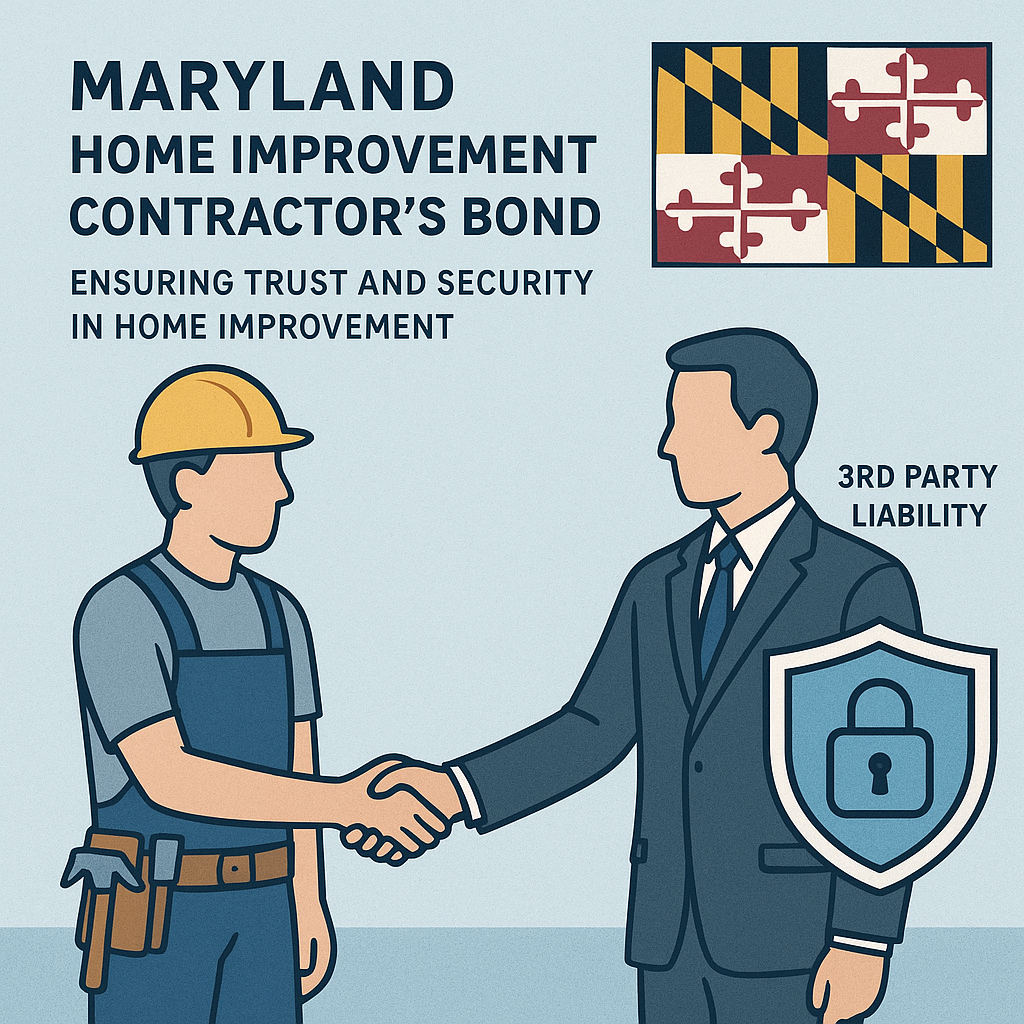
Picture this: You’ve just hired a contractor to remodel your kitchen. The design looks amazing, the timeline is set, and you hand over a hefty deposit. Weeks later, the work is sloppy, the contractor vanishes, or the project doesn’t meet local building codes. It’s a homeowner’s worst nightmare. In Maryland, there’s a powerful safeguard built into the system to protect you from exactly that kind of financial and emotional headache—the Maryland Home Improvement Contractor Bond. But what is it, how does it work, and why does third-party liability matter so much? Let’s break it all down in plain English.
What Is a Maryland Home Improvement Contractor Bond?
At its core, a Maryland Home Improvement Contractor Bond is a type of surety bond. Think of it as a three-way promise between the contractor (that’s the principal), the state of Maryland (the obligee), and the bonding company (the surety). The bond guarantees that the contractor will follow all state laws, regulations, and codes when working on your home. If they don’t, the bond steps in to cover financial losses up to a certain amount.
You might hear it called an MHIC bond because it’s tied directly to the Maryland Home Improvement Commission (MHIC). In Maryland, any contractor performing home improvement work valued at $500 or more must be licensed by the MHIC—and part of that licensing process is securing this bond. It’s not optional. It’s a legal requirement.
Why Does Maryland Require This Bond?
The short answer? To protect the public. Home improvement projects can go sideways for all sorts of reasons—unscrupulous contractors, financial instability, or simple incompetence. The bond acts as a financial safety net for homeowners who suffer losses because a contractor broke the rules.
Maryland legislators understood that suing a contractor in court can be slow, expensive, and uncertain. The MHIC bond creates a much faster, more direct path to compensation. It also incentivizes contractors to do the right thing from the start. After all, if a claim is paid out, the contractor is personally on the hook to reimburse the bonding company for every penny.
The Role of Third-Party Liability in Home Improvement Bonds
Here’s where the term “third-party liability” comes into play. In a surety bond, the contractor is the first party, the state is the second party, and you—the homeowner—are the third party. The bond is designed specifically to compensate third parties like you when the contractor violates the terms of their license. That’s third-party liability in a nutshell.
Unlike a contractor’s general liability insurance, which might cover accidental damage to your property during the job, the MHIC bond covers financial harm caused by a contractor’s failure to meet legal and contractual obligations. Think of the bond as a promise backed by money, while insurance is protection against accidents.
How Does the Bond Protect Homeowners in Real Life?
Let’s make this concrete. Imagine you hire a contractor to install a new deck. You pay $7,000 upfront. The contractor starts the work but halfway through, they stop showing up. You can’t reach them, and the deck is left in a dangerous, unfinished state. After giving the contractor a reasonable chance to fix the problem, you can file a claim against their MHIC bond.
Another common scenario: a contractor uses substandard materials or fails to pull the proper permits. Months later, a county inspector flags the work and you have to pay someone else to tear it out and redo it. Again, the bond is there to help you recover those costs—typically up to the bond’s full penalty amount, which for most MHIC bonds is $20,000.
It’s important to understand what the bond doesn’t cover. It won’t pay for simple dissatisfaction (like not liking the paint color you picked), nor will it cover workplace injuries or damage to the contractor’s own tools. Those fall under other types of insurance. The bond’s sole purpose is to ensure the contractor plays by the rules.
The Difference Between a Bond and Insurance—And Why It Matters
A common misconception is that a contractor’s bond works like an insurance policy for the contractor. It doesn’t. Let’s clear that up with an analogy. Imagine renting a car: the rental agency requires a deposit. If you return the car damaged, they use the deposit to fix it. The deposit protects the rental agency, not you. A surety bond works the same way—it protects the homeowner and the state, not the contractor.
When a claim is paid, the bonding company will immediately seek reimbursement from the contractor. In the insurance world, the insurance company absorbs the loss. With a bond, the contractor absorbs the loss. That’s why legitimate contractors take bonding very seriously. A single valid claim can jeopardize their ability to stay in business.
How Do You Get an MHIC Bond as a Contractor?
If you’re a contractor reading this, you might be wondering how to secure your bond. The process is straightforward but does involve a credit check. Surety companies use your personal and business credit scores to determine the bond premium—basically the cost you pay to get the bond.
Here’s the typical path:
- Complete the MHIC license application through the Maryland Department of Labor. You’ll need to provide proof of experience, financial references, and pass an exam.
- Apply for the bond with a licensed surety company or an agency that specializes in contractor bonds. You can often do this online.
- Pay the premium, which is usually a small percentage of the total bond amount. For the standard $20,000 bond, premiums can range from $100 to $1,000 or more per year, depending on your credit profile.
- File the bond with the MHIC and keep it active as long as your license is valid.
What Affects the Cost of a Maryland Home Improvement Contractor Bond?
The $20,000 bond amount doesn’t mean you pay $20,000. You only pay the premium. Rates typically fall between 0.5% and 5% of the bond amount for most applicants. So, a contractor with excellent credit might pay as little as $100 annually, while someone with challenged credit could pay closer to $1,000.
Factors that influence your premium include:
- Personal credit score: The biggest factor. Higher scores mean lower risk in the eyes of the surety.
- Business financial history: Bankruptcies, liens, or judgments can push your rate higher.
- Years of experience: A solid track record can sometimes help offset minor credit issues.
- Prior claims: A history of bond claims will make you a higher risk.
Many bonding agencies offer programs for contractors with less-than-perfect credit, so don’t assume you can’t get bonded. It may just cost a bit more.
What Should Homeowners Do If Something Goes Wrong?
You don’t need to be a legal expert to use the bond as it was intended. If you believe a licensed Maryland contractor has violated the law or their contract, here’s a simple action plan:
- Document everything. Keep copies of your contract, receipts, photos of the work, and logs of all communication.
- Attempt to resolve the issue directly with the contractor in writing. Many disputes never reach the bond stage because contractors want to protect their reputation and bonding capacity.
- Contact the MHIC to file a formal complaint. The commission can investigate and, if they find wrongdoing, may suspend or revoke the contractor’s license.
- File a claim against the bond if the contractor fails to make things right. You’ll need to provide evidence of the violation and the financial loss you suffered.
It’s important to note that the bond has a limit—$20,000 for most cases. If your loss exceeds that amount, you may need to pursue additional legal remedies. But for many remodeling and repair projects, the bond provides substantial protection.
Common Myths About Contractor Bonds in Maryland
Let’s bust a few persistent myths so you can move forward with clarity, whether you’re a homeowner or a contractor.
Myth #1: A bond is the same as insurance. We’ve already touched on this, but it bears repeating. Insurance protects the contractor from accidents; the bond protects the public from contractor misconduct.
Myth #2: Only large companies need bonds. Nope. Any home improvement contractor in Maryland doing $500+ in work must be licensed and bonded. Even a solo handyman hanging a door needs to comply if they’re doing business properly.
Myth #3: Homeowners can claim bond money for any dissatisfaction. The bond only kicks in for clear violations of Maryland home improvement law or the terms of your written contract. Disputes over minor cosmetic issues generally don’t qualify.
Myth #4: The bond covers subcontractors automatically. If a subcontractor messes up, the primary contractor is still responsible. The bond covers the actions of the licensee, so you don’t need to chase down the subcontractor—the contractor must answer for their entire team.
Staying on the Right Side of the Law
For contractors, maintaining your MHIC bond in good standing isn’t just about avoiding penalties. It’s a mark of credibility. When homeowners see that you’re bonded and licensed, they know you’re serious about your trade and committed to quality. It builds trust before you ever pick up a hammer.
For homeowners, the Maryland Home Improvement Contractor Bond is one of the strongest consumer protections in the country. It turns the often-intimidating idea of “third-party liability” into a real, accessible safety net. Next time you’re planning a home upgrade, ask to see a contractor’s MHIC license and verify their bond status. It only takes a few minutes and could save you thousands of dollars—and countless sleepless nights.
Whether you’re swinging the hammer or signing the contract, understanding how this bond works puts you in control. Because a well-informed choice is always the best foundation for a successful home improvement project.