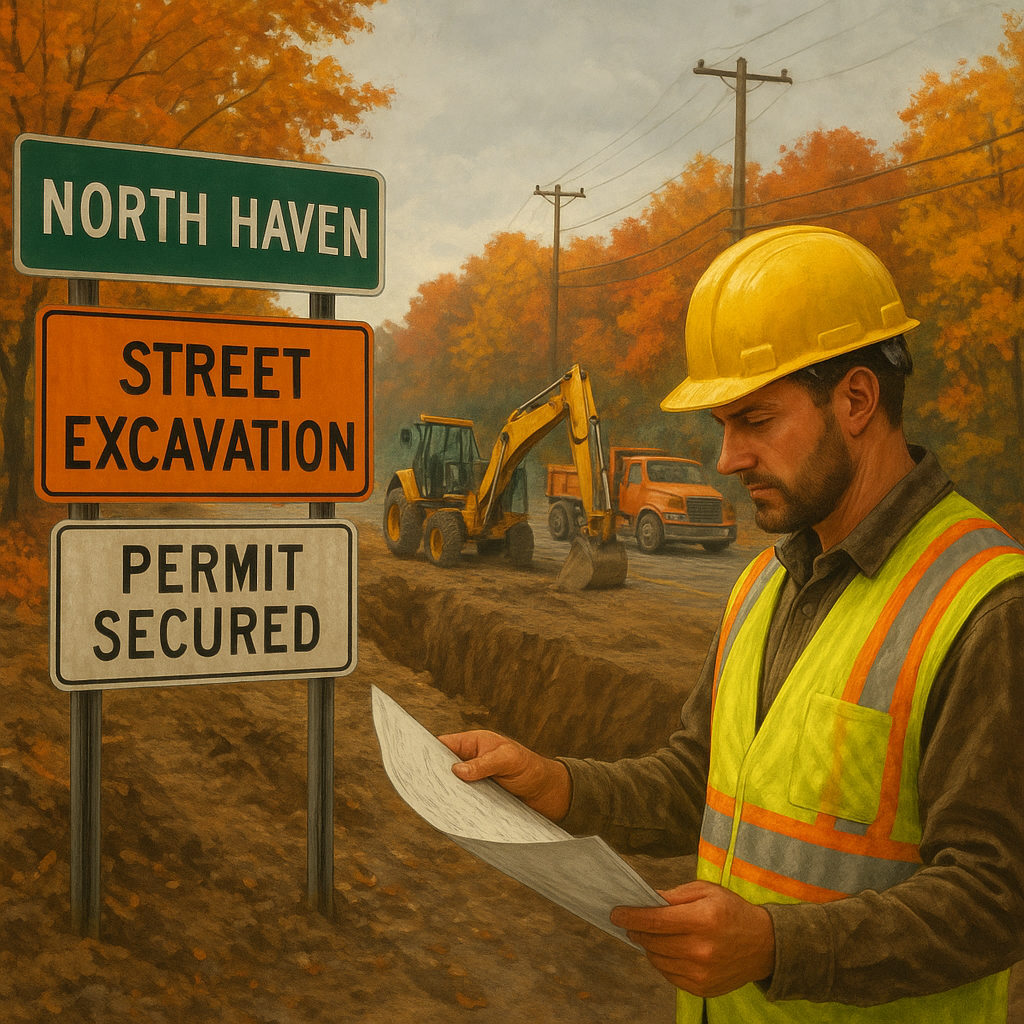
If you’re planning to dig up a street, sidewalk, or public right-of-way in North Haven, Connecticut, you’ve probably heard the term “highway excavation bond” thrown around. It might sound like complex government paperwork, but it’s actually a straightforward protection tool that keeps both contractors and the town safe.
Let’s walk through what this bond really is, why North Haven requires it, and how you can get one without pulling your hair out. Think of it as a helpful handshake between you, the town, and the folks who live and drive here.
What Exactly Is a Highway Excavation Bond?
A highway excavation bond is a type of surety bond. If you’ve never dealt with surety bonds before, a simple analogy can help. Imagine you’re borrowing a friend’s expensive camera. You promise to return it in perfect condition, but your friend is a little nervous. So, a third person steps in and says, “I guarantee they’ll fix or replace it if something goes wrong.” That’s what a surety bond does—it brings in a third party (an insurance or bonding company) to guarantee the job will be done right.
In North Haven, when you tear up a public street for utility work, sewer line repair, or driveway installation, the town wants assurance you’ll put everything back the way you found it. The highway excavation bond is your promise to restore the pavement, curbing, sidewalks, and any disturbed area to the town’s standards. If you don’t, the bond covers the cost of fixing it.
Why the Town of North Haven Cares So Much
North Haven is a community that values safe, smooth roads. Nobody likes surprise potholes or uneven trenches a year after a project wraps up. The town’s requirement for a street excavation permit and the associated bond isn’t about making your life difficult—it’s about long-term protection for everyone who uses that roadway.
Picture this: you’re a homeowner getting a new water line installed. The contractor cuts open the asphalt, completes the pipe work, and fills the trench. Fast forward through a harsh Connecticut winter. Freeze-thaw cycles can loosen that patch if it wasn’t compacted properly. Without a bond in place, who pays for the sinking pavement? Often, it’s the taxpayer. With a bonded contractor, the town has a financial remedy to call on the bond and fix the issue without dipping into public funds.
Who Needs This Bond in North Haven?
It’s not just massive construction companies. Any person or business opening up a town-owned street, sidewalk, or right-of-way will likely need a street excavation permit and a corresponding bond. This includes:
- Plumbers replacing sewer or water services
- Utility contractors installing gas, electric, or cable lines
- Driveway installers creating or expanding curb cuts
- General contractors connecting to municipal infrastructure
- Landscapers doing major drainage work that requires road cuts
Even a small job—like a 4-foot trench for a residential service line—can trigger the requirement. It’s always best to check with the North Haven Engineering or Public Works Department before you start digging.
The Permit-Bond Connection Made Simple
In North Haven, the highway excavation bond and the street excavation permit are a package deal. You can’t get the permit without posting the bond. The bond amount typically depends on the scope and size of the project. A minor curb cut might require a lower bond amount, while a large-scale utility trench spanning several blocks will need more coverage.
This isn’t a hidden fee—it’s a temporary guarantee. Once you complete the work, pass the town’s inspection, and the restoration holds up through a defined maintenance period (often one winter season or a full year), the bond obligation is released. You get the bond premium back only in the sense that the risk is removed, but the premium you paid for the bond is a non-refundable service cost, similar to an insurance premium.
A Real-Life Example to Clear Things Up
Let’s say Maria’s Plumbing is hired to replace a collapsed sewer lateral on Oak Avenue. Her crew obtains a street excavation permit from the Town of North Haven and secures a $10,000 highway excavation bond. The job goes smoothly—they saw-cut the pavement, dig, install the new pipe, backfill with gravel, and do a temporary asphalt patch.
The town inspector checks the work and gives the green light. A few months later, the permanent paving is laid. Maria’s bond remains in place for an additional year. If a dip or crack appears due to settling, the bond pays for the repair. After the maintenance period ends with no issues, the bond is closed. Maria moved on with a happy customer and a good reputation with the town.
How Much Does a North Haven Excavation Bond Cost?
Here’s some good news: you don’t need to pay the full bond amount out of pocket. Surety bonds work on a premium basis. If the town requires a $15,000 bond, you’ll pay a small percentage of that—typically 1% to 5% of the total bond amount—as an annual premium. For a $15,000 bond, you might pay between $150 and $750 per year, depending on your credit score, business financials, and experience.
Many small contractors with decent credit find the cost surprisingly affordable. It’s a small investment to stay compliant and show the town you’re a responsible professional. Think of it as the cost of doing business on public property.
Step-by-Step: Getting Your Bond and Permit
Navigating the process doesn’t have to be confusing. Here’s a simple path to follow:
- Contact the North Haven Engineering Department. They’ll tell you the exact bond amount and any specific application forms you need. They might call it a “Highway Excavation Bond” or a “Street Opening Bond.”
- Gather your project details. Know the street location, length of trench, and type of disturbance. This helps bonding companies give you an accurate quote.
- Reach out to a surety bond agency. You can work with an agency that specializes in Connecticut contractor bonds. They’ll ask for basic business info, possibly a credit check, and will quote you a premium.
- Pay the premium and receive your bond form. You’ll get a legal document stating the bond number, coverage amount, and the obligee (Town of North Haven).
- Submit the bond with your permit application. Once the town reviews and accepts it, you’ll get your permit. Keep a copy of the bond on the job site.
- Do the work, schedule inspections, and wrap it up. After final approval and the maintenance timeline, request a bond release if needed.
Common Questions People Ask
Can I use a cash deposit instead of a bond?
Some municipalities allow a cash or certified check in lieu of a surety bond. You’d need to confirm if North Haven accepts this. A bond is often easier because it doesn’t tie up your working capital. Cash deposits may be held for a long time, while a bond costs just the premium.
What happens if I don’t get the bond?
Skipping the bond isn’t an option if you want a legal street excavation permit. Working without permission can lead to stop-work orders, fines, and even liability for damages. The town might also require you to re-excavate improperly restored areas at your own expense. It’s a headache nobody wants.
Do I need a new bond for every project?
It depends on the town’s policy. Some contractors opt for a blanket bond that covers multiple jobs over a year, up to a certain limit. For occasional projects, single-job bonds work just fine. Ask the bonding agency what’s most cost-effective for your work volume.
Why This Matters for North Haven’s Future
Roadwork might seem like a temporary inconvenience, but it has lasting effects. A poorly restored trench can shorten the life of the pavement, cause vehicle damage, and lead to ice patches in winter. The bond requirement isn’t about red tape—it’s a quality assurance tool. It encourages contractors to do the job right the first time because their reputation (and future bond costs) are on the line.
For homeowners hiring a contractor for a project that touches the street, asking “Are you bonded and do you have a North Haven street excavation permit?” is a smart move. It’s a quick way to filter out fly-by-night operators and protect your own property from shoddy work that could affect your driveway or yard drainage.
Keeping Your Bond in Good Standing
Your bond isn’t just a piece of paper you file away. The town expects compliance. If a problem arises—say the temporary patch sinks before the permanent paving goes in—address it immediately. Proactive communication with the town and the bonding company can prevent a formal claim against your bond. Claims make it harder and more expensive to get bonded in the future, so respect the process.
It’s also wise to document your work thoroughly. Take photos before, during, and after excavation. Keep copies of inspection reports. This evidence can be invaluable if a dispute arises, helping you prove you met the required standards.
Final Thoughts on Navigating the Bond Process
Understanding highway excavation bonds for North Haven street projects puts you ahead of the game whether you’re a contractor starting out or a homeowner managing a large renovation. The bond protects the community’s infrastructure and gives everyone peace of mind.
Next time you see a freshly patched trench on your block, you’ll know there’s a system behind it—a system designed to keep North Haven’s roads safe, smooth, and reliable for years to come.
If you have more questions, the North Haven Public Works team is a fantastic resource. A quick call or a visit to their office can give you the exact requirements so you can move forward confidently. And remember, a little bit of paperwork upfront can save a mountain of trouble later.