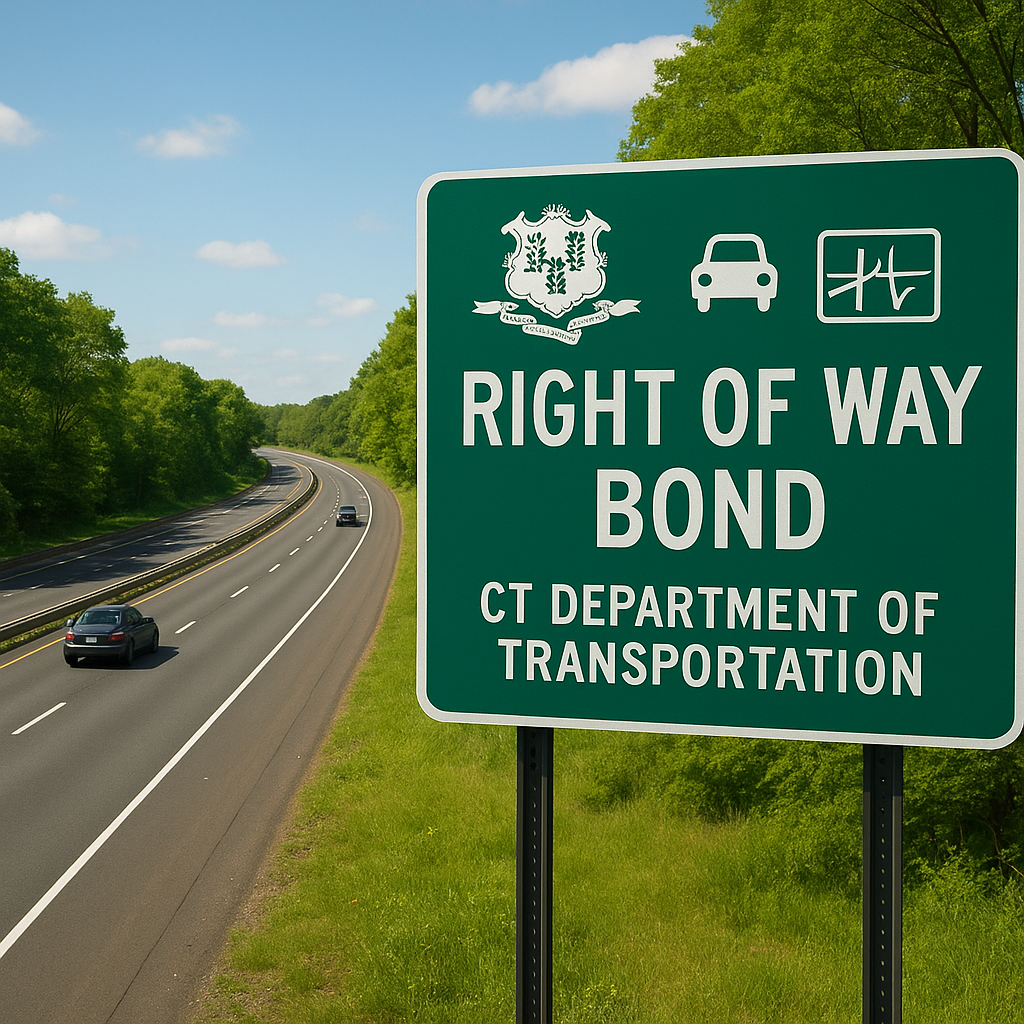
Have you ever driven through a construction zone on a Connecticut highway and wondered how all those lanes get wider, or how a new exit ramp appears seemingly out of nowhere? It’s easy to focus on the orange cones and heavy machinery, but behind every expansion project is a world of legal and financial safeguards. One of the most important pieces of that puzzle is something called a Right of Way Bond—sometimes called a Highway MTG Right of Way Bond. If you’re a contractor, developer, or just a curious taxpayer, understanding this bond can save you a lot of headaches.
What Exactly Is a Highway Right of Way Bond?
Think of a right of way bond as a promise with a financial backbone. It’s a type of surety bond that the Connecticut Department of Transportation (CT DOT) requires before anyone can perform work that impacts public roadways or state highway land. In simple terms, it’s a three-party agreement. The contractor or developer (the principal) buys the bond from a surety company. The bond guarantees to the CT DOT (the obligee) that the work will follow all rules, that any property acquired will be handled legally, and that the public won’t be left paying for mistakes.
If the contractor fails to meet their obligations—say they don’t properly restore a homeowner’s driveway that was partially taken for a road widening, or they skip out on payments for land acquisition—the bond steps in to cover the costs. It’s a lot like a security deposit on a rental apartment. The landlord holds it in case something goes wrong, but you get the benefit of trust and a smooth transaction.
Why Does the CT DOT Require This Bond?
The state of Connecticut doesn’t just love paperwork. The bond requirement is all about protecting everyone involved. Highway expansion projects often mean the state needs to acquire strips of private land, relocate utility poles, or temporarily disturb property near the road. The bond makes sure that property owners are compensated fairly and that any damage is fixed. It also shields taxpayers from shouldering the financial burden if a contractor abandons the job or performs substandard work.
Without this bond, the state would have to chase down contractors in court to recover costs—a slow and expensive process. The bond streamlines accountability. For the CT DOT, it’s a non-negotiable part of the puzzle when issuing permits for right of way work connected to highway expansions.
Who Needs a Connecticut Highway Right of Way Bond?
You might think only massive construction companies need to worry about this, but the net is wider than you’d expect. Anytime a project touches a state highway’s right of way—think new driveway connections, utility installations, commercial developments that require road widening, or the full-on addition of travel lanes—the bond enters the picture. This includes:
- General contractors building near state highways
- Subcontractors handling excavation or paving
- Utility companies laying pipes or cables under roads
- Developers creating subdivisions that feed into state routes
Even if you’re a small business owner planning to expand your parking lot and it butts up against a state road, the CT DOT may require you to secure a right of way bond before you break ground. The specific bond language often mentions “Highway MTG Right of Way Bond,” where MTG typically stands for “Mortgage.” Why mortgage? Because the bond also covers situations where the property being acquired still has an active mortgage, ensuring the bank’s interest is protected during the transfer. So if you see that term, don’t let it intimidate you—it’s simply another layer of financial protection.
How Does the Bonding Process Work?
Getting a right of way bond isn’t as complicated as it sounds. Here’s a look at the typical journey:
Step 1: Determine the required bond amount. The CT DOT will specify a dollar figure based on the project’s scope. It might be a flat amount or a percentage of the total contract value.
Step 2: Apply with a surety company. You’ll provide basic information about your business, your financial history, and the project details. Think of it as a background check that helps the surety assess risk.
Step 3: Underwriting and approval. The surety reviews your credit score, business experience, and sometimes your personal financial standing. This helps them decide whether to issue the bond and at what premium.
Step 4: Pay the premium. You don’t pay the full bond amount; instead, you pay a small percentage, usually between 1% and 3% of the total bond value. So for a $100,000 bond, you might pay as little as $1,000.
Step 5: File the bond with the CT DOT. Once the bond is in your hands, you submit it to the state as part of your permit package. Then you’re cleared to start work.
If a valid claim arises later, the surety will pay out up to the bond limit and then seek reimbursement from you. That’s why it’s critical to hold up your end of the deal—this isn’t insurance that lets you off the hook.
What About the “MTG” Part? Mortgage Considerations Explained
Let’s demystify that “MTG” abbreviation. In many right of way bond documents, MTG refers to a mortgage. When the state acquires property for a highway widening, that land might have an existing mortgage. The bond assures that any funds paid to the property owner first satisfy the mortgage lender’s interest. In other words, the bank doesn’t get left in the dust when the state buys a strip of someone’s front yard to make room for a turning lane.
So a Highway MTG Right of Way Bond simply bundles the traditional right of way obligations with mortgage-related safeguards. It’s a belt-and-suspenders approach that keeps the entire transaction clean and legally sound. For contractors, this means the bond covers a broader set of risks, but the application process remains largely the same.
Key Factors That Affect Your Bond Cost
Wondering how much you’ll actually pay? While the bond amount is set by the CT DOT, your premium depends on a few personal factors:
- Credit score: A strong score signals reliability and often earns the lowest rates.
- Business financials: Solid cash flow and a clean balance sheet make underwriters smile.
- Industry experience: A track record of completed projects without claims reduces risk.
- Project size and complexity: Bigger projects mean bigger bonds and potentially higher premiums.
If your credit is less than perfect, don’t panic. Some surety companies specialize in helping contractors with blemishes, though the premium might be a bit higher. The important thing is to start the conversation early so you’re not scrambling at the last minute.
Common Mistakes That Can Trip You Up
Avoiding a few pitfalls can make the entire bonding experience smoother than fresh asphalt. First, don’t wait until a permit deadline is breathing down your neck. Bond approval takes time, especially if the surety needs additional documentation. Second, don’t underestimate the bond amount required. The CT DOT might adjust the figure based on actual project scope, so assume a worst-case scenario when budgeting. Third, treat your bond like a legal handshake. If you cut corners on right of way restoration or ignore a property owner’s complaint, you risk a claim that can spike your future premiums and damage your reputation.
Finally, don’t gloss over the mortgage angle. If your project involves acquiring mortgaged property, be upfront with your surety agent. Full transparency helps them structure the bond correctly and avoid coverage gaps.
Benefits of Getting Your Bond Right the First Time
When you secure the proper Connecticut highway right of way bond early, you unlock a cascade of positives. Your project stays on schedule because you’re not held up by permit delays. You build trust with the CT DOT, which can lead to more work down the road. Property owners feel safer knowing a financial safety net exists, reducing the chance of disputes. And you protect your business’s bottom line from unexpected legal bills.
In many ways, this bond is a quiet hero of infrastructure growth. It keeps the gears turning while Connecticut expands routes like I-84, Route 7, or the countless local arteries that need a little extra breathing room. Next time you breeze past a highway expansion zone, you’ll know a little more about the invisible glue holding it all together.
Ready to Tackle Your Project?
Understanding right of way bonds might feel like learning a new language, but you don’t have to go it alone. The key is to partner with a surety bond professional who knows Connecticut’s specific requirements inside and out. Ask questions like, “What exactly does the CT DOT require for my project?” and “Does my bond need to address any mortgage situations?” The answers will steer you toward the right coverage and keep your expansion plans rolling ahead smoothly.
Whether you’re widening a two-lane road into four or simply adding a turn lane near your business, the right bond is your ticket to a compliant and stress-free project. Embrace it as the foundation of a job well done, and you’ll be miles ahead before the first excavator even arrives.