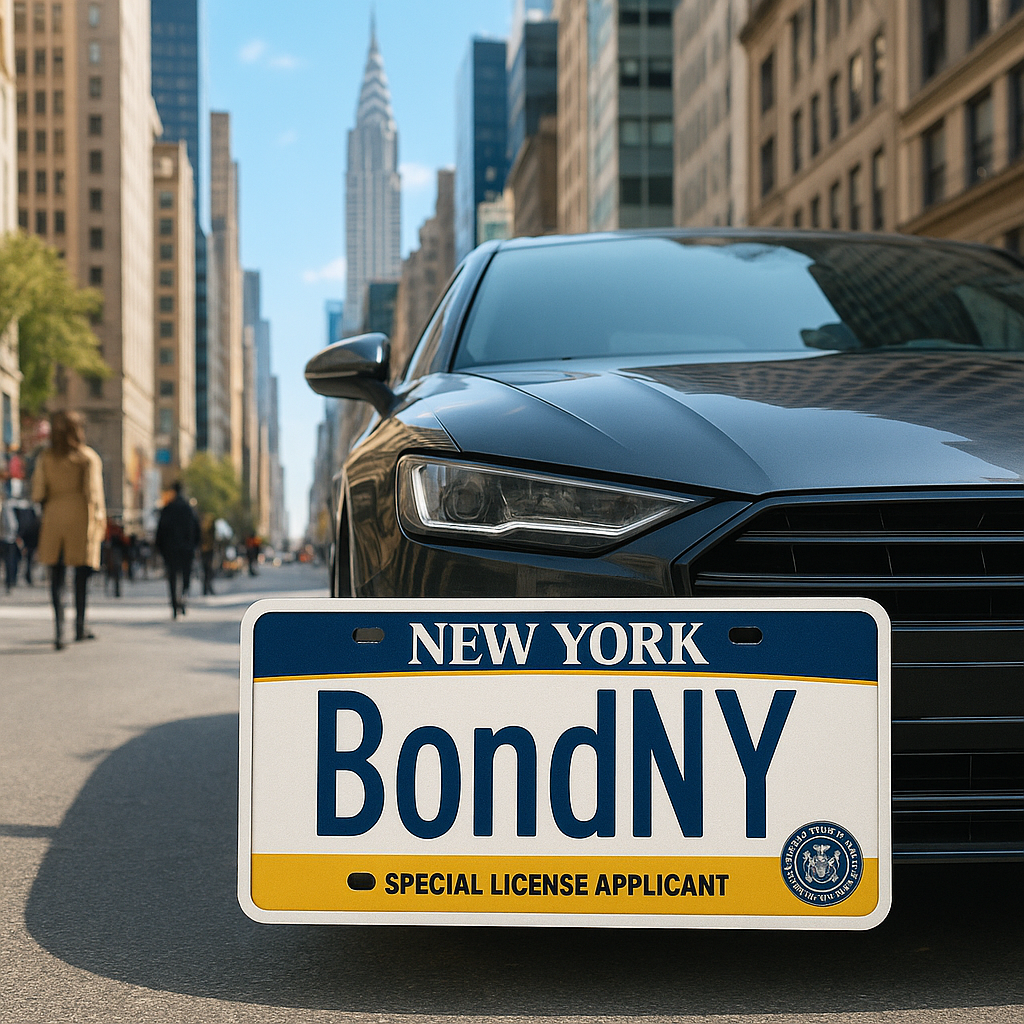
Picture this: you’ve got a brilliant idea for a custom license plate. Maybe you want to launch a small business selling themed novelty plates, or perhaps you’re an auto dealer planning to issue temporary tags that double as custom branding tools. You show up at the New York Department of Motor Vehicles, and suddenly someone mentions a “bond.” Wait, a bond? You didn’t think you’d need to talk about insurance just to get a piece of metal with letters on it. But here’s the deal: the Dept of Motor Vehicles of the State of NY takes license plates seriously, and a Custom License Plate Bond is often the key that unlocks your project.
In this guide, we’ll walk through everything you need to know—minus the confusing jargon. Think of me as your friendly neighborhood translator, turning government-speak into plain, actionable steps. Whether you’re a special license applicant or just curious about how these bonds work, you’ll finish this read feeling ready to tackle the process head-on.
What Exactly Is a Custom License Plate Bond?
Let’s keep this simple. A Custom License Plate Bond is a three-party promise. You (the applicant) promise the DMV (the obligee) that you’ll follow all the rules around manufacturing, distributing, or issuing custom plates. But since promises can be broken, a third party—the surety company—steps in and says, “If they don’t keep their word, we’ll cover the financial loss up to the bond amount.”
So, is it insurance for you? Not exactly. It’s protection for the state and the public. If you sell plates that don’t meet regulations, or if a batch of custom tags causes confusion on the road, the bond kicks in to make things right. You’re still responsible for paying back the surety company eventually. Think of it like a cosigner on a lease: the landlord gets paid, but you better believe your friend will want that money back.
Who Actually Needs This Bond in New York?
Not every person ordering a personalized “LUVNYC” plate needs a bond. That’s a common head-scratcher. The bond is typically tied to businesses or individuals who produce, issue, or sell custom license plates on a larger scale. Here are a few real-world scenarios where the NY DMV will likely require one:
- Novelty plate manufacturers: Creating decorative or commemorative plates that could be confused with official plates.
- Auto dealers issuing temporary custom tags: Some dealers brand their temp tags with logos or slogans.
- Plate distributors and wholesalers: Supplying custom plates to other businesses across the state.
- Special event organizers: Issuing one-off plates for parades, car shows, or promotional fleets.
If your application falls under the Special License Applicant category, the DMV will spell it out. But when in doubt, call your local DMV office and ask, “Will I need a surety bond for this?” Trust me, a five-minute phone call can save weeks of confusion.
Why Does the NY DMV Require One Anyway?
It’s not just red tape. New York has a massive, fast-moving traffic ecosystem. Custom plates, if misused, can create counterfeit tags, toll evasion nightmares, or even safety risks. The bond acts like a financial guardrail. It makes sure you’ll play by the rules because there’s money on the line. Plus, it gives the public a way to recover damages if something goes sideways.
Imagine you produce a batch of replica plates that look way too much like official government plates. Law enforcement gets involved, fines pile up, and the state needs to undo the mess. The bond covers those cleanup costs without dipping into taxpayer dollars. It’s essentially a “seriousness deposit” that separates the pros from the fly-by-night operators.
How Much Does a Custom License Plate Bond Cost?
Now for the question you really care about. The total bond amount is set by the Dept of Motor Vehicles of the State of NY and usually ranges from $5,000 to $50,000, depending on the scope of your operations. But—and this is a big but—you don’t pay that full amount upfront. You pay a small percentage, called the premium.
For most applicants with decent credit, the premium lands between 1% and 5% of the bond amount. So if your required bond is $10,000, you might only pay $100 to $500 for a one-year term. Applicants with rocky credit can still get approved, though rates climb higher. The surety company sizes up your financial history, business experience, and sometimes personal credit score. A few tips to keep your premium low:
- Check your credit report for errors before applying.
- Get your business documentation organized.
- Compare quotes from multiple surety bond providers.
Step-by-Step: How to Secure Your Bond Quickly
Overwhelmed? Don’t be. Getting a Custom License Plate Bond in New York is actually a straightforward process if you break it down. Follow these steps, and you’ll be holding your bond paperwork in no time.
1. Confirm Your Bond Requirement with the DMV
Before spending a dime, get the specifics. The DMV will tell you the exact bond amount, the form number, and any unique wording that needs to appear. Sometimes they’ll hand you a document that says “Form DB-123” or something similar. Keep that safe; your bond agent will need it.
2. Gather Your Personal and Business Information
Surety applications ask for the basics: name, address, Social Security number, business tax ID, and a few years of financial history. If you’re a startup without revenue, they might look harder at your personal credit. Lay it all out before you apply, and the rest flies by.
3. Request Quotes from Reputable Surety Companies
Don’t just grab the first bond ad you see. Reach out to specialized surety bond agencies that deal with DMV bonds regularly. They’ll understand the New York requirements inside out and often can beat generic insurance broker rates. Ask about multi-year discounts if you plan to be in business for a while.
4. Complete the Application and Pay the Premium
Once you choose a quote, you’ll complete a short application. In many cases, you can e-sign everything digitally. Pay the premium, and the bond gets issued—sometimes within 24 hours.
5. File the Bond with the DMV
The surety will send you the official bond form. You then submit it to the DMV along with the rest of your special license applicant packet. Make a copy for yourself. The DMV won’t process your application without the original bond on file, so double-check that it’s included.
Common Pitfalls That Trip People Up
I’ve seen enough “oops” moments to fill a small book. Here’s how to sidestep them.
- Skipping the DMV’s exact wording: Generic bond language can get rejected. Always match the DMV’s required form exactly.
- Underestimating turnaround time: Don’t wait until the day before your launch. Bond underwriting can take a couple of days if your credit file needs a closer look.
- Assuming the bond covers you: It doesn’t. If you suffer a loss, you’re still on the hook. Pair your bond with proper business liability insurance.
- Forgetting to renew: A Custom License Plate Bond usually renews annually. Missing the expiration date can put your DMV license in jeopardy overnight.
What If You Have Less-Than-Perfect Credit?
Don’t panic. Surety companies aren’t looking for flawless scores; they’re looking for responsibility. Even with a bankruptcy or low credit, you can secure a bond through a high-risk market program. The premium might be higher—say 6% to 10%—but it’s still a fraction of the total bond amount. Work with a knowledgeable agent who knows how to shop non-standard markets. Over time, as your business builds a track record, you can request a re-rate and lower that premium.
Bringing It All Together
At first glance, “secured a Dept of Motor Vehicles of the State of NY Custom License Plate Bond” might sound like a bureaucratic tongue twister. But peel back the layers, and it’s just a promise—backed by a financial guarantee—that you’ll operate honestly and follow the rules. The DMV gets peace of mind, your customers get protection, and you get the green light to turn your custom plate vision into reality.
So, what’s your next move? Pick up the phone, clarify your bond amount with the DMV, and start that application. With the right surety partner, you’ll wonder why you ever sweated the details. After all, the open road is calling, and your custom plates should be on it.