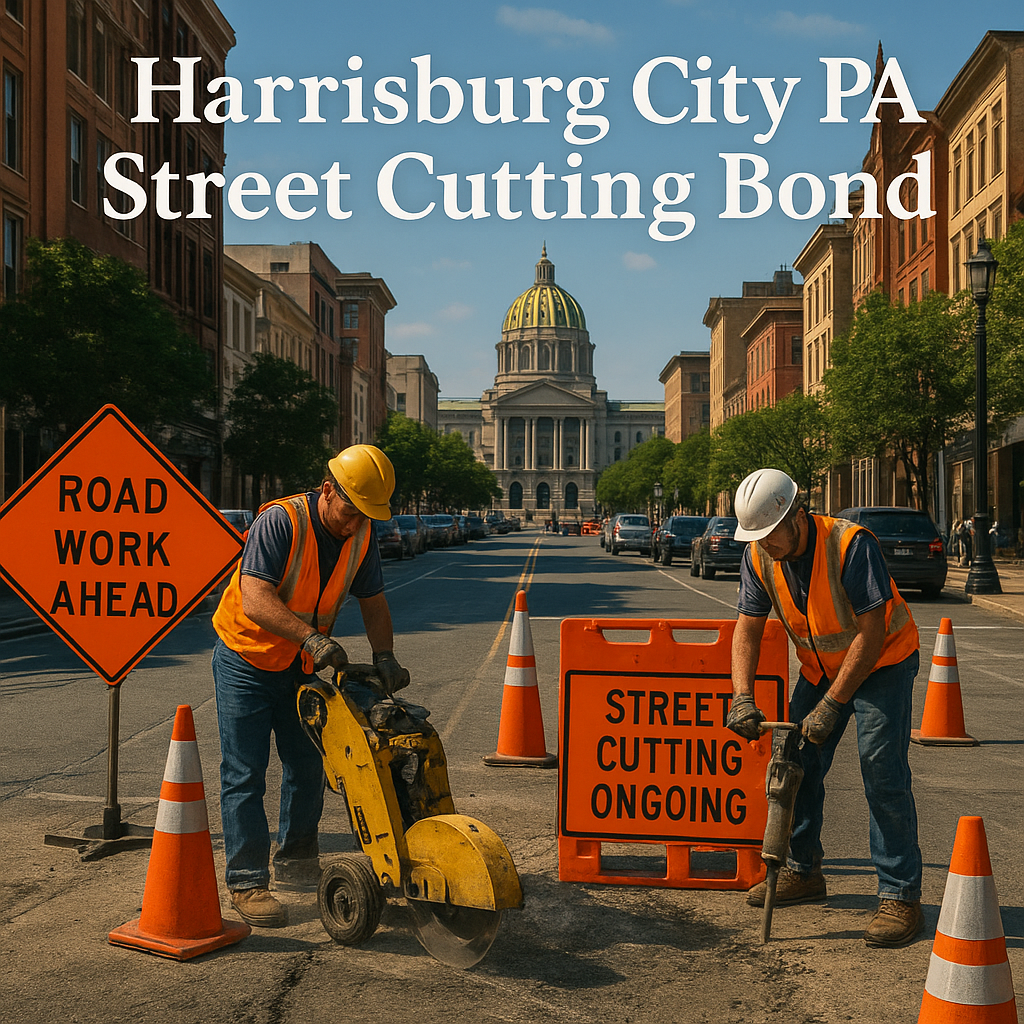
Anyone who’s ever driven through a freshly paved street only to hit a bumpy, uneven patch a few months later knows the frustration. Roads get torn up for water line repairs, gas main replacements, or fiber optic installations. But what happens after the work is done? Who makes sure the contractor actually fixes the road right? That’s where the City of Harrisburg’s new street cutting bond comes in—and it’s a big deal for anyone living, working, or driving in the capital city.
You might be thinking, “A bond? That sounds like something only lawyers and contractors care about.” I get it. But stick with me, because this little financial safeguard is quietly reshaping how Harrisburg protects your daily commute, your car’s suspension, and your tax dollars. Let’s unpack what a street cutting bond really is, why Harrisburg decided to implement it now, and what it means for local contractors and homeowners alike.
What Exactly Is a Harrisburg PA Street Cutting Bond?
Picture this: a plumber needs to dig into a public street to connect a new sewer line. They cut through the asphalt, excavate down several feet, complete the plumbing work, and then fill the hole. If they don’t compact the soil properly, use the right materials, or repave the surface to city standards, that spot will soon sag, crack, or cave. Now you’ve got a pothole waiting to happen—and the city is left holding the repair bill.
A street cutting bond (sometimes called a road cut bond or street opening bond) is a financial guarantee that the contractor will restore the road to the city’s specifications. It’s a three-party agreement between the contractor, the City of Harrisburg, and a surety company. The contractor purchases the bond, and if they fail to do the restoration properly or abandon the job, the city can file a claim to get funds to fix the damage. Essentially, it’s insurance for the pavement—and it puts the financial responsibility squarely on the folks who dig the hole.
Harrisburg’s move to implement this bond isn’t about creating red tape. It’s about accountability. Before, the city might have had to chase down contractors or use public funds for repairs that were someone else’s fault. Now, there’s a clear, enforceable structure in place.
Why Harrisburg Took Action Now
If you’ve driven around Allison Hill, Midtown, or uptown recently, you’ve probably noticed a flurry of construction. New development is booming. Older infrastructure is getting long-overdue upgrades. Every one of those projects often involves cutting into city streets. Without a consistent bonding requirement, the quality of restoration work was hit or miss. Some contractors did a beautiful job. Others left behind patches that looked like a teenager’s first attempt at frosting a cake—lumpy and doomed to fail.
The new street cutting bond levels the playing field. It tells every contractor, from the one-man plumbing operation to the big utility company, “You dig, you fix, you guarantee it.” It also gives the city a dedicated fund to pull from if things go south, which means your tax money stays where it belongs—serving the community, not patching up preventable potholes.
How Does the Bond Work in Real Life?
Let’s walk through a practical example. Say a homeowner hires a plumbing contractor to replace a water service line from the street to the house. The contractor gets the proper permit and then must also secure a street cutting bond from the city. The bond amount often depends on the size and depth of the cut, how many square feet of street surface will be disturbed, and the type of road (a sleepy residential lane versus a high-traffic corridor).
Once the underground work is finished, the contractor temporarily patches the road. The city then inspects the restoration. If it meets all standards—proper compaction, correct pavement thickness, smoothness—the bond is released or eventually expires with no claim. If the work fails within the bond’s warranty period (often one to three years), the city can require the contractor to fix it. If the contractor refuses or has gone out of business, the city makes a claim on the bond and uses the payout to hire someone else to do the permanent repair.
Think of it as a security deposit, but instead of handing over cash that sits in an envelope somewhere, the contractor pays a small percentage to a surety company for the coverage. It’s less expensive than tying up thousands of dollars, yet it still provides the same protection for the city.
Who Needs a Harrisburg City PA Street Cutting Bond?
If you’re a contractor working in Harrisburg, almost any time you cut into a public right-of-way, this bond will be on your checklist. That includes:
- Plumbers repairing water or sewer lines
- Gas company crews upgrading service lines
- Electricians running underground conduit
- Telecommunication contractors laying fiber optic cables
- Driveway installers when the project touches the street apron
- General excavators doing any subsurface work that disturbs the roadway
For property owners and project managers, this is also a signal: make sure your contractor is properly bonded. A contractor who can’t obtain a street cutting bond might be unlicensed, inexperienced, or carrying a poor track record. Hiring someone without the bond could put you at risk if the city later finds out and issues fines—or worse, makes you pay for the street damage.
What Makes Harrisburg’s Bond Different?
You might be wondering if this is just another bureaucratic hoop. After all, many cities in Pennsylvania already have bonding requirements. What makes Harrisburg’s street cutting bond stand out is its renewed focus on enforcement and clear communication. City officials have emphasized that they’ll be closely tracking permits and restoration deadlines. The bond isn’t just a piece of paper that gets filed away. It’s an active part of the city’s asset management strategy.
Harrisburg’s engineering department is also working to educate contractors about the bond before they break ground. This proactive approach means fewer surprises, faster approvals, and roads that stay smooth for years. The city is basically saying, “We want growth and infrastructure upgrades, but not at the cost of our streets falling apart.”
5 Big Benefits of the Street Cutting Bond for Harrisburg Residents
You might never need to buy a street cutting bond yourself, but its existence touches your life in tangible ways. Here’s how:
- Better road quality: Contractors have skin in the game. They know a sloppy patch could cost them their bond, so they’re more likely to do the job right the first time.
- Faster repairs: When a restoration fails, the bond provides immediate funds. No waiting for drawn-out legal battles or budget allocations.
- Protected public funds: The city doesn’t dip into its general fund to cover someone else’s poor workmanship.
- Fair competition: Responsible contractors aren’t undercut by lowball bidders who skip proper restoration steps. The bond requirement helps filter out risky players.
- Increased property value: Smooth, well-maintained streets boost neighborhood appeal and can even raise home values.
Common Questions About Harrisburg’s Street Cutting Bond
You might still have a few “what ifs” floating around. Let’s tackle some of the most frequent questions that pop up when a new bond requirement rolls out.
Is the bond cost passed on to the homeowner? Sometimes, yes. The contractor includes the bond premium as a line item in their bid. But consider it a small price for guaranteeing the restoration. Without a bond, you could end up with a $5,000 street repair bill down the road if the contractor botches the job and disappears.
What if the damage is minimal—just a tiny cut for a fiber line? Harrisburg typically scales the bond amount to reflect the scope of work. A small, shallow cut in a quiet residential street will have a lower bond requirement than tearing up a major arterial road. So the financial impact matches the risk.
How long does the bond remain in effect? Most street cutting bonds include a maintenance period, often 12 to 36 months after the final restoration is approved. That gives the city time to see how the patch holds up through freeze-thaw cycles and heavy summer traffic.
Can a contractor’s bond ever be canceled? Generally, the surety company can cancel the bond, but they must provide written notice to the city. Even after cancellation, claims can still be made for work already performed before the cancellation date. So the protection doesn’t just vanish overnight.
What Contractors Should Know Before Applying
If you’re a contractor reading this and you’ve got a job coming up in Harrisburg, here’s what you’ll want to do. First, contact the city’s engineering or public works department to confirm the exact bond amount and form required for your specific project. The bond is usually a standard surety form, but the dollar amount will vary. Most surety bond companies that write Pennsylvania license and permit bonds can issue a Harrisburg street cutting bond fairly quickly—often within 24 hours once your application is approved.
Your credit history and business financials will come into play. Surety companies want to see that you have experience completing street restorations without claims. If you’ve never bonded before, don’t panic. Many agents specialize in small contractor bonds and can guide you through the process. The premium is typically 1% to 5% of the bond amount for well-qualified contractors.
And here’s a pro tip: build a relationship with the city inspectors. When you know exactly what they’re looking for—compaction tests, asphalt temperature at the time of paving, proper joint sealing—you can prep your site so the inspection goes smoothly and the bond gets released without a hitch. Communication goes a long way in keeping your bonding costs low over time.
The Bigger Picture: A Smarter Way to Manage Growth
Harrisburg’s new street cutting bond isn’t an isolated policy tweak. It’s part of a larger conversation about how growing cities manage their aging infrastructure while welcoming new development. Every time a road gets cut open, it’s an opportunity to either strengthen the street network or weaken it. The bond ensures that opportunity results in a win for the public.
So next time you glide across a seamless patch of blacktop on Derry Street or see a work crew carefully compacting the base layer of an excavation on Front Street, you’ll know there’s a system quietly humming in the background—holding contractors to their promises and keeping Harrisburg’s roads smooth, safe, and long-lasting. And honestly, that’s something we can all feel good about, whether you drive a sedan, a delivery truck, or a beat-up bicycle.
If you’re planning a project that involves cutting into a city street, don’t wait until the last minute to sort out your bond. Reach out to the city early, get your paperwork in order, and choose a contractor who respects the process. Your neighbors (and their shocks absorbers) will thank you.