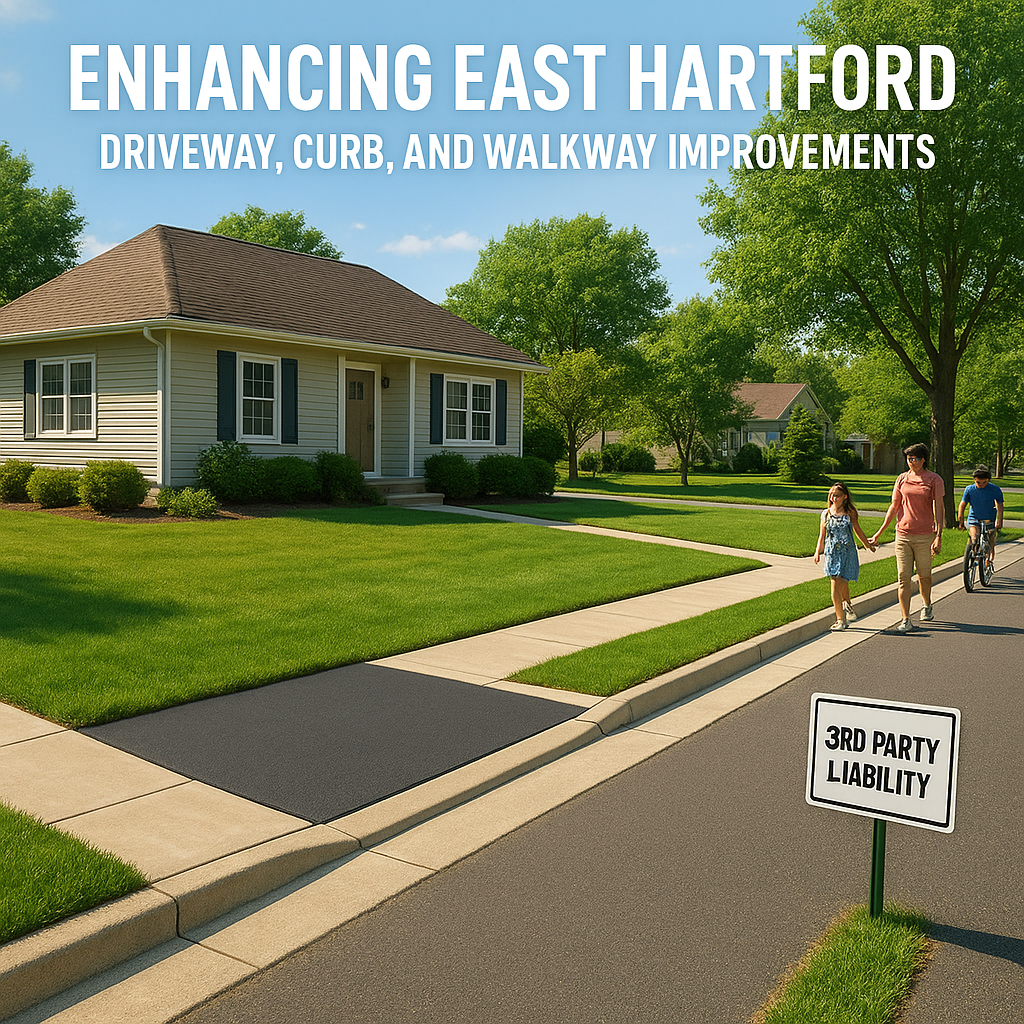
Taking care of your property means more than mowing the lawn and painting the shutters. The driveway where you park your car, the curb along the street, and the sidewalk that leads to your front door all play a huge role in your home’s look, safety, and value. If you live in East Hartford, Connecticut, you’ve probably noticed that our New England weather can be tough on concrete and asphalt. Cracks form, surfaces shift, and over time, even the sturdiest walkways start to show their age. But before you hire someone to pour a new driveway or replace a crumbling sidewalk, there’s a little-known piece of paper that can save you from a world of headaches: the Town of East Hartford Driveway, Curb & Walk Layer’s Bond.
Wait—what does a bond have to do with fixing my driveway? That’s a fair question. Let’s break it down in simple, everyday language so you can make a smart choice for your property.
What Exactly Is a Driveway, Curb & Walk Layer’s Bond?
Think of a bond like a financial safety net. In East Hartford, the town asks any contractor who installs, repairs, or replaces driveways, curbs, and sidewalks to carry this special bond. It isn’t an insurance policy for the contractor’s tools or a license to do business—it’s a promise to you, the homeowner, and to the town itself.
The bond says, “If this contractor doesn’t follow the rules, causes damage, or leaves a job half-done, there’s money set aside to make things right.” The town doesn’t want half-finished projects or unsafe walkways, and they certainly don’t want you to be stuck paying for someone else’s mistakes. The bond creates a layer of third-party liability coverage that protects you and your neighbors.
Why the Town of East Hartford Requires This Bond
Local governments love consistency. When a contractor digs up a curb or pours a new driveway apron where it meets the street, that work sits on public right-of-way or affects public infrastructure. The town needs to be sure the job meets safety codes, drainage standards, and doesn’t create a tripping hazard for everyone who walks by. The bond requirement helps East Hartford enforce those rules without having to chase contractors through court.
For you, the property owner, this requirement adds a layer of trust. A contractor who goes through the trouble of obtaining the proper Town of East Hartford Driveway, Curb & Walk Layer’s Bond shows they aren’t a fly-by-night operation. They’ve taken the time to register, pay the bond premium, and demonstrate that they stand behind their work. Choosing a bonded contractor means you’re far less likely to end up with a driveway that washes away after the first heavy rain or a curb that crumbles within a season.
Third-Party Liability in Plain English
You might hear the phrase “third-party liability” tossed around. It’s simpler than it sounds. The three parties are: you (the property owner), the contractor, and anyone else who could be affected by the work—say, a pedestrian who trips on a tool left on the sidewalk, or your neighbor whose lawn gets torn up by heavy equipment. If something goes wrong and a third party gets hurt or their property is damaged, the bond provides a financial cushion. Without it, you could potentially be dragged into a messy dispute.
Imagine a crew pouring concrete for your new walkway. In the middle of the job, a wheelbarrow tips over and cracks your neighbor’s freshly laid stone path. A bonded contractor has a clear path to make that right. If you hired an unlicensed, unbonded handyman, guess who your neighbor might come after? That’s right—you. The bond keeps you out of the middle, turning a stressful situation into a manageable one.
How This Bond Protects Your East Hartford Property
Let’s get concrete—pun intended—about the ways this bond works in your favor. When you hire an East Hartford driveway contractor who carries the proper bond, you gain several protections.
- Job Completion Guarantee: If the contractor abandons the project before it’s finished, the bond can cover the cost to hire someone else to complete the work up to the town’s standards. You won’t be left with a half-excavated driveway and an empty wallet.
- Code Compliance: East Hartford has specific rules about slope, materials, and drainage. Bonded contractors know those rules because ignoring them can trigger a claim against their bond. Your new driveway or sidewalk will pass inspection without nasty surprises.
- Financial Accountability: The bond acts like a motivation. Contractors don’t want claims filed, because that raises their insurance costs. They’ll do their best work the first time to protect their business reputation and wallet.
- Clear Dispute Resolution: If something does go south, you have a clear process to recover your money rather than fighting a losing battle with a disappearing contractor.
Have you ever paid someone a deposit and then spent weeks wondering if they’d ever come back? That sinking feeling is exactly what the bond is designed to prevent.
What Makes East Hartford Driveways and Sidewalks Unique
Our town sits right on the Connecticut River, which means soil conditions can be tricky. Frost heaves, shifting ground, and variations in drainage mean that a one-size-fits-all approach doesn’t work. A local contractor who understands the quirks of East Hartford soil and weather will build a driveway that stays level and a sidewalk that doesn’t turn into a winter ice rink. The bond requirement adds an extra layer of assurance that the contractor has been vetted with the town, but you still want someone with deep local roots.
Think about the difference between a well-installed asphalt driveway and one that was rushed. The cheaper job might look fine for a month, but then tiny cracks start appearing. Water seeps in, freezes, and before you know it, you’re looking at a repair that costs twice as much as the initial installation. A bonded, experienced East Hartford sidewalk and driveway contractor uses proper compaction, the right gravel base, and high-quality materials that laugh at Connecticut winters.
Choosing the Right Contractor in East Hartford
So you know a bond is important. How do you make sure the person you hire actually has one? Don’t be shy about asking. A legitimate contractor will be happy to provide their bonding information. You can also verify with the Town of East Hartford directly if you want extra peace of mind.
Beyond the bond, look for these signs of a quality pro:
- Physical address and local phone number—not just a cell phone and a generic website.
- Proof of general liability insurance—this is different from the bond and protects against work-related accidents on your property.
- A portfolio of recent local projects—drive around and see their work in your own neighborhood.
- Clear, written estimates—vague quotes are a red flag.
- References you can call—and actually call them.
Remember, the bond requirement exists for a reason. It gives you a starting filter. You wouldn’t board a plane if the pilot didn’t have a license, right? Why trust your home’s biggest visible asset to someone who hasn’t met the basic bar?
The Ripple Effect of a Beautiful, Safe Walkway
A freshly laid driveway or a smooth, even sidewalk does more than make your house look good in Instagram photos—though it certainly does that, too. It keeps your family safe from trips and falls. It boosts your property value when it’s time to sell. Even from a practical standpoint, a well-designed driveway with proper drainage prevents water from pooling near your foundation, saving you from basement dampness down the line.
Homeowners often underestimate the weight a driveway has to handle. It’s not just your sedan; it’s the delivery truck, the moving van, the plow in winter. A properly bonded contractor sizes the base and chooses the right material thickness to handle all that stress without cracking. When you pull into a driveway that feels solid and looks pristine, that’s the quiet result of expertise and town-backed accountability working hand in hand.
Frequently Asked Questions
Can I hire an unlicensed, unbonded contractor if I’m trying to save money?
You can, but it’s a gamble. If the work damages public property or violates town codes, you could be on the hook for expensive repairs. Plus, your homeowner’s insurance might not cover problems caused by unpermitted work. The bond exists to protect you, so skipping it may end up costing far more than you save.
Does the bond cover regular wear and tear years later?
No, the bond isn’t a warranty. It protects against issues during installation or shortly after, especially around code compliance and job completion. For long-term peace of mind, ask the contractor about any workmanship guarantees they offer separately.
How do I file a claim if something goes wrong?
Contact the Town of East Hartford building or permit office. They can guide you through the process of making a claim against the contractor’s bond. Documentation is key, so take photos and keep all contracts and receipts.
Is this bond the same thing as a contractor’s license?
Not exactly. A license says the contractor has met state or local requirements to do business. The bond is an additional town-specific requirement for certain jobs like driveway, curb, and walkway work. Many reputable East Hartford driveway contractors hold both.
Turning Knowledge into Action
Now that you understand the role of the Town of East Hartford Driveway, Curb & Walk Layer’s Bond, you can move forward with confidence. The next time you daydream about a smooth new driveway or a charming brick walkway, you’ll know exactly what questions to ask. This small piece of diligence transforms a potentially stressful home improvement project into a smooth, predictable experience.
Your property deserves more than a quick fix. It deserves craftsmanship that stands the test of time—and the backing of a system that makes sure everything gets done right. Look for that bond, ask the right questions, and then enjoy the feeling of crunching gravel or rolling onto flawless pavement knowing you’re protected every step of the way.