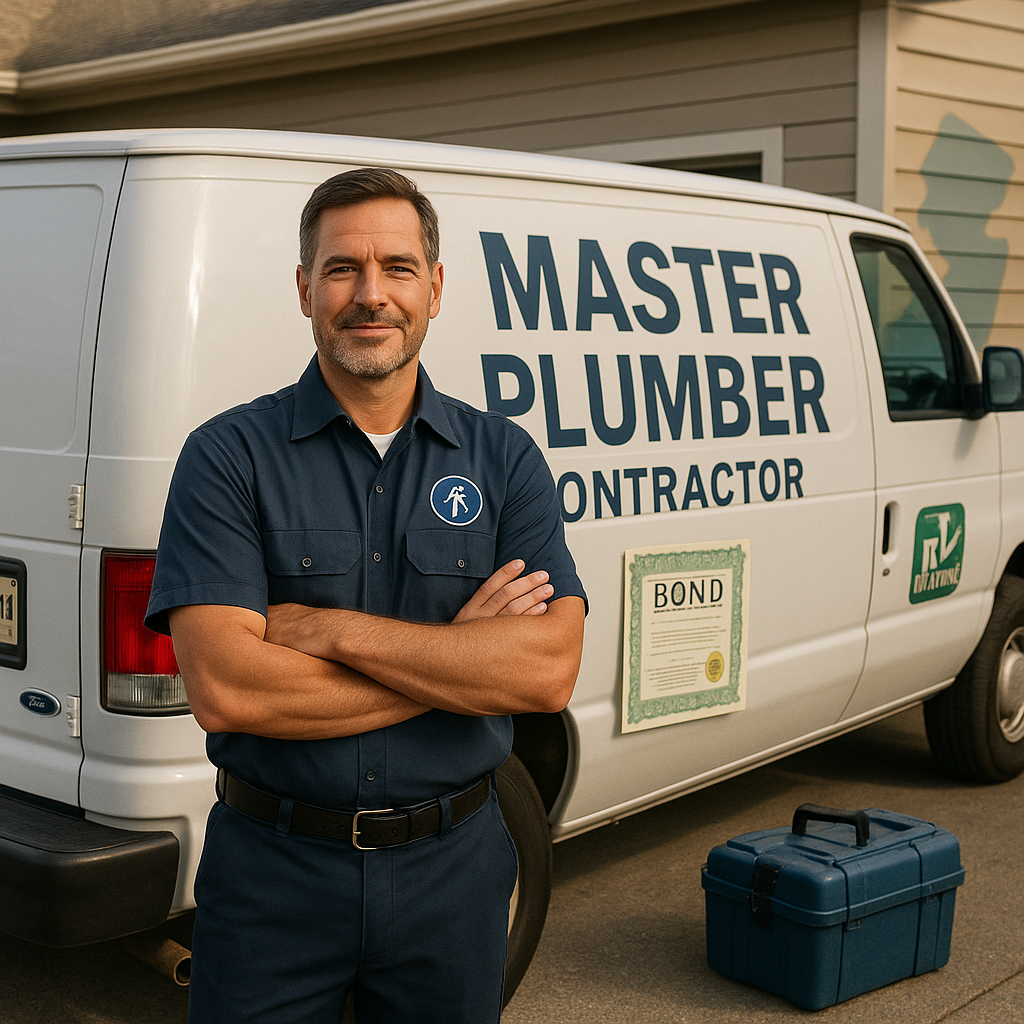
So, you’re thinking about becoming a Master Plumber in New Jersey. That’s a fantastic goal. It’s a career that blends hands-on skill with real problem-solving, and the Garden State makes sure only the best earn that title. But the path isn’t just about fixing pipes; it also involves some important paperwork, including something called a “Master Plumber Bond.” If the word “bond” makes your eyes glaze over, don’t worry. We’re going to break it all down in plain, everyday language.
What Exactly Is a Master Plumber in New Jersey?
Let’s start with the basics. In New Jersey, a Master Plumber isn’t just someone who’s really good at unclogging drains. It’s an official state license. Think of it as the driver’s license of the plumbing world—but way harder to get. A Master Plumber can design plumbing systems, pull permits, hire journeymen, and run their own plumbing business. You’re the quarterback, not just a player on the field.
Without this license, you can’t legally operate as a plumbing contractor in the state. You can’t bid on big jobs, and you certainly can’t sign off on work that needs to meet code. The State of New Jersey, through the Board of Examiners of Master Plumbers, protects homeowners and business owners by making sure only qualified, insured, and bonded professionals carry the title.
The Journey to the Master Plumber License: Step by Step
Getting your license feels a bit like climbing a ladder. You don’t jump straight to the top rung. You need experience, education, and a passing grade on a tough exam. Here’s how the climb usually looks.
Step 1: Get Your Hands Dirty as an Apprentice
Every master starts as a beginner. First, you’ll need a high school diploma or GED. Then, you’ll enroll in a state-approved apprenticeship program. This is a beautiful blend of classroom learning and real-world, on-the-job training. You’ll be working under the watchful eye of a licensed master plumber, learning how to read blueprints, understand the Uniform Construction Code, and, of course, fix leaks. Apprenticeships typically last four to five years. It’s a commitment, but think of it as earning while you learn.
Step 2: Work as a Journeyman Plumber
Once you finish your apprenticeship, you don’t automatically become a master. You become a Journeyman Plumber. This is a crucial middle stage. In New Jersey, you must work as a journeyman for at least one year, gaining more experience and taking on more responsibility. You’ll need to document all of these working hours carefully. The state reviews this experience log as part of your application to sit for the Master Plumber exam. If your hours don’t add up, your application gets denied.
Step 3: Conquer the Master Plumber Exam
This is the big hurdle. The New Jersey Master Plumber exam is known for being challenging. It has two parts. The first is a business and law section, which tests your knowledge of contracts, liens, and state regulations. The second is the technical section, diving deep into the National Standard Plumbing Code, New Jersey’s plumbing subcode, and math for pipe sizing and venting.
You need to pass both sections with a score of at least 70%. Preparation is key. Many people study for months, using guidebooks and taking prep courses. Don’t walk in unprepared—it’s not a test you can just wing.
Step 4: File Your Application and Secure Your Bond
You passed! Now you can apply to the Board of Examiners for your license. But you’re not done yet. The application requires a fee, proof of your experience, your passing exam scores, and something that confuses a lot of people: the Master Plumber Bond. Let’s talk about what that is, because it’s a non-negotiable part of getting licensed.
Demystifying the New Jersey Master Plumber Bond
Does “Master Plumber Bond” sound like a fancy financial instrument? It’s simpler than you think. A bond is a three-party promise. Let’s use an analogy.
Imagine you’re lending your car to a friend. You (the state) want a guarantee that your friend (the plumber) will follow all the rules of the road and not damage your car. You ask a third, very responsible friend (the surety company) to promise, “If the driver messes up, I’ll pay for the damages up to $3,000.” That promise is the bond.
In legal terms, the State of New Jersey requires you to file a $3,000 surety bond. The bond must “run to the State.” That means the obligee, the party protected by the bond, is the State of New Jersey and its citizens. You, the master plumber, are the principal. The surety company issues the bond.
Why on Earth Does the State Require This Bond?
It all comes down to protection. The Master Plumber Bond isn’t insurance for you; it’s a safety net for the public and your employees. Here are the two main things it covers:
1. Guaranteeing Work Quality and Code Compliance. If you do plumbing work that violates the New Jersey Uniform Construction Code, you can be fined. If you refuse to correct the shoddy work, the homeowner or the state can file a claim against your bond to cover the cost of fixing it properly. It’s a “do it right the first time, or pay for it” guarantee.
2. Protecting Wages for Your Workers. This is a big one. The bond ensures you pay the prevailing wages due to your employees and any subcontractors on public works projects. If a worker puts in a week of hard labor and you don’t pay them, they have a path to get their money back through your bond. It’s a powerful form of worker protection.
Think of the bond as your professional credibility in paper form. The state trusts you enough to grant a license, but they also want a financial backup plan just in case things go wrong.
How Do You Get a Master Plumber Bond?
Getting bonded is usually quick and straightforward. You don’t need to pay the full $3,000 out of pocket. Instead, you’ll pay a surety company a small premium, often just 1% to 5% of the bond amount. For a $3,000 bond, you might pay as little as $100 to $150 annually, depending on your credit score.
- Apply: Contact a licensed surety bond agency. They specialize in these guarantees.
- Get a Quote: They’ll do a soft credit check. Good credit generally means the lowest price.
- Pay and File: Once you pay the premium, the surety issues the bond form. You then file a sealed, original copy of the bond directly with the New Jersey Board of Examiners of Master Plumbers. This is part of your license application, and your license won’t be active until the state has it.
You must keep this bond active for as long as your license is active. An expired bond means a suspended license. No exceptions.
What Happens If Someone Files a Claim on Your Bond?
Let’s be real: nobody wants a claim. If a client or worker believes you’ve violated the terms and files a claim against your bond, the surety company will investigate. If the claim is valid, the surety pays them up to the full $3,000 penalty. But here’s the catch you must never forget: the bond is a form of credit extended to you, not insurance. You are legally required to reimburse the surety company for every single penny they paid out. If you don’t pay them back, they can take you to court and it will destroy your ability to get bonded again. The best practice is to handle disputes fairly and directly so a claim never becomes a reality.
More Than Just a Bond: Insurance and Registration
Getting your license and bond is the foundation, but running a legitimate plumbing business requires a few more key pieces. Don’t get them confused.
Liability Insurance. Remember, the bond isn’t insurance. It doesn’t protect you if you accidentally flood a client’s basement. For that, you need a general liability insurance policy, which most contractors carry with at least $500,000 in coverage. Many landlords and general contractors won’t even let you on the property without proof of insurance.
Workers’ Compensation. If you have any employees, New Jersey law mandates you carry workers’ compensation insurance. This covers medical bills and lost wages if an employee gets hurt on the job.
Business Registration. You’ll need to register your business with the state and get a tax identification number. For most small operations, this means forming an LLC and registering a trade name with your local county clerk. You’ll also need to get a Public Works Contractor Registration if you plan to bid on any government projects.
Keeping Your License Active and Healthy
Earning the title of Master Plumber is an achievement to be proud of. But it’s not a “set it and forget it” situation. New Jersey licenses expire every two years. You’ll need to renew on time, pay a fee, and most importantly, keep your bond continuous. The state also requires continuing education. You must complete a certain number of hours of approved courses to stay updated on code changes and new technology. This is a good thing—it makes you a smarter, safer plumber.
The Bottom Line: Your Ticket to Opportunity
Is this a lot of hoops to jump through? Absolutely. But each hoop exists for a reason. The experience requirement ensures you know what you’re doing. The exam proves your knowledge. The bond and insurance protect the very people you serve. Together, they create a system that separates the true professionals from the fly-by-night operators.
Once you have that license, the bond, and the insurance, you unlock a world of opportunity. You can build a business, earn a great living, and take pride in work that keeps communities safe and healthy. So, take it step by step. Start with your apprenticeship, log those hours, study hard, and when it’s time, get that bond in place quickly with a trusted agency. The view from the top is worth the climb.