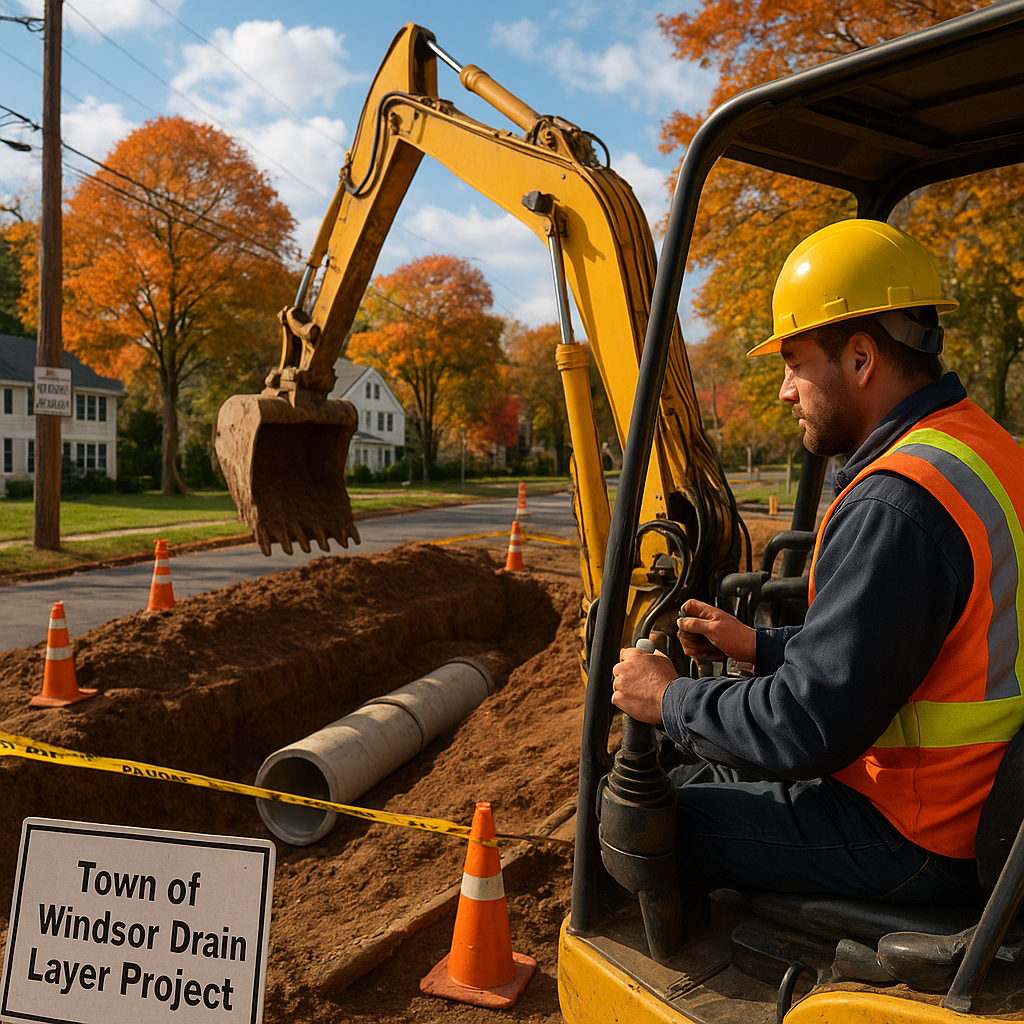
So, you’re planning to dig into the ground in Windsor, Connecticut. Maybe you’re repairing a collapsed pipe, installing a new driveway culvert, or connecting a home to the storm sewer. Before you sink that shovel into the earth—especially if you’ll be working anywhere near the road—you need to talk about a little thing called a Drain Layer Excavating Bond. It sounds like a mouthful, but stick with me. By the end of this guide, you’ll understand exactly what it is, why the Town of Windsor requires it, and how to get one without pulling your hair out.
Understanding the Drain Layer Excavating Bond in Windsor, CT
Let’s break it down in plain English. A drain layer excavating bond is a type of surety bond. Think of it as a financial safety net, a three-way promise between you (the contractor), the Town of Windsor, and a surety company. The bond says, “We trust this contractor to do the digging, lay those drain pipes correctly, and restore the public right-of-way back to its original condition.” If the job goes sideways—like a poorly patched trench that turns into a pothole paradise—the town can make a claim against your bond to cover the cost of fixing it.
It’s not insurance for you. It’s protection for the town and its residents. You pay a small premium, you promise to follow the rules, and the town sleeps better at night knowing the roads won’t be left in ruins.
Why Do You Even Need This Bond? (Right-of-Way Protection)
Picture this: you’re driving down a quiet Windsor neighborhood street. A crew just replaced a drain pipe last week. The pavement looks perfect. That’s the goal. Now imagine the opposite—a sunken trench that rattles your car every time you drive over it. The town doesn’t want that phone call, and neither do you.
When you excavate in the public right-of-way—the strip of land that includes the sidewalk, the grassy boulevard, and the road itself—you’re working on property that belongs to everyone. The town has a responsibility to keep it safe and well-maintained. The bond guarantees that if your restoration work doesn’t meet their standards, money is already set aside to make it right. No chasing you down, no long legal battles. It’s a clean, efficient system.
What Exactly Is a Right-of-Way?
Sometimes the term confuses people. The right-of-way isn’t just the asphalt you drive on. It often extends several feet behind the curb, covering utility poles, fire hydrants, and that strip of grass between the sidewalk and the street. If you’re digging a trench to connect a basement sump pump to the storm drain and you cross that invisible line, you’re in the right-of-way. Suddenly, you need permission and that bond.
What Are the Actual Requirements for Drain Layers?
The Town of Windsor takes its infrastructure seriously. While exact regulations can be updated, the core requirements for drain layers working in the right-of-way have remained consistent for years. Here’s what you can typically expect to provide:
- A valid drain layer license: You or your business must be licensed to perform drainage work in Windsor. This often involves proving your experience and paying a fee.
- The surety bond: As of this writing, the Town of Windsor generally requires a $10,000 drain layer excavating bond. This amount has been standard, but always double-check with the Engineering Department. A quick call can save you a ton of headaches.
- Certificate of insurance: The town will want to see liability insurance, typically with minimum coverage amounts, naming Windsor as an additional insured.
- A right-of-way permit: The bond is your long-term promise. The permit is your permission slip for each specific job.
Don’t let the list intimidate you. For a seasoned contractor, these are just the usual steps to play fair and protect the community. For a homeowner tackling a DIY project that touches the road, you may or may not need a full contractor’s license, but you’ll almost certainly need a permit and possibly a bond. When in doubt, ask.
Step-by-Step: How to Get Your Windsor Excavating Bond
Obtaining the bond is often the fastest part of the whole process. It feels bureaucratic, but once you know the dance, it’s easy. Here’s your roadmap.
Step 1: Contact a surety bond agency. You can’t just walk into a hardware store and pick one up. You’ll work with a company that specializes in bonds. Many local insurance agents offer them, and there are plenty of online options focused solely on surety bonds.
Step 2: Complete a short application. You’ll need your basic business info, maybe your social security number for a credit check, and the bond type: “Town of Windsor Drain Layer Bond.” The amount is usually set at $10,000.
Step 3: Pay the premium. Here’s the good news: you don’t pay $10,000. You pay a percentage—often between 1% and 3% for applicants with decent credit. So, a $10,000 bond might only cost you $100 to $300 for the year. That’s a small price to pay for the ability to work legally.
Step 4: Receive your bond form. The surety will issue an official bond document. It will need to show the Town of Windsor as the obligee. Keep the original; the town requires it with your license application or permit request.
Step 5: File it with the town. Take that bond certificate to the Windsor Engineering or Public Works office along with the rest of your paperwork. They’ll keep it on file.
That’s it. The bond will have an expiration date, so mark your calendar to renew it annually. Letting it lapse could suspend your ability to pull permits.
The Right-of-Way Permit: Another Piece of the Puzzle
Having the bond in place doesn’t mean you can start digging whenever you feel like it. You need a right-of-way excavation permit for each project. Think of the bond as your library card, and the permit as the book you check out each time you want to read.
When you apply for a permit, you’ll describe the work: where exactly you’re digging, how deep, how long the trench will be open, and what traffic control measures you’ll use. The town reviews it to make sure you won’t accidentally slice through a gas line or cause a traffic nightmare. They may require detailed drawings, a traffic control plan, and a fee based on the size of the opening.
Inspectors will often visit the site before, during, and after the work. Your bond is what guarantees you’ll restore the pavement properly, and the final inspection signs off on it. Only then are you truly in the clear.
Avoiding Costly Mistakes
You’re busy. It’s tempting to cut corners. But a few common slip-ups can turn a simple drain repair into a financial sinkhole. Learn from others’ mistakes so you don’t repeat them.
- Skipping the bond entirely. If a town inspector finds you excavating in the right-of-way without a bond and a permit, you could face a stop-work order, fines, and even the cost of having to redo the restoration with a bonded contractor. That stings.
- Assuming you don’t need it. “I’m just replacing a small section of pipe in my own front yard.” If that pipe connects to the town’s system and you’re in the right-of-way, you do need it. The town isn’t trying to be difficult; it’s about maintaining a uniform standard for everyone who opens up public ground.
- Not checking the bond’s date. Let’s say your bond expired last month, and you pull a permit anyway. The town may reject your permit application until you provide a current bond, delaying your project by days or weeks.
- Cutting corners on restoration. Patching asphalt with a cold-mix that crumbles after the first rain sends a clear signal that you didn’t take the work seriously. The town can, and will, call your bond. Suddenly, that “quick, cheap fix” costs you your $10,000 bond limit, and you’ll need to pay it back plus possibly higher premiums down the road.
Is It Worth the Effort? Absolutely.
At this point, you might wonder if it’s all just red tape. But when you see those freshly paved trench patches, flat and indistinguishable from the original road years later, you realize the system works. The bond creates a circle of accountability. You do solid work. The town gets a long-lasting repair. Homeowners drive down smooth streets. You build a reputation as a contractor who does things right, and the surety company trusts you with better rates next time.
Think of the bond as a badge of professionalism. It tells homeowners and commercial clients, “I follow the rules, I stand behind my work, and the Town of Windsor trusts me to dig in their streets.” That’s powerful marketing you can’t buy with an ad.
So, whether you’re a seasoned excavation pro or a homeowner trying to navigate a drainage disaster, getting your arms around the drain layer excavating bond is step one. Visit the Town of Windsor Engineering Division website or pick up the phone. They’re there to help you get it right the first time. Gather your paperwork, secure that bond, pull your permit, and dig with confidence. The road—literally—is waiting for you.