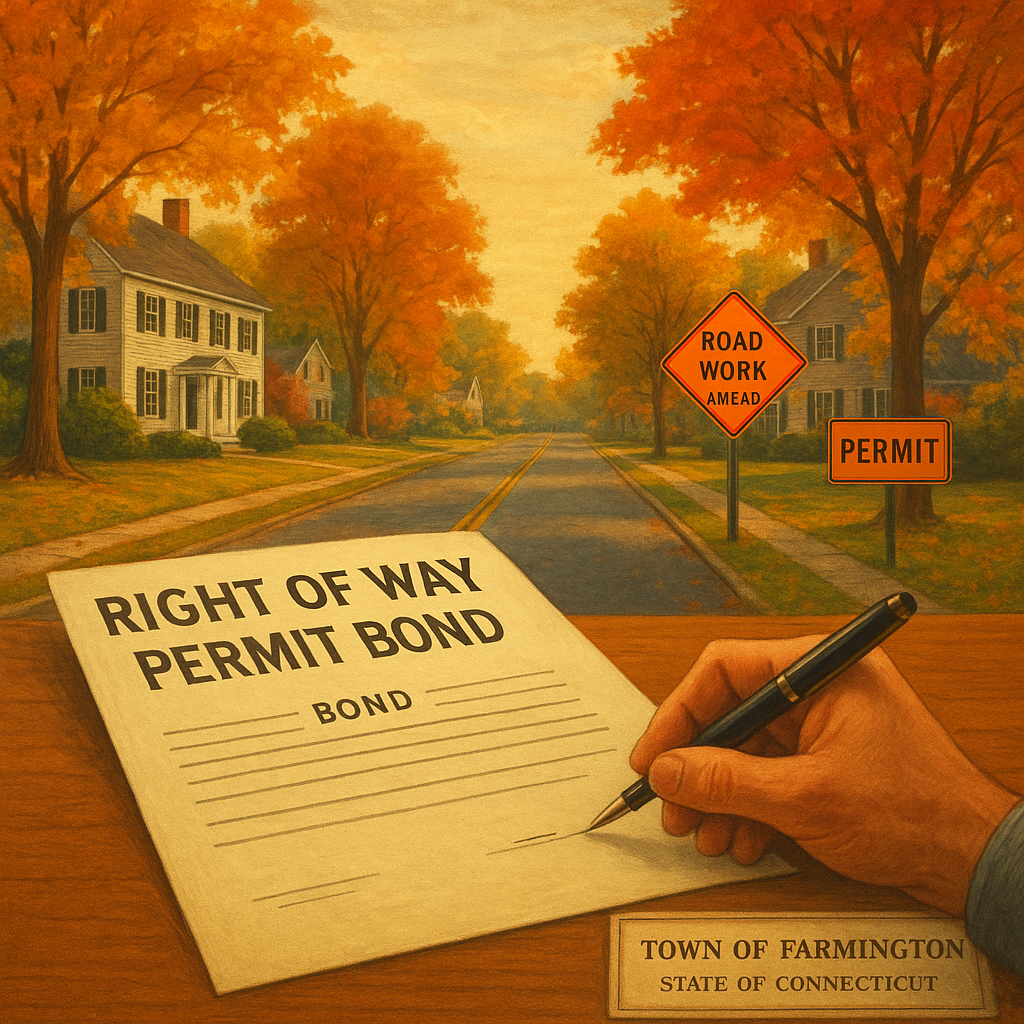
If you’re a contractor, subcontractor, or utility company planning to dig, build, or do any work on public property in Farmington, Connecticut, you’ve probably heard the term “right of way permit bond.” It can sound a little intimidating at first, but don’t worry — it’s actually a straightforward safety net that protects both you and the town. Let’s break this down in plain English so you know exactly what to expect, why it matters, and how to get one without breaking a sweat.
What Exactly Is a Right of Way?
Before we dive into bonds, let’s quickly talk about the “right of way.” Imagine the strip of grass between the sidewalk and the curb, the sidewalk itself, the road, or any public land that runs alongside a street. That space is typically owned by the town, but utility companies and contractors often need to access it. Maybe you’re installing a new water line, repairing a sewer connection, or burying fiber optic cables. When you work in that public area, you need permission — and that permission comes with a promise to put everything back the way you found it.
So, What Is the Farmington CT Right of Way Permit Bond?
Think of this bond as a refundable security deposit you’d put down when renting an apartment, except you don’t get the money back yourself — it’s a guarantee for the town. A Farmington CT Right of Way Permit Bond is a three-party agreement between:
- You (the contractor or permit applicant), called the principal.
- The Town of Farmington, called the obligee — the one requiring the bond.
- An insurance or surety company, which backs your promise with a financial guarantee.
By posting this bond, you’re essentially telling the town: “I will obey all local codes, complete the work properly, and restore the right of way to its original (or better) condition. If I don’t, the surety company will pay for the town to fix things — and then they’ll come to me for reimbursement.”
Why Does the Town of Farmington Require This Bond?
Great question. Towns like Farmington don’t ask for bonds to make your life harder. They ask because public spaces belong to everyone. If a contractor digs a trench and leaves a dangerous hole, or poorly backfills an area that later sinks, it becomes a safety hazard and an eyesore. Taxpayer money shouldn’t have to pay for those repairs. The permit bond creates a financial cushion that protects the community’s infrastructure and your project’s reputation. It’s the town’s way of saying, “We trust you, but we also need a backup plan.”
Who Needs a Right of Way Permit Bond in Farmington?
If any of these sound like you, you’ll almost certainly need one:
- Excavation contractors digging up streets or sidewalks.
- Utility companies installing gas, electric, water, or telecom lines.
- Landscapers or hardscape installers whose work extends into the public right of way.
- Driveway contractors connecting a private drive to a public road.
- Plumbers or sewer line repair crews tapping into public mains.
Basically, if your project touches a public road, sidewalk, or utility easement, check with the Farmington Public Works or Engineering Department. They’ll confirm the bond amount you need and guide you through the permit process.
How Does the Bond Actually Work?
Let’s walk through a quick real-world example. Say you’re a local contractor hired to replace a water service line for a homeowner. Part of the work falls inside the town’s right of way. You pull the required permit and buy a $10,000 right of way permit bond. Midway through the job, a backhoe accidentally damages the sidewalk beyond simple patching. You promise to fix it, but months go by and nothing happens. The town can file a claim against your bond. The surety investigates, and if the claim is valid, they cut a check to Farmington (up to the bond’s full amount) to repair the sidewalk. Then, that same surety will ask you to repay every penny. So yes, it protects the town, but it also keeps you accountable — and a good contractor won’t ever let it get that far.
How Much Does a Farmington Right of Way Permit Bond Cost?
That’s the big question, right? The bond amount is set by the town and varies based on the scope and location of your work. It might be as low as $5,000 for a minor curb cut or as high as $50,000 or more for major utility installations. But the premium — the actual amount you pay — is only a small percentage of that number.
For most contractors with decent credit, expect to pay between 1% and 3% of the bond amount. So a $10,000 bond could cost you just $100 to $300. Factors that influence your rate include:
- Personal or business credit score.
- Financial strength and years in business.
- Any past bond claims or similar issues.
- The specific bond amount required.
If your credit isn’t perfect, don’t panic. Specialized bond agencies often work with higher-risk applicants — the premium might be a little steeper, but you can still get bonded.
How to Get Your Bond Step by Step
Getting a Farmington CT Right of Way Permit Bond is surprisingly simple. Most of the process happens online or over the phone.
1. Confirm Your Requirements
Call the Town of Farmington’s permit office or visit their website. Ask what bond amount they need for your specific project. Don’t guess — every job is different.
2. Gather Your Info
Be ready to provide basic business details: company name, address, years in business, owner information, and the exact bond requirement.
3. Request Quotes
Reach out to a surety bond agency — preferably one that specializes in contractor bonds. Provide the same info to a couple of places so you can compare rates. Most give quotes within hours.
4. Pay the Premium and Get Your Bond
Once you accept a quote, pay the premium (usually by credit card or ACH) and you’ll receive the bond form. Some agencies even email a digital copy right away.
5. File with the Town
Submit the original bond document along with your permit application. The town needs the physical bond or a certified copy before they issue your permit. Pro tip: keep a copy for your records.
Is This the Same as Liability Insurance?
Think of insurance as a safety net for you — it protects your business from unforeseen accidents or damage. A bond, on the other hand, protects a third party (the town) from your failure to meet your obligations. With insurance, the insurance company typically doesn’t chase you for repayment. With a bond, the surety will absolutely come after you if they have to pay out. That’s a crucial distinction. You’ll need both general liability insurance and the required bond for most Farmington projects — they aren’t interchangeable.
What Happens If You Don’t Get a Bond?
Skipping this step isn’t an option if you want to work legally. Without a valid permit bond on file, the town won’t issue your right of way permit. If you start work anyway, you could face stop-work orders, hefty fines, and even legal action. It’s a quick way to burn bridges (and not the kind you’re trying to build). On top of that, the cost of fixing the damage afterward would come straight out of your pocket, with no bond to soften the blow.
How Long Does a Right of Way Permit Bond Last?
Most bonds for permits are issued for a one-year term, but it depends on the town’s requirements and the length of your project. Some bonds remain in effect until the job is done and the town signs off on the final inspection. Be sure to ask: “Does this bond need to be renewed annually, or is it a one-time purchase for the life of my permit?” If your project stretches beyond a year, you might simply renew the bond and pay another premium for the next term. Don’t let a bond lapse — that’s like letting your driver’s license expire while still driving.
Quick Tips to Keep the Process Smooth
- Start early — don’t wait until the day before you need the permit to shop for a bond.
- Keep good credit habits; a strong credit score lowers your premium significantly.
- Read the permit regulations carefully. The bond amount might increase if you’re working near sensitive utilities or heavy traffic areas.
- Build a relationship with a surety agent who knows Connecticut municipal bonds. They speed things up when you have multiple jobs in various towns.
Your Path to a Successful Farmington Project
At first glance, a right of way permit bond in Farmington, CT might feel like just another hoop to jump through. But when you reframe it, you’ll see it’s really a tool that builds trust between you, the town, and the community you’re serving. It says, “I stand by my work, and I respect your public spaces.” By taking twenty minutes to secure the bond, you’re safeguarding your business, protecting your reputation, and keeping Farmington’s streets — and sidewalks — safe for everyone. Need more detailed guidance? Reach out to a local surety bond expert or contact the Farmington Public Works Department. They’ll point you in the right direction, no pun intended.