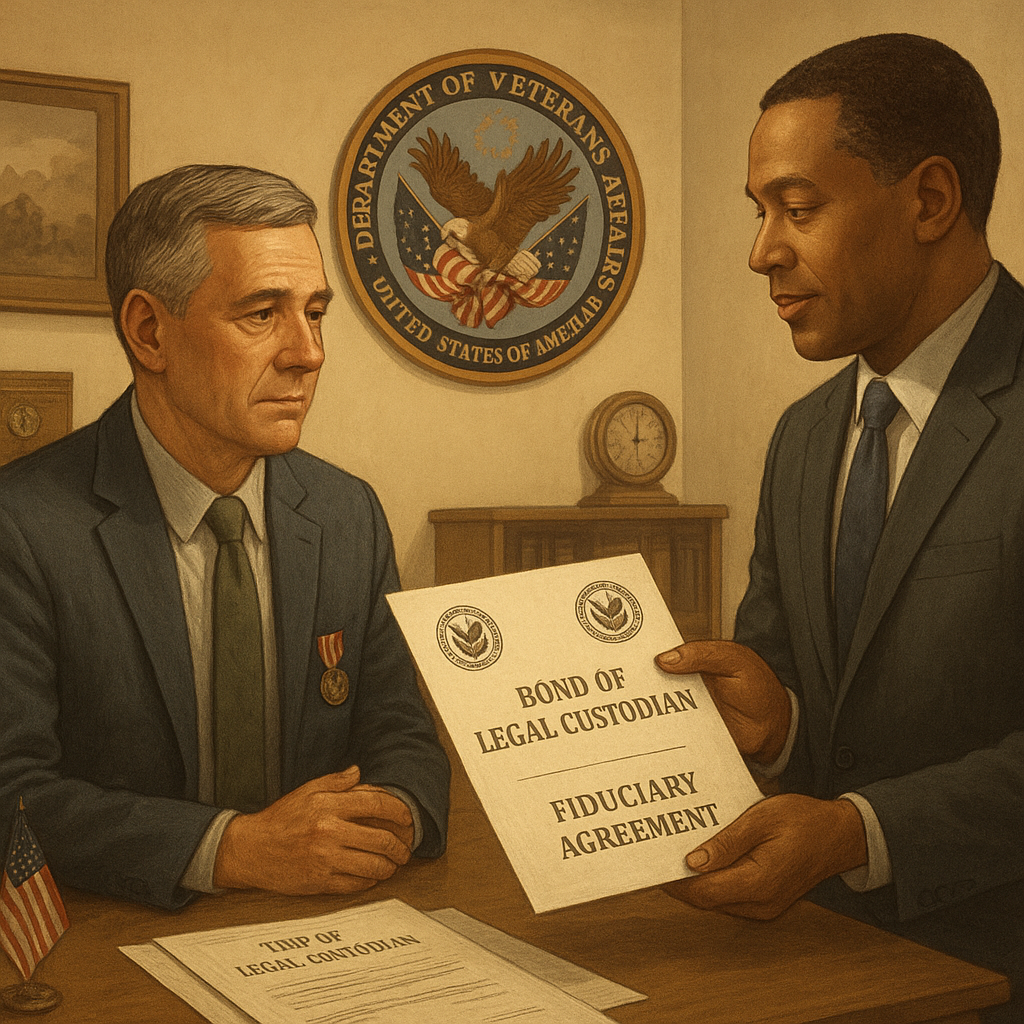
Imagine this: a beloved veteran can no longer manage their own finances due to illness, injury, or age. The Department of Veterans Affairs steps in to appoint someone trustworthy, a fiduciary, to handle their VA benefits. But how does the government ensure that the money meant for the veteran’s care, housing, and food is actually used for those things? The answer is a special kind of promise called a VA fiduciary bond, often known as a Bond of Legal Custodian or a Department of Veterans Affairs surety bond. If you’ve been asked to obtain one—or you’re simply curious about how these protections work—you’re in the right place. Let’s walk through it together, step by step.
What Is a VA Fiduciary Bond, Exactly?
Think of a VA fiduciary bond as a financial safety net. It’s a legally binding agreement involving three parties: the Secretary of the Department of Veterans Affairs (the obligee, who requires the bond), the fiduciary (the principal, who will manage the veteran’s funds), and a surety company (the entity that backs the bond). The bond guarantees that if the fiduciary mishandles the veteran’s money—whether through negligence, theft, or simple mistakes—the veteran won’t be left empty-handed. The surety company will step in to cover the loss up to the bond amount, and then seek reimbursement from the fiduciary. It’s a classic trust-but-verify setup.
Why Does the VA Require This Bond?
The Department of Veterans Affairs has a solemn responsibility: protect veterans who are unable to manage their own affairs. When a veteran is deemed incompetent by the VA, a field examination happens to determine who should be appointed as their fiduciary. That fiduciary could be a family member, a close friend, or even a professional guardian. But no matter how close the relationship, the VA wants an extra layer of financial accountability. The bond ensures fiduciaries perform their duties honestly and in strict accordance with VA regulations. It’s not about distrusting individuals—it’s about safeguarding the veteran’s well-being. After all, these are often the only funds standing between a vulnerable hero and hardship.
Who Needs a Bond of Legal Custodian?
Not every VA-appointed fiduciary must obtain a bond, but many do. The requirement usually kicks in when the fiduciary lives in a specific state (like New Jersey, for instance, where “NJ” frequently appears in related forms), or when the amount of VA benefits under management exceeds a certain threshold. Common scenarios include:
- Family members appointed as fiduciaries for a parent or sibling who is a veteran.
- Professional fiduciaries or guardians overseeing multiple veterans’ estates.
- Legal custodians who aren’t immediate family but have been entrusted with a veteran’s finances.
The VA will notify you directly if a bond is required and tell you the precise bond amount. This amount is typically based on the total benefits expected to be received in a year, plus any retroactive lump sum payments. So if a veteran has $30,000 in annual benefits, the bond might be set around that figure—providing coverage that matches the value of assets the fiduciary handles.
How Does the Bond Protect Our Veterans?
You might wonder, “Does this bond actually come into play?” Sadly, yes. While the vast majority of fiduciaries are caring, dedicated individuals, problems do arise. A fiduciary might misuse funds for personal expenses, fail to pay the veteran’s bills on time, or mismanage investments. The bond gives the veteran (or the VA on their behalf) a clear path to recovery. Instead of a messy, drawn-out lawsuit, the harmed party files a claim with the surety company. After investigation, if the claim is valid, the surety pays out up to the bond’s penalty. It’s a streamlined form of justice that puts the veteran first.
Real-Life Example: How a Bond Saved the Day
Let’s paint a picture. Meet John, a retired Army mechanic who developed dementia. His nephew, Mark, was appointed as his VA fiduciary. Mark received a bond of legal custodian for $25,000, as required by the Secretary of Veterans Affairs. Over two years, Mark gradually diverted $18,000 of John’s benefits to pay off his own credit card debt, hiding the mismanagement with falsified reports. When the VA’s oversight caught the discrepancies, they filed a claim on the bond. The surety investigated, confirmed the loss, and reimbursed John’s estate the full $18,000. Mark was then responsible for repaying the surety, but John never missed a month of care because the safety net worked. Without that bond, recovering the money would have been a slow, uncertain process.
Breaking Down the Cost and Application Process
One of the first questions people ask is, “How much will this cost me?” The good news is that you don’t pay the full bond amount—you only pay a small percentage, known as the premium. For VA fiduciary bonds, premiums typically range from 0.5% to 3% of the bond amount, depending on your credit history and financial background. If you have decent credit and a clean record, you could pay as little as $100 for a $20,000 bond. It’s an affordable peace-of-mind investment.
Applying is straightforward. You’ll need:
- A copy of the VA’s appointment letter or bond requirement notice.
- Basic personal information, including Social Security number for a credit check.
- Details about the veteran, such as their VA file number and the state where benefits are administered.
- Sometimes a financial statement if the bond amount is large.
Many surety bond agencies offer online applications that can be completed in minutes. Approval times vary, but it’s often possible to get bonded the same day, especially for smaller bond amounts. Once issued, the agency files the bond directly with the Department of Veterans Affairs, so you don’t have to navigate government paperwork alone.
Common Misconceptions About VA Fiduciary Bonds
Let’s clear the air on a few points that sometimes cause confusion.
“It’s Insurance for Me.”
This is a big one. A fiduciary bond protects the veteran and the VA—not the fiduciary. If you make a mistake that causes financial harm, the surety will pay the veteran, but you’ll be on the hook to repay that amount. Consider it a line of credit, not a shield. Treat it with the respect it deserves, and always keep meticulous records.
“Only Professionals Need Bonds.”
Family member fiduciaries often assume they’re exempt. While some close relatives might be waived in certain states, many still must get bonded. The rules aren’t about your relationship—they’re about risk management. Always check with your VA regional office.
“Any Surety Bond Will Work.”
The bond must be on the exact form prescribed by the Department of Veterans Affairs, naming the Secretary of the VA as obligee. Generic fiduciary bonds won’t be accepted. Work with a surety provider experienced in VA bonds to avoid delays.
What Happens If a Fiduciary Doesn’t Get the Bond?
Ignoring a VA bond requirement is not an option. Without the bond in place, you cannot be officially appointed. That means no access to the veteran’s benefit funds. The veteran’s financial care could be turned over to a court-appointed conservator or a professional fiduciary, which might be significantly more expensive and less personal. Delaying the bond could also disrupt ongoing support—bills might go unpaid and essential services could lapse. The VA takes compliance seriously, and so should you.
Tips for Fiduciaries: Staying in Good Standing
Once you’re bonded and managing a veteran’s funds, the real work begins. Here are a few practical tips to keep everything running smoothly and protect the veteran—and yourself.
- Keep separate accounts. Never mix the veteran’s funds with your own money. Open a dedicated, properly titled account (often called a “VA Fiduciary Account”).
- Document every transaction. Save receipts, bank statements, and bills. You’ll need to file regular accounting with the VA.
- Communicate openly. Notify the VA of any major changes in the veteran’s condition or living situation.
- Renew your bond on time. Most VA fiduciary bonds must be renewed annually. Missing a renewal could cause your appointment to be revoked.
- Ask for help. If you’re unsure whether an expense is allowed, reach out to the VA’s fiduciary hub before spending the money.
Where Does the Secretary of the Department of Veterans Affairs Fit In?
You’ll notice the bond form always lists the obligee as the Secretary of the Department of Veterans Affairs. This might sound formal, but it simply means the bond is held for the benefit of the federal agency responsible for veteran oversight. The Secretary’s role is to enforce the rules and ensure fiduciaries perform ethically. When a bond is issued, it’s filed at the VA regional office, and the Secretary (through the VA’s fiduciary program) monitors compliance. If a problem occurs, the VA can initiate a claim, acting as the veteran’s powerful advocate.
The Bigger Picture: Dignity and Protection
At its core, this bond isn’t about paperwork or bureaucracy—it’s about preserving the dignity of the men and women who served our country. By requiring this bond, the VA creates a system of checks and balances that lets family and friends serve as fiduciaries without jeopardizing the veteran’s security. It allows for compassionate, personal care within a framework of accountability. So if you’re stepping into the role of a VA-appointed fiduciary, embrace the bond not as a hurdle, but as a badge of honor. It shows you’re willing to do things the right way.
Are you preparing to become a fiduciary for a veteran in your life? Do you have questions about the bond amount or the application process? Take a deep breath—the surety industry has streamlined these bonds to be fast and accessible. Reach out to a bonding specialist who understands the unique requirements of the Department of Veterans Affairs, and you’ll have your bond of legal custodian in hand before you know it. That’s one less thing to worry about, leaving you free to focus on what really matters: caring for the veteran who gave so much for all of us.