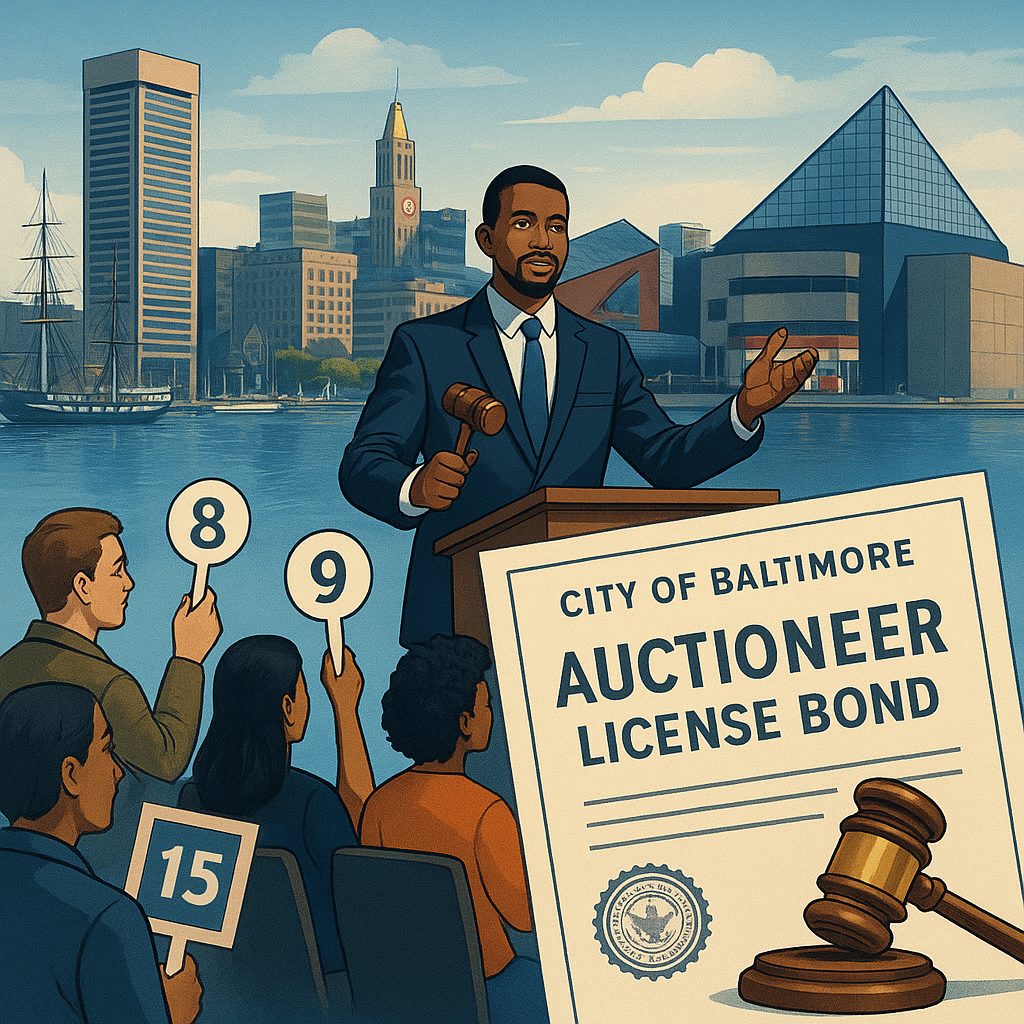
Have you ever been to a lively auction in Baltimore? The fast-talking auctioneer, the eager bidders, the thrill of a winning bid—it’s exciting. But behind that excitement is a serious responsibility. If you’re planning to become an auctioneer in Baltimore City (and you’re not selling livestock), you’ll need something called an auctioneer license bond. It’s not just a piece of paper; it’s your ticket to doing business the right way.
Maybe the term “surety bond” sounds confusing. Don’t worry—you’re not alone. Think of it like a safety net. It protects the public if an auctioneer doesn’t follow the rules. In this guide, we’ll walk through the Baltimore auctioneer license bond in plain, everyday language. We’ll cover what it is, why it matters, how to get one, and how much it costs. Let’s dive in.
What Is a Baltimore City Auctioneer License Bond?
Let’s break it down. A Baltimore City auctioneer license bond is a type of surety bond required by the city for auctioneers who handle personal property (not livestock). It’s a three-party agreement between:
- The Principal – That’s you, the auctioneer.
- The Obligee – The City of Baltimore, which requires the bond.
- The Surety – The company that issues the bond and guarantees your performance.
Think of the bond as a promise. You’re promising to follow all local auction laws and treat your clients fairly. If you break that promise, the bond can provide financial compensation to the harmed party. But here’s the important part: it’s not insurance for you. If the surety pays out a claim, you’re responsible for paying them back. It’s like having a co-signer—they trust you, but if something goes wrong, you’ll need to settle up.
Who Needs This Bond in Baltimore?
Not all auctioneers are the same. Baltimore City requires a specific license bond for auctioneers who sell items like antiques, estate goods, business inventory, art, vehicles, and more. If you’re auctioning off grandma’s antique vase or a restaurant’s kitchen equipment, this bond applies to you.
On the other hand, if you’re an auctioneer who focuses only on livestock, you’re in a different category and likely don’t need this particular bond. But for everyone else selling goods under the hammer, the city wants to see that bond certificate before you can even pick up your auctioneer’s gavel.
You might be thinking: “Why does the city care so much?” Well, imagine you attend an auction, win a bid, pay your money, but the auctioneer never delivers the item—or pockets the proceeds and disappears. The bond gives consumers a way to recover their losses. It’s a layer of consumer protection that keeps the marketplace fair.
How Much Does the Auctioneer Bond Cost?
Now for the good news: you don’t need to pay the full bond amount out of pocket. Let’s say the required bond amount for Baltimore City is $10,000 (always check with the city clerk’s office for the most current amount, as requirements can change). You only pay a small percentage as a premium—typically 1% to 5% of that total.
Your exact premium depends on your personal credit score and financial history. If you have strong credit, you might pay as little as $100 a year. If your credit has a few bumps, you could pay more, but even then it’s usually within reach. For many folks, the cost is less than a dinner out each month.
What if your credit isn’t perfect? Don’t panic. There are surety companies that work with people in all kinds of situations. Some offer quotes based on other factors, like business experience. It never hurts to apply and see what options are available.
The Bond Amount: What’s the Magic Number?
The city sets a fixed bond amount. As of this writing, Baltimore commonly requires a $10,000 auctioneer license bond, but you must verify this number directly with the City of Baltimore’s licensing department. We can’t stress this enough: always confirm the current requirement before you apply. A quick phone call or visit to the city’s website can save you time and headaches later.
Why $10,000? That figure represents a reasonable limit of protection for a single transaction or series of transactions. It tells the public that if something goes sideways, there’s at least a baseline safety net.
Step-by-Step: How to Get Your Auctioneer Bond
Getting the bond isn’t complicated. Here’s a straightforward path you can follow:
- Gather Your Information: You’ll need your business details, personal identification, and maybe a few years of financial history. Think of it like applying for a credit card—just a bit more paperwork.
- Choose a Reputable Surety Bond Agency: You can go directly to a surety company or work with a specialized bond agency. An agency often has access to multiple markets and can shop around for the best rate.
- Submit a Quick Application: Many agencies let you apply online in minutes. You’ll provide your name, address, social security number for a credit check, and the bond details (auctioneer license bond for Baltimore City).
- Get Your Quote: In many cases, you’ll receive a premium quote almost instantly. You’ll see the annual cost before you commit.
- Pay the Premium and Receive Your Bond Form: Once you pay, the surety issues the official bond document. This isn’t just an email; it’s a legal instrument that you’ll need to sign as the principal.
- File the Bond with the City: You’ll submit the original signed bond (or a certified copy) to Baltimore City’s licensing office along with the rest of your license application. They must have the bond on file before they issue your auctioneer license.
The entire process, from application to having the bond in hand, can often be completed in a day or two. If you’re in a hurry, many agencies offer same-day bonding for qualified applicants.
What Happens If You Don’t Get the Bond?
Skipping this step is not an option. Without a valid auctioneer license bond, Baltimore City will not approve your license application. Operating without a license can lead to steep fines, cease-and-desist orders, and damage to your professional reputation. You could even face legal action. In short, the bond is the gateway—no bond, no chants.
But more than that, having the bond shows your clients you take your responsibilities seriously. It’s a trust signal. When you display your license backed by a bond, you’re telling the world: “I stand behind my hammer.”
Keeping Your Bond Active: Renewals and Ongoing Responsibilities
Auctioneer bonds are typically issued for one year. That means you need to renew annually for as long as you’re licensed. Your surety will send you a renewal notice before the expiration date. You’ll pay the premium again, and they might pull a fresh credit check. Sometimes, if your financial situation improves, your premium could drop.
Don’t let the bond lapse. If the bond expires before you renew it, your license could be suspended. Stay on top of the dates. Mark them on your calendar, set a reminder on your phone—do whatever it takes to keep things current.
Real-Life Scenarios: How the Bond Protects People
Let’s put some skin on these bones. Imagine you’re an auctioneer handling an estate sale. You collect payments from winning bidders but then fail to pass the proceeds to the estate. That’s a clear violation. The estate can file a claim against your bond to recover the missing funds. The surety investigates, and if the claim is valid, they pay up to the bond amount. You then have to reimburse the surety.
Another example: you misrepresent a lot—say a “vintage Rolex” that turns out to be a cheap knockoff. A buyer who paid thousands could seek compensation through the bond. It’s a powerful accountability tool that encourages ethical behavior.
Common Questions about the Auctioneer Bond
Does my personal credit really affect the cost?
Yes, but don’t let that scare you. The surety uses your credit as a snapshot of financial responsibility. Even if your score isn’t perfect, you can still get bonded. Some companies specialize in helping people with lower credit scores, though premiums might be a bit higher.
Is this the same as insurance?
Not exactly. Insurance protects you and your business from unforeseen events. A bond protects the public from your mistakes or misdeeds. And remember, you must pay back any claims the surety pays out. That’s the big difference.
Can I use one bond for multiple cities or states?
Generally, no. A Baltimore City auctioneer bond is specific to the city’s requirements. If you work in other jurisdictions like Baltimore County or other Maryland cities, you’ll likely need separate bonds or meet their own licensing rules. Always ask local officials what they require.
How long does it take to get bonded?
For many, it’s a same-day process. You can apply online, get approved, pay, and download the bond form in under an hour. Then you just need to submit it to the city.
A Final Word: Your Passport to a Trusted Auction Career
Navigating government requirements can feel intimidating, but the Baltimore auctioneer license bond is one of those things that’s simpler than it sounds. It’s a small step that opens the door to a rewarding profession. By securing this bond, you’re not just checking a box—you’re building a foundation of trust with your clients and the community.
If you’re ready to start, reach out to a licensed surety bond professional today. They can walk you through the specific requirements for Baltimore City, answer your questions, and get you bonded fast. Then you can focus on what you do best: orchestrating great auctions, creating excitement, and helping people discover treasures.