What Exactly Is a Sewer Tap Bond?
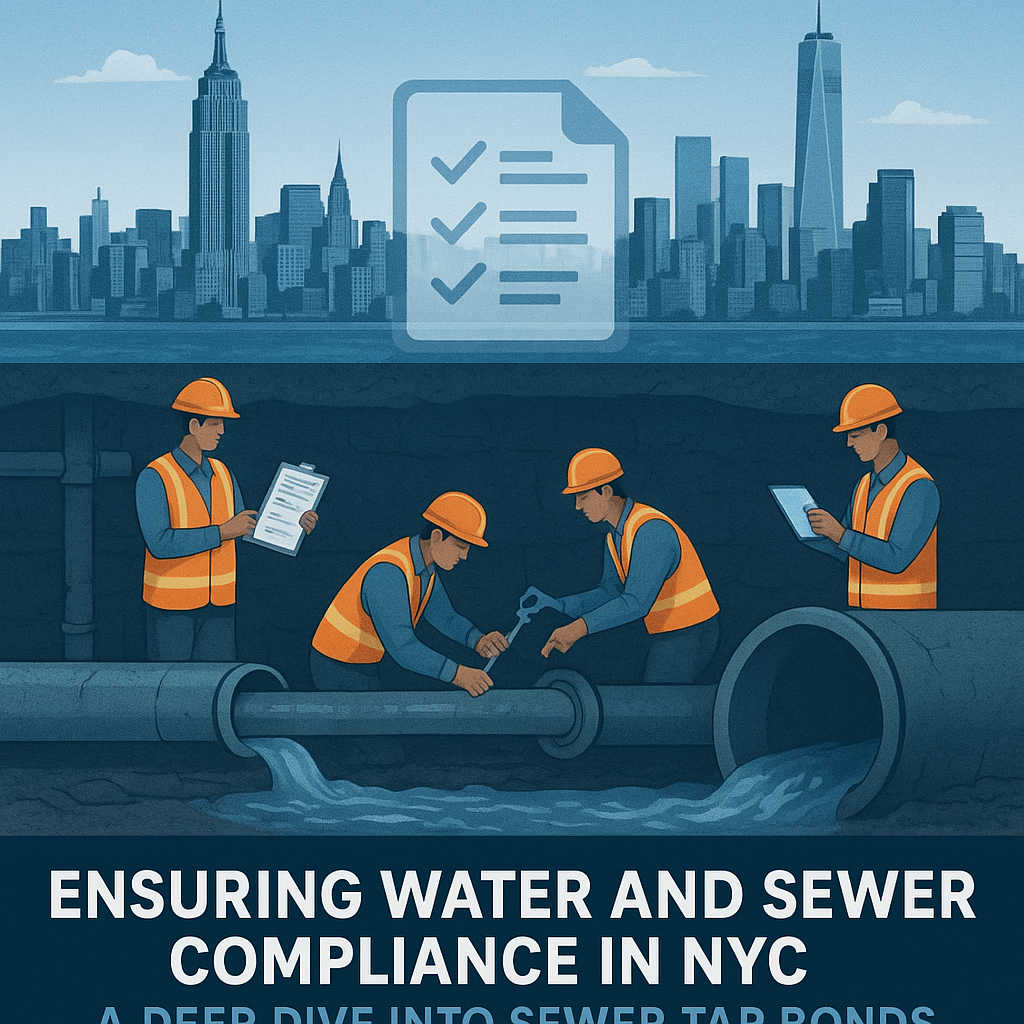
Imagine you’re a plumber or an excavation contractor about to connect a brand-new building to the city’s main sewer line. Before you dig, the City of New York wants a promise. That promise comes in the form of a sewer tap bond. Simply put, it’s a financial guarantee that you’ll follow all the rules, do the job correctly, and fix any damage you might cause to public property. If something goes wrong, the bond protects the city and its residents from paying for your mistakes.
In the construction and utility world, this type of bond is often called a “compliance only” bond. That means you don’t have to worry about it covering huge, open-ended liabilities. Instead, it guarantees that you’ll stick to the specific regulations set by the New York City Department of Environmental Protection (DEP) and other local agencies. For a water and sewer contractor, this little piece of paper is as essential as your shovel.
Why Does New York City Require This Bond?
You might be thinking, “Why does the city need a bond? I already carry insurance.” Good question. Insurance protects you and your business. A sewer tap bond protects the city. When you cut into a public street or a sidewalk to tap into a sewer main, you’re working on property that belongs to everyone. If you patch the asphalt poorly, leave a trench unstable, or accidentally damage another underground utility, the city needs a quick, guaranteed way to fix the problem without wasting taxpayer dollars or getting stuck in a lengthy legal battle.
For the City of New York, these bonds are a risk management tool. They ensure that contractors stay compliant with the city’s strict Department of Transportation (DOT) and DEP standards for street restoration. The bond acts like a deposit. If you leave a job site a mess, the city can call on the bond to hire someone else to clean it up. This system keeps our sidewalks safe and our streets from turning into a patchwork of potholes.
Who Needs a Sewer Tap Bond in NYC?
Not every contractor driving a truck around New York City needs this bond. It’s specifically for water and sewer contractors who are performing physical taps into the city’s main sewer or water lines. If your work involves any of these activities, you’ll likely need one:
- Installing a new sewer connection for a residential home or a high-rise apartment building.
- Performing a sewer repair that requires cutting into the main line.
- Tapping a water main to supply a new commercial property.
- Working on capital improvement projects that involve city infrastructure.
Essentially, if you are a licensed master plumber or an excavation firm that directly alters a public utility connection, the New York City Department of Environmental Protection will almost certainly require a sewer tap bond—sometimes called a sewer connection bond—before they issue your permit.
How Does a Sewer Tap Bond Work? A Simple Analogy
Let’s break down the three-party system using something we all know: renting an apartment. Think of the City of New York as the landlord. They own the building (the sewer infrastructure). You, the contractor, are the tenant who wants to make a small modification, like hanging a heavy mirror on the wall. The surety company that provides the bond is like a security deposit service.
You don’t give the landlord a cash deposit; instead, you pay a small fee to a bonding company. That company tells the landlord, “Don’t worry, if this tenant punches a huge hole in the wall and doesn’t fix it, we’ll pay for the repairs up to a certain amount.” Once the job is done and the landlord inspects the wall and sees it’s perfect, the guarantee expires. Everyone is happy.
In our real-world scenario, the bond guarantees that you’ll restore the street and the tap site correctly. If you don’t, the city makes a claim on your bond. You then have to reimburse the surety company for every penny they paid out. It’s not a free pass; it’s a line of credit that keeps you accountable.
The Cost of a Sewer Tap Bond: It’s Not What You Might Expect
One of the biggest misconceptions about surety bonds is how much they cost. When the city demands a $10,000 bond, you do not need to write a check for $10,000. Phew, right? That’s the “penal sum,” or the maximum payout. You only pay a small fraction of that, called the bond premium.
For a sewer tap bond in New York City, premiums usually range from 1% to 5% of the total bond amount, depending on your personal credit score and business financial history. If you’ve got great credit, you might snag a $10,000 bond for just $100. If your credit is a little beat up, you might pay a bit more, but you won’t be locked out of the market. Most bond providers offer programs specifically designed to help contractors with less-than-perfect scores get bonded and back to work.
How to Get Your New York City Sewer Tap Bond Quickly
Time is money, especially when your crew is standing by waiting to break ground. The process to get bonded can be surprisingly fast if you’re prepared. Here’s the usual roadmap:
- Know your requirements: Check with the NYC DEP or the Department of Transportation to find out the exact bond amount they require for your permit. A sewer tap bond often ranges from $5,000 to $20,000, but large projects might need more.
- Find a specialized surety agency: Go to a bond provider that understands the nuances of New York City’s construction scene. A local expert will know the exact city bond form required, often called the “City of New York Sewer Tap Bond” form, saving you from rejection headaches.
- Submit an application: This typically involves sharing some basic business details and running a soft credit check. For many compliance-only bonds, the underwriting is straightforward—the risk is considered low because the bond is tied to specific rules, not massive liabilities.
- Pay the premium and get sealed: Once approved, you pay the premium, and the surety issues the bond. Many agencies can email you a digital copy immediately, while the original sealed document gets sent out overnight.
Could you hold that permit in your hands by tomorrow afternoon? In many cases, absolutely.
What Happens If You Don’t Have One? The Real-World Consequences
Skipping the bond step isn’t an option. If you show up to pull a sewer tap permit without that bond in hand, the city will simply turn you away. No bond, no permit. No permit, no digging. Working without a permit can lead to massive fines, stop-work orders, and serious damage to your professional reputation. In a city as tightly regulated as New York, you can’t afford to cut this corner.
Moreover, building owners and general contractors rely on you to have your paperwork in order. A delay in your permit can stall an entire multi-million-dollar construction project. Being known as the contractor who gets things bonded fast gives you a competitive edge.
Common Pitfalls and How to Avoid Them
Even seasoned contractors can trip up if they’re not careful. Let’s walk through some frequent mistakes and how to dodge them:
- Confusing the bond type: Don’t mix this up with a contractor license bond or a private payment bond. A sewer tap bond is a compliance bond for a specific physical connection. Ask your surety agent explicitly for a “sewer tap bond for the City of New York.”
- Letting the bond expire: These bonds are often project-specific and have a term that aligns with your permit. If your job gets delayed and the permit expires, your bond might become ineffective. Set a calendar reminder to review your documents before the city comes for inspection.
- Poor street restoration records: The bond protects the city, but frequent claims against your bond will raise your future premiums. The best way to keep costs low is to do immaculate trench backfill and pavement restoration work the first time. Think of it as permanent advertising for your skills.
Tying It All Together: A Safer, Smarter NYC
When you look at the bigger picture, a sewer tap bond isn’t bureaucratic red tape meant to frustrate you. It’s a shared safety net. It tells the city that you are a serious, responsible professional. It tells the property owner that their street won’t cave in two months after you’ve left. And it tells your own crew that you run a business anchored in trust.
So, next time you’re wrestling with a permit application for a water and sewer contractor job in the Big Apple, don’t let the bond requirement slow you down. See it for what it really is—a low-cost tool that keeps your projects moving, protects the public, and makes the City of New York a little bit safer, one clean sewer connection at a time. Ready to get started? Grab your application, talk to a surety expert, and get back to doing what you do best: keeping the city’s underground flowing smoothly.