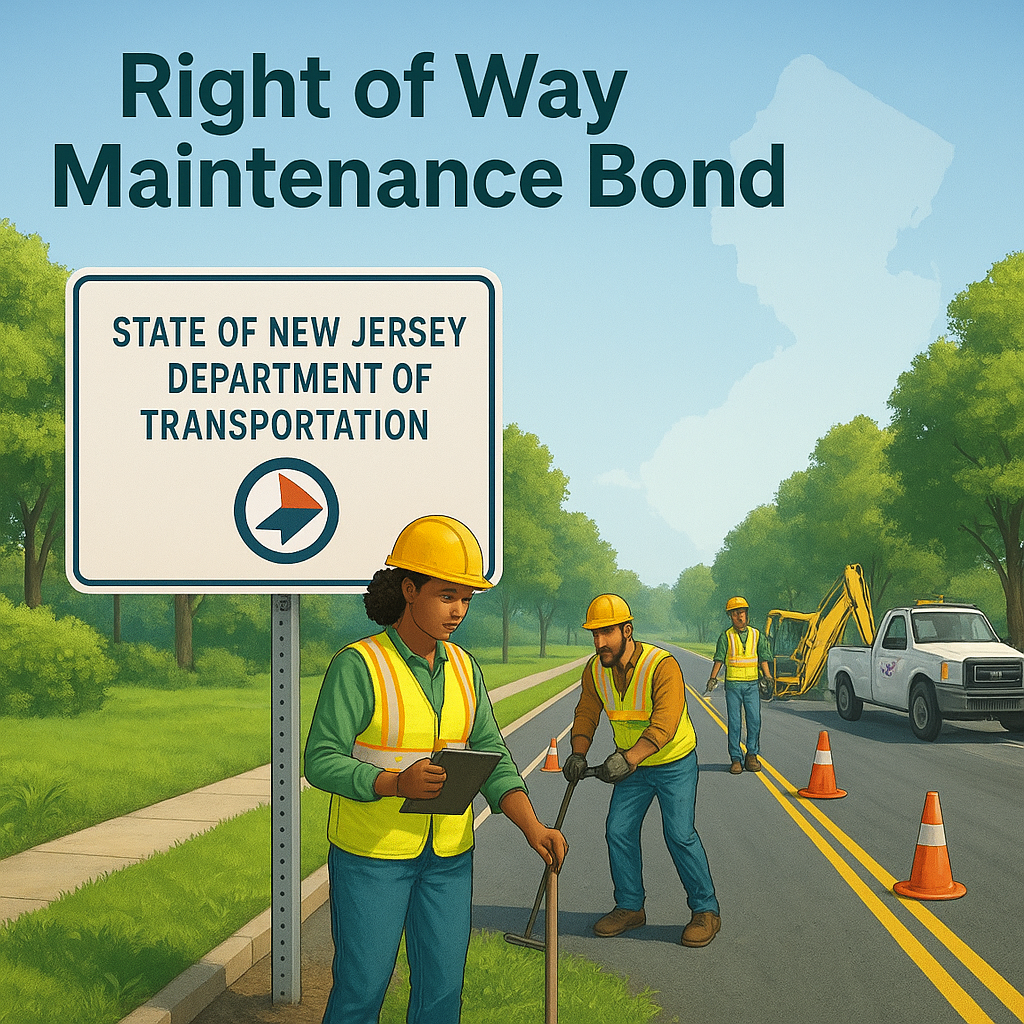
If you’ve ever driven along New Jersey’s highways and noticed crews trimming trees, repairing guardrails, or re-striping lanes close to the road, you might have wondered what keeps those workers and their projects in line. Often, a quiet but powerful document sits behind the scenes: a Right of Way Maintenance Bond. The NJ Department of Transportation (NJDOT) uses this bond to ensure that any work done inside the state’s right of way meets strict safety and restoration standards. But what exactly is this bond, and why should anyone who digs, builds, or maintains near public roads care about it?
What Is a Right of Way Maintenance Bond?
Think of a Right of Way Maintenance Bond as a promise backed by money. It’s a three-party agreement that involves the contractor (you or your company), the NJDOT, and a surety company. The bond guarantees that if the contractor performs work within the state’s right of way—like installing utilities, making driveway connections, or doing landscape maintenance—they’ll complete the job correctly and leave the area in good shape. If something goes wrong, the bond offers a financial safety net for the state and the public.
This isn’t insurance for the contractor. Instead, it’s a shield for the public and the transportation agency. Should the contractor fail to repair a damaged road shoulder, clean up debris, or comply with a permit, NJDOT can file a claim against the bond to cover the cost of fixing the mess.
Why Does the NJ Department of Transportation Require These Bonds?
Roads, highways, and the strips of land alongside them belong to all of us. When anyone works there, they’re borrowing public space. NJDOT demands a maintenance bond to protect that space and the people who use it. Without this requirement, a contractor could dig up a shoulder for a cable line, walk away, and leave behind a crumbling patch that turns into a pothole nightmare. With the bond in place, there’s a clear obligation—and a financial incentive—to do the job right.
The bond also reinforces trust. It tells NJDOT that the contractor is serious, financially stable, and ready to stand behind their work for a specified period after the project is complete. Usually, this maintenance period lasts one or two years, during which the contractor must address any defects or damage caused by their work.
Who Needs to Get This Bond?
The requirement doesn’t apply to every roadside project, but it’s common for several groups:
- Utility companies installing or repairing pipes, cables, or conduits under or along state highways.
- Private contractors doing driveway cuts, sidewalk repairs, or retaining wall work that touches the right of way.
- Landscaping firms maintaining vegetation or trees within NJDOT-controlled areas.
- Developers whose construction activities spill into the public right of way for drainage, access, or grading.
If you’re unsure, check your permit documents from NJDOT. The agency will clearly state whether a maintenance bond is required and for how much.
How Does the Bond Work in Real Life?
Let’s walk through a relatable scenario. Imagine you run a construction crew, and you’re hired to put in a new sewer line that crosses under a state road. NJDOT issues a permit with a condition: you must post a $50,000 Right of Way Maintenance Bond before you start digging. You buy the bond from a surety company, paying only a small percentage of that amount as a premium. The bond stays active for the length of your project plus a maintenance period of, say, two years.
Everything goes smoothly, and you patch the road perfectly. A year later, however, the patch sinks, creating a dangerous dip. NJDOT notifies you to fix it, but you’ve moved on and can’t respond quickly enough. The department then calls on the surety to pay for a different contractor to redo the patch. The surety pays out, but here’s the catch: you have to repay the surety every penny. That’s why it’s crucial to treat the bond as a serious commitment, not just a paper hurdle.
A Simple Analogy: Renting Public Space
Think of the right of way like a rented apartment. When you move in, you pay a security deposit. If you leave holes in the wall or stains on the carpet, the landlord uses your deposit to fix them. A Right of Way Maintenance Bond works the same way—it’s a security deposit for the public road. But instead of handing over a pile of cash, you pay a much smaller fee to a surety company that vouches for you. If you damage the “apartment,” the surety covers the repairs and then comes after you for the full amount.
What Does the Bond Cover?
The coverage is fairly specific, and understanding it helps you avoid nasty surprises. Generally, the bond ensures:
- The work area is restored to its original condition, or better.
- All materials and workmanship remain sound during the maintenance period.
- Any damage to pavement, drainage, signs, or landscaping caused by your work is repaired promptly.
- NJDOT doesn’t have to spend taxpayer money to fix your mistakes.
When you read your bond form, you’ll see clear language tying the bond to your permit. Always keep the permit requirements handy—any violation can trigger a claim.
How Much Does a Right of Way Maintenance Bond Cost?
The bond amount is set by NJDOT, often based on the scope and risk of your project. It could range from $10,000 for a small driveway opening to $100,000 or more for a large utility crossing. But you won’t need to pay the full amount out of pocket. You’ll pay a premium, which is a percentage of the bond amount. For a contractor with good credit and solid financials, that premium typically falls between 1% and 3% of the bond’s value.
On a $25,000 bond, for example, you might pay just $250 to $750 for the entire maintenance term. Factors that influence your premium include your credit score, business history, and the surety company’s evaluation of your risk. Some sureties also offer multi-year bonding programs to save money on longer projects.
Steps to Get Your Bond in New Jersey
Securing the bond isn’t complicated, but it pays to work with an agency that understands NJDOT’s specific forms and expectations. Here’s a straightforward path:
- Review your permit: Confirm the required bond amount, maintenance period, and any special conditions.
- Reach out to a surety bond provider: Look for one experienced in New Jersey transportation bonds. They can often provide a quote in minutes.
- Complete the application: You’ll need basic business information and possibly financial statements for larger bonds.
- Receive your premium quote and pay: Once you accept, the bond is issued.
- File the bond with NJDOT: The original bond must be submitted to the NJ Department of Transportation before work can legally start.
Don’t wait until the last minute. Even a small delay in filing can push out your project start date, and NJDOT doesn’t budge on permit conditions.
Common Questions Contractors Ask
Is the bond the same as insurance?
No. Insurance protects your business from accidents or losses. This bond protects the state and public from incomplete or subpar work. If the surety pays a claim, you must reimburse them fully.
What if my project gets delayed?
The bond’s maintenance period usually starts after the project is accepted by NJDOT, not when your physical work ends. Delays shouldn’t reduce the coverage timeline, but always check the bond form’s exact language.
Can I increase my bond amount after it’s issued?
Yes, if NJDOT revises the requirement or you discover you’re doing more extensive work. Talk to your surety about a rider or a new bond. It’s better to address this before the additional work begins.
What happens if a claim is filed against my bond?
You’ll be notified and given a chance to resolve the issue directly. Many claims are avoided by simply communicating with NJDOT and making corrections fast. If you don’t, the surety pays and then collects from you. It can feel like a bank demanding repayment of a loan you didn’t want.
Why This Bond Matters to Every New Jersey Resident
You don’t need to be a contractor to benefit from understanding these bonds. Every time you glide down a smooth highway without swerving to avoid a sunken trench, or enjoy a well-kept roadside free of construction debris, you’re seeing the bond system at work. It’s a quiet guardian of the state’s infrastructure, keeping contractors accountable and tax dollars safe.
For contractors, the bond is more than a bureaucratic hoop—it’s a mark of reliability. Holding one tells NJDOT that you’re serious about public safety and quality work. It can even give you a competitive edge when bidding on jobs that involve right of way access.
Ready to Move Forward with Confidence?
Navigating New Jersey’s right of way rules can feel overwhelming, but the maintenance bond doesn’t have to be. By understanding what it is, why it’s needed, and how to get one, you’re already a step ahead. Whether you’re a seasoned contractor or taking on your first NJDOT-permitted project, treat this bond as the foundation of a trustworthy partnership with the state. And the next time you see workers near the roadside, you’ll know there’s more than just hard hats and signs keeping everything in check—there’s a bond that turns fragile promises into rock-solid guarantees.