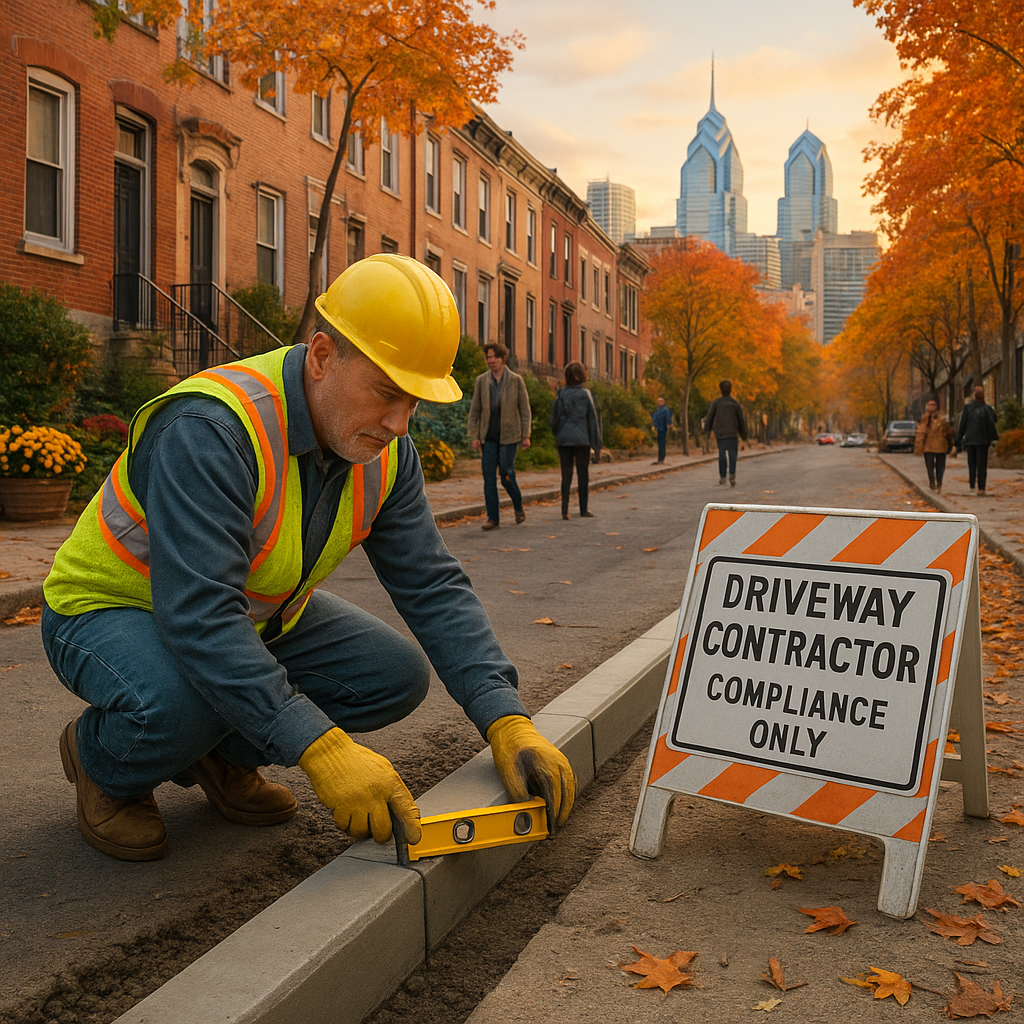
If you’re a driveway contractor in Philadelphia—or thinking about becoming one—you’ve probably heard the term “Curb Setter Bond” tossed around. It might sound like just another piece of paperwork, but it’s actually a key that unlocks your ability to work legally in the city. And honestly, once you understand what it is, it’s not nearly as intimidating as it sounds.
Think of this blog post as a friendly conversation over coffee. We’ll walk through everything you need to know about Philadelphia’s Curb Setter Bond, why it exists, how much it costs, and how to get one without pulling your hair out. By the end, you’ll see that this bond isn’t a hurdle—it’s a badge of trust that helps you win more jobs.
What Exactly Is a Curb Setter Bond in Philadelphia?
Let’s strip away the legal jargon. A Curb Setter Bond is a type of surety bond required by the City of Philadelphia for contractors who set, reset, or repair curbs and sidewalks, especially when it’s tied to driveway construction. In plain English, it’s a three-party promise. You (the contractor) promise to follow the city’s rules. A bonding company backs that promise with money. And the city is the one who gets protected if things go wrong.
It’s not insurance for you—it’s a financial guarantee for the city and, indirectly, for the property owner. If you do the job according to code, nothing happens. If you cut corners and damage public property or leave a mess, the bond kicks in to cover the cost of fixing it. Think of it like a deposit you’d leave when renting equipment; you get it back in good standing as long as you return everything in proper shape. The bond is a pre-paid promise that you’ll leave the city’s curbs and streets as you found them—or better.
This bond often goes by a few different names: Philadelphia Curb Setter Bond, Driveway Contractor Bond, or simply Compliance Bond. But they all serve the same purpose: making sure driveway and curb work doesn’t become a headache for the neighborhood or the city’s infrastructure.
Why Does Philadelphia Require This Bond?
You might be thinking, “I’m a careful contractor. Why do I need a bond?” It’s a fair question. Philadelphia’s streets are old, narrow, and tightly packed. A simple curb cut for a new driveway can easily disturb water drainage, damage underground utilities, or create a tripping hazard on the sidewalk. The city wants to avoid turning your small project into a massive public expense.
The Curb Setter Bond acts as a safety net. It ensures that contractors don’t start a job, break something, and then disappear. The bond requirement also levels the playing field. It weeds out unqualified operators who might underbid a job but can’t meet the city’s standards. When you carry a valid Philadelphia curb setter bond, you’re telling homeowners and general contractors, “I’m legitimate, I follow the rules, and my work is backed by a financial guarantee.”
Another reason is the city’s long-term planning. Properly set curbs handle stormwater runoff and protect asphalt edges. Poor work leads to potholes, drainage issues, and costly repairs down the line. By mandating a driveway contractor bond, the city prevents those future problems at the source.
Who Needs This Bond? Are You One of Them?
Not every contractor in Philadelphia needs a curb setter bond. It’s specifically aimed at those doing work that touches the public right-of-way—typically the curb line, the sidewalk, and the apron where a driveway meets the street. If your project involves:
- Pouring a new concrete driveway that requires a curb cut
- Widening an existing driveway opening
- Resetting or repairing damaged curbs alongside a driveway
- Replacing sidewalks in conjunction with a driveway
…then you almost certainly need a Philadelphia Curb Setter Bond. The bond is tied to your license to perform this type of work, and you’ll need to show proof before pulling permits.
If you’re a general contractor who subs out curb work, the responsibility typically falls on the subcontractor. However, it’s wise to confirm your sub holds their own bond—otherwise, you might end up liable. For new contractors, it’s a must-have to even get started. For seasoned pros, it’s a non-negotiable part of your annual paperwork.
How Does the Bond Actually Work? Breaking It Down
Let’s use a scenario to make this crystal clear. Imagine you’re hired to replace an old, crumbling driveway in South Philly. You’ll need to cut the curb, pour a new apron, and make sure the street grade aligns perfectly. You’ve got your bond in place. Halfway through the job, a city inspector notices the curb wasn’t formed to spec—it’s too steep and doesn’t meet ADA compliance. The homeowner is upset. The city requires you to tear it out and redo it.
If you refuse or go out of business, the city can file a claim against your Curb Setter Bond. The bonding company investigates, and if the claim is valid, they pay the city up to the bond amount to hire another contractor to fix the curb. Then—here’s the big catch—the bonding company will come after you for that money. You’re ultimately on the hook. The bond just guarantees that the funds are available quickly so the public doesn’t suffer.
So, a bond isn’t a get-out-of-jail-free card. It’s a credit line you must repay. That’s why it motivates contractors to do things right the first time.
How Much Does a Philadelphia Curb Setter Bond Cost?
Great news: you don’t need to pay the full bond amount out of pocket. Let’s say the city requires a $10,000 bond (a common figure, though you should always check current regulations). You don’t write a check for ten grand. Instead, you pay a small percentage—often between 1% and 5% of that amount—as an annual premium. For a contractor with solid credit and business history, a $10,000 bond might cost just $100 to $300 per year.
The exact premium depends on your personal credit score, your business financials, and the bonding company’s underwriting. Think of it like paying a subscription fee to maintain your good standing. Even if your credit isn’t perfect, there are programs that can help you get bonded at a slightly higher rate.
Keep in mind that the bond amount can vary. Some driveway contractors may need a bond as high as $20,000 or more, depending on the scope of work and the city’s current mandate. Always verify with Philadelphia’s Department of Licenses and Inspections (L&I) or your bond provider.
The Simple Path to Getting Your Bond
Obtaining a Philadelphia Curb Setter Bond is surprisingly straightforward. You’ll typically follow these steps:
- Confirm the requirement: Reach out to L&I or check the city’s website to know the exact bond amount and form you need.
- Gather your info: You’ll need your business license number, personal details, and maybe a few years of financial history.
- Apply with a surety provider: Many online agencies specialize in contractor bonds. They’ll guide you through the application, which can sometimes be done in minutes.
- Get a quote and pay the premium: Once approved, you pay the annual premium, and the bond is issued.
- File the bond with the city: You’ll receive the official bond document. Submit it as part of your permit or license renewal. Some bonding companies can even file it on your behalf.
From start to finish, the process can take as little as 24 hours. Many contractors procrastinate on this, but it’s a painless step that keeps your projects moving without delays.
Maintaining Compliance: Keep Your Bond and Business Healthy
Getting the bond is just the beginning. Staying compliant means more than just paying the premium every year. It’s about protecting your bond from claims and keeping your reputation shiny. Here’s how to do that:
- Renew on time: Set a calendar reminder at least 30 days before your bond expires. Letting it lapse can suspend your ability to pull permits.
- Document everything: Take before and after photos of every curb project. Keep signed contracts that clearly outline the scope and city code requirements.
- Communicate with inspectors: Schedule inspections early and be present. A quick correction on the spot can stop a small issue from becoming a bond claim.
- Use written change orders: If a property owner asks for something that might conflict with code, get it in writing and explain the risks.
- Stay educated: Philadelphia occasionally updates its curb and sidewalk regulations. A quick check once a year can prevent accidental violations.
Think of your Curb Setter Bond as a partnership with the city. It’s a sign that you’re committed to quality work, and it opens doors to projects where homeowners demand proof of bonding. In many cases, you can even use your bond as a marketing tool. Put “Fully Bonded and Insured” on your truck, your website, and your estimates. That alone can set you apart from the competition.
Common Misunderstandings (And the Truth)
Let’s clear up a few myths that often trip up new driveway contractors:
“My general liability insurance covers the same thing.” Nope. Insurance protects you from accidents and damages. A curb setter bond guarantees compliance with city codes and payment for fines or restoration. They complement each other, but one doesn’t replace the other.
“Once I have the bond, I’m free from liability.” As we mentioned earlier, if a claim is paid, you must reimburse the surety company. The bond doesn’t erase your responsibility—it just assures the city that funds exist.
“I only need it for big commercial jobs.” The requirement often applies to residential driveway work, too. If you touch the curb, you likely need the bond. Never assume a small job is exempt.
“The bond amount is a fine I pay if I mess up.” The bond amount is the maximum the surety will pay out. You’re still liable for the full cost of damages above that limit, and you owe every penny the surety pays. So no, it’s not a fine you can just budget for.
Why It’s Really a Win-Win (Even if It Feels Like Red Tape)
It’s natural to see another government requirement and sigh. But look at it from the homeowner’s perspective. They’re spending thousands on a new driveway. They want confidence that the contractor won’t leave them with a cracked apron and a notice from the city. Your Philadelphia Curb Setter Bond gives them that peace of mind. It says, “If something isn’t up to code, there’s a clear path to get it fixed.” That trust often translates into more referrals and better online reviews.
For you, the bond also adds a layer of protection. When you follow the rules and document your work, the bond shields you from frivolous claims. The surety company won’t pay out unless you’ve truly failed to comply. So as long as you do quality work, the bond stays in the background, quietly supporting your business.
Ready to Take the Next Step?
Understanding Philadelphia’s Curb Setter Bond is the first move toward running a smooth, obedient, and successful driveway contracting business. You now know what the bond is, why it’s required, how much it’ll cost you, and how to keep it in good standing. The only thing left is to act. Check with Philadelphia L&I for current bond amounts, reach out to a reputable surety bond agency, and get bonded. It’s a small investment that pays off every time you break ground without a permit holdup or a worried homeowner looking over your shoulder.
So, are you ready to pave the way—literally and figuratively—with a solid compliance bond in your back pocket? Go ahead, take the leap. Your next driveway project will be all the smoother for it.