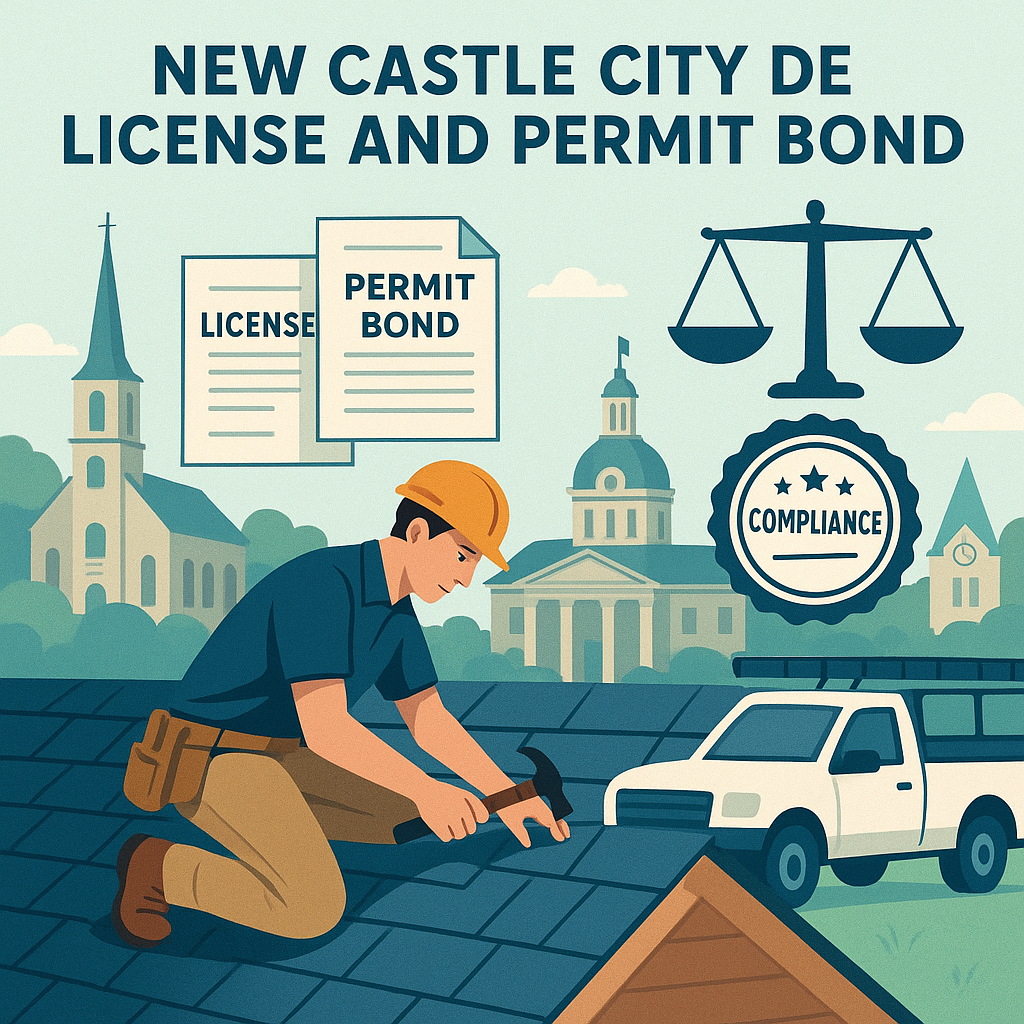
Are you a roofing contractor looking to break into the New Castle City market? Or maybe you’re a homeowner who just heard the term “license and permit bond” and your eyes glazed over. Don’t worry, you’re in the right place. Let’s unpack the whole idea of the City of New Castle DE License and Permit Bond, specifically for roofing contractors. We’ll keep it simple, honest, and totally free of confusing insurance-speak. By the end, you’ll know exactly what this bond is, why it matters, and how to get one without the headache.
What Exactly Is a License and Permit Bond?
Imagine you’re lending your favorite ladder to a neighbor. You trust them, but you’d still like a little promise that if they break it, they’ll make things right. A license and permit bond works in a similar way, just with three parties instead of two.
The bond is a three-way agreement. There’s you, the contractor (the principal). There’s the city requiring the bond (the obligee), which in this case is the City of New Castle, Delaware. And then there’s the surety company that backs your promise financially. You’re not buying insurance for yourself. Instead, you’re giving the city a financial guarantee that you’ll play by the rules. If you don’t? The bond steps in to protect the public or the city from financial loss. It’s like a security deposit for your professional behavior.
The New Castle City, DE Twist: Compliance Only
You might have seen the phrase “Compliance Only” tacked onto the bond requirement. Here’s where the story gets specific to our friends in New Castle City. Some bonds guarantee that you’ll finish a specific construction project. Not this one. A compliance-only bond is laser-focused on something else entirely. It promises that you, as a roofing contractor, will follow all the local laws, building codes, and permit regulations the city has put in place.
Think of it as your pledge to keep your work safe and legal from day one. It doesn’t cover shoddy workmanship on a particular house, nor does it ensure you’ll finish a project on time. Instead, it tells the city, “I’ll pull the right permits. I’ll stick to the zoning rules. I won’t cut corners that put the community at risk.” If you break that promise, the city or a harmed party can make a claim against your bond to recover fines, fees, or damages caused by your non-compliance.
Why Did New Castle City Put This Rule in Place?
Pause for a moment and put yourself in the city’s shoes. They have to protect everyone — homeowners, businesses, and even other contractors who do things by the book. Without a bond, a roofer could breeze into town, ignore a stop-work order, and then disappear, leaving the homeowner with a mess and the city with unpaid fines. That’s a lose-lose scenario.
By requiring a license and permit bond, New Castle City creates a safety net. The bond acts like a referee. If a contractor ignores the rules, the bond money can be used to pay for the problem. More importantly, most contractors want to avoid a bond claim at all costs. Why? Because a bond is not insurance where you just let the company pay out and walk away. If a claim is paid, the surety company will come back to you, the contractor, for every single penny. That little detail naturally encourages everyone to stay compliant. It’s a clever system that quietly keeps the building landscape cleaner and safer.
Who Exactly Needs This Roofing Contractor Bond in New Castle City?
The short answer? If you plan to nail down a single shingle within the City of New Castle limits, you almost certainly need this bond. The city doesn’t just hand out permits to anyone with a ladder and a truck. They want proof that you’re a legitimate business that will respect the local rules. The “Roofing Contractor – Compliance Only” designation makes it crystal clear: this requirement is tailored for roofers specifically.
It doesn’t matter if you’re a giant company with decades of history or a solo operator just starting out. The bond requirement applies equally. It’s part of the licensing package you’ll need to pull together before you can legally advertise, bid, or break ground on any roofing project. Skipping this step isn’t a minor oversight; it can lead to hefty fines, your permits being yanked, and your reputation taking a serious hit right out of the gate.
How Big Is the Bond, and What Will It Cost You?
This is usually the first question every contractor asks. The city sets a required bond amount. You’ll need to check the most current municipal code or contact the New Castle City licensing office for the exact dollar figure, as these can be updated periodically. However, don’t let the total bond amount make you nervous.
You won’t pay that entire amount upfront. You’ll pay a small percentage, called the premium. For most contractors with decent credit, this premium ranges from 1% to 5% of the total bond amount. So, let’s say the required bond is $10,000. You might only pay somewhere between $100 and $500 to get bonded for an entire year. It’s an incredibly affordable way to unlock your ability to work in the city. The surety company will quickly look at your personal credit history and business financials to set your exact rate. Even if your credit isn’t perfect, there are usually programs available; you just might pay a slightly higher percentage.
The Step-by-Step Journey to Getting Bonded
Ready to get this done? The process is often much faster and simpler than pulling a building permit itself. Here’s a typical path you’ll follow:
- Confirm the requirement: Call or visit the City of New Castle’s licensing department. Confirm the exact bond amount and any special form they require. Getting the form right is key.
- Gather your info: You’ll need your business license, your own contact details, and your social security number for the personal credit check.
- Apply with a surety bond agency: Choose a reputable agency that specializes in contractor bonds. Fill out a short application, which often takes less than ten minutes.
- Get your quote and pay: The agency will run a soft credit check and present you with a premium price. Once you pay, they issue the bond.
- File it with the city: You’ll send the original bond document to the City of New Castle. Don’t just keep it in a drawer; the city needs it on file to make your license active.
- Mark your calendar: Bonds expire. Most are annual. You’ll need to renew the bond and send the city proof of renewal before it lapses. Make a note in your phone so your license doesn’t hit an unexpected dead stop.
What Kinds of Things Could Trigger a Claim Against Your Bond?
Remember, this is a compliance bond, so it’s not about an unhappy customer who just didn’t like the color of the shingles. Claims are almost always triggered by a clear violation of city rules. Some common scenarios include:
- Starting a roofing job without pulling the required permits.
- Failing to address a code violation after receiving a cited notice from a city inspector.
- Ignoring a stop-work order because you wanted to finish a job quicker.
- Causing damage to public property, like a sidewalk or street, during your work and leaving without repairing it.
If the city comes knocking with a claim, the surety company will investigate. If the claim is valid, they’ll pay out up to the bond’s limit. But remember that personal guarantee? The surety company will then demand that you reimburse them fully. So, protecting your bond means protecting your own wallet and business future.
The Bright Side: Why Being Bonded is a Business Superpower
At first glance, a bond might feel like just another bureaucratic hoop to jump through. But savvy contractors know it’s actually a marketing goldmine. When you can tell a homeowner, “Yes, I’m fully licensed, bonded, and insured by the City of New Castle,” you instantly set yourself apart from the unlicensed operators giving the trade a bad name.
That bonded status communicates trust before you even step onto the property. It tells customers that you’ve been vetted, you’ve put skin in the game, and you stand behind the legitimacy of your business. It’s a quiet reassurance that nudges a nervous homeowner to choose you over a cheaper, unbonded competitor. Think of the bond premium not as a cost, but as an investment in your company’s credibility and a direct line to more closed deals.
Common Missteps and How to Dodge Them
Life gets busy. Here are a few pitfalls that trip up busy roofing contractors, and how you can breeze right past them:
- The “Set It and Forget It” trap: You got the bond and filed it. Great! But if you ignore the renewal notice, your license can become inactive overnight. Always set a reminder 30 days before expiration.
- Assuming it covers your workmanship: A compliance bond is not a warranty. If a roof leaks because of poor installation, that’s a different kind of insurance claim. Make sure you explain this clearly to customers too, so expectations are aligned.
- Not updating your bond if you change your business structure: If you switch from a sole proprietorship to an LLC, you may need a new bond. The name on the bond must exactly match your official business name on file with the city.
- Blowing off the small stuff: Even small code violations can become bond claims. Don’t brush off a notice from a building inspector. A quick, corrective conversation can save a world of financial pain later.
So, What’s Your Next Move?
We’ve covered a lot of ground, but the core message is simple. The City of New Castle DE License and Permit Bond for roofing contractors is your ticket to doing business legally and ethically in a wonderful Delaware community. It’s a compliance-only promise that protects the city and, ultimately, your own reputation. The cost is modest, the application process is painless, and the professional advantage is enormous.
If you’re ready to start roofing in New Castle City, reach out to a trusted surety bond professional today. Have them walk you through the exact bond amount and get you a quote in minutes. A few simple steps now can open the doors to a thriving, trustworthy business for years to come. The rooftops are calling. Go get bonded, and answer them with confidence.