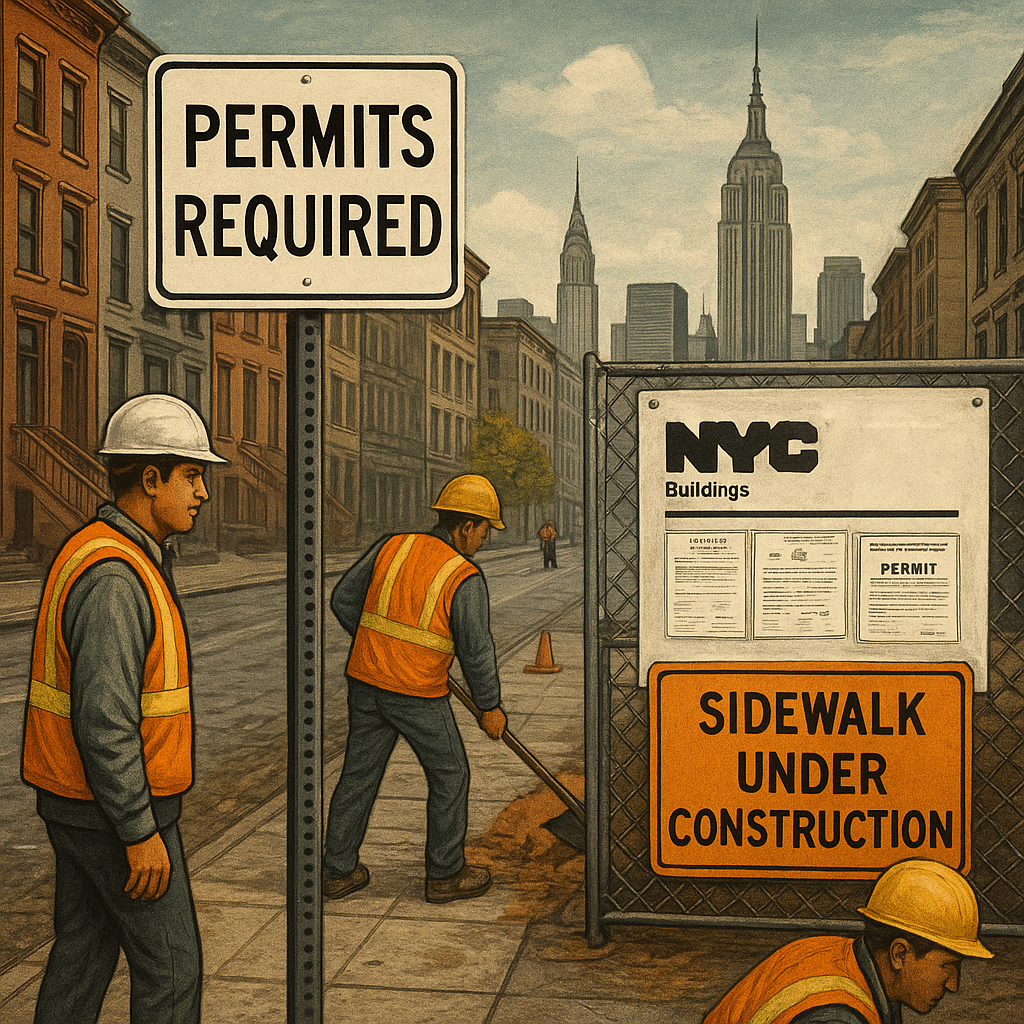
Walking down a busy New York City street, you probably don’t think twice about the concrete beneath your feet. But for the contractors who repair, replace, and maintain those sidewalks, there’s a whole world of rules to follow. Getting the work done right isn’t just about mixing cement—it’s about understanding permits, staying compliant, and securing the right financial protections.
If you’re a sidewalk contractor in the City of New York, you’ve likely heard about the “One Location Liability – Building Operations Permits Only” bond. It sounds like a mouthful, right? Don’t worry. We’re going to break it all down into simple, easy-to-understand pieces. Whether you’re just starting out or you’ve been pouring concrete for years, this guide will help you navigate the compliance side of your work with confidence.
What Does “Building Operations Permits Only” Actually Mean?
Before we dive into bonds and liability, let’s talk about permits. In New York City, you can’t just grab a jackhammer and tear up a sidewalk whenever you feel like it. The city requires specific permits for construction and repair work on public walkways. These are often called building operations permits.
Think of a building operations permit as a green light from the city. It says you have permission to perform work at a particular location, like fixing a cracked sidewalk outside a Brooklyn brownstone or replacing a stretch of uneven concrete in Queens. The “Permits Only” part means the bond you’re getting is tied strictly to that permit. It covers your liability for the job described in that permit, not for a whole umbrella of different services you might offer.
Why is this important? Because the city wants to make sure that if something goes wrong—like property damage or incomplete work—the public is protected. That’s where the bond comes into play.
Why Sidewalk Contractors Need a Special Bond
Let’s use an analogy. Imagine you’re renting a car. The rental company asks for a security deposit, just in case you return the vehicle with a scratch or dent. A surety bond works in a similar way, but for your construction permit. It’s a financial promise that you’ll follow the rules and complete the job according to city regulations.
For NYC sidewalk contractors, the required bond often goes by the name “One Location Liability – Building Operations Permits Only.” That title might seem wordy, but it’s actually very descriptive:
- One Location Liability – The bond covers a single, specific job site. If you have three different projects happening at the same time, you’ll likely need a separate bond for each one.
- Building Operations Permits Only – The bond is tied to the permit itself. It doesn’t cover general business operations or other types of contracting you might do, like plumbing or electrical work.
So, if you’ve pulled a permit to replace a sidewalk at 123 Main Street, your bond for that job will be linked to that address. It’s a focused layer of protection for the property owner, pedestrians, and the City of New York.
The City’s Perspective: Protecting the Public
Why does the city insist on this? Sidewalks are public spaces. If a contractor digs a trench and leaves it uncovered, someone could get hurt. If the new concrete cracks a week after installation because of shoddy work, the property owner shouldn’t be left holding the bag. The bond is a safety net. It gives everyone peace of mind, knowing that money is set aside to fix problems if the contractor doesn’t act responsibly.
Compliance Essentials for NYC Sidewalk Contractors
Staying compliant isn’t just about buying a bond and calling it a day. There’s a bigger picture. Let’s walk through the key pieces every sidewalk contractor should have in place.
1. Valid Permits Are Non-Negotiable
You absolutely must have an active building operations permit before starting any sidewalk work. The New York City Department of Transportation (DOT) is often the agency that oversees these permits, especially for work that impacts public walkways. Working without one can lead to heavy fines, stop-work orders, and damage to your reputation. Plus, your bond won’t be valid without the corresponding permit number.
2. The Right Bond Amount Matters
Not all bonds are equal. The city will specify the required bond amount based on the scope of the project. For sidewalk contractors, this is often a fixed sum that acts like a line of credit. If a claim is made against your bond, the surety company pays out up to that amount and then looks to you for reimbursement. Always double-check the bond requirement with the permitting office or your insurance agent. You don’t want to show up with a $5,000 bond when the city asked for $10,000.
3. Insurance and Bonding Go Hand in Hand
A common mistake is thinking a bond replaces general liability insurance. It does not. Liability insurance covers accidents, injuries, or property damage that happen because of your work. The bond covers your obligation to follow the permit’s rules and complete the job correctly. They are two different layers of protection, and smart contractors carry both.
4. Know the Local Rules Like the Back of Your Hand
New York City’s construction codes can change, and they are famously detailed. For example, there are specific rules about how much slope a sidewalk can have, what materials you can use, and how you must protect pedestrians during construction. Ignorance is not a defense. If you do something that violates the code, a claim can be filed against your bond. Keep a checklist of current DOT and Department of Buildings (DOB) regulations, and update it regularly.
How to Get Your One Location Liability Bond
Getting bonded might sound intimidating, but it’s often a straightforward process. Here’s a step-by-step look at what you can expect.
First, gather your information. You’ll need basic details about your business, such as your legal company name, address, and federal tax ID. You’ll also need the specific permit details—the location where you’ll be working and the permit number, if you already have it.
Next, reach out to a surety bond provider. Many insurance agencies that work with contractors can help you secure this type of bond. They’ll ask a few questions to make sure you qualify. Because this is a “Permits Only” bond tied to one location, the underwriting is often simpler than a full-blown contractor bond that covers many projects. Your credit score may be checked, but even contractors with less-than-perfect credit can often get bonded; they may just pay a slightly higher premium.
Pay the premium and file the bond. You won’t pay the full bond amount. Instead, you pay a percentage of it, typically between 1% and 5%. Once paid, the surety company gives you the bond document. You’ll then file that with the appropriate city agency to activate your permit.
Don’t forget to keep a copy for your records. You might need to show it to a city inspector who stops by the job site.
Common Pitfalls That Lead to Compliance Headaches
Even the most experienced sidewalk contractor can stumble. Let’s look at a few real-world scenarios that can trigger problems—and how to avoid them.
Pitfall #1: Forgetting to renew or extend the bond. If your project takes longer than expected and the permit expires, you can’t just keep working. You’ll need to renew both the permit and the bond. Set reminders in your calendar well before expiration dates.
Pitfall #2: Changing the scope of work without updating the permit. Suppose you start a simple sidewalk repair, but then the property owner asks you to extend the work to the curb cut. That’s a different scope. Pulling a new or amended permit ensures your bond still covers the work. Working outside your permit’s description is a fast track to a violation.
Pitfall #3: Assuming one bond covers multiple locations. “One Location” means exactly that. If you’re doing sidewalk work on three different blocks, you need three separate bonds, each tied to its own permit. Blending them together is a serious no-no.
Pitfall #4: Ignoring small code details. The city might require specific signage, barriers, or safe pathways while you work. A pedestrian tripping over an unmarked hose could result in a claim. Little oversights can have big consequences.
Why This Matters for Your Business
You might be thinking, “This is just red tape.” But compliance isn’t a hurdle—it’s a trust signal. When you can show a property owner or general contractor that you are fully bonded and permitted, you immediately stand out. You look professional, reliable, and safe to hire. In a city as competitive as New York, that reputation is gold.
Plus, consider the alternative. A single bond claim can make it harder and more expensive to get bonded in the future. Multiple claims could even make you uninsurable. Staying on top of your permits and understanding exactly what your One Location Liability bond does will protect your business’s future.
Final Thoughts: Keep It Simple, Stay Covered
Navigating the world of building operations permits and compliance for NYC sidewalk contractors doesn’t have to make your head spin. Remember the key ingredients: pull the right permit, match it with a One Location Liability bond, keep your insurance current, and follow the city’s ever-changing rules. When you build compliance into your everyday workflow, it becomes second nature—just like finishing a smooth concrete walkway.
Do you have a sidewalk project coming up in the City of New York? Great. Now you know that the bond with the long name is really just a straightforward promise: you’ll do the job right, and if you don’t, there’s a plan B to make things right. That’s good for the city, good for the property owner, and ultimately, good for you.