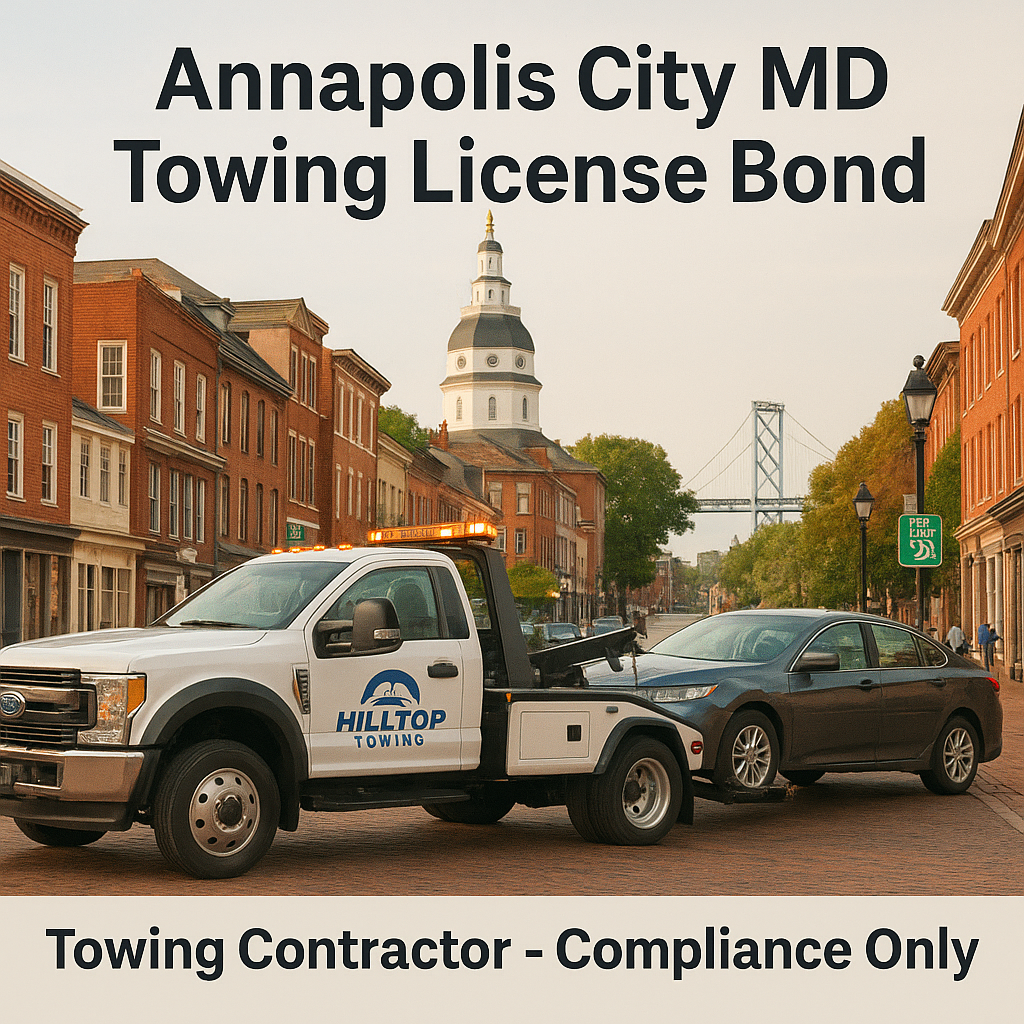
You’ve probably seen tow trucks zipping around Annapolis—picking up cars from private lots, helping stranded drivers, or clearing accident scenes. If you’re thinking of joining this essential industry, there’s one piece of paperwork you absolutely can’t ignore: the Annapolis towing license bond. Don’t let the term “bond” intimidate you. Think of it as a safety net, a promise that you’ll play by the rules. Let’s break down what this bond really is, why the City of Annapolis requires it, and how you can get one without losing your mind.
What Exactly Is a Towing License Bond?
Let’s strip away the insurance jargon. A towing license bond is not insurance for your business. Instead, it’s a three-party agreement designed to protect the public—your customers and the city itself. Picture a triangle. On one corner, you have the principal (that’s you, the towing contractor). On another corner, the obligee (the City of Annapolis, the one requiring the bond). And finally, the surety (the company that backs your bond financially).
If you break the city’s towing rules—say, you overcharge a driver or damage a vehicle while towing—someone can file a claim against your bond. The surety pays up to the bond amount to make things right. But here’s the kicker: you’re still on the hook. You’ll need to reimburse the surety for every penny they pay out. It’s like having a cosigner on a loan; they trust you, but if you mess up, you’re responsible for the debt.
Why Does Annapolis Require This Bond for Towing Contractors?
Imagine parking regulations as a delicate ecosystem. Private tow companies are a necessary part of that system—they keep fire lanes clear, clear disabled parking spots, and manage unauthorized vehicles. But without oversight, things could go south fast. Towing companies could slap on hidden fees, hold vehicles hostage, or damage cars with zero accountability.
The City of Annapolis uses the towing license bond as a regulatory handshake. By posting this bond, you’re telling the city, “I agree to follow your municipal code, treat people fairly, and operate ethically.” It’s a financial incentive to behave, because breaking the rules could hit your wallet directly. For the public, it’s reassurance that they’re not dealing with a fly-by-night operator. If something goes wrong, there’s a pot of money available to compensate them.
Who Needs an Annapolis Towing License Bond?
If you plan to tow vehicles from private property within Annapolis city limits, you almost certainly need this bond. This applies to contractors doing what’s often called “non-consent” towing—when the vehicle owner didn’t request the tow, like when a car is parked illegally in a private lot at 2 a.m. Even if you’re just starting out or running a one-truck operation, the bond requirement doesn’t go away. The city wants every towing contractor, regardless of size, to have that financial backing.
Are you offering only roadside assistance where the driver calls you directly? That’s consent towing, and the rules might be a bit different. However, it’s always smart to check with Annapolis city authorities, as licensing requirements can cover multiple towing activities. The bond requirement often shows up as part of the business license application process. The city might call it a “compliance only bond” because its sole purpose is to guarantee you’ll follow local laws.
How Does a “Compliance Only” Bond Work in Real Life?
Let’s step away from legal definitions for a moment. Think of the bond like a deposit you put down when renting an apartment. You don’t expect to lose that deposit; you plan to leave the place spotless. But the landlord knows that if you punch a hole in the wall, they can use your deposit to fix it. In the same way, Annapolis requires you to essentially “deposit” a bond amount (though you pay a small fraction of that upfront) as a sign of good faith. If you keep your nose clean and operate ethically, the bond sits quietly in the background, costing you nothing beyond the initial premium.
The “compliance only” label means the bond doesn’t cover things like your truck getting stolen or an employee getting hurt. It’s strictly about obeying city ordinances. So if you charge exactly what the law allows, give proper notice before towing, and release vehicles promptly upon payment, your bond will likely never be used. It’s a silent partner that only speaks up when rules are broken.
What’s the Bond Amount, and How Much Will It Cost Me?
The City of Annapolis sets a specific bond amount that you must post. This is the maximum the surety will pay out for a single claim or in total. You’ll find this figure in the municipal code or on your license application—often it’s a manageable sum like $10,000, $25,000, or another amount tailored to the risk. Don’t panic when you see that number, because you are not shelling out that whole amount in cash.
Instead, you pay a premium—a small percentage of the bond amount. For towing contractor bonds, premiums typically range from 1% to 10% of the bond amount, depending on your personal credit score and business finances. Someone with strong credit might pay as little as $100 a year for a $10,000 bond. If your credit is a little rough, you could still get bonded, but the rate might be higher. The surety company evaluates the risk that you’ll cause a claim, and sets your price accordingly.
Factors That Influence Your Bond Cost
- Credit history: A solid credit score signals reliability, so you’ll snag a lower rate.
- Business experience: If you’ve been in the towing game a while without claims, that helps.
- Bond amount required: Higher required amounts naturally mean slightly higher premiums, even with great credit.
- Surety company selected: Different sureties have different underwriting appetites. Shopping around pays off.
Step-by-Step: How to Get Your Annapolis Towing Bond
Getting bonded isn’t a maze—it’s a straightforward path. Let’s walk through it together.
Step 1: Confirm the exact bond requirement. Visit the Annapolis city clerk’s office or their official website. Look for the towing contractor license application. It will spell out the required bond amount and any special wording the bond must include. Don’t guess; get it in writing.
Step 2: Gather your business and personal information. Surety companies will ask for your business name, address, Social Security number (for a personal credit check), and sometimes basic financials. Having your ducks in a row speeds things up.
Step 3: Apply with a reputable surety bond provider. You can go through an independent insurance agent who specializes in bonds, or use an online surety marketplace. They’ll generate a quote quickly, often within minutes for smaller bonds. You’ll provide the details from step 2, and they’ll run a soft credit pull.
Step 4: Review and pay your premium. Once approved, you’ll get a rate. If it looks good, pay the premium and the surety will issue your bond. You’ll typically receive a bond form ready to be filed.
Step 5: File the bond with the City of Annapolis. Your bond form will need to be submitted alongside your license application. The bond document is the official proof that you’ve met the requirement. Keep a copy for your records, and set a reminder for renewal, as these bonds usually need to be kept active year after year.
What Happens If You Operate Without This Bond?
Skipping the bond might feel tempting if you’re trying to cut costs, but it’s a dangerous game. Operating a towing business without the necessary license and bond can land you in hot water. The city can slap you with fines, revoke your business license, or even impound your trucks. More importantly, it destroys the trust Annapolis residents and businesses have in you. A bonded contractor displays a commitment to doing things the right way. Without it, potential clients might choose a competitor who looks more legitimate.
And let’s not forget—if you do cause damage without a bond, you’re personally on the hook for every cent. A lawsuit could sink your business faster than a lead anchor. The bond is there to provide an easier path to resolution for everyone involved.
Maintaining Your Bond and Keeping Your Record Clean
Once you’re bonded and licensed, your job isn’t done. Most bonds renew annually. Pay your premium on time to avoid a lapse. If the city ever sends a notice about a claim or complaint, take it seriously. A single valid claim can cause your future premiums to spike, or even make bonding harder to obtain. Treat every tow with care, document vehicle condition before and after, and train your drivers on proper procedures. A few extra minutes of caution can save you thousands of dollars and a world of hassle.
Tying It All Together: Why the Bond Matters Beyond Paperwork
At first glance, the Annapolis towing license bond looks like another bureaucratic hoop. But when you look closer, it’s a sign of a maturing industry. It separates the professionals from the opportunists. It tells the mom worried about her car in a private lot, “You’re protected.” It tells the city, “We can trust this business.” And it tells you, the contractor, that you’re playing a long-term game built on integrity. So, whether you’re applying for your first towing license or renewing an existing one, embrace the bond as a badge of honor. It’s not just a compliance checkbox—it’s your promise to do right by Annapolis.
Now, take a deep breath, gather your documents, and get bonded. The streets of this historic city are waiting for a tow operator they can rely on. Why not let it be you?