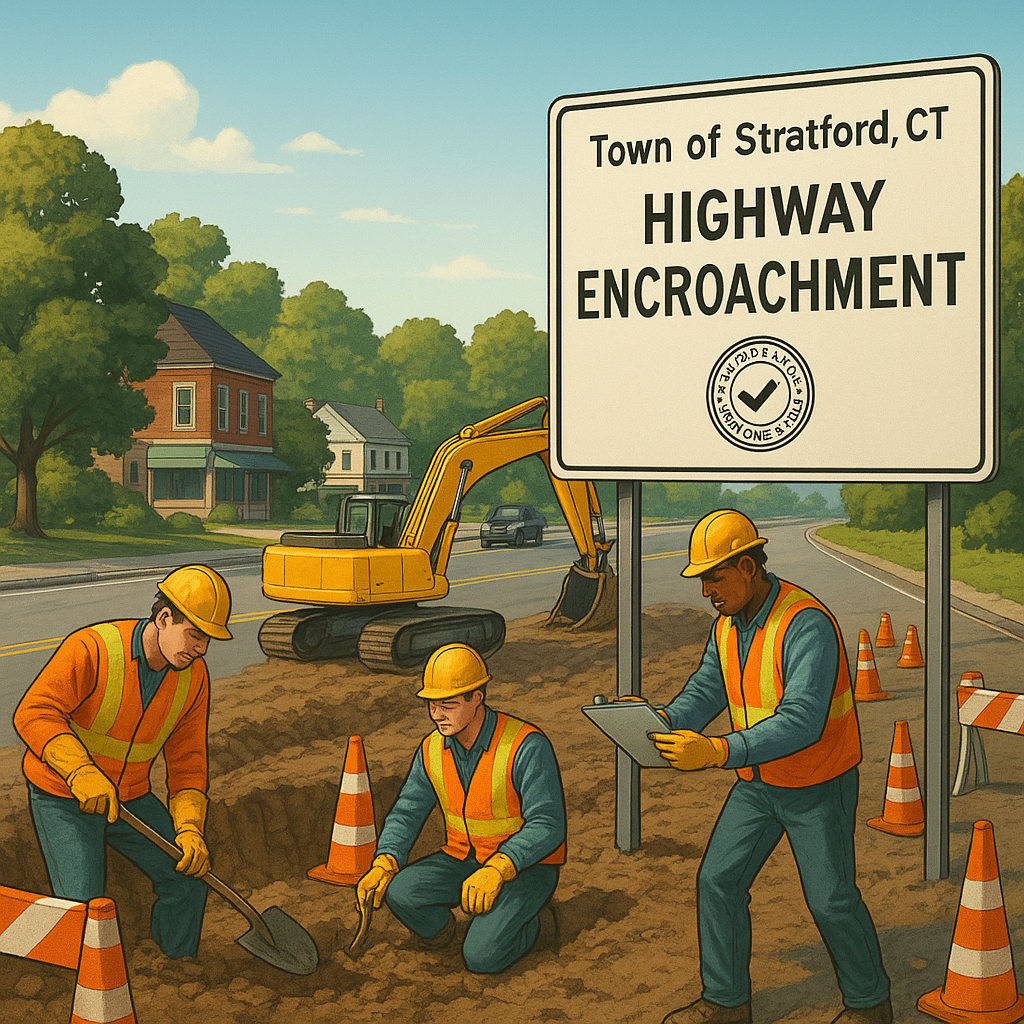
If you’ve ever watched a crew dig up a street to replace a water line or install a new driveway apron, you’ve witnessed highway encroachment in action. In Stratford, Connecticut, that kind of work doesn’t happen without a clear set of rules—and a very important financial promise. Whether you’re a contractor, a homeowner managing your own project, or just someone curious about what happens beneath the asphalt, understanding the Town of Stratford’s public highway excavation and maintenance license bond will save you time, money, and headaches.
What Is Highway Encroachment, Anyway?
Let’s break it down in plain English. Highway encroachment simply means any activity that temporarily or permanently occupies, disturbs, or changes the public right-of-way. Think of the street, the sidewalk, the grassy strip between the curb and your property line—all of that is usually public property. When you dig into it to run a sewer line, repair a curb, or install a utility connection, you’re encroaching. The Town of Stratford wants to make sure that when the work is done, the road is just as safe and sound as it was before you arrived. That’s where the license and bond come in.
Why You Need a Public Highway Excavation & Maintenance License
In Stratford, you can’t just grab a shovel and start cutting into a public road. The town requires a specific license for anyone performing excavation or maintenance within the highway right-of-way. This applies to plumbers, paving companies, driveway contractors, utility firms, and even a homeowner who decides to tackle a project themselves. The license shows that you understand the local regulations, safety standards, and restoration requirements. It’s a way of saying, “I know what I’m doing, and I promise to put everything back the right way.”
But a license alone isn’t enough. The town asks for an extra layer of protection: a surety bond.
So, What Exactly Is the Official Bond?
Let’s strip away the legal-sounding name. The Town of Stratford CT Public Highway Excavation & Maintenance License Official Bond is a three-party guarantee. The town (the obligee) requires it. You, the contractor or permit holder (the principal), buy it. And an insurance or surety company (the surety) backs it. If you fail to follow the rules—maybe you leave a trench unmarked, damage existing utilities, or don’t repair the pavement correctly—the town can make a claim against your bond. The surety then pays to fix the problem, up to the bond’s limit. Eventually, you have to reimburse the surety because a bond isn’t insurance for you; it’s protection for the public.
Think of the bond like a security deposit for the entire community. You don’t get to keep the cash, but it’s there in case something goes wrong. It gives the town confidence that your work won’t leave taxpayers footing a repair bill.
When Do You Need This Bond?
Almost any time you break ground in a public right-of-way, the bond becomes part of the conversation. Common scenarios include:
- Installing or repairing underground utility lines (water, gas, sewer, electric, fiber optic).
- Building a new driveway apron where your property meets the street.
- Replacing a sidewalk or curb that sits on public land.
- Performing maintenance on drainage structures under the roadway.
- Setting up temporary construction staging that impacts the road or walkway.
If your project involves cutting into asphalt, concrete, or soil that belongs to the Town of Stratford, plan on securing both the license and the required bond before the first backhoe arrives.
How the Bond Process Works (It’s Easier Than You Think)
Navigating a surety bond might seem intimidating, but the process follows a straightforward path. Here’s a step-by-step look at what you can expect.
Step 1: Determine the Bond Amount
The town sets a required bond amount based on the scope of work. Smaller residential driveway openings may need a lower amount, while large-scale utility projects might call for a bond of $10,000, $25,000, or more. Always check with the Stratford Public Works or Engineering Department to get the exact figure tied to your permit.
Step 2: Apply for the Bond
You’ll contact a surety bond agency that writes bonds in Connecticut. The application typically asks for basic business information, the bond amount, and your personal credit details. In most cases, you can apply online in minutes.
Step 3: Get Your Premium Quote
Here’s where many people get pleasantly surprised. You don’t pay the full bond amount. You pay a small percentage, called the premium. If your credit is strong, that premium might be as low as 1% to 3% of the total bond. For a $10,000 bond, you could be looking at just $100 to $300 for a full year of coverage. Even with less-than-perfect credit, options exist, though the rate may be slightly higher. The key is to shop around and work with an agency that explains your choices clearly.
Step 4: File the Bond with the Town
Once your bond is issued, you’ll receive a bond form. You submit that original document to the Town of Stratford along with your license application or permit paperwork. The bond stays on file and remains active for the required period, often one year, and can be renewed annually if you do ongoing work.
Why the Town Takes This So Seriously
You might wonder, “It’s just a small trench. Why all the red tape?” The answer lies in protection. A poorly backfilled excavation can sink after a few months, creating a pothole that damages cars or trips pedestrians. An incorrectly sealed road cut might allow water to seep in, leading to freeze-thaw damage that destroys the pavement long before its time. Underground utilities get struck, causing outages and expensive emergency repairs. The bond helps ensure that the contractor—or the property owner—bears that financial responsibility, not the town’s budget and not your neighbors.
Stratford, like many Connecticut communities, manages a delicate network of roads and utilities. When everyone plays by the same set of rules, the system stays reliable and safe.
What Happens If You Skip the Bond?
Working without a required bond is a gamble you don’t want to take. The town can issue stop-work orders, levy fines, and revoke permits. You could face legal liability for any damage that occurs. Even worse, your reputation takes a hit. General contractors and homeowners alike rely on a trustworthy network. Being known as someone who cut corners doesn’t lead to many repeat calls. Getting bonded upfront is far cheaper than paying for emergency repairs, legal fees, and lost business.
Common Questions People Ask
Let’s walk through a few head-scratchers that pop up again and again.
“Is this the same as insurance?”
Not quite. Insurance protects you from accidents and unforeseen events. A bond protects the town and the public from your failure to follow the rules. If a claim is paid out, you must pay the surety back. It’s a financial guarantee, not a shield for your own losses.
“Can I use one bond for multiple jobs?”
Often, yes. Contractors can secure an annual blanket bond that covers all their permitted work within the town over the course of a year. That’s much more efficient than applying for a new bond every time you open a permit. Check with the town to see what format they accept.
“Do I need a bond if I’m just a homeowner doing my own driveway?”
In many cases, yes. Even if you’re not a professional contractor, the town wants assurance that you’ll restore the public right-of-way correctly. A small driveway bond is typically accessible, and the premium won’t break the bank. It’s a small price to pay for peace of mind.
Making It Work for Your Project
Whether you’re installing a new gas service or pouring a concrete curb, the highway excavation and maintenance license bond is your entry ticket to a smooth project. Plan ahead. Contact Stratford’s Public Works department early to understand the exact bond amount and permit conditions. Then reach out to a reputable surety bond provider who can walk you through the paperwork without making your eyes glaze over.
Remember, the goal isn’t to create obstacles. It’s to keep Stratford’s streets safe, functional, and well-maintained for everyone who uses them. When you approach any road-opening project with the right license and bond in hand, you’re doing your part to uphold a standard that benefits the whole community. And honestly, there’s something reassuring about driving down a freshly patched street knowing that the crew behind the work stood behind their promise.
If you have questions about your specific situation, reach out to the town directly or consult with a bonding expert. A quick conversation today can prevent a costly mistake tomorrow—and keep your project rolling forward without any unnecessary bumps.