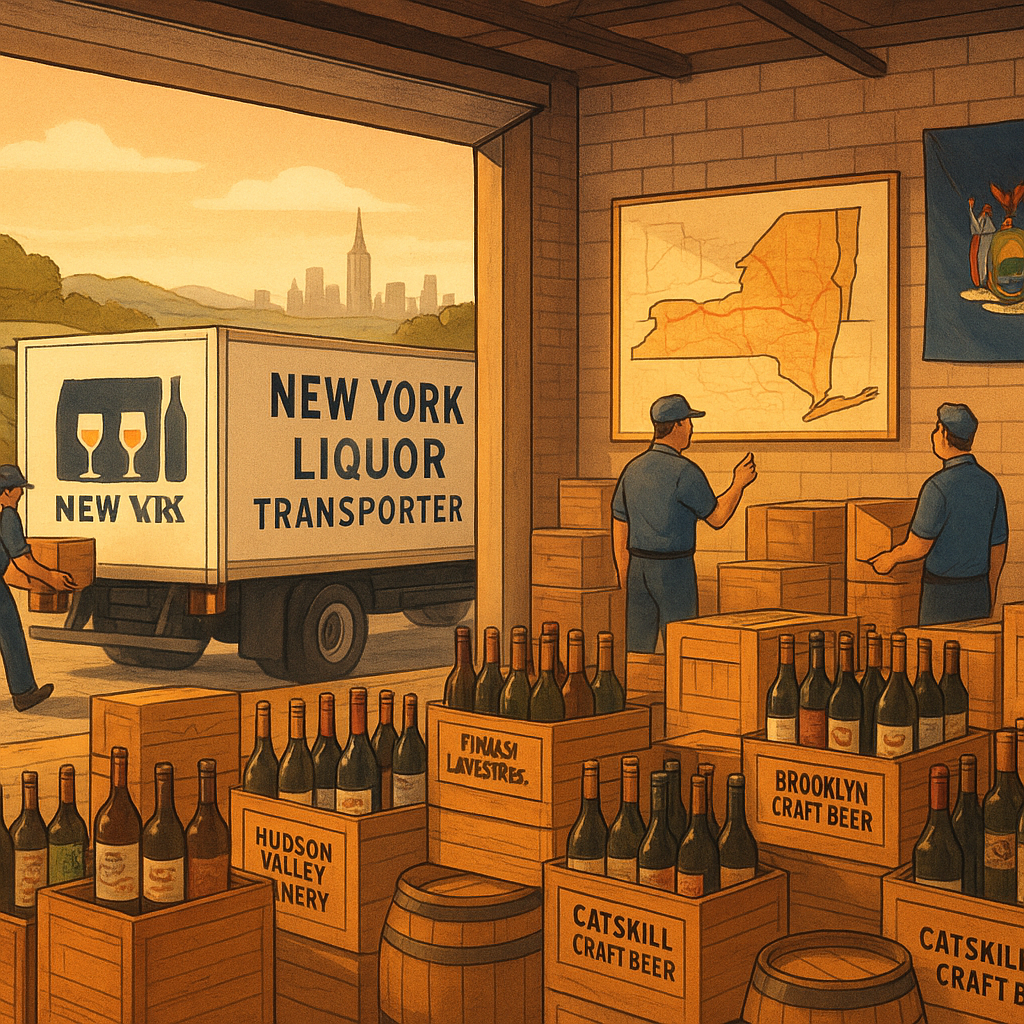
Getting into the liquor business in New York can feel like trying to find your way through a huge, noisy party where everyone’s speaking a different language. You’ve got terms flying around like “L-9 bond,” “warehouse permit,” “transporter license,” and “wholesaler authority.” If you’re planning to store, move, or sell alcohol to retailers or restaurants, you’re in the right place. Let’s break this down together and make sense of it all—without the headache.
What Exactly Are We Talking About?
Before you can move a single bottle of wine or a keg of craft beer in New York, you need official permission from the State. Think of a liquor license as your golden ticket. It says, “This business has the state’s blessing to handle alcohol legally.” But not all tickets are the same. You might need a license for a bar, a restaurant, a store, or—for what we’re covering today—a warehouse, a transporter, or a wholesaler.
These three roles sound similar, but each one has a very specific job. One stores the goods, one moves them from point A to point B, and one sells them to places with a retail license. A lot of new business owners get confused about who needs what. So let’s shine a light on each one.
Warehouse Permit: Your Alcohol Storage Hub
Imagine you’re importing a few hundred cases of Italian wine. You can’t just stack them in your garage or a random storage unit. The state says you need a licensed warehouse. A warehouse permit in New York allows you to store liquor, beer, and wine that’s not yet taxed and not yet headed straight to a consumer. It’s a holding spot.
Why does this matter? Because every bottle must be tracked. The state wants to know exactly where that alcohol lives before it hits a liquor store shelf or a restaurant table. A warehouse permit is like a secure, state-approved vault. You might run a massive storage facility that serves multiple brands, or you could operate a smaller space tied to your wholesale business. Either way, the permit is non-negotiable.
Who Needs a Warehouse Permit?
- Businesses that store liquor, wine, or beer for distribution in New York.
- Importers who need a holding area before products clear customs and taxes.
- Any wholesaler that doesn’t want to ship directly from a manufacturer every single time.
Even if you temporarily keep a few pallets of craft beer for a local brewery, that space might need its own permit. The rules can get specific, so checking with the New York State Liquor Authority (SLA) early saves a lot of trouble later.
Transporter License: Moving Alcohol Without a Hitch
Now you’ve got the alcohol safely stored. How does it get from the warehouse to a retailer or a restaurant? That’s where the transporter comes in. A transporter license in New York allows a company to physically carry alcoholic beverages over the state’s roads. You’re not selling anything; you’re just the delivery driver—but at a professional, licensed level.
Picture a specialized trucking company that hauls kegs to bars in Manhattan, cases of wine to shops in the Hudson Valley, and pallets of spirits to event venues. Without a transporter license, you’re basically driving around with illegal cargo. The authorities treat this seriously because an unlicensed shipment could mean lost taxes or untracked alcohol ending up in the wrong hands.
Does a Food Delivery Service Need This?
This is a common question. If you’re a local courier picking up a bottle of wine from a licensed store and delivering it to a customer’s home, you generally don’t need a full-blown transporter license. That’s usually covered under the store’s retail delivery permit. But if you’re a third-party logistics company moving bulk quantities between licensed businesses, you absolutely need a transporter license. When in doubt, imagine the difference between a mail carrier dropping off a birthday gift versus a freight company hauling a 53-foot trailer full of liquor. If you’re the freight company, get licensed.
Wholesaler License: Selling to Other Businesses
Here’s where the sales power lives. A wholesaler license lets you sell alcohol to retailers (liquor stores, supermarkets for beer, wine shops) and on-premises accounts (restaurants, bars, hotels). You’re the middleman connecting producers or importers with the businesses that serve the public. In New York, this is often called a wholesaler’s permit, and it covers beer, wine, and liquor—though you might need separate designations depending on what you’re selling.
If you’ve ever wondered how your favorite small-batch bourbon ends up on a local bar’s shelf, a wholesaler probably made that happen. They have a catalog, sales reps, and relationships. But they also have a big responsibility: they can only sell to other license holders. No selling directly to the general public unless you also hold a retail license.
The L-9 Bond: A Safety Net Nobody Talks About
Now we get to the bond part—the L-9 bond. This might sound like financial jargon, but it’s really just a promise backed by money. The State of New York requires certain alcohol businesses to post a bond as a guarantee that they’ll pay their taxes and follow the rules. If you mess up and owe excise taxes or penalties, the state can claim against that bond. It’s like a security deposit for your liquor business.
The L-9 bond is specifically tied to warehouse, transporter, and wholesaler licenses. The exact amount can vary, but it’s typically calculated based on your expected tax liability or the volume of alcohol you handle. You’re not actually handing over cash (usually); you purchase a bond from a surety company for a small percentage of the total amount. So if you need a $50,000 bond, you might pay only a few hundred dollars a year for it, depending on your credit.
Do I Need an L-9 Bond for Beer and Wine Too?
Yes. A lot of people think bonds only apply to liquor (the hard stuff), but in New York, beer and wine are taxed as well. If your warehouse stores beer, or your transporter hauls wine, or your wholesale business sells both, that L-9 bond likely covers those products under the same umbrella. The SLA wants to make sure that whatever you handle, the taxman gets his share. The bond is your way of saying, “I’m good for it.”
How All These Pieces Fit Together
Imagine you’re launching a business that will import organic wine from Europe, store it in a Long Island warehouse, then deliver it to restaurants across New York City. You’d need:
- A warehouse permit for that storage facility.
- A wholesaler license to legally sell to the restaurants.
- A transporter license (or a contract with a licensed transporter) to move the wine from the warehouse to those restaurants.
- And to tie it all together, an L-9 bond to satisfy the state’s tax requirements.
Some businesses operate in all three roles. Others focus on just one. But every link in the chain needs to be solid, or the whole system breaks. The state designed these categories to keep everything above board and traceable, from the dock to the dinner table.
Common Mistakes That Cost Time and Money
Over the years, people fall into the same traps. Let’s steer clear of them.
Skipping the bond because you’re “just storing a little inventory” is risky. Even a small amount of unlicensed storage can lead to fines. If the SLA finds out, they could seize your products. The same goes for assuming your general business insurance covers the required bond—it doesn’t. The L-9 bond is a separate, specific instrument.
Confusing a transporter with a wholesaler also trips up many startups. You might think, “I’m just driving the beer to a store, but I also take orders.” If you take an order and deliver it, you’re acting as a wholesaler, even if you don’t own a warehouse. You’d need both licenses. Always separate the act of selling from the act of shipping. If you’re selling, you’re a wholesaler. If you’re only moving it for someone else’s sale, you’re a transporter.
Not renewing the bond on time can shut you down overnight. These bonds typically renew annually. If there’s a lapse, your license can become invalid immediately, and you might have to stop operations until it’s fixed. That means lost revenue and unhappy customers.
How to Get Started with Your New York License
The process doesn’t have to be scary. Start by visiting the New York State Liquor Authority website. They have application packets for each license type. Here’s a rough roadmap:
- Figure out exactly which categories you fit. Warehouse only? Warehouse plus wholesaler? All three? Nail this down first.
- Secure your business location and any local zoning approvals. Even a warehouse needs the right zoning.
- Obtain your federal basic permit if you’re dealing with wholesale or import activities (this comes from the Alcohol and Tobacco Tax and Trade Bureau, TTB).
- Calculate the L-9 bond amount based on SLA guidelines. Work with a surety bond agency that knows New York liquor bonds. They’ll ask for basic business and financial info.
- Complete the SLA application and attach the bond, financial statements, diagrams of your premises, and the required fees.
- Wait for the review and approval. The SLA may inspect your facility and check your background. Timelines vary, so plan accordingly.
Keep in mind that changes in your business might require updated permits. If you start with a beer-only wholesaler license and later add spirits, you’ll amend your license and possibly adjust your bond.
Why Compliance Is Worth the Effort
I know—paperwork isn’t anyone’s favorite Saturday activity. But think about the alternative. Operating without the right license or bond can lead to massive fines, loss of product, and even criminal charges. Beyond the scary stuff, being fully licensed builds trust. Retailers want to buy from a wholesaler who’s legitimate. A transporter with a valid license gets contracts over a fly-by-night guy with a van. It’s a gateway to bigger business relationships.
Plus, when your paperwork is solid, you sleep better at night. There’s no nagging worry that an audit might put you out of business. You can focus on building your brand, finding great products, and making your customers happy.
Still Have Questions? You’re Not Alone
This guide covers the big picture, but every business is a little different. Maybe you’re wondering if a bonded warehouse in New Jersey can serve your New York wholesale customers. Or perhaps you need clarity on how the L-9 bond amount is specifically calculated for seasonal businesses. The best move is to consult with an attorney who knows New York liquor law or reach out directly to the SLA. Don’t let uncertainty keep you stuck. The industry is full of people who started exactly where you are—confused but determined—and now they run thriving operations.
Take it one step at a time. Grab a cup of coffee, dive into the SLA resources, and remember: this is just the price of entry to an exciting, fast-paced world. Once you’ve got your licenses in hand, the real fun begins.