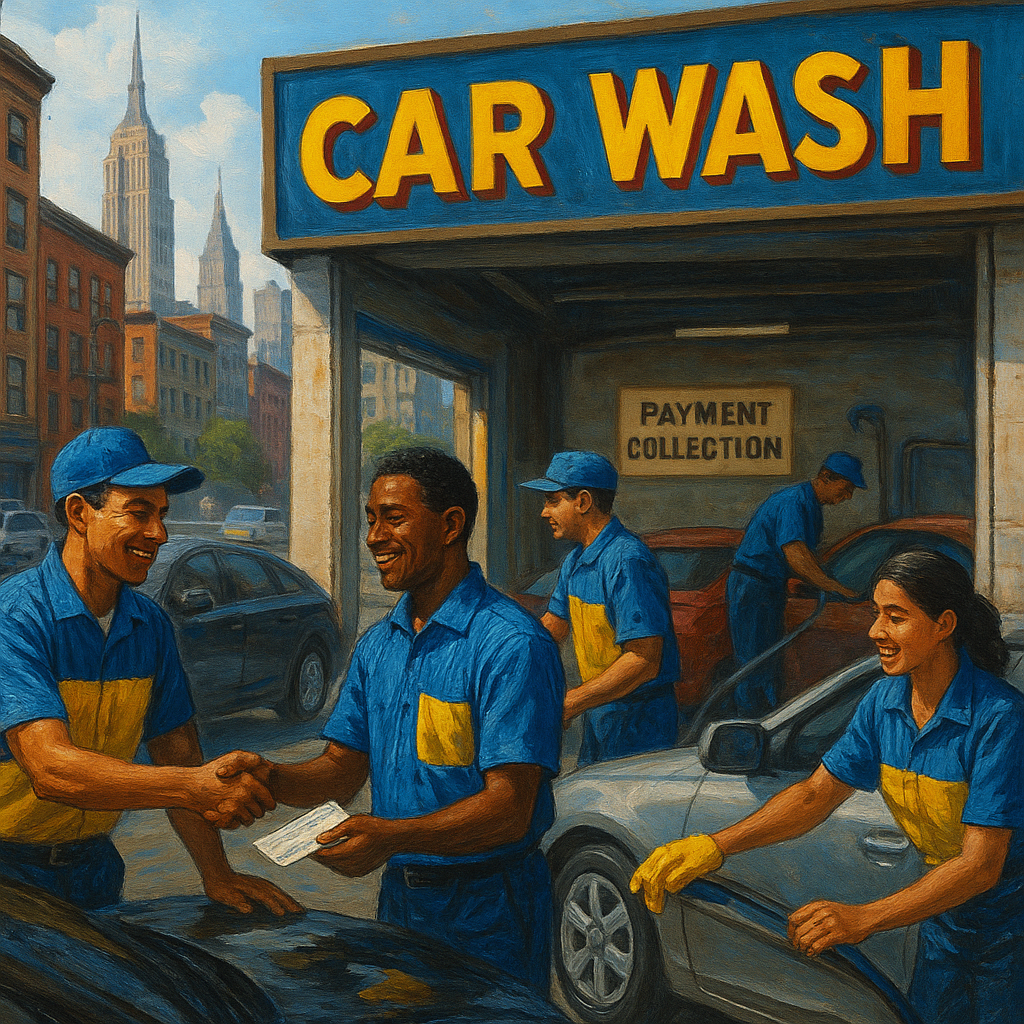
Running a car wash in the Big Apple isn’t just about soap, water, and shiny cars. If you own a car wash in New York City—or work in one—there’s a little-known rule that packs a big punch. It’s called the car wash wage payment bond. This isn’t some dusty piece of paper. It’s a financial safety net designed to make sure workers get every dollar they earn.
Maybe you’re a car wash employee who’s been shortchanged on overtime. Or perhaps you’re an owner trying to understand a new compliance hurdle. Either way, this guide will walk you through what this bond is, why it exists, and how it changes the game for wage collection in the city that never sleeps.
What Exactly Is a Car Wash Wage Payment Bond?
Think of a wage payment bond as a promise backed by money. It’s a type of surety bond that car wash owners in New York City must purchase from a licensed surety company. If the owner fails to pay wages properly—whether that’s skipping overtime, paying below minimum wage, or not paying at all—the bond acts like an emergency fund. Workers can file a claim against that bond and get the money they’re owed.
It’s similar to a security deposit you might put down when renting an apartment. The landlord holds that deposit just in case you damage something. Here, the bond is held just in case wage laws get broken. The big difference? The bond isn’t the owner’s cash sitting in a drawer. It’s a guarantee from a third-party company that says, “If this business doesn’t pay its workers, we will.”
New York City didn’t pull this idea out of thin air. The car wash industry here has a troubled history. For years, some owners treated wage theft like a cost-saving strategy. Workers—many of them immigrants or people with limited English fluency—were especially vulnerable. The bond requirement flips the script. It puts teeth into the city’s wage laws.
Why Did NYC Create This Rule?
Let’s be honest. Have you ever wondered why certain businesses seem to get away with not paying people what they’re owed? In the early 2000s and 2010s, the NYC car wash sector was an infamous example. Investigators found pattern after pattern of wage violations. Workers cleaned hundreds of cars a day, often in tough conditions, only to receive less than the legal minimum. Overtime pay was a fantasy. Some weren’t even paid for all their hours.
The City Council and local advocates decided enough was enough. They passed a law that specifically targeted car washes, requiring them to secure a wage payment bond. The goal wasn’t just punishment. It was prevention. By making the bond a mandatory license requirement, the city ensured that businesses couldn’t operate if they weren’t financially accountable for wage theft. No bond, no license. No license, no business.
It’s a classic “trust but verify” approach. Instead of just hoping owners follow the rules, the city built a system where workers have a direct path to recovering stolen wages, even if the shop shuts down or the owner claims to be broke.
How Does the Bond Actually Protect Workers?
Imagine you’ve just finished a grueling 60-hour workweek at a busy Bronx car wash. Payday arrives, and your envelope is light. You do the math—your boss missed about $300 in overtime. You complain, and suddenly your hours get cut. That’s a frightening situation. Without the bond, you might have to hire a lawyer and wait months or years for a court case that you might lose.
With the bond in place, your path is much clearer. You can file a wage complaint with the New York City Department of Consumer and Worker Protection (DCWP), the state Department of Labor, or even take legal action directly. If your claim is valid and the boss refuses to pay, you can seek compensation from the bond. The surety company that issued the bond becomes responsible for making you whole, up to the bond’s coverage limit.
What makes this system brilliant is its speed. A bond claim doesn’t require you to fight through a business’s bankruptcy or disappear into a legal black hole. The money is essentially set aside for exactly this scenario. It’s a dedicated pot of funds for wage collection.
What Kinds of Wage Violations Are Covered?
The bond covers a wide range of unpaid earnings. That includes:
- Regular hourly wages that were never paid.
- Overtime pay that was denied or miscalculated.
- Minimum wage shortfalls where the effective hourly rate dipped below the legal minimum.
- Spread-of-hours pay, a quirky New York rule that requires an extra hour’s pay when a workday spans more than ten hours.
- Unlawful deductions from paychecks.
Basically, if you earned it and your employer didn’t deliver, the bond is there to back you up.
Who Has to Get This Bond?
Not every business with a hose and a bucket falls under this law. The requirement applies to car washes licensed by the City of New York. That covers most for-profit car wash businesses that clean vehicles for the public. If you operate a small detailing shop as part of a larger auto body business, you might still need a license, but the specific rules can vary. The DCWP determines which businesses are classified as car washes under the local law.
New owners often get a nasty surprise here. You might assume you only need basic insurance and a storefront. Then you learn that a car wash wage payment bond is part of your license application. The bond amount is set by the city. It’s not a one-size-fits-all number; it usually ranges from $30,000 to over $100,000 depending on factors like the number of employees or the business’s history of violations. The city periodically reviews and adjusts the requirements, so staying up-to-date is essential.
The Nuts and Bolts of Filing a Claim
Let’s get practical. If you believe you’re owed wages, what do you actually do? First, gather your evidence. Pay stubs, schedules, texts from your boss asking you to stay late—anything that shows the hours you worked and what you were paid. Without records, your claim is a hill to climb barefoot.
Then, reach out to the DCWP or the New York State Department of Labor. Both can investigate. You can also contact a workers’ rights organization or an attorney who handles wage and hour cases. Many of these lawyers work on contingency, meaning they only get paid if you win.
Once a violation is established, the agency or your attorney can initiate the process to demand payment from the bond. The surety company then reviews the claim. If everything checks out, they pay. They’ll later go after the car wash owner to recover that money—so the owner doesn’t get to walk away scot-free. That’s the beauty of the surety system: workers get paid first, and the fight becomes between the surety and the owner.
What Happens if an Owner Ignores the Bond Requirement?
Ignoring the bond is like ignoring gravity—it will catch up with you. The DCWP can issue steep fines. They can shut down an unlicensed car wash entirely. Every day you operate without the proper license and bond piles on more liability. If you’re caught, you’ll owe back wages plus penalties, and you might be barred from the car wash business in NYC altogether.
From an employee’s perspective, if you’re working at a car wash that doesn’t have a posted license, that’s a huge red flag. You should ask about the bond. Legitimate owners won’t mind you asking; they’ll be proud to show compliance. The ones who get defensive? There’s probably a reason.
Real-Life Impact and Some Nuances
This isn’t just legal theory. Since the bond requirement took full effect, many workers have recovered wages they would have otherwise lost forever. There have been cases where a car wash closed overnight, and employees arrived the next morning to locked gates. Without the bond, those workers would have joined a long list of creditors. With the bond, they received their final paychecks and unpaid overtime within weeks.
But the system isn’t perfect. Some owners try to misclassify employees as independent contractors to dodge the bond altogether. The courts and the DCWP are increasingly savvy about this trick. If you’re told you’re not an employee, yet you’re given a schedule, told how to do your job, and use the owner’s equipment, you’re likely an employee under the law—and the bond should cover you.
Tips for Car Wash Workers in NYC
Are you working in a car wash right now or thinking about taking a job at one? Keep these pointers in your back pocket:
- Keep your own records. Note your clock-in and clock-out times every day. A simple notebook or a notes app works wonders.
- Look for the license. NYC car washes must display their license where customers and workers can see it. The bond information should be there too.
- Ask questions early. If something seems off with your paystub, speak up. Don’t let small problems snowball.
- Know where to turn. The DCWP’s hotline is 311. You can also contact groups like Make the Road New York or Legal Services NYC for free help.
What Car Wash Owners Should Keep in Mind
You might view the bond as just another bureaucratic expense. But it can actually be a business asset. A bonded car wash signals trust. Workers feel secure, and that can reduce turnover in an industry where finding reliable employees is tough. When your team knows you’re playing by the rules, they’re more likely to stick around.
To keep your bond in good standing, partner with a surety broker who understands the NYC car wash market. They’ll help you find a competitive rate and walk you through the annual renewal. Also, invest in a solid payroll system. A simple software that automatically calculates overtime and spread-of-hours pay can save you from accidental violations that lead to bond claims.
And if you’re buying an existing car wash, do your homework. You could be inheriting the previous owner’s wage debts. Review their bond history and any outstanding claims before you sign the dotted line.
Where Is This Headed?
New York City often sets trends that ripple outward. Already, other cities and states keep a close eye on the NYC car wash bond model. As the gig economy blurs employment lines, similar bonds could pop up in nail salons, restaurant chains, or warehouse distribution centers. The core idea—making industries prepay into a fund that guarantees worker wages—is gaining traction.
For now, the car wash wage payment bond remains a uniquely New York solution to a very New York problem. It’s a gritty, practical response to exploitation. It says to workers: your labor has value, and we’re going to make sure that value reaches your pocket.
Wrapping It All Up
The next time you drive past a buzzing NYC car wash, you’ll know there’s more happening inside than vacuums and microfiber towels. There’s a network of rules, bonds, and protections all working to keep the wage floor from collapsing. Whether you’re a worker seeking fair pay or an owner aiming for a smooth operation, understanding the wage payment bond is absolutely essential.
Have more questions about how wage collection works in New York City? You’re not alone. The path from confusion to clarity starts with knowing your rights and the mechanisms that guard them. That bond? It’s not just a piece of paper. It’s a shield.