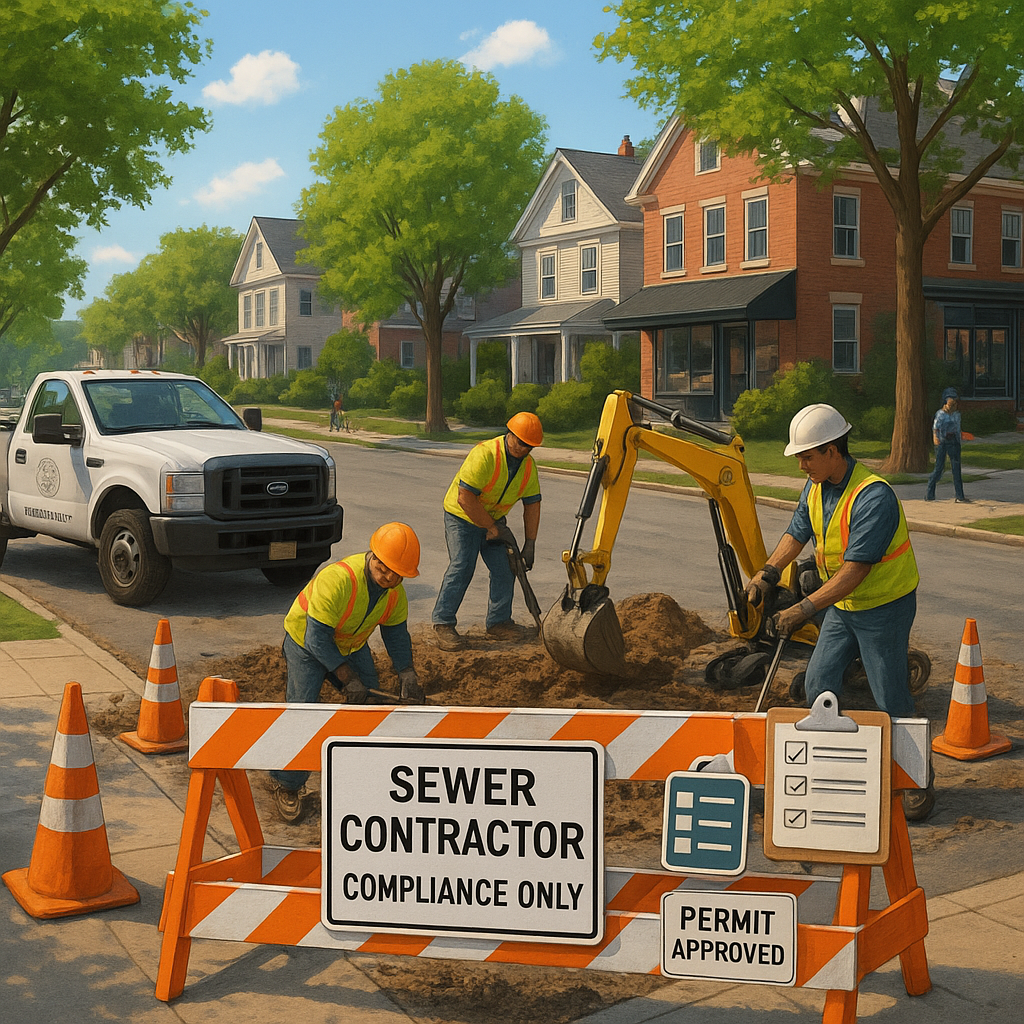
So, you’re a sewer contractor in Montclair, New Jersey. You’ve landed a project at a private home or business. Everything looks great — until you realize part of the work needs to happen in the street, the sidewalk, or that strip of grass between the curb and the sidewalk. That’s the public right-of-way. And the moment your shovel touches that ground, a whole new set of rules kicks in. One of the first things the Township of Montclair will ask for is a specific kind of financial guarantee: the Private Construction in the Public Right of Way Bond. If that sounds like a mouthful, don’t worry. We’re about to break it all down in plain English.
What Exactly Is the Public Right-of-Way?
Think of the public right-of-way as the community’s shared backyard. It’s not private property — it belongs to the town, the county, or the state, and everyone uses it. We’re talking about streets, sidewalks, curbs, tree lawns, and even the space under the road where utility lines run. When a private construction project, like a sewer line repair or replacement, needs to dig into this area, the contractor isn’t just working for the homeowner anymore. You’re now working in a space that belongs to everyone in Montclair. And the town wants to make sure you’ll put everything back exactly the way you found it — or better.
Why Montclair Requires a Bond for Private Sewer Work
The Township of Montclair isn’t being difficult. They’re being smart. Imagine if a contractor dug up a section of sidewalk to connect a new sewer lateral, finished the pipe work, but left the sidewalk cracked, uneven, or sinking six months later. Who foots the bill for repairs? Without a bond in place, the homeowner might point fingers, the contractor might have moved on, and the town is stuck either chasing someone down or using taxpayer money. A right-of-way bond is essentially a promise backed by money. It says, “If the contractor doesn’t restore the public space properly, the bond will cover the repair costs.”
For sewer contractors, this is often called a “Compliance Only” bond. It’s not about the quality of your pipe work inside the house. It’s strictly about how you handle the part of the job that sits on public property. You’re guaranteeing that you’ll follow Montclair’s rules for excavation, backfilling, pavement restoration, and final cleanup.
The “Compliance Only” Bond Explained
A compliance-only bond focuses narrowly on one thing: following the town’s technical specifications and ordinances. Don’t confuse this with a performance bond for the entire project. This bond only covers work performed in the public right-of-way. If your sewer repair requires opening a trench in the street, the bond ensures you’ll compact the soil correctly, repave the trench to match the surrounding road, and keep the site safe while you work. It won’t pay for a pipe leak inside the basement — that’s between you and the homeowner. It’s a safety net for the town, not for the client.
Think of it like renting a tuxedo. When you rent it, you leave a deposit. If you return it stained or ripped, the shop keeps the deposit to fix the damage. The right-of-way bond is Montclair’s deposit. You don’t lose a dime if you do the job right. But if the sidewalk sinks or the asphalt crumbles, the township uses the bond money to hire another crew to fix it.
How to Get a Right-of-Way Bond in Montclair, NJ
If you’re a sewer contractor new to working in Montclair, the process might feel overwhelming, but it’s fairly straightforward once you know the steps. First, you’ll need to contact the Township of Montclair’s Engineering Department or the office that handles permits. They’ll give you the exact bond amount required. This amount can vary depending on the scope of your excavation — a simple sidewalk cut will demand less than a full road opening for a new sewer lateral. The town will tell you the required bond limit, which might be something like $10,000, $25,000, or more for larger projects.
Armed with that number, you approach a surety bond company. Many insurance agencies in New Jersey offer these bonds. You’ll pay a premium, which is a small percentage of the total bond amount. So if the bond is $10,000 and the premium is 1-3%, you might only pay $100 to $300 out of pocket. The surety company then issues the bond, which you file with the township before pulling your permit. Keep in mind, the bond stays in place until the town inspects and approves the restoration work, which can sometimes take a few months after the pavement settles.
Does Every Sewer Job Need This Bond?
Not necessarily. If your sewer work is entirely on private property — say, replacing a section of drain line in the basement or digging in the backyard away from any right-of-way — you generally won’t need this bond. But the moment your excavation extends past the property line into the sidewalk, curb, or street, the bond requirement kicks in. This is incredibly common with sewer lateral replacements where the old clay pipe runs under the sidewalk and connects to the town’s main in the street. A quick way to think about it: if you need to set up traffic cones on a public road, you almost certainly need the bond.
Common Mistakes Montclair Sewer Contractors Make
Even experienced plumbers sometimes slip up when it comes to the public right-of-way. One classic mistake is assuming the homeowner’s property insurance or a general liability policy will cover the restoration. It won’t. The town specifically requires a right-of-way bond, no substitutes. Another pitfall is rushing through the restoration to beat the weather. Montclair’s engineers are particular about compaction and base materials. A quick patch job might look fine for a week, but after a few rainstorms, a depression can form — and that’s a red flag for inspectors.
Some contractors forget that the bond doesn’t just cover the final product; it also covers the work zone safety during construction. Proper barricades, steel plates, and overnight lighting aren’t just good ideas — they’re often part of the compliance agreement. Failing on safety can trigger a claim on the bond just as quickly as a bad pavement repair.
Navigating the Approval Process Like a Pro
You can save a lot of headaches by treating the bond as a standard part of your project estimate. When quoting a sewer replacement that involves the right-of-way, include the bond premium and the permit fees as line items. Explain to the homeowner why it’s there — most people appreciate knowing the town is protected, and it shows you’re a legitimate, professional contractor. The township’s website often has checklists and application forms for “Private Construction in the Public Right of Way” permits. Bookmark them. Build a relationship with the permit desk; knowing the name of the person who reviews your application can turn a frustrating back-and-forth into a five-minute phone call.
After the underground work is done, don’t vanish. Temporary restoration is just the first step. Often, Montclair requires a final inspection months later, after the ground has settled through a freeze-thaw cycle. Staying in touch with the homeowner and the town ensures the bond gets released without issues. No news is not always good news — follow up proactively.
What If Something Goes Wrong? Understanding Bond Claims
Nobody plans on a bond claim, but it’s wise to know how it works. If the township inspects your restoration and finds it lacking, they’ll notify you and give you a chance to correct it. If you don’t, they can file a claim against your bond. The surety company then pays the town to hire a different contractor to do the repairs. At that point, you still owe that money to the surety — a bond isn’t insurance for you, it’s financial backhandshake that you’ll make things right. Too many claims can make it difficult or expensive to get bonded in the future, so treating every restoration seriously protects your business long-term.
Why Compliance Builds Your Reputation in Montclair
Here’s the upside: consistently meeting Montclair’s right-of-way requirements sets you apart. Homeowners talk. Local plumbing supply houses recommend contractors who don’t cause headaches with the town. The township itself may expedite your permits next time because they know your work will pass inspection on the first try. In a close-knit community like Montclair, being known as the sewer contractor who “does things right” is worth far more than the small cost of a bond premium. It’s door-opener, not a hurdle.
Think about it — every time you leave a street or sidewalk perfectly restored, you’re leaving a permanent business card in the neighborhood. Neighbors walking their dogs see the quality, note the clean job site, and remember your name on the truck. That trust ripples outward, and soon you’re the go-to sewer contractor for the whole block.
Looking Ahead: Montclair’s Growing Infrastructure Needs
Montclair, like many older New Jersey towns, has aging sewer lines. More and more homeowners are replacing old clay pipes with modern PVC to prevent root intrusion and collapses. That means more work in the right-of-way, not less. The township’s regulations, including this bond requirement, are designed to handle that increase responsibly. For contractors, staying informed about any changes to local ordinances is crucial. The bond requirement itself is stable, but specific restoration standards — like acceptable asphalt mix temperatures or backfill materials — can evolve. A quick annual check with the engineering department can keep you ahead of the game.
Final Thoughts from the Trenches
Navigating private construction regulations in Montclair as a sewer contractor doesn’t have to be scary. The Private Construction in the Public Right of Way Bond is simply the town’s way of protecting public property while letting essential private work move forward. Understand what triggers the requirement, budget for the premium, respect the restoration standards, and you’ll find it’s just another part of a well-run project. When you approach it with a mindset of partnership — you, the homeowner, and the township all wanting the same outcome — the process shifts from a bureaucratic burden to a badge of professionalism. So, before you break ground on that next sewer lateral, check your permit, secure your bond, and dig in with confidence.