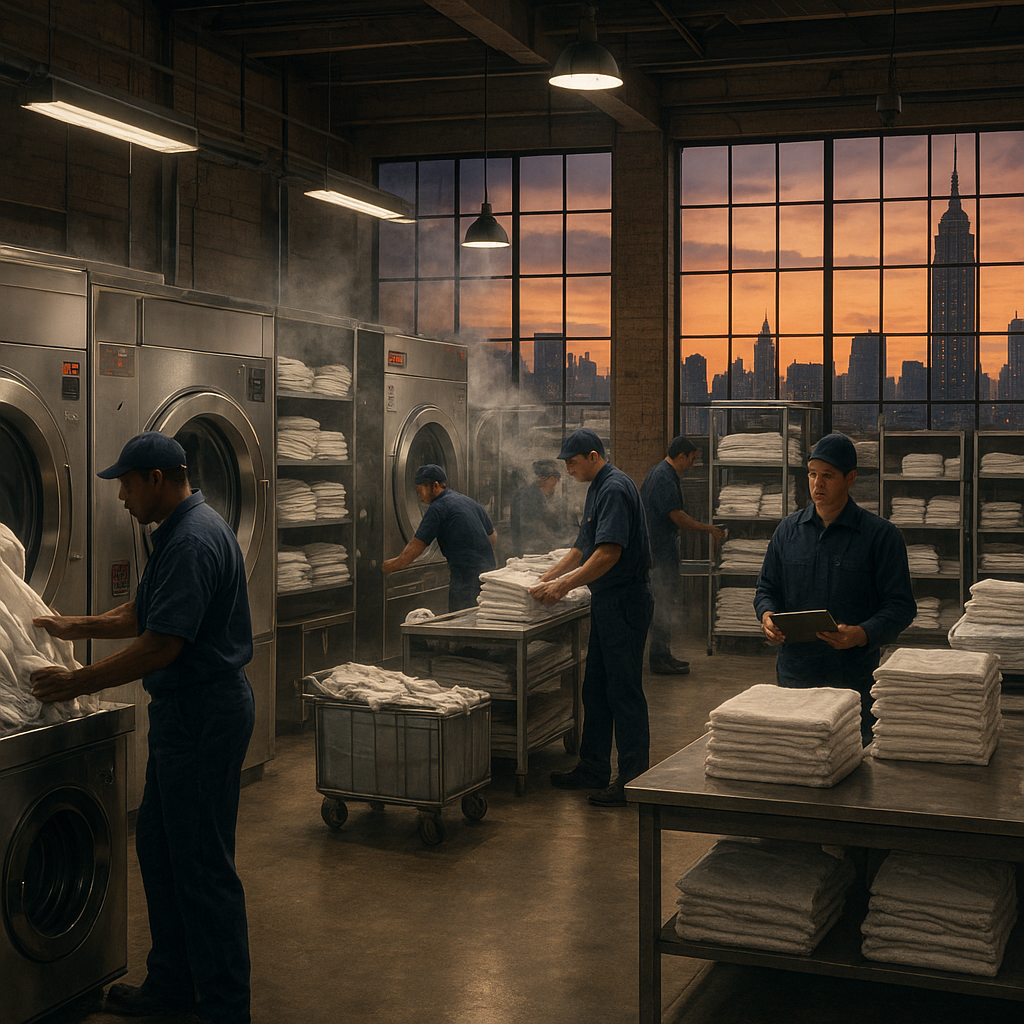
Have you ever stopped to think about what happens to the mountains of linens, uniforms, and towels used in New York City every single day? It’s easy to take clean sheets in a hotel or a spotless restaurant napkin for granted. Behind the scenes, an entire industry works around the clock to keep the city’s fabric fresh. This isn’t your neighborhood laundromat. We’re talking about industrial laundry—massive operations that clean tons of textiles for hospitals, hotels, spas, and even construction crews. And believe it or not, this world is changing faster than a spin cycle on high speed.
New York City’s industrial laundry sector is evolving rapidly, driven by new rules, green technology, and the ever-growing demand for spotless efficiency. If you’re curious about how this gritty, essential service is transforming (and what a “laundry bond” has to do with it), you’re in the right place. Let’s unfold the story.
The Hidden Backbone of the Big Apple
Think of industrial laundries as the city’s circulatory system for textiles. They don’t just wash clothes; they process thousands of pounds of linens per hour. Hospitals need sterile sheets. Fancy hotels need crisp, flawless tablecloths. Even your favorite neighborhood pizza joint relies on a steady supply of clean aprons and wiping cloths. These aren’t machines you load with quarters. An industrial laundry facility is a carefully choreographed factory where conveyor belts, tunnel washers, and robotic folders hum in harmony.
For decades, this industry operated quietly, mostly out of sight in industrial zones across the boroughs. But lately, things have become far more dynamic. Why the sudden shift? It comes down to a blend of tighter regulations, a push for sustainability, and a competitive market that demands top-tier service. New York isn’t a city that stands still, and neither can the businesses that clean up after it.
What Exactly Is a New York Industrial Laundry Bond?
You might have stumbled across the term “NY Industrial Laundry Bond” and wondered if it’s some kind of financial detergent. It’s actually a crucial piece of paperwork, one that highlights how seriously the city takes this trade. In simple terms, this is a type of surety bond required by the City of New York for businesses operating as industrial laundries.
Now, a surety bond isn’t insurance for the laundry owner. Instead, think of it as a three-way promise. The City of New York (the obligee) requires the laundry (the principal) to purchase a bond from a surety company. This bond guarantees that the laundry will follow all municipal laws and codes. If a business cuts corners—say, by improperly disposing of chemical wastewater or violating worker safety rules—the bond provides a financial safety net to make things right.
So, why does this matter for the industry’s evolution? The bond acts as a filter. It ensures that only serious, responsible operators can get licensed. This pushes out fly-by-night outfits and raises the bar for everyone. It’s the city’s way of saying, “We value safety and fairness, and our laundry partners must do the same.”
Why the Old-School Laundry Model Is Getting Washed Out
Let’s be honest: running an industrial laundry the old-fashioned way is like trying to navigate Manhattan with a paper map. It’s becoming impossible. The traditional model often involved massive amounts of water, harsh chemicals, and energy-sucking equipment that left a heavy carbon footprint. For years, that was just the cost of doing business. But today, that approach is getting washed out, and fast.
Water and Energy: The Price Is Too High
New York City has some of the highest water and utility costs in the nation. An industrial washer that guzzles hundreds of gallons per load isn’t just bad for the planet; it’s a financial anchor. Facility owners realized they could either adapt or start sinking. This pressure has fueled a rapid technological renaissance. Modern tunnel washers now recycle water multiple times, cutting consumption by up to 70%. It’s not magic; it’s smart engineering.
The Chemical Question Nobody Wants to Ask
Remember the smell of bleach that used to cling to hotel towels? That intense chemical aroma is starting to fade, and for good reason. Traditional detergents and optical brighteners are tough on the environment and on skin. As consumers and clients become more eco-conscious, the demand for “green washing” (the good kind) has skyrocketed. The industry is pivoting to biodegradable soaps, ozone washing systems that sanitize with cold water, and enzyme-based cleaners that work wonders at lower temperatures. This isn’t a niche trend; it’s becoming the standard for any laundry wanting to hold onto a New York City contract.
Technology Is Starched and Pressed for Success
You might picture a laundry facility as a steamy room full of people pushing carts. That image is nearly a decade out of date. The modern NYC industrial laundry looks more like a high-tech distribution center.
Walk into a cutting-edge plant today, and you’ll see Radio-Frequency Identification (RFID) chips sewn into every napkin and uniform. Why? Because losing linens is like watching money float down the drain. Hotels and hospitals can now track exactly how many times a sheet has been washed, where it is in the supply chain, and when it’s about to wear out. This data-driven approach eliminates massive waste. Instead of replacing entire batches of linens based on a guess, clients replace only the pieces that are genuinely at the end of their lifespan.
Automation has also taken over. Machines now sort, iron, and fold at incredible speeds. For owners, this means fewer repetitive strain injuries and more consistent quality. For workers, the job is shifting from physical labor to machine operation and quality control—a skill upgrade that reflects the city’s evolving workforce.
How the City of New York Shapes the Suds
The City of New York isn’t just a passive observer in this transformation. Through licensing requirements and bonds, City Hall actively curates the industry. The “City of New York – Industrial Laundry” designation on a license signals that a business has met strict operational benchmarks.
Beyond the bond requirement, the city enforces rigorous wastewater discharge rules. Industrial laundries can’t just send anything down the drain. They must test and treat their effluent to ensure it’s free of pollutants that could harm the water system. This regulation pushes laundries to adopt closed-loop water systems and safer chemistry. It’s a classic case of regulation driving innovation. What once seemed like a costly headache has birthed a generation of cleaner, leaner operations that often market their “city-approved” eco-status as a competitive advantage.
The Human Side of Clean: More Than Just a Service
It’s easy to get lost in the machinery and forget the people. But this rapid evolution has a very human heartbeat. Consider the hotel housekeeper in Times Square who can now restock rooms faster because her linens arrive pre-sorted and perfectly folded. Think about the surgical team that relies on scrubs cleaned to a medical-grade, sterile finish, every single time.
The shift toward efficiency even touches the gig economy. Restaurants that pop up overnight for a trendy food fair can rent textiles through app-based laundry services that deliver and pick up next-day. This speed and flexibility would have been unthinkable ten years ago. The industrial laundry is no longer a distant factory; it’s a responsive partner woven directly into the daily hustle of the city.
So, what does all this mean for the small business owner running a bustling laundromat or a boutique linen service? For one thing, it levels the playing field. Even smaller players can lease advanced ozone systems or connect with centralized water-recycling hubs, allowing them to compete with the giants. The City’s bonding and licensing framework, while strict, offers a clear path. Once you’ve secured your NY Industrial Laundry Bond and complied with the codes, you gain instant credibility. Clients who see that you’re bonded understand you’re betting your own money on your compliance. It builds trust in a city that runs on reputation.
The piece that often goes unsaid is resilience. The pandemic taught New York a hard lesson about hygiene and supply chains. Industrial laundries were essential frontline workers, processing infinite pounds of medical linens and face masks. The rapid evolution we’re seeing now is partly a response to that pressure test. Facilities are investing in modular systems that can scale up instantly during demand spikes, ensuring they never become a bottleneck again.
Common Questions About NYC’s Industrial Laundry Scene
You might still be scratching your head about a few things. Let’s tackle some of the most common questions people have.
Is the Industrial Laundry Bond Expensive?
Here’s some good news: you don’t pay the full bond amount. You pay a small percentage of the total, based on your credit and financial health. For a business that stays compliant, this is simply a manageable annual overhead cost, not a huge capital outlay. It’s a small price to pay for the license to operate and the trust badge it provides.
Are “Green” Laundries Really Clean Enough?
This is a fair question, especially if you’ve ever tried a natural cleaner at home that left things a bit dingy. Industrial green cleaning is a totally different beast. Ozone injection systems, for example, kill bacteria at low temperatures and leave linens smelling like fresh air, not perfume. Many NYC hotels now tout hypoallergenic, green-cleaned linens as a luxury feature. So yes, it’s not just clean—it’s often clinically superior.
What Has Changed Most in the Last Five Years?
The biggest shift is the marriage of data and logistics. The laundry of yesterday was reactive: you dropped off dirty items, they cleaned them, you picked them up. The laundry of today is predictive. It uses software to know your usage patterns and deliver precisely what you need before you even place the order. That transformation, backed by the reliability enforced through city bonds, is the true definition of a rapid evolution.
The Future Is Fresher Than Ever
The next time you sink into a hotel bed with crisp white sheets or dry your hands on a cloth towel in an upscale restaurant, take a moment. Behind that simple pleasure is a roaring, reimagined industry. New York City’s industrial laundries are shedding their old skin, embracing waterless technologies, robotic helpers, and a deep commitment to the planet.
This evolution is far from over. It’s a constant cycle of improvement, much like the laundry process itself. As the City of New York continues to refine its industrial laundry regulations and bonds, you can expect even greater transparency, greener practices, and an unwavering focus on quality. The goal? To keep this 24/7 city fresh, safe, and moving forward—one perfectly folded towel at a time. It’s a tough job, but as any New Yorker knows, this city doesn’t run on dirty laundry.