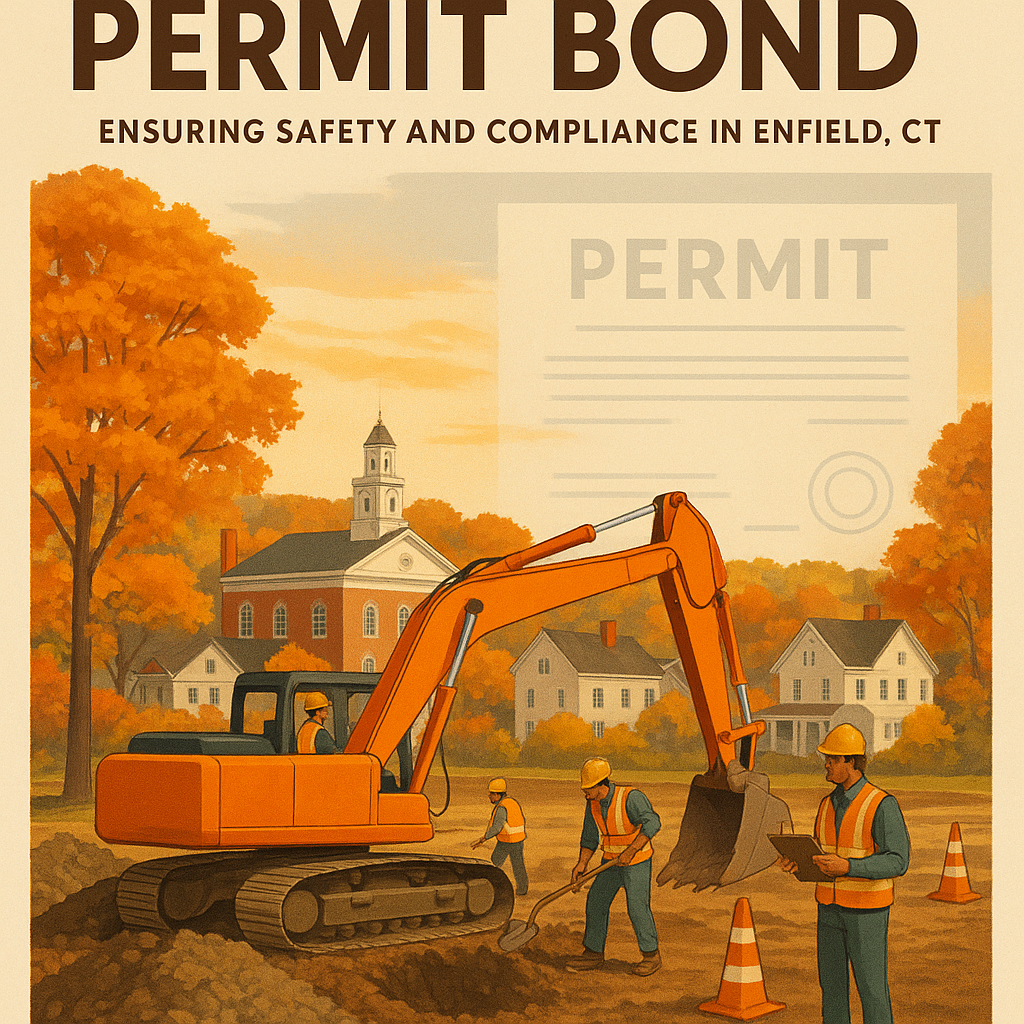
What Is an Excavation Permit Bond, and Why Does Enfield Require It?
Picture this: you’re an excavation contractor ready to break ground on a new project in Enfield, Connecticut. Before you can even think about moving dirt, the town asks for something called an excavation permit bond. It might sound like just another piece of red tape, but it’s actually a straightforward safety net—for both the community and your business.
In simple terms, an excavation permit bond is a three-party promise. You, the contractor, promise the Town of Enfield that you’ll follow all local rules when digging, trenching, or grading. A third party, usually an insurance or surety company, backs that promise financially. If you accidentally damage a public road, hit an underground utility, or leave a site unsafe, the bond steps in to cover the repair costs. You then repay the surety company—it’s not a free pass, more like a cosigned loan with a very specific purpose.
Enfield, like many Connecticut towns, sits on a web of underground infrastructure. Water mains, gas lines, fiber-optic cables—one wrong scoop with an excavator can knock out an entire neighborhood’s utilities. The permit bond makes sure there’s money set aside to fix things fast, without taxpayers footing the bill. It protects the town, sure, but it also protects your reputation. Knowing you’re bonded shows homeowners and developers that you take responsibility seriously.
The Third-Party Liability Connection
You might notice the phrase “3rd party liability” tied to Enfield’s excavation permit bond. Let’s unpack that without the legal fog. In any construction work, there are risks that reach beyond the immediate job site. Your digging could compromise a neighbor’s driveway, break a sewer lateral, or cause a sidewalk to sink months later. Those aren’t direct damages to the town’s property—they affect private citizens or businesses. That’s where third-party liability coverage, often built into or paired with the permit bond, becomes essential.
Think of the bond as having two layers. The first layer guarantees you’ll restore public property—the street, the curb, the town’s water pipe. The second layer makes sure you’re answerable if your work harms someone else’s land or structure. A real-world example: your crew is trenching for a new foundation near the property line. The vibration loosens the soil, and part of the neighbor’s retaining wall collapses. Without adequate coverage, you’d be dealing with an angry homeowner, a lawsuit, and a hefty out-of-pocket bill. With a proper Enfield excavation permit bond that includes third-party liability, the claim can be addressed through the bond, minimizing your immediate financial hit while you make things right.
Of course, the bond doesn’t replace your general liability insurance. It’s a companion tool, required by the town before you can even pull the permit. Understanding this overlap helps you explain your protections confidently when clients ask, “What happens if something goes wrong?”
Who Needs This Bond in Enfield?
If you’re planning to dig, scrape, grade, or excavate within the Town of Enfield, you’re almost certainly going to need one. The requirement typically applies to:
- Excavation and site preparation contractors
- Utility installation crews (water, sewer, gas, electric)
- Landscaping companies performing significant regrading
- Pool installers who dig deep enough to trigger local permits
- Demolition contractors removing foundations or underground tanks
Even a small job, like digging a trench for a residential sprinkler system, might trigger the bond requirement if it encroaches on the public right-of-way or involves more than a certain depth. The best move? Contact Enfield’s Building and Zoning Department before you start. They’ll give you the precise threshold, but expect the bond to be a regular part of your toolkit if excavation is your bread and butter.
How Much Does an Excavation Permit Bond Cost?
Now for the part every contractor asks first: what’s this going to set me back? The total bond amount is set by the town, not by your surety company. For Enfield, the required amount can vary based on the project’s scale, but amounts between $5,000 and $25,000 are common for smaller residential work, while larger commercial digs might need $50,000 or more. Don’t panic—you’re not paying that full amount upfront.
You pay a premium, which is a small percentage of the total bond amount. For contractors with good credit and a clean record, that premium might be as low as 1% to 3% of the bond. So a $10,000 bond could cost you just $100 to $300 a year. If your credit is shaky or your business is brand new, the rate might climb a bit, but it’s still far cheaper than the potential cost of fixing a damaged gas main out of pocket. Many sureties even offer instant online quotes, so you can know your cost in minutes and factor it into your job bid.
Remember, this is an annual expense. You’ll renew the bond as long as you hold the permit or do active excavation work in town. Some contractors wrap it into their annual operating costs, just like vehicle insurance or license fees. A savvy owner sees the bond premium not as a burden, but as a predictable line item that opens the door to more projects in Enfield.
Walking Through the Application Process
Securing your Enfield excavation permit bond is rarely a headache if you know what to expect. It usually flows like this:
- Research the town’s requirements: Visit the Enfield town website or call the permit office. Ask for the exact bond form and amount needed for your project type. Getting this detail right the first time prevents delays.
- Gather your paperwork: You’ll typically need your business license, contractor’s registration, and contact information. Some sureties ask for a few years of financial history if the bond amount is high, but for smaller bonds, it’s often a simple credit check.
- Apply with a licensed surety agency: Choose a provider that specializes in contractor bonds. They’ll understand Connecticut’s lingo and can often get the bond approved the same day. You’ll fill out a short application, receive a quote, and pay the premium.
- Receive your bond form: The surety issues a physical or electronic bond document. It must be executed exactly as the town wants—right names, right dates, right seal. You’ll sign as the principal.
- File the bond with the Town of Enfield: Hand over the original bond to the permitting office. They’ll keep it on file before issuing your excavation permit. Don’t skip this step—your permit won’t be valid until the bond is in their hands.
Does that sound overly formal? It’s really just about dotting i’s and crossing t’s. Once you’ve done it the first time, renewals become second nature. And if you use the same surety agency yearly, they often remind you when it’s time to renew—like a friendly tap on the shoulder.
What Happens When a Claim Is Made?
Let’s be real: nobody wants a claim. But it’s wise to know the mechanics so you aren’t caught off guard. Suppose you’re digging for a sewer line repair and accidentally crack a town water main. Water floods the street, the road base washes out, and the town has to make emergency repairs. The town can file a claim against your excavation permit bond. The surety investigates to confirm the damage falls under the bond’s terms. If it’s valid, the surety pays the town up to the bond’s full amount for the repair costs.
Here’s the key part—the surety will then turn to you for reimbursement. A bond is not insurance for the contractor; it’s a guarantee for the town. You’ll need to pay back every cent the surety shelled out. This is why safe digging practices, calling CT One-Call before you dig, and meticulous site prep are your best friends. They prevent the nightmare scenario where you owe thousands of dollars after a project is long finished.
Third-party claims work similarly. If a neighbor’s property is damaged, they can seek compensation through the bond if it’s covered. The bond essentially forces a resolution without clogging the courts. For you, the quicker the claim is settled, the quicker you can move on—and reinvest in preventing future hiccups.
Common Mistakes That Trip Up Contractors
Even seasoned pros stumble. Avoid these frequent pitfalls when dealing with your Enfield excavation permit bond:
- Assuming one bond covers all towns: Each municipality has its own bond requirements and forms. A bond you used in Manchester or Suffield probably won’t work in Enfield without adjustments. Always get a bond specific to the Town of Enfield.
- Letting the bond lapse mid-project: Your permit remains active only while the bond is in force. If your bond expires and you continue working, you’re violating your permit. Set calendar reminders for renewal dates.
- Not reading the bond form carefully: Some bonds require notarization. Others must be on a town-provided template. A rejected bond means a delayed permit, and a delayed permit means an idle crew.
- Confusing the bond with insurance: A bond reimburses the obligee (the town) and, in some cases, third parties, but you must repay the surety. Your own equipment, injuries, and business risks fall under insurance, not the permit bond. Keep both policies current.
A little attention goes a long way. Treat the bond paperwork with the same precision you’d use to locate an underground utility, and you’ll sail through.
Why This Bond Actually Helps Your Business Grow
On the surface, a bond might feel like just another expense. But flip the perspective: it’s a marketing tool. When you can tell a potential client, “Yes, I’m fully bonded and permitted for excavation in Enfield,” you instantly boost your credibility. Homeowners worried about backyard disasters sleep easier. Commercial property managers, who often demand proof of bonding before awarding contracts, see you as a lower-risk choice.
Moreover, many larger contractors won’t subcontract work to un bonded excavators. By keeping your bond active, you stay eligible for those juicy subcontracting gigs—pipeline projects, school expansions, retail site prep. In a competitive market, the simple act of being bonded can be the difference between getting the call and getting ghosted.
And don’t overlook the town relationship. Enfield officials want to work with contractors who respect the rules. A solid bonding history quietly tells them you’re professional and reliable. That can mean smoother inspections and fewer bureaucratic snags over time. It’s like a passport that grants you easier passage through the permitting world.
Get Started Without the Headache
Ready to secure your Enfield Connecticut excavation permit bond? Begin by jotting down what you know about your next project—scope, location, proximity to roads or utilities—and call a trusted bond agency. Ask them flat out: “What will this cost, and how fast can you turn it around?” Most will walk you through it in minutes.
While you’re at it, double-check your insurance coverages. A comprehensive approach that pairs your bond with general liability and excavation-specific insurance gives you 360-degree protection. The peace of mind alone is worth the premium. Trench safely, dig smart, and let your bond handle the “what-ifs” so you can focus on doing the work you love right here in Enfield.