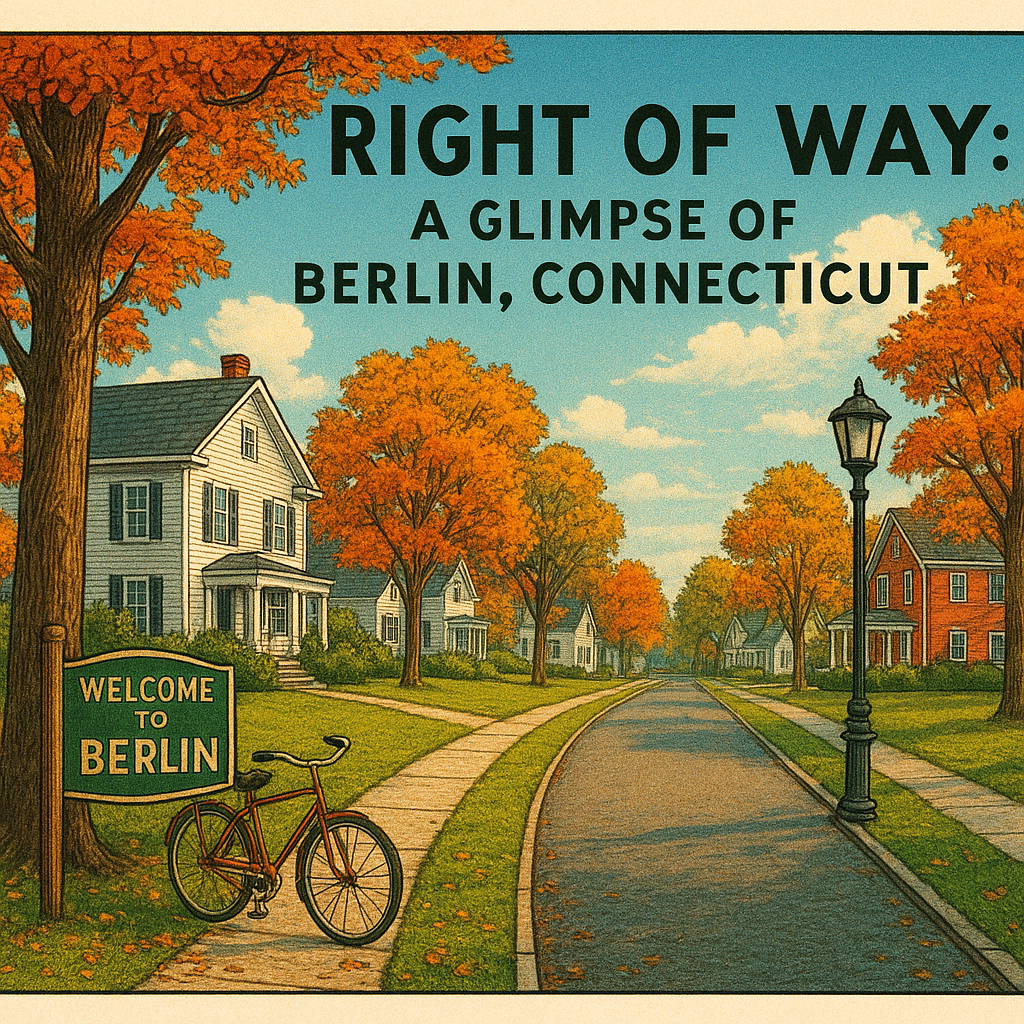
Imagine a quiet New England town with tree-lined streets, historic homes, and a strong sense of community. Now picture those same streets being quietly transformed—not with loud construction that drags on for years, but with smart, efficient upgrades that you might not even notice until they’re done. That’s exactly what’s happening in Berlin, Connecticut. The Town of Berlin has taken a bold step forward by launching a new Right of Way program backed by something called a Town Continuous Bond. It sounds technical, but at its heart, it’s about making life better, safer, and more reliable for everyone who lives, works, or drives through this charming Hartford County town.
Have you ever wondered how a town manages to fix sidewalks, bury utility lines, or widen a road without getting tangled in financial delays? The answer often lies in a little-known financial tool: a continuous bond. Berlin is using this tool to pave the way—literally—for smoother infrastructure projects. Let’s unpack what this all means and why it matters to you, whether you’re a lifelong resident or just passing through.
What Exactly Is a Right of Way Program?
A right of way is simply a strip of land that allows someone—like a utility company or the town itself—to pass through for a specific purpose. Think of it as a hallway in your house. You need that hallway to get from the living room to the bedroom, even though you don’t necessarily “own” the hallway as a separate room. In the same way, a right of way gives permission to use a piece of land for things like power lines, water pipes, sidewalks, or road expansions, without owning it outright.
But managing these rights can get messy. Multiple parties are involved: the town, utility companies, private property owners, and sometimes state agencies. A Right of Way program organizes all these moving parts. It sets clear guidelines, speeds up approvals, and ensures that any work done respects both public needs and private property rights. Berlin’s new program is designed to cut through the red tape while protecting everyone’s interests.
You might ask: “Isn’t this just more bureaucracy?” Not at all. When done right, a program like this creates a predictable process. That predictability saves time and money—two things every taxpayer appreciates.
Understanding the Town Continuous Bond
Now let’s talk about the “continuous bond” part. A bond, in this context, isn’t a sticky glue or a spy movie gadget. It’s a financial guarantee. Specifically, a continuous bond is an insurance-like promise that the town will fulfill its obligations when working in or near public rights of way. Unlike a one-time bond for a single project, this bond stays in place year after year, covering multiple projects automatically. Think of it like an umbrella policy for the town’s infrastructure work.
Here’s a simple analogy. Say you’re planting a tree near the street. You promise to fix any sidewalk cracks that happen during digging. A bond is a deposit the town holds to make sure you actually do the repair. A continuous bond means you don’t have to set up a new deposit for every single tree you plant. It’s already in place, ready to go.
For Berlin, CT, this continuous bond simplifies dealings with utility companies, contractors, and other partners. It guarantees that if a project causes damage or isn’t completed properly, there are funds available to make things right—without lengthy court battles or budget scrambles. The “continuous” nature means the town doesn’t have to issue separate bonds for every single road cut or utility repair. One blanket bond covers it all.
How Berlin, CT Is Putting This into Action
The Town of Berlin, Connecticut, has a long history of balancing growth with its small-town character. This new Right of Way program is a natural extension of that philosophy. By adopting the continuous bond approach, Berlin is making it easier to coordinate with electric companies, gas providers, internet services, and water agencies all at once. Here’s what that looks like in real life.
Imagine a gas company needs to replace aging pipes beneath a residential street. In the past, that project might have required separate approvals, bonds for each phase, and endless back-and-forth. Now, under the new program, the company can work under the town’s existing continuous bond framework. The town’s engineers review the plan, the bond covers any potential restoration, and the work proceeds without months of paperwork. When the gas company finishes, the town inspects the repaving. If something isn’t up to standard, the bond funds the fix.
Similarly, when the town wants to install new fiber optic cables for faster internet, the same bond streamlines the process. This isn’t just theory. Communities across the country have seen that continuous bonds reduce project delays by weeks, sometimes months. Berlin is positioning itself as a place where upgrading critical infrastructure is as painless as possible.
Real-World Benefits You Can Feel
You might be thinking, “Okay, but how does this bond thing affect my morning commute?” Let’s get practical. Below are some concrete ways Berlin residents and businesses will see improvements:
- Smoother roads, sooner: Because the bond covers restoration, paving repairs happen faster after utility work. No more dodging potholes for half a year.
- Faster internet upgrades: Providers are more willing to invest in Berlin because the path to lay fiber is clearer. Better connectivity for remote work, streaming, and smart homes.
- Lower long-term costs: Streamlined bonding reduces administrative overhead. That means tax dollars go further toward actual construction, not paperwork.
- Protected property values: When a utility job damages a homeowner’s lawn or driveway, the continuous bond ensures proper repair. Your curb appeal stays intact.
- Quicker emergency responses: If a water main breaks, crews can mobilize fast under the existing bond, fix the issue, and the road gets restored without a financial tug-of-war.
These benefits aren’t flashy, but they’re the kind of everyday improvements that make a town pleasant to live in. It’s the difference between a street that looks patched together and one that’s maintained with pride.
Why a Continuous Bond Matters More Than Ever
We live in a time when infrastructure is aging, and demands are growing. The American Society of Civil Engineers regularly gives the nation’s infrastructure mediocre grades. Towns like Berlin need to stretch every resource. A continuous bond isn’t just a financial instrument; it’s a strategic tool for resilience. It says to contractors and utilities, “We’re open for business, and we’re organized.”
Have you ever watched a road project stall because the contractor and the town couldn’t agree on who pays for a cracked curb? That’s exactly the scenario this program prevents. The bond steps in as a neutral referee with a wallet. It reduces friction and builds trust. For a town of around 20,000 people, building that trust is key to getting the best vendors and the most competitive project bids.
Moreover, the continuous nature of the bond means Berlin doesn’t have to shop for bonding approval every time a new need pops up. Whether it’s installing electric vehicle charging stations along public streets or updating underground sewer lines, the framework is already in place. This agility is a huge draw for businesses looking to locate in a forward-thinking community. A smooth-moving town is an attractive town.
A Step-by-Step Look at the Process
Let’s demystify how the Town of Berlin, Connecticut, handles a typical project under this new program. The steps are designed to be logical and fair:
- Application and review: A utility or town department submits a plan for work within the right of way. The town’s engineering team checks that the plan meets safety and design standards.
- Coverage under the continuous bond: Instead of issuing a new bond, the project is noted under the existing continuous bond. The bond’s terms already define the requirements for restoration, timelines, and financial responsibility.
- Permit issuance: With the bond covering the financial assurance, the permit is granted quickly. Work can begin, often within days rather than weeks.
- Construction and inspection: As the work progresses, town inspectors ensure compliance. If something isn’t right, they can stop the work and tap the bond for corrections.
- Restoration and sign-off: After the underground work is done, the road, sidewalk, or landscaping must be restored properly. The final inspection checks that everything matches the original condition or better. Only then is the project closed out.
This clear path removes guesswork. Need to compare it to something familiar? It’s like a pre-approved loan. You don’t reapply for credit every time you buy groceries; you have a credit card with a set limit. The continuous bond is Berlin’s credit card for right of way projects—always ready, with clear terms, and built on trust.
Common Questions Answered
It’s natural to have some questions. Here are a few that might pop into your head.
Does this mean my street will be torn up more often? Surprisingly, it often means less disruption. Because projects can be coordinated and completed efficiently, you’ll deal with shorter work windows and better communication. The town’s program encourages clustering utility work so that a street gets upgraded all at once, not piecemeal.
Is the continuous bond paid for by taxpayers? The bond itself is typically funded through fees charged to utilities and contractors who work in the right of way. The town uses those fees to maintain the bond and cover administrative costs. So it’s essentially user-funded, not a new tax on residents.
What if a project damages my property? That’s where the bond shines. If a contractor’s crew damages your mailbox, driveway, or landscaping and doesn’t fix it properly, the town can make a claim on the bond to cover repairs. You have an extra layer of protection without needing to hire a lawyer.
The Bigger Picture for Berlin, CT
This new approach is part of Berlin’s broader commitment to a well-maintained, modern community. The town sits at the geographic center of Connecticut, with easy access to major highways. That makes it a prime spot for businesses and families alike. By ensuring infrastructure can be upgraded seamlessly, Berlin is quietly future-proofing itself.
Think about the dramatic increase in home solar installations, the rollout of 5G small cells on streetlights, or the coming wave of electric autonomous shuttles. All of these rely on a smooth-functioning right of way system. Berlin’s continuous bond program lays the groundwork—metaphorically and physically—for these innovations. It’s not about chasing headlines; it’s about doing the behind-the-scenes work that makes a town resilient for decades.
Next time you drive down Farmington Avenue or walk along Wilbur Cross Highway, you might not think about bonds and rights of way. And that’s the whole point. Good infrastructure programs are invisible when they work well. You just enjoy the smooth pavement, the steady water pressure, and the lightning-fast internet.
How You Can Stay Involved
Curious about upcoming projects in your neighborhood? The Town of Berlin typically posts public notices and holds meetings where infrastructure plans are discussed. Attending a Town Council session or checking the official website keeps you in the loop. An informed community is a strong community. If you have specific concerns about a right of way near your property, the town’s engineering department is just a phone call away. They can explain how the continuous bond protects your interests and what to expect during construction.
At the end of the day, Berlin, Connecticut, is showing that smart financial tools and careful planning don’t have to be boring. They’re the secret ingredients to a town that works—today, tomorrow, and well into the future. So while “Town Continuous Bond Right of Way” might not be the most exciting phrase in the world, its results are something every resident can feel good about.
We’d love to hear your thoughts. Have you noticed a quicker restoration after utility work in your area? Have questions about how the bond works? Drop a comment below and join the conversation. Because when it comes to building a better Berlin, we’re all walking the same path—preferably a freshly paved one.