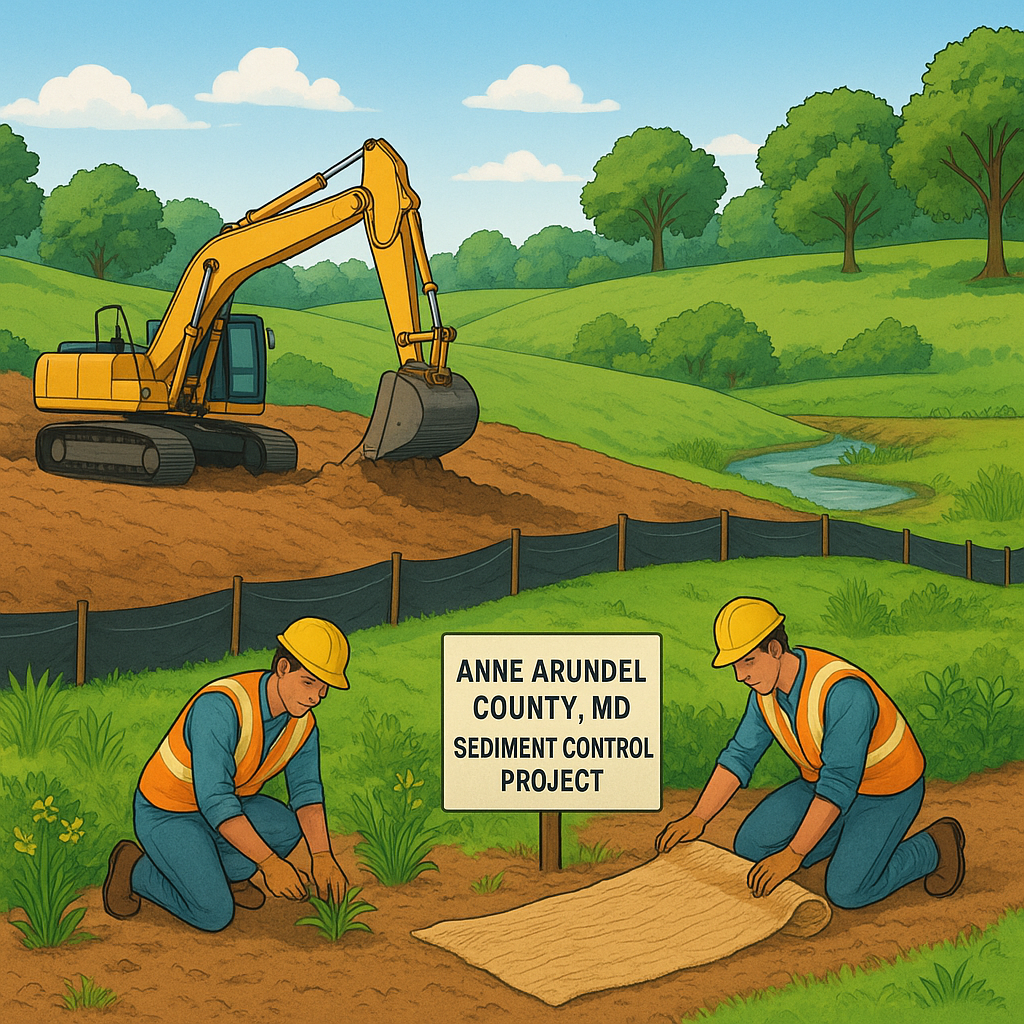
Have you ever watched a construction site turn into a muddy mess after a heavy rain? That swirling, chocolate-brown water running down the street isn’t just dirty—it’s carrying soil, chemicals, and debris straight into our local streams and the Chesapeake Bay. Keeping that dirt in its place is serious business, and in Anne Arundel County, Maryland, the rules just got a whole lot stronger. If you’re a homeowner planning a big landscaping project or a developer eyeing a new subdivision, there’s one term you need to know: the grading and sediment control bond. Let’s unpack what this means, why it matters for every resident, and how the county’s fresh approach is protecting our water.
What Is a Grading and Sediment Control Bond, Exactly?
Think of this bond as a promise backed by money. Before anyone moves a shovel of dirt on a site that disturbs a certain amount of land, Anne Arundel County requires them to secure a financial guarantee. That guarantee—often called a surety bond—ensures that if the contractor or property owner fails to install proper erosion controls or leaves the site a muddy disaster, the county has funds readily available to step in and fix the problem. It’s a lot like a security deposit you’d put down for an apartment. You do everything right, you get your money back. You leave a mess, and the deposit covers the cleanup. Only here, the “apartment” is our shared environment.
The bond is tied to a grading permit. The permit outlines exactly how the work should be done to stop soil from washing away. Sediment control measures—silt fences, storm drain inlet protection, temporary seeding, and stabilized construction entrances—form an invisible shield around the site. If those measures fail or aren’t put in place at all, the bond becomes the county’s safety net.
Why Anne Arundel County Is Raising the Bar
You might wonder, haven’t these rules been around forever? Yes, but the pressure on our local waterways has never been higher. Every time a hard rain hits a bare construction site, it can erode tons of soil in just hours. That sediment clouds the water, harms fish and aquatic plants, and carries nutrients like phosphorus that fuel algae blooms downstream. Anne Arundel County, with its 500-plus miles of shoreline along the Chesapeake Bay and its tributaries, sits on the front lines of this battle. The county isn’t just sitting back; it’s actively tightening the reins.
New enhanced measures mean the county is looking more closely at how bonds are calculated, inspecting sites more frequently, and raising the bar for what “good” erosion control actually looks like. It’s not about making life difficult for builders—it’s about making sure the person who creates the risk is the one who owns the cleanup, not taxpayers and not the families who swim and fish in our creeks.
Digging Deeper: How the Bond Works in Real Life
Let’s say you’re a contractor breaking ground on a new community in Pasadena. Your grading plan says you’ll disturb three acres. The county reviews your sediment control design and calculates a bond amount that would cover the cost of hiring a third-party crew to install, maintain, and repair all those controls if you walk away. You then go to an insurance or surety company and purchase that bond, paying a small percentage of the total as a premium. The bond is filed with the county, and you get your grading permit.
Throughout the project, inspectors stop by—sometimes unannounced. They check that silt fences are trenched in properly, that gravel pads at the exit are keeping mud off the road, and that any bare slopes are quickly covered with mulch or grass. If they spot a problem, you fix it. If you repeatedly ignore violations, the county can call in the bond. That means the surety company pays the county, and then the surety comes after you for every penny. It’s a powerful motivator to keep the site clean.
A Safety Net for Homeowners, Too
Here’s a common scenario. You hire an excavator to level your backyard for a pool. The crew scrapes away the grass, and a surprise thunderstorm sends a slurry of mud into your neighbor’s yard and the storm drain. If that contractor didn’t have a grading permit and the required bond (yes, small projects often trigger this), you could be left holding the bag for fines and cleanup. The bond process adds a layer of consumer protection, ensuring the folks you hire take soil control seriously from day one.
Peeling Back the Layers of the Enhanced Measures
So what exactly is new in Anne Arundel County’s playbook? While the core concept of the bond hasn’t changed, the expectations and enforcement have sharpened like a freshly tuned instrument. Let’s walk through a few tangible shifts.
More Realistic Bond Amounts
In the past, bond calculations sometimes fell short of what emergency repairs actually cost. The county has updated its formulas to reflect today’s prices for heavy equipment, labor, and materials. That means the financial “cushion” is thicker, and the public is better insulated from risk. If a site needs immediate stabilization after a contractor goes bankrupt, the county won’t have to scramble for extra funds.
Smarter, Tech-Driven Inspections
Inspectors aren’t just driving by with a clipboard anymore. Enhanced measures incorporate digital reporting and geo-tagged photos. This creates an undeniable record of compliance—or lack thereof. For good actors, it speeds up the close-out process and the return of their bond. For bad actors, it’s incontrovertible evidence. The message is clear: out of sight is no longer out of mind.
The Domino Effect: Cleaner Creeks and Happier Communities
All this talk about paperwork and penalties might feel dry, but the payoff is anything but. Picture the Marley Creek or the Severn River after a solid downpour. When sediment controls function perfectly, the water stays clearer. Underwater grasses, which are the nurseries for blue crabs and rockfish, get the sunlight they need. Kids can wade without stirring up clouds of muck. And property values near clean water? They tend to hold steady or climb. A grading and sediment control bond is, in many ways, a down payment on that quality of life.
It also helps the county meet its Chesapeake Bay cleanup goals—a legal and moral obligation. Every pound of dirt kept out of the water is a victory. By strengthening the bond program, Anne Arundel County is proving that environmental protection and responsible development can walk hand in hand.
Who Needs to Pay Attention?
You might be thinking, “I’m not a developer,” but the net is wider than you’d expect. Any land-disturbing activity exceeding 5,000 square feet typically kicks in the need for a grading permit and a bond. That’s about the size of a single-family home lot with a decent backyard. Even some smaller projects, especially those on steep slopes or near critical areas, can be caught by the rules. So if you’re planning:
- A new home construction or a major addition
- A large driveway regrade
- A commercial building pad
- Clearing land for a trail or a pond
- Any soil stockpiling operation
…you need to have a conversation early with the county’s Inspections and Permits office. They’ll help you understand what bond amount applies and what control practices you’ll need to design into your plan.
Navigating the Bonding Process Without the Headaches
I know, “bond” sounds like financial jargon that makes your eyes glaze over. But getting one is usually straightforward. Most contractors already have a relationship with a surety bond provider, and the cost to you might be a few hundred to a few thousand dollars, depending on the project size. Compare that to a potential fine of thousands of dollars—or a lawsuit from an affected neighbor—and it’s a bargain.
Start by gathering your civil plans or site design. Submit them with your permit application. The county’s plan reviewer will note the maximum area of disturbance and the erosion control features, then calculate a bond estimate. You’ll secure the actual bond, file it with the county, and get your approved permit. Keep that bond in place until the project is completely stabilized—meaning grass has grown thick, slopes are covered, and an inspector gives you the final thumbs-up. Then the bond is released.
What Happens When Things Go Wrong?
Let’s be real: sometimes things slip. A silt fence gets knocked over by equipment. A storm hits the day before the seeding contractor was scheduled. The county’s approach isn’t to slap fines on everyone at first blush. It’s about communication and correction. Typically, you’ll get a notice of violation and a window to fix it. However, repeated neglect or an outright abandonment of the site triggers the bond call. Once that happens, it’s messy: your bonding company will pay the county and then pursue you for the full amount plus legal fees. You might also find it nearly impossible to get bonded for future work. That’s a career-ender for a builder.
The enhanced measures mean the county is faster to spot failing controls and less tolerant of endless delays. The goal isn’t punishment—it’s keeping our waterways clean in real time, not months later when the damage is done.
Your Role as a Resident—Yes, You Have One
Change doesn’t just come from county hall. Next time you pass a construction site, glance at its perimeter. Do you see silt fences standing upright, with no gaps at the bottom? Is there a gravel entrance so trucks aren’t tracking mud onto the road? Are storm drains wrapped with protective fabric? If something looks off, you can report it to Anne Arundel County’s Department of Inspections and Permits. Your eyes on the ground are priceless. That’s community-powered protection.
And if you hire a contractor? Ask about their grading permit and bond. It’s a sign of professionalism. A builder who complains loudly about these rules is waving a red flag. The true pros know that a clean, stable site saves money and headaches in the long run.
A Cleaner, Greener Anne Arundel County
The enhanced soil erosion control measures are not a static set of rules gathering dust. They’re a living commitment to our rivers, our Bay, and our neighborhoods. The grading and sediment control bond weaves accountability into the very fabric of how we grow. It’s a quiet hero—rarely seen but holding the line against the mud and sediment that threaten what makes this area so special.
Next time you enjoy a sunset over the Magothy River or reel in a perch off a pier in Shady Side, remember that part of that clean experience relies on a simple premise: if you disturb the earth, you protect the water. Anne Arundel County is making sure that promise isn’t just words. It’s a bond—literally.