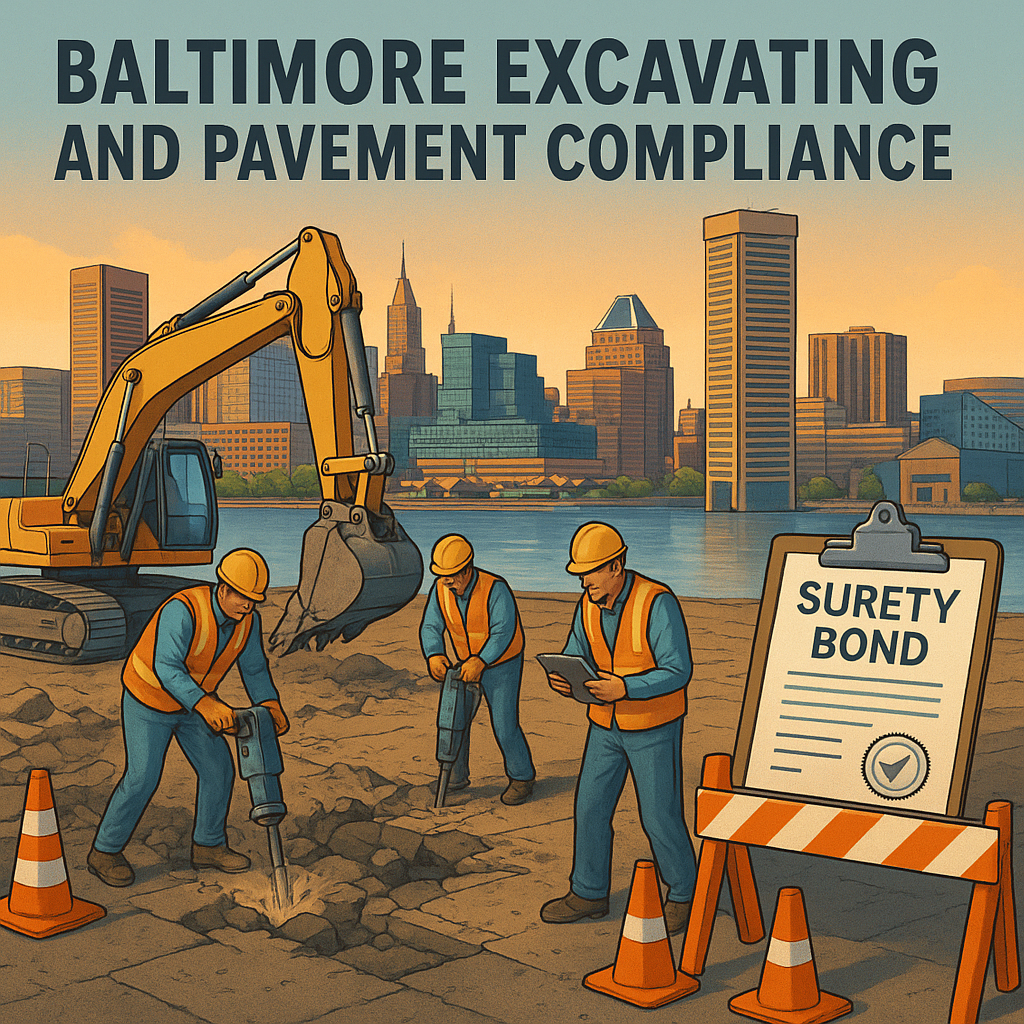
Ever wondered what happens when construction crews dig up city streets or sidewalks? If you’ve noticed roadwork in Baltimore, you’ve seen the process in action. But what you might not see is the invisible safety net protecting the city and its residents—surety bonds. Today, we’re diving into a specific kind of bond: Baltimore’s requirement for excavating, cutting pavement, and following all the rules. Don’t worry if that sounds technical; we’ll break it down together.
Why Baltimore Requires a Surety Bond for Street Work
Imagine you’re about to do some major yard work. You hire a landscaper who promises to dig a trench for a new drainage system, tear up part of your driveway, and restore everything perfectly. You’d want a guarantee, right? A promise that if they leave a mess or damage something, you won’t be stuck with the bill. That’s exactly what a surety bond does, but on a much larger scale for public streets.
When a contractor needs to excavate or cut into a city-owned right of way—sidewalks, streets, alleys—in Baltimore, the City doesn’t just hand over a permit and hope for the best. They require a Right of Way Excavation and Pavement Cutting Bond. This bond is a three-party agreement between the contractor (principal), the City of Baltimore (obligee), and a bonding company (surety). It’s the city’s way of saying, “We trust you to do the job right, but if you don’t, we have a financial backup.”
What Exactly Is This Bond Covering?
Let’s get specific. In Baltimore, this bond isn’t just about digging. It’s a promise to comply with all ordinances and regulations related to the work. That includes:
- Properly restoring pavement, sidewalks, and curbs after the work is done.
- Following safety standards to protect pedestrians and drivers.
- Repairing any damage caused to public utilities or infrastructure.
- Completing the work within the allowed timeframe.
- Cleaning up the site thoroughly.
Think of it like a deposit on a rental property. The landlord holds a security deposit in case you damage the apartment. Similarly, the city holds this bond as a financial guarantee that the contractor won’t leave a pothole or half-finished trench that could endanger people or cost taxpayers money.
Who Needs This Bond in Baltimore?
You might be a contractor wondering if this applies to you, or a business owner planning a construction project. The rule is straightforward: anyone performing work that disturbs the public right of way in Baltimore City must obtain this bond before getting a permit. Common examples include:
- Utility companies installing or repairing water, gas, electric, or fiber lines.
- Plumbers connecting a new building to the main sewer line.
- General contractors cutting a driveway curb or replacing a sidewalk.
- Excavation firms doing foundation work that extends into the street area.
Essentially, if your shovel hits a city street or sidewalk, you’re in bond territory. This applies equally to a large-scale infrastructure project and a small repair job.
How Does the Bond Process Work? A Simple Walkthrough
Navigating city paperwork can feel overwhelming, but acquiring this bond doesn’t have to be. Let’s walk through it step by step, like following a recipe.
Step 1: Determine Your Bond Amount
Baltimore City sets the required bond amount based on the scope of work. For smaller projects, it might be a few thousand dollars. Major excavation jobs could require a bond of $50,000 or more. The city’s permit office will tell you exactly what you need after reviewing your project plans. Always check with the Baltimore City Department of Transportation or the agency issuing your permit.
Step 2: Apply for the Bond
You’ll work with a licensed surety bond agency. They’ll ask some questions about your business—credit history, experience, financial stability. Why? The surety company is vouching for you. They need to feel confident that you’ll complete the job correctly so they won’t have to pay out. It’s similar to a bank vetting you before issuing a loan.
Step 3: Pay the Premium
Good news: you don’t have to put up the full bond amount in cash. You pay a small percentage as a premium, often between 1% and 10% of the total bond value. For a $10,000 bond, you might pay only $100 to $1,000 per year. The rate depends on your credit and business track record. Contractors with strong financials and good credit enjoy lower rates.
Step 4: File the Bond with the City
Once issued, you’ll receive the bond form. Submit it to the Baltimore City permitting office along with your permit application. The bond must be in place before you break ground. Keep a copy for your records; the city keeps the original on file.
What Happens If Something Goes Wrong?
This is the part everyone wonders about. Suppose a contractor cuts a street, promises to repave it in two weeks, but six months later the area is still a muddy mess. Or maybe the patch work sinks and creates a dangerous bump. The city can step in and make a claim against the bond.
Here’s the key thing to understand: the bond pays the city for the cost of fixing the problem. Then, the surety company will come to the contractor for repayment. It’s not insurance for the contractor; it’s a guarantee to the city. Contractors are ultimately responsible for their work—and their wallet.
This system protects everyone. Residents don’t have to live with shoddy repairs, the city doesn’t waste taxpayer money, and reputable contractors can stand out because they’re bonded.
Common Misconceptions About Surety Bonds
Many people confuse surety bonds with insurance. Let’s clear that up. Insurance protects you from unexpected events. A bond protects a third party (the city) from your failure to meet obligations. If a claim is paid, you must reimburse the surety. It’s more like a co-signer on a loan than a safety net.
Another myth? “Only big companies need this.” Incorrect. Even a solo plumber installing a water line for a rowhouse likely needs a bond to cut into the sidewalk. The size of your business doesn’t matter; the nature of the work does.
Why This Bond Is a Win for Baltimore Communities
It might seem like just another bureaucratic hoop. Yet, this bond has a real, positive impact on neighborhoods. By holding contractors accountable, Baltimore keeps its streets safer and its infrastructure in better shape. No one wants a bike lane riddled with unfinished patch jobs or a newly paved road cut open and ignored. The bond ensures that the people who break ground also take responsibility for sealing it back to code.
For contractors, being bonded is a badge of trust. It tells clients and the city, “I stand behind my work.” It can even help win bids because many project owners require proof of bonding before awarding contracts.
Get Help Navigating Baltimore’s Requirements
If you’re feeling a bit lost, take a deep breath. The process might seem dense, but you don’t have to figure it out alone. The City of Baltimore provides clear resources through its permit office, and a knowledgeable surety bond agent can answer questions specific to your project.
Ask yourself: Could my next job involve a city street or sidewalk? If yes, start the bonding process early. It will save you from last-minute permit delays and show that you’re a responsible professional.
By understanding and securing the right surety bond, you’re not just complying with the law—you’re helping to maintain the Charm City we all love, one well-paved street at a time.