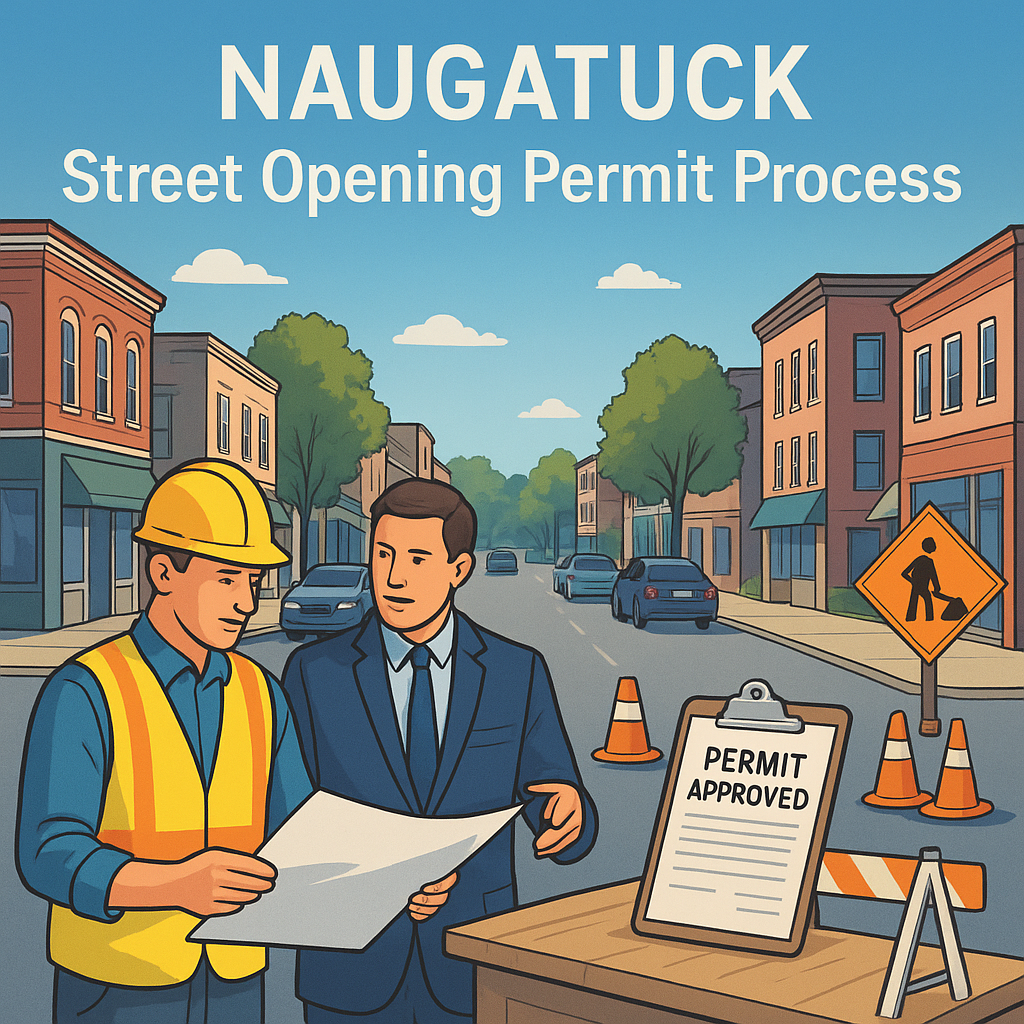
If you’ve ever watched a backhoe tear into a quiet neighborhood road, you know exactly what a street opening looks like. But before a contractor or utility company can even think about breaking ground in Naugatuck, Connecticut, there’s a pretty important piece of paperwork they need to secure: a Naugatuck CT street opening permit bond. It might sound like just another bureaucratic hoop, but it plays a huge role in keeping our streets safe, functional, and pothole-free after the work is done.
What Is a Street Opening Permit Bond, Exactly?
Let’s break this down. A street opening permit bond is a type of surety bond. Think of it as a financial safety net, a promise in three parts. The Town of Naugatuck (the obligee) requires it, the contractor or excavator (the principal) purchases it, and a surety company backs it. If the contractor fails to restore the street properly after opening it up, the town can make a claim on the bond to cover the cost of repairs. So, it’s not insurance for the contractor—it’s protection for the town and, ultimately, for everyone who drives on that road.
Why Does Naugatuck Need This Bond?
Naugatuck’s streets are more than just pavement. Underneath them runs a delicate web of water mains, gas lines, fiber-optic cables, and sewer pipes. Any time someone digs in, there’s a risk of damaging these utilities or leaving behind a shoddy patch job that becomes a future sinkhole or safety hazard. The bond requirement keeps the town from dipping into taxpayer money to fix a contractor’s shortcut. It’s a fair system: the party doing the digging should be responsible for making the street whole again.
Who Needs This Bond?
In Naugatuck, pretty much anyone who plans to cut into, excavate, or open up any part of a public street, sidewalk, or right-of-way needs a street opening permit—and, in almost all cases, an accompanying bond. This includes:
- Plumbing contractors tapping into water or sewer lines.
- Utility companies repairing or installing underground cables.
- General contractors doing site work for new construction.
- Homeowners who might be connecting a new driveway culvert, though sometimes a homeowner’s bond is handled a bit differently.
When in doubt, a quick call to the Naugatuck Public Works Department can clarify whether your project falls under this requirement.
How the Naugatuck Street Opening Bond Process Works
The process isn’t designed to trip anyone up. It’s just a step-by-step safeguard. Here’s what you should expect.
Step 1: Pulling the Permit
Before you ever buy the bond, you’ll need to apply for a street opening permit with the Town of Naugatuck. You’ll provide details about the location, the nature of the work, how deep you’ll dig, and how long the project will take. The town reviews your plans and determines the bond amount.
Step 2: Getting the Bond
Once the bond amount is set, you approach a surety bond agency. The agent will ask for some basic business information and may run a credit check. The cost you pay—the premium—is usually just a small percentage of the total bond amount, often between 1% and 5% for those with solid credit. For a $10,000 bond, you might pay as little as $100 to $500 out of pocket, not the full ten grand. You’ll then receive the official bond form.
Step 3: Filing with the Town
You take that bond certificate back to Naugatuck’s engineering or public works office along with any other required documents. The town keeps it on file. Only then does your street opening permit become active. That little piece of paper gives you the green light to start your dig.
Step 4: Completing the Work—the Right Way
Now you carefully open the street, do the underground work, and temporarily patch the surface. Naugatuck typically requires a specific method for backfilling and compaction, and often a final paving restoration must be completed within a certain timeframe. Inspectors may check in to make sure everything meets the town’s standards.
Step 5: Final Inspection and Bond Release
After the permanent patch is in place and the town signs off that the street is restored to its original condition—or better—the bond obligation is fulfilled. In many cases, the bond stays active for a warranty period (say, one year) to make sure the patch doesn’t settle. Once that period passes with no issues, the bond can be released or canceled.
What Determines the Bond Amount?
The bond amount isn’t a one-size-fits-all figure. Naugatuck calculates it based on factors like the square footage of the cut, the street type (a major arterial road needs a larger bond than a quiet side street), and the estimated cost of a full-depth restoration. A typical bond might range from $5,000 to $50,000 or more for large-scale work. The town’s engineer makes the call, and this amount is spelled out on your permit application.
Common Challenges and How to Avoid Them
Even experienced contractors can stumble if they’re not paying attention. Here are a few pitfalls to dodge:
- Guessing the bond amount. Always get the official figure from the town before purchasing the bond. Buying the wrong amount leads to delays and extra paperwork.
- Skimping on the patch. A temporary cold patch that sinks after three months will trigger a bond claim faster than you can say “frost heave.” Use proper materials and compaction methods.
- Missing the deadline. Naugatuck often sets a strict timeline for permanent restoration. Mark your calendar and budget for it.
- Forgetting to close out the permit. If you don’t request a final inspection, the bond stays open indefinitely, tying up your surety credit line.
A Real-World Analogy: Think of It Like a Security Deposit
You know how a landlord holds a security deposit to cover any damage beyond normal wear and tear? A street opening permit bond works in a very similar way. The town is the landlord, the road is the rental property, and the contractor is the tenant. If the tenant leaves the place trashed, the landlord uses the deposit to fix things. If everything is returned in perfect shape, the deposit is released. The bond just formalizes that handshake deal with a third-party guarantee.
Can You Get a Bond With Less-Than-Perfect Credit?
Absolutely. While the best rates go to applicants with strong credit and a track record of completed projects, many surety companies offer bonds to those with rocky credit histories. You might pay a higher premium percentage, but it’s still very doable. Some agencies specialize in “high-risk” bonds. Just be upfront with your agent, and they can recommend the right program. It’s a small price to pay to keep your business moving forward in Naugatuck.
What Happens If a Claim Is Filed?
Let’s say the worst-case scenario plays out: the contractor opens the street, does not restore it properly, and drives away into the sunset. The town calls out another crew to fix the dangerous potholes and then files a claim against the bond. The surety company investigates. If the claim is valid, the surety pays Naugatuck up to the bond’s limit to cover the repair cost. Here’s the kicker: the contractor is then legally obligated to reimburse the surety for every cent paid out. So, a bond isn’t a get-out-of-jail-free card; it’s a personal guarantee that amplifies your responsibility.
Key Takeaways for a Smooth Process
Navigating the Naugatuck street opening permit bond doesn’t have to be a headache. Just remember to communicate early with the town, work with a reputable surety agent who understands Connecticut requirements, and treat the restoration as the most critical part of your job. Doing so protects your reputation, your wallet, and the community that relies on safe, uninterrupted roads.
Frequently Implied Questions (Or Things You Might Be Wondering)
We’re often asked whether a bond is required for tiny jobs, like cutting a small trench for a signpost. The answer usually comes down to the scope and whether it falls under the town’s ordinance. When you’re unsure, ask the permitting office directly—it’s better to have a bond you don’t need than a stop-work order you didn’t expect. Another common head-scratcher: Does the bond cover damage to private utilities? No, the street opening bond specifically guarantees the public right-of-way restoration. Damage to a gas line or fiber cable would typically fall under the contractor’s general liability insurance.
Final Thoughts
The Town of Naugatuck’s street opening permit bond process is rooted in a simple idea: trust, but verify. It allows progress to happen—new water lines, faster internet, safer sidewalks—while making sure the people benefiting from that work are also accountable for putting the street back exactly as they found it. Whether you’re a seasoned contractor or a property owner tackling a one-off project, understanding this bond puts you a step ahead. You’ll walk into the permit office prepared, calm, and ready to break ground the right way.