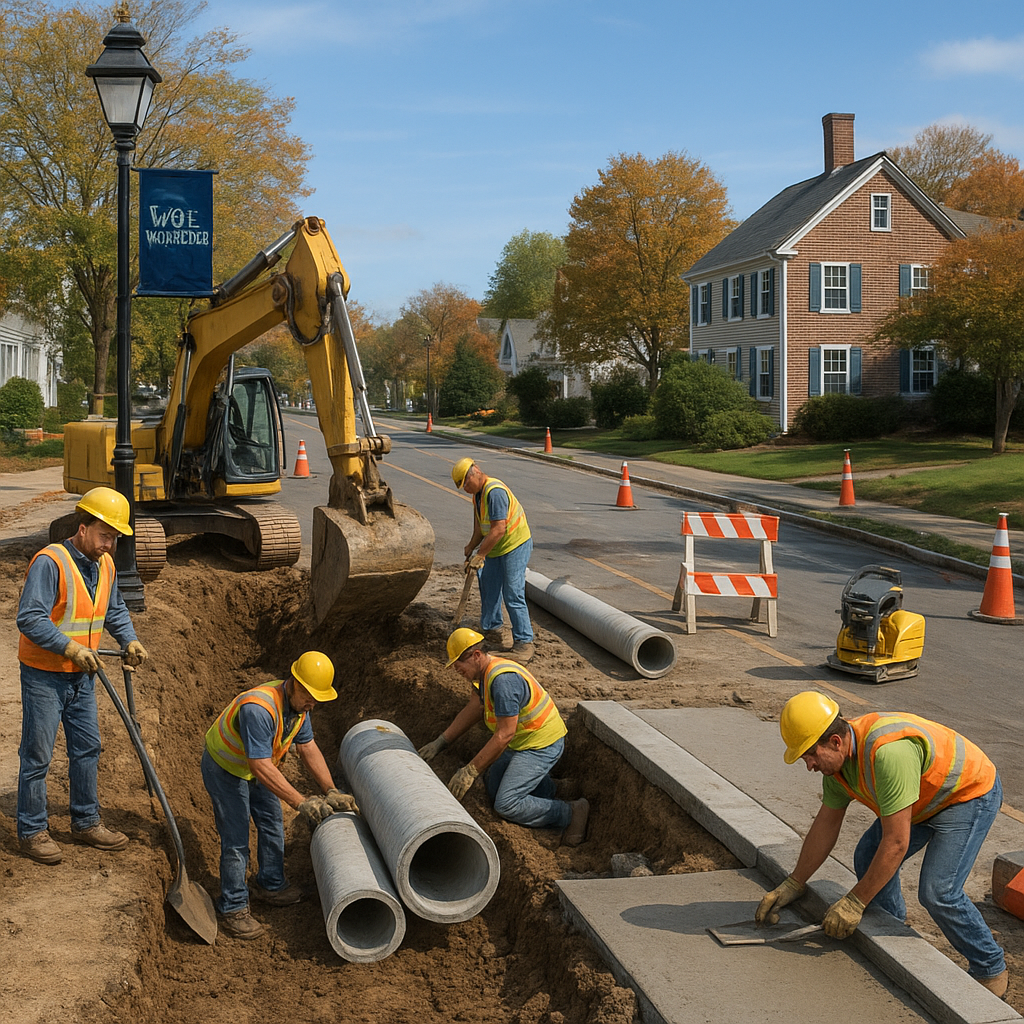
So, you’re a contractor looking to dig up a street in Wethersfield, Connecticut—or maybe you’re a homeowner trying to understand what your hired crew needs before they start tearing up the pavement. Either way, you’ve stumbled onto a topic that might sound about as exciting as watching asphalt cool: street excavation and drain layer bonds. But stick with me. By the time you finish reading, you’ll see these bonds aren’t just bureaucratic red tape. They’re more like a promise wrapped in paperwork, a safety net for the town’s roads, sidewalks, and underground drainage systems.
Wethersfield, one of the oldest towns in the state, takes its historic streets seriously. Whether it’s a small trench to connect a new sewer line or a major curb replacement along a tree-lined neighborhood, the town wants to make sure the work is done right—and that if something goes wrong, there’s money set aside to fix it. That’s where the bond comes in. Let’s break it all down in plain English.
What Exactly Is a Street Excavation Bond in Wethersfield, CT?
Imagine you’re borrowing your neighbor’s fancy lawnmower. Before they hand it over, they ask for a security deposit—just in case you ding it or return it covered in mud. A bond is that deposit, but for public property. When you apply for a permit to excavate, install a drain, or build curbs and sidewalks within the town’s right-of-way, Wethersfield requires you to post a surety bond. It’s a three-party agreement: you (the contractor), the town (the obligee), and a surety company (the financial backer). If you fail to restore the street to its original condition, or your drain layer leaves a sinkhole waiting to happen, the town can file a claim against your bond to fund the repairs.
In Wethersfield, these bonds often go by a few different names: street excavation bond, drain layer bond, curb and walk layer’s bond. They all serve the same core purpose—protecting public infrastructure and guaranteeing a job well done.
Why Does Wethersfield Require These Bonds for Road Work?
Picture this: a contractor digs up a section of sidewalk to install a new drainage pipe. They backfill the trench, slap some temporary asphalt on top, and disappear. A few months later, that patch sinks, leaving a tripping hazard right where kids walk to school. Without a bond, the town might have to chase down the contractor, argue about liability, and eventually use taxpayer dollars to make it safe. Bonds flip that script.
Here’s why the Town of Wethersfield insists on them:
- Financial protection: The bond is a guaranteed fund the town can tap without litigation.
- Quality assurance: Knowing your own money could be on the line encourages contractors to meet the town’s standards the first time.
- Public safety: Roads, curbs, and drains affect everyone. A properly restored surface prevents accidents, flooding, and damage to vehicles.
- Long-term durability: Wethersfield wants repairs that last decades, not just a few seasons of freeze-thaw cycles.
Who Needs a Bond? Breaking Down the Types
Not every worker swinging a shovel needs a bond. In Wethersfield, the rules typically separate obligations based on the specific work you’re performing. Let’s look at the three main categories you’ll encounter.
1. Street Excavation Bond
If you plan to cut into any town-owned street—whether to repair a water main, install a gas line, or connect a new driveway—you’ll need a street excavation permit and the bond that goes with it. This bond covers the restoration of the pavement, base layers, and any associated disturbances. The required amount often depends on the size and scope of the cut. A small residential tie-in might need a $5,000 bond, while a large commercial project could be $25,000 or more.
2. Drain Layer Bond
Drain layers are the specialists who install, alter, or repair storm drains, catch basins, and sewer laterals within the right-of-way. Wethersfield wants to be sure that when you lay a pipe, it won’t collapse, back up, or undermine the roadway above. The drain layer bond specifically protects against faulty workmanship and materials in drainage systems. Think of it as a pledge that your pipework will handle whatever Mother Nature sends its way.
3. Curb and Walk Layer’s Bond
Sidewalks and curbs might seem like minor pieces of the puzzle, but they’re incredibly important for pedestrian safety and proper water runoff. When you construct, replace, or repair concrete curbs or sidewalk panels along a public right-of-way, the town will ask for a curb and walk layer’s bond. This ensures the finished product is level, meets Americans with Disabilities Act (ADA) standards, and blends with the existing streetscape. Nobody wants a wobbly walkway in front of their historic home.
How to Obtain a Drain Layer, Excavation, or Curb Bond in Wethersfield
Getting bonded might sound intimidating, but the process is fairly straightforward once you know the steps. Here’s a typical path a contractor follows:
- Contact the Wethersfield Engineering Department: Before anything else, call or visit the town hall. Ask for the exact bond form and amount required for your specific permit. Requirements can change, and they’ll give you the most current info.
- Fill out the permit application: You’ll describe the work, location, and estimated timeline. The town will calculate your bond amount based on unit costs per square foot of pavement, linear feet of curb, or depth of drain installation.
- Reach out to a surety bond agency: Not all insurance agents handle surety bonds. Look for an agency that specializes in contractor bonds, preferably one that’s familiar with Connecticut municipal requirements. You’ll provide your business details, credit history, and the bond form.
- Pay the premium: A bond premium is a small percentage of the total bond amount—often 1% to 3% for well-qualified contractors. So a $10,000 bond might cost you between $100 and $300.
- Submit the bond to the town: Once issued, the surety company will give you the original bond document. Bring this to the Engineering Department along with your permit fee, and you’re ready to work.
What Does a Street Excavation Bond Cost?
The cost varies, and it’s one of the first questions contractors ask. “Do I have to tie up thousands of dollars in a bond?” The good news: you’re not paying the full bond amount upfront. You’re only paying the annual premium. The premium depends on a few factors:
- Your credit score: Strong personal and business credit often means lower premiums.
- Your experience: Established contractors with a history of few claims can get better rates.
- The bond amount: Naturally, a $50,000 bond costs more than a $5,000 bond, but the rate might be similar.
- The bond term: Most Wethersfield bonds are written for one year, and you might need to renew if the project extends longer or if you want to keep a blanket bond active for multiple jobs.
For a typical small excavation bond of $10,000, a contractor might pay $100 to $300 for the year. That’s a small price for the ability to dig into a street and the trust it builds with the town.
What Happens If Something Goes Wrong?
Let’s talk claims—because this is where the bond proves its worth. Say you finish a drain installation, but a few weeks later a heavy rain reveals that the trench wasn’t compacted properly, and the pavement above collapses. A town inspector documents the defect. The town then notifies you and the surety company. Ideally, you’ll fix the problem voluntarily. If you don’t, the surety will investigate and may pay the town to hire another contractor to do the repair. But here’s the crucial part: the bond isn’t insurance for you. The surety will come back to you for reimbursement. That’s right—you’ll have to pay back every penny the surety spends on the claim, plus possible legal fees. So it’s always best to do the job right the first time, and if a problem pops up, address it immediately.
Tips for a Smooth Bonding and Permitting Experience in Wethersfield
Dealing with municipal requirements can feel like navigating a maze with a blindfold. Here are some practical pointers to keep your project moving without headaches:
- Start early. Don’t wait until the day before you want to break ground to apply for the bond. Surety underwriting can take a few days, especially for larger amounts.
- Keep your credit in shape. Even if you’re a sole proprietor with a small operation, your personal credit matters. Check it for errors before you apply.
- Bundle your bonds. If you frequently work in Wethersfield doing various types of work, ask about a blanket bond that covers multiple categories (excavation, drain, curb) under one limit. This can save money and paperwork.
- Build a relationship with the Engineering Department. The folks there are not your enemies. They want to help you comply. Ask questions, invite them for a pre-construction walkthrough, and earn their trust.
- Document everything before you dig. Take photos and videos of the existing curb, sidewalk, and pavement condition. This way, if a dispute arises about restoration standards, you have a clear “before” picture.
- Don’t let the bond lapse. If your project extends into the next permit year, make sure to renew the bond on time. Letting it expire could stop work and lead to fines.
Frequently Asked Questions (Without the Jargon)
Is a bond the same as insurance? No. Insurance protects you from accidents and unforeseen events. A bond protects the town from your failure to perform or follow the rules. Think of insurance as a cushion for you; a bond is a promise to the public.
Can a homeowner pull a permit without a bond? Typically, if you’re doing work on your own property that doesn’t encroach into the town right-of-way, you might not need one. But the moment you touch the street or sidewalk, the bond requirement usually kicks in. Homeowners often hire licensed, bonded contractors to avoid this headache.
Do I need a separate bond for each job? It depends. Some contractors maintain an annual “blanket” bond that covers all their work in Wethersfield for the year. Others get a single-job bond for each permit. Speak with the town to see which option works best for your volume of work.
What if the street is private? Bonds are generally required for excavation in the town’s right-of-way or on publicly owned roads. Private streets might not have the same rule, but you’ll still want to check with the town—utilities often run under private roads that connect to public systems.
Wethersfield’s Commitment to Protecting Its Infrastructure
It’s easy to view bond requirements as another fee grabbing at your wallet. But step back and look at the big picture. Wethersfield is a town filled with colonial charm, busy local businesses, and families who stroll along sidewalks under ancient oaks. Keeping those streets smooth and drains flowing protects property values and keeps the community welcoming. The bond system is simply a way to hold contractors accountable while giving the town a financial safety net. When you follow the rules and post your street excavation or drain layer bond, you’re not just obeying an ordinance—you’re joining a partnership that maintains the town for generations.
Next time you see a crew cutting into a road on Silas Deane Highway or repairing a curb near the Wethersfield Green, you’ll know there’s likely a bond standing behind that orange cone. And if you’re the one doing that work, you can dig with confidence, knowing you’ve got the paperwork sorted and the town’s trust in your back pocket.