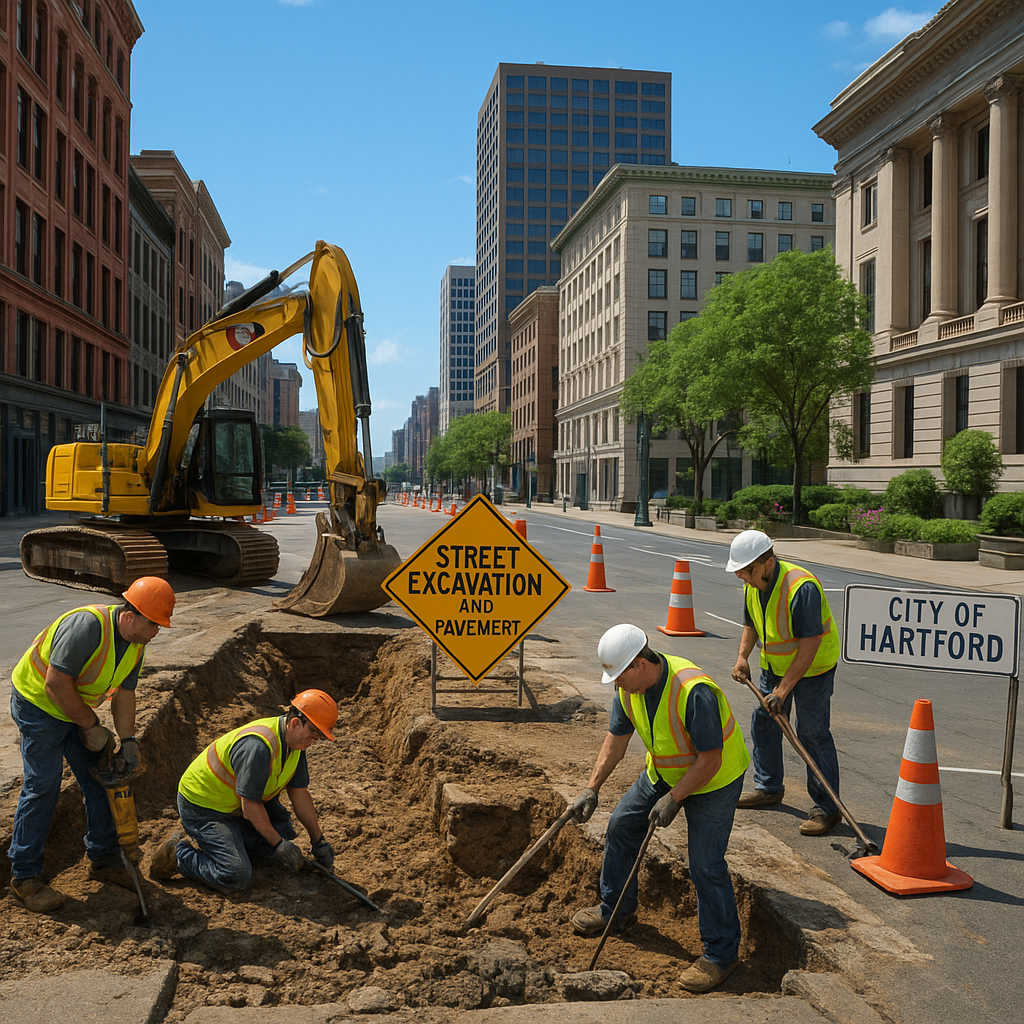
If you’ve ever had to dig into a city street in Hartford, you know it can feel like navigating a maze. Maybe you’re a contractor replacing an old water line, a homeowner installing a new sewer connection, or a utility company upgrading underground cables. Whatever the reason, one thing is clear: the rules just changed. The City of Hartford, Connecticut, has rolled out a new street excavation and pavement permitting process designed to protect public roads and make the entire experience smoother for everyone. Let’s break it all down in plain, everyday language so you can get your project moving without hitting a wall of confusion.
What Is the New Hartford Street Excavation and Pavement Permit Process?
Think of this update as the city finally putting a well-organized instruction manual on the table. For a long time, contractors and property owners dealt with a patchwork of requirements that could leave you scratching your head. Now, Hartford has streamlined the steps for getting permission to cut into any public street, sidewalk, or right-of-way. At the heart of the process sits one key requirement: the Hartford CT Street Excavation and Pavement Bond. This bond isn’t just paperwork—it’s a promise that you’ll restore the road surface to its original condition, or better, once your underground work is done.
The new system clarifies when you need a street excavation permit, how to secure that bond, and what inspections will happen afterward. If you’re digging into pavement, whether for a simple driveway culvert or a major trench for fiber optics, you’ll now follow a consistent path from application to final sign-off. The city’s engineering division oversees the entire thing, ensuring that our streets don’t turn into a patchwork of potholes and ruts after every private project.
Why Did Hartford Update Its Excavation Rules?
You might be wondering, “Why fix something that wasn’t broken?” The reality is, the old way was showing its age. Hartford’s streets endure a lot—harsh New England winters, heavy traffic, and constant utility work. Every time someone cuts into the pavement and doesn’t restore it properly, it creates weak spots. Those weak spots lead to potholes, cracks, and sinking patches that cost the city—and taxpayers—millions of dollars over time.
The new process puts teeth into the restoration phase. By requiring a street excavation bond, the city makes sure there’s money set aside to fix a bad job if the contractor or property owner fails to do it right. This isn’t about punishing anyone. It’s about safeguarding a shared resource. Think of the bond like a security deposit on a rental apartment. You get it back when you leave the place in good shape. Here, you’re essentially telling the city, “I’ll leave your street as good as new—and if I don’t, you can use this bond to hire someone who will.” This change also brings Hartford in line with best practices used in neighboring towns, reducing confusion for regional contractors who work in multiple jurisdictions.
Understanding the Hartford CT Street Excavation and Pavement Bond
If there’s one piece of the puzzle that raises eyebrows, it’s the bond. Let’s demystify it. The City of Hartford CT Street Excavation and Pavement Bond is a type of surety bond. In simple terms, it’s a three-way agreement between you (the principal), the city (the obligee), and a bonding company (the surety). You pay a small percentage of the total bond amount to get the bond, and in return, the surety guarantees to the city that you’ll follow all street restoration rules.
The bond amount depends on the scope and size of your project. A minor curb cut for a residential driveway will require a much smaller bond than a multi-block utility trench. The city reviews your permit application and tells you the required coverage. You then purchase the bond from an insurance agent or surety specialist. The annual cost is typically just a fraction of the bond’s face value—often between 1% and 3% for applicants with good credit. That means a $10,000 bond might only cost you around $100 to $200 a year. Keep the bond active until the city releases you, which usually happens after final inspection and a mandatory waiting period to ensure the pavement holds up.
Who Needs This Bond?
You’ll need a Hartford Street Excavation and Pavement Bond if your work involves cutting, breaking, or removing any part of a public street, alley, sidewalk, or right-of-way. Common examples include:
- Plumbers replacing a lead water service line from the street main to the house.
- Contractors installing a new sewer lateral for a home or business.
- Utility companies laying gas, electric, or telecommunications lines.
- Homeowners adding a driveway apron that ties into the public roadway.
- Landscapers regrading a strip between the sidewalk and curb.
Even if you’re just drilling a small test hole, you should check with the Hartford Engineering Division. The rule of thumb: if you’re breaking pavement the public uses, you’re likely in bond territory.
How to Apply for a Hartford Excavation Permit Step by Step
Nobody likes drowning in paperwork, so the city has tried to make this as painless as possible. Here’s a straightforward roadmap you can follow.
1. Pre-Application Homework
Before filling out a single form, gather your documents. You’ll need a detailed site plan showing exactly where you’ll dig, the dimensions of the excavation, and the proposed restoration method. You’ll also want your contractor’s license number (if you’re hiring one) and proof of insurance. Homeowners acting as their own contractor on their primary residence may be exempt from certain license requirements, but the bond is still mandatory.
2. Submit Your Application and Pay the Fee
Take your completed application to the Hartford Department of Public Works or the Engineering Division. You can usually find the current form on the city’s website. Along with the form, you’ll pay an application fee that covers the administrative review. This fee is separate from the bond cost and varies based on the type of project. A small residential opening will cost less than a large commercial trench.
3. Obtain Your Street Excavation Bond
Once the city approves your project scope, they’ll tell you the required bond amount. At this point, contact a surety bond agency. Many local insurance agents who handle contractor insurance can also set up these bonds. You’ll fill out a short application, often with a quick credit check. After approval, the agent issues the bond form that you’ll file with the city.
4. Perform the Work with Care
With permit in hand and bond in place, you’re greenlit to dig. But remember, this isn’t a free-for-all. You must follow Hartford’s street opening standards. That means proper trenching, shoring, traffic control, and above all, temporary patching that keeps the road safe while you wait for final restoration. Don’t forget to call CT’s Call Before You Dig line (811) at least two full business days before any excavation. It’s the law and it’s free.
5. Schedule the Final Inspection
After you’ve backfilled the trench and placed the permanent pavement patch, notify the city for an inspection. An inspector will come out to check the compaction, pavement smoothness, and overall quality. If it meets the city’s specifications, you’ll get a passing report. If not, you’ll need to fix the issues before the bond can be released.
6. Bond Release and Peace of Mind
The city won’t release your bond immediately. There’s often a hold period—sometimes six months to a year—to see how the patch survives a freeze-thaw cycle. If the pavement sinks or cracks during that time, you’ll be asked to correct it. Otherwise, the city issues a release, and your bond obligation ends. If you used a surety, they’ll close out your file.
Common Mistakes People Make and How to Dodge Them
Even the savviest contractors slip up. Here’s what to watch for so you don’t get tripped up.
- Skipping the bond altogether. Some people assume a general liability policy covers street damage. It doesn’t. The street excavation bond is a separate requirement that specifically guarantees restoration. Dig without it, and you risk stop-work orders, fines, and a bill for the city’s own repair crew.
- Underestimating the restoration cost. The bond amount should reflect the true cost of cutting and patching asphalt or concrete. If your patch fails and the city has to step in, the bond might not fully cover the expense if you went too low. Be realistic.
- Forgetting the temporary patch step. Cold patches and steel plates are okay for a day or two, but leaving a trench open or poorly covered for weeks is a safety hazard and will bring inspectors down on you. Plan your schedule to pour the final restoration as soon as the ground settles.
- Not communicating with neighbors. A blocked sidewalk or a dusty work zone can generate complaints that fast-track enforcement. A simple heads-up to the folks next door goes a long way in keeping the peace.
Why This Matters for Homeowners, Not Just Big Contractors
Maybe you’re reading this as a homeowner who needs to replace a crumbling sewer line. You might think, “I’m just fixing my own property. Do I really need a bond?” The short answer is yes, if that sewer line connects to the main under the street. The good news is that the bond is there to protect you, too. Imagine you hire a contractor who promises a perfect patch but then disappears, leaving a sunken ditch in front of your house. The city can call on that bond to make things right without sending you a five-figure repair bill. It’s a safety net that makes sure the work gets done correctly.
For small residential projects, the bond cost is modest, and many contractors include it in their overall bid. Always ask your plumber or excavator if they’re familiar with Hartford’s permit and bond rules. If they balk or say it’s not needed, that’s a red flag. A reputable local pro will have done this dance before and will have a surety agent on speed dial.
What Happens If You Don’t Get It Right?
Let’s paint a picture. You skip the permit and bond, cut into the street to fix a water main break, and then toss down some cold patch. Six months later, a pothole forms, a car damages its wheel, and the city investigates. They find your unpermitted work. Now you’re facing penalties that can include back permit fees, fines, repair costs, and even legal action. The bond requirement is non-negotiable; it’s in place to hold everyone accountable and keep Hartford’s roads in decent shape. Taking a shortcut is never worth the headache.
How the New Process Benefits Our Whole Community
Let’s zoom out. Every time someone follows the new rules, the streets stay smoother longer. That means less jarring for your morning commute, fewer alignment-killing potholes, and a city that looks well cared for. It also means lower long-term costs for public works, because properly restored pavement doesn’t need to be ripped up again for emergency repairs. The bond system creates a powerful incentive for contractors to do the job right the first time, and that quality trickles down to everyone who lives, works, or drives in Hartford.
There’s also a transparency angle. Previously, it could be anyone’s guess who was responsible for a shoddy patch. Now, the permit and bond create a clear paper trail. If there’s ever a problem, the city can trace it back and get it fixed—without dipping into general tax revenue.
Getting Started: Your First Step
Ready to move forward? Your best ally is the City of Hartford’s Engineering or Public Works office. Give them a call or stop by with your project details. They can walk you through the current bond amounts, application fees, and any neighborhood-specific rules. Many contractors also find it helpful to build a relationship with a local surety bond agency that understands Hartford’s requirements inside and out. That way, when a project pops up, you’re not scrambling at the last minute.
If you’re a homeowner, don’t be intimidated. The process might feel foreign at first, but it’s designed to be manageable. Think of it like pulling a building permit for a deck or a bathroom renovation—except this one protects the street that everyone uses. A little time spent on the front end saves massive headaches later.
Final Thoughts: Paving the Way Forward
Hartford’s new street excavation and pavement permitting process, anchored by the Street Excavation and Pavement Bond, is more than red tape. It’s a practical tool that keeps our city intact while allowing necessary underground work to happen. Whether you’re digging a trench in the South End or installing a new curb cut downtown, understanding this process puts you a step ahead.
Remember, the pavement beneath your feet is a shared asset. Treating it with care through proper permitting and bonding isn’t just a legal box to check—it’s a way of showing respect for your neighbors and your community. So, next time a project calls for cutting into a Hartford street, you’ll know exactly which path to take. And trust me, your future self, driving over a smooth patch of asphalt, will thank you.