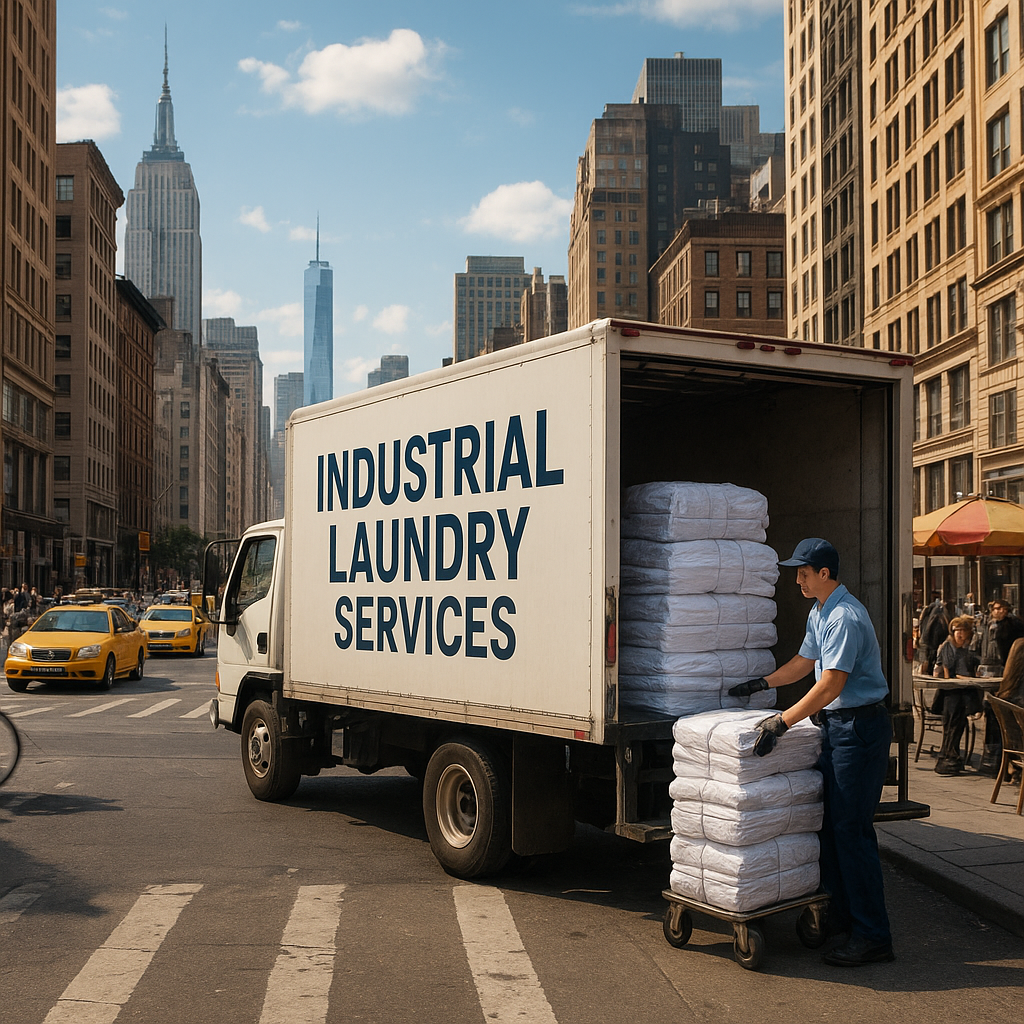
A Quiet Revolution in New York’s Laundry World
Have you ever stopped to wonder how a giant hotel in Times Square keeps hundreds of fluffy white towels ready every single hour? Or how a busy Manhattan hospital never runs out of clean sheets? Behind the hustle of New York City, a massive network of industrial laundry delivery services works around the clock. But there’s a secret ingredient that keeps this whole system running smoothly and changing the game for businesses—something called the New York Industrial Laundry Delivery Bond. Think of it as the unsung handshake that builds trust in an industry where there’s no room for “Oops, we forgot your linens.”
What Is Industrial Laundry Delivery, Anyway?
Before we dive into the bond itself, let’s get clear on what industrial laundry delivery really means. This isn’t your corner dry cleaner washing a couple of dress shirts. Industrial laundry serves big commercial clients—hotels, restaurants, hospitals, nursing homes, gyms, and even factories. These places generate literal mountains of soiled towels, sheets, tablecloths, uniforms, and blankets every single day.
An industrial laundry service picks up the dirty items, transports them to a large-scale washing facility (where machines can handle hundreds of pounds at a time), cleans and presses everything, and then delivers fresh, folded linens right back to the client. It’s a rinse-and-repeat cycle that demands perfect timing. In a city that never sleeps, “tomorrow” is never an option.
So, What Exactly Is an Industrial Laundry Delivery Bond?
Now for the star of the show. A NY Industrial Laundry Delivery Bond might sound like complicated jargon, but at its heart it’s a very simple promise. It’s a type of surety bond—a three-party safety net involving the laundry company, the customer, and a bonding agency. You can picture it like this: when you rent an apartment, you often put down a security deposit to guarantee you won’t wreck the place. A laundry bond works the same way, only for the delivery and care of your textiles.
The City of New York requires this bond for certain industrial laundry delivery businesses before they can legally operate. Why? Because city regulators want to protect the restaurants, hotels, and healthcare facilities that rely on these services. If a laundry company suddenly closes its doors, damages a huge batch of linens, or fails to deliver as promised, the bond steps in. It provides financial compensation to make things right. It’s a shield for the customer and a badge of honor for the business.
Bond vs. Insurance—Don’t Mix Them Up
People often confuse a surety bond with regular insurance, but they’re quite different. Insurance protects the laundry company itself from accidents. An industrial laundry delivery bond, on the other hand, protects you—the customer. If something goes wrong, the bonding company pays you up to the bond’s limit, and then the laundry company must pay the bonding company back. It’s a powerful motivator for businesses to show up on time, every time.
How This Bond Is Revolutionizing Laundry Efficiency in New York
You might be thinking, “Okay, it’s a legal requirement—but why does a bond lead to a revolution in delivery efficiency?” The answer lies in the trust loop it creates. When a laundry provider obtains a City of New York Industrial Laundry Delivery Bond, they’re signaling that they take their commitment seriously. That trust ripples outward in fascinating ways.
Think about a large hotel chain. Without a bond, the hotel worries about whether their linen partner will vanish overnight or deliver stained tablecloths right before a big conference. They might hold extra inventory “just in case,” wasting storage space and money. But when the laundry service is bonded, the worry evaporates. The hotel can slash its backup stock, order precise daily amounts, and integrate the delivery schedule directly into their operations. This alignment cuts down on waste, fuel, and double-handling—the core of efficiency.
Laundry companies that carry a bond also tend to be the ones investing in smarter technology. They optimize delivery routes using GPS, switch to energy-efficient machines, and build reliable driver teams because a claim on their bond hurts their reputation and wallet. The bond acts like a gentle, constant coach whispering, “Keep your promises.” The result? A citywide network of crisp, fresh linens moving with almost mechanical precision.
Real-World Impact: From Hotel Lobbies to Hospital Wards
Imagine a busy Midtown hotel. At 6 a.m., a bonded laundry truck backs into the loading dock. Every duvet cover, bath towel, and pillowcase arrives clean and pre-sorted by room type. The housekeeping team doesn’t need to count or inspect every piece—they trust the system. That’s not magic; it’s the quiet engine of an industrial laundry delivery bond at work.
The stakes are even higher in healthcare. A Brooklyn hospital can’t afford a single hiccup with its surgical linens or patient gowns. By partnering with a bonded delivery service, the hospital transforms a potential logistical nightmare into a seamless background function. Nurses focus on patients, not on inventory. That’s a revolution you won’t read about on the front page, but it changes lives every single day.
Why NYC Businesses Are Prioritizing Bonded Laundry Partners
New York is a city built on speed and second chances are rare. A restaurant that runs out of clean napkins during lunch rush can lose customers in a heartbeat. A gym without fresh towels will see membership complaints spike. This is why more and more businesses actively seek out laundry providers that mention the NY Industrial Laundry Delivery Bond right in their contract. It’s become a shorthand for reliability.
The bond also streamlines the hiring process. Instead of auditing a dozen different companies, a business can ask one simple question: “Are you bonded with the City of New York?” A “yes” instantly filters out fly-by-night operators. That saves hours of research and gives decision-makers peace of mind. It’s like choosing a taxi with a visible medallion—you know the system has your back.
How to Spot a Truly Reliable Industrial Laundry Service in NYC
Ready to find a partner that embodies this efficiency revolution? Here are a few practical things to look for beyond the bond itself. These tips will help you separate the pros from the pretenders.
- Ask for the bond certificate. A trustworthy company will happily show you proof of their New York Industrial Laundry Delivery Bond. If they hesitate, walk away.
- Check city records. You can often verify bonding and licensing through New York’s consumer affairs or business portals. A quick check today prevents a headache tomorrow.
- Look for route consistency. Efficiency thrives on routine. A great service will assign you a dedicated route driver and provide a clear pickup/delivery window, not a vague “sometime Tuesday.”
- Review their textile tracking. Does the company use barcode or RFID systems to track your linens? This tech reduces losses and shows they care about precision, a mindset often found in bonded, long-term-thinking companies.
- Read reviews with a critical eye. Zero negative reviews over several years might look perfect, but a handful of minor complaints with detailed, polite responses often paints a more human and realistic picture of a company that fixes mistakes.
Is the Bond Enough? Building a Full Picture of Trust
An industrial laundry delivery bond is a fantastic starting point, but it’s not the whole story. Pair that bond with a company that answers the phone, provides clear invoicing, and uses eco-friendly soaps if that matters to you. The bond ensures you have a financial safety net; the daily interactions tell you how much they truly value your business. When you combine a NYC laundry bond with genuine customer care, you get a service that feels less like a vendor and more like an extension of your own team.
Still wondering why a piece of paper can revolutionize something as dusty as laundry delivery? Think of the bond as the foundation of a skyscraper. You never see it buried underground, but without it, the whole building wobbles. In business, trust is that foundation. The bond formalizes that trust, so you and your