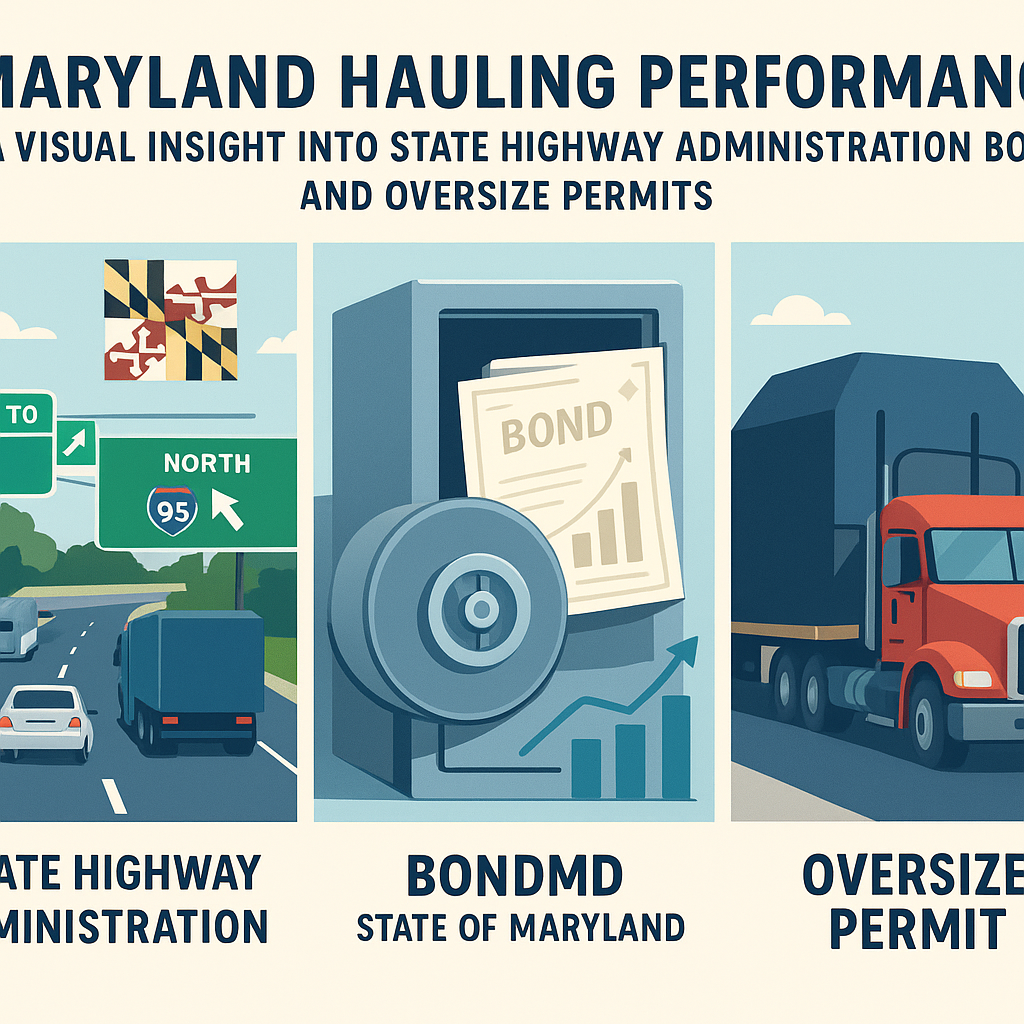
Have you ever driven down the highway and seen a massive piece of equipment being hauled on a flatbed trailer? Maybe it was a bulldozer, a prefabricated home, or a wind turbine blade. Moving things that are wider, taller, or heavier than the law normally allows is no small feat. It takes careful planning, special permits, and now—if you’re in Maryland—a new kind of financial guarantee called a performance bond. If you’re a trucker, a construction company owner, or just someone curious about how those big rigs get from point A to point B without damaging the roads, you’re in the right place.
Let’s unpack what the Maryland State Highway Administration (SHA) is doing, why it matters, and how you can stay on the right side of the rules without getting a headache. We’ll keep things simple, practical, and—dare I say—a little fun. Because let’s face it, bonds and permits don’t have to be boring.
Wait, What Exactly Is an Oversize Permit in Maryland?
Before we jump into the bond itself, let’s make sure we’re all on the same page. An oversize permit is essentially a permission slip from the state. It allows a vehicle and its load to exceed standard legal size and weight limits on public roads. Think of it like asking your neighbor for permission to park in their driveway while yours is being paved. You need that green light before you proceed.
In Maryland, the SHA handles these permits for state-maintained highways. When a load is exceptionally heavy or large, the risk of damaging pavement, bridges, or overhead structures goes up. The permit sets conditions—like designated routes, travel times, and required escort vehicles—to minimize those risks. But permits alone didn’t always guarantee that if something went wrong, the costs would be covered quickly and efficiently. That’s where the new performance bond steps in.
The Big News: Maryland’s Performance Bond Requirement
The Maryland State Highway Administration now requires certain haulers to secure a Maryland Hauling Performance Bond as part of the oversize permit process. You might see it called the “MD Hauling Performance Bond,” “MD SHA Performance Bond,” or even “Maryland Oversize Permit Bond.” These all point to the same thing: a financial safety net that protects the state and its taxpayers.
Picture this: a company moves a huge crane across a rural bridge, and despite all precautions, the bridge sustains minor damage. Without a bond, the state might have to chase the company for repair costs, potentially dragging the situation out for months. With the bond in place, the state can claim against that bond promptly, getting the funds needed to fix the bridge without relying on a slow legal process. It’s a lot like a security deposit on a rental apartment. Landlords hold that deposit so they’re not stuck paying for damages out of pocket. Similarly, the performance bond acts as a guarantee that the hauler will follow all permit conditions and cover any damages caused.
Why Now? Understanding the Logic Behind the Bond
You might be thinking, “Why is Maryland springing this on haulers now?” It’s a fair question. Over the past few years, infrastructure projects have exploded across the Old Line State. Bigger wind energy components, prefabricated bridge sections, and modular construction units are crisscrossing highways more regularly. While that’s great for progress, it also increases wear and tear on aging roads and bridges.
The Maryland SHA wants to be proactive rather than reactive. A performance bond creates a pool of money that’s accessible immediately in case something goes wrong. It also encourages haulers to double-check their routes, maintain their equipment well, and follow every rule to the letter—because nobody wants a claim against their bond. That can lead to a better environment for everyone sharing the road.
Who Needs This Bond? Let’s Break It Down
Not every pickup truck towing a slightly wide trailer will need to race out and buy a bond. The requirement typically applies to commercial motor carriers hauling loads that exceed certain thresholds for weight, width, height, or length. If you regularly move super loads—the kind where you see state police escorts and road closures—you are almost certainly in this group.
To put it in practical terms:
- Heavy haulers transporting construction machinery like excavators, bulldozers, or cranes.
- Mobile home movers relocating manufactured houses or modular offices.
- Wind energy contractors delivering massive turbine blades and tower sections.
- Industrial movers handling oversized tanks, generators, or large-scale prefabricated components.
If you’re unsure whether your loads qualify, check the Maryland SHA’s current permit guidelines. They usually spell out the exact dimensions and weights that trigger the need for a bond. When in doubt, a quick call to a Maryland transportation compliance expert or bond agency can clear things up fast.
How Does a Performance Bond Actually Work?
Now let’s demystify the bond itself. A performance bond isn’t an insurance policy for the hauler—it’s a three-party agreement designed to protect the state. Here are the key players:
- The Principal: That’s you, the hauler or moving company. You’re promising to follow all permit rules and pay for any damage caused.
- The Obligee: The Maryland State Highway Administration. They’re the ones requiring the bond and benefiting from its protection.
- The Surety: The bonding company that issues the bond and backs your promise financially.
If the hauler violates the permit terms and causes damage, the SHA can file a claim against the bond. The surety company will investigate and, if the claim is valid, pay the state up to the bond’s full amount. But here’s the catch: the hauler must reimburse the surety for every penny paid out. So while the bond feels like a form of credit, it’s really a personal guarantee with a middleman. It’s similar to a co-signer on a loan—they step in if you can’t pay, but they expect you to make things right eventually.
What’s the Cost? Hint: It’s Not the Full Bond Amount
One of the biggest misconceptions about performance bonds is the price tag. When you see a requirement for a $50,000 or $100,000 bond, your eyes might widen. But you won’t have to write a check for that entire sum. Instead, you pay a small percentage of the total bond amount as a premium. That premium can range from 1% to 5% depending on factors like your personal credit score, business financials, industry experience, and the size of the bond.
For example, if you need a $25,000 bond and your rate is 2%, you’d pay just $500 per year. That’s a manageable fixed cost for the peace of mind and compliance it provides. Better credit typically means lower rates, so it pays to keep your financial house in order. Many bonding agencies even offer multi-year terms if your permits roll over, saving you paperwork down the road.
How to Get Bonded Without Pulling Your Hair Out
The process might sound intimidating, but it’s pretty straightforward. Most haulers get their bond through a specialized surety bond agency. You’ll fill out an application, provide some basic business and financial information, and the agency will shop around with their surety partners to find you the best rate. Here’s a simple roadmap:
- Step 1: Confirm the exact bond amount and form required by the Maryland SHA. Don’t guess—get it in writing from the permit office or a trusted source.
- Step 2: Reach out to a bond agency that understands the transportation industry. They’ll know the nuances of Maryland’s requirements.
- Step 3: Complete the application. Be ready to share your business license, EIN, and possibly recent financial statements.
- Step 4: Receive your quote. Once you accept and pay the premium, the bond is issued.
- Step 5: File the bond with your permit application and keep a copy in your glovebox (or digital files) for roadside checks.
The whole thing can often be done online in a matter of hours. Yes, really. So if you suddenly land a big job that requires moving an oversized load tomorrow, you aren’t necessarily out of luck.
What Happens If You Skip the Bond?
Skipping this requirement isn’t a slap-on-the-wrist situation. Operating without the necessary bond can lead to permit denial, fines, and even having your truck placed out of service at a weigh station. That means downtime, lost revenue, and a tarnished reputation with clients who expect on-time delivery. Beyond the legalities, think about your liability. Without a bond, any damage you cause could come directly out of your company’s pocket. A single bridge strike or road surface repair can run into tens of thousands of dollars. A bond caps your exposure in many ways by creating a structured process, but avoiding it altogether opens you up to unlimited risk.
So the question isn’t really “Can I get away without it?” It’s “How can I protect my business and comply with the law in the smartest way possible?” The answer usually points back toward getting bonded.
Real Talk: Will This Bond Slow Down Your Business?
Change is never easy, especially when it involves paperwork and extra costs. But look at it this way: the new Maryland oversize permit bond is already becoming standard for competitors in your field. Getting ahead of it can actually make your business look more professional and reliable to general contractors and project owners. It shows you’re serious about safety and accountability.
Plus, understanding the bond requirement now means fewer surprises later. Imagine showing up to pick up a load and discovering your permit isn’t valid because of a missing bond. By then, you’re burning fuel and payroll without moving an inch. A little bit of prep work now keeps your wheels turning when it matters most.
Final Thoughts: Embracing the Bond as a Business Tool
The Maryland State Highway Administration’s new performance bond for highway oversize permits is more than a bureaucratic hoop. It’s a reasonable step toward keeping state roads safe and financially protected while allowing the essential movement of massive goods. For haulers, it’s a manageable cost that builds credibility and limits liability. For everyday drivers, it’s an invisible shield that helps ensure the roads stay in good shape even after that house-sized excavator rumbles by.
If you’re in the hauling business, take a few minutes this week to review your upcoming loads. Do any of them cross into Maryland on state highways? Check the size and weight. If you suspect you’ll need the MD Hauling Performance Bond, reach out to a bonding professional sooner rather than later. It’s a small step that can save you big headaches.
Have more questions about oversize permits or bonds? Pop them in the comments below—I’d love to keep the conversation rolling. Safe travels out there, and may your loads always be just the right size.