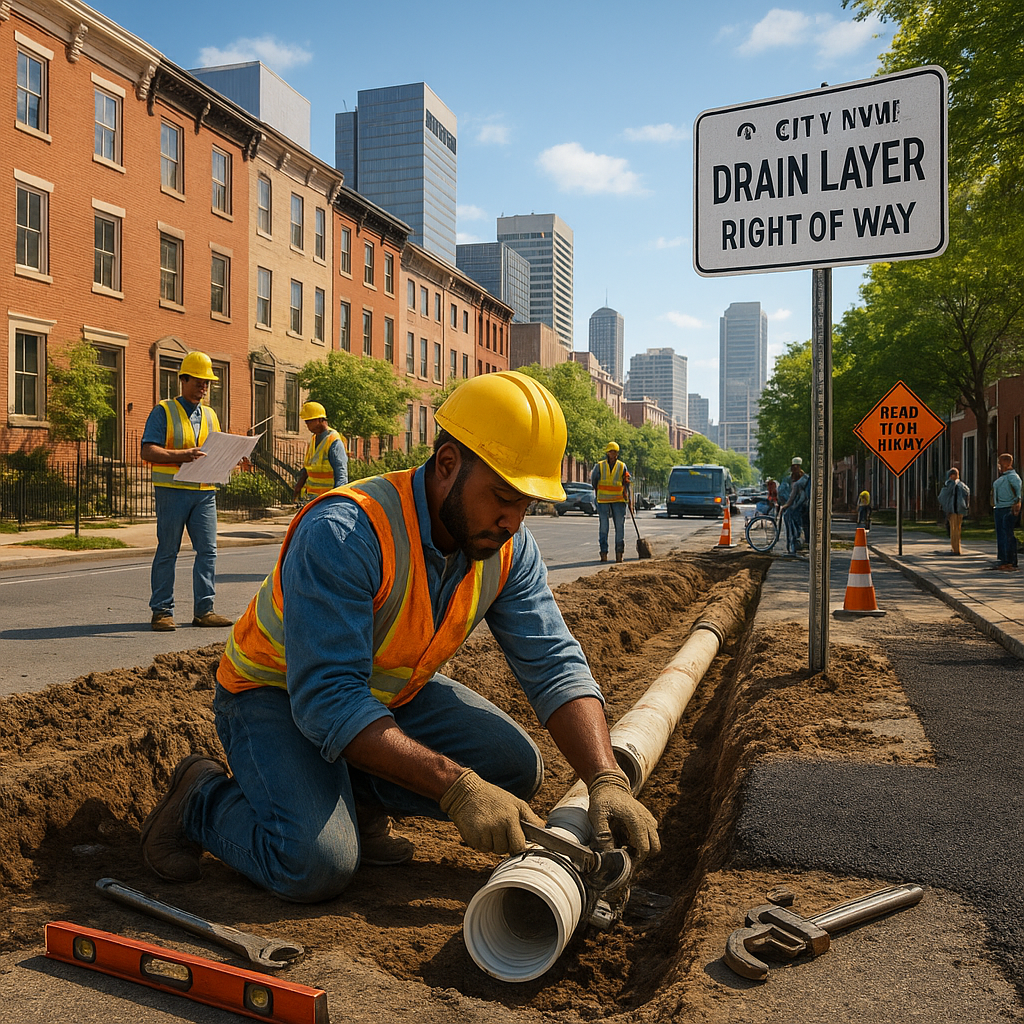
If you’re a contractor in Baltimore who digs into streets, sidewalks, or public rights-of-way to install or repair drainage systems, you’ve probably heard the term “Single Drain Layers Bond” tossed around. It might sound like just another piece of paperwork—until a city inspector asks for proof before you can break ground. Suddenly, it’s the most important document in your world. Let’s walk through what this bond really is, why the City of Baltimore requires it, and how you can check this off your to-do list without breaking a sweat.
What Exactly Is a Single Drain Layers Bond?
Think of a Single Drain Layers Bond as a financial promise, wrapped in a legal document, that protects the City of Baltimore and its residents. When you perform work in the public right-of-way—areas like the strip between the curb and the sidewalk, or the road itself—the city needs a guarantee that you’ll follow the rules, do the job right, and leave the site in safe, clean condition. This bond is that guarantee.
In simple terms, it’s a three-party agreement. You, the drain layer (the principal), get the bond. The City of Baltimore is the obligee—the one requiring the bond. The surety company is the third party that backs you financially. If you fail to comply with regulations or cause damage, the city can make a claim against the bond to cover repair costs or penalties. It’s not insurance for you; it’s protection for the public.
Who Needs This Bond in Baltimore?
The short answer: anyone doing drain layer work within Baltimore’s public right-of-way. But let’s break that down. Are you connecting a home’s downspouts to a new storm drain? Replacing an old clay sewer lateral under the sidewalk? Installing a french drain that ties into the municipal system? If your project involves opening up any part of the public street, alley, sidewalk, or utility strip, the city will almost certainly require a bond on file before issuing a permit.
Even smaller contractors who only occasionally touch the right-of-way should take note. This isn’t just for large excavation companies. A one-person operation fixing a residential drain line that crosses under the sidewalk might still need a Single Drain Layers Bond. If you’re unsure, ask yourself this question: “Will my work disturb any surface that isn’t private property?” If the answer is yes, read on.
The Right-of-Way Puzzle: Why It Matters So Much
Public rights-of-way are shared spaces. They carry water mains, gas lines, fiber optic cables, and sewer connections. One poorly backfilled trench can turn into a sinkhole months later. A forgotten patch of uneven asphalt can trip a pedestrian. That’s why Baltimore doesn’t just hand out permits with a handshake—they want a bond in place as a safety net.
Picture this: you install a new driveway drain that crosses the sidewalk. Six months later, the ground settles and creates a dip where rainwater pools and freezes into a hazard. Without a bond, the city might have to chase you down for repairs, spending taxpayer money in the process. With a bond, the surety steps in to resolve the issue quickly. It’s a system designed to keep everyone accountable.
How Is the Bond Amount Determined?
In Baltimore, the required bond amount for a Single Drain Layers Bond is typically a fixed sum. It’s not based on a single project’s value, but rather on the potential risk to the city’s infrastructure. While amounts can change with legislation, you’ll often see bonds in the range of $5,000 to $10,000 for this specific license bond. Always verify the current requirement with the Baltimore City Department of Transportation or the permit office—regulations shift over time.
Don’t let that number scare you. You’re not paying $10,000 out of pocket. The bond amount is the maximum coverage the surety provides. You actually pay a small percentage of that amount as an annual premium, usually somewhere between 1% and 5%, depending on your credit score and business history. So a $10,000 bond might cost you only $100 to $500 a year. That’s a manageable line item for most contractors.
The Step-by-Step Process: How to Get Bonded
Securing a Baltimore Single Drain Layers Bond doesn’t have to be a maze. Here’s a straightforward path you can follow:
- Confirm the exact requirement. Before anything else, reach out to the Baltimore City permit office or check their website. Ask, “What bond amount and form do you need for a drain layer working in the right-of-way?” Get it in writing if possible.
- Gather your business information. Surety companies will ask for your legal business name, address, and possibly your license number. Having these ready speeds things up.
- Apply with a surety bond agency. You can work with a specialized bond agency that understands Baltimore’s requirements. They’ll walk you through the application, which often takes just a few minutes online or over the phone.
- Undergo a quick underwriting review. The surety will check your personal and business credit. For bonds under a certain threshold, this is often a soft credit check that won’t heavily impact your score. Decisions can come within hours.
- Pay the premium and receive your bond. Once approved, you pay the annual premium, and the agency issues the official bond form. You’ll get a physical or digital copy to file with the city.
- Submit the bond to Baltimore City. This is usually done alongside your permit application or license renewal. Keep a copy for your records—you’ll need to renew the bond each year.
Don’t wait until the last minute. Sureties can process applications fast, but city offices may take time to record everything. Start a couple of weeks before your planned project kickoff.
Common Mistakes That Trip Up Contractors
Even experienced drain layers sometimes stumble over bond details. Let’s highlight a few pitfalls so you can sidestep them:
- Assuming a general license bond covers right-of-way work. Many cities separate a business license bond from a right-of-way permit bond. In Baltimore, the Single Drain Layers Bond is specific. Don’t show up with the wrong document.
- Letting the bond lapse. Most bonds renew annually. If your bond expires and you’re mid-project, you could face a stop-work order. Mark your calendar and set reminders.
- Confusing the bond with insurance. As we touched on earlier, this bond protects the city, not you. It doesn’t replace general liability insurance. You’ll still need separate coverage for property damage, injuries, or your own equipment.
- Underestimating credit’s role. If you have a lower credit score, your premium might be higher. That doesn’t mean you can’t get bonded—some markets offer programs for all credit levels—but it’s wise to budget accordingly.
A Real-Life Scenario: The Sidewalk Sinkhole
Let’s make this tangible. Imagine you’re a drain layer named Alex. You excavate a section of sidewalk in a Baltimore neighborhood to replace a collapsed storm drain. You finish the job, restore the concrete, and move on. Weeks later, heavy rain washes away the soil beneath your patch because the compaction wasn’t right. The sidewalk caves in, creating a hazard. A resident reports it to the city.
The city inspects, determines the cause traces back to your work, and files a claim against your Single Drain Layers Bond. The surety investigates, confirms the fault, and pays the city up to the bond limit for the cost of proper repairs. You’re then responsible for reimbursing the surety—this isn’t a free fix. Without the bond, the city might have sued you directly, costing far more in legal fees and damages. The bond streamlines the resolution and keeps your business reputation from a deeper nosedive.
Why This Bond Is Good for Your Business
It’s tempting to view bonds as an annoying cost of doing business. Try flipping that perspective. Holding a valid Single Drain Layers Bond signals to clients, general contractors, and city officials that you’re a legitimate professional who plays by the rules. It often gives you a competitive edge. When a homeowner or developer compares bids, a bonded drain layer appears more trustworthy and less risky.
Plus, once you’re bonded and in the city’s system, future permit applications can become smoother. You’ve already demonstrated financial responsibility. That can translate into fewer hurdles down the line.
Frequently Asked Questions You Might Be Wondering About
Can I use the same bond for multiple projects? Usually, yes. The Single Drain Layers Bond typically covers all your right-of-way work for the bond term, not just a one-off job. But double-check with the city, because some special projects or higher-risk activities might require an additional or higher bond.
What happens if I can’t get approved through standard markets? There are bonds for people with less-than-perfect credit. You might pay a higher rate, but you can still meet the requirement. Work with an agency that has access to multiple surety carriers.
Do I need this bond if I’m just subcontracting for a larger company? In many cases, yes. The primary contractor might carry a bond, but Baltimore City often wants each subcontractor doing the actual excavation to be individually bonded. Verify with the permit office to avoid surprises.
Is the bond the same as a permit fee? No. The permit fee is a separate charge. The bond is a guarantee; the permit is official permission to start work. You’ll usually need to show proof of your bond before the permit is issued.
Keeping Up with Changes and Staying Compliant
City regulations aren’t set in stone. Baltimore updates its codes periodically. Make it a habit to check in annually, not just when your bond expires, but also to see if the required bond amount or form has changed. Follow the Department of Transportation’s bulletins, or join a local contractor association that shares regulatory updates. Being proactive prevents that sinking feeling when your permit is denied because your bond doesn’t match the latest specs.
Your Next Move
So where do you go from here? Start by confirming the exact bond requirement with the City of Baltimore. Then reach out to a surety bond professional who can help you navigate the application. Collect your business paperwork, be ready to answer a few credit questions, and secure that bond. With the document in hand, you can focus on what you do best—installing reliable drainage systems that keep Baltimore’s properties dry and its streets safe.
That piece of paper might feel small, but it opens up big opportunities. It tells the city you’re ready, you’re responsible, and you’re a partner in keeping the public right-of-way in top shape. And isn’t that a reputation worth building?