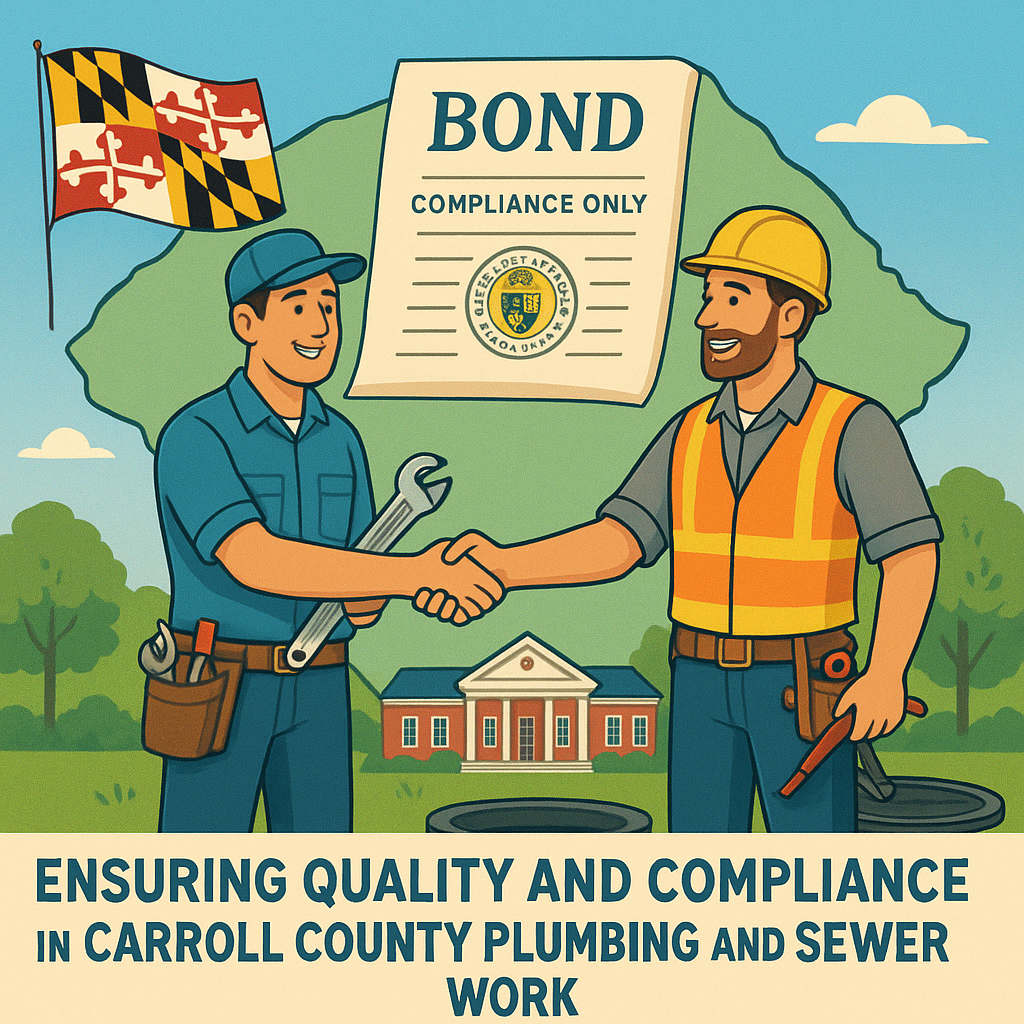
If you’re a plumber or sewer contractor working in Carroll County, Maryland, you’ve probably heard about a requirement that can feel like just another hoop to jump through: the Carroll County MD Plumbing Contractor Bond. But what if I told you it’s less about red tape and more about trust? Think of it as a promise you make to the community, backed by a financial guarantee. Let’s unpack this in plain English so you can get back to doing what you do best – keeping pipes flowing and drains clear.
What Exactly Is the Carroll County Plumbing/Utility Contractor Bond?
Simply put, this bond is a type of license bond required by the County Commissioners of Carroll County. It’s often referred to as a plumber and sewer contractor bond or a plumbing/utility contractor bond. The key phrase here is “compliance only.” This bond doesn’t guarantee that your work will be perfect or that you’ll finish a project on time (that’s a performance bond). Instead, it guarantees that you’ll follow all the local rules, codes, and ordinances that apply to your trade.
Imagine you’re a driver and your contractor license is like your driver’s license. The bond is like a special insurance policy that says, “If this driver breaks traffic laws, there’s a fund to cover the fines.” It’s there to protect the public, not you, but it also shows you’re a legitimate, accountable professional.
Who Actually Needs This Bond?
If you’re an individual or a business performing plumbing or sewer work within Carroll County, chances are this bond applies to you. It’s specifically for contractors who need a license from the county. This usually includes:
- Master plumbers and journeyman plumbers pulling permits.
- Sewer contractors installing, repairing, or maintaining sewer lines.
- Utility contractors whose work touches water, sewer, or storm systems.
Essentially, if you’re digging a trench or connecting a pipe to a public system, the county wants to know you’re on the hook for playing by the rules. Not sure if you need it? A quick call to the Carroll County permits office can clear things up, and we’ll point you in the right direction, too.
Why Does Carroll County Require a Compliance Only Bond?
You might be thinking, “Why do I need to pay for a bond just to promise I won’t do anything wrong?” It’s a fair question. The answer lies in public protection. Local governments use these bonds to create a financial cushion between a contractor’s mistake and the public’s wallet. If a contractor violates county code – maybe they dig without proper permits, damage public property, or leave a mess that the county has to clean up – there’s a pool of money available to cover the damages or fines.
It also levels the playing field. When every licensed contractor has to get bonded, it helps weed out unqualified operators. For homeowners and businesses hiring a plumber, seeing that you hold a valid Carroll County MD Plumbing Contractor Bond is a signal that you’re serious, vetted, and accountable.
How Does a “Compliance Only” Bond Actually Work?
Let’s break this down with a simple, everyday analogy. Picture a three-legged stool. The three parties involved are:
- The Obligee (Carroll County): The county officials who require the bond and hold you to the rules.
- The Principal (You, the Contractor): The person or business taking out the bond.
- The Surety (The Bond Company): The financial institution that backs your promise.
When you buy the bond, the surety company tells the county, “We believe this contractor will follow the rules. But if they don’t, we’ll pay up to the bond amount for covered violations.” Now, here’s the part that surprises many contractors: if a valid claim is paid, the surety will come to you for reimbursement. A bond is not insurance for you; it’s a credit line you’re responsible for. You pay them back for any losses, plus associated costs.
For example, say you accidentally damage a county water main while working and the county has to pay $2,000 for emergency repairs. If the county files a claim on your bond and the surety pays, you’ll owe that $2,000 back to the surety. It’s a powerful motivator to keep your work clean and your paperwork in order.
What’s the Required Bond Amount and What Does It Cost?
In Carroll County, the typical bond amount for plumbing and sewer contractors is set by the county commissioners. You’ll often see a required limit, such as $10,000 or $20,000, but you should always verify the current amount with the county because requirements can change. The good news is you don’t need to have that full amount in cash.
You pay only a small percentage of the total bond amount as a premium. For a compliance bond, this premium is often based on your personal credit and business financials. For established contractors with solid credit, the annual premium might run somewhere between $100 and $300 for a $10,000 bond. Even with less-than-perfect credit, options are available, though the rate may land a little higher. Think of it like buying a promise for pennies on the dollar.
Step-by-Step: How to Get Your Bond Quickly
Getting bonded doesn’t have to be a headache. Here’s how the process typically goes:
- Confirm your requirement. Check with Carroll County’s licensing department to know exactly what bond amount and form they need.
- Apply online or over the phone. Provide basic info about your business and, usually, your social security number for a credit check. The process is fast and secure.
- Get a quote. In many cases, you’ll see your premium instantly. For most plumbers and sewer contractors, the cost is surprisingly affordable.
- Pay the premium and receive your bond. Many surety agencies can email you the bond form right away. You’ll also get a power of attorney form that the county may require.
- File the bond with the county. Typically, you’ll submit the original bond form along with your license application or renewal. Keep a copy for your records.
Common Misunderstandings That Can Trip You Up
Because the bond world has its own language, a few things often cause confusion. Let’s clear them up right now.
“It’s the same as general liability insurance.”
Not true. General liability might pay if you accidentally break a client’s window. A compliance bond pays only when you violate county code. They are complementary but serve completely different purposes. You’ll likely need both.
“Once I buy it, I don’t have to worry about it for years.”
Check the term. Most bonds are written for one year and require annual renewal. If you let it lapse, your license could be suspended. Mark it on your calendar.
“The bond covers my workmanship.”
Again, this is a compliance bond, not a performance or workmanship guarantee. If a customer is unhappy with a soldering job and wants it redone, that’s between you and the customer – not the bond. The bond only kicks in for regulatory violations.
What Happens If a Claim Is Filed Against You?
Let’s be real: nobody wants to think about this. But understanding it removes the mystery. A claim typically starts when the county notices a violation – maybe you failed to call for an inspection, constructed something without a permit, or caused damage to public infrastructure. The county notifies the surety, who investigates. If the claim is valid, the surety pays the county up to the bond limit. Then, as we mentioned, the surety will seek reimbursement from you.
The best defense? Operate with integrity. Pull every required permit, document your communications, and build a relationship with the local inspectors. Contractors who communicate openly and fix mistakes voluntarily rarely end up with bond claims.
Keeping Your Bond and Your Business in Good Standing
Once you’re bonded, a little proactive care goes a long way. Send your renewal payment on time. Notify your bond provider if you change your business structure or address. And if you ever face a situation that could lead to a claim, talk to your surety agent early. They often have solutions that can stop a small problem before it becomes a big headache.
The Hidden Perk: Standing Out in a Crowded Market
Beyond just satisfying county hall, this bond can be a silent marketing tool. In an industry where trust is everything, proudly noting that you’re licensed and bonded sets you apart from someone working out of a pickup truck with no backing. Homeowners are more likely to hire you when they see you’ve met the county’s strict requirements. It’s a simple way to say, “I’m not going anywhere, and I stand behind my commitment to play by the rules.”
Still Have Questions? That’s What We’re Here For
Navigating bonds can feel a bit like learning a new language. But hopefully, you now see that the Carroll County MD Plumbing Contractor Bond – this compliance-only bond for sewer and utility contractors – is really a straightforward tool that protects everyone involved. It keeps the county’s infrastructure safe, it gives your customers peace of mind, and it reinforces your reputation as a pro. If you’re ready to take the next step, reach out to a specialized surety agency that understands the local Maryland market. They’ll help you get the right bond at a fair price, often in a single afternoon.