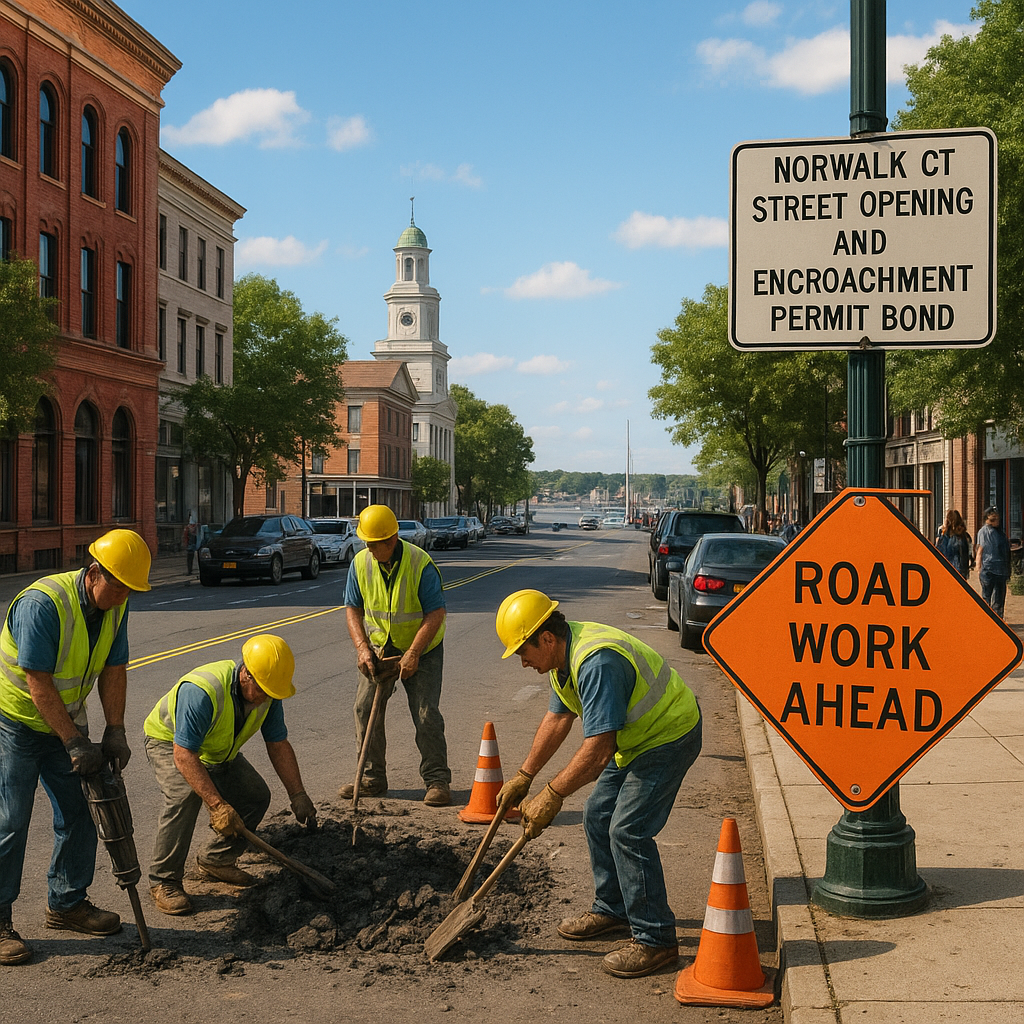
Have you ever noticed a crew cutting into a perfectly smooth road and wondered, “Who makes sure they put it back the way it was?” If you live or work in Norwalk, Connecticut, that’s exactly what the city’s street opening and encroachment permit process is designed to do. Whether you’re a contractor replacing a water line or a homeowner adding a new driveway curb cut, understanding how this permit—and the required bond—works can save you time, money, and a whole lot of headaches.
Why Permits Matter in Norwalk
Norwalk’s streets, sidewalks, and public rights-of-way aren’t just asphalt and concrete. They’re shared spaces that carry utilities, stormwater, and the daily flow of traffic. When anyone digs into the road surface, disturbs the sidewalk, or places something in the public right-of-way, the city wants a guarantee: the work will be done safely, and the area will be restored to its original condition. That guarantee comes in two parts—a permit and a bond.
Think of it like borrowing a friend’s car. You wouldn’t just take it without asking, and you’d promise to return it with a full tank and no scratches. The permit is your permission to borrow public space. The bond is your promise, backed by money, that you’ll fix any damage you cause.
What Exactly Is a Street Opening and Encroachment Permit?
Let’s break it down into two simple ideas.
A street opening permit is required any time you need to cut, excavate, or tunnel under a public street, sidewalk, or alley. This covers everything from a plumber digging to repair a sewer lateral to a utility company installing new fiber optic lines.
An encroachment permit deals with anything that extends into or occupies the public right-of-way beyond a simple cut. Think of items like dumpsters placed on the street, scaffolding over a sidewalk, a new driveway entrance, or even a sign that hangs over the walkway. If it’s privately owned but sits on public space, you need an encroachment permit.
In Norwalk, these permits are often handled together because street work frequently involves both digging and some form of long-term occupancy. The Department of Public Works (DPW) oversees the process, making sure the city’s infrastructure stays safe and functional.
The Bond: Your Financial Promise to the City
Now, here’s where the City of Norwalk CT Street Opening and Encroachment Permit Bond steps onto the stage. A bond is not insurance for you; it’s a financial guarantee for the city and its residents. If a contractor tears up a road and does a lousy patching job, the city can call on the bond to pay for proper repairs. In simple terms, the bond says, “If I don’t fix this right, the money is here to fix it for me.”
This is incredibly important because shoddy restoration can lead to potholes, tripping hazards, and expensive water main breaks. By requiring a bond, Norwalk protects taxpayers from having to foot the bill for someone else’s sloppy work.
How the Bond Protects Everyone
Let’s imagine a real scenario. A homeowner hires a contractor to trench across a residential street so they can install a new gas line. The contractor gets the permit and the bond. The work is done, but a few months later, the trench sinks, creating a bone-jarring dip and a puddle every time it rains. The homeowner calls the contractor, but they’ve disappeared. Now what? The city can step in, make a claim against the bond, hire a qualified paving crew, and restore the road properly. The homeowner’s neighborhood stays safe, and the bond covers the cost.
Who Needs a Street Opening and Encroachment Bond in Norwalk?
The short answer? Almost anyone performing work in the public right-of-way that goes beyond simple landscaping. Here are some common groups:
- Utility contractors connecting gas, water, electric, or telecommunications lines.
- Plumbers and drain layers repairing or replacing sewer and water service laterals.
- Excavation and paving companies doing curb cuts, driveway aprons, or road widening.
- General contractors managing projects that require sidewalk closures, material storage on the street, or crane placements.
- Homeowners acting as their own contractor for a major project. If you’re not using a licensed contractor who already carries a bond, you may need to secure one yourself.
If you’re unsure, a quick call to the Norwalk DPW can clarify before you break ground. It’s always better to ask than to face a stop-work order later.
How Much Does a Norwalk Street Opening Bond Cost?
This is the question on everyone’s mind. The bond amount—the total coverage required by the city—varies based on the scope of work. A small residential sewer repair might only need a $5,000 bond, while a major utility project could require a $50,000 bond or more. But here’s the good news: you don’t pay the full bond amount upfront. You pay a small percentage, called the premium.
For most contractors with decent credit, the premium is just 1-3% of the bond amount. So that $5,000 bond might cost you only $100 to $150 for a one-year term. For larger bonds, the premium could be a bit higher depending on the applicant’s financial standing. Think of it like paying a small fee to borrow a much larger promise.
Several factors influence your exact cost:
- Bond amount required by the city – This is non-negotiable and set by the permit office.
- Personal or business credit score – Better credit almost always means a lower premium.
- Your experience and claims history – A long track record of clean work may help.
- The bond’s duration – Permits often require the bond to remain in force for a set period after completion, sometimes 1-2 years, to cover the warranty on the restoration.
It’s a small price to pay for the right to work in the public way, and it significantly reduces your financial risk compared to posting a cash deposit with the city.
What’s the Difference Between a Bond and a Cash Deposit?
Some municipalities offer a choice: you can deposit cash or a certified check for the full amount. But who wants to tie up thousands of dollars in city coffers? A surety bond keeps your working capital free for tools, materials, and payroll. It’s a smarter cash flow move for any business.
Navigating the Permit and Bond Process Step by Step
Getting your permit and bond in order doesn’t have to feel like untangling a giant knot. Most successful applicants follow a clear path.
1. Talk to the DPW first. Before you draw up detailed plans, visit or call the Norwalk Department of Public Works Permit Office. Describe your project. They’ll tell you exactly what permits you need and what bond amount they require. Every job is a little different, so this step prevents expensive do-overs.
2. Gather your documents. You’ll typically need a site plan showing the work area, traffic control plans if lanes are closed, proof of insurance, and a contractor’s license (if required). Having these ready speeds everything up.
3. Secure your bond. You can’t pull the permit without proof of bond. Work with a reputable surety bond agency familiar with Connecticut requirements. Provide the bond amount the city specified, your business details, and answer a few underwriting questions. Many agencies can issue the bond the same day.
4. Submit everything to the city. Take your application, supporting documents, and the original bond form to the permit office. Pay the permit fee—which is separate from the bond premium—and wait for approval. Simple residential jobs might get approved quickly, while complex projects may need engineering review.
5. Do the work—and document it. Once approved, follow all city specifications for backfill, compaction, and temporary or permanent patch. Take photos. Norwalk often requires a final inspection. If everything passes, great! If not, your bond is still in place until the city releases it.
6. Close out the permit. After the final inspection and any required waiting period, request a bond release. Never assume the bond cancels automatically. Keeping records of the release protects you from old claims.
Common Pitfalls to Avoid
Even experienced contractors can trip over small details. Here’s how to stay on solid ground.
- Forgetting the encroachment part. You’ve got the street opening permit, but if your equipment or materials are sitting on the sidewalk for three days, you’re likely encroaching. Get both permits when your work extends beyond a simple cut.
- Letting the bond lapse too soon. City ordinances often require the bond to remain active for a maintenance period—commonly 12 to 24 months after completion. Canceling early is an easy way to annoy the city and risk a claim.
- Ignoring traffic control requirements. Norwalk cares deeply about pedestrian and driver safety. Failing to submit an approved traffic control plan can stall your permit for weeks.
- Assuming your subcontractor has you covered. If you’re the primary contractor pulling the permit, the bond is your responsibility. Verify that any subs are properly covered, and don’t rely on their bond unless the city has agreed in writing.
Where Do I Find More Information?
The City of Norwalk’s official website is your best resource. The Department of Public Works publishes permit applications, fee schedules, and construction standards. If you prefer talking to a human, a quick visit to the DPW office on Main Street can clear up any confusion. Getting the right info straight from the source prevents costly misunderstandings.
Wrapping It All Up
Understanding the Norwalk CT street opening and encroachment permit process is really about respecting our shared spaces. The city’s requirements aren’t there to make life difficult—they’re there to make sure that when a road is cut open, it gets put back together the right way. The bond is the backbone of that promise, giving the community peace of mind that repairs will last.
So, whether you’re laying a new sewer line under East Avenue or just putting a dumpster in front of a business on Washington Street, take the time to get your paperwork in order. A solid permit and a properly placed bond mean you can focus on the job at hand, not on angry neighbors or city fines. And when the work is done and the pavement is smooth again, you’ll drive away knowing you left Norwalk just a little bit better than you found it.