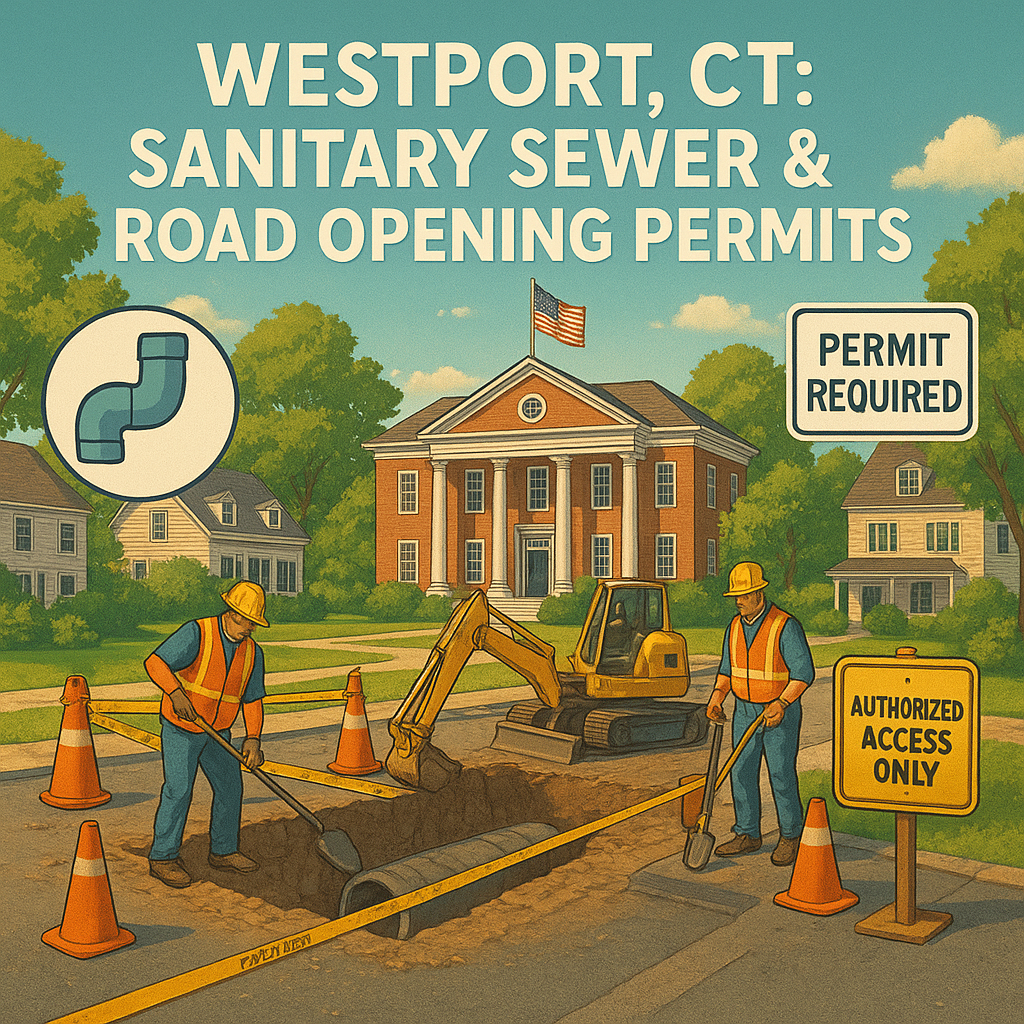
What Does It Mean to Connect to a Public Sewer in Westport?
So, you’ve decided to upgrade an old septic system or develop a new property in Westport, Connecticut. Maybe you’re adding a home addition, or you’re a contractor preparing to break ground. Either way, tying into the town’s sanitary sewer is often the cleanest, most reliable choice. But before a single shovel hits the dirt, there’s a process you need to follow — and it starts with permits and a special kind of financial guarantee called a sanitary sewer connection or road opening permit bond.
While that term might sound like a mouthful, it’s actually a pretty straightforward concept. Think of it as a promise you make to the Town of Westport: “I’ll do the work correctly, restore any pavement I disturb, and follow all the rules. If I don’t, you have financial recourse.” Let’s walk through what this all means, why it matters, and how you can navigate the requirements without pulling your hair out.
Why Westport Requires a Permit for Sewer Connections
Westport takes its infrastructure seriously. The roads, sidewalks, and underground pipes are shared assets that thousands of people rely on every day. When a homeowner or contractor digs into a public road or the town’s right-of-way to connect to the sanitary sewer, it creates a potential risk. A poorly patched trench could become a pothole. A misaligned pipe could cause leaks or backups. A sloppy restoration could shorten the life of the pavement, costing everyone money.
To prevent these headaches, the Town’s Public Works and Engineering departments require a permit. It’s not just about paying a fee — it’s about proving you understand the technical specifications, you’re qualified to do the work, and you’re willing to stand behind it. The permit process ensures that every sewer connection or road cut meets Westport’s standards for materials, workmanship, and safety.
Where the Bond Comes Into Play
Now, you might wonder: “If I have a permit, why do I also need a bond?” Great question. A permit gives you permission; the bond provides accountability. Picture a rental security deposit. Your landlord trusts you to leave the apartment in good shape, but the deposit is there just in case. A Sanitary Sewer Connection or Road Opening Permit Bond works the same way for Westport’s public spaces.
When the Town issues a permit for work in a public right-of-way — whether it’s connecting a house to the sewer main, repairing a lateral line, or opening a street for utility work — they require the permittee (that’s you or your contractor) to post a surety bond. This bond guarantees that if the work doesn’t meet specs, or if the area isn’t restored properly, the Town can tap into the bond to cover the cost of fixing it. No lengthy legal battles, no chasing after contractors who’ve moved on to the next job.
Breaking Down the Bond: How It Actually Works
This isn’t an insurance policy you buy and forget. A surety bond involves three parties:
- The Obligee: The Town of Westport, which requires the bond and receives the protection.
- The Principal: You — the homeowner, contractor, or developer doing the work.
- The Surety: The bonding company that backs your promise with financial muscle.
If you fail to fulfill your obligations, the Town can make a claim on the bond. The surety would then pay out up to the bond amount, but here’s the catch: you’ll eventually have to reimburse the surety for every penny. Bonds aren’t a “get out of jail free” card. They’re a tool that keeps everyone honest, and they protect the community’s investment in its streets and sewer system.
Typical Bond Amounts and Cost
So, how much bond coverage does Westport ask for? The amount can vary depending on the scope of the work. A small residential sewer connection might only require a bond of $5,000 or $10,000, while a larger road-opening project for a subdivision could demand $25,000, $50,000, or more. The exact requirement will be spelled out in your permit approval documents. Always check with the Westport Engineering Division or Public Works for current minimums.
Here’s some good news: you don’t need to have that full bond amount in cash. You pay a small percentage as a premium — often 1% to 3% of the bond value — to the surety company. For a $10,000 bond, your out-of-pocket cost might be as low as $100 to $300 if your credit is solid. The bonding company evaluates your personal or business credit, financial stability, and sometimes experience. Even with slightly rocky credit, many sureties offer programs that can help, though the premium might be a bit higher.
Do Homeowners Need a Bond, or Just Contractors?
This is a common point of confusion. In many Connecticut towns, the permit itself is issued to the party responsible for the work. If you’re a homeowner hiring a licensed, insured, and bonded contractor, that contractor will likely pull the street opening permit and provide their own bond. However, some Westport homeowners choose to manage projects themselves. If you’re acting as your own general contractor, you might have to obtain the permit and the bond directly. Before you start, ask the Town’s engineering department exactly who must hold the bond. It can save you a lot of back-and-forth.
Step by Step: Getting Your Sewer Connection Permit and Bond
Let’s make this practical. Here’s a typical path when you need to connect to the sanitary sewer or open a road in Westport:
- Contact the Westport Engineering Department. Explain your project. They’ll tell you what permits are needed, what the bond amount is, and which technical specs you must follow.
- Prepare your plans. You’ll likely need a site plan showing where the connection occurs, how the trench will be restored, and details on traffic control if the road will be partially closed. A licensed professional often helps with this.
- Submit the permit application. Along with your plans, pay the required permit fee. The Town reviews everything for code compliance.
- Secure the surety bond. Once you know the bond amount, contact a surety bond agency or your insurance broker. Provide the precise bond form language the Town requires — Westport may have a specific form for a Right of Way Bond or Road Opening Permit Bond. The agency then quotes you a premium and issues the bond.
- File the bond with the Town. The original signed bond is delivered to the Town. They’ll hold it until the project is finished and inspected.
- Perform the work. Follow the approved plans meticulously. Don’t cut corners on pavement patching or compaction, because the final inspection is thorough.
- Request final inspection and bond release. When everything’s done and passes inspection, the Town officially releases your bond. That means the bond’s obligation ends, and you’re in the clear.
What Happens If Something Goes Wrong?
No one plans for a road cut to sink or a sewer connection to leak, but mistakes happen. Maybe the asphalt settles into a pothole, or the trench wasn’t backfilled properly. The Town will notify you to fix the issue. If you refuse or disappear, they can file a claim against your bond. The surety then investigates and, if the claim is valid, pays the Town up to the bond’s limit. After that, the surety will come to you for repayment — plus potential legal costs. It’s a powerful motivator to do the job right the first time.
Why “Right of Way” Bonds Protect Everyone
You might see the terms “Right of Way bond” or “Right of Way permit bond” used interchangeably with road opening bonds in Westport. They all serve the same purpose: safeguarding the public’s shared space. A right of way includes not just the paved road, but the grass strip, sidewalk, and sometimes the area where utility lines run. Any work in these zones requires permission and, more often than not, a bond. It’s a system that has kept Westport’s neighborhoods safe, attractive, and functional for decades.
Practical Tips to Smooth the Process
- Start early. Bond applications can take a day or two if things are straightforward, but give yourself at least a week. If you have credit quirks, the process might take longer as the surety reviews your file.
- Use a local surety agent. Someone familiar with Westport’s bonding requirements can get the exact form right and avoid delays. They know the ins and outs of Town Hall expectations.
- Keep the bond active until official release. Never assume the bond is expired just because you finished the work. Wait for the formal inspection and release letter.
- Ask about a blanket bond. If you’re a contractor who regularly works in Westport, you may be able to secure an annual blanket bond that covers multiple small projects, saving time and paperwork.
Frequently Asked Questions from Westport Residents
Is a sanitary sewer connection bond the same as a road opening permit bond? They are often combined or closely linked. The bond covers restoration of any public property disturbed during the connection, including roads, curbs, and sidewalks. A “road opening permit bond” is simply a broader term.
Can I use my contractor’s bond, or must I have my own? If your contractor pulls the permit and they operate with a blanket bond or project-specific bond that names them as principal, that generally satisfies the Town. You, as the homeowner, typically do not need to double-bond. Just verify the contractor’s paperwork is on file with Westport.
What if my project is entirely on private property, with no street cutting? A right-of-way bond usually isn’t required. However, the sanitary sewer connection itself still requires a plumbing and sewer permit, and you must follow town codes. Always check with the building department to confirm.
Embracing the Process for a Better Community
It’s easy to see permits and bonds as bureaucratic red tape. But in a town like Westport, where coastal beauty meets a strong sense of community, these rules protect what we all value. They keep our roads smooth, our sewer mains flowing reliably, and our public rights-of-way safe for walkers, bikers, and drivers. The next time you see a neat patch of fresh asphalt where a house was connected to the sewer, remember there was a bond behind it — a quiet promise that everything would be restored just right.
Whether you’re a first-time homeowner or a seasoned contractor, understanding the sanitary sewer connection and road opening permit bond requirements in Westport, CT, puts you ahead of the curve. Plan ahead, ask questions, and partner with professionals who know the local rules. That way, you can focus on the exciting parts of your project — and leave the worry behind.