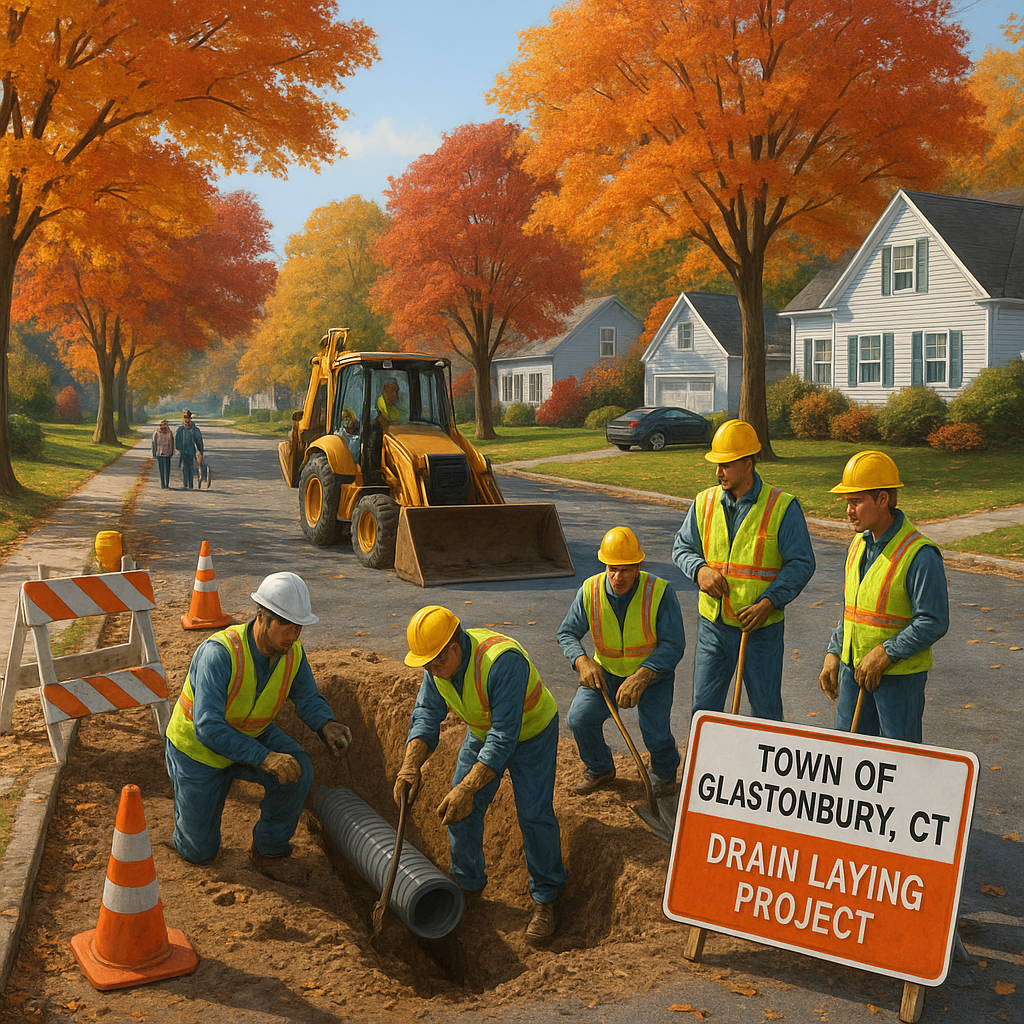
If you’re a contractor digging into a drainage project in Glastonbury, Connecticut, you might have stumbled across a requirement that sounds a bit like insider lingo: the Drain Laying Bond. Don’t let the name intimidate you. Think of it as a promise you make to the town — a promise that after you open up the ground, you’ll put everything back the way you found it, or even better.
At its core, the Glastonbury CT Drain Laying Bond is a public right of way bond. It’s a safety net for the community, ensuring that when you install, repair, or replace a drain line under a sidewalk, street, or any public space, the work won’t leave behind a mess or a hazard. Let’s break down what this bond really is, why it exists, and how it fits into your next project.
What in the World is a Drain Laying Bond?
Picture this: a homeowner needs a new storm drain connection to stop their basement from flooding every spring. You, as the drain layer, need to cut through a section of the public right of way — maybe a sidewalk panel or a strip of asphalt on a quiet residential street. The town says, “Sure, go ahead, but first, we need a little insurance.” That insurance comes in the form of a surety bond.
A Drain Laying Bond is a three-party agreement. You, the contractor (the principal), the town of Glastonbury (the obligee), and a surety company (the guarantor). If you fail to restore the public right of way correctly — say the patch of asphalt sinks after two months or a curb remains cracked — the town can make a claim on your bond to cover the cost of fixing it. It’s not insurance for you; it’s protection for the public.
Why Glastonbury Requires This Bond
The town of Glastonbury, like many Connecticut municipalities, takes its infrastructure seriously. Streets, sidewalks, and public utility strips are shared resources. If every drain layer left behind a wobbly manhole cover or a poorly compacted trench, the town would quickly become a patchwork of potholes and trip hazards. The bond requirement enforces accountability.
Simply put, the bond says: “You break it, you buy it… or at least you fix it right.” And if you don’t, the surety steps in to pay for repairs, then comes after you for reimbursement. That’s a key point — the contractor is always ultimately responsible.
Who Needs This Bond in Glastonbury?
Not every landscaping job or home renovation project triggers this requirement. You’ll typically need a Glastonbury CT public right of way and drain laying bond if:
- You’re a licensed drain layer performing work within the town’s right of way.
- Your project involves connecting a private drain to a public sewer or stormwater system.
- You’re excavating any part of a street, sidewalk, or public easement to install, maintain, or repair a drainpipe.
Think of it as a gate pass. Without the bond, you likely can’t pull the permit to start digging. The town wants to know up front that you’re bonded, which signals you meet certain financial and professional criteria.
A Real-World Example
Imagine you’re fixing a collapsed culvert under a driveway apron that connects to the town’s drainage system. That apron sits inside the public right of way. You break ground, replace the rusted corrugated pipe, backfill the trench, and pour new concrete. Six months later, the concrete cracks because the base wasn’t compacted enough. The homeowner calls the town. Instead of chasing you down, the town files a claim against your bond. The surety investigates, and if the claim is valid, pays for the fix — then looks to you for that money. It keeps the process clean and protects the homeowner, the town, and your reputation in the long run.
How the Drain Layer Bond Protects the Public Right of Way
The public right of way isn’t just a strip of grass; it’s the walkway your kids use to reach the school bus, the street bicycles share with cars, the underground network of utilities. When a drain layer disturbs this area, several things can go wrong:
- Improper compaction leading to settlement and depressions.
- Damaged utilities like water or gas lines.
- Poor surface restoration creating tripping hazards on sidewalks.
- Drainage issues that cause water to pool on the road.
The bond covers the cost of correcting these problems if the contractor doesn’t. So the town isn’t stuck using taxpayer dollars to fix a private contractor’s mistake. That’s the beauty of the system — the cost of negligence shifts to the responsible party.
The Process of Obtaining a Drain Laying Bond in Glastonbury
Getting bonded isn’t as complicated as it sounds, especially if you work with a surety bond agency familiar with Connecticut requirements. Here’s the typical path:
1. Check the Town’s Requirements
Start with the Town of Glastonbury Engineering Department or the permit office. They’ll tell you the exact bond amount needed. Often, the bond amount is a fixed dollar value (say $5,000 or $10,000), but it could scale based on the project scope. Make sure you have a clear, written requirement.
2. Contact a Surety Bond Provider
You’ll apply for the bond through a licensed surety company. The application will ask about your business’s financial health, experience, and sometimes credit history. Because drain laying bonds are generally smaller and less risky, approval is often quick — sometimes same-day.
3. Pay the Premium, Not the Full Amount
One huge misconception is that you need to cough up the whole bond amount. In reality, you pay a premium, usually a small percentage of the bond total. If your bond is $10,000, your premium might be $100 to $300 for the year, depending on credit and underwriting. That’s a lot more manageable.
4. File the Bond with the Town
Once you have the bond documents, you’ll submit them to the town as part of your permitting package. Keep a copy for your records, and note the expiration date. Most bonds cover you for one year, after which you’ll need to renew if your permit or ongoing work extends beyond that.
Common Questions About the Glastonbury Drain Laying Bond
Is This the Same as a Drain Layer License?
No. A license typically proves your competence — that you know how to lay drains correctly. The bond is a financial guarantee. Glastonbury may require both. The license shows you’re qualified; the bond shows you’re accountable.
What Happens If a Claim Is Filed Against My Bond?
First, don’t panic. A claim doesn’t automatically ruin your business. The surety investigates. If the town’s claim is valid and you genuinely failed to restore the right of way, the surety pays the town, then you must reimburse the surety. It’s like having a co-signer on a loan — if you don’t pay, they do, but they’ll come after you.
If the claim is minor, your best move is to fix the problem immediately and communicate with the town. Often, the bond claim never gets fully processed if you show good faith and repair the issue.
Can I Get a Bond with Less-Than-Perfect Credit?
Absolutely. Because these bonds are relatively low risk, many surety companies offer programs for contractors with challenging credit. You might pay a slightly higher premium, but it’s still very achievable. Don’t assume you’re locked out — shop around.
The Hidden Value of Being Bonded
Beyond satisfying the town’s red tape, carrying a drain laying bond has a subtle marketing perk. When homeowners see you’re bonded, they feel safer. It tells them you’re professional, vetted, and prepared to stand behind your work. It can set you apart from a fly-by-night operator who cuts corners and disappears. You become the reliable choice.
And let’s face it — working in a public right of way is a privilege, not a right. The town is trusting you with community property. The bond is simply a handshake made official, proving you respect that trust.
Quick Tips for a Smooth Bonding Experience
- Start early. Don’t wait until the day before your permit appointment. Give yourself a few business days to gather paperwork and get approval.
- Work with a specialist. Find a surety agency that understands Connecticut municipal bonds. They’ll know Glastonbury’s idiosyncrasies.
- Keep your bond current. An expired bond can halt your project faster than a summer thunderstorm. Mark your calendar for renewal.
- Do the job right the first time. A bond is a backstop, not a shortcut. Proper compaction, care around buried utilities, and meticulous surface restoration prevent claims and protect your bottom line.
Wrapping It All Up
The Glastonbury CT Drain Laying Bond might seem like just another bureaucratic checkbox, but it’s rooted in a simple idea: if you’re going to work in the public’s space, you leave it as good as you found it. For drain layers, it’s a cost of doing business that ultimately shields the community, preserves infrastructure, and elevates your professional standing.
Next time you’re preparing a project that touches a Glastonbury sidewalk or street, remember that bond isn’t your enemy. It’s the tool that lets you dig in with confidence, knowing you’ve got the support, the accountability, and the town’s blessing to get the job done right.
And if you’re still scratching your head about the amount, the paperwork, or where to even start, reach out to a friendly surety bond agent. They’ll help you navigate the process as smoothly as water flowing through a properly pitched drainpipe.