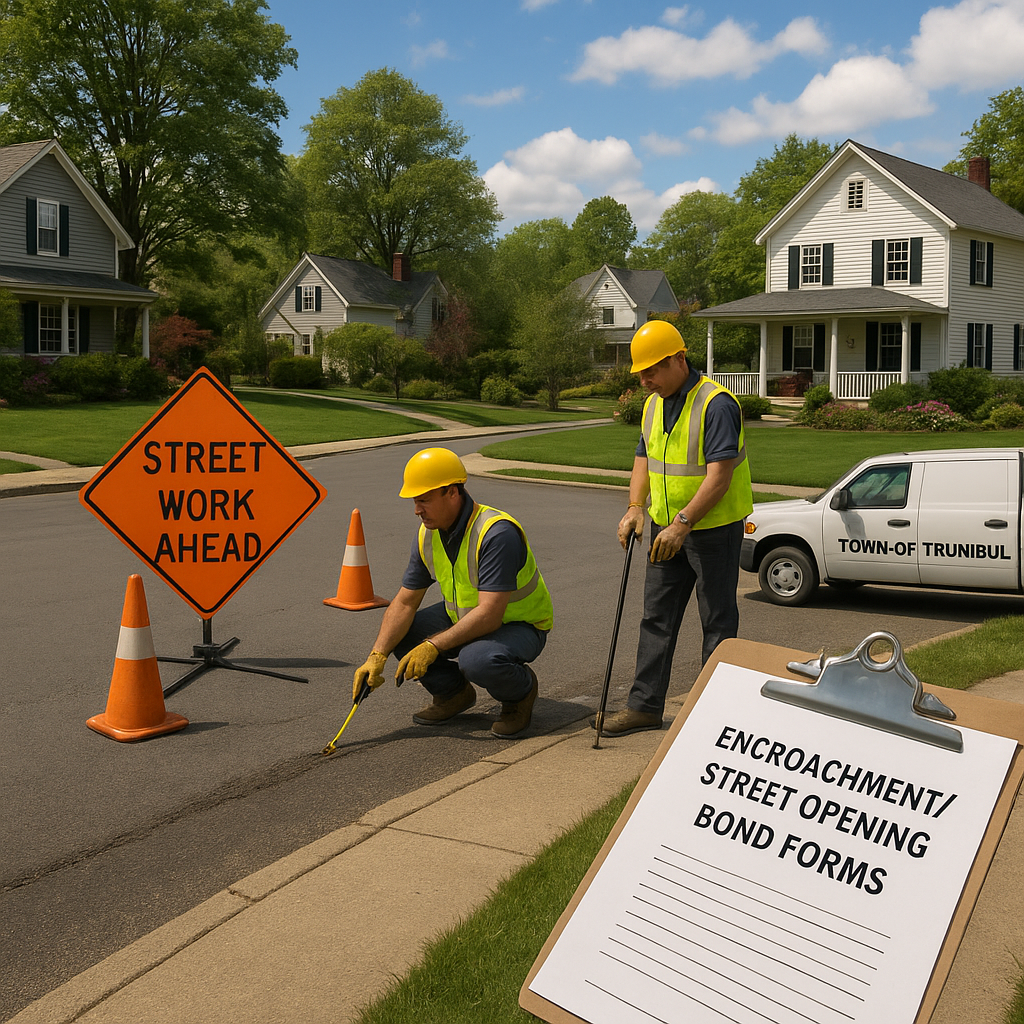
So, you’re planning a project in Trumbull, Connecticut. Maybe you’re a contractor getting ready to repave a driveway that crosses a sidewalk, or a homeowner who needs to connect a new water line that runs beneath a quiet neighborhood street. You’ve pulled your permits, lined up your crew, and then someone at Town Hall mentions an “encroachment and street opening bond.” Suddenly, you’re scratching your head. What exactly is that, and why do you need one? Don’t worry. You’re not alone. Let’s walk through it together, plain and simple.
What is an Encroachment and Street Opening Bond, Really?
At its core, this bond is a promise. But it’s a promise with financial teeth. Think of it like a security deposit you might give a landlord when renting a car. The rental company trusts you’ll bring the car back in good shape, but they hold a little money just in case. Here, the Town of Trumbull is the one handing you the keys—specifically, the keys to their public property. If your work involves cutting into a town street, sidewalk, or even a tree belt, you’re encroaching on public land. The bond guarantees you’ll restore that space to its original condition, or better, once the job is done.
Behind the scenes, this isn’t a pile of cash you hand over and wait to get back. It’s a surety bond, which means three parties are involved: you (the contractor or homeowner), the town, and a bonding company. The bonding company essentially vouches for you. If you fail to patch that road properly or leave a dangerous ditch behind, the town can make a claim on the bond to pay for fixing it. It’s a safety net that protects every resident who drives, walks, or cycles through Trumbull.
Why Does Trumbull, CT Require This Bond?
Towns don’t just ask for paperwork to make your life difficult—though it can feel that way some mornings. Trumbull’s streets, curbs, and sidewalks belong to everyone. When a private party digs them up, there’s a real risk of shoddy repairs, unexpected settlement, or even just forgetting to repaint the crosswalk lines. The bond requirement puts a financial motivator in place. It says, “We’re letting you use our shared space, and we trust you’ll leave it as you found it.”
Imagine your neighbor gets a new sewer line installed, and the contractor fills the trench but rushes the paving. Six months later, that patch sinks into a crater that swallows a car tire. Without a bond, the town might have to spend taxpayer dollars to fix it. With the bond, there’s a dedicated pot of money available to step in and make things right. It keeps the burden off the community and squarely on the shoulders of the people doing the work.
Who Actually Needs One?
This requirement pops up more often than you’d think. It’s not just for massive construction companies. You might need a Trumbull street opening bond if you are:
- Installing or repairing a driveway approach that crosses a town sidewalk.
- Tapping into a public water or sewer main for a new connection.
- Running underground electrical or gas lines beneath a road.
- Opening the street to repair a private drainage issue.
- Working on landscaping that disturbs the public right-of-way, like grading near a curb.
In short, if a shovel, backhoe, or saw cuts into any surface owned by the Town of Trumbull, you’re almost certainly in bond territory. The engineering or public works department will let you know during the permit process, but it’s wise to plan ahead. Nobody likes a surprise delay when the machines are already on site.
How Does the Bonding Process Work?
Getting an encroachment bond isn’t as daunting as it sounds. You won’t have to decipher legal jargon alone. Let’s break it down into bite-sized steps.
Step 1: Determine Your Bond Amount
The town will calculate how much the bond needs to cover. They look at the size of the excavation, the type of road, and the estimated cost of a professional repair. It’s not a random number. The goal is to have enough funds to fully restore the public area if you disappear overnight. A small utility cut might require a $5,000 bond, while a large street opening could push that figure much higher.
Step 2: Secure the Bond from a Surety Company
You don’t need to freeze your own cash. Instead, you purchase a bond through a licensed surety agent, much like buying an insurance policy. The premium you pay is a small percentage of the total bond amount—often just 1% to 3% for applicants with decent credit. The surety company then issues the bond form. You’ll bring that official document back to the town as part of your permit package.
Step 3: Complete Your Work with Care
Now for the important part. You perform the street opening or encroachment exactly as permitted. Follow all of Trumbull’s specifications for backfilling, compaction, and temporary patching. Don’t cut corners. The town will likely inspect your work at various stages, so open communication is your friend.
Step 4: The Release Period
After you finish, the town doesn’t cancel the bond immediately. There’s typically a waiting period—often one year, sometimes two—to see how the repair holds up through freeze-thaw cycles and regular traffic. If everything remains solid and nothing sinks or cracks, the bond is released. At that point, your obligation ends, and you can close the book on the project.
How Much Does a Trumbull Street Opening Bond Cost?
Let’s talk dollars and cents. You’re not writing a check for the full bond amount. The actual out-of-pocket cost is the premium. For example, if the town requires a $10,000 bond and your rate is 2%, you’ll pay just $200. That’s a small price for peace of mind. Some contractors build this cost right into their bid to a homeowner, so you might never even see it as a separate line item.
Keep in mind that credit history can tweak the premium. Strong credit means lower rates. Even with some dings on your credit, special programs exist to help you get bonded. The key is working with a surety professional who understands Connecticut municipal requirements. They can shop around so you don’t overpay.
What Happens If the Repair Fails?
Nobody wants a bond claim, but life happens. Maybe a subcontractor used the wrong soil mix. Perhaps a brutal winter opened up a pothole the size of a pizza box. If the town inspects and finds the restoration wanting, they’ll first give you a chance to fix it yourself. That’s always the best route. It preserves your reputation and avoids a formal claim.
If you can’t or won’t make the repair, the town will call on the bond. The surety company pays the town the cost to hire another contractor. Then the surety comes back to you for reimbursement. In this way, the bond is not insurance for you—it’s protection for Trumbull. The financial responsibility ultimately lands in your lap, so doing the job right the first time is the smartest move.
Tips for a Smooth Bonding Experience in Trumbull
A little preparation goes a long way. Here’s how to keep your project on track and your blood pressure low.
- Talk to the town early. Before you start digging, visit the Trumbull Engineering Department. Ask about their specific bond form and current requirements. Regulations can shift, and you want the latest info.
- Line up your bond before the permit. The bond is often a prerequisite. Having it ready shows you’re serious and keeps your timeline moving.
- Follow the specs to the letter. Trumbull publishes standards for street openings, from the depth of gravel base to the type of asphalt. Print them. Live by them. A small detail skipped today can become a big headache during the release inspection.
- Take “before” photos. Document the pre-existing condition of the sidewalk, curb, and road. If a crack was already there, you’ll have proof it wasn’t your fault. This simple habit has saved countless contractors from unfair blame.
- Keep the bond active until it’s formally released. Don’t just assume the clock ran out. File the necessary paperwork with the town when the maintenance period ends. An expired bond that wasn’t officially released can still cause confusion down the line.
Seeing the Bigger Picture
It’s easy to view bonds as another layer of bureaucratic red tape. But step back for a moment. This requirement is part of what keeps Trumbull’s neighborhoods safe, walkable, and attractive. Every time a street opening is repaired correctly, with proper compaction and matching pavement, the whole community benefits. No potholes surprising cyclists. No sunken trenches rattling your car’s alignment. The encroachment bond drives accountability, and that’s something we can all appreciate.
Think of it as a team effort. The town sets the rules to protect public property. You bring the skills to do the work. The surety company stands behind your promise. The residents get smooth roads and safe sidewalks. When all three pieces click, even a messy construction project can have a tidy ending.
Ready to Start Your Project?
Whether you’re a contractor bidding on a Trumbull job or a homeowner finally tackling that drainage fix, don’t let the bond requirement intimidate you. It’s a well-oiled part of doing business in Connecticut. Grab the specs, crunch the bond cost into your budget, and move forward with confidence. A town that cares about its infrastructure is a town that will be around for generations—and your careful work, backed by a solid bond, will play a small but meaningful role in that story.
And if you’re still unsure where to begin, a quick call to a local surety bond agency can clear up any fog. They’ve walked hundreds of folks through this exact process. You’ll be on the other side with a permit in hand, a shovel in the ground, and a much clearer understanding of what those words “encroachment bond” actually mean.