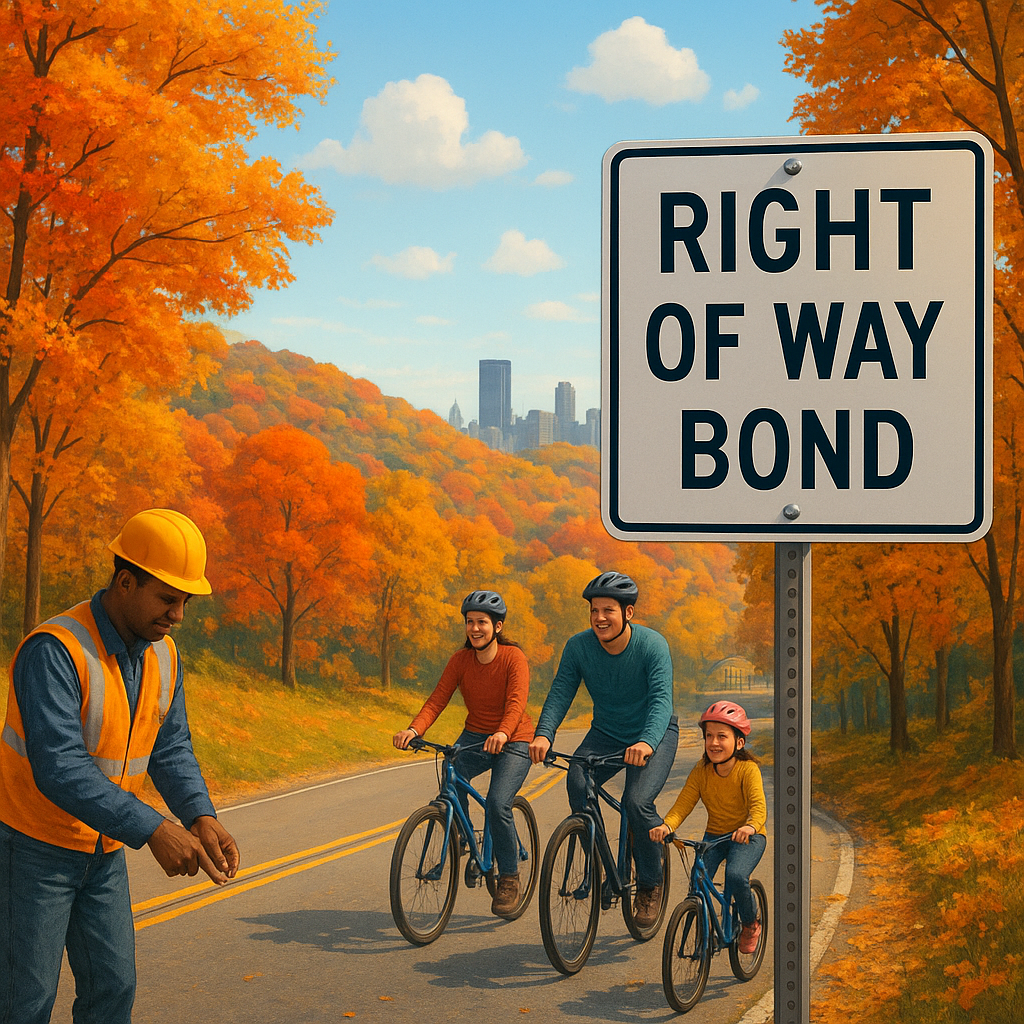
So, you’ve got a project that requires digging into a public street, sidewalk, or right-of-way area in Allegheny County, Pennsylvania. Maybe you’re a contractor replacing a water line, a utility company installing fiber optic cable, or a homeowner putting in a new driveway that crosses the sidewalk. You’ve probably been told you need something called a “Right of Way Bond.” If that phrase makes your head spin a little, don’t worry. You’re in the right place. Let’s unpack everything you need to know, using simple language and zero confusion.
What Exactly Is a Right of Way Bond in Allegheny County?
Think of a Right of Way Bond as a financial promise. It’s a three-party guarantee between you (the contractor or permit applicant), the county (Allegheny County), and a surety company. The bond tells the county, “I promise to do the work correctly and restore the public space to its original condition. If I don’t, there’s money set aside to fix it.”
In plain English, this isn’t insurance for your tools or your crew. It’s protection for the public and the county. If you dig up a street to lay a pipe and then leave the pavement a bumpy mess, or if a sidewalk repair crumbles after a month, the county can use the bond to hire someone else to make it right. You’re pledging to follow all the rules set by Allegheny County’s Department of Public Works or the relevant municipal authority.
Why Does Allegheny County Require This Bond?
Allegheny County takes its public infrastructure seriously. Roads, sidewalks, curbs, and utility strips belong to everyone. If every contractor just cut into asphalt and did a slapdash job putting it back, our commute would feel like an off-road adventure. The bond ensures that the entity doing the work has both the skill and the financial backing to complete the restoration properly.
Here’s the core idea: public safety and longevity. A poorly restored trench can sink over time, creating hazards for drivers, cyclists, and pedestrians. The bond is your way of saying, “I stand behind my work long after I’m gone from the job site.”
Who Needs to Get One?
Not every little project triggers the need for a bond, but many do. You’ll typically need an Allegheny County Right of Way Bond if you are:
- A general contractor opening a trench to connect sewer, water, or gas lines.
- A utility company installing or repairing underground cables or pipes.
- A paving company doing work that goes beyond the property line into the public right of way.
- A homeowner acting as your own contractor for a major curb cut or drainage installation that affects the street or sidewalk.
When you apply for a right-of-way permit from Allegheny County, the reviewing department will tell you if a bond is required and for how much. Sometimes the bond amount is determined by the scale of the excavation, the traffic volume on the road, or the length of the disturbance.
How Does a Right of Way Bond Actually Work?
Let’s break this down with a relatable analogy. Imagine you borrow a neighbor’s pristine lawnmower. You promise to return it clean and working perfectly. Your other neighbor, a trusted mutual friend, holds $500 of your money. If you bring the mower back caked in mud and broken, the mutual friend gives that $500 to your neighbor for repairs. If you return the mower in great shape, you get your money back. The bond works in a similar way — just with legal paperwork instead of a cash deposit.
There are three parties in every bond:
- The Obligee – Allegheny County. They require the guarantee.
- The Principal – You, the contractor or permit holder. You’re doing the work.
- The Surety – The company backing your promise financially.
If you fail to complete the restoration according to county specifications, the county can file a claim against the bond. The surety will investigate. If the claim is valid, the surety pays out up to the bond amount. And here’s the part people sometimes forget: you have to pay the surety back for every cent they paid on your behalf. A bond is not an insurance policy that covers your mistakes — it’s a credit line you’re responsible for.
How Much Does an Allegheny County Right of Way Bond Cost?
You won’t pay the full bond amount. Instead, you pay a small percentage called the premium. For most right-of-way bonds, premiums range from 1% to 3% of the total bond value, depending on your credit score and financial history. So, if the county requires a $20,000 bond, you might pay as little as $200 to $600 for a one-year term.
Yes, your personal or business credit matters here. A contractor with strong credit usually secures the best rates. If your credit has taken a few hits, you still have options — the premium might be a bit higher, but specialized surety agencies can help you get bonded when others turn you away.
The Application Process: Easier Than You Think
Securing this bond doesn’t have to involve towering stacks of paper. Most agencies offer a straightforward, often digital process. Here’s a typical path:
- Gather your permit details. Know the exact bond amount the county is asking for.
- Fill out a short application. You’ll provide basic business and personal information, and possibly consent to a credit check.
- Get a quote. Often within minutes for smaller bonds.
- Pay the premium and receive your bond form. The surety will issue a document that you sign and submit to the county along with your permit paperwork.
Many contractors get tripped up waiting until the last minute. Plan ahead, especially if the project has a tight start date. A quick phone call to a surety bond specialist can clarify everything and keep your timeline intact.
Common Pitfalls and How to Avoid Them
Even experienced crews can stumble over bond-related details. Stay ahead of these common issues:
- Underestimating the bond duration. Restoration warranties often last a year or more. Your bond must remain active until the county officially releases it. Letting a bond lapse before final inspection can stall your project or trigger fines.
- Confusing bonding requirements across municipalities. While Allegheny County has its own rules, individual boroughs or townships within the county might impose additional conditions. Always double-check with the specific permitting office.
- Thinking a general liability policy covers this. It doesn’t. Liability insurance and a right-of-way bond serve entirely different purposes. You need both in many cases.
- Poor record-keeping. Photograph the work site before, during, and after restoration. Detailed documentation can resolve a dispute before it becomes a bond claim.
What Happens After the Work Is Done?
You finished the excavation, restored the pavement, and cleaned up the site. Now what? Don’t just walk away. The county will usually inspect the completed work. If everything meets their standards, they issue a release or acceptance letter. This is your golden ticket. It means the bond can be canceled or allowed to expire without any claims.
Keep in mind that some permits require a maintenance period. The bond might need to stay in force for six months or a year after final acceptance to cover any settlement or defects. Your surety agency can help you track those deadlines.
Can You Get a Bond if You’re a Small or New Contractor?
Absolutely. New contractors often worry that a limited track record will lock them out. While it’s true that sureties look at experience and financial stability, many programs exist specifically for emerging businesses. You might pay a slightly higher rate initially, but as you build a history of successful, claim-free projects, your bonding capacity and rates improve. Think of that first bond as an investment in your company’s future reputation.
Wrapping It All Up
An Allegheny County Right of Way Bond isn’t just a bureaucratic hoop to jump through. It’s a signal to the community and the county that you’re committed to quality workmanship and public safety. By understanding what the bond is, how to obtain it affordably, and how to maintain it through project completion, you keep your business moving smoothly — and keep Allegheny County’s streets and sidewalks safe for everyone.
Need help figuring out your exact requirement? Reach out to a surety professional who knows the Pittsburgh area and Allegheny County’s permit landscape. A quick conversation can save you hours of guesswork and set your project up for a clean, stress-free start.