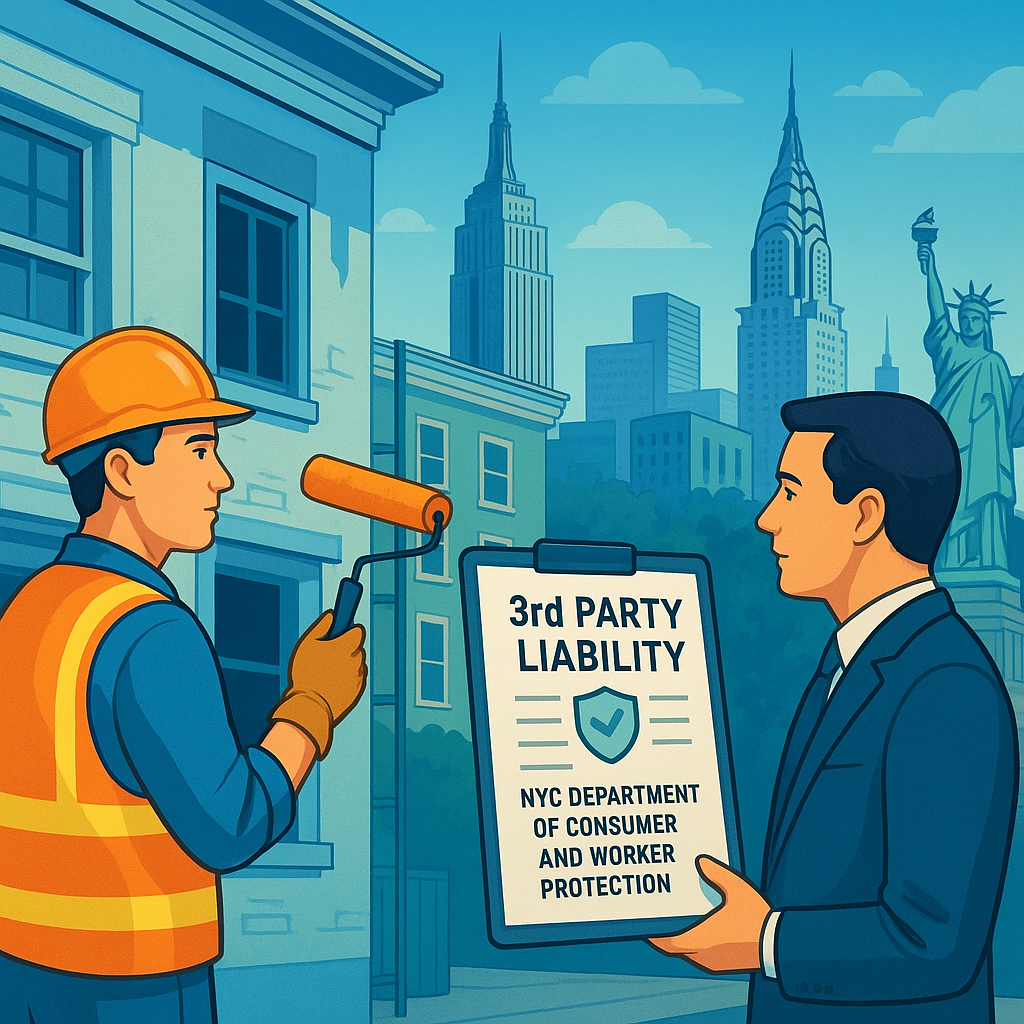
Picture this: you’ve finally saved up enough to remodel that outdated kitchen. You find a contractor who seems perfect—friendly, quick with a quote, and ready to start next week. But do you know if they’re actually licensed, bonded, and insured as required by New York City? It’s a topic that can feel overwhelming, but understanding it can save you thousands of dollars and countless headaches.
If you’re a homeowner in the five boroughs, you’re in luck. The New York City Department of Consumer and Worker Protection (DCWP)—formerly known as the Department of Consumer Affairs—has put rules in place to protect you when you hire a home improvement contractor. Today, we’ll break down everything you need to know about the Home Improvement Contractor Bond, 3rd Party Liability, and the overall licensing requirements. Think of this as your friendly guide to navigating the red tape so you can focus on picking out those countertops with confidence.
Who Needs a License from the NYC Department of Consumer and Worker Protection?
First, let’s clarify who falls under these rules. The City of New York – Home Improvement Contractor license isn’t just for big construction companies. If someone does any kind of repair, remodeling, renovation, or improvement work on residential property—and the total cost (including labor and materials) exceeds $200—they must be licensed. This includes carpenters, painters, roofers, flooring installers, kitchen and bath remodelers, and even handymen doing certain jobs.
The idea is simple: the NY Department of Consumer and Worker Protection wants to make sure that anyone working on your home meets baseline standards. Before issuing a license, the DCWP checks things like the applicant’s background, requires a bond, and demands proof of liability insurance. So, when you see that license number on a truck or a contract, it’s not just decoration—it’s a signal that the contractor has jumped through important hoops to legally work in the city.
What Is a Home Improvement Contractor Bond and Why Does It Matter?
Let’s talk about one of the most misunderstood parts of the process: the Home Improvement Contractor Bond. You can think of a bond as a safety net. It’s not the same as insurance, even though people often confuse the two. While insurance protects the contractor from accidents or property damage, a bond protects you—the consumer—from dishonest or incomplete work.
In New York City, licensed home improvement contractors must maintain a $20,000 surety bond with the DCWP. If a contractor fails to complete the job they were paid for, does shoddy work they refuse to fix, or violates the city’s consumer protection laws, you may be able to file a claim against that bond. The bond money can then be used to compensate you for your financial loss. It’s like having a financial backup plan that kicks in when things go wrong.
Think of it this way: if you hire an unlicensed contractor and they disappear halfway through a bathroom renovation, your money might be gone for good. But with a licensed contractor who holds a Home Improvement Contractor Bond, you have a clear path to recover some of your losses. It doesn’t guarantee everything will be perfect, but it adds a powerful layer of accountability.
Third-Party Liability: Protecting People and Property Beyond Your Own
Now let’s dig into a crucial phrase you might hear contractors toss around: Home Improvement Contractor – 3rd Party Liability. What does that actually mean? Put simply, third-party liability insurance covers bodily injury or property damage that occurs to someone other than the contractor or their employees during the project. The “third party” could be you, your neighbor, a delivery person, or even a guest visiting your home.
Imagine a roofer accidentally drops a bundle of shingles from your roof, and it damages your neighbor’s brand-new car parked in the driveway. Without proper liability coverage, you could be stuck in the middle of a messy dispute. But if the contractor has the required $1,000,000 in general liability insurance—as mandated by the New York City Department of Consumer and Worker Protection—that insurer steps in to handle the claim. It protects the contractor, sure, but it also protects you from being dragged into a lawsuit or facing angry neighbors alone.
This requirement isn’t just a bureaucratic checkbox. It’s a real-world shield. When a contractor shows you a certificate of insurance with city-mandated coverage limits, you can breathe easier knowing that slip-and-fall accidents, falling debris, and other unexpected mishaps are covered.
How the Bond and Liability Insurance Work Together
It’s easy to mix these two protections up, so let’s compare them side by side. The bond is primarily about the quality and completion of the work, as well as honest business practices. If a contractor takes your deposit and vanishes, that’s a bond issue. If they install cabinets so poorly that the entire kitchen needs to be redone, the bond may cover that too, up to the bond limit.
Liability insurance, on the other hand, is about accidents and injuries. Did the contractor’s ladder scratch your neighbor’s prized flower beds? Did a passerby get hurt by a flying piece of debris? That’s where third-party liability kicks in. Both are required by the City of New York – Home Improvement Contractor license, and together they form a comprehensive safety net.
When you’re interviewing contractors, don’t be shy. Ask to see their DCWP license number, their bond information, and their certificate of liability insurance. A legitimate contractor will be happy to provide these. If they hesitate, that’s a red flag the size of a stop sign.
Checking a Contractor’s Status Is Easier Than You Think
You might wonder, “How do I even check if a contractor is licensed?” Luckily, the NY Department of Consumer and Worker Protection maintains an online lookup tool that anyone can use. In just a few clicks, you can enter the contractor’s company name or license number and see if their license is active, when it expires, and whether there have been any disciplinary actions or complaints filed against them.
Here’s a quick checklist of what to verify before you sign any contract:
- Confirm the license is current—expired doesn’t count.
- Ask for a copy of the $20,000 surety bond (it should name the DCWP as the obligee).
- Request a certificate of liability insurance with at least $1 million in coverage and make sure it’s dated within the last few months.
- Check online reviews and perhaps even ask the contractor for references in your neighborhood.
Spending fifteen minutes on these steps can save you from hiring someone who looks legitimate but isn’t. Think of it like checking a restaurant’s health grade before sitting down to eat—common sense for your home, too.
What Happens If a Contractor Ignores the Rules?
The New York City Department of Consumer and Worker Protection doesn’t just set the rules and walk away. They actively enforce them. Contractors who operate without a license or fail to maintain the required bond and insurance can face hefty fines, license suspension, or even criminal charges in severe cases. For consumers, the department also offers mediation and complaint services. If you find yourself in a dispute, you can file a formal complaint, and the DCWP may help mediate the situation. While they can’t force a contractor to refund your money like a court can, they can apply pressure through license consequences.
This enforcement muscle is a big reason why sticking with a licensed contractor is so important. An unlicensed worker might promise lower prices, but if something goes sideways, you lose that whole layer of city-backed protection. The rare stories of homeowners losing their life savings to fly-by-night operators are almost always about contractors who skipped the licensing process entirely.
Simple Analogies to Remember the Essentials
Still feeling a bit tangled in all these terms? Let’s use an analogy. Think of hiring a contractor like flying on an airplane. The DCWP license is the pilot’s certification—it says they’ve met minimum training and safety standards. The surety bond is like travel insurance for your luggage—if something goes missing or gets damaged, you have a way to be compensated. Third-party liability insurance is the airline’s coverage for injuries or accidents—it protects everyone on the plane and on the ground, not just the pilot.
Would you board a plane with an uncertified pilot and no insurance? Probably not. So why treat your home renovation any differently? The process is there to give you peace of mind, not to make life harder. The City of New York – Home Improvement Contractor rules put you in the driver’s seat, armed with information that makes you a smarter, safer consumer.
Final Thoughts for Your Next Home Project
Remodeling your home should be exciting, not terrifying. By understanding the basics of the Home Improvement Contractor Bond, the role of 3rd Party Liability, and the licensing system run by the New York City Department of Consumer and Worker Protection, you’ve already taken a massive step toward a successful renovation. You’re no longer at the mercy of vague promises; you know exactly what to ask for and why it matters.
Next time a contractor hands you a business card, take a moment to run the quick checks we talked about. Ask the right questions. Look for that license number and insurance certificate. Your home is likely your largest investment, and a little knowledge goes a long way in protecting it. Now go ahead—dream big about that new deck, updated bathroom, or open-concept living space. Just make sure the person holding the hammer is also holding a valid license from the city that never sleeps.